

In this answer
Short answer
The Disability Energy Service is a free advice service for disabled households in England, Scotland and Wales, delivered by the disability charity Scope and funded by the gas distribution networks. It is open to any household where one or more disabled people live, including households with disabled children, and it is not tied to any energy supplier1.
The service covers energy and water debt, changing meters, energy and water efficiency, benefits, grants and trusts, complaints to suppliers, understanding bills, and using heating systems. Advisers can also help a household join the Priority Services Register. Every eligible household receives a personalised action plan, and support is available by phone on 0808 801 0828 or by email at Disability.EnergySupport@scope.org.uk1.
Demand has risen sharply. Scope reports a 500% increase in referrals to its Disability Energy Support service compared with the same period a year earlier, which is the clearest signal of how many disabled households are struggling with bills3.
What the service is and who runs it
The Disability Energy Service is delivered by Scope, the disability equality charity, under the name Disability Energy Support. It is funded by four gas distribution networks: SGN, Cadent, Northern Gas Networks and Wales and West Utilities1. That funding model matters to how the service works. Because the money comes from the networks rather than from suppliers or from a government scheme, the advice is not tied to a particular tariff, meter type or supplier relationship.
The service sits alongside, rather than inside, the formal energy support system. It is not a grant scheme and it does not pay bills. It is an advice and casework service: advisers work through a household's circumstances and produce a personalised action plan. Scope describes the offer as free advice, and the service is described in independent reporting as free energy support for households where at least one person is disabled1.
Scope's wider energy and water work for disabled people is aimed at helping households manage their energy and water needs, and the charity is listed among the organisations providing energy crisis support to communities4.
"Scope can offer free advice."
The distinction between advice and payment is the single most important thing to understand about the service. A household that needs money for a bill will not receive it from Scope. A household that needs to understand why a bill is wrong, how to challenge it, what it is entitled to, or how to get out of debt will find the service built for exactly that.
Eligibility: any household in England, Scotland and Wales with a disabled person
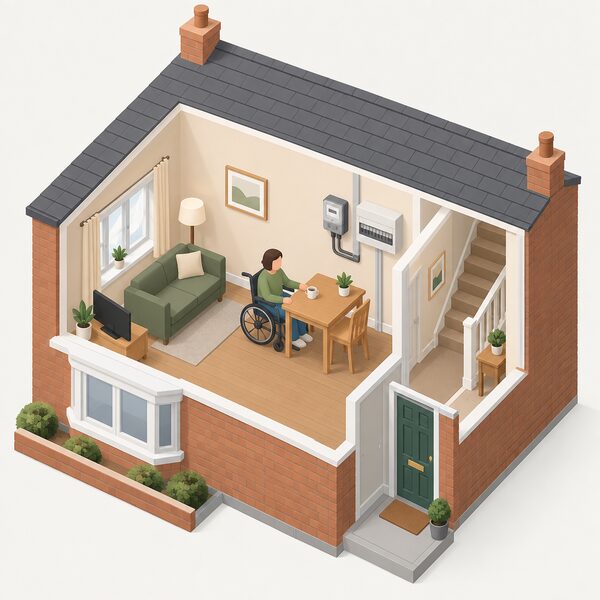
Eligibility is deliberately broad. Scope states that the service is open to any disabled person, including children, or to households where one or more disabled people live, in England, Scotland or Wales1. Independent reporting of the service uses the same wording: it is open to any households in England, Scotland and Wales where one or more disabled people live2.
There is no means test, no benefit condition and no requirement to be in debt. A household with a disabled adult or a disabled child, in any tenure, in any of the three nations, falls within the stated eligibility. That is wider than most energy support schemes, which typically require a qualifying benefit, a low income, or both.
| Scheme | Who it is for | Supplier condition |
|---|---|---|
| Disability Energy Service | Any household in England, Scotland or Wales with one or more disabled people1 | None |
| Warm Home Discount | Households meeting benefit and supplier conditions5 | Must be a customer of a participating supplier on the qualifying date5 |
| Demand Flexibility Service | Households able to shift electricity use3 | Supplier must be registered to take part3 |
| Priority Services Register | Older and disabled people, and those dependent on electricity for medical or mobility equipment6 | Held by the supplier and network operator |
The contrast with the Warm Home Discount is instructive. For the 2026 to 2027 scheme year, eligibility in England and Wales requires receiving one or more of a list of benefits, including Pension Credit and the extra Universal Credit amount for a disability or health condition, and being a customer of a participating supplier5. In Scotland the scheme operates through a broader group, and the electricity supplier may apply extra eligibility criteria and will tell you which benefits mean you are eligible7. The Disability Energy Service has no equivalent gate.
Northern Ireland is the exception. The service does not cover it. NI Energy Advice offers independent and impartial energy advice to domestic householders in Northern Ireland, plus referrals to other services8.
What the service covers: debt, meters, bills and efficiency
Scope lists the areas its advisers can support: managing energy and water debt; changing your meter; energy and water efficiency; accessing benefits, grants and trusts; contacting or complaining to your supplier; understanding gas and electricity bills; understanding how to use heating systems; and support registering with the Priority Services Register1. Independent reporting summarises the same offer as expert help with managing energy debt, changing meters, energy efficiency and understanding energy bills2.
That list is broader than it first appears. Meter changes matter to households on prepayment meters who want to move to credit, or who need a meter relocated or adapted. Efficiency advice matters where a household is rationing energy because of cost. Benefits and grants work matters because the disability benefit system is itself a route into other energy schemes.
The Priority Services Register element is worth separating out. The register is held by suppliers and network operators and provides free extra services, and being on it may help protect a household from disconnection if it struggles to pay9. Network operators run their own versions: UK Power Networks describes its Extra Care register as free to join and open to anyone who thinks they may struggle to cope during a power cut, including people who have reached state pension age, are disabled or have a long-term medical condition, are recovering from an injury, have a hearing or sight condition, have a mental health condition, are pregnant or have children under the age of 5, have extra communication needs, need medical equipment that runs on electricity, have poor or no sense of smell, or would struggle to answer the door or get help in an emergency10.
The register's own eligibility list is similarly wide: pensionable age; disability; chronic illness or long-term medical condition; hearing or visual impairment or other communication needs; children under five living with you; a mental health condition causing difficulty understanding your bill; inability to top up a prepayment meter due to injury; temporary need for extra support; and households that would struggle to maintain well-being if supply were lost11. The Met Office advises households on the register to check what support is available before a power cut happens6.
Why it exists: the extra cost of disability
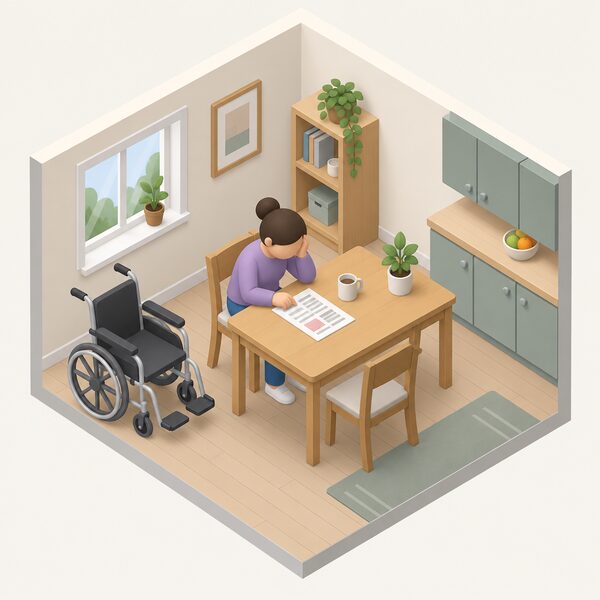
The case for a dedicated service rests on evidence that disabled households face energy costs and affordability pressures that other households do not. Consumer Scotland found that disabled people and those with a health condition are more likely to face challenges related to struggling financially, affordability of energy bills, rationing energy, difficulties keeping their house to a comfortable temperature, difficulties meeting essential costs, and related impacts on their health12.
That finding is the core of the argument. It is not simply that disabled households have lower incomes, though many do. It is that the same bill buys less comfort, because of time spent at home, medical equipment, higher heating needs, or the practical difficulty of managing accounts and suppliers while unwell.
The Scottish Government frames its disability payments in similar terms, describing them as extra money to help people with a disability or long-term health condition that affects their everyday life13. The principle is that disability carries additional costs, and energy is one of them.
"disabled people and those with a health condition are more likely to face challenges related to:"
There is a policy gap here that the service partly fills. Consumer Scotland has recommended reinstating Personal Independence Payment, and Adult Disability Payment in Scotland, as eligibility criteria for Energy Company Obligation funding14. That recommendation has not been adopted, which means the main energy efficiency obligation does not currently use disability benefit receipt as a route in. The Disability Energy Service therefore operates in a space where the formal schemes are narrower than the need.
How to apply and what you get
Applying is straightforward. Scope publishes a phone number, 0808 801 0828, and an email address, Disability.EnergySupport@scope.org.uk. Households can apply through Scope's website or by calling the number1. Support is available by phone or email, and every eligible household receives a personalised action plan setting out the support available2.
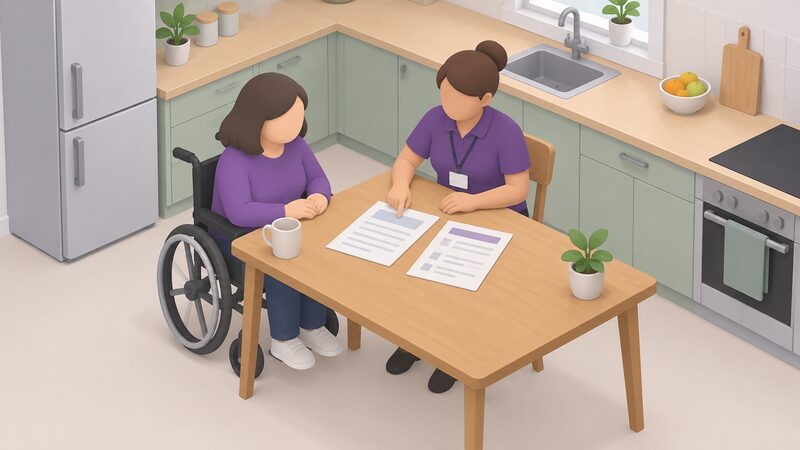
The action plan is the output of the service. It follows a conversation about the household's circumstances and sets out what applies to them: which debts can be addressed, which meter changes are possible, which benefits and grants they may be able to claim, and what to say to a supplier. It is a document a household can act on, and it is produced for every eligible household rather than only for those in crisis.
The service does not issue fuel vouchers itself, but advisers can help households access benefits, grants and trusts and can refer to other organisations1. Separate provision exists for households in immediate difficulty. The Fuel Bank Foundation provides support including to those with prepayment meters and at risk of imminent disconnection15. Energy supplier grants for people in debt do not always require you to be a customer of the company16. Charitable funds vary in who they can help: one fund can help customers of other energy suppliers, but this depends on funding availability17.
Local authority services overlap with the same territory. East Herts Home Energy Support Service, for example, offers information on grants and eligibility checking, benefits support, supplier switching advice, energy saving advice, debt advice, and referral to other organisations or contractors18. For households in England and Wales, there is also a free energy advice helpline19.
Funding and independence: who pays for it
The service is funded by SGN, Cadent, Northern Gas Networks and Wales and West Utilities1. Those are the gas distribution networks: the companies that own and operate the pipes carrying gas to homes. Their funding of an advice service is a form of community support rather than a statutory obligation, and it is worth being clear about what that means for a household.
On the positive side, network funding keeps the advice free at the point of use and independent of any supplier. A household using the service is not a customer being retained, and the adviser has no commercial interest in which tariff or supplier is chosen. That is a meaningful form of independence for a household trying to work out whether a bill is right or whether a supplier has treated them fairly.
On the limiting side, the service is advice, not money. It cannot clear a debt, fund a new boiler, or pay a bill. It also depends on continued network funding, which is not a statutory entitlement in the way that, for example, the Warm Home Discount is. And it covers England, Scotland and Wales only, leaving Northern Ireland to separate provision8.
For a household's energy independence, the service addresses the administrative and financial layer rather than the physical one. It can help a household understand and challenge bills, move off a prepayment meter, claim what it is entitled to, and register for priority support during outages. It does not reduce consumption, generate energy, or remove dependence on the grid or a supplier. What it does is reduce the risk that a disabled household pays more than it should, or loses supply, because the system is hard to navigate.
Where a household needs physical improvements, the routes are different. The Energy Company Obligation funds efficiency measures, and help may be available from any participating supplier, which does not have to be the one supplying your energy20. Income Support is a qualifying benefit under the Affordable Warmth route of ECO421. In Wales, a local authority grant scheme has included an exception where someone in the household is registered disabled and receives a disability benefit, including Disability Living Allowance, Personal Independence Payment, Employment Support Allowance, Attendance Allowance, Universal Credit with a disability premium or Limited Capability for Work and Work Related Activity, Severe Disablement Allowance, and Scottish equivalents22. In Scotland, an insulation and efficiency grant scheme has used a condition based on a child in the dwelling who has been awarded Disability Living Allowance23. The Disabled Facilities Grant operates on a separate track, for an owner, private tenant or Council tenant who is disabled or has a disabled person living in the property24.
For complaints that cannot be resolved with a supplier, Ombudsman Services: Energy is a free independent scheme25. Carmarthenshire Council's alternative funding route for the Energy Bills Support Scheme illustrates the kind of gap-filling that exists for households in care homes or assisted living who pay for some or all of their care26. Smart Energy GB directs households worried about energy bills to available help27.
Sources27 cited
- Disability Energy Support, Scope, 2026-09-20
- Energy support for disabled households, British Gas Energy Trust, 2025-12-09
- Cost of living report, Scope, 2026-09-20
- Helping communities in crisis, SGN, 2026
- Warm Home Discount eligibility statement, England and Wales, 2026 to 2027, GOV.UK, 2026-09-17
- What to do in a power cut, Met Office, 2026-09-20
- Warm Home Discount if you live in Scotland, GOV.UK, 2026-09-17
- NI Energy Advice, nidirect, 2026-09-17
- Priority Services Register, Turn2us, 2026-09-08
- Additional services and the Extra Care register, UK Power Networks, 2026-09-19
- Priority Services Register guide, Uswitch, 2025-11-07
- Health, disability and the energy crisis, Consumer Scotland, 2023-06-08
- Benefits, Social Security Scotland, 2026-09-17
- Designing energy support for disabled consumers, Consumer Scotland, 2024-11-28
- Boosting the Fuel Insecurity Fund, Scottish Government, 2026-09-17
- Government payments and discounts for heating bills, Scope, 2026-09-01
- Energy bills help, Scope, 2026-07-24
- Home and business grants, schemes and advice, East Herts Council, 2026-09-17
- Energy schemes: useful resources, Turn2us, 2026-09-20
- Energy saving tips, Age UK, 2026-04-02
- Energy Company Obligation scheme and home energy efficiency, Leeds City Council, 2026-09-20
- Grants available, British Gas Energy Trust, 2026-09-17
- Insulation and energy efficiency works grant (Scotland), legislation.gov.uk, 2006-11-29
- Private sector housing renewal and adaptations, Swansea Council, 2026-09-20
- How to leaflet, Ofgem, 2014-08
- Energy Bills Support Scheme alternative funding, Carmarthenshire Council, 2023-03-24
- Accessibility and support, Smart Energy GB, 2026-03-16
 Energy Consumer BodiesWho do you call about an energy problem where you live?
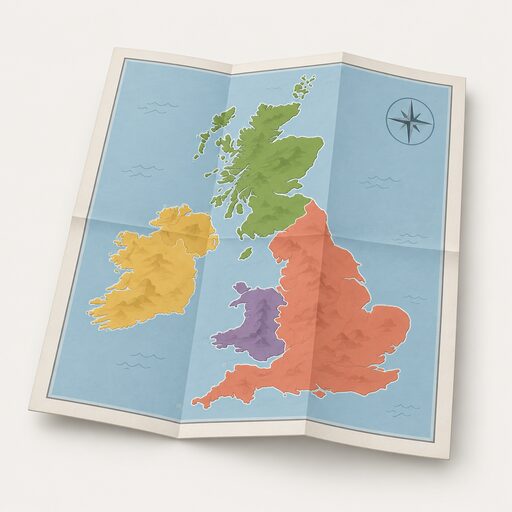 The Full Scotland, Wales and Northern Ireland GuideWhy a householder in Glasgow, Cardiff or Belfast faces different schemes, standards, targets and markets from one in England.
 Who to Call for Energy HelpA single reference to the right contact for each situation: gas escapes, power cuts, water leaks, meter faults, billing disputes, scams and free advice.
 The Full Rules and Regulation GuideConfused about who actually decides what you pay for gas and electricity, or why rules differ in Scotland and Wales?
 Suppliers in ScotlandWho do you contact in Scotland when something goes wrong with your supplier, whether that is British Gas, ScottishPower, SSE or another big name?
 The Full Your Type of Home GuideLiving in a flat, an old listed house or somewhere off the gas grid changes what energy help you can get and what you are allowed to install.