

In this answer
Short answer
Gas distribution networks run two quite different things that households often confuse. The first is a commercial connection service: Cadent quotes to run a gas supply to a property, and its new connection team can be reached on 0800 074 57881. The second is a charitable and regulatory funding stream aimed at households in fuel poverty, delivered through partners rather than directly. The Cadent Foundation, set up in 2019, has awarded more than £28 million in grants since it started, and Cadent has provided over £31m for it to distribute2.
The scale of the network behind this matters. Cadent describes itself as working day and night to ensure gas reaches 11 million homes from Cumbria to North London and the Welsh Borders to East Anglia, and it manages the National Gas Emergency Service for all gas customers in the UK4. Its fuel poverty spending under the RIIO-2 price control reached £60.03m by 31 March 2026, alongside a target to give 250,000 customers living in fuel poverty free one-to-one energy and income advice consultations6.
For a household, the practical question is not who owns the pipes but which route leads to help. Some of that help is a physical connection or a safety check on an existing appliance; some is advice, income maximisation and grant applications completed on the household's behalf. The sections below set out what each route covers, who delivers it, and where the limits sit.
Fuel poverty: the problem the funding addresses
Fuel poverty is not evenly spread, and the gap between what a household pays and what it can afford varies sharply by heating fuel. Scottish Government modelling puts the median fuel poverty gap for households using mains gas as primary heating fuel at around £800 per year in January to March 2026, a figure that sits alongside higher gaps for households on other fuels7. That is the arithmetic the Foundation's grants are aimed at: not a one-off bill crisis, but a persistent shortfall.
The Foundation's own framing is that it exists to provide funding to charities which support individuals and households living in fuel poverty8. Its stated priority is long term solutions to fuel poverty, and it says that will remain a key priority moving forward3. That emphasis on duration rather than emergency relief shapes what the money buys: advice capacity, caseworker time, in-home measures and referral infrastructure, rather than direct bill payments to households.
Where a household sits in the UK changes the surrounding picture. In Wales, the Fuel Bank Foundation provides fuel vouchers for deliveries of oil or gas for those not connected to the mains gas network, and separately supports households in Wales that pre-pay for their fuel and are at risk of disconnection9. In Northern Ireland, free advice covers saving energy in the home, energy efficiency grants and oil buying clubs11. These are devolved responses to the same problem, and they run alongside, not instead of, the network-funded schemes.
The dependence that remains is worth stating plainly. A household helped by a network-funded advice service is still dependent on the gas grid, on a supplier, and on the continuation of the funding. The Foundation's grants are charitable distributions, not an entitlement, and they are reviewed annually.
Where the money goes: grants, partners and the Green Doctor programme
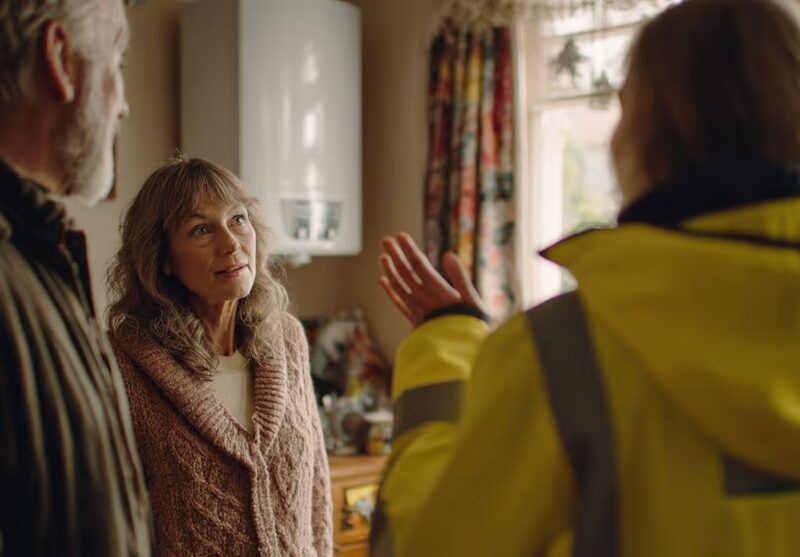
The Foundation does not deliver advice itself. It works with charity partners including Groundwork, Citizens Advice, Housing Plus Group, Care Network and Act on Energy, who use the funding to support households3. The best known of these programmes is the Green Doctor programme, which the Foundation funds to create energy saving experts who help with advice and in-home measures8. Groundwork describes its side of it as working with the Cadent Foundation to give the most vulnerable households tailored consultations with Groundwork Green Doctors about energy-saving measures and financial support via a referral service12.
That referral service is the mechanism that turns a funding stream into something a household experiences. A Green Doctor consultation typically covers what can be done in the home and what financial support might be available, with the caseworker handling the onward referral rather than leaving the household to navigate schemes alone.
Other funded work is more specific. Housing Plus Group has implemented a trial of Switchee devices in several of its homes thanks to funding from the Cadent Foundation, using real-time data to identify conditions in social housing13. Cadent also uses the Ofgem awarded Vulnerability and Carbon Monoxide Initiative (VCMI) to fund the Centres for Warmth partner network, a separate funding source from the Foundation14.
"We fund the Green Doctor programme, to create energy saving experts who help with advice and in-home measures."
The Warm Fund, income maximisation and the wider advice network

Income maximisation is the part of this work that has least to do with pipes and meters. Trust-funded advice centres complete grant applications to British Gas Energy Trust and other helpful schemes, including Warm Home Discount and ECO schemes and energy companies' Priority Services Registers15. That is caseworker time spent on forms, which is often what unlocks money a household is entitled to but has not claimed.
The network-funded advice bodies are distinct organisations with their own funders. The Warm Homes Network is funded by Cadent and Northern Gas Networks16. Warm Homes, Healthy Futures was developed with Energy Action Scotland and is supported by Cadent, Northern Gas Networks, SGN and Wales & West Utilities17. Both draw on gas distribution network funding but operate as independent advice services.
The Warm Home Discount sits in this landscape as a government scheme rather than a network one, with Pension Credit among the qualifying benefits for the England and Wales route19. Where a grant-funded scheme pays for a mains gas connection or reconnection, the VAT treatment follows the grant-funded heating supplies rules, which cover connection or reconnection to the mains gas supply among the qualifying works20.
For a household, the practical effect is that advice and income support arrive through a charity or housing provider, while the connection and safety work arrives through the network operator. The two are funded from different pots and applied for in different ways.
Results so far: what the funding has delivered
The measurable outputs are a mix of reach and depth. Cadent reports 3.4m customers provided with tools and advice to reduce their energy consumption and maximise their income, and a target of 250,000 customers living in fuel poverty receiving free one-to-one energy and income advice consultations6. Those two figures describe different things: broad reach through information, and intensive support for a smaller group.
At programme level, the Energy Caseworker project reports that with support from Cadent it has helped nearly 8,800 clients and achieved financial gains of over £20m22. That is a caseworker model rather than a call centre one, and the financial gains figure reflects money secured for households through grants, discounts and income checks rather than energy savings alone.
The Foundation publishes an Impact Report every April, which is where cumulative grant totals are updated2. Reported totals move between documents: the Foundation's own figure is more than £28 million awarded in grants since 2019, while Cadent's contribution to the Foundation is stated as over £31m2. The two numbers measure different things, money awarded to charities and money provided by the network, and both are stated here as published.
How households are referred and who delivers the help
There is no single national application form for Foundation-funded support. Cadent states that through Cadent and the Cadent Foundation it funds community partners to support customers with energy saving advice and other measures, to stay safe, warm, and connected at home23. In practice a household reaches that support through a charity, a local authority or a housing provider that already holds a relationship with one of the delivery partners.
The connection route is separate and has its own process. Before applying for a quote for a new gas connection, Cadent asks for the full address, the property owner's full name and telephone number, the meter position, whether there is private land between the property and the nearest footpath or road, the distance in metres from the gas meter to the property boundary, and approved Planning Permission and site plans for new builds1. A pricing tool gives an indicative cost of a standard domestic new connection in the area and current work delivery timescales1.
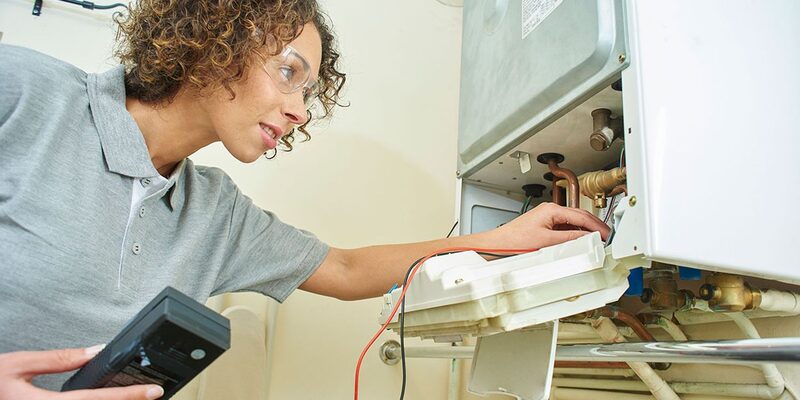
For households already connected, Cadent's repair and replacement service arranges a Gas Safe registered engineer visit to service an appliance for qualifying households, with eligibility based on receipt of at least one of a list of benefits including Income based Jobseekers Allowance, Income related Employment and Support Allowance, Income Support, Pension Credit Guarantee Credit, Working Tax Credit, Child Tax Credit, Universal Credit, Housing Benefit and Pension Credit Savings Credit24. Eligibility criteria are subject to change in line with Ofgem guidance24.
Where the network schemes stop short
The limits are as important as the offer. Foundation funding is charitable and discretionary: it is distributed through partners, reviewed annually, and not an entitlement a household can demand. The Foundation has confirmed support continuing in 2026 and beyond, but each programme depends on continued funding decisions3.
The connection side has its own boundaries. A new connection is a quoted commercial job unless it falls under a grant-funded scheme, and the information required to quote is substantial1. Disconnections run through a separate process again, requiring the full address, the diameter of the gas pipe being disconnected, the type, size and serial number of the gas meter currently fitted, and a relevant HMRC VAT relief declaration26.
There is also a caution in the wider grant landscape. Green Connect Ltd appears in the Energy Ombudsman's dispute records, which is a reminder that scheme delivery can go wrong and that households have a dispute route when it does27. For any grant-funded work, the funding source and the delivering body are worth checking separately.
The dependence that remains after any of this help is real. A household supported by a network-funded advice service still buys gas from a supplier, still relies on the grid, and still depends on the funding continuing. What these schemes change is the household's ability to claim what exists and to reduce what it uses, not its underlying reliance on the network.
Sources27 cited
- New gas connection, Cadent Gas
- Cadent Foundation reports record year of fuel poverty support, Cadent Gas, 20 April 2026
- Fuel poverty: an uncomfortable truth, Cadent Gas, 16 May 2026
- How much does decarbonising home heating really cost, Cadent Gas, 6 February 2023
- Gas safety advice, Cadent Gas
- Tackling affordability and fuel poverty, Cadent Gas, 31 March 2026
- Scenario modelling: impact of the reduction of the Renewables Obligation and ending ECO on fuel poverty in Scotland, Scottish Government
- What is fuel poverty, Cadent Gas
- Written statement: support available to help with the cost of living, Welsh Government, 18 March 2026
- Written statement: fuel poverty, Welsh Government, 7 August 2025
- Cost of living and winter support, Belfast City Council
- Energy efficiency, Cadent Gas
- How real-time data is helping create healthier, safer homes, Cadent Gas, 10 September 2026
- Centres for Warmth, Cadent Gas
- Fuel and money advice, British Gas Energy Trust, 12 August 2026
- Warm Homes Network, Turn2us, 8 September 2026
- Warm Homes, Healthy Futures, National Energy Action, 10 June 2026
- Our Health Our Homes, National Energy Action, 20 August 2026
- Warm Home Discount Scheme: if you live in England and Wales, GOV.UK
- VAT on energy saving materials and grant funded heating supplies: VENSAV4250, HM Revenue and Customs
- VAT on energy saving materials and grant funded heating supplies: VENSAV4300, HM Revenue and Customs
- Supporting the most vulnerable through holistic energy advice, Cadent Gas, 30 July 2026
- Help and support with energy bills, Cadent Gas, 17 September 2026
- Repair and replacement, Cadent Gas
- Flood advice, Cadent Gas
- Gas disconnections, Cadent Gas
- Green Connect Ltd, Energy Ombudsman, 19 September 2026
 Getting a New Gas ConnectionHow a household applies for a new or upgraded gas connection, who carries out the work, the quotation and contribution rules, typical timescales, and what a connection means for a home's energy independence.
 Who to Call for Energy HelpA single reference to the right contact for each situation: gas escapes, power cuts, water leaks, meter faults, billing disputes, scams and free advice.
 Grant ScamsGrant schemes attract cold callers, doorstep sellers and fake approval letters using real scheme names.
 Product RecallsHow recalls and safety notices work for energy equipment in UK homes, who issues them, how to check a product, and what replacement, repair and refund routes exist.
 Gas Distribution NetworksWho actually owns the pipes under your street, and who do you call when gas smells or the supply fails?
 Living Off the Gas GridNo mains gas at your home?