
In this answer
Short answer
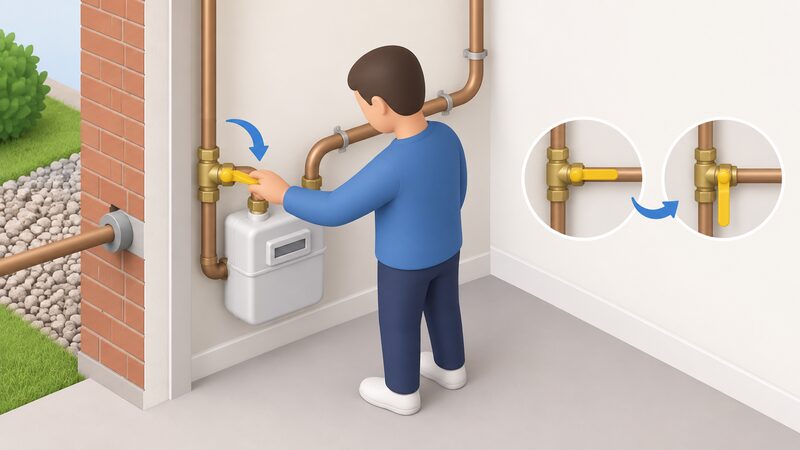
If you smell gas, the action is immediate and the number is 0800 111 999. Open windows and doors to ventilate, turn off the gas supply at the meter and at any gas appliances, and call the National Gas Emergency Service1. The service runs 24 hours a day, 365 days a year, and the call is free2. If the leak is in a cellar or basement, evacuate3.
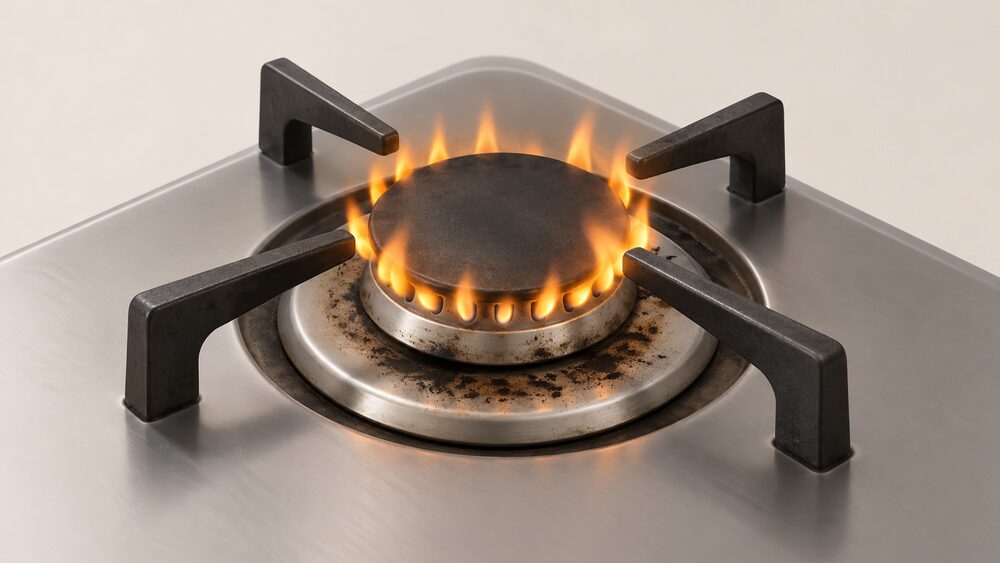
If there is no smell but the appliance is misbehaving, that is a different problem with a different route. Lazy yellow or orange flames instead of crisp blue ones, black marks around the appliance, a pilot light that keeps going out, excess condensation in the room or error messages on the control panel are all signs that something is wrong4. The gas emergency number cannot help with boiler or appliance issues5. Those need a Gas Safe registered engineer, the retailer or the manufacturer.
The dividing line matters because it decides who comes out, how fast, and who pays. An emergency call makes the property safe; the repair itself is then arranged separately and paid for by the householder or through insurance6. This page sets out the emergency steps, the fault signs, the split of responsibility between appliance, pipework and meter, the help available with costs, and what to do if the response falls short.
Smell gas or suspect a leak: the emergency number and what happens next
The National Gas Emergency Service number is 0800 111 999, and it is the single number for a gas emergency anywhere in Great Britain1. The published steps are consistent across network operators: open windows and doors to ventilate the gas, turn off the gas supply at the meter as well as at any gas appliances, and call the number1. Do not switch lights or electrical equipment on or off, because a spark can ignite accumulated gas3.
For LPG households the sequence differs slightly, because the fuel is stored on site rather than piped. Close the manual outlet valve on the cylinder or tank, turn off all appliances and the property's emergency valve, open doors and windows, do not switch lights or electrical equipment on or off, call your supplier, dial 999 for the fire brigade and leave the premises3.
What happens next is a safety visit, not a repair visit. The engineer's job is to make the property safe. Repairs to appliances, including boilers, after the emergency engineer has made the house safe will need to be paid for yourself or arranged through your insurance if you have suitable cover in place6. Because gas leaks can be potentially fatal, those repairs should be carried out as soon as a problem is identified and before the main gas supply to the property is switched back on12.
The dependence here is structural. A household on a piped supply cannot isolate itself from the network's emergency arrangements, and the emergency service is the one part of the gas chain a home never controls. What a household can control is detection and speed of response: knowing the number, knowing where the meter tap is, and knowing that the emergency visit ends at "safe", not at "fixed".
Fault, leak or poor performance: telling an emergency from an ordinary fault
The distinction is not cosmetic. An emergency is a smell of gas, low gas pressure or suspected carbon monoxide. An ordinary fault is an appliance that lights badly, heats poorly, leaks water or throws an error code. The gas emergency number cannot help you with boiler or appliance issues5, so calling it for a broken boiler delays the household and occupies a line meant for leaks.
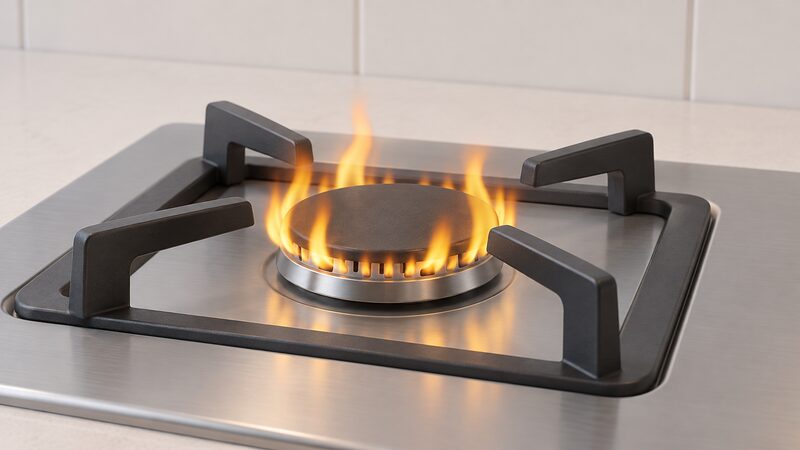
The warning signs of a combustion problem are specific. They include lazy yellow or orange flames instead of crisp blue ones, black marks on or around the appliance, a pilot light that keeps going out, too much condensation in the room, or error messages on the appliance's control panel4. A gas appliance burning a floppy yellow or orange flame, not crisp and blue, is a warning sign in its own right13. On a gas stove, a tired-looking orange or yellow flame instead of the usual blue one is another tell-tale sign6.
Gas leaks in the home are usually the result of poorly fitted, badly maintained or faulty appliances like boilers and cookers6. That is why the servicing regime matters: all gas appliances, including the gas boiler, gas cooker and gas fire, should be safety checked once a year, serviced regularly according to the manufacturer's instructions by a Gas Safe registered engineer7. Gas boilers, gas cookers and gas water heaters should be serviced annually13.
"When it comes to repairing faulty appliances, work must be carried out by a registered Gas Safe engineer."
For electrical appliances the parallel advice is to unplug the appliance and contact the retailer, manufacturer or a qualified repair technician, as appropriate14. For gas, the equivalent route is a Gas Safe registered engineer, and the register itself is the check that matters: poorly maintained, badly installed or faulty gas appliances can cause gas leaks, fire, explosions and carbon monoxide poisoning15.
Who is responsible for what: appliance, pipework and meter
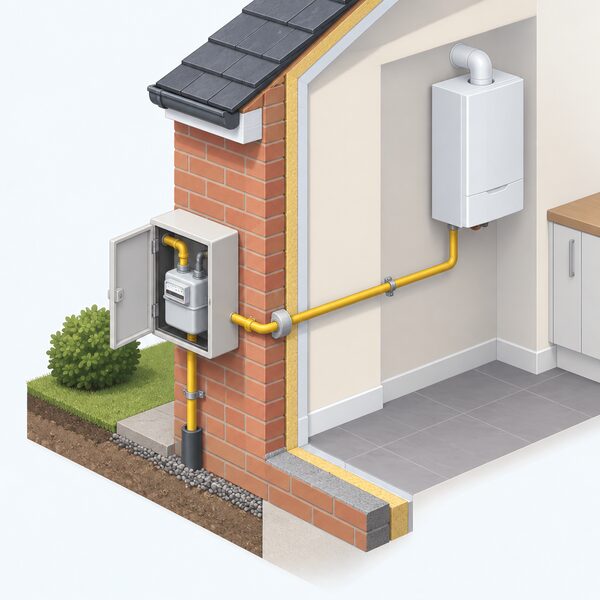
Responsibility splits three ways, and knowing which part is whose decides who pays and who you call.
The householder or landlord is responsible not only for the appliances, such as the boiler or cooker, but also for the gas pipes running from the meter to them3. The property owner is responsible for the internal pipes from the meter to the gas appliances, and it is advised that the gas appliances are checked and serviced annually by a Gas Safe registered engineer9. The same split is stated for new connections: the property owner is responsible for the internal pipes from the gas meter to the gas appliances within the property8.
The gas supplier owns the meter and the gas transported through the network, and is responsible for the installation and maintenance of the gas meter and for billing8. Your gas supplier, the company you pay your gas bill to, is responsible for your meter and any faults with it3.
For rented homes the position is more layered. If a tenant has their own gas appliance that the landlord has not provided, the landlord is responsible for parts of the associated installation and pipework, but not for the appliance itself17.
| Element | Who is responsible | What it covers |
|---|---|---|
| Appliance | Householder or landlord | Boiler, cooker, fire; annual check by a Gas Safe registered engineer9 |
| Internal pipework | Householder or landlord | Pipes from the meter to the appliances3 |
| Meter | Gas supplier | Installation, maintenance and billing8 |
| Tenant's own appliance | Landlord for associated installation and pipework, not the appliance | Parts of the installation serving a tenant-owned appliance17 |
If you do not know who your supplier is, the Find My Supplier service and the Meter Number Helpline can be used to discover who supplies your gas, as well as your MPRN number and gas transporter18. That is the starting point for a meter fault, and for the complaint route if the fault is not resolved.
The independence question is blunt here. The meter and everything upstream belong to someone else, and no household can take them over. The appliance and the pipework behind it are the household's own, which is where servicing, repair and replacement decisions actually sit.
Getting a faulty appliance repaired or replaced: help with costs
Repairs after an emergency call-out are normally the householder's cost, paid directly or through insurance6. Where money is the obstacle, two routes exist, and both are targeted rather than open to all.
The Energy Company Obligation funds the repair or replacement of broken and unsafe boilers19. It is a supplier obligation administered under Ofgem's rules, and complaints about an installation under it follow a specific complaints process rather than the general supplier route20.
The Household Support Fund provides discretionary support to vulnerable households with the cost of essentials. This may include support with energy bills for any form of fuel used for the purpose of domestic heating, cooking or lighting, including oil or portable gas cylinders, and simple energy efficiency measures21. Because it is discretionary and administered locally, the qualifying conditions vary by council area, and the four nations run their own arrangements.
The practical sequence for a household facing a repair bill is to establish first whether the fault is the appliance or the meter, because that decides who pays. A meter fault is the supplier's cost8. An appliance fault is the household's, unless one of the targeted schemes applies19. Where a repair is needed, the work must be carried out by a registered Gas Safe engineer12, and the register is the check on competence15.
Losing your gas supply after a fault: temporary heating and cooking support
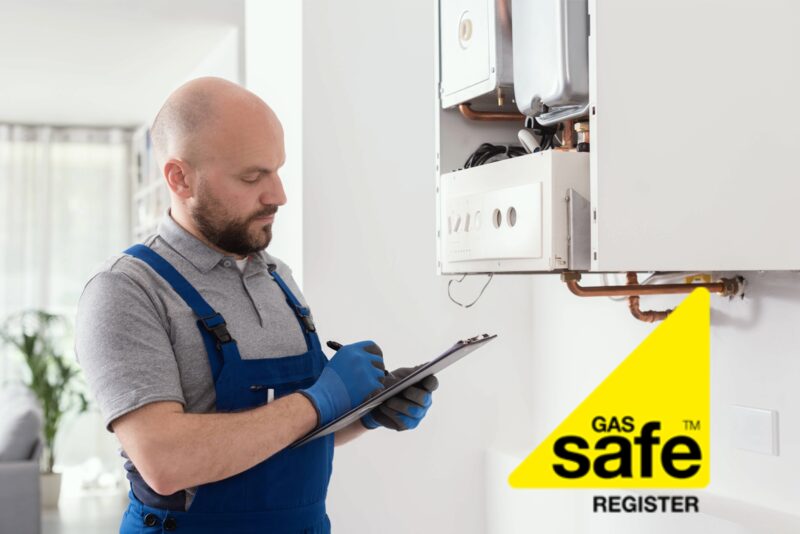
A faulty appliance can leave a home without heat or hot water even when the network is working perfectly. The common causes of a boiler breakdown are no power supply, no gas supply, no water supply, low or high pressure, a frozen condensate pipe, a faulty thermostat, no pilot light, or faulty or broken controls such as a diverter valve22. Several of those are not gas problems at all, which is why the fault-finding sequence starts with the basics.
Some failures are outside the household's control entirely. Gas boilers and heating, electrical appliances and a home's internet and landline connections will stop working in a power cut23. A gas boiler with a working gas supply but no electricity is a boiler that does not run.
Where the network itself is the cause, support exists. If you are without your gas supply because of an emergency or planned work, the network operator will provide alternative electric cooking and heating appliances5. In a declared gas supply emergency, the instruction is to immediately and safely turn off any equipment or appliances that use gas24.
A temporary supply is a separate route, used where a site needs gas before or instead of a permanent connection. To get a temporary supply, apply for a new connection and provide details of the temporary supply in the 'Additional Information' section25. Applications for a new household gas connection, alteration or disconnection can be made online to get a quote26.
The independence picture is mixed. A household can hold alternative cooking and heating appliances, and can know its own isolation points, but a gas supply interruption is resolved by the network, not by the home. The realistic household position is resilience rather than autonomy: a plan for heat and cooking that does not depend on the gas arriving.
Complaining about the response: timescales and next steps

Complaints run on different clocks depending on who the complaint is against, and the first step is always to raise it with the organisation itself. For an energy supplier, the first thing you need to do is log a dispute with your supplier28. Domestic energy suppliers have 8 weeks to investigate and resolve the problem10.
For smart meter operational issues there is a tighter standard. The energy supplier must complete an initial assessment, take an appropriate action and offer to update the consumer, within 5 working days11.
For installer complaints under a consumer code, the installer should be informed as soon as possible and given at least 10 working days to resolve it before the consumer code is contacted29. For complaints about an installation under the Energy Company Obligation, Ofgem publishes a dedicated complaints process page20.
Escalation follows the clock. If a complaint is still unresolved after 8 weeks, it can be escalated to the Energy Ombudsman30. That 8-week figure appears both as the supplier's resolution window and as the escalation trigger, so the two are the same deadline seen from either end10.
| Complaint route | First step | Timescale before escalation |
|---|---|---|
| Energy supplier | Log a dispute with the supplier28 | 8 weeks to investigate and resolve10 |
| Smart meter operational issue | Raise with the supplier | Initial assessment and action within 5 working days11 |
| Installer under a consumer code | Inform the installer | At least 10 working days to resolve29 |
| ECO installation | Ofgem complaints process20 | Follows the published process |
Two practical points shorten the process. Keep the emergency reference and any engineer's report, because the split between a safety visit and a repair is the point most disputes turn on6. And establish early whether the fault sits with the meter or the appliance, since that determines whether the supplier or the household is the correct respondent8.
Sources30 cited
- Smell Gas, SGN, 2026
- Extra Help, SGN, 2026
- Emergency Engineer Visit, Cadent Gas, 2026-09-20
- Gas Safety Week 2024, Cadent Gas, 2024
- Winter Safety, Wales & West Utilities, 2026
- Gas Leaks Safety, Uswitch, 2026-06-01
- Using a Gas Safe Engineer, Liquid Gas UK, 2026-09-20
- New Gas Connection, Cadent Gas, 2026-09-20
- What to Expect, Northern Gas Networks, 2026-09-04
- Smart Meters: Your Rights and Expectations, GOV.UK, 2025-08-08
- Final Decision: Smart Meter GSOPs, Ofgem, 2026-01-30
- How to Detect a Gas Leak, Cadent Gas, 2026-09-20
- Be Aware or It Could Be Game Over, Wales & West Utilities, 2026-09-20
- Running Appliances at Cheaper Times, Electrical Safety First, 2026-09-19
- Gas Safe Register, nidirect, 2025-10-29
- Got an Engineer Coming, Cadent Gas, 2026-09-20
- Safety Checks: What Landlords Must Do, Health and Safety Executive, 2026
- Who Supplies My Electricity and Gas?, Uswitch, 2026-06-29
- Getting Help With Your Energy Bills, Birmingham City Council, 2026-06-24
- Energy Company Obligation: Contacts, Guidance and Resources, Ofgem, 2026-09-17
- Household Support Fund, House of Commons Library, 2026-02-26
- What to Do If Your Boiler Breaks Down at Christmas, Which?, 2025-12-12
- Storms and Bad Weather, Energy Networks Association, 2026-09-17
- Gas Supply Emergencies, Cadent Gas, 2026-09-20
- What Is a Temporary Supply, NIE Networks, 2026-09-20
- Connections FAQ, SGN, 2026-09-17
- Don't Be Frozen Out, CIPHE, 2024-01-11
- Understanding Your Rights, Energy Ombudsman, 2026-09-20
- Who to Contact, Ofgem, 2026-09-17
- Guidance for FIT Generators V18, Ofgem, 2026-04-01
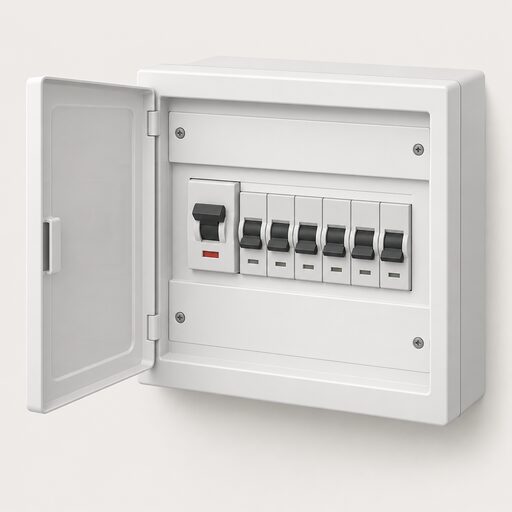 Turn Off Gas, Water, PowerWhere the gas emergency control valve, internal stopcock and consumer unit main switch are usually found and how each is operated.
 Gas Supply EmergenciesIf gas runs short, will my home lose supply?
 Maintenance and FaultsWhat does it mean when your home battery starts beeping or showing a warning, and can you fix it yourself?
 Gas Safety RulesAnyone working on gas in your home has to be on the Gas Safe Register, whether they are installing, fixing or servicing an appliance.
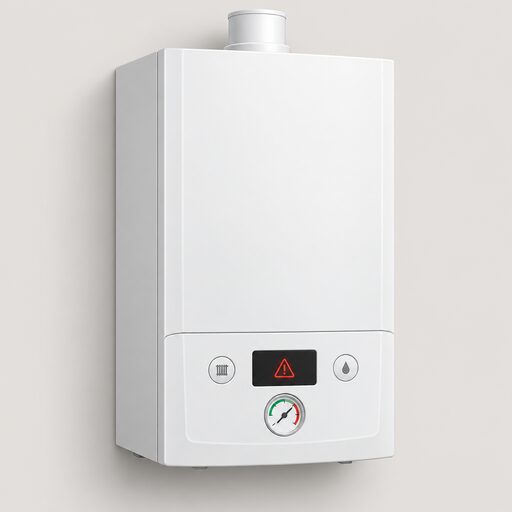 Faults and Fault CodesThe faults UK households meet most often: lockouts, kettling, pressure loss, frozen condensate pipes and no hot water, and what the fault code systems used by major brands indicate.
 Faults and TroubleshootingWhat to check when a heat pump stops working, how to read fault logs and error codes, why short cycling happens, what servicing and warranty cover, and which refrigerant and F-gas rules apply.