

In this guide
Most households can find out who supplies their gas in under a minute, without a bill and without a phone call. The Find My Supplier website takes your postcode and house number, searches the national gas database, and returns your supplier, your meter point reference number and the gas transporter for your area1. It is the quickest route for gas, and it costs nothing to use.
Electricity works differently. There is no single public lookup that returns the name of your electricity supplier from an address alone. Instead, your electricity bill carries a Meter Point Administration Number, the unique identifier for your supply point, and the supplier's name sits on the same bill2. If you have no bill, the network operator covering your postcode can tell you who owns the wires, and the Meter Number Helpline on 0870 608 1524 can trace a gas supplier when the online route fails1.
The two numbers behind all of this, the MPAN for electricity and the MPRN for gas, stay with the property rather than the account. They are what makes a switch possible, and they are what a new occupier needs when they move in and the previous supplier has not been told. Northern Ireland runs a separate system with its own numbering, and heat network customers sit outside the switching framework altogether.
Two ways to find your supplier: the online lookup and the helpline
The gas side of the question has a clean answer. The Find My Supplier website is described as the quickest way to find out your gas supplier, and it works from the two pieces of information any occupier already has: postcode and house number1. Enter them, and the tool searches the database and finds your gas supplier within seconds1. It returns three things: your Meter Point Reference Number, your gas supplier, and your gas transporter1.
The helpline is the fallback. The Meter Number Helpline on 0870 608 1524 does the same job by telephone, and it exists for the cases the online tool cannot serve: a property with no reliable address match, a householder without internet access, or someone who simply wants a person to confirm the result1. Because it is an 0870 number, the call is charged at the national rate rather than being free, and whether that charge lands on your bill depends on your phone package. The online lookup carries no call charge at all.
For electricity, the route is different because the database is different. The Meter Point Administration Service holds the record of every electricity supply point, and the MPAN is the key to it. Your supplier's name appears on your electricity bill alongside that number1. Where a bill is missing, the network operator for your area can be identified through the Energy Networks Association, and the operator can confirm the supply point details4.

What the lookup returns, and what each field means
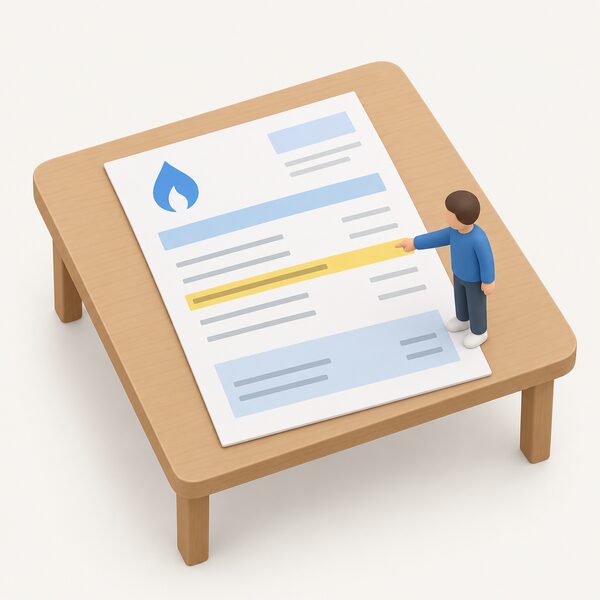
The Find My Supplier result is short but every line has a use. The Meter Point Reference Number is the one to keep. It is needed when switching supplier or moving home, because it identifies the physical gas supply point rather than the account held against it1. The supplier name tells you who is currently billing the property. The gas transporter tells you which company owns and maintains the pipes feeding the address, which matters when the issue is a leak, a smell of gas or a supply interruption rather than a billing problem.
The MPRN also appears on your gas bill, so the lookup and the bill should agree1. Where they do not, the bill is the more likely to be out of date, because the database is updated when a switch completes and the paperwork can lag behind. The MPRN is described as a unique registration number for your meter, used to check that the meter referenced on a bill is the correct one2. That is its practical function: it ties a bill to a physical meter, which is why it is the number quoted in any dispute about whether the right meter is being charged.
For electricity, the equivalent check runs through the MPAN. It is the unique identifier for your electricity supply point, and it appears on your electricity bill2. The MPAN is a longer number than the MPRN and carries more internal structure, but for a householder its role is the same: it names the supply point, not the account.
| What you need | Gas | Electricity |
|---|---|---|
| Identifier | MPRN1 | MPAN2 |
| Where it appears | Gas bill, or the Find My Supplier lookup1 | Electricity bill1 |
| What it identifies | The gas supply at your property2 | Your electricity supply point2 |
| Northern Ireland format | GPRN for gas2 | 11-digit MPRN following the Irish system2 |
Meter Point Administration Service: the database behind electricity supply points
The Meter Point Administration Service is the register that holds every electricity supply point in Great Britain, keyed by MPAN. It is not a consumer-facing website in the way Find My Supplier is; it is the industry record that suppliers, network operators and switching services work from. When a switch completes, the MPAN is what moves between suppliers, and the record of who is registered against it is what changes.
The structure of that register matters to households in two ways. First, it is why an electricity switch does not require a visit or a new meter: the supply point stays where it is and only the registration against it changes. Second, it is why a supplier can be identified even when the householder has lost every piece of paper, because the network operator for the area holds the connection record and can be traced through the Energy Networks Association4.
The register also underpins the data that government and regulators use. Electricity suppliers were asked to provide data on their payments to eligible customers under the Energy Bills Support Scheme, and that data was broken down by electricity supplier, by electricity meter type, and geographically by region, local authority and Westminster parliamentary constituency5. None of that would be possible without a stable identifier attached to each supply point. For a household, the practical consequence is simple: the MPAN is the thread that connects your address to every record held about its electricity supply, and quoting it shortens almost any query.
Where a community or smaller-scale electricity supplier operates, the eligible licensed supplier is the registrant for the meters of any local consumer purchasing energy under that tariff6. The registrant is the entity the register recognises, which is why the name on the register and the name on the marketing material can differ.
The Meter Number Helpline: 0870 608 1524

The Meter Number Helpline is the telephone route to a gas supplier's identity. The number is 0870 608 15241. It is the number to call when the online lookup has not produced a usable answer, or when a householder wants confirmation from a person rather than a screen.
Two practical points attach to it. The first is cost: 0870 numbers are charged at the national rate, and whether that charge is included in a phone package varies by provider, so the call is not free in the way the online lookup is. The second is timing. The helpline follows the standard weekday pattern used across government and industry energy services, Monday to Friday, 9am to 5pm3. Calls outside those hours are not answered, which is worth knowing before a weekend move or a bank holiday.
For heat networks, the route is different again. The Energy Ombudsman takes heat network enquiries on 0330 440 1624, pressing option 3 when prompted3. Where a heat network is not registered on the Ombudsman's website, that same number is the way to raise a dispute7. Heat network customers cannot switch supplier, so the question of who supplies them has a different answer from the outset: the supplier is whoever operates the network serving the building, and there is no competitive market to move within8.
MPAN and MPRN: the numbers that identify your supply points
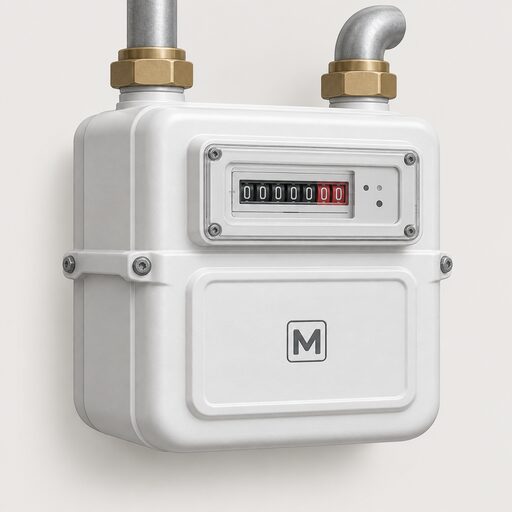
The two numbers are often confused because they do similar jobs for different fuels. The MPAN is a unique registration number for your electricity meter, used to check that the meter on a bill is correct2. The MPRN is a unique registration number for your gas meter, doing the same job on the gas side2. Both are property-linked rather than person-linked, which is why they survive a change of occupier, a change of supplier and a change of tariff.
The MPRN is used by energy suppliers to identify the gas supply at your property2. That phrasing is precise: it identifies the supply, not the customer. When you move home, the MPRN stays with the address and the new occupier inherits it. When you switch supplier, the MPRN transfers to the new supplier's records. The number is the constant.
In Northern Ireland the numbering follows a different convention. The MPRN there is an 11-digit number used to identify your electricity supply, following the Irish system2. Gas in Northern Ireland is identified by its Gas Point Reference Number, or GPRN2. A household moving between Great Britain and Northern Ireland therefore encounters two different numbering schemes for the same two fuels, and the numbers do not carry across.
The practical use of both numbers is the same everywhere: they are what you quote when switching, when querying a bill, when reporting a fault to the network operator, and when a new supplier needs to take over the supply point. A householder who knows where both numbers are recorded has removed most of the friction from every subsequent energy transaction.
Why your supplier may not be who you think
Several ordinary events put the name on the bill out of step with what a householder expects. The most common is a move. A new occupier inherits the supply point and, until they choose a tariff, sits on whatever arrangement the previous account left behind. The supplier named on the first bill may be one the householder never chose.
A second cause is a supplier failure. Where a supplier goes out of business, the householder does not need to do anything: Ofgem moves customers automatically to a new supplier and ensures the energy supply is not interrupted8. The result is that a householder who last chose a supplier two years ago may now be billed by a company they have never heard of, with no action taken on their part.
A third cause is billing error. A case study records a dispute in which a supplier rebilled a contested electricity account after a delay in updating its systems following a meter exchange, and had used estimated readings because the meter could not go backwards9. The same case study notes that the supplier assumed the consumer's reading was incorrect9. Errors of this kind produce a bill that names the right supplier but the wrong meter, which is exactly the situation the MPAN and MPRN exist to resolve.
Where the problem is a billing dispute rather than an identity question, the supplier is the first contact for late, incorrect or missing bills, back billing, being overcharged, a faulty meter, poor customer service, and refusing to refund credit from an account10. If the supplier cannot resolve it, the Energy Ombudsman takes the dispute, and its service is free for consumers11. The Ombudsman's own registration process begins by searching for the name of the energy supplier, which is why establishing that name accurately is the first step in any complaint12.
Northern Ireland: a separate market with its own numbers
Northern Ireland does not share the Great Britain gas and electricity databases, and the numbering reflects that. Electricity supply is identified by an 11-digit MPRN following the Irish system, and gas by a GPRN2. A householder in Northern Ireland looking for the equivalent of the Find My Supplier lookup will not find a service that returns a Great Britain style result, because the underlying registers are different.
The support landscape differs too. Energy suppliers in Northern Ireland refer customers who are struggling to pay bills to organisations such as Advice NI, which offers free, independent debt advice13. The Utility Regulator publishes a Code of Practice for Consumers in Vulnerable Circumstances, which sets out what suppliers must do for those households14. Under that framework, a household finding it difficult to pay for electricity or gas will be offered a referral by their energy company to a consumer body that can carry out a benefit entitlement check14.
There is also a scheme that reaches households outside the conventional billing relationship. The Energy Bills Support Scheme Alternative Funding provided £400 to help with energy bills for households that do not have a domestic energy meter or do not pay bills directly to an energy supplier15. That covers a group for whom the question "who is my supplier" has no straightforward answer, because no supplier bills them directly.
For gas specifically, Northern Ireland households on a low income have a further protection: where a household is vulnerable and lives on its own, or where everyone in the household is vulnerable, the gas supplier can arrange a free gas safety inspection14. That is a supplier obligation rather than a lookup service, but it is one of the practical reasons why knowing which company holds your supply point matters.
When no supplier can be traced
There are addresses where the standard lookups return nothing useful. A property that has never been registered, a new build not yet connected to the database, a building served by a communal system, or an account closed without a replacement opening can all leave a householder without a named supplier.
The first step is to establish who owns the network. The Energy Networks Association holds the details of the electricity Distribution Network Operator companies, and the network operator for an area can be identified through it4. The network operator knows which supply point serves an address even when no supplier is registered against it, because the physical connection is theirs.
The second step, for gas, is the Meter Number Helpline on 0870 608 1524, which can trace a gas supplier where the online lookup has failed1. For heat networks, the Energy Ombudsman takes enquiries on 0330 440 1624, option 3, including networks not registered on its website7.
A householder who cannot identify a supplier and is receiving no bills should treat the position carefully. Where a supply is being used but no account exists, a deemed contract normally applies, and the eventual bill can cover a long period. The Energy Ombudsman can take a dispute where a supplier is identified but has not resolved the issue, and its service is free to consumers11. Where the supplier genuinely cannot be traced, the network operator and the Ombudsman between them are the routes that establish who holds the supply point.
What this means for a household's energy independence

Knowing who supplies your gas and electricity is the minimum condition for acting on it. The MPAN and MPRN are the property-linked identifiers that make a switch possible without a visit, a new meter or any interruption to supply, and smart meters allow households to switch easily and quickly between suppliers without any disruption to the smart service16. A householder who has both numbers recorded can change supplier, query a bill, or challenge an erroneous transfer without first having to establish basic facts about their own supply point.
The dependence that remains is structural. The supply point is fixed to the property, the network is owned by a regional operator, and the gas and electricity themselves arrive through pipes and wires that no household controls. Switching changes the billing relationship, not the physical one. For heat network households the position is tighter still, because there is no competitive market to switch within at all8.
There is also a data dependence. The registers that hold the MPAN and MPRN records are industry databases, not household records, and the householder's access to them runs through services such as Find My Supplier or a telephone helpline. That is why keeping a copy of both numbers, and of a recent bill, is the practical form of independence available here: it means the household can answer the question without depending on a lookup at the moment it needs the answer.
Sources16 cited
- Who is my gas supplier?, Cadent Gas
- MPAN and MPRN numbers explained, Uswitch, 2026-07-02
- Energy Ombudsman FAQs, Energy Ombudsman, 2026-09-19
- Network operators, Energy Ombudsman, 2026-09-20
- Energy Bills Support Scheme statistics, UK Parliament, 2023-02-24
- Energy Bills Support Scheme Alternative Funding, Carmarthenshire County Council, 2023-03-24
- Heat networks affected by the Energy Prices Act 2022, Energy Ombudsman, 2026-09-20
- Switch your home energy supplier, Ofgem, 2026
- Incorrect estimated billing case study, Energy Ombudsman
- Complain about your energy supplier or network operator, Ofgem, 2026
- Understanding your rights, Energy Ombudsman, 2026-09-20
- Raise a dispute, Energy Ombudsman, 2026-09-19
- Advice if you're struggling to pay your energy bills, nidirect, 2026-09-17
- Code of Practice for Consumers in Vulnerable Circumstances, Utility Regulator, 2025
- Home energy support service, East Herts Council, 2026-09-17
- Smart meters: your rights and expectations, GOV.UK, 2025-08-08
 Find Your MPAN and MPRNWhere do you find your MPAN and MPRN?
 The Full Energy Suppliers GuideWho the UK's domestic gas and electricity suppliers are, how the market is structured across Great Britain and Northern Ireland, what a supplier is licensed and obliged to do, how the price cap limits bills, what happens when a supplier fails, and who regulates it all.
 Who to Call for Energy HelpA single reference to the right contact for each situation: gas escapes, power cuts, water leaks, meter faults, billing disputes, scams and free advice.
 Utility Regulator NIWho sets your energy prices in Northern Ireland and who can you complain to?
 Suppliers in Northern IrelandNorthern Ireland runs its own energy market, with its own regulator, its own suppliers and no price cap.
 Gas Distribution NetworksWho actually owns the pipes under your street, and who do you call when gas smells or the supply fails?