In this guide
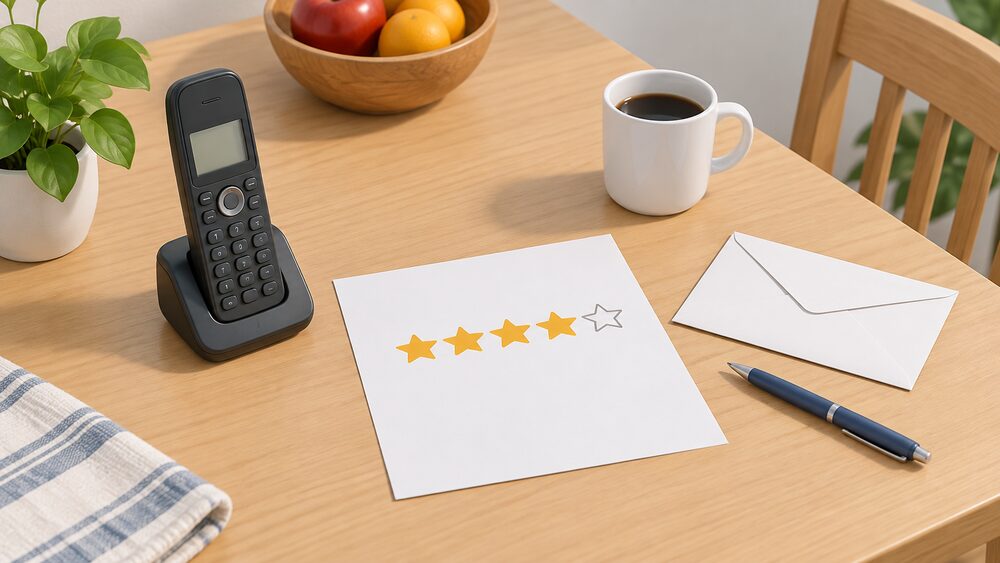
Customer service ratings for UK energy suppliers come from two main places. The Citizens Advice customer performance measure, usually called the Citizens Advice star rating, scores each domestic supplier out of five on measures that include how quickly it answers the telephone: answering in under five minutes equates to one star under that methodology. Ofgem has written that rating into the supply licence, introducing licence requirements that compel suppliers to publish information on their Citizens Advice star rating performance1. Alongside it, Ofgem runs its own Energy Consumer Satisfaction Survey and now publishes supplier-level findings for the largest domestic supply groups.
The headline picture is better than the sector's reputation suggests and worse in the detail. Ofgem's retail market reporting recorded that 81% of customers are satisfied with their energy supplier, described as the highest level ever recorded in the survey2. Most customers also rate their own supplier well: research into tariff choices noted that most customers already rate their supplier at 3 stars or higher, giving that figure as 87%, although a second figure of 60% appears for the same measure in the same body of research and the documents are not consistent3. Yet in the January 2025 wave of the satisfaction survey, only 44% of those who had complained were satisfied with how their complaint was handled4.
Supplier-level results separate the field. In the July to August 2025 wave, EDF Energy, E.ON / E.ON Next, OVO Energy and Scottish Power customers reported satisfaction with customer service at a significantly lower proportion than the average5. By the January 2026 wave the same finding applied to EDF Energy, E.ON / E.ON Next and OVO Energy6. That is the closest thing to an official statement about which large suppliers underperform, and it is the measure a reader should look at before any commercially compiled league table.
Who publishes the ratings, and what each one is measuring
Three bodies produce the numbers that sit behind any claim about the best energy supplier for customer service, and they do different jobs.
Citizens Advice runs the customer performance measure that produces the star rating. Ofgem's consumer standards decision refers to it directly as "the metrics used in the Citizens Advice customer performance measure (Citizens Advice star rating)" and made publication of performance against it a licence obligation rather than a voluntary exercise1. That matters: a rating a supplier is compelled to publish is harder to bury than a marketing award.
Ofgem itself is the regulator and the statistician. It monitors suppliers and network operators closely to make sure they meet the rules set out in licences, regulations and law, provide good customer service, and reply quickly to customers who contact them8. Separately, it publishes the Energy Consumer Satisfaction Survey, and since January 2025 has published two indicators of customer satisfaction for seven energy supply groups: overall satisfaction with their supplier, and satisfaction with the customer service they have received4. Government has committed to working with Ofgem on the publication of a wider range of supplier performance data9.
The Energy Ombudsman is the third source, though it publishes case outcomes rather than ratings. It is approved by Ofgem to handle service disputes in the energy sector10, and it has stated its support for Ofgem's work to improve customer service and trust in the energy retail sector through the Consumer Confidence Programme11.
The market these bodies cover is large: 23 domestic energy suppliers and 72 business energy suppliers were recorded as active2. Ratings coverage is far narrower than that, which is the first limitation of any table.
The star rating: what one star is worth
The single published detail of the methodology that a householder can check for themselves is the call-handling threshold. Under the Citizens Advice methodology, answering the phone in under 5 minutes equates to one star1. The measure is therefore not a general impression of friendliness; it is built from operational measures a supplier either hits or misses.
Ofgem's consumer standards decision sets out what suppliers' contact arrangements are expected to deliver. Enquiry services must:
- be available via contact methods that meet customer needs
- be open at times that meet customer needs
- be free for customers struggling to pay their energy bills
- prioritise vulnerable customers who need immediate support, or their representatives1
Read against those obligations, the star rating is best understood as a compliance-adjacent score rather than a satisfaction score. A supplier can hold a respectable rating while individual customers have poor experiences, because the rating aggregates across a customer base that in any period is mostly not in contact with the supplier at all.
Because suppliers are compelled to publish their own performance against the measure, the rating is usually visible on a supplier's own site as well as in Citizens Advice's table. The date attached to the figure matters more than the figure: results are periodic, not live, and a supplier that has changed its contact-centre staffing may move between publications. Anyone comparing suppliers should note the period each score covers, as they do with the supplier-level survey waves discussed below. Further detail on the escalation rights that sit behind these measures is set out in switching compensation and guaranteed standards.
The complaints data behind the ratings
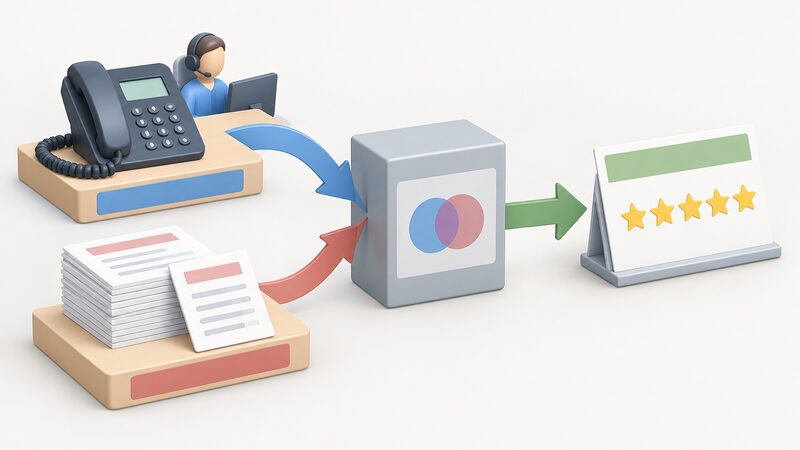
Complaint volumes are low and complaint satisfaction is poor. In the January 2025 wave, 6% of respondents reported making a complaint to their supplier, a proportion described as stable, while satisfaction with how the complaint was handled stood at 44% and was characterised as low4. Earlier survey work found satisfaction with the time taken to reach the end of the complaints process at 37% in July 2024, against 78% satisfaction with the information consumers had received from their supplier in the same wave12. The gap between those two numbers is the shape of the problem: routine communication works reasonably well, and resolution does not.
What people complain about has been consistent. Billing issues accounted for 31% of complaints among Great Britain domestic bill-payers in the second quarter of 202113. Ofgem's own list of matters to take to a supplier tracks the same ground: late, incorrect or missing bills, back billing, being overcharged, a faulty meter, poor customer service, and refusing to refund credit from an account14.
Expectations are also low to begin with. Research into guaranteed standards of performance found that all participants had low expectations of customer service from their energy supplier because of previous experiences within a range of different sectors15. That finding should temper any reading of a high satisfaction score, because satisfaction is measured against what people expect rather than against an absolute standard.
The most recent supplier-level reading is more positive on the top end: in July/August 2025, 40% of domestic energy consumers in Great Britain reported being very satisfied with their supplier's customer service7. Against that, the same wave identified four large suppliers below average, and the January 2026 wave three5.
| Survey wave | Supply groups reported significantly below average on customer service satisfaction |
|---|---|
| July to August 2025 | EDF Energy, E.ON / E.ON Next, OVO Energy, Scottish Power5 |
| January 2026 | EDF Energy, E.ON / E.ON Next, OVO Energy6 |
Company profiles for several of these are held separately: EDF, E.ON Next and ScottishPower.
Ofgem's compliance reviews: where the regulator found weaknesses
Survey scores describe how customers feel. Compliance reviews describe what Ofgem found when it looked at supplier processes, and they name names.
Ofgem's Market Compliance Review of customer service and complaints handling, completed in February 2023, placed eleven suppliers in a category of moderate weaknesses: British Gas, E Gas & Electricity, EDF, Good Energy, Outfox the Market, OVO, Scottish Power, SO Energy, Utilita, Utility Warehouse and Tru Energy16. A separate Market Compliance Review assessed how suppliers support customers in vulnerable situations17.
The rules those reviews test against are specific. Ofgem's self-disconnection and self-rationing decision of 19 October 2020 required energy suppliers to identify self-disconnecting and vulnerable customers and offer them credit and additional support, including emergency and friendly-hours credit and additional support credit for vulnerable customers, and updated the Ability to Pay principles in the supply licence18. Government guidance states that where a customer has vulnerable needs, "those needs should be proactively identified by energy suppliers, and additional support provided wherever appropriate"19. On back billing, Ofgem said of Standard Licence Condition 21BA that it would review compliance and, where the requirements were not applied correctly, "we will investigate further and take action to ensure compliance and provide redress to any disadvantaged consumers"20.
Ofgem has since tied service quality to debt policy, stating that it expects suppliers "to demonstrate excellent customer service as part of their strategies for driving down consumer energy debt"21.
Related detail on the obligations themselves sits in what suppliers must do for vulnerable customers and supplier conduct on prepayment meters and customer debt.
What the ratings tell you before you switch, and what they do not
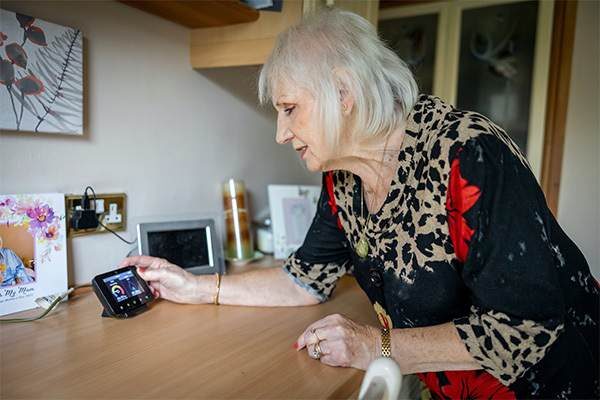
Ofgem's research into tariff choices shows ratings genuinely change behaviour, and at a clear threshold. Suppliers that fell to 3.5 stars or below for customer service rating became less appealing to consumers in the experiment22. Consumers who rate their current supplier at 3.5 stars or less are more inclined to switch across all rating levels presented, while those who highly rate their current supplier, especially at 5 stars, show greater resistance to switching, particularly to deals with poor customer service22.
What a rating cannot do is predict an individual experience. It is an average across a large customer base in a past period, weighted by measures such as call answering time1. It does not capture how a supplier handles an unusual meter, a disputed debt or a bereavement. Nor does it cover the whole market: the domestic ratings apply to a fraction of the 23 domestic and 72 business suppliers recorded as active2, so smaller and newer brands may have no published score at all.
Ratings are also silent on financial resilience, which is a separate risk. When a supplier ceases trading, Ofgem appoints another supplier to provide the energy supply, to prevent a drop in service to customers10. Advice issued when Toto Energy collapsed told affected customers not to switch to another energy supplier until a new one had been appointed and they had been contacted by them, and to take a meter reading ready for when the new supplier makes contact23. A well-rated supplier can still fail; see energy supplier failures and supplier of last resort.
For a household thinking in terms of independence, the honest reading is narrow. A high service score reduces the friction of a relationship you cannot exit while you are on the grid. It does not reduce the dependence itself: billing, metering, debt terms and the price cap all remain in the supplier's and the regulator's hands. Only reducing consumption or generating on site shifts that balance, a point developed in energy suppliers and household energy independence.
Where to get help with a supplier problem
The Citizens Advice consumer service is free and covers consumers in England and Wales with problems with energy bills or supply14. It offers information and support on struggling to pay bills, problems with an energy supplier or energy supply, saving energy at home and getting a better energy deal24.
| Contact | Detail | Coverage |
|---|---|---|
| Consumer service telephone | 0808 223 113325 | England and Wales |
| Welsh language line | 0808 223 114425 | England and Wales |
| Opening hours | Monday to Friday, 9am to 5pm25 | England and Wales |
| Additional line listed by Ofgem | 0808 144 884426 | England |
| Textphone | 18001 followed by the helpline number27 | England and Wales |
Guidance is not consistent on the Welsh-language number, with a different number appearing in other published material, so the number shown on current official guidance should be checked before calling.
Scotland and Northern Ireland are served by their own bodies, covered in energy consumer bodies. In Northern Ireland, suppliers are expected to refer customers who are struggling to pay bills to organisations such as Advice NI, which offers free, independent debt advice, and to reassess or cut debt repayment and bill payments for domestic customers in financial trouble, as well as offering advice on more efficient use of energy28. Across Great Britain, a household struggling to pay, or expecting to, can ask a supplier to agree a payment plan, payment break or reduction, to review current payments and debt repayments, and to give access to hardship funds26.
The Extra Help Unit: when your case is taken on for you

The Extra Help Unit is not an advice line. It supports vulnerable consumers by raising complaints with energy suppliers on their behalf, particularly where there is a risk of disconnection or complex personal circumstances29.
Referral comes through the Citizens Advice consumer service, which may pass a case to the unit where the person14:
- needs support with a difficult or urgent complaint
- cannot deal with their energy supplier on their own due to personal circumstances
- is considered vulnerable
- is at risk of being disconnected from an energy supply
The practical difference is representation. Where an ordinary complaint requires the customer to pursue the supplier through its own process, the unit takes the case on, which matters most for the situations Ofgem's own rules single out: self-disconnection, additional support credit and the proactive identification of vulnerable needs18.
Escalating a complaint: from supplier to Energy Ombudsman
The route is fixed, and the first step cannot be skipped. The first thing to do is log a dispute with the supplier30, following its complaints procedure, the details of which should be on a bill or on the supplier's website31. The Energy Ombudsman is explicit: "Speak to your energy supplier first to raise a complaint, and if they can't help, we'll aim to fairly and impartially resolve your dispute"32. At that stage a supplier may resolve matters with financial compensation, an apology, agreeing to fix the problem, a refund, or providing an affordable payment plan14.
If that fails, the Ombudsman takes over. Its own guidance sets the trigger:
"You must raise a complaint with your supplier in the first instance. If the issue isn't resolved after eight weeks, or you receive a deadlock letter"
The service is free at that point29. It provides an independent service, separate to Ofgem, for problems with an energy supplier, an energy broker, a network operator, a green deal or a heat network supplier33, and it can process complaints for both domestic and small business consumers in the energy sector34. Disputes are registered by searching for the name of the supplier, and the case must be raised against the correct supplier.
- Raise the complaint with the supplier and keep a record of the date.
- Wait eight weeks, or obtain a deadlock letter.
- Submit the case with the supplier's name, the account holder's name, the account number and the date the complaint was first raised35.
- Send information and evidence relating to the dispute when asked36.
- The Ombudsman reviews evidence from the consumer and the energy company and informs the consumer of its decision within 6 weeks, then gives the company a set of actions to resolve the problem36.
Outcomes can require suppliers to take practical action such as crediting or cancelling an account or changing a tariff, to make an apology, or to offer a financial award, or a combination of these, and recommendations may be made to prevent the issue recurring37. One published case concerned a consumer struggling to meet ongoing energy payments under an agreed 12-month debt payment plan whose changing financial circumstances were not reviewed by the supplier38. Where a supplier has failed and customers have been moved under the supplier of last resort process, the same clock applies: if a complaint to the new supplier is unresolved after eight weeks, the consumer can pursue dispute resolution through the Energy Ombudsman39. Heat network customers should contact the heat network supplier first in the same way. The full process is set out in complaining about an energy supplier and in the profile of the Energy Ombudsman.
Service ratings alongside price

Price and service are not independent in how households actually choose. Ofgem's tariff research shows a rating acts as a filter on price: suppliers falling to 3.5 stars or below became less appealing, and highly rated incumbents held customers who resisted moving to deals with poor customer service22. In other words, a cheaper tariff from a low-rated supplier has to be materially cheaper before many households will take it.
The data supports treating service ratings as a risk measure rather than a ranking. The things a low score predicts are the things that cost money and time later: slow complaint resolution, which only 44% of complainants were satisfied with4, and slow calls, which is what the star methodology measures directly1. The things it does not predict are price stability, the terms of a debt plan, or whether the supplier will still be trading in two years.
Two practical qualifications apply. First, published supplier-level indicators cover seven energy supply groups4, not the full market, so a like-for-like service comparison is not available for every tariff on a comparison site. Second, the figures are dated snapshots, and the below-average list changed between the July to August 2025 and January 2026 waves5. A rating quoted without its period is of limited use. Where price comparison is the starting point, energy comparison sites and brokers explains how those intermediaries operate, and the wider market picture sits on the suppliers pillar.
Sources39 cited
- Consumer Standards decision, Ofgem, 18 October 2023
- State of the energy market: retail, Ofgem, 15 April 2025
- Understanding consumers' energy tariff choices: research report, Ofgem, July 2025
- Energy Consumer Satisfaction Survey: January 2025, Ofgem, 2025
- Customers' satisfaction with their supplier: supplier-level findings, July to August 2025, Ofgem, 2025
- Customers' satisfaction with their supplier: supplier-level findings, January 2026, Ofgem, January 2026
- Energy Consumer Satisfaction Survey findings report, July to August 2025, Ofgem, 2025
- Complain about your energy supplier or network operator, Ofgem, 2026
- Putting consumers first: empowering and protecting energy consumers, GOV.UK, 24 May 2024
- Energy Ombudsman FAQs, Energy Ombudsman, 19 September 2026
- Ofgem Forward Work Programme 2025/6 consultation response, Energy Ombudsman, 7 February 2025
- Energy Consumer Satisfaction Survey findings report, July 2024, Ofgem, 2024
- Consumer Perceptions of the Energy Market Q2 2021, Ofgem, 2021
- Complain about your energy supplier or network operator, Ofgem, 2026
- Energy consumer experiences: customer service standards, Ofgem, 23 June 2026
- Ofgem completes review of suppliers' customer service and complaints handling, Ofgem, 2 February 2023
- Ofgem completes review of how suppliers support customers in vulnerable situations, Ofgem, 22 November 2022
- Energy supply: self-disconnection and consumer support briefing, UK Parliament, 2022
- Smart meters: your rights and expectations, GOV.UK, 8 August 2025
- Open letter on expectations for energy suppliers undertaking charge recovery action, Ofgem, 17 December 2020
- Debt strategy update: supporting a reduction in energy debt, Ofgem, 6 November 2025
- Understanding consumers' energy tariff choices, Ofgem, 8 July 2025
- Toto Energy collapses: advice for affected customers, Energy Ombudsman, 24 October 2019
- Get help with your energy bills, Ofgem, 17 September 2026
- Consumer protection rights, GOV.UK, 17 September 2026
- Get help with your home or business energy bills, Ofgem, 2026
- Energy terms explained, Ofgem, 2026
- Advice if you're struggling to pay your energy bills, nidirect, 17 September 2026
- Worried about your energy bills, Energy Ombudsman, 24 March 2026
- Understanding your rights, Energy Ombudsman, 20 September 2026
- Alternative homes energy guidance, Ofgem, 2026
- Facilitated complaints resolution, Energy Ombudsman, 20 September 2026
- Complain about your energy supplier, Ofgem, 2026
- We may be able to help resolve your energy dispute, Energy Ombudsman, 20 September 2026
- Creating a case with the Energy Ombudsman, Energy Ombudsman, 20 September 2026
- Complain about your energy supplier or network operator, Ofgem, 2026
- What to expect, Energy Ombudsman, 19 September 2026
- Case studies: debt and payment, Energy Ombudsman, 20 September 2026
- Supplier of last resort information, Energy Ombudsman, 20 September 2026
 Energy Complaints and RedressMaps the routes a householder has when an energy supplier, network operator, broker or heat network gets something wrong, which body handles which dispute, and what the Energy Ombudsman can and cannot do.
 OfgemOfgem sets the rules energy suppliers and network companies must follow, including the price cap on standard tariffs.
 Complaining About a SupplierHow do you complain about your energy supplier, and how long should it take?
 Complain About Energy SupplierThe order of a complaint: the supplier's own procedure, the eight-week point or deadlock, and referral to the Energy Ombudsman in Great Britain or the Consumer Council in Northern Ireland.
 Ofgem Consumer ArchetypesWhich kind of household are you, and does it change what you pay for energy?
 Scams and Mis-SellingHow energy supplier scams present, what the doorstep and phone selling rules require, the redress available when a contract was mis-sold, and how the Energy Ombudsman handles a dispute.