
In this guide
Utilita Energy Limited is a licensed electricity and gas supplier built around prepayment. It reported serving over 775,000 electricity customers and 648,000 gas customers in December 2022, and around 95% of its customers have smart meters, a share that is unusually high for a UK supplier1. Its feed-in tariff contact listing gives the company telephone number as 0330 053 5669 and the website as utilita.co.uk3.
The company is not, however, a straightforward choice. Ofgem opened an enforcement investigation into Utilita in November 2024 covering compliance with the rules on installing and using prepayment meters, and that investigation was still open when Ofgem published its market compliance review in June 20264. Separately, Ofgem found a failure in the delivery of additional support credit that led to a compensation package for Utilita customers1. Both matters sit directly on the ground Utilita occupies: prepayment customers and the support owed to them.
On service, the official picture is mixed but improving. Ofgem's January 2026 survey found 76% of Utilita respondents satisfied or very satisfied with customer service and 77% satisfied overall, against 8% and 11% dissatisfied5. Which?'s January 2026 assessment scored the supplier 68% overall, with 10 out of 10 for supporting customers but 7 out of 15 for complaints and 7 out of 12 for contacting it6.
Utilita at a glance: a prepay-first licensed supplier
Utilita Energy Limited holds encompassing licences listed by Ofgem, and appears on the feed-in tariff licensee contact list with the telephone number 0330 053 5669, the email fit@utilita.co.uk and the website utilita.co.uk3. The company also appears as the lead organisation on a Heat Pump Ready Programme project, which places it among suppliers working on low-carbon heating rather than only on prepayment supply7.
Its customer base is the distinguishing feature. The December 2022 press release figure of over 775,000 electricity customers and 648,000 gas customers is the most recent company-level number in the published record, and it is dated, so it should be read as a scale indicator rather than a current count1. The smart meter share is the more striking figure: around 95% of its customers have smart meters, according to independent guidance published in August 20262. For a supplier whose model depends on prepayment, that matters, because a smart prepay meter can be topped up remotely and read without a visit.
The company has also absorbed customers from failed suppliers. When Eversmart ceased trading in September 2019, 29,000 of its customers moved to Utilita. That history is common to the sector rather than peculiar to this supplier, and the wider pattern is set out in energy supplier failures and supplier of last resort.
For a household, the independence question is immediate. A prepayment account with any supplier means the home's energy continues only while credit continues. There is no arrears buffer, no monthly billing cycle to smooth a difficult month, and no supply without a topped-up meter. What a smart prepay meter changes is the friction, not the principle.
Prepay and smart tariffs: no standing charge, higher unit rates

Prepayment energy tariffs are one of the standard tariff types a supplier may offer, alongside standard variable, renewable, electric vehicle and fixed price tariffs8. The structural trade-off in prepayment is well established: no standing charge in the typical prepay design, but a higher unit rate in its place. A household that uses very little energy can do better on that shape of tariff, while a high-usage household usually pays more for the same consumption.
The practical lever for a prepay household is the smart meter itself. Independent guidance advises using smart meter energy data to shop around for the best tariff and to look out for suppliers offering prepay customers discounts9. That is the same switching logic that applies on credit meters, applied to a meter type that historically made switching harder because of the need for a site visit or a key change.
Two limits are worth stating plainly. First, prepayment does not by itself reduce consumption; it changes when payment happens and how visible it is. Second, the tariff a prepay household is on is still set by the supplier, and the unit rate is the number that determines the bill. The general mechanics of how a bill is built from unit rates and standing charges are covered in paying your energy supplier and energy supplier apps and online accounts.
| Feature | Prepayment tariff | Credit tariff |
|---|---|---|
| Standing charge | Typically none | Usually applied |
| Unit rate | Typically higher | Typically lower |
| Payment timing | Before use, by top-up | After use, by bill |
| Supply on zero balance | Stops until topped up10 | Continues, debt accrues |
Emergency credit, friendly credit and an empty meter
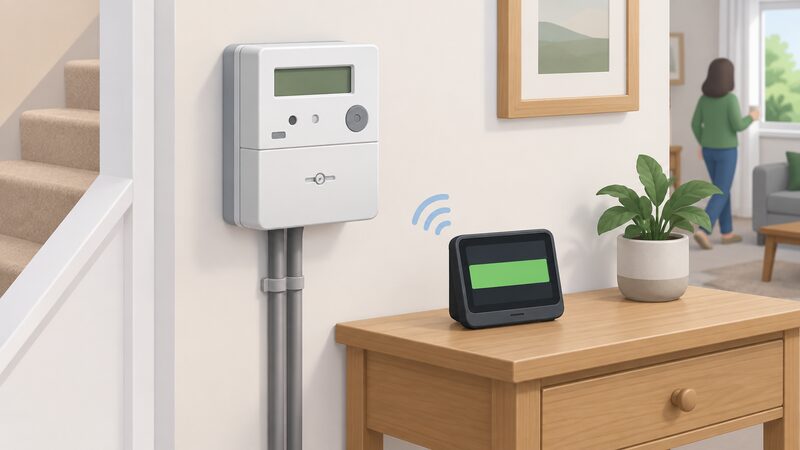
Most pay as you go smart meter systems include emergency credit when the balance reaches zero, activated directly through the meter or the in-home display9. Emergency credit exists to avoid sudden disconnection, provide temporary energy access and give the customer time to top up9. Once credit runs out entirely, no energy can be used until the meter is topped up again10.
Friendly credit is the second layer, and it is time-based rather than balance-based. Utilita's friendly credit applies to all meters between 2pm and 10am on weekdays, all day at weekends and on bank holidays, and all day on Mondays for customers of more than three years' standing2. That window covers the hours when topping up is hardest, which is the point of it.
The regulatory backdrop is that suppliers operating prepayment meters are expected to offer a reasonable amount of emergency credit and friendly hours credit to any consumer using one, unless it is technically infeasible11. That obligation is written for authorised heat network suppliers, and it describes the standard the sector is held to. Where a prepayment meter has been installed without the householder's permission, the rules are separate and are set out in supplier conduct on prepayment and debt.
For a household, the independence position here is blunt. Emergency credit and friendly credit are buffers against a gap in income or a missed top-up, not sources of energy in their own right. A home that relies on them repeatedly is a home whose supply is contingent on the next payment.
Customer service: what the surveys and ratings show

The official survey evidence on Utilita is more favourable than its reputation in some quarters would suggest, and it has moved in one direction. Ofgem's January 2026 supplier-level findings record 76% of Utilita respondents satisfied or very satisfied with customer service, 77% satisfied or very satisfied overall, 8% dissatisfied or very dissatisfied with customer service and 11% dissatisfied overall5. The sample was 166 respondents5.
The earlier waves show the trend. In the July to August 2025 wave, 72% of Utilita respondents were satisfied or very satisfied with customer service and 76% overall, on a sample of 1124. Going back further, Ofgem's July 2024 findings recorded a statistically significant increase in the proportion of Utilita customers satisfied or very satisfied overall since January to February 2024, and noted that Utilita and Octopus Energy were the only suppliers with a significantly higher proportion of customers satisfied or very satisfied overall compared with the July 2024 average1.
Which?'s January 2026 assessment gives a more granular and less flattering breakdown: 68% overall, 10 out of 10 for supporting customers, 7 out of 15 for complaints and 7 out of 12 for contacting the supplier6. The two bodies are measuring different things. Ofgem asks customers how they feel; Which? scores the supplier against service dimensions including how complaints and contact are handled. A household reading both should take the point that satisfaction is high while the mechanics of complaining and getting through score lower.
The wider comparison set is at energy supplier customer service ratings, and a direct comparison is at Utilita vs Octopus.
The Ofgem enforcement investigation and the redress package
Two regulatory matters sit on Utilita's record and both concern prepayment customers.
Ofgem opened an enforcement investigation into Utilita in November 2024 into its compliance with the rules around the installation and use of prepayment meters4. The investigation was still described as open in Ofgem's June 2026 market compliance review of prepayment meter installations4. An open investigation is not a finding. It means the regulator is examining the conduct and has not concluded.
The second matter is concluded. Ofgem uncovered a failure in the delivery of additional support credit, and Utilita Energy customers received compensation as a result1. Additional support credit is the credit a supplier can add to a prepayment meter for a customer who cannot afford to top up, and it is one of the specific protections that prepayment customers depend on.
For context on how Ofgem uses these powers, the regulator has previously required an energy supplier to contribute more than £1m to a redress fund, and has said it is considering more severe financial penalties12. The Energy Ombudsman, appointed by Ofgem in 2008, handles complaints that suppliers have not resolved13.
What this means for a household is not that the supplier is unfit, but that the protections specific to prepayment are the area where the regulator has found problems. A prepay customer should know what additional support credit is, that it exists, and that a refusal can be escalated. The escalation route is set out in complaining about an energy supplier.
Smart meters, solar and the Power Payback service
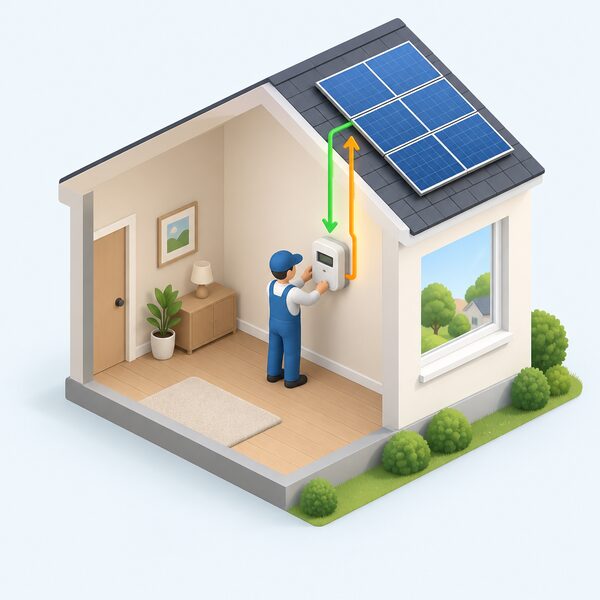
Smart meters are installed by your energy supplier at no extra cost14. That applies to a home with solar panels as it does to any other property, and a smart meter records export as well as import, which is what a solar household needs if it is paid for exported electricity. The accuracy of the metering itself is a separate question, addressed by the national smart metering network operator15.
Utilita's position in the export market is small. In Year 5 of the Smart Export Guarantee, the suppliers with the lowest number of registrations were Utilita, with 83, and E Energy with zero installations16. A household with solar panels looking for an export tariff should read that figure as a statement about scale rather than about eligibility: the scheme is open, but the volume of Utilita export registrations is low.
The Power Payback service is the demand flexibility side of the business. The invitation email told customers the service would start on 30 October 2023. Demand flexibility services pay households for shifting use away from peak times, and they depend on a smart meter and, in most designs, on the supplier's own systems to trigger and settle events.
That is the dependence to name. A smart meter gives a household better information and remote top-up, but the data path runs through the supplier and, for services like Power Payback, through the supplier's platform. Utilita has described how smart meter data provides a non-digital pathway to improved insight, enabling consumers who may not use digital channels to benefit from their own consumption data17. The general obligations on suppliers around smart meter installation are at suppliers and smart meter installation.
Priority Services Register and support for vulnerable customers
The Priority Services Register is a free support service offered by energy suppliers and network operators to help vulnerable people18. It is provided by water and power suppliers, and it is free19. Signing up requires contacting all your utility suppliers directly, because there is no single register that covers every service20.
That last point catches people out. A household on electricity from one supplier and gas from another, with water from a third, must register with each. The register is the mechanism by which a supplier knows in advance that a customer needs advance notice of an interruption, priority in a power cut, or communication in an accessible format.
"To sign up for the Priority Services Register you will need to contact all your utility suppliers directly."
Utilita joined the Energy UK Vulnerability Commitment at the start of 2024, bringing signatory numbers to 13. The commitment is a voluntary framework rather than a licence condition, and it sits alongside the statutory protections. Ofgem's consumer vulnerability strategy progress report records Utilita's work on using smart meter data to reach consumers who do not use digital channels17.
For a prepayment household, the register matters more than it does on credit, because an interruption to supply has an immediate effect and because topping up during a power cut or a period away from home is harder. The wider framework is at supplier support for vulnerable customers, and the credit available to households in difficulty is at supplier hardship and additional support credit.
Contacting Utilita: phone, chat, Energy Hubs and opening hours
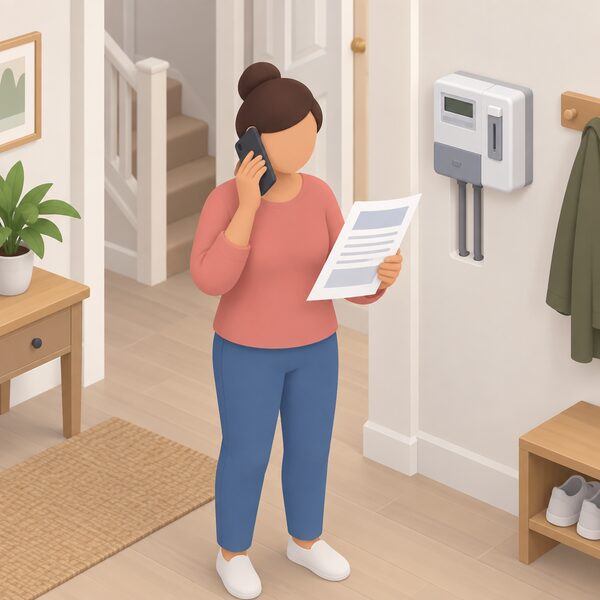
The published contact details for Utilita Energy Limited are the telephone number 0330 053 5669, the email fit@utilita.co.uk and the website utilita.co.uk3. That listing sits on Ofgem's feed-in tariff licensee contact page, so it is the route for feed-in tariff enquiries rather than a general household billing line. General customer service hours are not stated in the published figures here, so the number printed on a bill or shown in the online account is the safer starting point.
For a refund specifically, independent guidance on energy refunds lists Utilita's refund line as 0330 3337 44221. Credit can accumulate on a prepayment meter through top-ups that are not consumed, and a refund is requested rather than automatic. The general process is at final bills and credit refunds.
Complaints follow a defined route. A household with its own contract with a supplier can follow that supplier's complaints procedure, details of which should be on the bill or the website22. If the issue is not resolved, the Energy Ombudsman can be contacted23. The issues that reach the Ombudsman include late, incorrect or missing bills, back billing, being overcharged, a faulty meter, poor customer service and refusing to refund credit from an account24. Complaints about a prepayment meter installation follow the same escalation25.
The Energy Ombudsman's own contact number is 0330 440 1624, with option 3 for heat networks when prompted26. The Ombudsman's dispute pages list suppliers individually, and a household should check that its supplier appears before raising a dispute27. The full process, including when a deadlock letter is needed, is at complaining about an energy supplier and the Energy Ombudsman.
Sources27 cited
- Utilita Energy customer numbers and smart meter share, Ofgem, 2026
- Is a prepayment energy meter right for you?, Which?, 2026
- Feed-in tariff licensee contact details, Ofgem, 2026
- Market compliance review: prepayment meter installations, Ofgem, 2026
- Customers' satisfaction with their supplier: January 2026, Ofgem, 2026
- Which? energy survey results, Which?, 2026
- Heat Pump Ready Programme Stream 1 Phase 1 projects, GOV.UK, 2026
- Problems with services: consumer advice, Isle of Anglesey County Council, 2025
- How to use a smart meter in prepay mode to save money, Smart Energy GB, 2026
- Prepayment meters: consumer guidance, Ofgem, 2026
- Heat networks consumer protection draft guidance, Ofgem, 2025
- Delayed smart meter programme fails to hit targets, Public Accounts Committee, 2023
- One million consumers helped by Energy Ombudsman, Energy Ombudsman, 2026
- Get help with your smart meter, Ofgem, 2026
- How accurate are smart meters?, Smart DCC, 2026
- Smart Export Guarantee annual report, Year 5, Ofgem, 2025
- Consumer vulnerability strategy progress report, Ofgem, 2026
- Energy efficiency tips, nidirect, 2022
- What to do in a power cut, Met Office, 2026
- Heating your home, Carmarthenshire Council, 2026
- Energy refunds guide, Uswitch, 2025
- Alternative homes energy guidance, Ofgem, 2026
- How your electricity or gas bill is calculated, Ofgem, 2026
- Complain about your energy supplier or network operator, Ofgem, 2026
- Installing a prepayment meter without your permission, Ofgem, 2026
- Raise a dispute: UK Prime Utility, Energy Ombudsman, 2026
- Understand your electricity and gas bills, Ofgem, 2026