
In this answer
Short answer
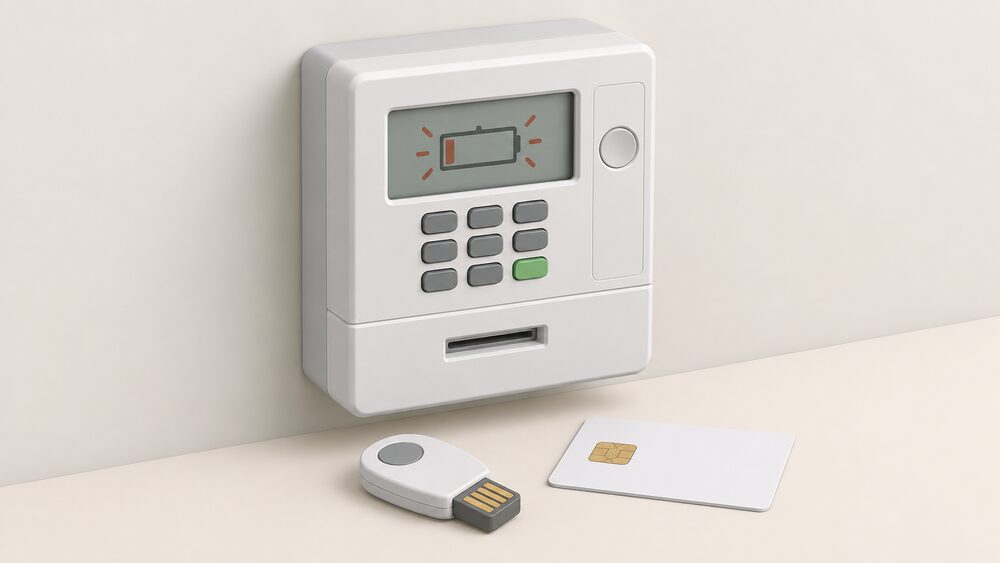
Emergency credit is the small buffer built into a prepayment meter that keeps the gas or electricity flowing after the regular balance runs out. Most suppliers provide around £10, and it is designed to do three things: help avoid sudden disconnection, provide temporary energy access, and give customers time to top up1. Your supplier should offer it wherever possible2.
It is not free money. Any emergency credit must be repaid, and it is normally reclaimed from the next top-up before that top-up reaches your balance3. Emergency credit and friendly credit usually need to be repaid in full before they can be used again4. The buffer buys time; it does not settle the bill.
The amount varies by supplier and meter type, and the trigger point is set by the supplier rather than by regulation. One supplier states the buffer becomes available when the balance drops below £13. Where the meter empties completely and no top-up follows, supply stops, which is self-disconnection5. For a household, emergency credit is a short bridge to the next top-up, not a route to independence from the grid or from a supplier.
What emergency credit is and when you can use it
Emergency credit exists because a prepayment meter stops supplying energy the moment the balance reaches zero. It is a temporary overdraft on the meter, and most prepayment meters have an emergency credit budget you can use, like an overdraft, but it is limited7. The limit is the point: it covers the gap between running out and reaching a shop, a phone or a top-up app.
The circumstances in which it applies are narrow. It is for the household that cannot top up today, not for one that cannot afford energy over a period. Where the problem is affordability rather than timing, the route is supplier support and Additional Support Credit, which is a loan with an agreed repayment route rather than a meter buffer8.
The distinction matters for a household's energy independence. Emergency credit keeps the supply on without a phone call, a card or a network connection, which is a genuine resilience feature of a prepayment meter. What it does not do is remove dependence on the supplier: the credit is the supplier's, the repayment terms are the supplier's, and the meter will still stop when the buffer is exhausted.
"Emergency credit is designed to: Help avoid sudden disconnection; Provide temporary energy access; Give customers time to top up"
How much you get: typically around £10, but it varies
Most suppliers provide emergency credit of around £10 in case you are unable to top up for any reason1. That is the figure to expect, but it is a typical figure, not a guaranteed one. One independent guide puts the usual amount at about £109, while another states that you can claim £5 emergency credit on both your electricity and gas meters10. The two figures describe different suppliers and different meter types, and the two sources give different standard amounts.
Supplier practice varies further. One supplier provides £10 per fuel for most customers and £5 for some electricity meters11. Another provides £15 per fuel on a smart meter and £10 per fuel on a traditional meter11. The allowance is therefore a supplier setting, and the meter screen is the only reliable place to read your own.
| Supplier or source | Emergency credit | Applies to |
|---|---|---|
| Typical across suppliers | around £10 | Most prepayment meters1 |
| One independent guide | £5 | Electricity and gas meters10 |
| E.ON Next | £10 per fuel; £5 for some electricity meters | Most customers11 |
| E (Gas & Electricity) | £15 per fuel | Smart meter11 |
| E (Gas & Electricity) | £10 per fuel | Traditional meter11 |
Two figures for the same supplier sit unresolved in the record: £3 in one support article and £10 in summer, £30 in winter in another. Both are maker statements about its own product, and neither has been ruled on, so a household on that supplier should read the allowance from the meter rather than rely on either.
How to activate it on smart and traditional meters
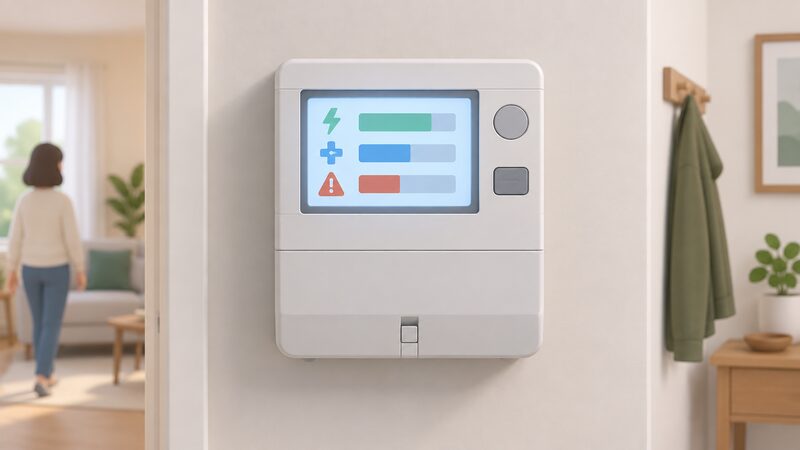
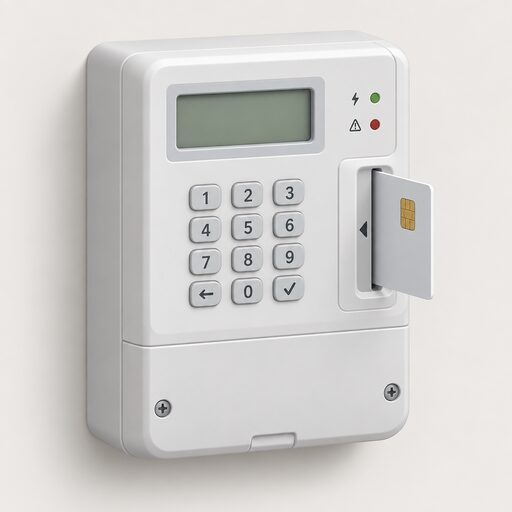
Most pay as you go smart meter systems include emergency credit if your balance reaches zero, and it can usually be activated directly through the meter or the in-home display12. There is also an emergency credit button you can press if you need a bit of extra time before you are able to top up13. If you have a smart meter, you can normally access the emergency credit using your in-home display9.
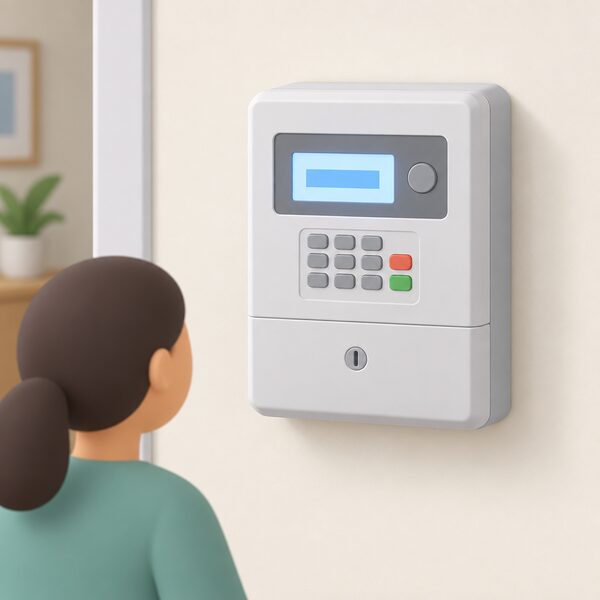
On a traditional meter the process runs through the meter keypad rather than a display, and the credit is added to the meter in the same way as a top-up. Prepayment meters are topped up before use through a corresponding prepay token, smartcard or key14, and the emergency credit is drawn from the same meter balance.
Smart meters add a route that traditional meters do not have. The prepayment service allows end consumers to add credit to their meters through an over-the-air top-up over the smart meter network15. That means a household with a smart meter in prepay mode can often top up remotely, which reduces how often the emergency buffer is needed at all. Switching from an existing gas or electricity prepay meter to a smart credit meter is straightforward for customers who want to leave prepayment behind16.

Finding your allowance on the meter screen
A prepay display screen shows how much credit you have, how much emergency credit you have, how much your debt is if you have one, and if your credit is low17. That single screen answers most of the practical questions: whether the buffer is still available, how much of it remains, and whether a debt repayment is being taken alongside it.
On a smart meter the same information is on the in-home display, which shows your credit balance, alerts you when your balance is running low, and lets you activate emergency credit13. The alert matters more than the balance itself, because it is the warning that the buffer is about to become the only supply.
Repayment: how it is paid back and why it matters
Emergency credit is reclaimed automatically. You will pay it back next time you top up9, and any temporary credit is paid back from future prepayment card top-ups18. The repayment comes out before the new credit reaches your balance, so a £10 top-up on a meter carrying £10 of emergency credit can leave the balance close to zero.
There is an alternative where a single repayment is not manageable. Emergency credit can be paid back by paying the full amount next time you add credit, or a small amount each time until it is paid19, and a repayment plan can be arranged with the supplier9. The condition is that the credit is eventually repaid: you will eventually need to pay back any credit your supplier gives you4.
Repayment is also where emergency credit interacts with existing debt. Debt from a credit meter account may be transferred onto a prepayment meter by the energy company, with automatic repayments taken each time you top up20. Where that is already happening, the emergency credit repayment sits alongside the debt repayment, and both come out of the same top-up.
Additional Support Credit and extra help if you cannot top up
Additional Support Credit is the larger, discretionary form of help. It is extra temporary credit, a loan from your supplier which you agree how to pay back, for example in monthly payments21. It is not the meter buffer: it is negotiated, assessed and recorded.
Ofgem's expectations are specific. Additional Support Credit is a vital tool to support prepayment customers in vulnerable situations who have self-disconnected or are at risk of doing so8, and suppliers are required to offer additional credit to vulnerable prepayment customers who have self-disconnected or are at risk of doing so8. Vulnerability criteria include customers who would struggle to answer the door or get help in an emergency, cannot get to a shop to top up, or need extra help with communication21.
The obligation on suppliers is broader than the credit itself. Talk to your supplier if you cannot afford to top up your meter: they must offer to help you, for example by giving you extra credit in a vulnerable situation22. Ofgem introduced 24/7 emergency contact requirements in August 2025 to improve access to urgent support. Temporary credit may also be added automatically when your meter runs out of credit, depending on your supplier, and is paid back from future prepayment card top-ups18.
Heat network customers have a parallel protection. Authorised heat network suppliers are obliged to offer a reasonable amount of Emergency Credit and Friendly Hours Credit to any consumer using a prepayment meter, unless it is technically infeasible, and to offer additional support credit in a timely manner where a prepayment consumer has self-disconnected or self-rationed in a vulnerable household23.
Where emergency credit falls short
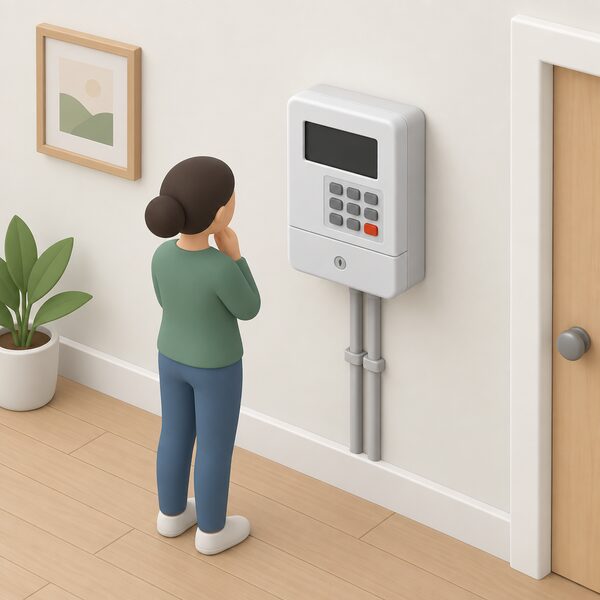
The buffer is small, and it does not cover the fixed costs of supply. Standing charges are included in prepayment tariffs and charged daily even with no credit, recovered on the next top-up24. That means part of every top-up goes to the standing charge before it reaches the energy balance, and emergency credit does not pay it.
Debt is the second limit. You can owe money on a prepayment meter if you have used some or all of your emergency credit, missed a standing charge payment, or are on a repayment plan7, and you might still be in debt if there is not enough money on the meter to cover standing charges or emergency credit you have used25. The buffer can therefore create the debt it was meant to bridge.
The third limit is the hard stop. Once your credit runs out you will not be able to use any energy until you top up again6. When credit runs out, energy supply stops, leading to self-disconnection5. The risks that follow are documented: debt enforcement, prepayment meter disconnection, energy rationing, and deepening debt26.
For a household's independence, the honest reading is that emergency credit is a short, supplier-controlled bridge. It keeps the lights on for a day or two without a phone signal or a shop, which is real resilience. It does not remove dependence on the supplier, the top-up network or the standing charge, and it is not a substitute for the debt and support routes covered in repaying energy debt through a prepayment meter and energy debt and repayment plans.
Sources26 cited
- Change prepayment meter to credit meter, Confused.com, 2026-04-20
- Energy meters, Age UK, 2026-09-10
- Worried about energy bills, ScottishPower, 2026-05-27
- Advice for those worried about energy bills, Smart Energy GB, 2026-08-19
- Prepayment meter advice, Scope, 2025-01-08
- Energy debt on prepayment meters, Centre for Sustainable Energy, 2026-08
- Prepayment meters consumer guidance, Ofgem, 2026
- Struggling to pay your heat network bills, Citizens Advice Scotland, 2026-09-17
- Is a prepayment energy meter right for you, Which?, 2026-01
- How to read your energy bills, National Energy Action, 2026-06-12
- Easy read: what is a smart meter, Smart Energy GB, 2026-03-16
- How to use a smart meter in prepay mode, Smart Energy GB, 2026-08-17
- Smart meter benefits for you, Smart Energy GB, 2026-08-18
- Energy price cap explained, Welsh Government, 2026
- How do smart meters send readings, Smart DCC, 2026
- Grants available, British Gas Energy Trust, 2026-09-17
- How to use your smart meter data, Which?, 2026-07-14
- Help if you're struggling to pay your energy bill, Which?, 2026-08-19
- Gas and electricity standing charges, Confused.com, 2026-07-06
- What emergency help is available for unpaid energy bills, British Gas Energy Trust, 2026-04-28
- How to get help with energy bills, Confused.com, 2025-11-10
- Get help with your prepayment meter, Ofgem, 2026
- Three years on: the forced prepayment meters scandal, End Fuel Poverty Coalition, 2026-02-02
- Energy debt, Uswitch, 2026-06-09
- Prepayment meters, Uswitch, 2026-08-26
- Prepayment meters advice, Centre for Sustainable Energy, 2025-08
 Prepayment MetersHow do you top up a prepayment meter for gas or electricity, and what happens when the credit runs out?
 Top Up a Prepayment MeterHow to top up by card, key, app and code, how to enter a vend code by hand and how emergency credit and friendly-hours protection work.
 Smart Prepayment MetersHow prepayment mode works on a smart meter, remote switching between credit and prepay, topping up, emergency and friendly credit, the prepayment price cap, the £500 debt limit for switching, and the free help available when a household cannot top up.
 Prepayment and Pay As You GoHow prepayment and pay as you go energy tariffs work in the UK: meter types, top-ups, emergency credit, debt repayment through the meter, price cap treatment and how households move to a credit meter.
 Prepayment Meter DebtHow debt repayment is set on a prepayment meter, the limits on the share of a top-up that can be taken, and how to have a rate reviewed.
 Prepayment and Vulnerable RulesThe licence obligations on energy suppliers when a household falls into debt: when a prepayment meter may be installed without consent, the warrant process, the ban covering highly vulnerable households, remote switching of smart meters, and the free help available.