

Short answer
The switch from a prepayment meter to a credit meter usually costs nothing in itself. None of the bigger suppliers charge to change prepayment meters over to credit meters, according to independent guidance1. Where a charge does appear, it is for hardware: a supplier might ask you to pay if you want a non-smart credit meter fitted rather than a smart meter in credit mode2.
The bigger obstacles are conditions rather than fees. A supplier will likely want the account debt-free and may ask for a credit check3. If you owe more than £500 for gas or £500 for electricity to your current supplier, switching is blocked until that is dealt with4. Renters need the landlord's permission because the meter is a physical change to the property3.
What changes is the payment model. A prepayment meter requires you to pay for energy before you use it, typically by key, card, online or phone1. A credit meter bills you after use, which opens up the wider range of deals that standard credit customers can choose from1.
Switching from prepayment to credit: what it costs
The direct answer is that the change of payment method is normally free. Independent guidance states plainly that none of the bigger suppliers charge to change prepayment meters over to credit meters1. That covers the administrative switch and, on a smart meter, the remote change of mode.
Costs appear in three places. First, a non-smart credit meter: if you want a prepayment meter replaced with a non-smart credit meter rather than a smart one, the supplier might ask you to pay for it2. Second, an early switch charge: a supplier might charge if you move to a new supplier within 12 months of the meter being fitted, even where it was fitted for free2. Third, the meter move itself in a rented property, where the tenant is almost certainly expected to pay the cost unless the landlord wants the move as part of a renovation or improvement14.
There is also a running-cost dimension that sits behind the question. Prepayment customers have historically paid more: a Welsh Government statement records that those reliant on pre-payment meters pay a more expensive tariff compared to standard credit meters15, and independent guidance says prepayment is usually more expensive than paying by monthly direct debit16. One guide notes that as of April 2024 those on prepayment meters would pay slightly less for their energy than those on credit meters, a reversal driven by the prepayment price cap3. The direction of the price difference has moved between periods, so the standing charge and unit rate on the specific tariff matter more than the payment label.
For a household's energy independence, the switch changes who carries the timing risk. Prepay means the household funds energy before use and can be cut off by an empty meter; credit means the supplier carries the cost until the bill arrives, in exchange for a credit relationship and the possibility of debt. Neither removes dependence on the grid or a supplier.
How a smart meter changes the switch
A smart meter turns the prepayment to credit change into a software event. Smart Energy GB states that with a smart meter you can switch from prepayment to credit without needing a new meter installed12. The same source notes that suppliers can switch consumers from credit to prepayment mode without the cost of a new meter being added to existing debt12.
The mechanism is that smart meters work in both credit and prepay modes17. All smart meters can be switched between prepay and credit mode, so anyone eligible for a smart meter is eligible for a prepay meter18. Independent guidance describes the practical effect: if you have a smart prepayment meter, it is usually possible to change how you pay without getting a new meter, and the change is done remotely19. Smart DCC, which runs the national network, describes switching from an existing gas or electricity prepay meter to a smart credit meter as straightforward for customers who pay their supplier directly4.
In prepayment mode a smart meter can add credit automatically or without a visit to a shop20. That matters for the independence picture: a smart prepay meter reduces the dependence on a physical top-up point, but it does not remove the dependence on the supplier's systems, the communications network or the app or in-home display used to check balance. A credit mode smart meter removes the top-up step entirely but keeps the meter, the supplier and the network in the loop.
How to apply to your supplier
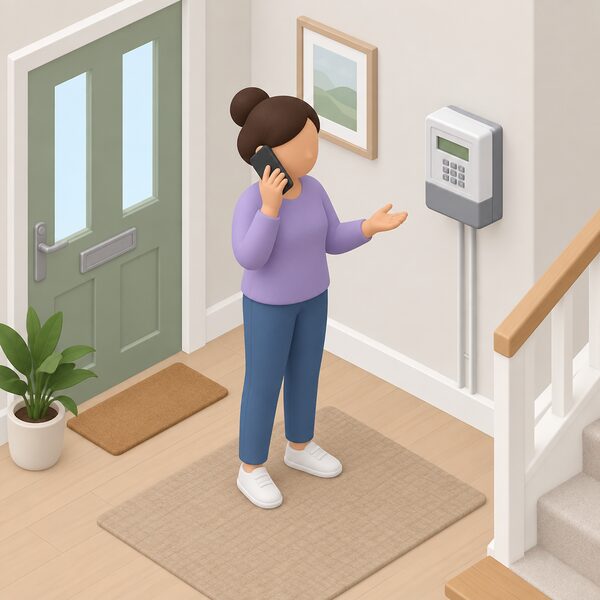
The application goes to the supplier that bills you. Smart DCC describes the route from an existing gas or electricity prepay meter to a smart credit meter as straightforward for customers who pay their supplier directly4. The supplier decides what evidence it needs: independent guidance says it may require proof of address and/or a credit check21.
A practical sequence:
- Check the account balance and any debt owed to the current supplier.
- Contact the supplier and ask for the change from prepayment to credit.
- Provide whatever the supplier asks for, which may include proof of address or a credit check21.
- If the meter is smart, the supplier changes the mode remotely12.
- If the meter is not smart, the supplier arranges a meter change, which may be free or chargeable depending on the meter type2.
Where it is not safe and practical for a household to remain on prepayment, independent guidance says the supplier should move the customer to paying by credit, meaning payment after use22. That is a safety and practicality route rather than a commercial one, and it sits alongside the ordinary application process.
The reverse direction is regulated. Suppliers can install a prepayment meter under warrant or remotely switch an existing smart meter to prepayment mode9. Ofgem rules require £30 credit per meter on all warrant installations and remote switches9, and compensation of £1,000 applies for inappropriate installation, switch or use of a prepayment meter11. A code of practice on involuntary prepayment installations sets out the protections23. For heat network customers, official guidance requires that where a supplier switches an existing supply meter to prepayment mode without consent, the consumer receives prepayment meter credit unless that is technically infeasible or outside the supplier's control25.
Renters and landlord permission
For renters the meter is part of the property, so permission comes first. Independent guidance states that renters need the landlord's permission to change the meter3. A separate guide on moving a meter puts it more broadly: in most cases you need the landlord's permission to move a meter, and you will almost certainly be expected to pay the cost unless the landlord wants the move as part of a renovation or improvement14.
Permission and payment rights are separate things. Tenants who are responsible for paying the bills have the right to change payment method, and being on a prepayment meter does not prevent switching tariff or supplier7. Independent guidance on switching as a tenant covers the same ground26. So a renter who pays the supplier directly can pursue the change, but should settle the property question with the landlord before asking the supplier to book work.
Where a supplier wants to install prepayment in a tenanted property, it might install a smart meter in prepayment mode, or switch an existing smart meter to prepayment mode26. The involuntary installation rules and the £30 credit per meter apply here too9.
For the household's independence, renting adds a layer of dependence that no meter choice removes: the landlord's consent, and in many cases the tenant's liability for the cost of the change. A smart meter softens this because the mode can be changed without new hardware, which also means the meter does not have to be swapped between tenancies17.
What a credit meter means for how you pay
A prepayment meter is defined by paying before use. Independent guidance describes it as a meter that requires you to pre-pay for your energy before you use it1, and as paying on a pay-as-you-go basis, usually with a key, smart card, online or over the phone7. Ofgem's own description is payment in advance rather than after use8, and one guide notes the key card that has to be topped up with credit6.
A credit meter reverses that: energy is used first and billed afterwards. The practical consequences are:
- More choice of deals. Those on standard credit meters will likely have more choice in terms of deals to switch to than those on prepayment meters1.
- No top-up step, so no risk of self-disconnection from an empty meter.
- A credit relationship with the supplier, which is why a credit check may be required3.
- Debt can build, and debt from a credit meter account may be transferred onto a prepayment meter by the energy company, with automatic repayments taken each time you top up27.
That last point is the trade-off in plain terms. Moving to credit removes the top-up discipline and the immediate cut-off risk, but it creates the possibility of arrears, and arrears can later be recovered through a prepayment meter with automatic deductions. Once debt on the account is settled, the supplier may be able to change the prepayment meter to a credit meter19.
For energy independence, a credit meter is a shift in who holds the risk, not a step off the grid. The household still depends on the supplier for billing, on the meter for measurement and, where the meter is smart, on the communications network and any app or in-home display used to track use. What the household gains is optionality: a wider set of tariffs, including time-of-use products that reward shifting load, and no dependence on a top-up channel. What it gives up is the hard budget ceiling that prepayment enforces.
Sources27 cited
- Prepayment meter change to credit meter, Uswitch, 2026-04-23
- Change prepayment meter to credit meter, Confused.com, 2026-04-20
- Prepayment meters guide, Uswitch, 2026-08-26
- How to get a smart meter, Smart DCC, 2026
- Gas only supply, Confused.com, 2026
- A step by step guide to setting up gas and electricity in a new home, Energy Helpline, 2026-09-20
- Prepayment meters advice, Centre for Sustainable Energy, 2025-08
- Get help with your prepayment meter, Ofgem, 2026
- Check energy suppliers can install prepayment meters without household permission, Ofgem, 2026
- Installing a prepayment meter without your permission, Ofgem, 2026
- Compensation for installing prepayment meters without permission, Ofgem, 2025-05-28
- Can a smart meter cut off power, Smart Energy GB, 2026-04-24
- Switching supplier, tariffs and bills, Smart Energy GB, 2026-03-16
- How to move your gas or electricity meter, Uswitch, 2026-09-04
- Welsh Government fuel voucher scheme, Welsh Government, 2022-06-10
- Affordable energy access, Centre for Sustainable Energy, 2025-01-23
- Smart meters for landlords, Smart Energy GB, 2026-03-16
- Myth busting smart meter problems, Smart Energy GB, 2026-09-17
- Is a prepayment energy meter right for you, Which?, 2026-08-27
- Get help with your smart meter, Ofgem, 2026-09-17
- Moving house gas and electricity guide, Uswitch, 2026-08-26
- Problems getting to or topping up your prepayment meter, Citizens Advice, 2026-09-17
- Energy suppliers sign new code of practice on involuntary prepayment installations, Ofgem, 2023-04-18
- New protections from forced prepayment meters, Centre for Sustainable Energy, 2023-11-08
- Heat networks consumer protections draft guidance, Ofgem, 2025-09-05
- Switching energy supplier if you're a tenant, Citizens Advice, 2026-09-17
- Energy debt on prepayment meters, Centre for Sustainable Energy, 2026-08
 Smart Prepayment MetersHow prepayment mode works on a smart meter, remote switching between credit and prepay, topping up, emergency and friendly credit, the prepayment price cap, the £500 debt limit for switching, and the free help available when a household cannot top up.
 Prepayment Meter DebtHow debt repayment is set on a prepayment meter, the limits on the share of a top-up that can be taken, and how to have a rate reviewed.
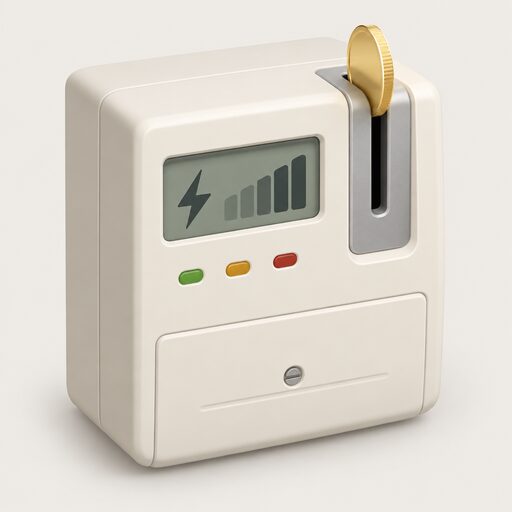 Prepayment MetersHow do you top up a prepayment meter for gas or electricity, and what happens when the credit runs out?
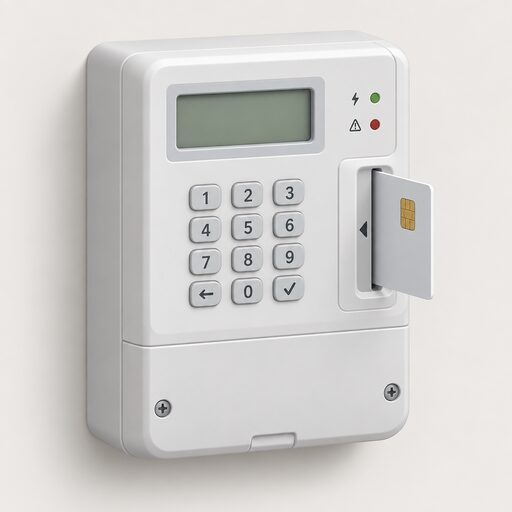 Prepayment and Vulnerable RulesThe licence obligations on energy suppliers when a household falls into debt: when a prepayment meter may be installed without consent, the warrant process, the ban covering highly vulnerable households, remote switching of smart meters, and the free help available.
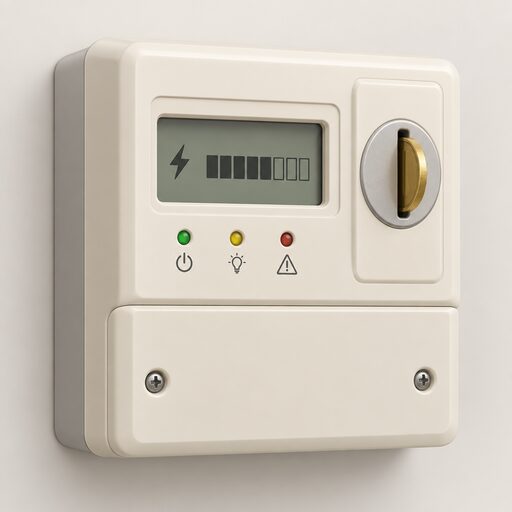 Prepayment and Pay As You GoHow prepayment and pay as you go energy tariffs work in the UK: meter types, top-ups, emergency credit, debt repayment through the meter, price cap treatment and how households move to a credit meter.
 Prepayment Meters and DebtCan your energy supplier force you onto a prepayment meter because you owe them money?