
In this answer
Short answer
Yes, a household can ask its supplier to move from prepayment to credit payment. The route depends on the meter in the property. With a smart meter, the supplier can switch the meter to credit mode remotely, with no visit and no new hardware. With an older prepayment meter, the change is physical: the meter is replaced or reconfigured, and the supplier may ask for proof of address, a clear account, or a credit check.
The cost of asking is usually nothing. None of the bigger suppliers charge to change prepayment meters over to credit meters1. What blocks a switch is more often debt than hardware. Independent guidance states that a supplier will likely require the account to be debt-free and, in some cases, that the account holder passes a credit check2. Where it is not safe or practical for a household to stay on prepayment, independent guidance says the supplier should move the customer to paying by credit3.
The wider context matters for what a switch can and cannot fix. Prepayment tariffs sit under the same price cap as standard variable credit tariffs2, so moving to credit does not remove cap protection. It changes how and when a household pays, and it changes which unit rate applies. Standard credit unit rates ran roughly 8% higher than direct debit or prepayment in August 20264, while prepayment customers paid slightly less than credit customers as of April 20242.
Yes, you can ask your supplier to move you from prepayment to credit payment
The starting point is a request to the supplier. Once debt on the account is settled, the supplier may be able to change the prepayment meter to a credit meter7. The supplier may require proof of address and, in some cases, a credit check8. For renters who pay the supplier directly, the change should be possible, but because it can involve a physical change to the property, checking with the landlord first is sensible1.
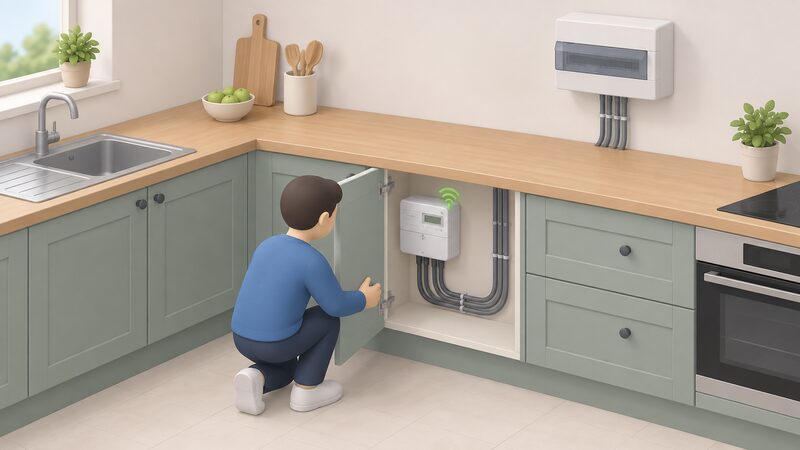
The mechanics differ by meter type, and this is the single biggest practical difference between households. A smart meter is set up to work for both prepay and credit customers, and the supplier can switch between the two without a whole new meter9. All smart meters can be switched between prepay and credit mode, so anyone eligible for a smart meter is eligible for a prepay meter10. Switching from an existing gas or electricity prepay meter to a smart credit meter is described as straightforward for customers who have one11.
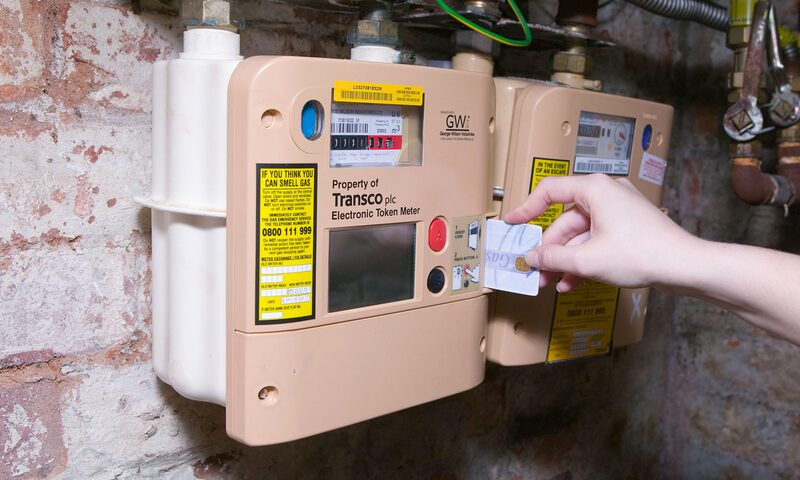
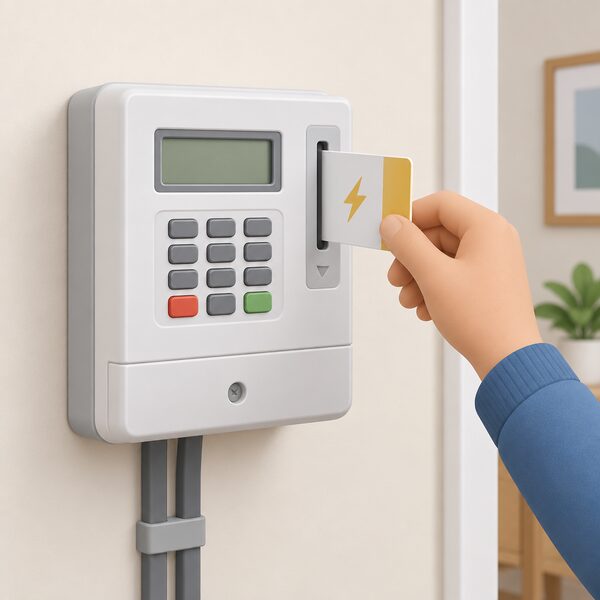
For a traditional prepayment meter, the picture is different. These work via a key or card that the household tops up with credit to use12. Replacing one with a non-smart credit meter is a physical job, and the supplier might ask the customer to pay for it13. Some suppliers install a new meter free of charge, but in most cases a credit check or a refundable deposit is required12.
What this means for a household's energy independence is narrow but real. A credit meter removes the top-up routine and the risk of self-disconnection when the credit runs out. It does not remove dependence on the supplier, the grid or the wholesale market. The meter is a payment device, not a source of supply.
How the switch works: requesting the change and agreeing a payment plan
The process is a conversation with the supplier, and the order of steps matters. A household asks for the change, the supplier checks the account, and where a repayment plan is needed, the two sides agree one. Suppliers cannot force a customer to switch to a prepay meter, or remotely switch them, unless they have taken all reasonable steps to agree a repayment plan14.
Where the meter is smart, the change is often administrative. Suppliers can switch between credit and prepay without physically changing the meter15, and the same applies to smart prepay meters specifically16. The supplier can switch a smart meter to credit mode remotely, or replace a non-smart prepayment meter with a smart meter in credit mode3.
Where the meter is not smart, the change involves a visit and possibly new hardware. That is where cost and credit checks enter. The supplier may require proof of address and a credit check8, and for a non-smart credit meter it might ask the customer to pay for the replacement13.
A practical sequence looks like this:
- Contact the supplier and ask for the change from prepayment to credit.
- Confirm the meter type: smart meters can usually be switched remotely, older meters cannot.
- Agree any repayment plan for arrears before or alongside the switch.
- Provide proof of address, and a credit check or deposit if the supplier requires one.
- Confirm the date the new payment method starts and how bills will be issued.
Being on a prepayment meter does not prevent a household from switching tariff or supplier, and tenants responsible for paying the bills have the right to switch provider12. That right sits alongside the right to ask for a change of payment method.
Debt and arrears: what your supplier must do before and after the switch
Arrears are the main reason a switch stalls, and the rules here are specific. If it is not safe and practical for a household to be on prepayment, the supplier should move the customer to paying by credit, which means paying for energy after using it3. That obligation runs in the opposite direction to the more familiar force-fit rules.
For switching supplier while in debt, the thresholds are set out clearly. A prepayment meter does not stop a household switching unless it owes the current supplier more than £500 for gas or £500 for electricity17. Official guidance puts the same figure at up to £500 of debt on a prepayment meter18. Where a household switches with arrears below that level, it repays the new supplier instead19. Transfer debts of up to £500 can move with the customer20.
The consequence of carrying debt across is that the prepayment meter stays in place. A household in that position has to use the prepayment meter with the new supplier until the arrears are paid off20. So a switch of supplier is not the same as a switch of payment method: the meter follows the debt.
Where a supplier installs a prepayment meter without permission, or remotely switches an existing meter to prepayment mode, it must give the household £30 credit once the installation or remote switch is done21. The same £30 credit per meter requirement appears in independent guidance on the force-fit rules6.
The debt picture behind these rules is large. Ofgem figures show combined domestic energy debt and arrears rose 5% from £4.55bn to £4.79bn between Q4 2025 and Q1 2026, up 15% on Q1 202523. Ofgem's debt strategy update lists ensuring accurate bills and direct debits, reducing the occurrence of shock bills, and ensuring customers who want a smart meter can receive one quickly among its priorities24.
Deemed contracts: the rates that apply and the 'unduly onerous' rule
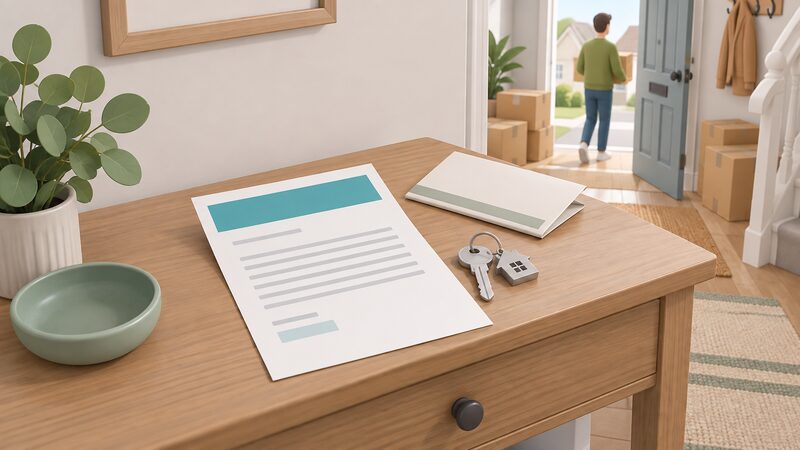
A deemed contract is normally in place when a customer moves to new premises and starts to consume gas or electricity, or both, without agreeing a contract with a supplier14. It is the default arrangement that applies when a household occupies a property and uses energy before a supply contract is agreed. It is not the same as a prepayment or credit choice, but it can be the state a household is in when it first tries to arrange either.
The protection attached to deemed contracts is the unduly onerous rule. Ofgem rules state that the terms of deemed rate contracts should not be unduly onerous14. The test for suppliers is that profit derived from deemed rate customers should not be significantly higher than profit derived from contracted customers14.
"These rules state that the terms of deemed rate contracts should not be 'unduly onerous'"
For a household moving into a new property, the practical risk is a period on deemed rates before a contract is agreed. That period ends when a supply contract or a switch to a chosen tariff is completed. The deemed contract rules do not set a price; they set a limit on how unfavourable the default terms can be.
The interaction with prepayment is indirect. A household on a deemed contract is not automatically on prepayment, and a household on prepayment is not automatically on a deemed contract. But a move into a new property, followed by a period without an agreed contract, is exactly the situation in which deemed rates apply, and it is also a common moment when a prepayment meter is inherited from a previous occupant.
Will my unit rates change when I switch to credit payment?
They can, and the direction depends on which credit payment method is chosen. Prepayment tariffs are subject to the price cap in the same way standard variable credit tariffs are2, so both sit under the same regulatory ceiling. What differs is the payment method discount or premium built into the capped rates.
Independent reporting in August 2026 found that those paying by standard credit see unit rates roughly 8% higher than those paying on direct debit or by prepayment4. That is a comparison between payment methods under the cap, not a statement about the cap level itself. As of April 2024, those on prepayment meters paid slightly less for their energy than those on credit meters2.
The history of the cap matters here. Tariff caps for customers on prepayment meters were introduced in April 2017, followed by caps for vulnerable customers25. The prepayment cap came first, which is why prepayment tariffs have been treated as a capped category in their own right rather than an exception to the default tariff cap.
For a household weighing the change, the rate question is secondary to the payment question. Moving from prepayment to credit changes when energy is paid for: before use on prepayment, after use on credit. It does not remove the household from the capped market, and it does not by itself reduce the unit rate. The rate a household ends up on depends on whether it moves to direct debit or standard credit, and on the tariff it chooses.
The price cap level itself is reviewed periodically. The next review is due on 25 November 202626. The cap applies across Great Britain; Northern Ireland operates a separate market with its own arrangements.
Do I need a credit check to move off a prepayment meter?
Often, but not always, and the answer turns on the meter type. Independent guidance states that a supplier will likely require the account to be debt-free and, in some cases, that the account holder passes a credit check2. For a non-smart meter replacement, some suppliers install a new meter for free, but in most cases a credit check or a refundable deposit is required12.
The smart meter route avoids the question. A household with a smart meter can switch from prepayment to credit without needing a new meter installed5. Because no new hardware is involved, the credit check that exists to protect the supplier against the cost and risk of a replacement meter is less likely to be triggered. The supplier can make the change remotely3.
There is a separate point about switching to prepayment, which is sometimes confused with switching away from it. No credit check is needed to switch to a prepayment meter13. The asymmetry is deliberate: prepayment carries no credit risk to the supplier because energy is paid for in advance.
For private tenants who are the bill payer, the right to change payment method exists, though the physical change to the property means the landlord should be consulted first1. The credit check, where it applies, is a condition set by the supplier rather than a regulatory requirement.
Ofgem's role: what the regulator does and does not do for individual households
Ofgem sets the rules and monitors suppliers. It does not resolve individual household disputes. The escalation route for a complaint a supplier has not resolved is the Energy Ombudsman: a household can contact the Ombudsman if it is not happy with the way the supplier has handled the complaint27.
The regulator's prepayment work has focused on when suppliers can force a change. Suppliers can only switch a meter to prepay mode where it is safe to do so28. All suppliers have signed a Code of Practice for installing prepay meters or remotely switching customers to prepay, and the rules apply to both smart and traditional meters and are closely controlled by Ofgem29.
The force-fit ban sets out who is protected. Energy firms are banned from forcibly installing prepayment meters if the household includes someone over 75 with no support at home, children under two at home, severe health issues including terminal illness, medically dependent on electricity or a warm home, or nobody able to top up the meter6. There is also a requirement for suppliers to conduct a vulnerability and affordability assessment before fitting prepayment meters in specific households not covered by the expanded vulnerable group list30.
Transparency is part of the design. Customers and consumer groups can check which energy suppliers can install prepayment meters without household permission on the Ofgem website31. Ofgem has also consulted on the contact requirements attached to involuntary installations, with stakeholders raising that ten attempts to contact consumers is too onerous32.
Independent analysis has pointed to where the regime could go further. Changes to Ofgem's regulation, increased data sharing and the rollout of smart meters offer opportunities to improve consumer outcomes33. For a household, the practical takeaway is that Ofgem sets the frame, the supplier applies it, and the Ombudsman is the route when the supplier's own process fails.
Sources33 cited
- Prepayment meter change to credit meter, Uswitch, 2026-04-23
- Prepayment meters guide, Uswitch, 2026-08-26
- Problems getting to or topping up your prepayment meter, Citizens Advice, 2026-09-17
- Ofgem confirms soaring gas prices will hit bills in winter 2026, End Fuel Poverty Coalition, 2026-08-26
- Can a smart meter cut off power, Smart Energy GB, 2026-04-24
- Is a prepayment energy meter right for you, Which?, 2026-08-27
- Energy tariffs explained, Uswitch, 2026-02-17
- Moving house gas and electricity guide, Uswitch, 2026-08-26
- The accessible in-home display, Smart Energy GB, 2026-03-16
- Myth busting smart meter problems, Smart Energy GB, 2026-09-17
- How to get a smart meter, Smart DCC, 2026
- Prepayment meters advice, Centre for Sustainable Energy, 2025-08
- Change prepayment meter to credit meter, Confused.com, 2026-04-20
- Deemed contracts and rates, Energy Ombudsman, 2026-09-20
- Switching supplier, tariffs and bills, Smart Energy GB, 2026-03-16
- How to use a smart meter in prepay mode to save money, Smart Energy GB, 2026-08-17
- You can't afford to top up your prepayment meter, Citizens Advice, 2026-09-17
- Switch your home energy supplier, Ofgem, 2026
- How to switch energy supplier, Which?, 2026-05-15
- Switching utility providers, StepChange, 2026-09-20
- Check energy suppliers can install prepayment meters without household permission, Ofgem, 2026
- Prepayment meters consumer guidance, Ofgem, 2026
- Energy debt figures, National Energy Action, 2026-06
- Debt strategy update: supporting reduction in energy debt, Ofgem, 2025-11-06
- Energy price cap research briefing, House of Commons Library, 2026-09-20
- What is the energy price cap, Energy Saving Trust, 2026
- Installing a prepayment meter without your permission, Ofgem, 2026
- Troubleshooting smart meter issues, Smart Energy GB, 2026-04-01
- Advice for those worried about energy bills, Smart Energy GB, 2026-08-19
- New protections from forced prepayment meters, Centre for Sustainable Energy, 2023-11-08
- Ofgem allows energy firms forcefitting prepayment meters, End Fuel Poverty Coalition, 2024-01-08
- Heat networks consumer protection guidance decision, Ofgem, 2026-01-13
- Future of prepayment discussion paper, Citizens Advice, 2026-06-25
 Prepayment Meters and DebtCan your energy supplier force you onto a prepayment meter because you owe them money?
 Prepayment Meter DebtHow debt repayment is set on a prepayment meter, the limits on the share of a top-up that can be taken, and how to have a rate reviewed.
 Disconnection and WarrantsCan your energy supplier force you onto prepayment or cut you off for debt?
 Prepayment MetersHow do you top up a prepayment meter for gas or electricity, and what happens when the credit runs out?
 Switching SupplierHow long does switching energy supplier actually take, and what happens if you owe money?
 Smart Prepayment MetersHow prepayment mode works on a smart meter, remote switching between credit and prepay, topping up, emergency and friendly credit, the prepayment price cap, the £500 debt limit for switching, and the free help available when a household cannot top up.