

In this answer
Short answer
Owing money does not automatically stop a switch. Ofgem's rule is that you cannot switch if you have been in debt to your supplier for more than 28 days1. Inside that window, the debt is not a barrier: any money owed is added to your final bill1. On a prepayment meter the test is different, and it is measured in pounds rather than days: you can switch while you owe up to £5001.
The two tests exist because the two payment methods carry different risk. A credit customer builds up a balance between bills, so a short period of arrears is normal and recoverable through a final bill. A prepayment customer pays before using energy, so a debt on the meter is money the supplier has already advanced, and it is recovered through the meter itself.
What follows is the rule in full, the point at which each meter type blocks a switch, what happens to the balance afterwards, and how the position changes for renters and for households whose supplier has failed.
The 28-day rule, and why the clock matters more than the amount
For a household on a credit meter, the question is not how much is owed but how long it has been owed. Ofgem states the rule plainly: you cannot switch if you have been in debt to your supplier for more than 28 days1. Under that threshold, the switch proceeds and the outstanding amount is added to the final bill1. Independent guidance from Uswitch and Confused.com sets out the same limit, describing it as less than 28 days of debt to the current supplier, with the balance carried into the final bill5.
The rule applies whatever the payment method behind the account. If you pay by direct debit or on receipt of a bill and have owed money for less than 28 days, you can switch, and the debt is added to your final bill7. Paying by direct debit does not reset the clock or exempt the account; it simply describes how the money normally moves.
The 28-day figure is a supplier's right, not an automatic block. A supplier can legally stop a switch where money is owed, or has been owed, for more than 28 days8. In practice the objection is raised when the account is in arrears beyond that point, and it is the reason a switch can stall without any fault on the household's side.
For a household pursuing energy independence, this is the first constraint to understand: the ability to choose a supplier is contingent on the account being current, or nearly so. The debt itself is a claim on future income, and it sits with the old supplier rather than following the household to a new one.
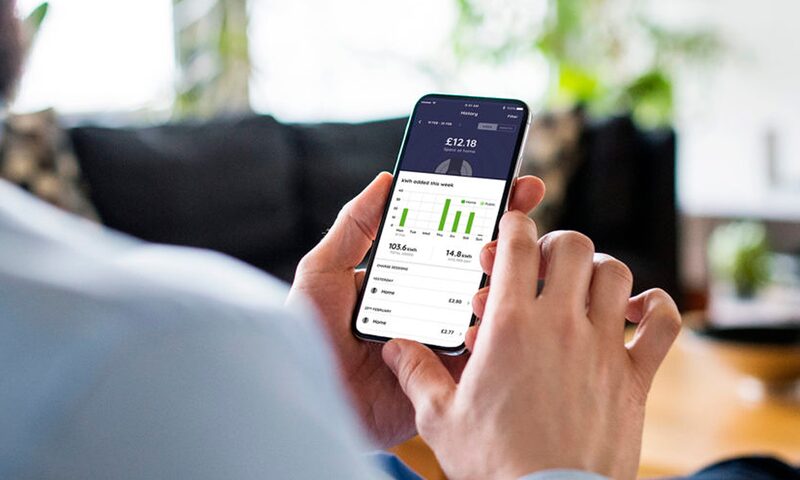
When debt blocks a switch: over 28 days, or over £500 on a prepayment meter
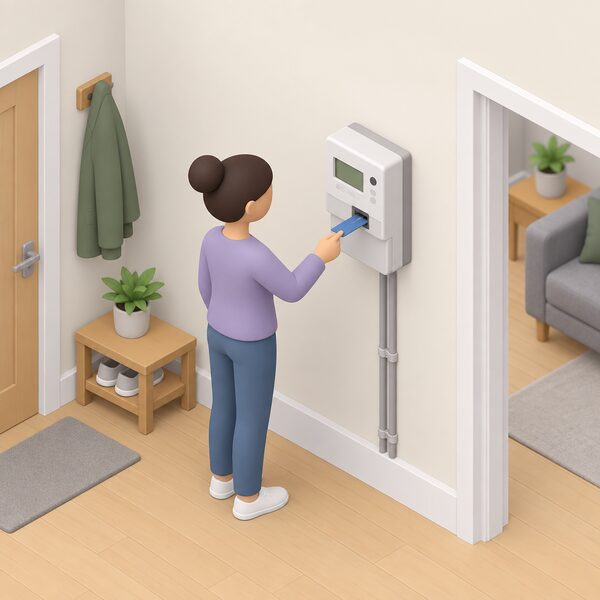
Two thresholds do the blocking, and they are not interchangeable. On a credit meter, the block is time-based: more than 28 days in debt and the supplier can refuse the switch1. On a prepayment meter, the block is amount-based: you cannot switch if you owe your current supplier more than £500 for gas or £500 for electricity2. Uswitch gives the same figure, noting that a prepayment customer will not be able to switch if they owe more than £500 in gas or electricity6.
The £500 is applied per fuel, not per household. Energy Helpline states that owing more than £500 for gas and £500 for electricity prevents a switch, which means a dual-fuel prepayment customer could in principle owe close to £1,000 across the two accounts and still be within the limit on each10. Confused.com describes the same arrangement, with the debt transferring with the customer to the new provider11.
There is a further condition attached to the prepayment route. Where the debt is under the limit, the customer repays the new supplier rather than the old one, and the balance moves across with the account7. That is the practical difference between the two regimes: a credit-meter debt is settled through a final bill, while a prepayment debt can be carried and recovered through the meter.
Prepayment and credit meters: two different debt limits
The distinction between the two regimes is worth setting out side by side, because the same household can move between them and the rules change with the meter.
| Meter type | Switching test | What happens to the debt |
|---|---|---|
| Credit meter | Debt held for less than 28 days1 | Added to the final bill from the old supplier1 |
| Prepayment meter | Debt below £500 per fuel2 | Repaid to the new supplier7 |
| Credit meter, over 28 days | Switch can be blocked1 | Remains with the old supplier |
| Prepayment meter, over £500 | Switch can be blocked2 | Remains with the old supplier |
Moving from prepayment to credit is a separate question from switching, and it is also gated by debt. Once the debt on the account is settled, the supplier may be able to change a prepayment meter to a credit meter9. Tenants who owe money to their energy supplier cannot change back to paying by credit until they have paid what they owe, while those who do not owe money can move to paying by credit12.
There is a safety dimension that overrides the commercial one. If it is not safe and practical for a household to be on prepayment, the supplier should move the customer to paying by credit, which means paying for energy after it is used13. That obligation sits alongside the debt rules rather than being displaced by them.
For independence, the meter type matters as much as the supplier. A prepayment meter gives a household direct control over spend but leaves it exposed to the £500 ceiling and to self-disconnection if the meter runs out. A credit meter restores flexibility but reintroduces the 28-day clock.
Options when a switch is blocked: repay, fix at home, or clear the balance
A blocked switch is not the end of the choices. Households with energy debt may not be able to switch supplier but might be able to fix their tariff with their current supplier14. That keeps the account with the existing company while locking the unit rate, which addresses price risk without moving the debt.
Suppliers are also required to offer alternatives to a single lump-sum demand. Ofgem's prepayment rules require that the supplier must have offered other ways to repay what is owed, such as a repayment plan or paying towards energy costs through benefits15. Citizens Advice sets out the same duty: suppliers must offer other ways to repay money owed, for example a repayment plan or payments through benefits16.
The support available to a household in arrears includes reviewing payments and debt repayments, reducing payments or taking a payment break, more time to pay, access to hardship funds, and emergency credit or a discretionary fund for prepayment customers17. The Fuel Direct Scheme allows a debt to the supplier, as well as the energy being used, to be paid from benefits18.
"offer you other ways to repay money you owe - for example, a repayment plan or payments through your benefits"
Switching is straightforward for a household on a variable rate tariff, or where a current fixed contract is ending shortly19. That is the moment to act if the account is clear, because the exit fee question falls away at the end of a fixed term.
Renters: who pays the bill decides who can switch
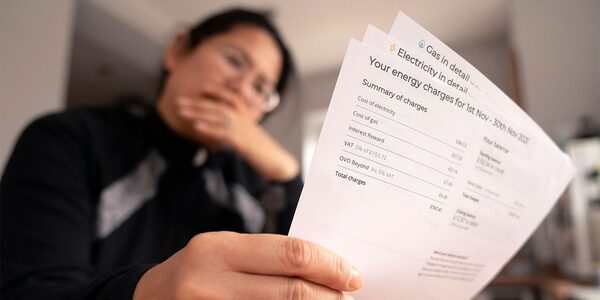
For renters, the switching right follows the bill, not the tenancy. If you have to pay your energy bills, you can choose to switch your supplier or tariff at any time1. Confused.com puts it in terms of the lease: you can switch energy supplier as a renter if the lease says bills are your responsibility5. Uswitch adds that a renter directly responsible for paying the energy bill should be able to switch3.
Where the landlord pays, the position reverses. A tenant whose landlord covers the energy bills, either by paying them directly or as an intermediary, does not have the right to switch20. Citizens Advice states that a tenant cannot switch energy supplier or tariff themselves if the landlord pays the supplier, and that the landlord might agree to switch but does not have to12. The landlord, by contrast, can switch whenever they want if they are responsible for paying the energy supplier10.
If the cost of energy is included in the rent, the landlord is responsible and the tenant needs to ask them to switch21. The same logic applies to gas: a renter responsible for utility bills can switch gas supplier, while a renter whose landlord is responsible cannot22.
There is one further condition for renters moving from prepayment to credit. That change requires a physical alteration to the property, so it is worth checking with the landlord first, even where the tenant pays the supplier directly23.
For a household's independence, this is the clearest limit in the whole area: without the account in your name, the choice of supplier is not yours to make. The guide to energy supply in rented homes sets out the wider position on landlord meters and tenant rights.
What happens to the debt when you do switch
If the switch goes ahead, the balance does not vanish and it does not follow the household to the new supplier. Where the account is in debit, the customer can still switch, but a final bill follows which must be paid in full24. Any amount owed is added to the final bill sent by the old supplier, which should arrive within six weeks3.
The same six-week window applies in the other direction. Where the account is in credit, the old supplier should send a final bill within six weeks of the switch, confirming how much it owes the customer25. Ofgem states that the old supplier will refund any credit in the final bill, and that compensation may be available if it does not4. Age UK advises claiming the money back from the old supplier when switching27.
Where a supplier has failed, the position is different again. Energy debt does not transfer to the new supplier, but the customer may still need to pay it off to the old supplier, and the administrator will make contact28. The supplier of last resort process covers how customers are moved when a company stops trading.
Finding out what you owe, and what to do if a block is wrong

The starting point is the balance itself. Suppliers must give information on how to avoid getting into debt, how to pay back debt, and a summary of the money owed3. Ofgem advises reviewing current payments and debt repayments as part of managing the account29. An account in credit simply means more has been paid to the supplier than is currently owed25.
If a switch is blocked and the household believes the balance is wrong, the complaint route runs through the supplier first. Ofgem lists late, incorrect or missing bills, back billing, being overcharged, a faulty meter, poor customer service, and refusing to refund credit from an account among the problems to raise with the supplier directly30. Where a customer has been switched to a new supplier without consent, the complaint can go to either the current or the previous supplier31.
If the supplier does not resolve it, the Energy Ombudsman can review the dispute. Ofgem directs customers to the Ombudsman where they are not happy with the way a supplier has handled a complaint32. The complaints process and the Ombudsman sets out the steps and the evidence needed.
Two practical points sit alongside the rules. When switching, a direct debit is set up with the new supplier ahead of the takeover date, and the old direct debit is cancelled after the final bills are paid33. And where a supplier changes payment arrangements, it should explain why the change is necessary34.
For a household, the debt rules are the point at which supplier choice meets cash flow. The 28-day window and the £500 prepayment ceiling are the two numbers that decide whether a switch is available today, and both are recoverable: a repayment plan, a fixed tariff at the current supplier, or a cleared balance each restore the choice. The full guide to UK energy suppliers covers what is on offer once the account is clear.
Sources34 cited
- Switching your home energy supplier, Ofgem, 2026
- You can't afford to top up your prepayment meter, Citizens Advice, 2026-09-17
- Energy debt, Uswitch, 2026-06-09
- Understand your electricity and gas bills, Ofgem, 2026
- Gas and electricity switching, Confused.com, 2026
- Gas and electricity, Uswitch, 2026-09-17
- How to switch energy supplier, Which?, 2026-05-15
- Switch energy supplier, EDF Energy, 2026
- Energy tariffs explained, Uswitch, 2026-02-17
- A step by step guide to setting up gas and electricity in a new home, Energy Helpline, 2026-09-20
- Change prepayment meter to credit meter, Confused.com, 2026-04-20
- Switching energy supplier if you're a tenant, Citizens Advice, 2026-09-17
- Problems getting to or topping up your prepayment meter, Citizens Advice, 2026-09-17
- Avoiding the price cap, Act on Energy, 2026
- Energy firms must stop forcing energy customers onto prepayment meters, Which?, 2023-01-23
- Stop your energy supplier installing a prepayment meter, Citizens Advice, 2026-09-17
- How you can beat the soaring price cap right now, Which?, 2026-05-28
- What to do about rising utility costs, CIPHE, 2023-01-11
- How to read your energy bill, Confused.com, 2025-12-15
- Tenants guide to switching, Uswitch, 2026-05-29
- Electricity only, Confused.com, 2026
- Gas only energy, Uswitch, 2026-09-07
- Prepayment meter change to credit meter, Uswitch, 2026-04-23
- Gas, Energy Helpline, 2026-09-20
- Energy credit, Confused.com, 2026-07-03
- How your electricity or gas bill is calculated, Ofgem, 2026
- Getting the best energy deal, Age UK, 2026-09-10
- Energy supplier out of business, Uswitch, 2026-05-29
- Get help with your energy bills, Ofgem, 2026-09-17
- Complain about your energy supplier or network operator, Ofgem, 2026
- Energy consumer rights, Uswitch, 2025-08-19
- Installing a prepayment meter without your permission, Ofgem, 2026
- Direct debit, Uswitch, 2025-10-22
- Your gas or electricity supplier has put up its prices, Citizens Advice, 2026-09-17
 Switching SupplierHow long does switching energy supplier actually take, and what happens if you owe money?
 Prepayment Meter DebtHow debt repayment is set on a prepayment meter, the limits on the share of a top-up that can be taken, and how to have a rate reviewed.
 Prepayment Meters and DebtCan your energy supplier force you onto a prepayment meter because you owe them money?
 Energy Debt Repayment PlansOwe money to your energy supplier?
 Prepayment and Vulnerable RulesThe licence obligations on energy suppliers when a household falls into debt: when a prepayment meter may be installed without consent, the warrant process, the ban covering highly vulnerable households, remote switching of smart meters, and the free help available.
 Switch Energy SupplierThe practical sequence of a domestic energy switch: the details and readings needed, the five working day transfer, cooling-off periods, exit fees and the final bill.