

In this answer
Short answer
A supplier cannot block a switch because it would rather keep you. The right to change supplier is a licence condition, and the grounds on which a switch can be stopped are narrow and defined. The one that catches most households is debt: Ofgem's guidance states you cannot switch if you have been in debt to your supplier for more than 28 days1. On a prepayment meter the threshold is higher, and you can switch while owing up to £500 for gas and £500 for electricity1.
Where a switch is stopped, it is usually stopped by an "objection" raised by the supplier losing the customer, not by the one gaining them. Objections must rest on a permitted ground. A supplier that objects without one, or that lets a switch drift past the five working days the Energy Switch Guarantee commits to, is in complaint territory, and the Energy Ombudsman can order redress2.
This page sets out when a hold-up is legitimate, what the debt and prepayment rules actually say, how objection codes work, and the escalation route when a switch is delayed or refused.
Can a supplier block a switch? The short answer
No, not at will. A domestic supplier operates under licence conditions that prohibit undue discrimination in the terms and conditions offered to customers, and the switching process itself is governed by rules designed to keep it fast and reliable5. A supplier that simply refuses to release a customer has no lawful basis for doing so.
What a supplier can do is raise an objection on a permitted ground. The main one is debt. Ofgem's consumer guidance is direct: you cannot switch if you have been in debt to your supplier for more than 28 days1. That is a rule about the account, not about the supplier's preference, and it applies whether the debt arose from a missed Direct Debit, a disputed bill or a final bill left unpaid.
There is a second category of block that has nothing to do with debt: the household may not hold the supply contract at all. Residents on a landlord's business contract may not have the right to choose their own energy supplier or switch suppliers themselves6. Where a resident holds their own contract with an energy supplier, they may be able to switch their business energy supplier7. That distinction matters in blocks of flats, serviced buildings and some park home sites, and it is a contractual limit rather than a supplier refusing anything.
A third category is administrative. A supplier can withdraw a transfer application at any time before the application is approved, which is a normal part of the registration process rather than a punishment8. Withdrawals happen when the data on the transfer is wrong, when the customer cancels, or when the two suppliers cannot reconcile the meter point.

When a switch can legitimately be held up
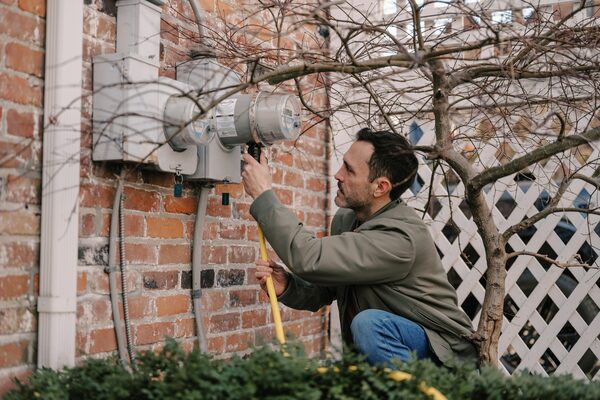
Beyond debt, several practical conditions can delay a switch without anyone acting in bad faith. The most common is a live supply that cannot simply be reassigned. Electricity North West states that it cannot move a supply whilst it is live on the network, and it must be disconnected first9. That applies to physical moves of a meter or supply point, and it is a safety and network rule rather than a supplier's choice.
Meter ownership creates a related limit. The electricity supplier owns the meter and is the only company that can move it, so the customer must arrange for the supplier to visit to move and connect the meter10. A household that wants the meter relocated as part of a move cannot treat that as a switching matter.
Supplier failure is the case where a switch is protected rather than blocked. If you were already in the process of switching when your supplier failed, you will still move to the supplier you chose11. The failure does not strand the transfer.
There is also the erroneous transfer problem in reverse. A switch can go wrong because a supplier made a mistake, for example by confusing your address with someone else's, or because you were misled by a salesperson12. Those cases are corrected through the erroneous transfer process, and the supplier that caused the error carries the cost of putting it right.
Debt, prepayment meters and the switch block
Debt is the single most common reason a switch is stopped, and the rules differ by payment method. For a customer paying by Direct Debit or on receipt of a bill, the 28-day rule applies: you cannot switch if you have been in debt to your supplier for more than 28 days1. For a prepayment customer, the limit is a balance rather than a period. You can switch while owing up to £500 for gas and £500 for electricity, and owing more than that prevents the switch1.
That £500 figure is a ceiling on the block, not a target. A prepayment customer owing less than £500 for electricity is not blocked by the debt rule, though other conditions may still apply. Suppliers may also prevent a switch where there are bills over 28 days old, or a high balance outstanding on a prepayment meter, until the outstanding amount is paid3.
The debt rules interact with the prepayment installation rules. A supplier can install a prepayment meter without permission if you are building up an energy debt and other ways of recovering that debt have not worked14. Separately, a supplier may decide to install a prepayment meter if you sign up to a plan but default on it15. Both routes put a household onto a meter type that changes the switching arithmetic, because the £500 limit then governs rather than the 28-day rule.
There is relief short of paying in full. A customer can ask their supplier to pause repayments for a short amount of time; the supplier must consider the situation but does not have to agree16. Where a repayment plan is agreed and kept to, the debt is being managed, and the block normally lifts once the account is no longer in default.
| Payment method | What blocks a switch | Threshold |
|---|---|---|
| Credit meter, Direct Debit or bill | Debt to the supplier lasting more than 28 days1 | 28 days |
| Prepayment meter | Outstanding balance above the limit1 | £500 gas and £500 electricity |
| Any method | Bills over 28 days old, or a high prepayment balance3 | Until paid |
Objection codes and what they mean

An objection is the industry mechanism by which the supplier losing a customer tells the switching process to stop. It is not a code the customer sees or quotes; it is a signal between suppliers, and it must be justified. Ofgem has treated the ability of suppliers to block consumer switches by objection as something to review, and flagged that review as part of its work on faster and more reliable switching17.
The wider problem the regulator identified is coordination. Ofgem's own letter to industry recorded that the lack of coordination between industry parties, suppliers and electricity distribution network operators alike, was hindering the timely consideration of code modifications, the consideration of cross-code issues and delaying the realisation of benefits for consumers18. In plain terms, objections and transfers can stall because the parties involved are not talking to each other efficiently, not because any single supplier has decided to refuse.
Where a switch is delayed, the guaranteed standards framework sets out when a supplier is excused. Under the Electricity and Gas (Standards of Performance) (Suppliers) Regulations 2015, exemptions include a formal dispute between supplier and customer that is still ongoing as to the amount of the credit balance due or the refund method, a customer who gave an inaccurate postal address for a cheque refund, or delay due to events outside the supplier's control19. A customer who asked the supplier not to attend the premises where attendance is necessary is also outside the standard19.
Those exemptions are narrow and specific. They cover refund disputes and practical failures, not a supplier's commercial reluctance. A household that has been objected to without one of these grounds has a complaint, and the licence conditions prohibiting undue discrimination in terms and conditions are the backdrop to it5.
What to do if your switch is delayed or refused
The first step is to establish which of the two situations applies. A delayed switch is one that is proceeding but slow. A refused switch is one that has been objected to or cancelled. The remedies differ.
For a delayed switch, the Energy Switch Guarantee sets the expectation: a switch should take no longer than 5 working days3. A switch should not take more than 5 working days in any case, though a customer can ask to delay it2. If the switch runs past that, the delay is the complaint.
For a refused switch, the ground matters. If it is debt, the route is a repayment plan and, where needed, a request to pause repayments, which the supplier must consider but need not agree16. If it is a landlord's business contract, the route is the contract itself, because residents on such a contract may not have the right to choose or switch supplier6. If it is an erroneous transfer, the route is correction through the supplier that made the error12.
Where a switching mistake has occurred, the guaranteed standards bite. A supplier that takes more than 20 working days to reply after being told about the switching mistake owes £40 extra compensation1. That is a defined payment, not a discretionary gesture.
Throughout, the account position matters. Your old supplier will refund any credit in your final bill, and you could get compensation if they do not20. A final bill is not a reason to withhold a switch, but unpaid debt on it can block a future one.
Taking it further: complaints and the Energy Ombudsman
The Energy Ombudsman is an independent service, separate to Ofgem, for problems with an energy supplier, an energy broker, a network operator or a heat network supplier21. It is the endpoint for a switch dispute that the supplier has not resolved.
The gate is time. Before raising a dispute, a customer must allow the supplier 8 weeks to put things right, unless a Deadlock Letter arrives sooner22. The same requirement appears across the Ombudsman's case pages: a complainant must have allowed the supplier 8 weeks to resolve the dispute or have received a Deadlock Letter permitting earlier escalation4. Customers need to have complained to the supplier first, waited 8 weeks or received a Deadlock Letter, hold sufficient evidence including the complaint date, and confirm the supplier name matches the bill23.
Evidence decides these cases. For delayed switch complaints, suppliers support their case by providing details explaining the reason for the delay along with the actions taken, such as a copy of requested information24. A household that has kept its own record of dates, calls and letters is in a stronger position than one relying on the supplier's file alone.
If the complaint is about how a supplier handled a prepayment meter installation, the same escalation applies: you can contact the Energy Ombudsman if you are not happy with the way your supplier has handled your complaint14. And for any energy bill complaint, the Ombudsman is available once the supplier has had its chance26.
Two related points sit alongside a switch. On the Warm Home Discount, switching away from a supplier that offers the discount to one that does not means losing it, even for the core group, so the new supplier's criteria matter before moving27. On credit, the old supplier must refund any credit in the final bill, with compensation if they do not20. Neither is a block, but both are consequences a household should weigh before switching.

Sources27 cited
- Switching your home energy supplier, Ofgem, 2026
- How to switch energy supplier, Confused.com, 2025-12-15
- Energy: your questions answered, Confused.com, 2026-07-03
- Creating a case with the Energy Ombudsman, Energy Ombudsman, 2026-09-20
- Guidelines on cost reflectivity between payment methods and prohibition of undue discrimination, Ofgem, 2009-08-07
- If you live in a home with a business energy contract, Ofgem, 2026
- Alternative homes energy guidance, Ofgem, 2026
- ECO4 guidance: supplier administration, Ofgem, 2026-07-06
- What to expect when moving your supply, Electricity North West, 2026-09-20
- What's involved in moving your supply, UK Power Networks, 2026-09-17
- What happens if your energy supplier goes out of business, Ofgem, 2026
- You've been switched to a new energy supplier without your agreement, Citizens Advice, 2026-09-17
- A step-by-step guide to setting up gas and electricity in a new home, Energy Helpline, 2026-09-20
- Check if energy suppliers can install prepayment meters without household permission, Ofgem, 2026
- Energy consumer rights, Uswitch, 2025-08-19
- You can't afford to top up your prepayment meter, Citizens Advice, 2026-09-17
- Fast and reliable switching consultation, Ofgem, 2014-06-16
- Letter to industry on the role of creating market conditions necessary to support the realisation of the benefits of smart metering, Ofgem, 2014-02-06
- The Electricity and Gas (Standards of Performance) (Suppliers) Regulations 2015, legislation.gov.uk, 2015-07-11
- How your electricity or gas bill is calculated, Ofgem, 2026
- Complain about your energy supplier or network operator, Ofgem, 2026
- We may be able to help resolve your energy dispute, Energy Ombudsman, 2026-09-20
- Raise a dispute: Cynon Taf Community Housing, Energy Ombudsman, 2026-09-19
- New guaranteed standards, 1 May 2020, Energy Ombudsman, 2026-09-20
- Installing a prepayment meter without your permission, Ofgem, 2026
- Check if you are owed money on your energy bill, Ofgem, 2026
- Warm Home Discount, Which?, 2026-08-04
 Back Billing RulesCan a supplier really charge you for energy you used years ago?
 Switching SupplierHow long does switching energy supplier actually take, and what happens if you owe money?
 Prepayment Meters and DebtCan your energy supplier force you onto a prepayment meter because you owe them money?
 Switch Energy SupplierThe practical sequence of a domestic energy switch: the details and readings needed, the five working day transfer, cooling-off periods, exit fees and the final bill.
 Disconnection and WarrantsCan your energy supplier force you onto prepayment or cut you off for debt?
 Smart Meter InstallationCan your supplier make you have a smart meter, and how long should you wait for an appointment?