
In this guide
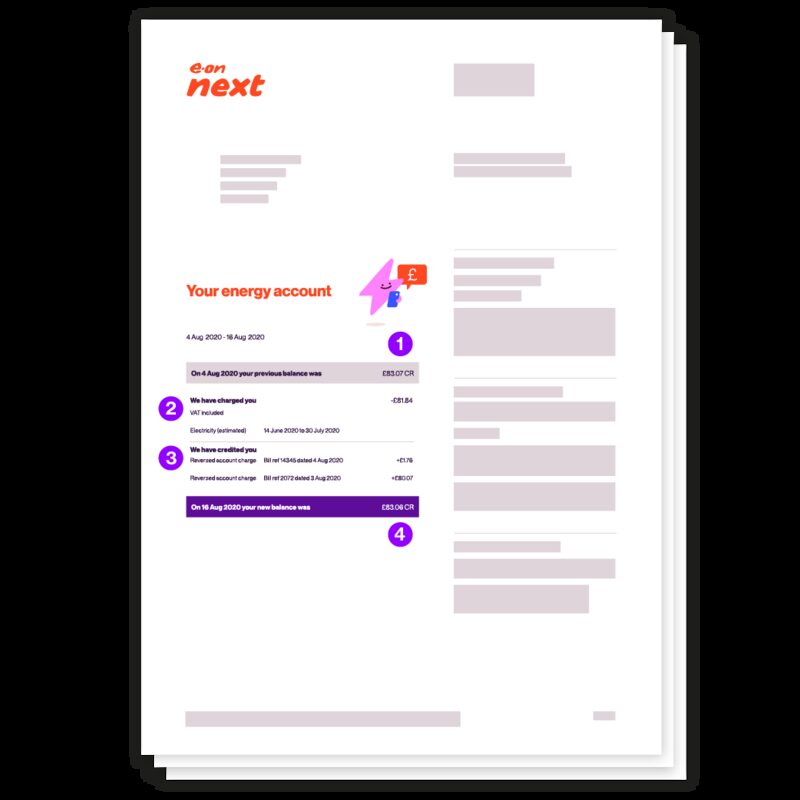
A back bill is what a supplier sends when it has not accurately charged a household for energy it has already used1. Under Ofgem's back billing rules, a household does not have to pay for energy used more than 12 months ago where it has not had an accurate bill for that energy before, has not been told what it owed through a statement of account, or where its Direct Debit was previously set too low to cover what needed to be paid1. The protection sits in Standard Licence Condition 21BA of the gas and electricity supply licences, which restricts suppliers from charging for energy used more than 12 months ago, with limited exceptions2.
The limit is not absolute. Where a customer has acted unreasonably, by blocking access to the meter, ignoring requests for payment or stealing gas or electricity, the supplier may charge for the whole period1. Which? reports that where the customer is at fault a supplier can back-bill for up to six years3. And the rules do not apply to a bill that was correctly sent inside the 12 months and simply went unpaid: that charge survives past the year4.
Back billing matters to a household's control over its own energy costs because it is the point at which a supplier's own administrative failure stops being the household's liability. It does not make energy free: any accurate bill, including a back bill, still has to be paid5. The dependence that remains is on the supplier's billing systems, on meter readings reaching them, and on Ofgem's willingness to enforce.
What a back bill is and why one arrives
Ofgem's definition is narrow and useful: a supplier asks for a back bill "when they have not accurately charged you for energy you've already used"1. Consumer guidance describes the same thing as a catch-up bill covering extra energy used but not charged for8. On a heat network the phrase covers a bill for heat used in the past9.
The usual causes are mundane. Bills based on estimated meter readings drift away from real consumption; a faulty meter under-records; a supplier makes an internal error; or a switch goes wrong and the first bill from the new supplier is delayed10. The Energy Ombudsman notes that industry concepts such as back billing and metric or imperial meters "will be unfamiliar to the majority of consumers"11, which is part of why these errors go unnoticed for long periods on both sides.
A shortfall can also build up quietly without any billing mistake at all, where a Direct Debit has been set below what the energy actually costs. Guidance is explicit that the protection covers "any shortfall that has built up because your supplier set your Direct Debit too low"8. That is worth understanding alongside how Direct Debit payments and credit balances work in practice.
The purpose of the rules, as described in supplier guidance, is to incentivise suppliers to get billing right first time, to resolve issues quickly and to protect consumers from stress and financial difficulty10. Citizens Advice made the same point from the other side: the current one-year window means suppliers have a full year in which to charge for energy already used12.
The 12-month limit: how far back a supplier can charge
Standard Licence Condition 21BA limits charge recovery action to units of gas or electricity consumed, or standing charges accrued, in the 12 months before the date of the charge recovery action13. Ofgem's consumer guidance puts the same rule the other way round: a household does not have to pay for energy used more than 12 months ago where one of three conditions is met1.
The three conditions Ofgem lists are:
- the household has not had an accurate bill for that energy before1
- it has not been told what it needed to pay through a statement of account before1
- its Direct Debit amount was previously set too low to cover what needed to be paid1
Only one needs to apply. Citizens Advice frames it plainly for England: under back billing rules a supplier "cannot usually send you a bill for energy you used more than 12 months ago"4, and the equivalent Welsh guidance says that where a supplier sent no bills for over a year, the household might only have to pay for energy used in the last year14.
The 12-month clock is measured from the charge recovery action, not from when the household noticed. Which? describes the ban as covering energy used more than 12 months before the error was detected, where the fault lies with the supplier3. Ofgem has confirmed the requirement applies to all payment methods, regardless of payment type, meter mode or meter arrangements15, so credit, prepayment and smart accounts are all within scope, and it "also applies to Direct Debit adjustments if they relate to charges which are over 12 months old"15.
Where the charge sits on a heat network rather than a gas or electricity supply, a different boundary can apply. Ofgem's heat networks guidance sets a 12-month limit across Great Britain where the customer is not at fault16, but notes that charges recovered through a Service Charge are not covered by that limit; under Section 20B of the Landlord and Tenant Act 1985 a landlord in England and Wales has 18 months in which to notify the consumer of Service Charge costs once incurred16.
When you can be billed beyond 12 months
The exceptions are real and there are more of them than the headline suggests. Ofgem's own framing of SLC 21BA is a 12-month protection "except for obstructive or manifestly unreasonable behaviour"15, with a further carve-out "where the supplier had already sent an accurate bill before but the customer has not paid the relevant charges"13.
| Situation | Effect on the 12-month limit | Source |
|---|---|---|
| Supplier error, no accurate bill sent | Limit applies; charges beyond 12 months not payable | 1 |
| Direct Debit set too low by the supplier | Limit applies to the shortfall | 1 |
| Estimated bills continued after accurate readings supplied | Limit applies | 8 |
| Accurate bill sent inside 12 months but not paid | Limit does not apply; charge still due | 4 |
| Meter access blocked more than once without good reason | Limit does not apply | 8 |
| Knowingly using gas or electricity without telling the supplier | Limit does not apply | 8 |
| Customer at fault generally | Back-billing possible for up to six years | 3 |
| Heat network charges recovered through a Service Charge | Not covered by the 12-month limit; 18-month Landlord and Tenant Act window instead | 16 |
Ofgem's press release announcing the ban described the exception as the case "where consumers actively prevent suppliers from taking or receiving accurate meter readings, for example by tampering with or obstructing access to the meter"17. Its consumer guidance gives three examples of unreasonable behaviour: stopping the supplier billing accurately including by blocking meter access, ignoring requests for payment, and stealing electricity or gas1. Supplier guidance adds deliberately preventing a meter reading and not paying a bill to the same list10.
That distinction carries most of the weight in disputes. Passive non-engagement leaves the protection intact; active obstruction does not. Consumer Scotland describes SLC 21BA as "a landmark development in limiting back-billing to 12 months, except where the customer's behaviour had been obstructive or manifestly unreasonable"18. Citizens Advice has argued that Ofgem should clarify how the back-billing rules interact with existing case law, on the basis that the current approach could expose consumers to unfair, long-term catch-up bills19.
Estimated bills, unread meters and what "accurate" means
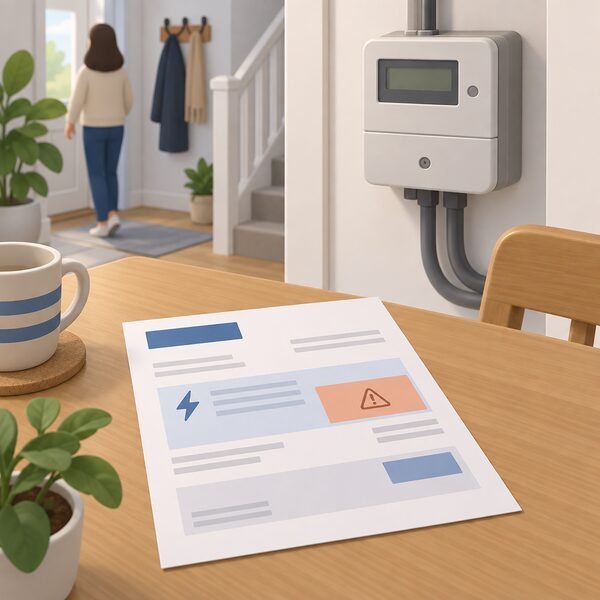
The protection turns on whether an accurate bill was ever sent, so what counts as accurate is the hinge. In its consumer outcomes consultation Ofgem set out that billing accuracy is tested by checking whether actual meter readings match real consumption and charges are applied correctly, and that estimated meter reads are not classed as accurate if they differ from actual consumption2. An estimate is normally based on previous bills for the same quarter or month and a database of similar properties, unless the account has a smart meter or pays in advance20.
The Energy Ombudsman advises looking for an "E" or the word "estimate" on a bill to identify a figure calculated by the supplier rather than read from the meter21. One supplier's own guidance concedes that a bill based on an estimated reading "might not accurately reflect your energy use"22; another states that estimated readings are based on past billing history and are usually accurate23. Both can be true: estimates track a steady household well and fail badly when consumption changes.
Crucially, the back billing protection reaches beyond the simple case of no bill at all. It also applies where a supplier continued to send bills based on estimated readings after accurate meter readings had been supplied8. Where a meter itself is faulty, a supplier "might only be able to charge you for the energy you used in the last 12 months"24.
Government guidance on smart meters states the baseline expectation: households "should receive accurate bills, only paying for the energy you use"25. Where payment is on receipt of bill and no regular readings are taken, bills will still be based on estimated usage26. In one Energy Ombudsman case involving disputed usage from estimated meter readings, the supplier was required to re-bill the account and provide an apology along with a time and trouble award for poor account management and poor complaint handling27.
Further detail sits on meter readings and estimated bills and on what estimated meter readings mean on your bill.
Paying an accurate back bill, and repayment over the same period
The rules limit how far back a charge can reach; they do not cancel the charge inside that window. Ofgem is direct: "You need to pay any accurate bill you've been sent by your supplier, including back bills"5. A supplier sets its own payment terms and is likely to demand payment in one lump sum within a set time of the date on the bill8.
That is where the repayment expectation matters. Ofgem's principle, as reported by Which?, is that a supplier "should offer you a payment plan that allows you to repay any debt over the same length of time it's built up"3. Consumer guidance gives the worked shape of it: eight months of unbilled usage repaid over an eight-month plan8. A household facing a large catch-up bill therefore has two separate questions to put: how much of the sum is lawfully chargeable, and over what period it must be cleared.
The two questions interact with wider energy debt and repayment plans rules. On a prepayment meter, credit received must be paid back at the next top-up, and the supplier must work with the household to agree an affordable payment plan28. National Energy Action notes that suppliers should get in touch if a household falls behind again29.
Where money has already left the account, the remedy is restitution. Ofgem states that if a supplier has not followed the back billing rules "they'll refund any money taken in error"5. Separately, suppliers must reimburse credit balances on request unless there is a good reason not to30, and where a final bill is concerned a supplier must refund any outstanding credit balance within 10 working days of issuing that final bill or corrected final bill31.
Who the rules cover: households, microbusinesses and territory
SLC 21BA protects domestic and micro business consumers from being charged for unbilled consumption over 12 months old15. Ofgem's consumer guidance says the same: "The rules apply to households and microbusinesses"5. Larger non-domestic consumers fall outside it; in Ofgem's consumer outcomes work, only the licence condition on meter read requirements applies to all non-domestic consumers, with SLC 21BA on backbilling applying to microbusinesses2. The licence guide on tariffs and contracts likewise covers suppliers of domestic consumers and some microbusinesses32.
The complaints machinery follows the same boundary. The Gas and Electricity (Consumer Complaints Handling Standards) Regulations 2008 have applied to complaints made by domestic customers and micro business consumers33.
| Group | Covered by the 12-month back billing limit | Source |
|---|---|---|
| Domestic gas and electricity customers, Great Britain | Yes | 15 |
| Microbusinesses | Yes | 15 |
| Larger non-domestic consumers | No | 2 |
| Heat network consumers, Great Britain, not at fault | Yes, 12 months | 16 |
| Heat network consumers in England and Wales in properties covered by Landlord and Tenant Act 1985 section 20B | Excluded from the limit | 34 |
| Heat network non-domestic consumers | No | 16 |
On heat networks the authorisation condition applies across Great Britain, limiting back billing to 12 months unless there are conflicts with existing housing legislation16. Where heating is billed separately from rent or service charges and a bill is sent within the limit but not paid, the charge survives past 12 months9. Citizens Advice has recommended limiting back-billing to 12 months for all consumers35.
Northern Ireland runs a separate market, covered on energy bills in Northern Ireland. There, the Consumer Energy Charter commits electricity and gas suppliers to conduct debt collection processes, including those carried out by their agents, strictly in line with the Utility Regulator's Code of Practice for Payment of Bills36. Citizens Advice publishes back billing guidance separately for England4 and Wales14, and Citizens Advice Scotland covers heat network back billing9.
The rules travel with the account rather than the company. Where a supplier goes bust, the back billing rules were part of the customer's contract with the old supplier as part of the Standard Licence Conditions37, and Ofgem has stated that insolvency practitioners must abide by the same regulatory requirements and contractual duties as energy suppliers, including the Backbilling Requirement13. Debt collection agencies collecting a supplier's consumer debt are held to the same requirement13.
Enforcement, complaints and where the rules are written
The Backbilling Requirement is a licence obligation, not guidance. Gas and electricity supply licensees are required by SLC 21BA to reflect it in their consumer supply contracts13, and Ofgem has set out the consequence in terms:
"Any consumer energy supply contract that does not reflect the Backbilling Requirement breaches SLC 21BA and is, as a result, unlawful"
Where a term is incompatible with the requirement, that term is unenforceable13. Ofgem also expects suppliers to inform consumers of the backbilling limit "in plain and intelligible language"15, and consumer guidance notes a supplier should make the rules clear in the contract's terms and conditions8. On enforcement, Ofgem has said it will review suppliers' compliance, investigate further where it believes the requirements are not being applied correctly, and take action to ensure compliance and provide redress to any disadvantaged consumers15. Suppliers have also been subject to enforceable Standards of Conduct since August 2013, requiring fair treatment across all interactions including complaints38.
The route for a household is to challenge the bill in writing and, if that fails, make a formal complaint8. Ofgem lists late, incorrect or missing bills, back billing, being overcharged, a faulty meter, poor customer service and refusal to refund credit as matters to raise with the supplier39. The detail of the process is set out on how to complain about a back bill and Citizens Advice and energy.
How often this arises is contested in scale rather than in kind. Energy UK reports back billing sitting at low or comparable levels to recent years, responsible for only 4 to 5% of total complaints to the Energy Ombudsman, with reported accuracy of bills at a joint record high6. The Energy Ombudsman received 3,218 back-billing disputes in 2024, around 3% of total complaints that year, and the Energy Security and Net Zero Committee found that back-billing issues are not systemic but still affect thousands of customers and need to be addressed7. Against that, Ofgem's consumer outcomes consultation records that 38% of Money Advice Trust sample cases involve catch-up billing2, a much higher share among households already in debt advice.
The rules are under review. Ofgem's debt standards consultation said policy options on billing would wait for its billing practices work to conclude, with proposals including making monthly billing the default and reviewing the back-billing rules40. Citizens Advice has said it welcomes a review of billing rules "which should enable a reduction in the current back billing period and reduce the risk of shock bills which can lead to debt"41, and has previously pressed Ofgem to ensure all suppliers follow the back billing rules to protect consumers from bill shock42. The original policy intent, set out when the principle was still voluntary, was that suppliers only charge customers for energy used in the previous 12 months, unless the consumer is at fault43.
What the protection does, and does not, do for a household
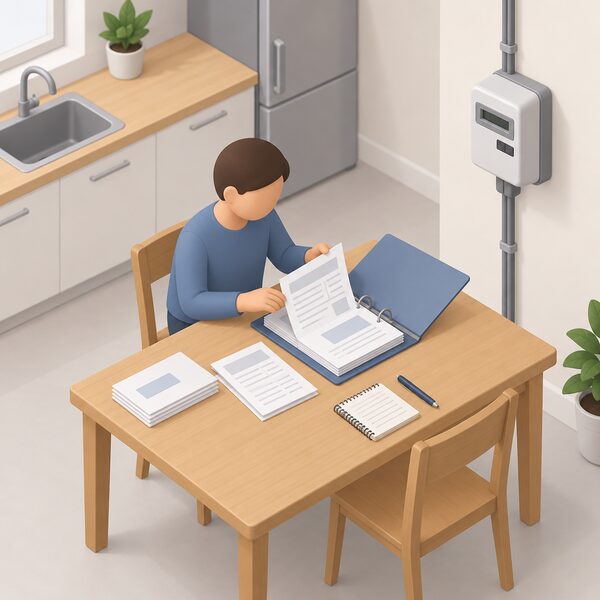
Back billing rules are a limit on a supplier's reach, not a source of independence in themselves. They cap the financial consequence of a supplier's billing failure at one year of consumption, and they oblige that supplier to refund money taken in error5 and to spread a genuine debt over the period it accrued3. That is meaningful protection against a single large shock landing on a household budget.
What remains is a set of dependencies the rules do not touch. The energy itself still has to be paid for, at whatever unit rates apply under the price cap. The protection depends on the household being able to show an accurate bill was never sent, which in practice means keeping bills, statements and a record of readings supplied. It depends on Ofgem's enforcement of a licence condition rather than on any right the household holds directly. And it can be lost by conduct: obstruction of meter access, or theft, moves the exposure out to six years by Which?'s account3. Reducing the exposure at source, through regular readings and a Direct Debit that matches actual consumption, is what keeps the question from arising.
Sources43 cited
- What to do if you get a back bill, Ofgem, 2026
- Energy Consumer Outcomes: proposed implementation, Ofgem, 2026-06-23
- How to complain about your electricity, gas or energy bill, Which?, 2026-07-30
- You haven't received a gas or electricity bill in a while, Citizens Advice, 2026-09-20
- What to do if you get a back bill, Ofgem, 2026
- Energy UK explains: back billing, Energy UK, 2025-02-25
- Why you should know about the back billing rules, Which?, 2026-09-20
- Energy back billing guide, Confused.com, 2026-07-06
- Struggling to pay your heat network bills, Citizens Advice Scotland, 2026-09-17
- Energy back billing rules, Utility Warehouse, 2025-11-03
- Billing explanations: hints and tips, Energy Ombudsman, 2026-09-20
- Citizens Advice helps with an energy billing issue every two minutes, Citizens Advice, 2024-11-29
- Open letter on SLC 21BA, Ofgem, 2020-05-07
- Check if you're responsible for paying an energy bill (Wales), Citizens Advice, 2023-11-28
- Open letter on expectations for suppliers undertaking charge recovery action, Ofgem, 2020-12-17
- Heat networks regulation: consumer protection guidance decision, Ofgem, 2026-01-13
- Ofgem bans suppliers back-billing customers beyond 12 months, Ofgem, 2018-03-05
- Response to Ofgem on improving debt standards in the domestic retail market, Consumer Scotland, 2025-02-06
- Response to Ofgem's heat networks regulation consumer protection consultation, Citizens Advice, 2025-11-03
- How to read your energy bill, Confused.com, 2025-12-15
- How to understand your electricity and gas bills, Energy Ombudsman, 2025-04-24
- How to reduce a high electric bill, EDF, 2026
- My bill is higher than usual, Power NI, 2026-09-20
- Find out if your energy meter is faulty, Citizens Advice, 2026-09-20
- Smart meters: your rights and expectations, GOV.UK, 2025-08-08
- How the retail market works, Energy UK, 2023-04-06
- Billing case studies, Energy Ombudsman, 2026-09-20
- Get help with your prepayment meter, Ofgem, 2026
- You and your home energy checklist, National Energy Action, 2026-05-20
- Energy refunds, Uswitch, 2025-10-29
- Way forward on supplier guaranteed standards, Ofgem, 2018-11-23
- Licence guide: tariffs and contracts, Ofgem, 2019-02-22
- Guidance on Complaints Handling Standards 2024, Ofgem, 2024-09-19
- Heat networks consumer protections: draft guidance, Ofgem, 2025-09-05
- Priorities for heat networks consumer protections: debt and affordability, Citizens Advice, 2025-05-07
- Electricity and gas consumer protection, Consumer Council for Northern Ireland, 2026
- Your energy supplier has gone bust, Citizens Advice, 2021-11-22
- Ofgem complaints report, Ofgem, 2014-08-08
- Complain about your energy supplier, Ofgem, 2026
- Improving debt standards in the domestic retail market, Ofgem, 2024-12-12
- Response to Ofgem's refreshing our consumer vulnerability strategy, Citizens Advice, 2024-11-08
- Recovery or ruin: the role of accessible support, Citizens Advice, 2020-12-16
- Response to Ofgem's open letter on protecting consumers from back-billing, Citizens Advice, 2017-12-19
 Prepayment Meters and DebtCan your energy supplier force you onto a prepayment meter because you owe them money?
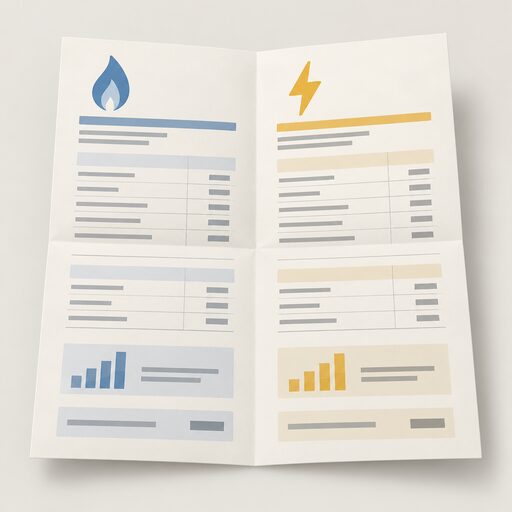 Reading an Energy BillA line-by-line walk through a domestic gas and electricity bill: unit rate, standing charge, kWh consumption, meter readings, tariff name and balance, plus the 12-month back billing limit and the guaranteed standards payments that apply when a supplier or network operator gets it wrong.
 Final Bills and Credit RefundsHow final bills and credit refunds work when you leave an energy supplier: the six-week deadline for the final bill, the ten-working-day deadline for refunding credit, the twelve-month back billing limit, and the automatic compensation that applies when suppliers miss these standards.
 Energy Debt Repayment PlansOwe money to your energy supplier?
 Smart Meter RulesCan your supplier make you have a smart meter?
 Disconnection and WarrantsCan your energy supplier force you onto prepayment or cut you off for debt?