
In this answer
Short answer
An estimated meter reading is a supplier's calculation of how much gas or electricity a household has used when no actual reading is available. It appears on the bill marked with an 'E' or the word 'estimated' next to the figure, and it may not reflect real consumption. Estimated readings can lead to large unexpected bills, so regular accurate readings are the way to keep the account on actual use1.
The distinction matters because a bill built on estimates is a forecast, not a measurement. Unless a household has a smart meter or pre-pays for energy, the bill is likely to be based on estimated power use drawn from previous bills, usually for the same quarter or month, and from a database of similar properties2. Suppliers are permitted to estimate when they cannot take a reading, for example if they cannot get to the meter or no reading has been given for a while3.
The practical consequence is that a household can over-pay or under-pay without knowing it. On a standard meter, not sending readings most likely leads to an estimated bill, meaning over-paying or under-paying4. The correction comes when an actual reading is submitted: any differences between the estimate and actual use are corrected on the next bill5.
What an estimated reading is: the 'E' on your bill
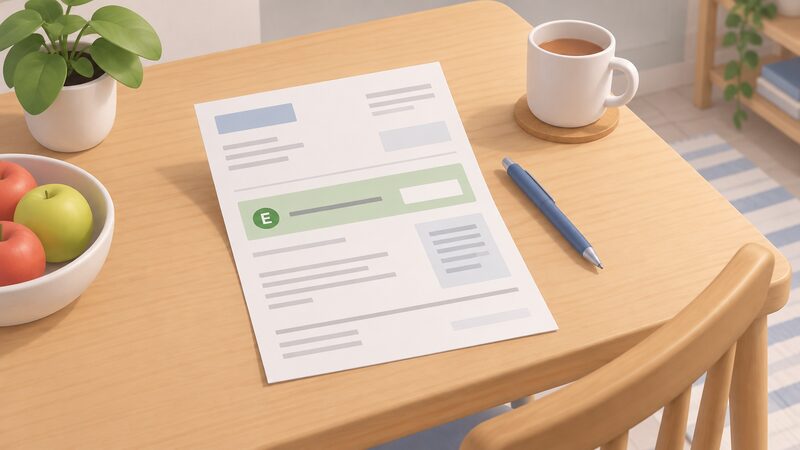
The 'E' is the single most useful marker on an energy bill. If a bill arrives with an 'E' marked against the meter reading, it means the supplier has estimated it and it may not be accurate6. The Energy Saving Trust puts it the same way: the bill may show 'estimated' or 'E' in front of the reading to show that it is based on estimated readings11. The Energy Ombudsman advises looking for an 'E' or 'estimate' on the bill to identify whether the reading has been calculated by the business12.
An estimate is not a guess pulled from nowhere. It is built from the household's own billing history and from comparable properties. Unless there is a smart meter or the household pre-pays, the bill is based on estimated power use, usually for the same quarter or month, and on a database of similar properties2. That means the estimate can track reasonably closely in a steady household, and drift badly where circumstances have changed: a new appliance, a new occupant, a period away, or a heating season that ran hotter or colder than the last.
The marker also appears on smart meter displays and statements. Where a reading carries an 'E' next to it, the reading has been estimated, and the meter may not be operating in smart mode13. That is a signal worth acting on, because it usually means the automatic reading has stopped arriving.
How to tell estimated from actual readings on your bill
The codes are simple once you know them. If a reading is estimated, the bill or statement will generally say 'estimated' or 'e' next to the reading; if it is a customer supplied or actual reading, it will show 'c' or 'a'7. The same convention runs across suppliers, so a household can scan the reading line and know immediately which basis the charge rests on.
| Marker | Meaning | Who provided it |
|---|---|---|
| 'E' or 'estimated' | Calculated by the supplier | Supplier estimate6 |
| 'C' or 'A' | Customer supplied or actual | Household or meter reader7 |
| 'E' on a smart meter display | Reading estimated, meter may not be in smart mode | Supplier estimate13 |
Where a home does not have its own meter, for example a property on a heat network or supplied through a landlord or site owner, the bill may be calculated differently again. In those cases the household should know how the bill is calculated if the home does not have a meter14. Heat network suppliers are allowed to estimate if they cannot take a meter reading, for example if they cannot get to the meter or the household has not given a reading in a while3.
The distinction is not cosmetic. An actual reading closes the gap between what was charged and what was used. An estimate leaves that gap open until the next real reading arrives, which is why the marker is worth checking every time a bill lands.
Why estimated readings can lead to large unexpected bills
Estimated readings can lead to large unexpected bills, which is why regular accurate readings matter1. The mechanism is straightforward: each estimate is a forecast, and if the forecasts run low for several periods, the shortfall accumulates and lands on a single later bill once an actual reading is finally taken. If they run high, the household has been paying ahead of use.
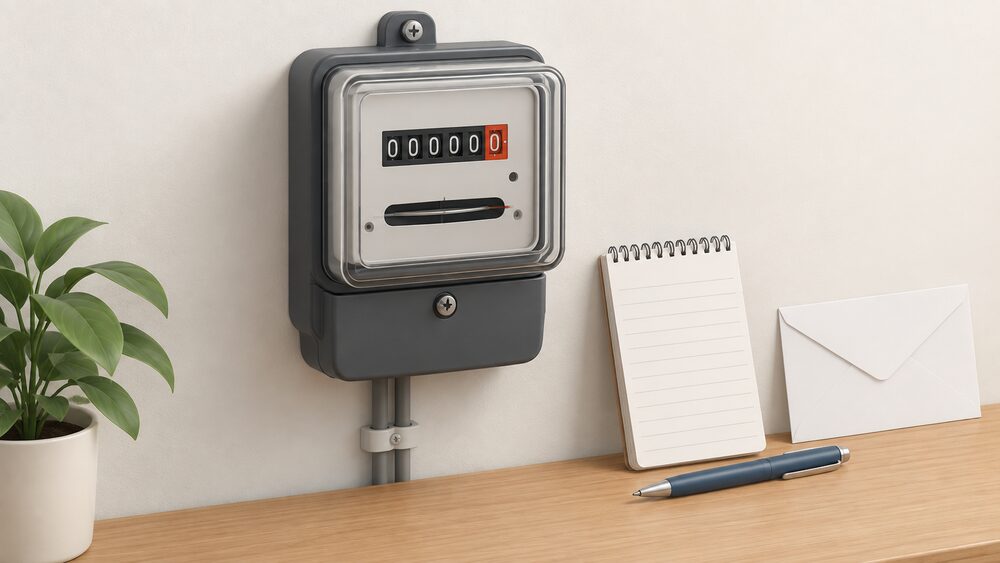
The Energy Ombudsman's casework shows how far this can go. In one case, an account had been opened to an incorrect meter reading, which had inflated the amount the consumer was asked to pay15. A second case turned on a meter exchange that the supplier's systems had not caught up with, so the account carried on being billed on estimates: the new meter had an installation reading of 00000, while eight months earlier a meter reader had taken a reading of 34518 from the old meter16. Where a replacement meter starts again from zero and the old readings are not transferred correctly, the estimates that follow can sit a long way from the energy actually used, in either direction.
The pattern across these cases is the same: the estimate is not wrong in itself, but it becomes wrong when it is not corrected. The longer an account runs on estimates, the larger the eventual correction, in either direction.
How to submit a meter reading and get your bill corrected
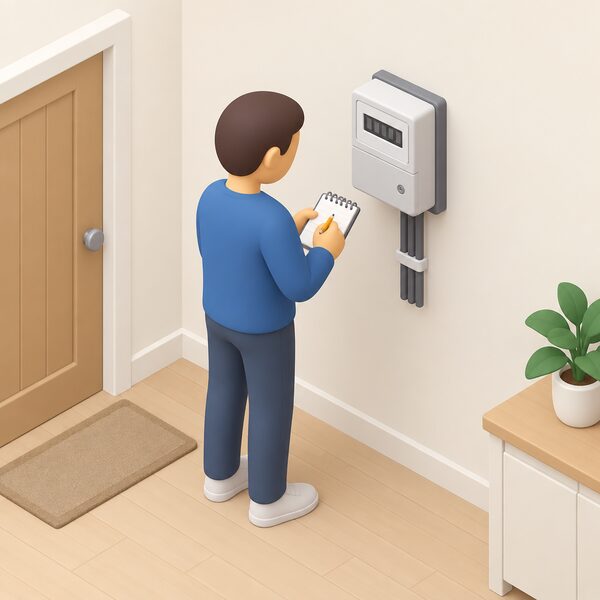
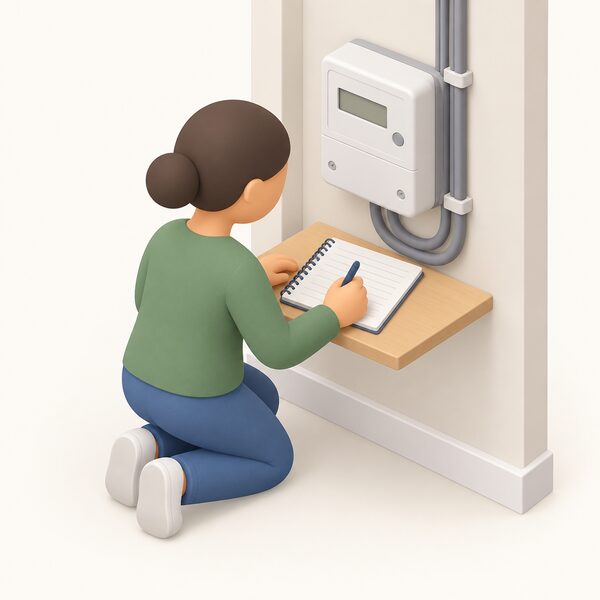
The correction process starts with a current reading. To avoid being overcharged, take a meter reading regularly and send it to your supplier17. Independent guidance recommends submitting a reading at least once a month, ideally on the same day of the month8. Without a smart meter, submitting readings regularly, ideally once a month, is the main safeguard18.
Where a household is seeking a refund of credit built up on the account, an up-to-date meter reading is required so the supplier can calculate the actual amount of credit owed17. Submitting regular readings, or checking that a smart meter is sending readings correctly, also helps ensure bills are accurate19. Where a household is in energy debt, the first step is to get a recent meter reading to ensure the account is billed correctly and up to date20.
The sequence is:
- Read the meter and note the figures.
- Submit the reading through the supplier's online account, app or phone line.
- Ask for the account to be rebilled on actual use.
- Where estimates have run for a long period, ask for a review of the last 12 months, the period suppliers look back over where an estimated reading was used rather than an actual one9.
- If the supplier does not resolve it, take the dispute to the Energy Ombudsman, which handles billing disputes free of charge21.
Where a supplier has gone out of business, the guidance is to take a meter reading as soon as possible and keep a record of it to make sure the new supplier bills correctly22.
Smart meters: readings sent automatically, so no more estimated bills
A working smart meter removes the estimate from the process. Smart meters send gas and electricity readings straight to the energy supplier10, and the household does not need to submit meter readings itself23. The result is bills based on accurate meter readings and not estimates24. Smart meters enable accurate billing by automatically recording energy use in half-hour periods, so suppliers can bill on actual rather than estimated usage25.
The benefit is stated plainly across official and independent guidance: readings are sent automatically to the supplier, allowing accurate bills, which should mean no more estimated bills or meter reader visits to the home26. Where a smart meter is working, the supplier will no longer send estimated bills and there is no need to provide readings21.
That caveat matters for energy independence. A smart meter still depends on a communications link and on the supplier's systems, so the household's billing accuracy rests on infrastructure it does not control. A traditional meter plus a monthly reading habit keeps the household in direct control of the figure, at the cost of the effort. Either way, the reading is the household's own record of what it used, and it is the basis on which any dispute is settled.
Where estimates leave a household exposed
An estimate is a reasonable administrative device and a poor basis for a household budget. It shifts the risk of accuracy onto the bill-payer, who may not discover the gap until a correction lands. The protections that exist are procedural: the right to submit a reading, the right to have the account rebilled on actual use, the 12-month look-back where estimates have been used, and access to free dispute resolution through the Energy Ombudsman9.
For households on a heat network, the same estimation right applies to the supplier, and the same route to dispute resolution is available: heat network consumers can access the Ombudsman's free and independent dispute resolution service27. Free telephone advice on benefits, money and bill problems is also available through Local Energy Advice Programme services29.
The dependence that remains is on the supplier's willingness to correct the account promptly and on the accuracy of the meter itself. A household that reads its meter monthly, keeps its own record, and checks the marker on every bill holds the strongest position. That record is what turns a disputed estimate into a settled figure.
Sources29 cited
- Struggling with energy bills, National Energy Action, 2026-05-06
- How to read your energy bill, Confused.com, 2025-12-15
- Struggling to pay your heat network bills, Citizens Advice, 2026-09-17
- Gas and electricity meter reading, Uswitch, 2026-04-23
- Troubleshooting smart meter issues, Smart Energy GB, 2026-04-01
- Your home energy checklist, National Energy Action, 2026-09-10
- Understanding your gas or electricity bill, Centre for Sustainable Energy, 2026-02
- How to submit a meter reading, Uswitch, 2026-04-23
- What if you can't pay your energy bill, Centre for Sustainable Energy, 2026-06
- What is a smart meter, Smart Energy GB, 2026-03-16
- How to understand your energy bill, Energy Saving Trust, 2024-11-08
- How to understand your electricity and gas bills, Energy Ombudsman, 2025-04-24
- Smart meters not working, Smart Energy GB, 2026-03-16
- Alternative homes energy guidance, Ofgem, 2026
- Estimated meter readings lead to £2,200 electricity bill dispute, Energy Ombudsman, 2026-07-29
- Billing case studies, Energy Ombudsman, 2026-09-20
- What happens to credit if I switch, Uswitch, 2026-05-29
- Gas and electricity guides, Confused.com, 2026
- Energy bills support, British Gas Energy Trust, 2026-08-11
- Energy debt factsheet, National Energy Action, 2026-09-10
- Get prepared, National Energy Action, 2026-06-02
- What happens if your energy supplier goes out of business, Ofgem, 2026
- Get help with your smart meter, Ofgem, 2026
- Get help with your smart meter, Ofgem, 2026-09-17
- Smart meters: your rights and expectations, GOV.UK, 2025-08-08
- Smart meters, Scottish and Southern Electricity Networks, 2026-09-19
- Cynon Taf Community Housing 2007 Ltd, Energy Ombudsman, 2026-09-19
- Gateway Housing Association, Energy Ombudsman, 2026-09-19
- Energy saving grants and funding, Tameside Council, 2026-09-17
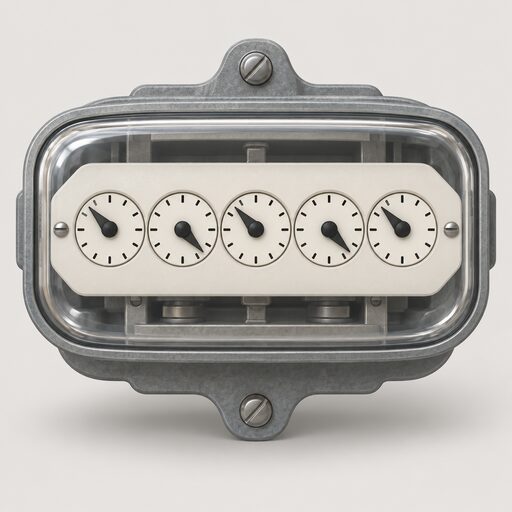 Meter Readings and EstimatesWhy is my energy bill estimated, and how often should my meter be read?
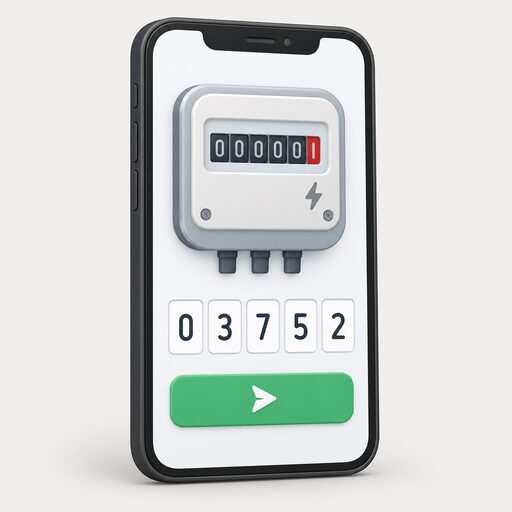 Submit Meter ReadingsThe routes for sending readings, by app, online account, phone and automated line, and the timing that gets them onto the right bill.
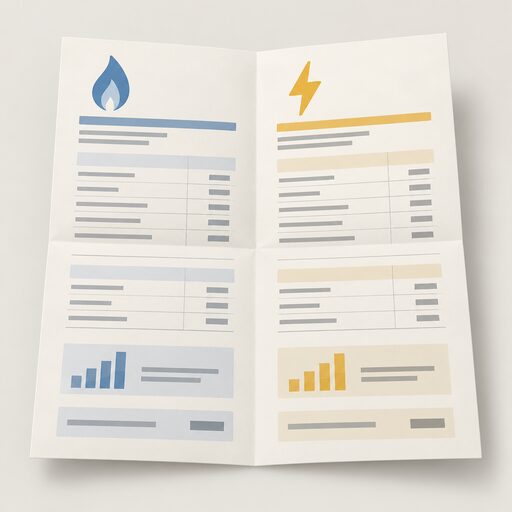 Reading an Energy BillA line-by-line walk through a domestic gas and electricity bill: unit rate, standing charge, kWh consumption, meter readings, tariff name and balance, plus the 12-month back billing limit and the guaranteed standards payments that apply when a supplier or network operator gets it wrong.
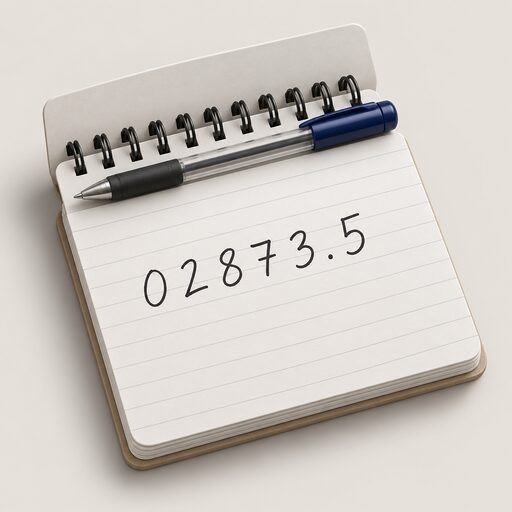 Take a Meter ReadingWhich numbers do you actually read on a gas or electricity meter, and which ones do you ignore?
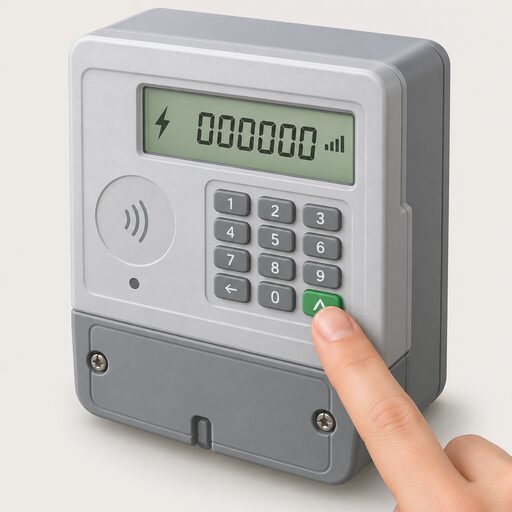 Get a Reading From a Smart MeterHow to bring up a meter reading on a smart electricity or gas meter when a manual reading is still needed, and the difference between the meter itself and the in-home display.
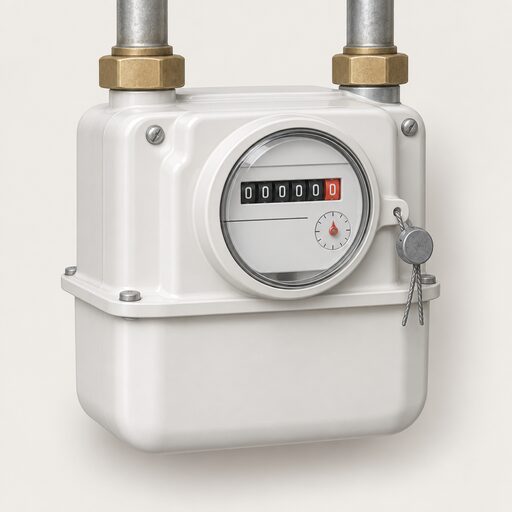 Meter Standards and AccuracyHow UK smart meters are certified for accuracy, how their readings become a bill, what happens when a meter stops communicating, and how a metering or billing dispute is escalated to a supplier and then to the Energy Ombudsman.