
In this answer
Short answer
A Power NI bill is estimated when no meter reading has been received, and the supplier builds the charge from previous usage patterns instead1. The estimate is not a mistake in itself: Power NI states that estimated readings are based on past billing history and are usually accurate2. It becomes a problem when the estimate and the meter have drifted apart, which is why the supplier asks any customer who thinks an estimated bill is not accurate to contact it with their own readings2.
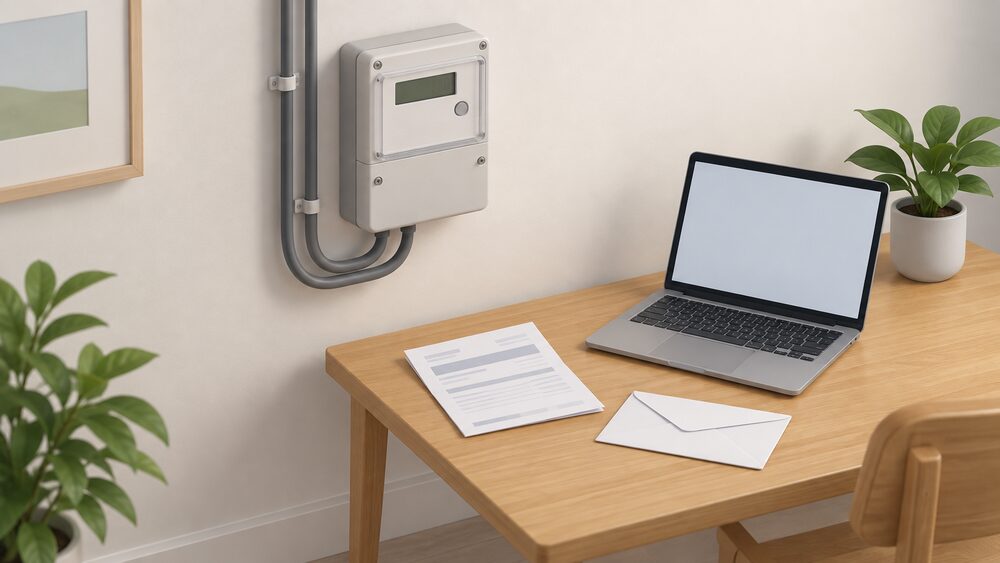
The fix is a reading. Power NI asks for the customer account number and an up-to-date reading, and will then process the reading and produce a revised bill3. The reading has to fall inside the meter reading window: a read can only be submitted when that window is open, and estimates made outside it are guidance only and are not used for billing4.
Why Power NI bills are estimated, and when it happens
The rule is simple: if no meter reading is received, the bill is estimated from previous usage patterns1. Power NI uses usage history to calculate estimated readings, so the estimate reflects what the household has used before rather than what it has used now5. For a household whose consumption is steady, that produces a bill close to the truth. For one that has changed, it does not.
Several things move consumption away from the historical pattern. Power NI lists a higher than expected bill as potentially arising from an estimated last bill, from comparing winter to summer bills, from changed home circumstances, from new or increased appliance use, from a tariff increase, or from a faulty appliance2. Energy bills are typically higher in winter than in summer months, so a winter estimate built on a summer-influenced history will undershoot2.
The Monthly Direct Debit amount is a separate calculation from the bill. For an existing customer Power NI looks at historical energy use to forecast costs for the next 12 months; for a new customer it uses property details6. That forecast sets the payment, while the bill records consumption, and the two are reconciled through readings.
A reading may also arrive from elsewhere. Power NI notes that a meter read received from Northern Ireland Electricity Networks may be used and shown on the bill as 'Estimate'9. So an 'E' does not always mean nobody read anything; it can mean the reading used was not one the household supplied.
For a household's energy independence, an estimated bill is a small but real loss of control: the charge is set by the supplier's model of past behaviour rather than by the meter. A reading restores the link between what the home used and what it pays.
How to spot an estimate on your bill
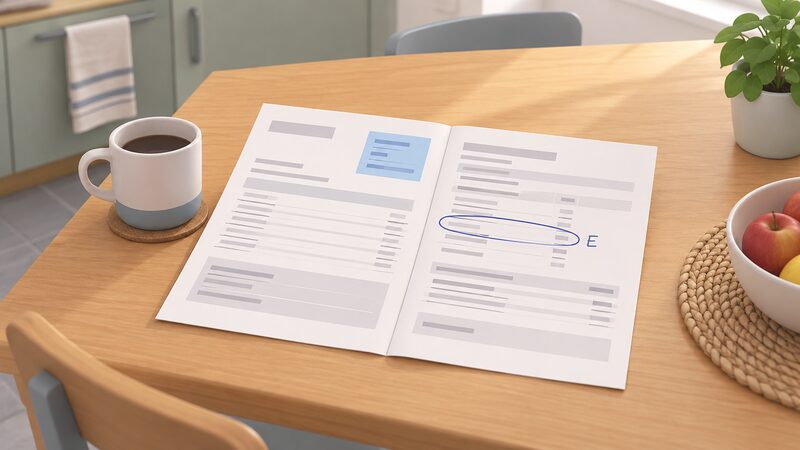
The marker is a single letter. If the bill is based on an estimated reading, the letter 'E' is shown beside the meter reading on page 2 of the bill5. Power NI repeats the same test in its direct debit guidance: look at the bill and see whether there is an 'E' beside the meter reading10.
Independent guidance describes the same convention in wider terms. A bill or statement will generally say 'estimated' or 'e' next to the reading, while 'c' or 'a' indicates a customer supplied or actual reading11. That distinction matters because it tells the household whether the number on the bill came from the meter or from a model.
Two other details on the bill are worth locating. The current tariff is shown in the top right section of the bill, or in the online account12. Power NI states the same location in its tariff guidance: the tariff is displayed on the bill in the top right section13. Knowing the tariff matters when checking a revised bill, because the reading correction changes the units charged, not the rate applied to them.
Getting an accurate bill: submit your own meter reading
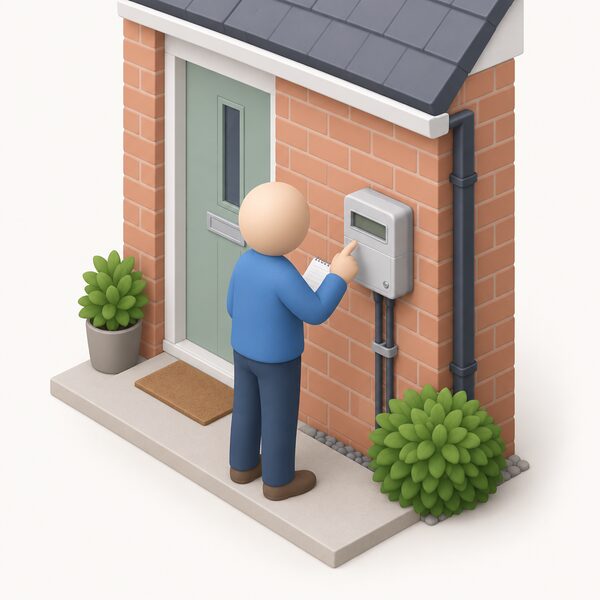
Power NI's own instruction is to provide an accurate reading as soon as possible after receiving the bill3. The online route is specific: click the 'Submit meter read' button on the Billing screen, enter the read on the Meter readings page, and click 'Submit meter read'4. The supplier emails when a reading is needed, and a notification also appears in the online account4.
There is a deadline attached to the meter reading visit. To avoid an estimated bill, a household should provide NIE Networks with its own reading within 24 hours of the meter reading visit5. Missing that window is one of the ways an estimate is produced even though somebody attended the meter.
The window rule governs when a submission is accepted at all. A read can only be submitted when the meter reading window is open; when it is closed, estimates are guidance only and are not used for billing4. If the window is closed, Power NI points to the bill estimator tool, which calculates the approximate cost of usage since the last bill, and states plainly that the amount displayed is an estimate of usage and will not be used to produce any bills12.
Smart meters change the mechanics rather than the principle. Ofgem describes the benefit as bills based on accurate meter readings and not estimates14. SSEN states that meter readings are sent automatically to the energy supplier, allowing for accurate bills which should mean no more estimated bills or meter reader visits to the home15. Where a smart meter is present but not communicating, the estimate can return, and Smart Energy GB notes that any differences between the estimate and actual energy use will be corrected on the next bill16.
What happens after you send a reading: the revised bill
Once the account number and an up-to-date reading are with Power NI, the supplier processes the reading and produces a revised bill3. The revised bill replaces the estimated charge with one built on the reading, so the balance moves by the difference between the two.
Power NI does not publish a timescale for a revised bill after a submitted reading. The nearest published timing is for a final bill after account closure, which the supplier says should arrive around 5 working days after the account has been closed7. That is a different process and should not be read across to a mid-account revision.
If the account has been closed and bills are still arriving, that is a separate issue from an estimate, and Power NI handles it through its closed account process7. Where a household has switched away, the credit position is settled in the final bill: Ofgem states that the old supplier will refund any credit in the final bill, and that compensation may be available if it does not17. Confused.com puts the final bill deadline at within 6 weeks of completing the switch, confirming how much the old supplier owes18.
"Any differences between the estimate and your actual energy use will be corrected on your next bill."
What if my estimated bill was too high or too low?
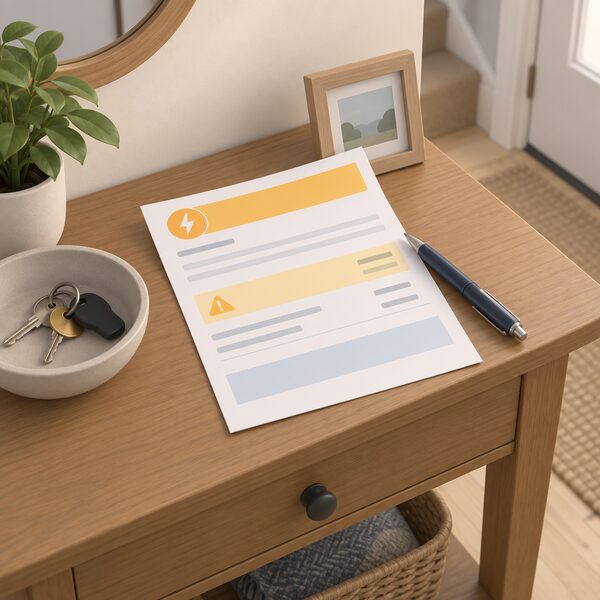
An estimate in either direction is corrected by an actual reading, but the two directions feel different. An estimate that is too high leaves the account in credit until the reading is processed. An estimate that is too low produces a catch-up bill when the real consumption is billed.
National Energy Action warns that estimated readings can lead to large unexpected bills, and advises regularly submitting accurate readings19. The Energy Ombudsman makes a related point about how households read those bills: many consumers assume that a catch-up bill is the result of higher than average usage, but this is rarely the case20.
The price cap does not cap the total. Ofgem states that it does not limit the cost of your total bill, and that the more energy you use, the higher your bill will be21. So a catch-up bill is not evidence that the cap has failed; it is evidence that earlier bills were built on estimates.
Where a bill is higher than expected, Power NI lists an estimated last bill among the possible causes, alongside a tariff increase and increased appliance use2. The supplier's price list records that the price paid for electricity increased by 6.2% on 1 July 2026, which is a change to the rate rather than to the reading8.
For households in difficulty, the wider support routes sit outside the supplier. NI Energy Advice offers independent and impartial energy advice to domestic householders in Northern Ireland, plus referrals to energy grants and other sources of help22. Ofgem's own guidance on understanding bills and the Centre for Sustainable Energy's advice on bills and on unaffordable bills set out the consumer-side rules23.
Keeping future bills accurate: regular readings and meter access
The supplier's stated expectation is quarterly. Power NI's Monthly Direct Debit guidance asks customers to keep sending in quarterly readings to keep the amount accurate6. That is the minimum rhythm; a household that reads the meter monthly will catch drift earlier.
Smart meters remove the manual step where they work. Ofgem describes the outcome as bills based on accurate meter readings and not estimates14. National Grid's customer guidance goes further, stating that this means you will always receive accurate and not estimated bills25. That is the intended position rather than a guarantee for every installation, since communication faults occur.
Meter access is the other half. A reading can only be submitted when the meter reading window is open4, and a household that cannot or does not provide a reading within 24 hours of the meter reading visit risks an estimate5. Where the meter is inside and access is difficult, the estimate becomes the default rather than the exception.
Ofgem's proposed consumer outcomes framework treats accuracy as something to be tested rather than assumed. It describes testing regular energy bills to ensure actual meter readings match real consumption and charges are applied correctly, with statistical sampling possible, and states that estimated meter reads are not classed as accurate if they differ from actual consumption24. That is the regulatory direction of travel: an estimate is acceptable only while it matches reality.
For energy independence, the practical position is that a household on a credit meter with a working communications link depends on the supplier for billing but not for the number. A quarterly reading, or a smart meter that reports on its own, keeps the bill tied to the meter. Where the link fails, the dependence returns.
Understanding how your bill is calculated
The bill is the product of a reading and a tariff. Power NI estimates from usage history when no reading arrives5, and the Monthly Direct Debit amount is forecast separately from historical use for existing customers or property details for new ones6. The bill records consumption; the direct debit smooths it.
The tariff itself is visible. Power NI shows the current tariff in the top right section of the bill or in the online account12. Rates on the export side are reviewed annually and approved by the Utility Regulator, and the price is considered and approved by the Utility Regulator each year26. That regulatory approval is a Northern Ireland feature: the market is separate from Great Britain, and the supplier's pricing pages sit under that framework8.
Two tools exist for interim arithmetic, and both are explicitly not bills. The bill calculator tool calculates the approximate cost of usage since the last bill, and Power NI states that the amount displayed is an estimate of usage and will not be used to produce any bills13. The bill estimator tool is available when the meter reading window is closed12. Neither replaces a reading.
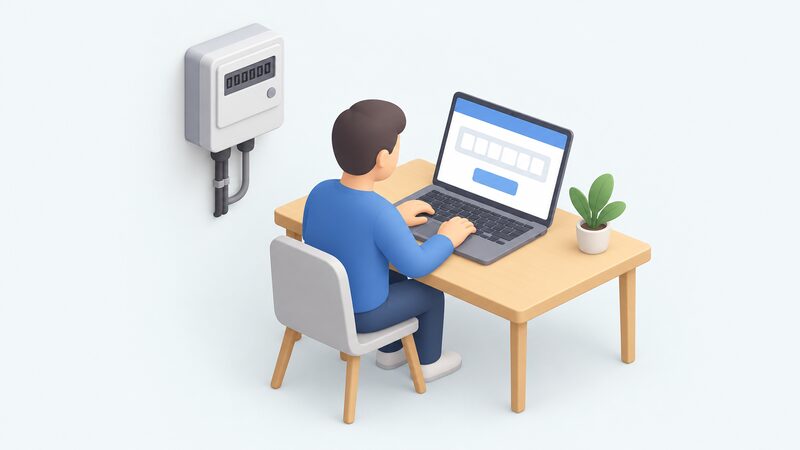
For a household managing someone else's account, Power NI asks for contact to discuss requirements, records the name and contact details, and requires the account holder to be available to consent and confirm the arrangement during the call28. The account number and reading remain the two items that correct an estimate3.
Sources28 cited
- How is my bill calculated?, Power NI, 2026-09-20
- My bill is higher than usual, Power NI, 2026-09-20
- If I receive an estimated bill how can I get an accurate one?, Power NI, 2026-09-20
- How do I submit a meter reading?, Power NI, 2026-09-20
- How can I tell if my bill is estimated?, Power NI, 2026-09-20
- Monthly Direct Debit, Power NI, 2026-09-20
- I closed my account but I'm still receiving bills, Power NI, 2026-09-20
- Pricing, Power NI, 2026-07-01
- My bill does not match what I submitted through Energy Online, Power NI, 2026-09-20
- Why has my Direct Debit changed?, Power NI, 2026-09-20
- Understanding your gas or electricity bill, Centre for Sustainable Energy, 2026-02
- What tariff am I on?, Power NI, 2026-09-20
- How can I calculate how much I owe since my last bill?, Power NI, 2026-09-20
- Getting a smart meter, Ofgem, 2026
- Smart meters, SSEN, 2026-09-19
- Smart meter issues, Smart Energy GB, 2026-04-01
- Understand your electricity and gas bills, Ofgem, 2026
- Energy credit, Confused.com, 2026-07-03
- Struggling with energy bills, National Energy Action, 2026-05-06
- Billing Explanations: Hints and Tips, Energy Ombudsman, 2026-09-20
- Energy price cap, Ofgem, 2026-09-17
- Hydropower, nidirect, 2026-09-17
- What if you can't pay your energy bill?, Centre for Sustainable Energy, 2026-06
- Energy Consumer Outcomes proposed implementation, Ofgem, 2026-06-23
- Smart meters, National Grid, 2026-09-17
- Solar panel grants and funding, Power NI, 2026-07-16
- Solar, Power NI, 2026-09-20
- I want to manage bills for someone else, Power NI, 2026-09-20
 Meter Readings and EstimatesWhy is my energy bill estimated, and how often should my meter be read?
 Reading an Energy BillA line-by-line walk through a domestic gas and electricity bill: unit rate, standing charge, kWh consumption, meter readings, tariff name and balance, plus the 12-month back billing limit and the guaranteed standards payments that apply when a supplier or network operator gets it wrong.
 Switch Energy SupplierThe practical sequence of a domestic energy switch: the details and readings needed, the five working day transfer, cooling-off periods, exit fees and the final bill.
 Using Your EPC to Plan WorkAn EPC comes with a recommendations report, and that report is the part worth reading before you spend anything.
 How to Read Energy StatisticsWhy do energy figures change after they are first published, and how much can you trust them?
 Read an EPCA walk through each part of an EPC: the A to G rating and potential rating, the estimated costs, the fabric and heating assumptions and the recommendation table, plus what the assessor did and did not inspect and how the rules differ across the UK.