
In this answer
Short answer
Ofgem's rules do not set a single fixed interval at which every supplier must read every meter. What the rules require is that suppliers take accurate readings regularly enough to bill you correctly, and that they resolve any problems that arise. For smart meters, readings are sent automatically to the supplier, so no visit is needed1. For traditional meters, the practical answer is that most suppliers will send a meter reader to your home on a regular basis if you make them aware of your circumstances2.
The key distinction is between what the supplier must do and what you can do. You can submit your own reading at any time, and the Energy Saving Trust advises taking accurate readings and providing them to your supplier so they can send an accurate bill3. If you have a smart meter, readings are sent automatically and you do not need to act1.
Where a supplier cannot take a reading, it is allowed to estimate. Heat network suppliers, for example, are permitted to estimate if they cannot get to the meter or if no reading has been given for a while4. The same principle applies across the domestic market: estimated bills are lawful, but they must be corrected when an accurate reading is provided.
What your supplier owes you under Ofgem's rules
Ofgem's rules place several obligations on suppliers that bear directly on meter readings and billing. Suppliers must work with you to set up a payment plan you can afford7. They must reimburse credit balances on request unless there is a good reason not to8. Where a supplier wants to install a prepayment meter for a customer in debt, Ofgem rules protect that customer9.
On billing accuracy, the back billing rules are the most important protection. If a supplier has continued to send bills based on estimated readings even after accurate meter readings were sent, the back billing rules apply10. This means the supplier cannot charge for energy used more than 12 months ago in those circumstances. There is an exception: you will have to pay for energy used more than 12 months ago if you have acted unreasonably, for example by stopping your supplier from billing you accurately, including by blocking access to your meter11.
You do need to pay any accurate bill you have been sent, including back bills11. The protection is against supplier error, not against your own consumption.
For residents in park homes and similar arrangements, there are additional rights. Residents paying by meter readings or estimates have the right to see the bills and contract between the landlord or site owner and the energy supplier12. This transparency matters because the resident may be paying the site owner rather than the supplier directly.
"Your energy supplier must try to fix any problems you reported within 8 weeks and resolve the complaint."
Ofgem's role: monitoring suppliers and enforcing the licences
Ofgem does not resolve individual complaints, but it does monitor suppliers closely. It checks that they meet the rules set out in licences, regulations and law, provide good customer service, and reply quickly to customers who contact them14. This monitoring role is distinct from dispute resolution.
Ofgem's enforcement powers are real. The Smart Metering Installation Schedule is regulated by Ofgem, which has powers to enforce it by fining suppliers if necessary15. On the price cap, Ofgem has said it will be closely monitoring supplier compliance and will continue to take firm action against suppliers who fall short of their requirements16.
Ofgem also administers environmental and social schemes. For the Energy Company Obligation (ECO), Ofgem sets targets for each obligated supplier, ensures compliance, and monitors progress towards those targets17. Suppliers must notify Ofgem of the measures they have delivered4. For the Great British Insulation Scheme, suppliers must provide information to Ofgem on projects delivered3.
The Guaranteed Standards of Performance are another area where Ofgem sets the rules. Ofgem commissioned research to help inform its review of energy supplier Guaranteed Standards of Performance18. Under GSOP 3, which covers investigating smart meter operational issues, the supplier must complete an initial assessment, take appropriate action and offer to update the consumer within 5 working days19.
Suppliers are also required by Ofgem's rules to publish their performance in the Citizens Advice Star Rating20. This gives households a way to compare supplier performance on customer service, though it does not resolve individual disputes.
Estimated bills and deemed contracts: the protections that apply
Estimated bills are a normal part of energy supply, but they come with protections. A deemed contract is normally in place when a customer moves to new premises and starts to consume gas or electricity, or both, without agreeing a contract with a supplier17. Deemed rates are typically higher than standard tariffs, which is why the rules around them matter.
After 6 months, the deemed contract must go back to its normal rate19. The Energy Ombudsman will consider whether it was appropriate for a supplier to place a customer on a deemed rate contract, or whether supplier error or omission left the customer on high deemed contract prices for longer than necessary17.
For heat network customers, the protections are similar in principle. The supplier is allowed to estimate if they cannot take a meter reading, for example if they cannot get to the meter or no reading has been given in a while4. But the customer retains the right to see the bills and contract between the landlord or site owner and the energy supplier12.
If a smart meter develops a fault, the supplier must promptly investigate suspected or identified issues, resolve them themselves or with third parties, and keep the consumer informed1. This is a specific obligation that goes beyond the general duty to bill accurately.
If a reading or bill looks wrong: who handles complaints
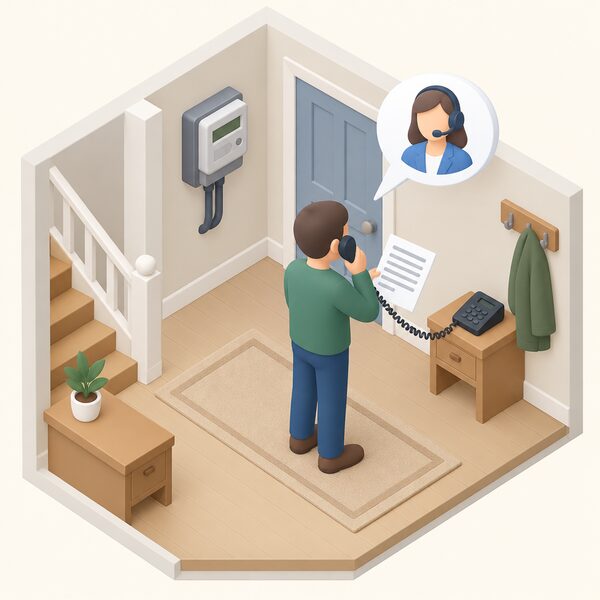
The complaints process has a clear structure. Your energy supplier must try to fix any problems you reported within 8 weeks and resolve the complaint5. If it does not, the Energy Ombudsman provides an independent service, separate to Ofgem, for problems with an energy supplier, an energy broker, a network operator or a heat network supplier22.
Ofgem itself does not directly get involved with complaints about energy suppliers or network operators, including heat network suppliers and operators, and does not investigate individual disputes14. This is a common misunderstanding. Ofgem sets the rules and monitors compliance; the Ombudsman resolves individual cases.
For feed-in tariff (FIT) complaints, the Energy Ombudsman can consider complaints where obligated electricity suppliers do not follow the rules set by Ofgem23. FIT licensees are recommended to remind FIT generators to provide a meter reading once a quarter24.
If a supplier goes out of business, there are specific protections. Ofgem has published guidance on what happens if your energy supplier goes out of business19. This is relevant to meter reading because a new supplier will need to establish accurate readings, and any outstanding balance or credit is handled through the supplier of last resort process.
Why accurate meter readings matter when the price cap changes
The price cap is revised each quarter6. Ofgem adjusts the level of the cap up or down twice a year to reflect the costs of supplying electricity and gas for supply25. The Smart Metering Net Cost Change allowance is updated as part of the six-monthly price cap updates26.
When the cap changes, your bill changes. If your meter readings are estimated, the change may not be reflected accurately in what you are charged. The supplier must write to tell you if your tariff is changing in a way that could disadvantage you, or if the tariff you are on is no longer available27.
The current cap, from 1 October 2026, is £1,723 a year for a typical household, a 4% increase from £1,6636. Electricity is 26.32p per kWh and gas is 7.97p per kWh6. These figures apply to households on variable tariffs.
Switching supplier also depends on accurate readings. In one in every ten switches there are problems with the change of supplier meter read that suppliers have to fix28. This is an older figure from 2014, but it illustrates why readings matter at the point of switching.
For households on smart meters, the automatic reading process reduces the risk of estimation error. For those on traditional meters, submitting a reading before and after a price cap change is the most reliable way to ensure the correct rate is applied to the correct consumption.
Where to get help: Ofgem's enquiry service and signposting
Ofgem's role in consumer help is primarily signposting and market monitoring rather than individual casework. For Energy Company Obligation (ECO) queries, Ofgem publishes a contact details page for obligated suppliers29. This is a specific route for ECO-related questions, not for general billing disputes.
For general complaints, the Energy Ombudsman is the correct route. It is an independent service, separate to Ofgem, for problems with an energy supplier, an energy broker, a network operator or a heat network supplier22.
Ofgem also commissions research on consumer experience. The Energy Consumer Satisfaction Survey is commissioned by Ofgem and Citizens Advice18. Suppliers are required by Ofgem's rules to publish their performance in the Citizens Advice Star Rating20. This gives households a way to see how suppliers compare on customer service.
For households struggling with bills, Ofgem's rules mean suppliers must work with you to set up a payment plan you can afford7. Ofgem rules also protect customers in debt where a supplier wants to install a prepayment meter9. These protections apply regardless of meter type.
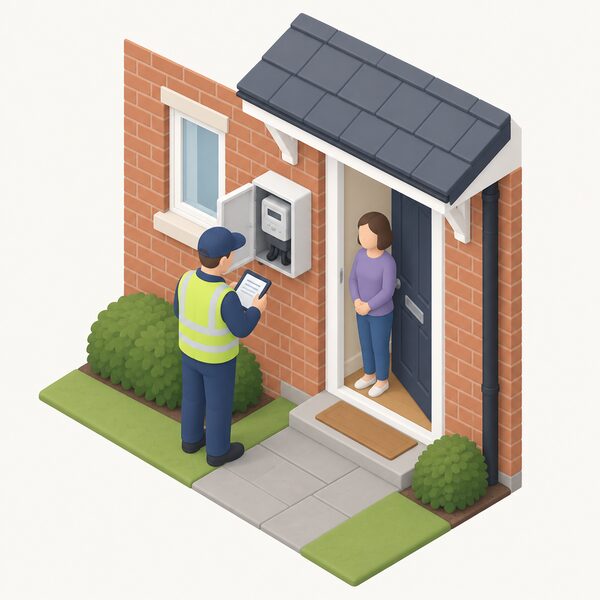
If you have a smart meter and suspect an issue, the supplier must promptly investigate and keep you informed1. If you have a traditional meter and want a reading taken, most suppliers will send a meter reader on a regular basis if you make them aware of your circumstances2.
Sources29 cited
- Smart meters: your rights and expectations, GOV.UK, 2025-08-08
- Energy for those with sight loss, Uswitch, 2026-04-09
- How to understand your energy bill, Energy Saving Trust, 2024-11-08
- Struggling to pay your heat network bills, Citizens Advice, 2026-09-17
- Complain about your energy supplier or network operator, Ofgem, 2026
- Energy price cap, House of Commons Library, 2026-09-20
- Energy price cap explained, Climate Action Wales, 2026-03-04
- Energy refunds, Uswitch, 2025-10-29
- Energy debt factsheet, National Energy Action, 2026-09-10
- Energy back billing, Confused.com, 2026-07-06
- What to do if you get a back bill, Ofgem, 2026
- If you live in a home or business with an energy contract, Ofgem, 2026
- Alternative homes energy guidance, Ofgem, 2026
- Complain about your energy supplier, Ofgem, 2026
- Final decision: smart meter GSOPs, Ofgem, 2026-01-30
- Summary of changes to energy price cap 1 October to 31 December 2025, Ofgem, 2025-08-27
- Deemed contracts and rates, Energy Ombudsman, 2026-09-20
- Energy consumer experiences: customer service standards, Ofgem, 2026-06-23
- What happens if your energy supplier goes out of business, Ofgem, 2026
- Customers' satisfaction with their supplier: July 2024, Ofgem, 2024-11-25
- Energy consumer satisfaction survey: January 2025, Ofgem, 2025-05-13
- Complain about your energy supplier or network operator, Ofgem, 2026
- Feed-in tariffs, Energy Ombudsman, 2026-09-20
- FIT guidance for licensed electricity suppliers, Ofgem, 2024-09-06
- Energy price cap increase April: consumers should switch to save money, Ofgem, 2021-02-05
- Smart meter rollout and the default tariff cap, Ofgem, 2021-02-02
- Energy price caps explained, Ofgem, 2020-12
- Fast and reliable switching, Ofgem, 2014-06-16
- Energy Company Obligation: contacts, guidance and resources, Ofgem, 2026-09-17
 Meter Readings and EstimatesWhy is my energy bill estimated, and how often should my meter be read?
 OfgemOfgem sets the rules energy suppliers and network companies must follow, including the price cap on standard tariffs.
 Submit Meter ReadingsThe routes for sending readings, by app, online account, phone and automated line, and the timing that gets them onto the right bill.
 Report a Faulty MeterWhat to do when a meter over-records, stops recording or produces impossible readings: the evidence to gather, how to raise it with the supplier, the 5 working day and 8 week deadlines, and how the Energy Ombudsman handles meter disputes.
 Take a Meter ReadingWhich numbers do you actually read on a gas or electricity meter, and which ones do you ignore?
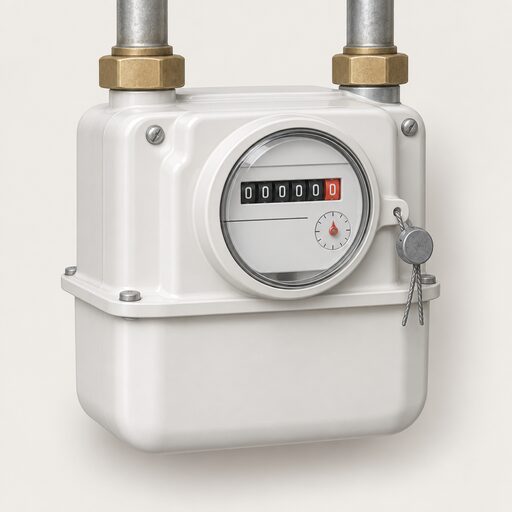 Meter Standards and AccuracyHow UK smart meters are certified for accuracy, how their readings become a bill, what happens when a meter stops communicating, and how a metering or billing dispute is escalated to a supplier and then to the Energy Ombudsman.