

In this answer
Short answer
No. If your energy supplier goes out of business because of financial problems, you will still have electricity and gas supplied to your home, and your supply will not be cut off1. The same point is made independently: if your supplier goes under or is bought by another firm, your gas and electricity will not be cut off2. There is no point in the process at which the supply stops3.
What changes is the company you pay, not the energy coming through the meter. Ofgem appoints another supplier to take on the failed company's customers, and the transfer is automatic4. You do not need to do anything, and your supply is not interrupted5. If you were already partway through a switch when the failure happened, you still move to the supplier you chose1.
What happens in the days after a supplier ceases trading
The first thing to understand is that nothing physical happens to your supply. There should be no interruption to your gas or electricity at any stage7. The failed company stops trading, Ofgem runs a process to find a replacement, and the replacement is vetted and appointed as quickly as possible3. Independent guidance describes the automatic move to a new supplier as happening within a few weeks4.
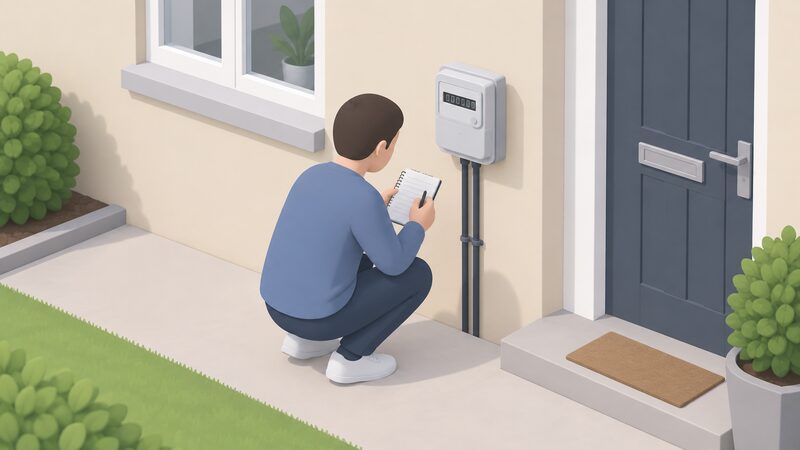
During that window, your online account is the main casualty. Once a supplier has stopped trading, you may not be able to access your account details online1. That makes your own records matter: meter readings, payment history and any credit balance are worth noting down before access disappears.
The transfer itself runs to a legal timetable. Under the supplier transfer rules, a new supplier must complete a transfer within 5 working days where the customer has requested supply to begin before the end of the cooling off period, and within 5 working days beginning with the day on which the latest of several conditions is met where the customer has not8. Ofgem's switching guidance states that suppliers must switch your electricity or gas supply from your old supplier to your new supplier within 5 working days7.
There is a separate, slower reality on contact. Ofgem's own self-disconnection research found that suppliers can wait between 14 and 111 days before contacting a customer9. A household that needs something urgently from a new supplier should not assume the first contact will come quickly.
The Supplier of Last Resort: how Ofgem moves you to a new supplier
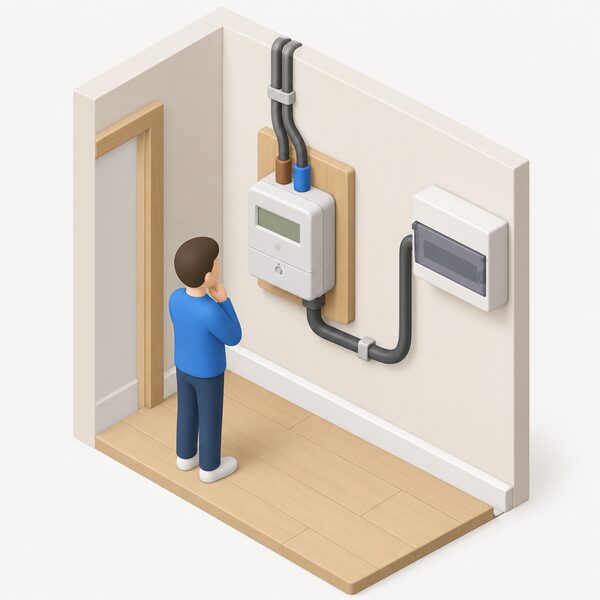
When an energy supplier ceases trading, Ofgem will appoint another supplier to provide their energy supply, to prevent a drop in service to customers5. That appointed company is the Supplier of Last Resort, or SoLR3. The mechanism exists so that a commercial failure does not become a physical one.
The appointment is not a market event the household participates in. Ofgem ensures your supply is uninterrupted and transfers you automatically to another supplier10. For electricity customers, the position is set out in the same terms: supply continues uninterrupted, any credit balance is protected, and Ofgem appoints a new supplier and automatically switches you to it11.
Two limits are worth stating plainly. First, the SoLR is a supplier like any other: it takes on the customers under a transfer process, not under the old company's promises. Second, the failed company is gone as a legal counterparty. The Energy Ombudsman will not consider disputes against a supplier that has ceased trading, because the supplier will not be able to respond6. Once a company ceases trading, no new cases can be opened for dispute with the closed company, though prior disputes are sometimes upheld by the new nominated supplier5.
That gap has been identified formally. In a consultation, the Energy Ombudsman noted that when suppliers leave the market through the Supplier of Last Resort process, consumers with outstanding disputes lose out, because there is no obligation on the new supplier to fulfil the obligations12. A household with a live complaint at the moment of failure should expect the complaint to be reviewed rather than simply carried forward: the new supplier will review it and check whether it is still relevant or whether it can be closed1.
Your tariff, credit balance and debt under the new supplier
The tariff is where a supplier failure bites hardest. The fixed rate contract you were on ends at the time you are moved onto the Supplier of Last Resort, and you are placed on a standard variable tariff with no early exit fee3. Price protection does not survive the transfer.
The escape route is open, though. You can switch without paying an exit fee if you are not happy with your new supplier or tariff4. Whether an exit fee applies at all depends on which supplier you are with13, so the position is not uniform across the market.
Credit balances are protected. Ofgem states that if your supplier goes out of business, your credit balance is still protected by the rules it sets, and the new supplier will contact you about a refund1. The general switching rule points the same way: when you switch to a new supplier, your old supplier will refund any credit in your final bill, and you could get compensation if they do not14.
Debt is treated differently from credit, and the distinction matters:
- Domestic credit balances are protected and refunded through the new supplier1.
- Business customer debt may transfer: if the new supplier transfers customer debts from your old supplier, you will need to pay them for your debt instead1.
- Households in energy debt may not be able to switch supplier, but might be able to fix their tariff with their current supplier15.
- Switching is barred where you have been in debt to your supplier for more than 28 days7.
If payments need adjusting, suppliers can review your current payments and debt repayments16, and where a household is struggling or expects difficulty, a supplier can agree a payment plan, a payment break or reduction, and give access to hardship funds17.
Prepayment customers and smart meters after a supplier failure
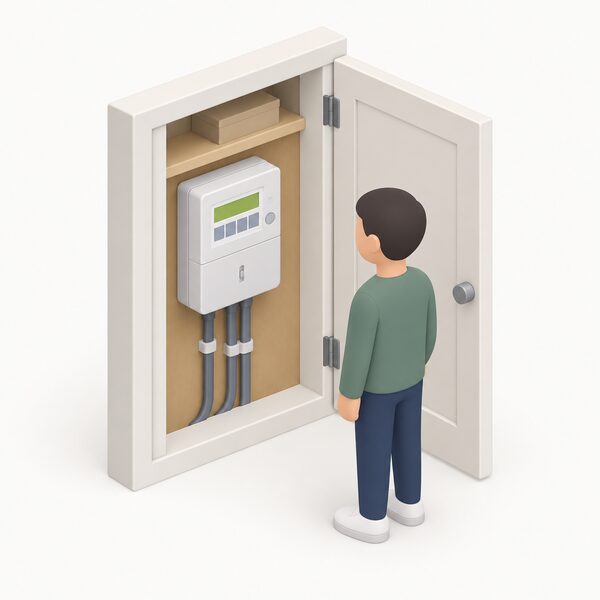
Prepayment households are not cut off by a supplier failure, but the practical detail matters more for them than for credit customers. The meter keeps operating and the new supplier takes over the account.
Smart meters generally survive the change of supplier. Many customers can switch supplier while keeping their smart meter18. Where a household has a non-smart prepayment meter, the supplier can install a smart meter in prepayment mode19. In England, a supplier that wants a prepayment arrangement might install a smart meter in prepayment mode, or switch an existing smart meter to prepayment mode20.
That remote switch is regulated. Your supplier must give you 7 working days' notice before they remotely switch your smart meter to prepayment mode21. Where a supplier switches an existing supply meter to prepayment mode without the consumer's consent, it must ensure the consumer receives prepayment meter credit, unless that is technically infeasible or otherwise outside the supplier's control22.
Disconnection rules sit behind all of this. Suppliers can switch off energy supply remotely through a smart meter, but cannot disconnect customers without first taking all reasonable steps to help them repay debts, and cannot cut off supply for certain vulnerable consumers23. Energy companies must help customers who are in need and are not allowed to cut you off24. All fuel suppliers follow a code of practice meaning they will not cut off your supply if you agree a payment plan and keep to it25.
What to do, and what not to do, while your supplier is failing
The single most useful action is none at all. Ofgem advises that you do not need to do anything if your current supplier goes out of business, because you will be moved automatically and your supply will not be interrupted7. Independent guidance is blunt about the alternative: do not attempt to switch before the automatic transfer process is complete2.
On payments, the pattern for a normal change of supplier is to set up the direct debit with the new supplier ahead of the takeover date and cancel the old direct debit after paying final bills26. For households in difficulty, guidance for Northern Ireland consumers states it is better to agree a payment plan with your supplier rather than cancelling direct debits and letting debt build up27.
Once the new supplier is in place, problems go to them. Contacting the new supplier is the route for reporting any problems, though information transfer may take a while28. Suppliers must complete certain steps, including responses on faulty in-home displays, within 5 working days of a customer contacting them29. Since 1 August, all suppliers need to have a way for customers to tell them if their electricity stops working, with support available 24 hours a day30.
A short checklist for the days around a failure:
- Take a meter reading and photograph it.
- Note your credit balance and last payment from your online account while it is still accessible1.
- Do not cancel the direct debit or start a switch2.
- Wait for the new supplier to make contact, then raise any problem with them28.
- Keep records of any complaint, because the failed company cannot answer it6.
Where the protection stops
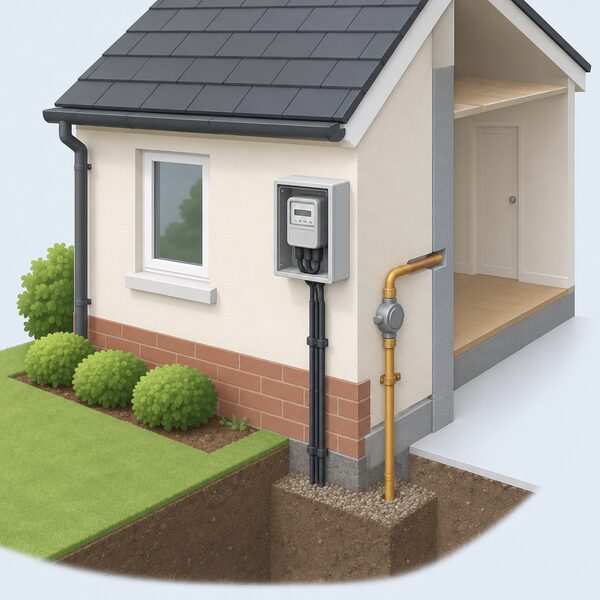
The reassurance is real but bounded. Supply continuity is guaranteed through the SoLR process5, credit balances are protected1, and the transfer is automatic10. What is not protected is the price: the fixed contract ends and a standard variable tariff applies3. What is not carried over is the complaint: the Ombudsman will not take on disputes against a company that has ceased trading6, and there is no obligation on the new supplier to fulfil the old one's obligations12.
For a household's energy independence, the lesson is structural. A supplier failure does not touch the wires, the pipes or the meter, so the physical dependence on the grid is unchanged. What it exposes is commercial dependence: the price you pay, the terms you hold and the complaint route you have all sit with a company that can disappear. The SoLR process keeps the lights on; it does not keep the deal.
Sources30 cited
- What happens if your energy supplier goes out of business, Ofgem, 2026
- Which? Energy Survey Results, Which?, 2026-01-19
- Energy supplier out of business, Uswitch, 2026-05-29
- Your Home Energy Checklist, National Energy Action, 2026-09-10
- Energy Ombudsman FAQs, Energy Ombudsman, 2026-09-19
- Supplier of Last Resort information, Energy Ombudsman, 2026-09-20
- Switch your home energy supplier, Ofgem, 2026
- The Electricity and Gas (Standards of Performance) (Suppliers) Regulations 2015, legislation.gov.uk, 2024-04-01
- Self-disconnection and self-rationing final impact assessment, Ofgem, 2019
- How to switch energy supplier, Confused.com, 2025-12-15
- Electricity only, Confused.com, 2026
- Review of Ofgem call for evidence, Energy Ombudsman, 2025-02-28
- How do I avoid exit fees when switching energy, Energy Helpline, 2026-09-20
- How your electricity or gas bill is calculated, Ofgem, 2026
- Avoiding the price cap, Act on Energy, 2026
- Get help with your energy bills, Ofgem, 2026-09-17
- Get help for your home or business energy bills, Ofgem, 2026
- How to use a smart meter in prepay mode to save money, Smart Energy GB, 2026-08-17
- Move your gas or electricity meter, Citizens Advice, 2026-09-20
- Switching energy supplier if you're a tenant, Citizens Advice, 2026-09-17
- Stop your energy supplier installing a prepayment meter, Citizens Advice, 2026-09-17
- Heat networks consumer protection draft guidance, Ofgem, 2025-09-05
- Energy supplier market research briefing, House of Commons Library, 2026-09-20
- Help if you're struggling to pay your energy bill, Which?, 2026-08-19
- Overdue utility bills, nidirect, 2026-09-17
- Direct Debit, Uswitch, 2025-10-22
- Advice if you're struggling to pay your energy bills, nidirect, 2026-09-17
- Find out if your energy meter is faulty, Citizens Advice, 2026-09-20
- Fixing problems with your smart meter's in-home display, Citizens Advice, 2026-09-17
- DTS energy meter, Citizens Advice, 2024-02-03
 Supplier Licensing and FailureWhat happens when your energy supplier goes bust?
 Switching SupplierHow long does switching energy supplier actually take, and what happens if you owe money?
 Financial Resilience RulesYour supplier going bust raises two questions: who takes over and what happens to your credit balance?
 Challenger and Small SuppliersSmall energy suppliers can be cheaper, but are they safe to switch to?
 Gas Supply EmergenciesIf gas runs short, will my home lose supply?
 Backup Power and EPSWill your lights stay on when the power goes out?