

In this guide
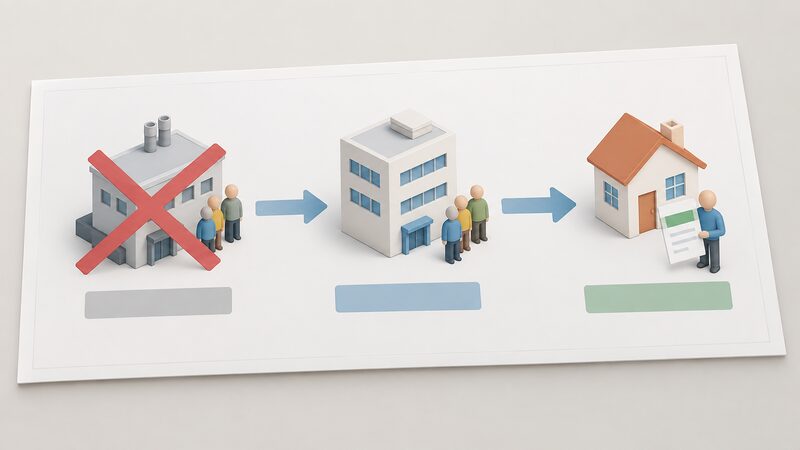
If an energy supplier goes out of business, the household supply continues. Ofgem states that where a supplier fails because of financial problems, electricity and gas are still supplied to the home or business and the supply is not cut off1. The regulator appoints another licensed supplier to take on the customers, a process known as supplier of last resort, and the transfer happens automatically: the customer does not have to arrange anything, find a new tariff, or contact the failed company2.
The customer is then placed on a deemed contract with the new supplier for six months1. A deemed contract is the supply arrangement that exists where a customer is consuming gas or electricity without having agreed a contract with that supplier3. Its rate is normally the new supplier's default or standard variable tariff, which is usually the most expensive tariff a supplier offers4. The protections that come with it are significant: domestic credit balances are protected by Ofgem's rules, the energy price cap still applies, there is no fixed term, and there is no exit fee if the customer wants to move on1.
The dependence this exposes is plain. A household buying gas and electricity from the retail market is dependent on a private company's solvency, and on a regulator's safety net when that solvency fails. The safety net keeps the lights on and protects the money, but it does not keep the price the household had agreed: a fixed tariff dies with the supplier, and the replacement rate is set by the cap rather than by any deal the customer negotiated.
What happens when an energy supplier goes out of business
A supplier failure is a company event, not a supply event. Gas and electricity reach the property through the networks, and the supplier is the billing and contracting party. So when a supplier ceases trading, Ofgem appoints another supplier to provide the energy supply in order to prevent a drop in service to customers2. Independent guidance describes the same mechanism from the customer's side: the supply continues uninterrupted, any credit balance is protected, and the regulator appoints a new supplier and switches the customer to it automatically7. The National Energy Action checklist puts the timescale at "within a few weeks" for the automatic move5.
A second route exists where a larger supplier fails: an Energy Supply Administration Order, under which an administrator is chosen to run the company of the energy supplier that has gone out of business1. Under that route too, credit balances are protected unless the customer is a business, and the customer can switch to another supplier without any exit fees1.
One gap in the safety net has been raised by the Energy Ombudsman. Where suppliers leave the market through the supplier of last resort process, consumers with outstanding disputes lose out, because there is no obligation on the new supplier to fulfil the obligations8. A complaint that was live against the failed company, including a compensation award, does not automatically transfer with the account. Where a case is already open, the Energy Ombudsman contacts the customer to discuss next steps1.
The deemed contract: the supply you are moved onto automatically
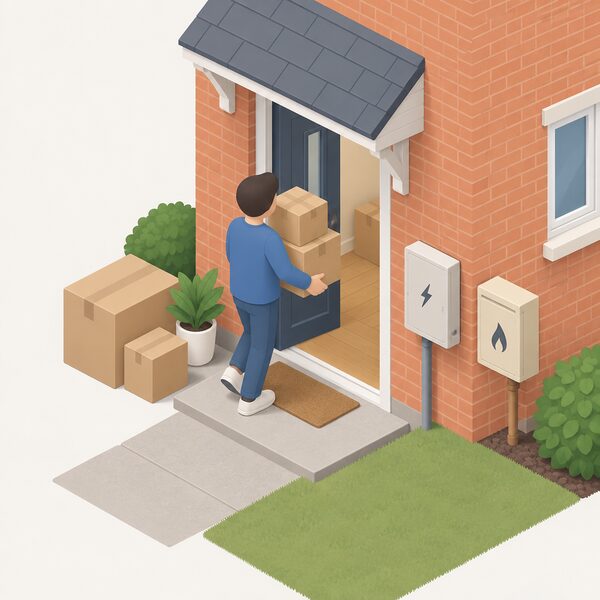
A deemed contract is the default legal relationship created when energy is consumed without an agreed contract. Ofgem's guidance describes it as normally in place when a customer moves to new premises and starts to consume gas or electricity, or both, without agreeing a contract with a supplier3. The same idea applies in the heat networks rules, where a deemed contract arises when there is no supply contract in place, for example where a consumer has moved into a heat network property and consumes heating, hot water or cooling with no supply contract9.
Supplier failure is the other common trigger. The customer never chose the new supplier and never agreed its terms, so a deemed contract fills the gap until a contract is agreed or the customer switches. The parallel case is house moving: whoever supplied energy to the previous occupants automatically becomes the new occupant's supplier, on that supplier's default or standard variable tariff10.
Deemed contract terms are constrained by the rules. Ofgem's heat network consumer protection guidance is explicit that a deemed contract must not provide for any fixed term period or any termination fee to be payable by the consumer, that it continues until the authorised person begins supply under a supply contract, and that no form of notice is required before entering a supply contract in place of it9. The practical effect in the gas and electricity market is the same shape of arrangement: a rolling default supply the customer can leave at any time.
"the Deemed Contract does not provide for any fixed term period or any termination fee to be payable by the Consumer"
Deemed contract rates sit at or close to the standard variable tariff
A deemed tariff is usually the same as the supplier's standard variable tariff, and often the most expensive10. Independent guidance on supplier failure is blunter: the customer is put on a deemed tariff which could be more expensive than the tariff they were on7. Standard variable tariffs are usually the most expensive tariffs offered by energy companies4, and a standard variable rate is one where the rate fluctuates depending on the price of energy12.
Where the household was on a fixed deal, that deal does not survive. The fixed rate contract ends at the time the customer is moved onto the supplier of last resort, and the customer is placed on a standard variable tariff with no early exit fee13. Fixed deals typically run for 12 to 24 months14, so a failure part-way through can mean losing a rate agreed many months earlier.
| Situation | Tariff applied | Fixed term | Exit fee |
|---|---|---|---|
| Supplier fails, moved to SoLR | Deemed contract, normally the standard variable tariff10 | None9 | None1 |
| Fixed deal runs to its end date | Rolled onto supplier's standard variable tariff16 | None | None12 |
| Leaving a fixed deal early | Fixed rate continues until switch | 12 to 24 months14 | Often £100 per fuel17 |
The size of the gap between a deemed rate and a negotiated one can be large in unregulated parts of the market. In a case examined by the Energy Ombudsman, the standing charge on the deemed contract was nearly 14 times higher than the consumer could have achieved on contract3. That figure comes from the deemed contract casework rather than from the domestic gas and electricity market, where the price cap limits what a deemed rate can be.
Price cap protection still applies on a deemed contract
The energy price cap is the single most important protection on a deemed contract. Ofgem states that a customer put on a deemed contract is still covered by the energy price cap1. Independent guidance describing the Ofgem safety net makes the same point about the new supplier's rates: it cannot charge more than the current energy price cap for gas18.
The cap, formally the default tariff cap, was introduced on 1 January 2019 and protects 22 million default tariff and standard variable tariff customers19. It applies where a customer has not signed up for a fixed-term contract with their supplier20, which is precisely the position of a household on a deemed contract. Under the Act, Ofgem cannot set different cap levels for different suppliers and must protect default tariff customers19, so the appointed supplier is not free to price a rescued customer book differently. The Welsh Government's guidance describes the cap's purpose as protecting people from a loyalty penalty21. Ofgem has said it will be closely monitoring supplier compliance and will continue to take firm action against suppliers who fall short of their requirements22.
What the cap does not cover matters just as much for a self-sufficiency-minded household:
- Fixed tariffs agreed with a supplier are outside the cap23.
- Business energy customers are not protected by the energy price cap25.
- Heat networks are not covered by the cap, being classed as commercial supplies26.
- Heating oil is outside the cap23, which leaves off-grid homes in Northern Ireland and rural Great Britain without this protection.
The cap is also a moving figure rather than a fixed ceiling: the default variable rate is determined by the energy price cap and changes every three months17. In a March 2026 Commons debate, ministers described bills falling in April and that level being protected to the end of June27. For context on past intervention, the Energy Price Guarantee limited the October 2022 increase to 26%, with the government paying suppliers the difference20.
More detail on how the cap is calculated sits on the energy price cap page, and the regulator's wider remit on the Ofgem page.
No fixed term and no exit fees: why a household is free to move
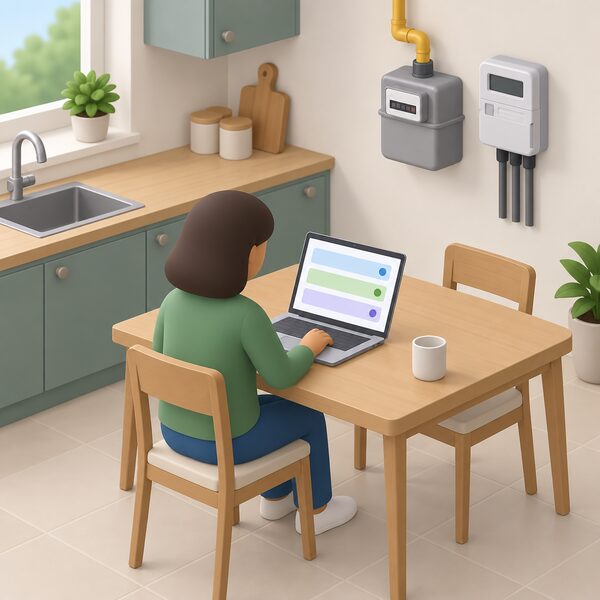
The deemed contract carries no lock-in. Ofgem states that a customer can ask the new supplier to put them on its cheapest tariff or switch to another supplier instead of a deemed contract, and that the supplier cannot charge an exit fee1. Under an Energy Supply Administration Order, the customer can switch to another supplier without any exit fees1. Independent sources agree: a customer can switch without incurring any exit fees even if they were previously on a fixed deal18, and can switch without paying an exit fee if not happy with the new supplier or tariff5. A standard variable rate tariff involves no contractual tie and no exit fees on changing supplier12.
This is a sharp contrast with the normal market. On a fixed tariff, a customer who chooses to leave before the term ends may have to pay the previous supplier an exit fee6, and most fixed tariffs include exit fees for each fuel payable on early switching28. Which? puts a common level at £100 per fuel17; one published bill showed £50 per fuel, £100 in total, for switching before the final 49 days of the contract29. Exit fees cannot be charged in the last 49 days of a fixed tariff, and within that window the customer has the right to switch freely without being charged17.
| Exit fee position | Rule |
|---|---|
| Deemed contract after supplier failure | No exit fee at all1 |
| Fixed tariff, early exit | Fee payable, varies by supplier, often £100 per fuel17 |
| Fixed tariff, final 49 days | No exit fee, free right to switch17 |
| After the supplier has said you can switch | No exit fee may be charged16 |
| Standard variable tariff | No contract tie, no exit fee12 |
Two conditions still apply to switching generally. A switch cannot go ahead where the customer has been in debt to the supplier for more than 28 days6. Where the debt is less than 28 days old, the money owed is added to the final bill6, which independent guidance says should arrive within six weeks15. Suppliers must complete a switch within five working days6, and the gas and electricity supply itself is unaffected by a switch15.
The six-month rule and what happens after it
Ofgem sets the deemed contract at six months and states that after six months the deemed contract must go back to its normal rate1. This is the one time-limited element in an otherwise open-ended arrangement. It exists because a supplier of last resort takes on a customer book at short notice and may be permitted a different rate treatment during the transition period; once that window closes, the account reverts to the supplier's normal deemed terms.
The six months is not a contract term the customer is bound by. Because a deemed contract has no fixed term period and no termination fee, and no notice is required before entering a supply contract in its place9, a household can agree a tariff with the new supplier or leave for another supplier on any day within those six months. The practical reason many people wait is administrative: the failed supplier's closing balance, refund and final bill have to be resolved, and account details may not be visible online once the company stops trading1.
Billing errors that surface during a transfer are subject to the back-billing rules. Energy firms are banned from back-billing for energy used more than 12 months before the error was detected where the supplier is at fault30. Ofgem notes the exception: a customer will have to pay for energy used more than 12 months ago if they have acted unreasonably, for example by stopping the supplier from billing accurately, including by blocking access to the meter31.
Credit balances, debts and what the new supplier owes you
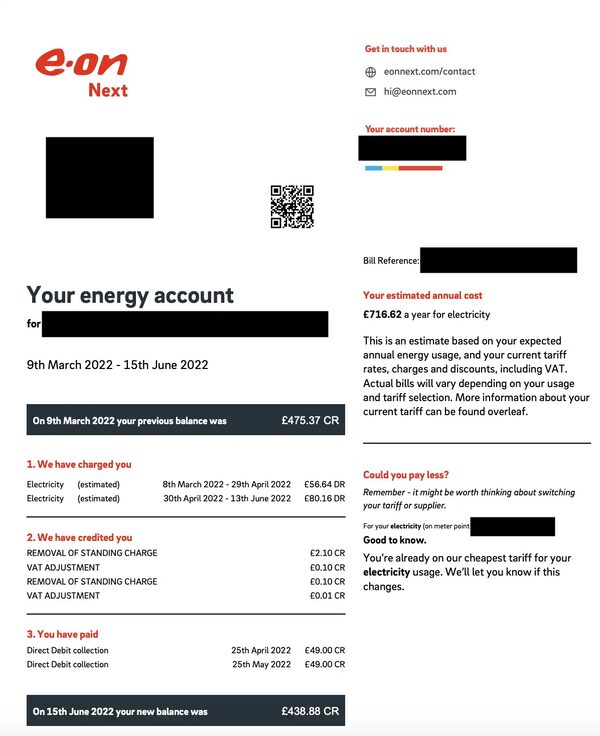
Ofgem states plainly that if a supplier goes out of business the credit balance is still protected by the rules it sets, and that the new supplier will contact the customer about a refund1. Under an Energy Supply Administration Order, the credit balance is protected unless the customer is a business1. That business exclusion is worth noting for anyone on a commercial or landlord-held account.
In an ordinary switch, the old supplier refunds any credit in the final bill, and compensation may be due if it does not32. After a failure that refund route runs through the appointed supplier instead, which is why the automatic transfer matters so much: it gives the balance somewhere to land.
Debt travels differently from credit. Where a customer owes money and has been in debt for less than 28 days, the amount owed is added to the final bill6. Households worried about payments can ask a supplier to agree a payment plan, payment break or reduction, to review current payments and debt repayments, and for access to hardship funds33. Suppliers follow a code of practice under which they will not cut off supply where a payment plan is agreed and kept to34. Where a consumer disconnected for non-payment has paid the debt or agreed a repayment plan, the guaranteed standards give 24 hours to restore supply35. Separately, the guaranteed standards provide an extra £100 where power has gone off more than four times between 1 April and 31 March the following year, for cuts of at least three hours, on a claim36; that payment relates to network power cuts rather than to supplier failure.
Ofgem, the Gas and Electricity Markets Authority and who sets the rules
The regulator behind all of this is the Gas and Electricity Markets Authority, referred to for ease as Ofgem37. It is Ofgem that sets the compensation rules suppliers must meet, and Ofgem notes that different rules apply where a supplier goes out of business17. It is Ofgem that appoints a supplier of last resort when a supplier ceases trading2, and Ofgem that sets and enforces the price cap under statute, without the power to set different cap levels for different suppliers19.
Ofgem's remit runs across Great Britain. Northern Ireland's gas and electricity market is regulated separately by the Utility Regulator, and readers in Northern Ireland should not assume the price cap figures or supplier of last resort arrangements described here apply in the same form. Broader devolved differences are set out in the Scotland and Wales pages, and the licensing and enforcement picture sits within the wider regulation and policy lane.
Heat networks are a distinct case. They are regulated separately under Ofgem's heat network consumer protection rules, which is where much of the published deemed contract drafting comes from9, but they are not covered by the price cap26. The heat network regulation page covers that regime.
Getting a copy of the deemed contract and your consumption data

A household on a deemed contract is entitled to see its terms. Ofgem's guidance requires that a copy of a deemed contract be provided free of charge within a reasonable period of time after receiving the request9. That copy is what establishes the unit rate, the standing charge and the fact that there is no termination fee.
Consumption history is the other document worth requesting, because it is the basis for checking the closing balance from the failed supplier. An online statement will display energy consumption for the last 12 months and an estimated cost of supply for the next 12 months for customers of 12 months or more38. Where the online account has gone with the failed company, that data has to be requested from the appointed supplier.
If something has gone wrong, the route is set out by the regulator and the Ombudsman:
- Contact the supplier about late, incorrect or missing bills, back billing, being overcharged, a faulty meter, poor customer service, or a refusal to refund credit from the account39.
- Log a dispute with the supplier through its formal dispute process, a copy of which can be requested and is often on its website40.
- Escalate to the Energy Ombudsman on receipt of a final decision or deadlock letter, or once eight weeks have passed without resolution41.
The Energy Ombudsman is an independent service, separate to Ofgem, covering problems with an energy supplier, an energy broker, a network operator, green deal or a heat network supplier39. It can tell suppliers to take practical action such as crediting or cancelling an account or changing a tariff, to make an apology, or to offer a financial award, or a combination, and it may make recommendations to prevent issues recurring43. Where a transfer has been made in error, compensation may be available under the Erroneous Transfer Customer Charter, which all energy suppliers must follow44. Further detail is on the energy complaints and redress page.
What supplier failure means for household energy independence
The safety net works on the two things that matter most in the moment: the supply keeps flowing and the money is protected1. What it does not do is restore the household's commercial position. A fixed price agreed before a market movement is gone13, and the replacement is a default rate sitting at the top end of what suppliers charge4, bounded only by a cap that changes every three months17. A live complaint may have to be started again, because the new supplier has no obligation to take on the old one's8.
That is the shape of the dependency. Every household buying from the retail market carries counterparty risk on a private company, mitigated by a regulator rather than removed. Reducing exposure means reducing the volume bought through that relationship: on-site generation, storage and fabric efficiency shrink the bill that any tariff, deemed or negotiated, is applied to. The grid connection, the network charges and the standing charge remain regardless. The practical consequences for self-sufficiency are drawn out on the regulation and energy independence page.
Sources44 cited
- What happens if your energy supplier goes out of business, Ofgem, 2026
- Energy Ombudsman FAQs, Energy Ombudsman, 2026-09-19
- Deemed contracts and rates, Energy Ombudsman, 2026-09-20
- Types of energy tariff, Confused.com, 2025-11-03
- Your home energy checklist, National Energy Action, 2026-09-10
- Switch your home energy supplier, Ofgem, 2026
- Electricity only tariffs, Confused.com, 2026
- Review of Ofgem call for evidence, Energy Ombudsman, 2025-02-28
- Heat networks consumer protections draft guidance, Ofgem, 2025-09-05
- Moving house energy checklist, Energy Saving Trust, 2026-05-01
- Heat networks regulation: consumer protection guidance decision, Ofgem, 2026-01-13
- Switching your energy supplier, Energy Saving Trust, 2026-06-26
- What happens when an energy supplier goes out of business, Uswitch, 2026-05-29
- Fixed energy tariffs, Uswitch, 2026-09-07
- How to switch energy supplier, Confused.com, 2025-12-15
- Your gas or electricity supplier has put up its prices, Citizens Advice, 2026-09-17
- How to switch energy supplier, Which?, 2026-05-15
- Gas only tariffs, Confused.com, 2026
- Energy price cap operating cost and debt allowances decision overview, Ofgem, 2025-05
- Domestic energy prices research briefing, House of Commons Library, 2026-09-20
- Energy price cap explained, Welsh Government, 2026-03-04
- Summary of changes to the energy price cap, 1 October to 31 December 2025, Ofgem, 2025-08-27
- Energy price cap, Ofgem, 2026-09-17
- Energy price caps explained, Ofgem, 2020-12
- Alternative homes energy guidance, Ofgem, 2026
- Edinburgh Local Heat and Energy Efficiency Strategy, City of Edinburgh Council, 2023-12
- Heating Oil Support debate, Hansard, 2026-03-16
- Energy tariffs explained, Uswitch, 2026-02-17
- How do I read my OVO Energy bill, Uswitch, 2025-09-10
- How to complain about your electricity, gas or energy bill, Which?, 2026-07-30
- What to do if you get a back bill, Ofgem, 2026
- How your electricity or gas bill is calculated, Ofgem, 2026
- Get help with your home or business energy bills, Ofgem, 2026
- Overdue utility bills, nidirect, 2026-09-17
- Energy Consumer Outcomes proposed implementation, Ofgem, 2026-06-23
- Check if you can get a payment for a power cut, Ofgem, 2026
- Improving debt standards in the domestic retail market, Ofgem, 2024-12-12
- Problems with services: consumer advice, Isle of Anglesey County Council, 2025-10
- Complain about your energy supplier or network operator, Ofgem, 2026
- Understanding your rights, Energy Ombudsman, 2026-09-20
- Our process, Energy Ombudsman, 2026-09-19
- We may be able to help resolve your energy dispute, Energy Ombudsman, 2026-09-20
- What to expect, Energy Ombudsman, 2026-09-19
- Energy terms explained, Ofgem, 2026
 Financial Resilience RulesYour supplier going bust raises two questions: who takes over and what happens to your credit balance?
 Switching SupplierHow long does switching energy supplier actually take, and what happens if you owe money?
 Switching and Supplier MarketWhat is the Ofgem price cap and does it limit what you actually pay?
 Tariff Rules and ProtectionsOfgem decides which energy tariffs suppliers can offer you, so it's worth knowing what they must provide.
 OfgemOfgem sets the rules energy suppliers and network companies must follow, including the price cap on standard tariffs.
 Challenger and Small SuppliersSmall energy suppliers can be cheaper, but are they safe to switch to?