

In this guide
An Energy Performance Certificate is a document recording the estimated energy performance of a building and its main heating systems, and it is a legal requirement whenever a home or non-domestic building is advertised for sale or let1. Legislation covering EPCs was introduced across the UK in 2008, transposing the EU Energy Performance of Buildings Directive and retained in UK law following EU Exit2. The certificate rates a building from A to G, with A the most efficient, and it is valid for 10 years3.
The rules are now in flux. Scotland has laid regulations that introduce a new rating system, redesigned certificates and a validity period cut from 10 years to five, with new-style certificates now scheduled for 30 April 20285. The UK Government intends the new Home Energy Model and a new cloud calculation-based EPC Register to be ready as the basis for issuing new EPCs by October 20267. The reform exists because the current ratings are poorly suited to defining standards and targets for reducing emissions from homes8.
For a household, the EPC is the document that decides whether a property can lawfully be let, what a buyer is told about running costs, and increasingly what retrofit work is expected. It is also a source of information only in Scotland, unlike in other parts of the UK where it is linked to minimum energy efficiency standards9.
What an EPC is and what it tells you
An EPC records the estimated energy performance of a building and its main heating systems1. It provides information about the energy efficiency and emissions of a building, and it is the basis of many energy efficiency policies in the domestic built environment1. That second role matters more than the first: the certificate is not simply consumer information, it is the measurement instrument that government uses to define standards.
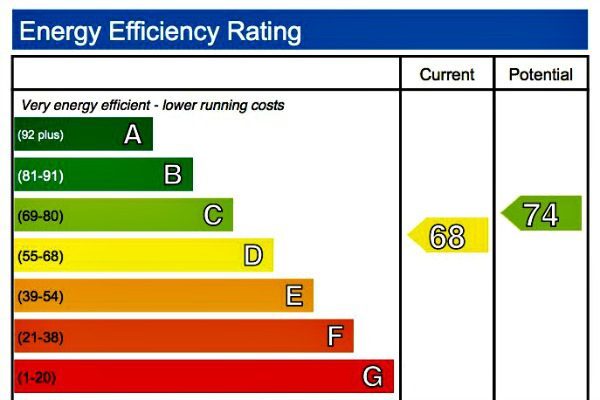
The certificate contains information on potential energy costs and carbon dioxide emissions, with a coloured chart showing how energy efficient the building is or could be4. Buildings are rated on a scale from A to G, with A being the most efficient12. It also carries information on measures which could be made to improve the energy efficiency of the building, with an indicative cost for each improvement12.
In Scotland, EPCs remain a source of information only, unlike in other parts of the UK where they are linked to minimum energy efficiency standards9. That is a real difference in what the document does for a household: north of the border it informs a transaction, while in England and Wales it can also determine whether a property may lawfully be let at all.
There is also a physical requirement that surprises owners. It is a requirement under law that the EPC must be affixed to the building, and building standards guidance suggests the boiler or meter cupboard13.
When an EPC is legally required

An EPC is required when selling or letting an existing building3. More precisely, EPCs must be provided when a building is advertised for sale or for let to a new tenant, and they are also required upon completion of construction of a new building6. Certain large non-domestic buildings must display one6. In Northern Ireland, EPCs are needed whenever a property is built or marketed for sale or rent4.
The Scottish regulations place obligations on building owners to provide an energy performance certificate when buildings are to be sold or rented out14. Dwelling owners there are legally required, under the Energy Performance of Buildings (Scotland) Regulations 2008, to provide an EPC on construction, sale or rental of a building to a new tenant15. For new buildings, an EPC is required upon completion, as has been the case16.
It is a legal requirement for all new build domestic dwellings in England and Wales to have an EPC when completed17. The duty is framed in the England and Wales regulations as the EPC construction duty, applying to specified buildings18.
Two points of coverage are worth knowing. EPCs cover around 60% of the housing stock in England and around 55% in Wales, based on Census 2021 analysis by the Office for National Statistics19. And the data is not private: it will be publicly available, and some of the underlying data may be shared with others for the monitoring and compliance of the energy performance of buildings regulations, with government also able to use some data for research or statistical purposes4.
Ratings explained: the A to G scale and how it is calculated
Ratings range from A (very efficient) to G (very inefficient)21. The assessments are banded from A to G, where A, or A+ for non-domestic properties, is the most efficient in terms of lighting, heating and insulation22. The certificate shows a current rating and a potential rating, so a household can see the gap between the building as it stands and as it could be23.
The calculation has historically rested on the Standard Assessment Procedure. That is being replaced. The reform establishes a new technical infrastructure to replace the current Standard Assessment Procedure with the new Home Energy Model, together with a new EPC Register23. Scotland intends to introduce the reformed EPC using the Home Energy Model as the calculation methodology, rather than RdSAP24.
The metrics themselves are changing shape. The reform introduces a Heat Retention Rating, set out on an A to G scale, showing a current and potential rating23. For non-domestic buildings in Scotland, the Energy Efficiency Rating is A to G, scored 1 to 100 based on kilograms of CO2e per square metre per year, based on modelled emissions from regulated energy, relative to a reference building to align with the rating system used across the UK23.
The reason for the change is that a single headline number has proved a blunt instrument. The Climate Change Committee's position is that the ratings on EPCs are an important policy tool, used to define standards and targets for reducing emissions from homes, but are poorly suited to that job8. Its recommendation is that reforms to EPC rating metrics should be applied alongside wider improvements to the EPC system to improve the quality of assessments and use of data8.
Accuracy is part of that. Research commissioned to support the EPC Reform is intended to ensure future models better reflect real-world energy performance, and to develop insights to improve modelling algorithms and enable dynamic updates to EPCs when building changes occur1.
Validity: 10 years, and when you need a new one
Under the 2008 regulations, an EPC is valid for 10 years from the issue date, provided no other energy performance certificate for the building has since been obtained by or provided to the relevant person11. Each EPC is valid for 10 years and can be used multiple times during that period4. Ratings are valid for 10 years21.
Expiry alone does not force a new certificate. A new EPC does not need to be produced when the previous certificate's 10-year validity period expires, unless the property is being sold or let to a new tenant20. In Scotland, EPCs do not have to be provided where an existing tenant is renewing their lease20.
Scotland is changing both the period and the consequence of the old regime. The validity period of the EPC is being reduced from 10 years to five25. The Energy Performance of Buildings (Scotland) Regulations 2025 make that reduction in the validity of the EPC from 10 years to five26. Scotland's climate change plan states the same change27.
The sharper point for Scottish owners is transitional. All EPCs issued under the 2008 Regulations will cease to be valid, and a new EPC meeting the requirements of the 2025 Regulations will be required for all properties from October 2026, subject to transitional arrangements10. The Scottish Government has since confirmed that regulations introducing new-style EPC certificates, validity periods and rating systems in Scotland will be amended, with new-style certificates now scheduled for 30 April 20285. The stated purpose of the delay is to ensure there is sufficient time for all of those involved and related to the EPC assessment industry, and for the wider property market, to prepare for the new regulations and deal with their effects and impacts28.
| Nation | Validity now | Change | New-style certificates |
|---|---|---|---|
| England and Wales | 10 years11 | Reform of regulations and certificate information planned for 202722 | New EPCs intended by October 20267 |
| Scotland | 10 years under the 2008 Regulations10 | Reduced to five years25 | 30 April 20285 |
| Northern Ireland | 10 years4 | No change given | No date given |
Cost, assessors and how the assessment works
The published cost in the regulations is the lodgement fee, not the assessment. EPC lodgement fees are being amended to £6.00 for domestic certificates and £15.50 for non-domestic certificates10. The increase is £3.40, raising the cost of lodging a domestic EPC to £6.0010. The domestic fee moves from £2.60 to £6.00, effective from 31 October 20265. The total annual cost of the EPC certification scenario is given as £41,250,00011.
The assessment itself is carried out by a qualified assessor, and qualified assessors can be found on the EPC register3. The recommendations that accompany the certificate are advisory only and are generated as part of the calculation methodology and software tools used by the EPC assessor15.
Quality assurance is being tightened. Strengthened operational governance arrangements for EPC assessors and Approved Organisations are being introduced to enhance quality assurance for consumers9. In Scotland, the Operational Framework is being updated to better protect consumers through higher standards of quality assurance, including exploring enhanced auditing arrangements such as on-site auditing and smart auditing23. Scotland also plans to align with EU requirements through new audit and inspection arrangements, supplementing desk-based random sampling with verification through onsite inspections23. All auditors will have undergone a Level 1 Disclosure check in line with current practice for EPC assessors26.
What the certificate contains, including the recommendations report
An EPC should contain a minimum of: the building asset rating against a benchmark; a recommendation report; a reference number and date of issuance; the building address; and the building's total useful floor area12. The certificate is accompanied by a recommendations report which provides more detailed information about improvement measures29. Under the Scottish regulations, the certificate must be accompanied by a recommendation report11.
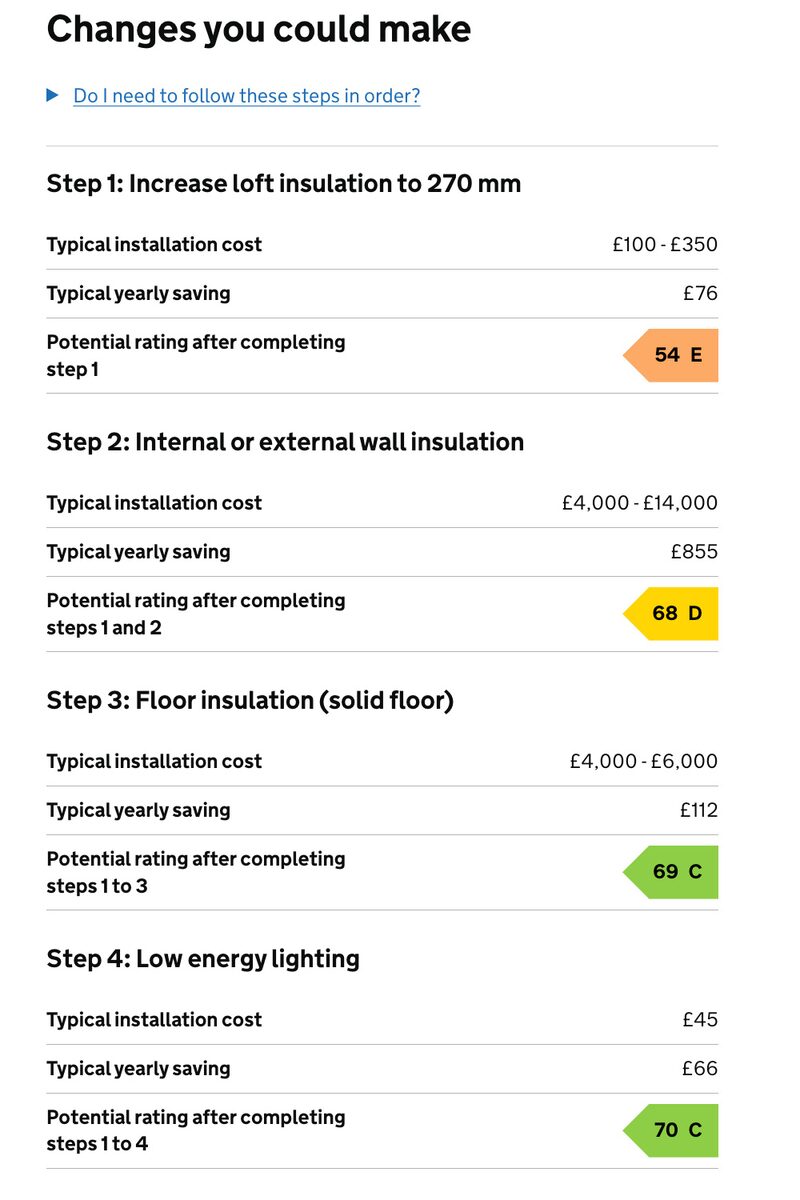
The recommendations are not instructions. The list of recommendations is advisory only and is generated as part of the calculation methodology and software tools used by the EPC assessor15. The EPC comes with cost effective recommendations to improve the energy efficiency of the building30.
Minimum standards for rental properties
The minimum standard of energy efficiency of certain domestic rented property is a rating of E or above31. Since April 2020, landlords can no longer let or continue to let properties covered by the MEES Regulations if those properties do not meet the required standard, unless they have a valid exemption32. The regulations only apply to those properties let on assured, regulated and agricultural tenancies that are legally required to have an EPC31.
A higher standard is proposed but not in force. The UK Government has proposed raising the minimum EPC standard for domestic private rented properties to band C by 203031. The Government has also proposed to raise minimum energy efficiency standards required of privately rented homes in England and Wales to the equivalent of EPC C by 203033.
Scotland's position differs, and the two Scottish consultations give different trajectories. One records a minimum EPC of E from 1 April 2019, with improvement within six months of a minimum standards assessment and all dwellings to have achieved that rating by 31 March 2022, against a minimum EPC of D from 1 April 2022 with all dwellings to have achieved that rating by 31 March 202534. A separate Scottish consultation records EPC band E for domestic private rented property, affecting new tenancies from 1 April 2020 and all tenancies from 31 March 2022, against a requirement from 1 April 2022 that the landlord must not let the property unless the EPC is a minimum of D34. A draft Scottish instrument sets a different standard again, a prohibition on the letting of domestic properties which do not meet EPC HRR band C34.
The Scottish Government has said the role the new EPC rating system could play is in supporting proposed regulations such as a private rented sector minimum energy efficiency standard25.
The reform of EPC regulations: new ratings and redesigned certificates
The reform has three parts: new ratings, redesigned certificates, and improvements to the operational infrastructure6. Regulations have been laid which will introduce a new EPC rating system, redesigned certificates, and strengthened quality assurance34. The new certificates and ratings are intended to help monitor progress in the heat decarbonisation target and to underpin minimum energy efficiency standards34.
The technical replacement is the Home Energy Model for the Standard Assessment Procedure, together with a new EPC Register23. The UK Government's intention is for the new Home Energy Model and new cloud calculation-based EPC Register to be ready as the basis for issuing the new EPCs by October 20267. The planned reforms to the EPC regulations and information displayed on certificates are dated 2027 in the statistics release22.
The certificate design is being rebuilt. Scotland will introduce a modernised Scottish EPC design and move to a web page format, and the introduction of a redesigned certificate will coincide with the regulations bringing the new rating system into force23. The redesign follows a first phase of user testing, to be followed by a second phase prior to regulations coming into force23. Clearer data sharing provisions are also planned, allowing non-personal EPC data to be shared in ways that better support organisations and industry to use it23.
Governance is part of the package. Strengthened operational governance arrangements for EPC assessors and Approved Organisations are being introduced to enhance quality assurance for consumers9. In Scotland, reforms will be implemented through a revised Operational Framework to come into force alongside the revised regulations in 202623.
How the rating system is changing and why
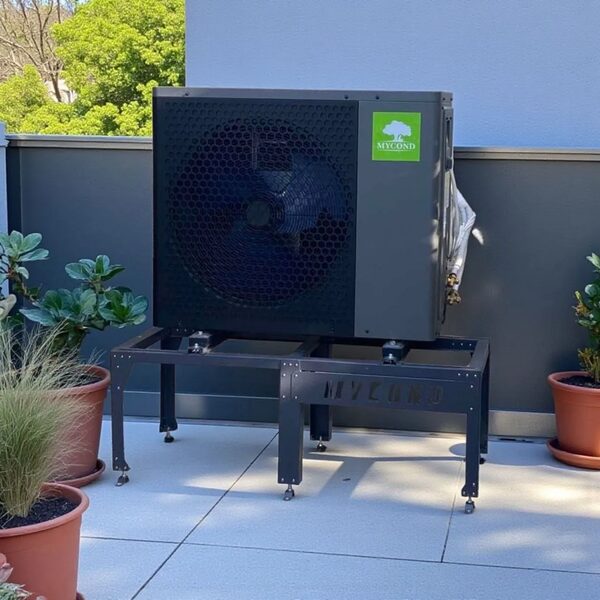
The case for change rests on a mismatch between what the rating measures and what policy needs it to measure. The ratings on EPCs are an important policy tool, used to define standards and targets for reducing emissions from homes, but they are poorly suited to that purpose8. The Climate Change Committee's recommendation is that reforms to EPC rating metrics should be applied alongside wider improvements to the EPC system to improve the quality of assessments and use of data8.
The practical consequence of the current metric is visible in one widely cited example. Replacing a gas boiler with a heat pump can, in fact, reduce a property's EPC score, which can negatively impact the property's value33. A rating system that penalises the low-carbon heating a household is being encouraged to install is the clearest argument for replacing the metric rather than adjusting it.
The replacement is a set of metrics rather than a single number. The Heat Retention Rating will be set out on an A to G scale and will show a current and potential rating23. The non-domestic Energy Efficiency Rating in Scotland is A to G, scored 1 to 100 based on kilograms of CO2e per square metre per year, based on modelled emissions from regulated energy, relative to a reference building to align with the rating system used across the UK23.
Accuracy work runs alongside. Research supporting the EPC Reform is intended to ensure future models better reflect real-world energy performance and to enable dynamic updates to EPCs when building changes occur1. The Scottish Government also aims to align with EU requirements for EPCs where possible, including with the enhanced independent audit and inspection requirements24.
Scotland: a different format and its own reform path
Scotland has its own legislation, its own register arrangements and its own timetable. The Scottish Government has committed to reform the EPC regime to ensure it is fit for purpose28. It intends to introduce the reformed EPC using the Home Energy Model as the calculation methodology, rather than RdSAP24. It will introduce a modernised Scottish EPC design and move to a web page format23.
The Scottish programme also covers data and oversight. Clearer data sharing provisions will allow non-personal EPC data to be shared in ways that better support organisations and industry to use it23. Reforms to the Operational Framework will come into force alongside the revised regulations in 202623. The Scottish Government has already established a small team to lead on operational governance of the new regulations, which includes enforcement by local authorities25. It will continue to cooperate with the UK Government and other devolved administrations on policy, legislation and market oversight of EPCs in Scotland, overseen by a new Memorandum of Understanding23.
The timetable has moved. Revised Energy Performance of Buildings Regulations were laid in 2025 and were to come into force in autumn 202627. The Scottish Government has since confirmed that regulations introducing new-style EPC certificates, validity periods and rating systems in Scotland will be amended, with new-style certificates now scheduled for 30 April 20285. The purpose of the amendment is to ensure there is sufficient time for all of those involved and related to the EPC assessment industry, and for the wider property market, to prepare for the new regulations and deal with their effects and impacts28.
Two Scottish connections are worth noting. EPC reforms are progressing in parallel with the review of the Home Report, of which the EPC already forms a part25. And the Scottish Government has said the new EPC rating system could play a role in supporting proposed regulations such as a private rented sector minimum energy efficiency standard25.
What the reforms mean for householders and energy independence

The EPC is a measurement instrument, and what it measures determines what a household can do. A rating built on the Standard Assessment Procedure has been shown to penalise heat pumps, which is a direct constraint on a household's ability to move away from gas33. A rating built on the Home Energy Model, with a separate Heat Retention Rating and a non-domestic emissions metric, is intended to measure the building rather than the fuel choice23.
The independence question is therefore about the metric, not the certificate. A household that installs low-carbon heating, insulation or solar is dependent on the rating system recognising that work in a way that lenders, landlords and standards can act on. The reform is intended to make that recognition more accurate: research supporting it is meant to ensure future models better reflect real-world energy performance and to enable dynamic updates when building changes occur1.
The wider economic case is stated by the Environmental Audit Committee: upgrading all homes to EPC Band C would deliver around £40bn in benefits to the UK economy in the period to 203033. That is a modelled figure for the housing stock as a whole, not a return any single household can expect.
What remains is dependence on the register, the assessor and the timetable. A certificate is only as good as the assessment behind it, which is why assessor governance and audit arrangements are being strengthened9. And the dates are not the household's to control: new EPCs are intended by October 2026 in the UK Government's plan, the planned reforms to regulations and certificate information are dated 2027, and Scotland's new-style certificates are scheduled for 30 April 20287.
Sources34 cited
- Energy Performance Certificate (EPC) accuracy research, GOV.UK, 2026-05-26
- Delivering net zero for Scotland's buildings: Heat in Buildings Bill consultation, Scottish Government, 2023-11
- When is an Energy Performance Certificate required?, Planning Portal, 2026
- Energy Performance Certificates, nidirect, 2026-02-26
- Energy Performance Certificate reform updates, Scottish Government, 2026-08-24
- Energy Performance of Buildings (Scotland) Regulations 2025: update and EPC reform consultation response, Scottish Government, 2025-10
- Energy Performance of Buildings (Scotland) Regulations 2025: update and EPC reform consultation response, page 1, Scottish Government, 2025-10-10
- Letter: Reform of domestic EPC rating metrics to Patrick Harvie MSP, Climate Change Committee, 2026-09-19
- Reforming Energy Performance Certificates, Scottish Government, 2025-01-21
- Energy Performance of Buildings (Scotland) Regulations 2025: update and EPC reform consultation response, Scottish Government, 2025-10
- Energy Performance of Buildings Regulations (Northern Ireland) 2008, Building Control Northern Ireland, 2008-04-10
- What does an Energy Performance Certificate contain?, Planning Portal, 2026
- Energy Performance Certificates: an introduction, Scottish Government, 2015-12
- The Energy Performance of Buildings (Scotland) Regulations 2008, legislation.gov.uk, 2026-09-17
- Domestic EPC reform consultation, page 4, Scottish Government, 2021-07-23
- New Build Heat Standard consultation part II, Scottish Government, 2022-07
- Energy Performance of Buildings Certificates in England and Wales: April to June 2025 change note, GOV.UK, 2025-07-31
- The Energy Performance of Buildings (England and Wales) Regulations 2012, regulation 34, legislation.gov.uk, 2012
- Energy Performance of Buildings Certificates in England and Wales: April to June 2025 statistical release, GOV.UK, 2025-07-31
- Energy Performance Certificates guide: buildings for let, Scottish Government, 2023-11-29
- Edinburgh Local Heat and Energy Efficiency Strategy, City of Edinburgh Council, 2023-12
- Energy Performance of Buildings Certificates in England and Wales: January to March 2026 statistical release, GOV.UK, 2026-05-19
- EPC reform consultation: government response, Scottish Government, 2025-01
- EPC reform consultation: government response, page 8, Scottish Government, 2025-01-21
- EPC reform: government response, Scottish Government, 2025-01-21
- Energy Performance of Buildings (Scotland) Regulations 2025: children's rights and wellbeing impact assessment, Scottish Government, 2025-10-10
- Scotland's Climate Change Plan 2026-2040, page 13, Scottish Government, 2025-11-06
- Energy Performance of Buildings (Scotland) Regulations 2025: amended regulations business and regulatory impact assessment, Scottish Government, 2026-08-24
- Energy Performance Certificates guide, Scottish Government, 2026-08-24
- Energy Performance Certificate leaflet, Building Control Northern Ireland, 2014
- Trading Standards guidance: other consumer problems, Isle of Anglesey County Council, 2026-05
- Energy efficiency and the private rented sector, Environmental Audit Committee, 2026-09-20
- Replacing a gas boiler with a heat pump and EPC scores, Environmental Audit Committee, 2025-05-09
- Proposals for a Heat in Buildings Bill, Scottish Government, 2019-06-17
 Get an EPC for Your HomeSelling or renting out a home means you need an Energy Performance Certificate.
 Energy Performance CertificatesAn Energy Performance Certificate rates how energy efficient your home is, from A down to G.
 EPC StatisticsHow energy efficient are UK homes, and is it getting better?
 Energy Checks Before BuyingHow energy efficient is the house, and what will it cost to heat?
 Read an EPCA walk through each part of an EPC: the A to G rating and potential rating, the estimated costs, the fabric and heating assumptions and the recommendation table, plus what the assessor did and did not inspect and how the rules differ across the UK.
 Home Energy ModelThe energy rating on your EPC is about to be worked out differently when you buy, sell or build a home.