

In this guide
The Building Safety Regulator sits within the Health and Safety Executive and was established by the Building Safety Act 2022. Since April 2023 it has had a duty under that Act to keep under review the safety and standards of all buildings in England, which includes advising government on updates to the Approved Documents1. That is a wider remit than the name suggests: it is not only a fire-safety body for tall blocks, but the national reviewer of building standards across the whole stock.
Its second, harder-edged role is as a building control authority. Building control approval for a higher-risk building comes from the Building Safety Regulator, not from a local authority or a private registered building control approver2. Approval is needed before starting to build a new higher-risk building, work that makes an existing building a higher-risk building, work that stops it being one, or work on an existing higher-risk building, except in certain cases2. The Building Regulations 2010 themselves apply to all buildings in England including higher-risk buildings3.
For a household, the practical consequence is a fork in the approval route. Work that does not include a higher-risk building can go to a private registered building control approver in England2. Work that does can only go to the regulator. Energy works on a tall residential block, from a plant room replacement to a rooftop array, sit on the same side of that fork as the structure and the fire strategy.
What the regulator is, and what it is not
The Building Safety Regulator is a body within the Health and Safety Executive, established by the Building Safety Act 20225. Its statutory duty, in force since April 2023, is to keep under review the safety and standards of all buildings in England, and that duty expressly includes advising government on updates to the Approved Documents1. The Approved Documents are where the technical content of the Building Regulations lives, so a body that advises on their revision has a hand in the rules themselves as well as in enforcement.
What it is not is a general building control service for every project. In England there are three possible building control bodies: a local authority, a registered building control approver, or the regulator4. The regulator is the one that applies where the work includes a higher-risk building. A private registered building control approver in England can be used only if the work does not include a higher-risk building2. Local authority building control bodies and approved inspectors are the two types of building control body described in Approved Document L4.
The regulator also has a research function. It has planned research into post-construction testing6. That matters to households because post-construction testing is where the gap between a design's claimed performance and a building's real performance is measured, and it is the mechanism by which the energy performance of a completed dwelling can be checked rather than assumed.
There is a live argument about how far the remit should stretch. The Climate Change Committee has recommended expanding the remit of the new building safety regulator to cover climate change mitigation and adaptation, strengthened through an explicit responsibility for sustainability, and ensuring it is fully equipped to monitor and enforce compliance with buildings standards7. That recommendation is not the current statutory duty. The current duty is safety and standards, with an advisory role on the Approved Documents.
What drives the regime: safety, standards and the cost of approval
The Building Regulations exist to control certain types of building work and to ensure that buildings meet certain standards of health, safety, welfare, convenience and sustainability8. That is the statutory purpose the regulator's review duty serves. The same formulation appears in the Welsh review of Part L, which describes the regulations as ensuring buildings meet required standards of health, safety, welfare, convenience and sustainability9.
In Northern Ireland the purposes are set out in legislation rather than guidance. The Building Regulations (Northern Ireland) Order 1979 sets out four purposes for requirements: to secure the health, safety, welfare and convenience of persons in or about buildings and of others who may be affected by buildings or matters connected with buildings; to further the conservation of fuel and power; to further the protection and enhancement of the environment; and to promote sustainable development10. The 2009 Order repeats the same four purposes11. The inclusion of fuel and power conservation as a statutory purpose, alongside health and safety, is the clearest statement in the UK that energy performance is not an add-on to building regulation but one of its founding objects.
Cost is part of what drives behaviour. Charges for higher-risk building control approval are explained on the Building Safety Regulator charging scheme on the Health and Safety Executive website2. There is no single published figure for a higher-risk building application; the scheme is the route to the number, and it varies with the project.
The Construction (Design and Management) Regulations 2007 are intended to protect people working in construction and others who may be affected by their activities12. They sit alongside the building control regime rather than inside it, and they bear on how energy retrofit work on occupied blocks is planned and sequenced.
Higher-risk buildings and the approval gate
The higher-risk building test is the hinge of the whole regime. It decides which body approves the work, and therefore which process, timescale and fee apply. Where the work includes a higher-risk building, the application goes to the Building Safety Regulator, unless the work is exempt, not covered by regulations, or carried out by a competent person2.
Four categories of work trigger the requirement. Approval is needed before starting to build a new higher-risk building; before work that makes an existing building a higher-risk building; before work that stops it being one; and before work on an existing higher-risk building, except in certain cases2. The second and third categories are the ones households most often miss. A change of use or a structural alteration that pushes a building across the threshold is itself regulated work, and so is work that takes a building back below it.
The regulator also has a copy-forwarding duty. As building control authority under section 91ZB of the Act, it must send a copy of each notice or certificate it receives under the relevant regulation in relation to a building to the local authority for the area in which the building is situated13. That keeps the local authority's records complete even though it is not the approving body, which matters when a future owner or a conveyancer searches the record.
Where the regime sits alongside the rest of building control
Building control approval is not the same thing as planning permission. Building regulations set standards for the design and construction of buildings to ensure the safety and health for people in or around those buildings14. Planning permission governs whether a development may happen at all. A project can have one and not the other, and energy works frequently need building regulations approval while needing no planning application.
The Building Regulations only set standards for electrical installation work in relation to dwellings, including houses and flats15. For industrial or commercial buildings, the Health and Safety Executive is responsible for making sure that electrical installation work in those kinds of buildings is safe16. That split matters on mixed-use blocks, where the residential and commercial parts of the same building fall under different electrical safety regimes even though they share a structure and, often, a plant room.
Safety on electrical work can be checked in either of two ways: by using an electrician registered with a competent person scheme, or by notifying the building control section of the local authority15. The rules exist to help reduce the number of deaths, injuries and fires caused by faulty installations16. Where a heating system has been altered or replaced, the person who last worked on the system is responsible for its safe running and should issue a certificate showing the necessary checks have been carried out17.
How the regime differs across England, Scotland, Wales and Northern Ireland
Building control is devolved, and the Building Safety Regulator's remit is England only. In England, enforcement of the Building Regulations 2010 and the Building Safety Act 2022 is carried out by local authorities and by the Building Safety Regulator for higher-risk buildings18. That dual enforcement structure is specific to England.
Scotland runs a separate system. The building standards system is overseen and updated by the Building Standards Division12. Scottish building standards include a mandatory electrical safety standard: every building must be designed and constructed in such a way that the electrical installation does not threaten the health and safety of people in and around the building or become a source of fire19. That is a standard of the Scottish system, not a duty of the Building Safety Regulator.
Wales has its own building regulations, including a review of Part L on the conservation of fuel and power20, and separate provision on electrical safety in buildings8. Northern Ireland's Building Regulations are intended to ensure the safety, health, welfare and convenience of people in and around buildings21, and each local council's Building Control enforces the Energy Performance of Buildings Regulations (NI) in its council area22. Applications there go through nidirect's building regulations approval route23.
| Nation | Who approves and enforces | Energy performance rules |
|---|---|---|
| England | Local authorities, and the Building Safety Regulator for higher-risk buildings18 | Part L of the Building Regulations24 |
| Scotland | Building Standards Division oversees and updates the system12 | Scottish building standards technical handbook12 |
| Wales | Welsh building regulations, with a Part L review20 | Part L review and written statement on conservation of fuel and power20 |
| Northern Ireland | Each council's Building Control enforces the EPB Regulations22 | Building Regulations (NI) Order purposes include conservation of fuel and power10 |
Energy infrastructure and regulation is the responsibility of the UK Government25. That is the asymmetry worth holding on to: the safety regime that governs a tall block is devolved, while the energy system the block connects to is not.
Energy performance, certification and the independence question
Part L of the Building Regulations sets the standards for the energy performance of new dwellings and non-domestic buildings24. That is the route by which a new home's fabric, heating and renewables are regulated, and it sits inside the same Building Regulations framework the regulator reviews and advises on.
Energy performance certification has its own independence requirement. Under the Energy Performance of Buildings Directive, the energy performance certification of buildings and the inspection of heating systems and air-conditioning systems are carried out in an independent manner by qualified and, or, accredited experts26. The definition of a relevant building for these purposes is a roofed construction which has walls, for which energy is used to condition the indoor climate, and in respect of which an EPC can be issued27. A parallel definition in the feed-in tariff guidance describes a relevant building as a roofed construction having walls, for which energy is used to condition the indoor climate, other than such a building for which an energy performance certificate cannot be issued28.
For a household's energy independence, the regime does three things. It sets a floor on the energy performance of new build, through Part L24. It requires that the certificate describing that performance is produced independently26. And it places approval for work on higher-risk buildings with a single national regulator, which means energy works on tall blocks cannot proceed on a private approver's sign-off2.
What dependence remains is structural. A higher-risk building still draws from the grid, still buys from a supplier, and still relies on a manufacturer for the performance of whatever plant is installed. The regime governs how safely and how efficiently the building is built and altered; it does not make the building self-supplying. The Future System Operator policy in the Energy Bill is intended to establish a new independent FSO with enhanced roles and responsibilities to strengthen energy security29, which is a system-level answer to a system-level dependence.
"Expand the remit of the new building safety regulator to cover climate change mitigation and adaptation, strengthened through an explicit responsibility for sustainability; and ensure it is fully equipped to monitor and enforce compliance with buildings standards."
Products, recalls and the limits of the safety net
The regulator's review duty covers safety and standards, and product safety sits with a different set of bodies. The regulation of product safety in the UK is the responsibility of market surveillance authorities30. The Office for Product Safety and Standards acts as the UK's national regulator for Weights and Measures and has a role in setting direction for local enforcement31.
Recalls are the visible end of that system. Tesco initiated a precautionary recall of its 1200W and 1600W halogen heaters following a house fire caused by an identical product sold by another retailer32. The same retailer recalled two upright halogen heater models after an investigation prompted by another retailer selling the identical product33. Authorities ordered the withdrawal of a radio control toy series from the market for non-compliance with the Low Voltage Directive34.
The UK safety specification for plug-in solar panels is more stringent than that of Germany, where the technology is already widely used35. That is a statement about the specification, not about any individual product's compliance, and it is the kind of claim a household should read as a description of the rule rather than a guarantee about a box on a shelf.
What this means in practice for a household
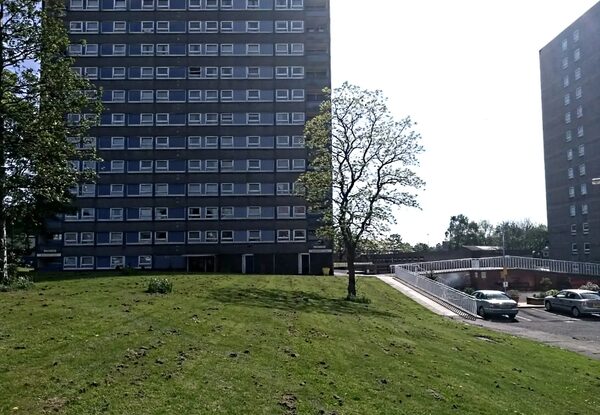
The regime's effect on a household depends almost entirely on which side of the higher-risk building line the property sits. For a house or a low-rise flat, the approval route runs through a local authority building control body or a private registered building control approver2, and the Building Safety Regulator's role is the distant one of reviewing standards and advising on the Approved Documents1.
For a flat in a tall block, the route narrows. Work that includes a higher-risk building needs approval from the regulator before it starts2. The regulator forwards notices and certificates to the local authority for the area13, so the record stays searchable. Charges are set by the published charging scheme rather than a flat fee2.
The energy consequence is a timing one. Energy works on a higher-risk building cannot be sequenced around the approval; the approval comes first. That is the same principle that applies to heating work in any dwelling, where the person who last worked on an altered or replaced system is responsible for its safe running and should issue a certificate showing the necessary checks have been carried out17. The difference is the body that signs it off.
For a household thinking about independence, the honest position is that the regime is a safety and standards framework, not an independence framework. It sets the energy performance floor for new build through Part L24, requires independent certification26, and puts a single national approver in front of work on the tallest and most complex residential buildings2. It does not remove the grid connection, the supplier relationship or the reliance on a manufacturer's stated performance. Those remain, and the Climate Change Committee's recommendation to widen the regulator's remit to climate change mitigation and adaptation7 is a proposal to extend the framework's reach, not a change that has taken effect.
Sources35 cited
- Building regulations approval, GOV.UK, 2026-09-17
- How to apply for building regulations approval, GOV.UK, 2026-09-17
- The Building Regulations 2010, legislation.gov.uk, 2010-09-06
- Approved Document L, Volume 1: Dwellings, GOV.UK
- The Future Homes and Buildings Standards 2023 consultation, GOV.UK, 2026-09-17
- Future Homes and Buildings Standards Consultation Response, GOV.UK, 2026-03
- Risks to health, wellbeing and productivity from overheating in buildings, Climate Change Committee, 2026-09-19
- Building regulations: electrical safety consultation, Welsh Government, 2012-07-30
- Building Regulations Wales consultation: Part L, Welsh Government, 2012-07-31
- Building Regulations (Northern Ireland) Order 1979, legislation.gov.uk, 1979-12-19
- Building Regulations (Northern Ireland) Act 2009, legislation.gov.uk, 2009-03-02
- Building Standards Technical Handbook, Domestic (April 2026), Scottish Government, 2026-03
- The Building Regulations 2010, regulation 43, legislation.gov.uk, 2026-09-17
- What is the difference between planning permission and building regulations approval?, Planning Portal, 2026-09-17
- Building regulations: general information for electrics, Planning Portal, 2026-09-17
- Electrical safety: Approved Document P, GOV.UK, 2026
- Boilers and heating: building regulations, Planning Portal, 2026
- Reforming consumer protection for home upgrade schemes, GOV.UK, 2026-06-17
- Building Standards Technical Handbook 2020: electrical safety, Scottish Government, 2020-12-02
- Building Regulations Part L review, Welsh Government
- Building Regulations, Building Control Northern Ireland, 2026
- Energy Performance of Buildings Regulations (NI), Building Control Northern Ireland, 2013-09
- How to apply for building regulations approval, nidirect
- Energy efficiency characteristics of new dwellings, GOV.UK, 2026-02-04
- Protection for energy customers ahead of RTS switch-off, Scottish Government, 2025-03-15
- Energy Performance of Buildings Directive, legislation.gov.uk, 2026-09-17
- Feed-in Tariff guidance for licensed electricity suppliers, Ofgem, 2024-09-06
- Feed-in Tariff guidance for renewable installations, Ofgem, 2016-06-20
- Energy Bill publications, UK Parliament, 2022-07
- Product recalls and alerts, GOV.UK, 2022-04-07
- Cost of living pressures expose gaps in bulk fuel checks, Chartered Trading Standards Institute, 2026-03-16
- Tesco halogen heater 1200W and 1600W recall, Electrical Safety First
- Tesco electric heater recall, Electrical Safety First
- Radio Control King of Stunt R/C Series recall, Electrical Safety First
- Households can save as plug-in solar panels come to market, GOV.UK, 2026-08-26
 High-Rise Flats and SafetyWho signs off new insulation, cladding or heating in a high-rise flat?
 Building RegulationsExplains the building control position for a solar installation across the four nations, the structural assessment of the roof, and the fire performance requirements for roof-mounted and integrated arrays.
 Building Regulations EnglandAdding a heat pump, solar panels or an extension usually needs building regulations approval, and it is separate from planning permission.
 Air Conditioning in FlatsExplains the lease, freeholder and landlord consents that govern fixed air conditioning in flats, and building safety points for higher-risk buildings.
 Backup Power Safety RulesWho signs off a battery or backup circuit, and can you legally plug in a power station or a plug-in solar panel in the UK?
 Building Regs Part L InsulationAdding insulation or replacing windows?