
In this answer
Short answer
Yes, in most cases an insurer needs to be told about solar panels. A rooftop array, its mounting, cabling and inverter become part of the buildings, so the sum insured needs to reflect the cost of reinstating them. Insurers also ask about alterations to the property, and an undeclared system can complicate a claim. The installation itself is a regulated alteration: building regulations normally apply to a solar panel on a roof, because of the additional loading on the roof structure and the associated electrical works1.
The declaration is not only about the panels. A battery storage system is a separate high-value item with its own electrical and fire risk, and it is normally declared alongside the array. Installation of a battery also triggers a District Network Operator application, with the same process as for solar panels, which the installer can complete3. The installer registers the system, and any battery, with the DNO as an important safety process4.
What follows is what the rules require, how insurers treat the technology, what changes at the point of installation, and what the options are where cover is refused or loaded. The lens throughout is the same one that applies to any energy independence measure: the household gains generation it controls, but it takes on a structural alteration, an electrical installation and a disclosure duty to its insurer.
Do you need to tell your insurer about solar panels?
The short answer is yes, and the reason is structural rather than administrative. Installing solar panels may require approval under the Building Regulations, due to the additional loading on the roof structure and the associated electrical works1. Building regulations will normally apply to a solar panel on your roof2. That approval is the evidence an insurer wants when the policy record is updated, because it shows the roof was assessed and the electrical work certified.
The roof assessment is specific. The installer must check that the roof can support the additional wind, snow and static load imposed by the solar panels, and that it complies with Part A: Structure6. A roof that is not in good condition, or that is heavily shaded, may not be suitable at all1. These are the same conditions that determine whether an insurer is being asked to carry a materially different risk from the one it priced.
There is also a planning dimension that varies across the UK. Installing solar panels on your roof will often fall under permitted development rights, meaning an application for planning permission is not required provided certain limits and conditions are met9. Where the installation does not meet government requirements, planning permission must be applied for10. In Wales, panels fitted to a building in a garden or grounds should not be visible from the highway in conservation areas and World Heritage Sites11. Where consent is needed, it is worth having it in place before the insurer is notified, so the policy record and the planning record agree.
For a household, the disclosure duty is the price of the independence the system delivers. The array reduces reliance on imported electricity and on a supplier, but it adds a declared asset to the property and a set of certificates that a future buyer, and a future insurer, will ask to see.
How insurers treat solar panels: buildings cover and extra premiums
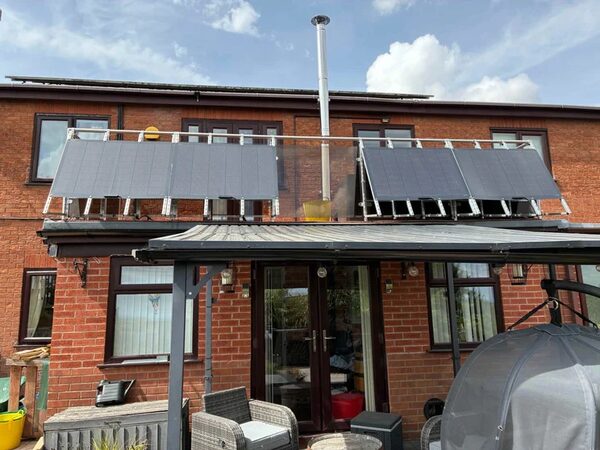
Panels fixed to the roof are treated as part of the buildings, not the contents. That means they sit within the buildings sum insured, and the sum should be increased to reflect the cost of reinstating the system, including mounting, cabling and the inverter. A portable plug-in kit is the exception, because it is not fixed to the structure.
Whether the premium rises depends on the insurer and the size of the system. Some policies absorb a modest rooftop array within the existing buildings sum; others apply an administration charge or a loading. The drivers are the same ones that shape the installation itself: the additional loading on the roof structure, the associated electrical works, and the value of the equipment1. A larger array, a battery, or a flat roof installation with tilted and spaced panels all change the picture5.
The practical route is to notify the insurer with the paperwork in hand: the building regulations completion evidence, the MCS certificate, and the system specification. That lets the insurer confirm the revised buildings sum insured in writing before the policy renews. Where the property is listed, the position is stricter: solar panels on listed buildings always require listed building consent13, and adding solar panels to the building or curtilage is caught by that consent requirement14. Consent is not an insurance matter, but an unconsented installation on a listed building is a defect an insurer will want to know about.
What changes when panels are fitted: sums insured, roof work and liability
Three things change at installation. The first is the buildings sum insured, which should rise by the reinstatement cost of the system. The second is the roof itself: the structure must take the additional wind, snow and static load, and comply with Part A: Structure6. The third is the electrical installation, which brings the associated works within the building regulations scope alongside structural safety and ventilation3.
Roof type matters to both the installer and the insurer. Solar panels can be installed on both pitched and flat roofs; on a flat roof the panels need to be tilted and spaced to avoid shading5. A flat roof installation therefore involves more mounting hardware and more penetrations, which is part of what the insurer is being asked to cover.
| What changes | Detail | Source |
|---|---|---|
| Buildings sum insured | Should reflect the reinstatement cost of panels, mounting, cabling and inverter | 1 |
| Roof structure | Must support additional wind, snow and static load; Part A: Structure | 6 |
| Electrical works | Within building regulations scope, with structural safety and ventilation | 3 |
| Approval route | Building Regulations approval likely needed for a roof installation | 12 |
| Listed buildings | Listed building consent always required | 13 |
Liability is the quieter change. Scaffolding, roof access and electrical work all introduce third-party risk during installation, which is normally carried by the installer's own insurance rather than the householder's. After handover, the householder's liability cover applies as before. The independence gain is real: the household generates its own electricity and depends less on the grid and a supplier. The dependence that remains is the grid connection itself, the DNO registration, and the insurer's willingness to carry the altered risk.
Battery storage, EV chargers and other additions that also need declaring
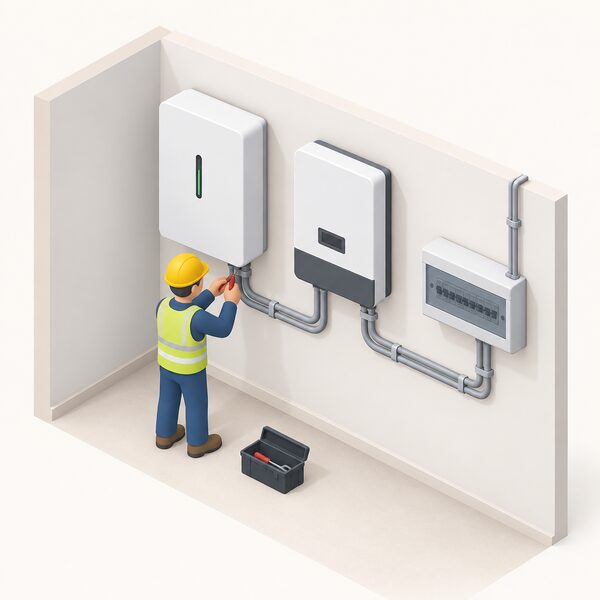
A battery is the addition most often overlooked. If you are installing a battery storage system alongside your solar PV, you will also need a DNO application, with the same process as for solar panels, and the installer can complete it3. The installer registers the solar panel system, and any battery storage, with your District Network Operator as an important safety process4. Battery storage can be added to existing solar panels to maximise the benefits of the system, and group buying schemes cover solar panels and battery storage through to heat pumps and EV chargers15.
Insurance-backed guarantees sit alongside this. Providing an IBG for a solar PV and/or electrical energy storage system installation is mandatory under the relevant scheme, while providing an IBG for an EV charge point only installation is optional7. Policies are activated automatically once the installer has registered the consumer's installation and paid the premium17. That registration is the link between the installation record and the guarantee, and it is worth confirming it has happened.
Each of these additions is a separate declared item. A battery, an EV charger and a diverter all change the electrical load and the risk profile, and each should appear on the policy record alongside the panels.
If your insurer refuses or charges more: your options
Where an insurer declines or loads the premium heavily, the market has alternatives. Specialist and high-net-worth insurers cover homes with renewable technology, and a broker can place the risk. The information an insurer or a planning authority may ask for overlaps: where consent is needed, evidence can include an assessment of alternative locations, an assessment of alternative technologies considered, and information on mitigation of impact, such as non-reflective panels or the use of tile panels or solar shingles19. Having that material ready helps with both processes.
For listed buildings, the position is that adding renewable energy solutions like solar panels or air and ground source heat pumps might be acceptable but will require listed and or planning consent20. Sometimes panels can be installed on a listed building, depending on the building and how the installation would affect its character21. Where consent is granted, the insurer has a consented installation to cover.
Cost factors that affect the premium are the same ones that affect the installation: size, how easy it is to access your roof, and whether panels or tiles are preferred22. A more complex installation is a larger declared value and a longer period of elevated risk during the works.
Leaseholders face an extra step. If you are a leaseholder you may need permission from your landlord, freeholder or management company before installing24. That permission is separate from insurance, but an insurer will want to know the installation is authorised.
Keeping your policy up to date after installation
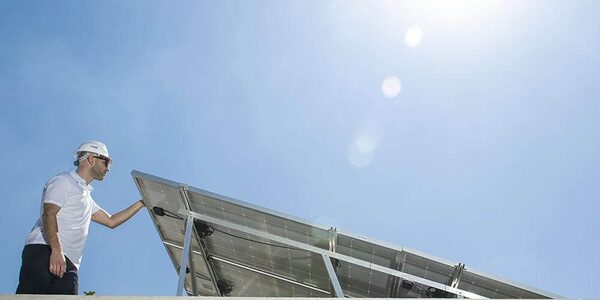
Once installed, the solar panels should only need minimal maintenance2. That does not remove the need to keep the policy record current. An annual check is sensible: get your panels checked on an annual basis to ensure there is no debris build-up on the panels themselves, and also to ensure the cables and connectors are still working as they should be25. The Energy Saving Trust also advises getting the system checked by a certified installer26.
Maintenance guidance should follow the manufacturer's recommendations for the model chosen2. Cleaning cost depends on the number of panels, their location, and whether specialist access equipment is needed27. None of this is insured work, but a maintained system is easier to evidence if a claim arises.
Two records matter when the household moves or the policy renews. The first is the installation and registration paperwork, including the DNO notification and any insurance-backed guarantee. The second is the feed-in tariff position if the system was ever registered under that scheme: if the installation is a solar PV installation, a new generator will need to make a new multi-installation declaration on change of ownership28. A moving-house energy checklist is a useful prompt for transferring or updating the relevant records29.
The independence picture at this point is stable. The household owns a generating asset, has declared it, and depends on the grid for import and export rather than for supply alone. The remaining dependencies are the DNO connection, the insurer's continued cover, and the manufacturer's warranty on the equipment, which is a company promise rather than a household one.
Sources29 cited
- Solar photovoltaic (PV) panels, London Borough of Bromley, 2026-09-17
- Solar panels, East Hertfordshire District Council, 2026-09-17
- Building regulations, Planning Portal, 2026-09-17
- Solar panels, City of York Council, 2026-09-17
- Solar panels, London Borough of Hammersmith and Fulham, 2026-09-17
- Building regulations renewables guidance, Bedford Borough Council, 2026-09-17
- How EPVS and Flexi-Orb are improving the standard of renewable energy installations, EPVS, 2026-09-17
- Solar panel costs, Heatable, 2027-04-01
- Solar panels and permitted development, London Borough of Richmond upon Thames, 2026-09-17
- Solar panels, London Borough of Lambeth, 2026-09-17
- Planning permission for solar panels, Welsh Government, 2026-09-17
- Building regulations energy efficiency, Planning Portal, 2026
- Improving energy saving and sustainability in conservation areas and listed buildings, Brighton and Hove City Council, 2026-09-17
- When consent is required, Buckinghamshire Council, 2026-09-17
- Switch Together Birmingham, Birmingham City Council, 2026-01-27
- Group buying, Switch Together, 2026-09-17
- Insurance backed guarantees, Flexi-Orb, 2026-02-25
- Plug-in solar panels, Which?, 2026-09-15
- Solar panels planning permission, Bath and North East Somerset Council, 2026-09-17
- Making alterations to a listed building, Bristol City Council, 2026-09-17
- FAQs for listed building owners and occupiers, Exeter City Council, 2026-09-17
- How do solar panels work, Smart Energy GB, 2026-03-16
- Information regarding free solar PV systems, Renewable Energy Consumer Code, 2026-09-17
- Solar panels guidance, London Borough of Islington, 2026-09-17
- Do solar panels work in winter, Uswitch, 2026-09-15
- Moving house energy checklist, Energy Saving Trust, 2026-05-01
- Solar panel cleaning and maintenance, Energy Saving Trust, 2026-08-25
- Guidance for FIT generators, Ofgem, 2026-04-01
- Solar panel installation, Energy Saving Trust, 2026-09-07
 Workmanship WarrantiesIf something goes wrong with your solar panels, who actually fixes it and who pays?
 Selling a Home With Energy KitCovers the paperwork a sale requires when a home has solar panels, a heat pump, insulation or a leased roof, and how warranties, export payments and guarantees transfer.
 Solar Mounting SystemsWill your roof take the extra weight of solar panels, and will it still keep the rain out afterwards?
 Warranties and DegradationHow long do solar panels actually last, and what do the warranties really cover?
 Free Solar Panels vs Rent-a-RoofOffers of free panels usually mean a company owns the system and keeps the generation income or charges a monthly fee.
 Deposits and Staged PaymentsHow much deposit should you pay for solar panels or a heat pump, and what happens to your money if the installer goes bust?