
In this answer
Short answer
A rent-a-roof solar scheme is an arrangement in which a company pays for and owns the panels on a household's roof, and takes the tariff income the system generates in return. The household gets the electricity the panels produce, but not the payments. Which? reports that companies offered to lease a roof for 20 to 25 years, and that there are very few free solar panel schemes available now1.
The defining feature is not the price, which is nil up front, but the lease. The lease stays with the property, so it passes to whoever buys the house next, and the contract Which? examined required the householder to get the company's consent during the term of the lease before selling, or before making alterations or additions to the building near the system1. That is why these arrangements still surface in conveyancing years after the offer was signed.
For a household's energy independence the picture is mixed. The panels generate on the roof and the electricity is free to use once installation is paid for, but in a leased system the installation was never the household's cost and the asset was never the household's property. A third party finances the upfront and maintenance costs and owns the generating asset2. The home remains connected to the grid and to a supplier, and the roof carries an obligation that outlasts the original owner.
How the "free" offer is paid for
The economics of a rent-a-roof scheme rest on the tariff income, not on the panels' output. Which? states that the rent-a-roof company usually takes all the generation and export tariff payments paid out under the Feed-in Tariff scheme1. The household's benefit is the electricity it uses directly; the company's return is the subsidy stream plus, in many contracts, the export payments.
Confused.com describes the same structure from the consumer side: some companies offer free solar panels if the household returns any income made through selling the energy back5. The offer is therefore a trade, not a gift. The household contributes roof space and a long-term legal commitment; the company contributes capital and maintenance.
The Renewable Energy Consumer Code sets out what a household should expect to be told in writing before signing. Its list for free solar PV systems covers legal ownership of the system, the up-front cost of the system if purchased with a loan, any additional charges, and the arrangements for terminating the agreement6. For hire purchase agreements specifically, it also covers details of the consumer credit licence6. Where a genuine grant is involved the position is different: in real grant schemes the household owns the panels once installed, with no lease and no repayments7.
Finance is not limited to leasing. Energy Saving Trust notes that some installers let households spread the cost of solar panels, with or without battery storage, over a number of years with low or zero interest, and that finance may also be available from local authorities, banks or other financial organisations8. Those are purchases, and the household ends up owning the asset.
The lease stays with the property when you sell
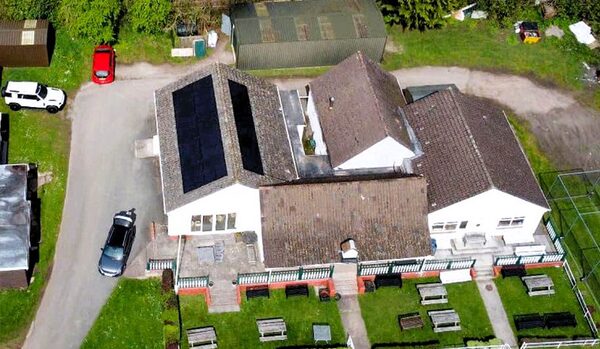
This is the point that catches households years later. Which? states plainly that the lease stays with the property1. The seller does not take it away and the buyer does not choose whether to accept it; it runs with the roof.
The contract Which? saw went further, stipulating that the householder would have to get consent during the term of the lease if they wanted to sell their house, or make any alterations or additions to the building near the solar PV system1. Consent requirements of that kind put a third party into decisions a homeowner would normally make alone, including work near the array.
There is a parallel in another long-lived property charge. The Green Deal loan is attached to a property rather than an individual, so if a homeowner sells their home the loan passes to the new owner9. The mechanism is the same in principle: an obligation registered against the property rather than the person.
For a sale, the paperwork matters as much as the panels. Energy Saving Trust advises that a solicitor should be able to help a buyer understand the documents relating to the solar panels, including any ownership and transfer forms, and that a change of ownership form is needed to ensure export payments reach the right person10. The RECC list includes the arrangements for assigning the arrangement if the property changes hands6.
"The lease stays with the property"
Where the panels were bought outright rather than leased, none of this applies in the same way, and the guide to selling or buying a home with solar, a heat pump or insulation work sets out the general position.
What leased panels mean for energy independence
A leased array delivers part of what a household wants from solar and withholds the rest. The generation is real and the electricity is free to use once installation is paid for, though in a leased system the household did not pay for that installation11. What the household does not hold is the asset, the tariff income, or full control of the roof.
The dependence that remains is layered. The home stays connected to the grid and buys from a supplier for everything the panels do not cover at the moment it is needed. The system itself belongs to a company, so maintenance, removal and modification decisions sit with that company or require its consent1. And the arrangement is contractual, so it depends on the company continuing to exist and honour its side.
Ownership changes the picture. Where a household buys the system, the panels are its own property and the surplus can be sold: Oxfordshire Council notes that a solar PV system allows a household to sell any surplus energy it does not use back to the grid12. That option is not available to every technology. Plug-in solar panels, for instance, cannot be used to sell excess power back into the grid, so the electricity has to be used when it is generated13.
For leaseholders and renters the permission layer comes first. Islington Council advises that a leaseholder will need the permission of the freeholder to install solar panels14, and Richmond Council makes the same point, that a leaseholder may still need permission from their landlord, freeholder or management company15. Plug-in solar carries a similar condition: renters and flat owners need permission from their landlord or freeholder before installing16, and permission may be needed from a landlord, freeholder or managing agent, particularly where the installation affects the building17.
Leased or bought panels: which fits which household
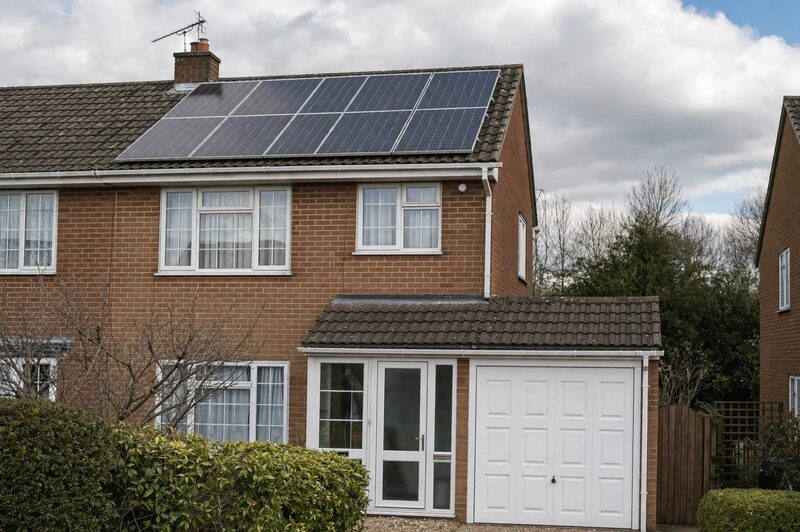
The choice is between holding an asset and holding a contract. A bought system is the household's property, generates free electricity once paid for, and can export surplus12. A leased system costs nothing up front but assigns the tariff income to the company and leaves a lease on the property1.
For households that cannot install a roof system at all, the alternatives are different in kind. Plug-in solar panels are recommended for renters, people in smaller homes such as flats, and those unable to afford full roof system installation costs18. Citizens Advice notes they can work well for renters and those living in flats with outdoor spaces, and that they do not need professional installation or a roof19. Energy Saving Trust adds that renters and flat owners need permission from their landlord or freeholder before installing them16.
Where a roof system is possible, roof mounting is by far the most common option for domestic installations, with ground mounting as the alternative3. Solar roof tiles are best suited to existing roofs20.
| Option | Who owns the asset | Up-front cost | Tariff income | Main constraint |
|---|---|---|---|---|
| Rent-a-roof lease | The company2 | None | Taken by the company1 | Lease stays with the property1 |
| Bought system | The household | Paid or financed8 | Retained by the household | Installation cost |
| Plug-in solar | The household | Lower than a roof system18 | No export payments13 | Landlord or freeholder permission16 |
For households in the private rented sector, landlord funding exists in some nations. The Private Rented Sector Landlord Loan Scheme in Scotland provides private registered landlords with interest free and low interest loan funding to invest in improving the energy efficiency of their properties and installing clean heating systems21. Social leasing, a model discussed at European level, means low-income households can rent clean technologies by paying an affordable monthly fee22; that is a different structure from a roof lease, and it is not a UK scheme.
Switching supplier, batteries and the limits of the lease
Switching energy supplier is governed by who pays the bill, not by who owns the panels. Ofgem states that if a household has to pay its energy bills, it can choose to switch supplier or tariff at any time4. Confused.com says a renter can switch supplier if the lease says the bills are their responsibility23, and Uswitch says the same for gas: a renter responsible for utility bills can switch, while a renter whose landlord is responsible cannot24.
Where the landlord pays the supplier directly, the position reverses. Which? notes that the landlord will choose the energy supplier, and a tenant can ask them to change supplier but they do not have to25. Citizens Advice states that a tenant cannot switch energy supplier or tariff themselves if the landlord pays the supplier for them26. The Green Deal has its own rule: a household can change electricity supplier as long as the new supplier is taking part in the Green Deal scheme9.
Adding a battery or altering the array is a different question from switching, because it changes the system a third party owns. The contract Which? examined required consent for alterations or additions to the building near the solar PV system1, and the RECC list expects the termination arrangements to be disclosed before signing6. Where panels have to be removed for a period, for example for roof maintenance, Which? reports that the householder would have to compensate the company for the missed Feed-in Tariff payments1.
Sources26 cited
- Free solar panels and solar buyback, Which?, 2026-03-26
- Behind-meter energy systems guidance, Welsh Government, 2026-06-29
- Solar panel installation, maintenance and repair, NICEIC, 2026-09-17
- Switch your home energy supplier, Ofgem, 2026
- Make your home more energy efficient, Confused.com, 2026-07-06
- Information regarding free solar PV systems, Renewable Energy Consumer Code, 2026-09-17
- Is there really such a thing as free solar panels?, Low Carbon Hub, 2025-10-21
- Solar panel installation, Energy Saving Trust, 2026-09-07
- Green Deal energy saving measures, GOV.UK, 2026-05-13
- Buying a house with solar panels, Energy Saving Trust, 2026-08-13
- How do solar panels work?, Smart Energy GB, 2026-03-16
- How do I retrofit my home: solar panels, Oxfordshire County Council, 2026-09-17
- Plug-in solar panels, Which?, 2026-09-15
- Solar panels guidance, Islington Council, 2026-08-12
- Solar panels and permitted development, Richmond Council, 2026-07-06
- Plug-in solar panels, Energy Saving Trust, 2026-09-17
- Plug-in solar panels: five top tips, REA, 2026-08-04
- Plug-in solar panels guide, Uswitch, 2026-09-04
- Six things to know before plug-in solar panels hit the shelves, Citizens Advice, 2026-08-21
- Solar roof tiles, Energy Saving Trust, 2026-08-13
- Heat in buildings progress report 2025, Scottish Government, 2025-10-02
- EHPA position on social leasing for heat pumps, European Heat Pump Association, 2025-09-01
- Gas and electricity guides, Confused.com, 2026
- Gas only energy, Uswitch, 2026-09-07
- How to switch energy supplier, Which?, 2026-05-15
- Switching energy supplier if you're a tenant, Citizens Advice, 2026-09-17
 Free Solar Panels vs Rent-a-RoofOffers of free panels usually mean a company owns the system and keeps the generation income or charges a monthly fee.
 Solar Mounting SystemsWill your roof take the extra weight of solar panels, and will it still keep the rain out afterwards?
 Selling a Home With Energy KitCovers the paperwork a sale requires when a home has solar panels, a heat pump, insulation or a leased roof, and how warranties, export payments and guarantees transfer.
 Panel RecyclingWhat actually happens to a solar panel when it stops working, and what can a household do with one?
 Installation ContractsCan you cancel a solar panel or boiler contract after signing?
 Planning Permission EnglandMost homes in England can have solar panels fitted without planning permission, but does yours count as one of the exceptions?