
In this guide
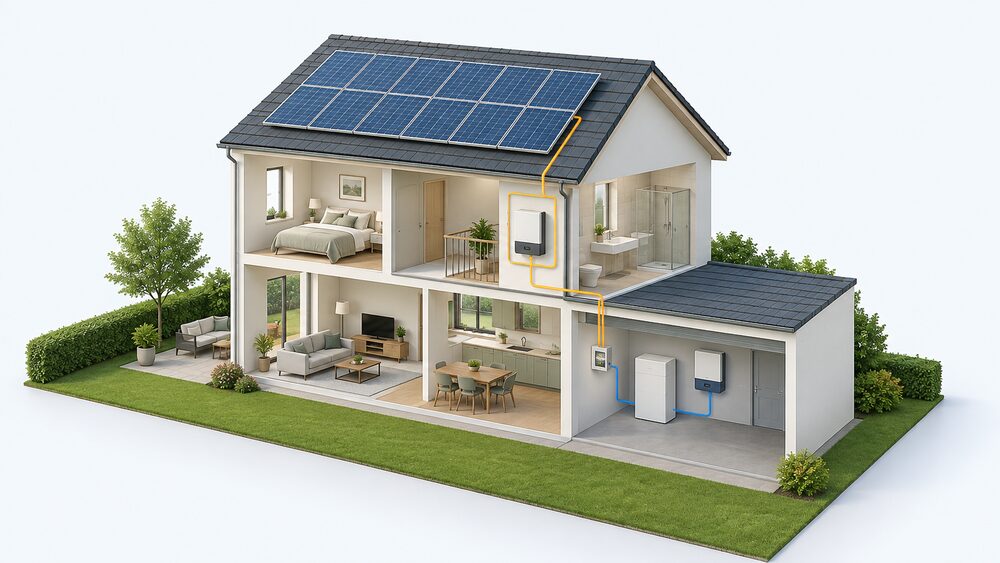
A battery can be added to solar panels that are already on the roof, and it does not require the array to be replaced. The three routes are a battery fitted at the same time as new panels, a battery added to an existing system, and a battery installed on its own1. For a household with panels already generating, the retrofit is the common case, and AC-coupled batteries are generally the easier option because they sit on the household wiring rather than on the panel string2.
The money is the difficult part. Adding a battery to a solar PV system increases the upfront cost by around £2,000 to £6,000 for capacity sufficient for typical UK rooftop systems3, and independent guidance puts a solar battery at around £4,500 on average on top of an existing array4. Energy Saving Trust is blunt that adding a battery to a solar panel system can increase bill savings, but often not enough to recover the cost of the battery within its expected lifetime, particularly where the household already has access to a good export tariff5.
What storage does change is the shape of the household's dependence. A battery stores electricity for later use, making the energy system more independent from the National Grid6, and Great British Energy figures put self-consumption at 70 to 80% with a battery against 30 to 40% without7. It does not remove the grid, the supplier or the meter, and it does not make a home self-sufficient.
Why add a battery to an existing solar system
The case for storage rests on a gap between what a solar array produces and when the household uses electricity. Panels generate in the middle of the day; demand peaks in the morning and evening. Without storage, surplus goes to the grid, and the household buys back at retail prices whatever it needs later. A battery closes that gap by holding the surplus until it is wanted.
The official group-buying schemes run by councils make the retrofit route explicit. Switch Together Birmingham tells households they can register to have battery storage added to existing solar panels to maximise the benefits of the system9, and Solar Together Norfolk uses the same wording10. These are scheme rules rather than sales claims, and they confirm that a retrofit is a normal, supported route rather than an unusual one.
The gain is not only in electricity. A solar battery can increase savings further by storing the sun's energy to power a heat pump later in the day11, which matters for a household that has electrified its heating. The same logic applies to any large load that can be shifted into the evening.
The counter-argument is financial and comes from the same independent body that supports storage generally. Energy Saving Trust states that adding a battery to a solar panel system can increase bill savings, but often not enough to recover the cost of the battery within its expected lifetime, particularly where households already have access to a good export tariff5. That is the central tension: a battery is worth more to a household with a poor export rate and heavy evening demand, and less to one already selling surplus at a strong rate.
For energy independence, the effect is real but partial. The household shifts from buying evening electricity to using its own generation, which reduces exposure to import prices. It remains connected to the grid, dependent on a supplier for backup and on the battery maker for a working product.
AC-coupled or DC-coupled: which retrofit route fits your setup
The choice between AC-coupled and DC-coupled storage is the first technical decision on a retrofit, and it usually follows from what is already installed.
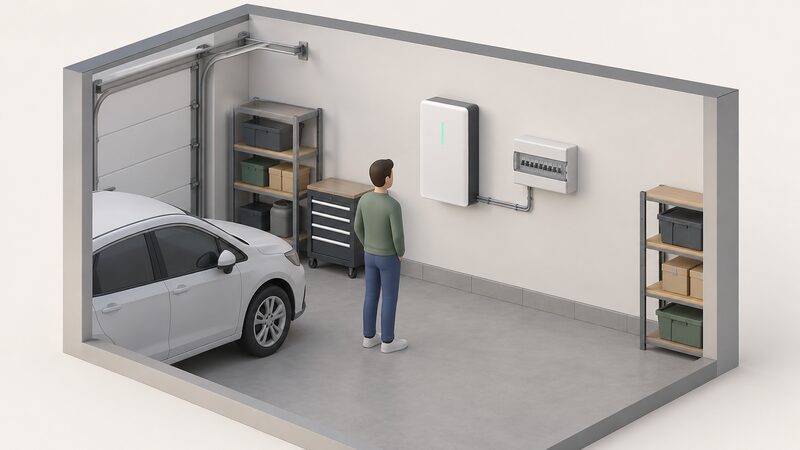
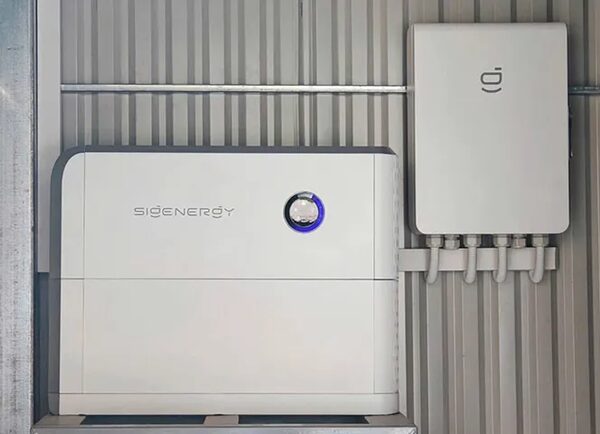
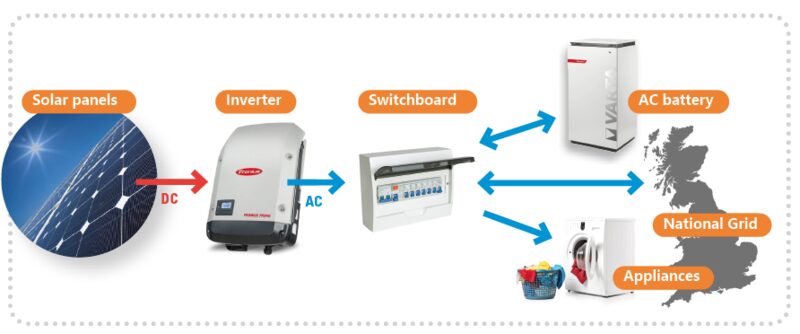
An AC-coupled battery has its own inverter and connects to the household alternating current wiring. It does not care what kind of inverter the solar array uses, which is why independent guidance concludes that AC-coupled batteries are probably better if you already have PV as they are easier to retrofit2. The existing solar inverter stays in place and keeps working. The cost is a second conversion: the panel inverter turns direct current into alternating current, the battery inverter turns it back, and each step loses a little energy.
A DC-coupled arrangement connects the battery to the direct current side, normally through a hybrid inverter that manages both the panels and the battery. That avoids the double conversion and suits a new installation where the inverter is being chosen anyway. On a retrofit it means replacing a working inverter, which is why it is less often the sensible route for an older array. The site's guide to hybrid inverters sets out how those units combine the two roles.
The practical questions for a retrofit are therefore:
- Does the existing inverter have a battery input, or would it have to be replaced?
- Is there space for a second inverter and a battery, with ventilation?
- Does the household want the battery to work during a power cut, which depends on the inverter's backup capability rather than the battery alone?
Compatibility has to be checked rather than assumed. MCS Certified advises households to make sure the chosen battery storage is compatible with the existing or potential solar panel setup1. That check covers voltage, communication protocol and whether the maker supports the combination at all.
Cost of retrofitting a battery: £3,000 to £6,000 installed
Published figures for battery cost vary widely, and the variation is mostly about what is being counted. Some numbers describe the battery alone, some the battery plus installation, and some the whole job including a new inverter.
| What the figure covers | Cost | Source |
|---|---|---|
| Battery added to a PV system, typical UK rooftop capacity | around £2,000 to £6,000 | Which?3 |
| Solar battery on top of an existing solar panel system, average | around £4,500 | The CPA4 |
| Battery storage, standalone guidance range | around £5,000 to £8,000 | Energy Saving Trust12 |
| Battery added to an installation | £2,500 to £5,000 | Uswitch13 |
| Buying and installing a battery, lower bound | upwards of £2,000 | Which?6 |
The spread is not a contradiction so much as a difference in scope. The £2,000 to £6,000 figure is explicitly tied to capacity sufficient for typical UK rooftop systems3, which makes it the most useful starting point for a retrofit. The £5,000 to £8,000 range from Energy Saving Trust is a general guidance figure for battery storage rather than a retrofit increment12. The £4,500 average sits between them and is described as an average cost on top of an existing system4.
For context, the array itself is the larger spend. Typical retrofit costs for solar panels run at £5,000 to £10,00014, and the average cost to install solar panels is around £6,10015. A battery therefore adds a substantial fraction to a job that has already been paid for once.
Prices are installer-quoted, and the figures above are the published ranges rather than a quotation for any particular property. Capacity, inverter type, whether the unit is indoors or outdoors, and whether the existing inverter has to be replaced all move the number. The site's solar panel cost page covers the array side of the same budget.
VAT treatment depends on how the work is packaged. Where a battery is installed at the same time as solar panels, and the customer perceives a single supply, and the battery is a better means of enjoying the principal supply of solar panels, the battery is included in the single supply of the installation16. That matters because solar panels are listed among energy-saving materials for the reduced rate17. A standalone retrofit battery, installed later and separately, is a different transaction and the packaging has to be checked with the installer.
How a battery changes your Smart Export Guarantee payments

The Smart Export Guarantee is the scheme that pays households for electricity exported to the grid. It launched on 1 January 2020 and replaced the Feed-in Tariff, which is closed to new applicants19. It enables small-scale generators to receive payments from electricity suppliers for electricity they export back to the National Grid, provided certain criteria are met21, and it is governed by the Smart Export Guarantee Order 2019 and conditions in the electricity supply licence22.
A battery changes the arithmetic in two ways.
First, it reduces the volume exported. Installing battery storage lowers the amount of electricity exported to the grid, meaning less money from export payments, but overall savings are greater than relying on export payments23. That is the intended trade: a unit of solar electricity used on site displaces an import priced at the retail rate, while the same unit exported earns the export rate, which is lower.
Second, it can affect eligibility. Having a storage battery may render a household ineligible for some SEG tariffs6. Tariffs differ between suppliers, and the terms are set commercially rather than by the scheme, so the position has to be checked against the specific tariff before the battery is ordered.
What does not change is the metering requirement. Generators must have a smart meter to monitor exports in order to qualify for the SEG7. The installation must also be certified: the system has to be installed by an MCS certified installer using certified products24, and only MCS or Flexi-Orb approved installations with suitable export metering are eligible25. Solar panels are an eligible technology under the scheme26.
Two practical points follow. The SEG does not have to be with the same company as the standard energy supplier27, so the export tariff can be chosen separately. And surplus can still be sold when the battery is full: surplus solar electricity can be sold back to the supplier through a SEG tariff at that point28. The battery does not end export income, it defers it to the moments when the battery has nothing left to absorb.
Sizing the battery to your solar surplus
Sizing starts with the surplus, not with the battery catalogue. The relevant question is how many kilowatt hours the array produces that the household cannot use at the moment of generation, and how much of the evening demand that surplus could cover.
The self-consumption figures show what is at stake. Great British Energy states that adding a battery to a solar installation increases self-consumption from 30 to 40% to 70 to 80%7. That is the difference between exporting most of the generation and using most of it, and it is the clearest single argument for storage.
A battery larger than the daily surplus will spend much of its life part-full, and the extra capacity earns nothing. A battery smaller than the surplus leaves electricity exported that could have been stored. The balance depends on the household's pattern: a home occupied during the day uses more generation directly and has less surplus to store, while a home empty until evening has more.
Charging is not limited to solar. A battery can be charged using excess electricity generated from solar panels or other home generation, the mains electricity supply, or off-peak grid electricity on a time-of-use tariff6. Home Energy Scotland puts it plainly: a battery can be charged with cheap electricity from the supplier, typically on certain tariffs at night or in the middle of the day23. That gives a second, winter-proof revenue stream, because it does not depend on panel output.
Tariff design matters as much as capacity. Energy Saving Trust's research found no great difference between the options it compared, and identifies the recommended combinations as a dedicated solar and battery tariff, or a good SEG tariff matched with a dynamic import tariff or an Economy 7 tariff29. The site's solar panel sizing page covers the array side of the same calculation.
For a household with an older array, the constraint is often the inverter rather than the roof. A retrofit battery that has to work around an existing inverter may be limited in how much it can charge or discharge at once, which caps the useful capacity regardless of what the battery can hold.
Backup power and self-sufficiency: what storage adds
Storage moves a household part of the way towards independence, and it is worth being exact about how far.
The direction of travel is clear. Home storage batteries store electricity to use later, making the energy system more independent from the National Grid6. Energy Saving Trust advises households buying a property with panels to consider getting battery storage if the system does not already have it, so that surplus electricity is stored rather than exported8. The gain is measured in self-consumption, and the 70 to 80% figure with a battery against 30 to 40% without is the headline7.
What remains is substantial. The household stays connected to the grid, keeps a supplier, and depends on a smart meter for export payments7. The battery itself is a manufactured product with a service life, and its warranty is a commercial promise from a company rather than a physical property of the installation. A battery does not make a home self-sufficient, and it does not remove the standing charge or the connection.
Backup during a power cut is a separate capability from storage, and it depends on the inverter rather than the battery. A battery that can only discharge through a grid-tied inverter will not energise the house when the grid is down unless the system is designed for it. That design question belongs in the specification conversation, not in the capacity decision.
The site's solar panels and household energy independence page sets storage in the wider picture of what a home can and cannot supply for itself.
Choosing a battery: chemistry, capacity and warranty compared
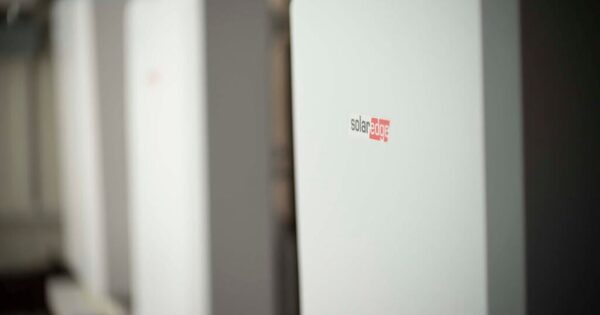
Battery products differ in chemistry, usable capacity, power rating and warranty terms, and the datasheet is where the differences are visible.
The Eaton xStorage Compact is a worked example of how a maker presents a pack. It is listed as a new fourth-generation battery, used in a string of five packs in series and sold for use with an Eaton grid converter only30.
| Specification | Eaton xStorage Compact |
|---|---|
| Nominal energy capacity | 10 kWh30 |
| Usable capacity | 95% of nominal at C/530 |
| Cell chemistry | NMC (lithium nickel manganese cobalt oxide)30 |
| Permitted depth of discharge | 100%30 |
| Maximum C-rate | 1.2030 |
| Calendar life | more than 10 years30 |
| Performance warranty | 10 years for GEN430 |
| Capacity at end of warranty | 65% relative to new state30 |
| Dimensions (W x L x H) | 442 x 812 x 174 mm30 |
| Weight | 74 kg master battery pack30 |
| Protection | IP20, indoors30 |
| Communications | CAN bus30 |
| Standards | IEC 62477-1; IEC 62619; UN 38.3; CE30 |
Two numbers in that table do the most work for a buyer. Usable capacity of 95% of nominal at a stated discharge rate means a 10 kWh pack delivers less than 10 kWh in practice30. Capacity at end of warranty of 65% relative to new state means the warranty promises a floor, not a like-new replacement30. Both are normal for the category and both are easy to miss.
Warranty length is the other comparison. Battery systems often come with a 10-year warranty6, and the Eaton datasheet matches that with a 10-year performance warranty for the fourth generation30. Panels are warranted for far longer: solar panels usually come with a 25-year performance warranty and a five to 10-year product warranty8, and most come with a product warranty ranging from around 12 to 25 years3. The mismatch is the point. Solar PV panels can last 25 years or more, so the cost of replacing the battery at least once should be factored into total costs6.
Chemistry choice is a live area rather than a settled one. NMC is one established option30, and sodium-ion storage for rooftop PV has been launched by a Cambridge-based startup, an alternative chemistry rather than a variant of lithium30. For a household, the practical questions are the same either way: usable capacity, power rating, warranty terms including any throughput condition, and whether the maker supports the existing inverter.
Installation, metering and getting set up
Installation is a qualified trade job, and the rules around it are specific.
Battery storage must be permanently wired and installed by a qualified electrician25. That applies even where the battery is added alongside plug-in solar panels, which are otherwise a self-install product. The site's plug-in solar kits page covers the kits themselves, which typically include one or two solar panels, a microinverter and a lead fitted with a standard three-pin plug, along with mounting brackets and an app for monitoring25. A battery is not part of that kit and is not a plug-in item.
The sequence for a retrofit runs roughly as follows:
- Confirm what the existing array and inverter can support, including whether the inverter has a battery input.
- Check the chosen battery's compatibility with the existing or potential solar setup1.
- Confirm the export metering position, since a smart meter is required to monitor exports for SEG eligibility7.
- Have the battery permanently wired and installed by a qualified electrician25.
- Register the installation where the scheme requires it, using an MCS certified installer and certified products24.
Metering is the step households most often underestimate. The smart meter requirement is not waived by adding storage7, and the export that still occurs has to be measured. Where a battery reduces exports, the meter records the smaller volume, and payments follow the measurement.
VAT treatment depends on packaging. Where the battery is installed at the same time as the panels, the customer perceives a single supply, and the battery is a better means of enjoying the principal supply of solar panels, it is included in the single supply of the installation16. Solar panels are listed among energy-saving materials for the reduced rate17. A battery fitted later, on its own, is a separate supply and the position has to be confirmed with the installer.
Sources30 cited
- Battery storage, MCS Certified, 2026-09-17
- Battery storage advice, Centre for Sustainable Energy, 2025-10
- Could solar panels save you £500 a year, Which?, 2026-06-17
- Battery storage and solar panels, The CPA, 2026-01-06
- Supporting households with low carbon technology combinations, Energy Saving Trust, 2026-07-15
- Solar panel battery storage, Which?, 2026-05-14
- POST note 771, Parliamentary Office of Science and Technology, 2026-06-25
- Buying a house with solar panels, Energy Saving Trust, 2026-08-13
- Switch Together Birmingham, Birmingham City Council, 2026-01-27
- Solar Together Norfolk, South Norfolk and Broadland Council, 2026-09-17
- Is now a good time to get a heat pump, Energy Saving Trust, 2025-12-12
- Solar panels, Energy Saving Trust, 2026-08-27
- Solar panels, Uswitch, 2026-09-16
- Watt a Save, Home Builders Federation, 2026-02
- Energy saving upgrades for home renovation, Energy Saving Trust, 2026-05-05
- Eaton xStorage Compact technical datasheet, Eaton, 2025-12
- VAT energy saving materials VENSAV3010, HM Revenue and Customs, 2019-09-30
- VAT energy saving materials VENSAV3210, HM Revenue and Customs, 2026-09-17
- Smart Export Guarantee electricity suppliers, Ofgem, 2026-09-17
- Feed-in Tariffs scheme closure, Ofgem, 2026-09-17
- Smart Export Guarantee generators, Ofgem, 2026-09-17
- Smart Export Guarantee, Ofgem, 2026
- Battery storage, Home Energy Scotland, 2026-09-20
- Smart Export Guarantee, MCS Certified, 2026-04-27
- How smart tech is helping households beat rising energy bills, Calisen, 2026-03-17
- Solar panels, Oxfordshire County Council, 2026-09-17
- Smart Export Guarantee, Energy Helpline, 2026-09-20
- Battery storage, Energy Saving Trust, 2026-09-20
- Tariffs for renewable technology, Energy Saving Trust, 2026-08-12
- Plug-in solar panels, Which?, 2026-09-15
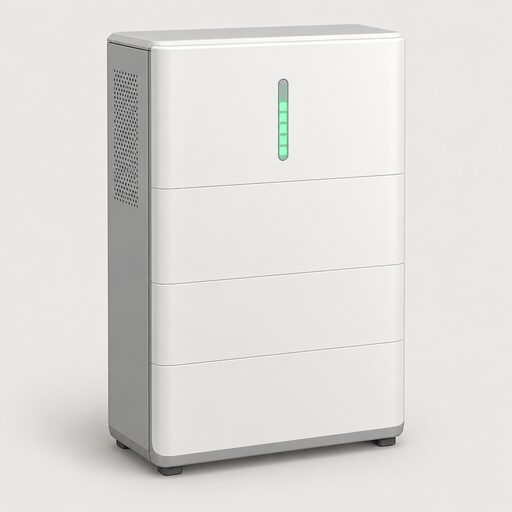 AC-Coupled vs DC-CoupledCan you add a battery to your existing solar panels without swapping the inverter, and does one kind waste more of your solar power than the other?
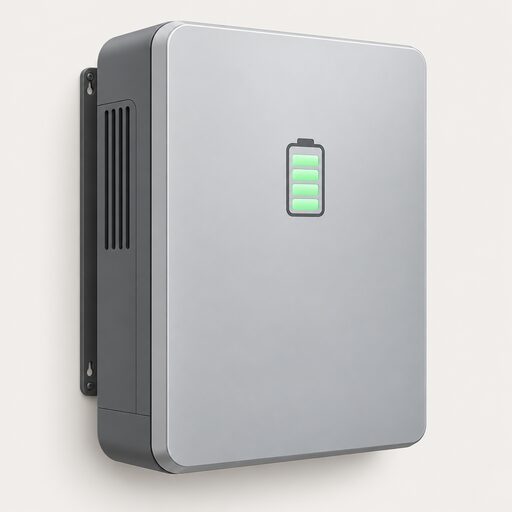 The Full Home Batteries GuideA home battery stores cheap or solar power for later, but will it really cut your bills enough to be worth it?
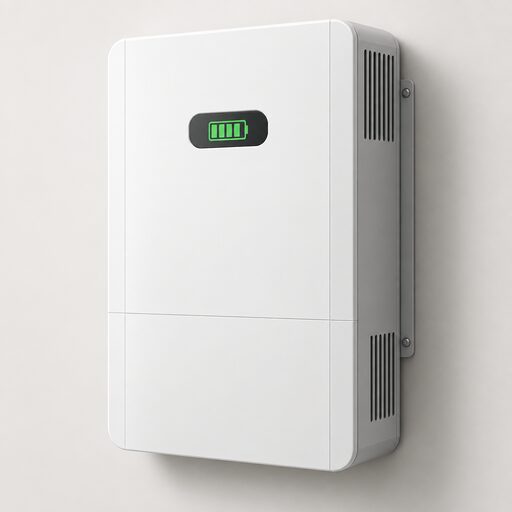 Home Battery Install StatisticsHow many homes in the UK actually have a battery, and is that number growing quickly?
 Charging an EV from Solar PanelsCharging your car from solar panels means using the power your roof makes instead of sending it to the grid.
 Solar Mounting SystemsWill your roof take the extra weight of solar panels, and will it still keep the rain out afterwards?
 Energy Bills and IndependenceSolar panels can cut the part of your bill that goes up with every unit you use, but you still pay a daily standing charge just for being connected to the grid.