
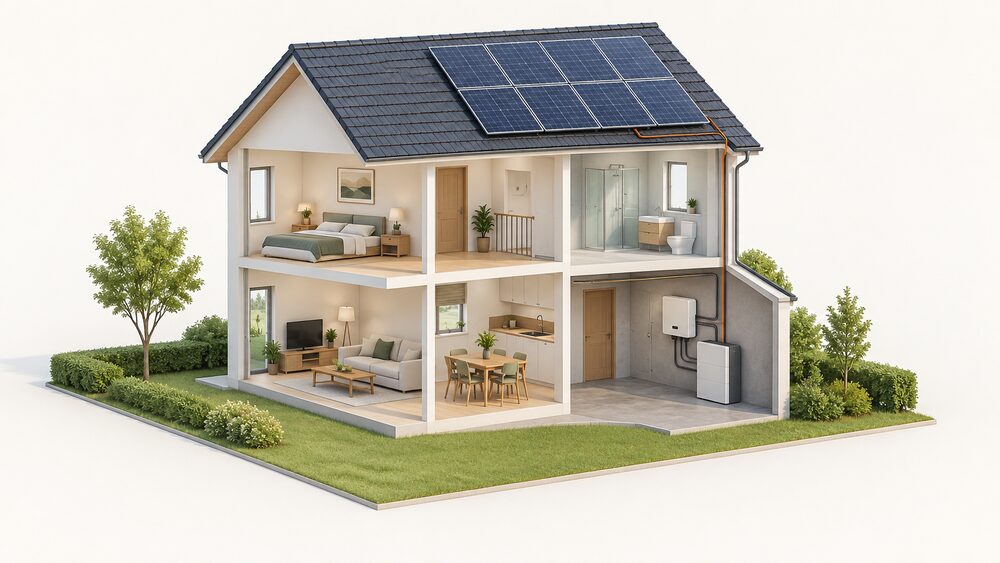
In this answer
Short answer
Most solar panels do not need replacing on a schedule. Parliamentary research puts the estimated lifespan of new solar panels at 25 to 30 years, though this varies with their environment1, and independent guidance says panels are close to maintenance-free and should last at least 25 years2. Replacement is therefore a judgement about condition and output, not a date in a diary.
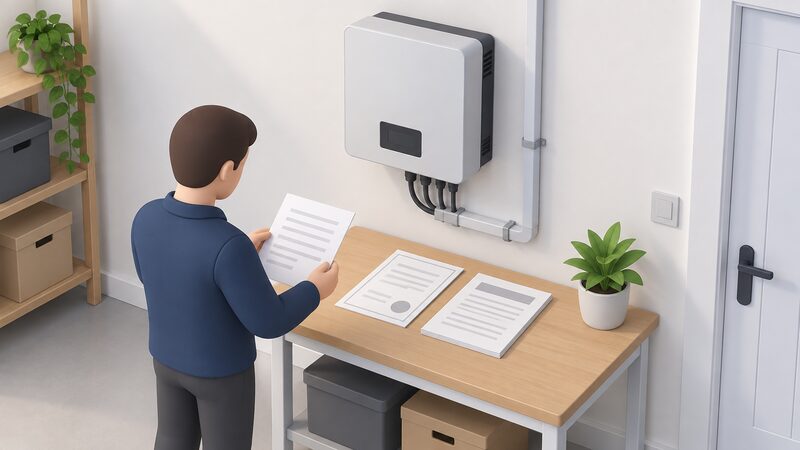
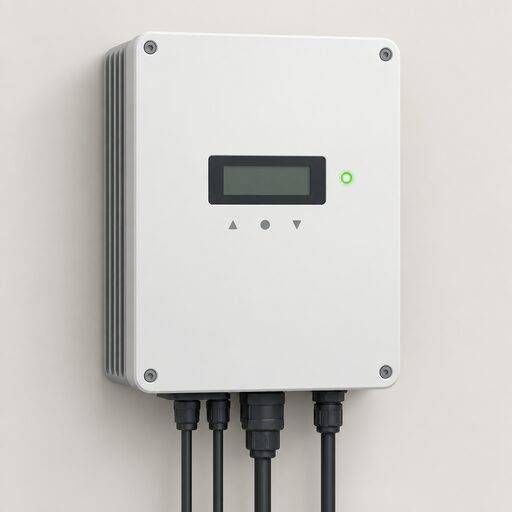
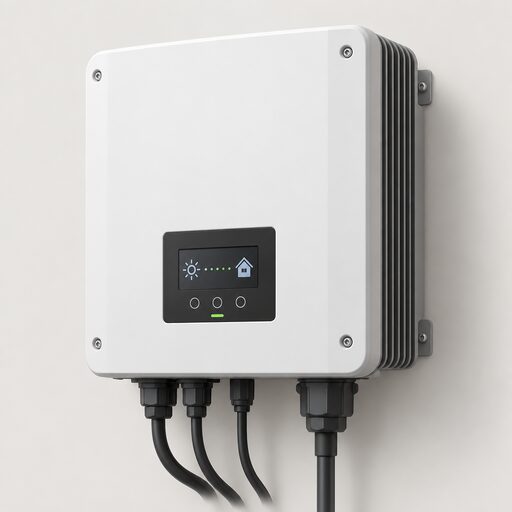
What actually wears out first is usually the inverter. Official guidance states that inverters usually need replacing after around 12 years3, and independent guidance notes that within 25 years an inverter replacement will be needed2. A battery, where one is fitted, is expected to be replaced at least once during the life of the solar panel system4. The panels themselves degrade gradually: independent guidance reports an average degradation rate of between 0.5% and 3% per year depending on panel type, which after 25 years means degradation of anything between 12.5% and 75%5.
The practical answer is that a well-installed array on a sound roof is more likely to outlive its inverter, its battery and possibly the roof beneath it than to fail outright. The sections below set out the signs that point to replacement rather than repair, what degrades panels, how battery storage fits in without new panels, and what replacement does to warranties and certification.
Do solar panels need replacing? The short answer
For most households the answer is no, not on the strength of age alone. Official guidance is that once installed, solar panels should only need minimal maintenance7, and independent guidance describes them as pretty much maintenance-free with a service life of at least 25 years2. The failure modes that do occur are gradual and visible rather than sudden.
That said, replacement becomes the right question in a small number of situations. Where a panel is physically damaged, where water has got into the module, or where the roof beneath the array needs work, the decision shifts from repair to replacement. Official guidance for one council area is blunt about the end of life: any solar panels no longer needed for micro-generation are removed as soon as is reasonably practicable8, and another states that panels should be removed as soon as they are no longer needed9. Removal and disposal are part of the lifecycle, not an afterthought.
It also matters where the panels are. Solar panels are not light, and the roof must be strong enough to take their weight, especially where a panel is placed on a roof10. A roof that has reached the end of its own life is often the trigger for taking an array off and deciding whether to refit it or replace it. The associated electrical works fall under building regulations11, so any replacement is a controlled job rather than a like-for-like swap.
The household energy independence point is straightforward. Panels that are still producing are still reducing the amount of electricity bought from a supplier. Replacing working panels early buys very little independence and costs a great deal; replacing failed ones restores output that has already been lost.
Signs that point to replacement rather than repair
The useful distinction is between faults that can be fixed in place and faults that mean the module itself is finished. Independent maintenance guidance lists the things to look for: signs of wear and tear, damage, water ingress, dirt build-up, bird droppings or lichen growth, with repairs arranged if issues are identified and panels cleaned if needed12. Of those, water ingress and physical damage to the module are the ones that generally cannot be repaired.
Routine inspection catches most of the rest. Independent guidance recommends checking panels every 12 to 18 months and cleaning them if there is visible dirt12, and a fuller inspection every one to two years covering the panels, the mounting system and any visible wiring, either done yourself or by a professional12. A full professional service looks for small cracks or inverter issues12. Independent guidance also suggests checking panels after rough or stormy weather, watching for animals nesting near the panels, and scheduling annual inspections13.
Two further conditions bear on whether replacement is even sensible. The roof must be in good condition14, and the manufacturer's recommendations for the model you have should be noted7. Where a system is still within its installation warranty, faults caused by poor workmanship should be covered free of charge by that warranty15, which makes repair the cheaper route while cover lasts.
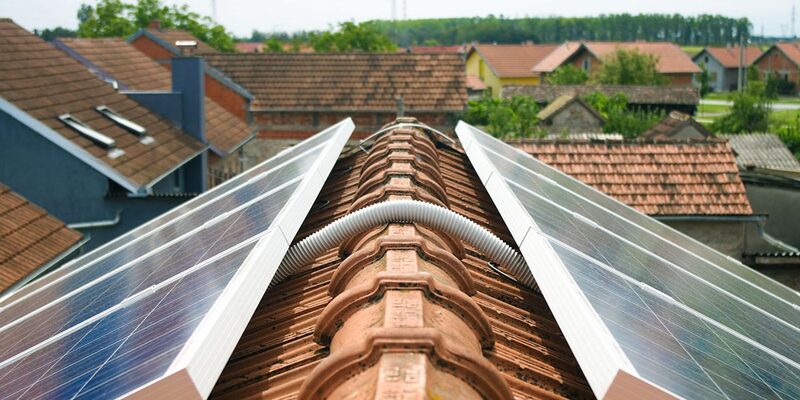
How long panels last and what degrades them
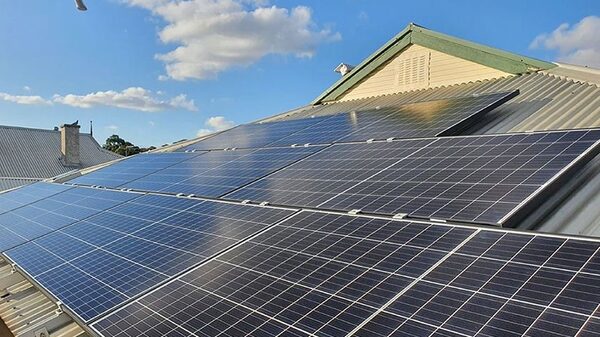
The headline range is 25 to 30 years for new panels, with the caveat that this varies depending on their environment1. Independent guidance is consistent with that, putting the minimum at 25 years2, and one source goes further, describing panels as lasting 30 years or more, while another puts it at 25 years or more and up to 30 years when properly maintained. Those two figures are not reconciled in the documents, so both stand: somewhere between 25 and 30 years is the working expectation.
Degradation is the mechanism behind the range. Independent guidance reports that panels degrade gradually over time, so after a decade of ownership they might produce slightly less power than when new15. The rate is reported as between 0.5% and 3% per year, depending on the type of panel5. Compounded over 25 years, that produces the wide spread of anything between 12.5% and 75% degradation5. The lower end of that range reflects better-performing module types; the upper end reflects the worst case in the same reported band.
What drives the difference is environment and technology rather than brand alone. Independent guidance notes that unless a home is in a particularly dusty area or by the beach, the solar panels should need little maintenance16, which implies that coastal and dusty locations are the harder cases. Shading matters too: independent guidance advises keeping panels reasonably clean and making sure any shading is minimised, with the installer providing a maintenance guide17. Panels do not need direct sunlight to work18, so cloud and indirect light reduce output rather than stopping it.
For a household, the independence implication is that output declines slowly and predictably. A system at year 20 is still contributing, just less. That is an argument for measuring actual generation against expectations before concluding that panels need replacing.
Adding battery storage without replacing your panels
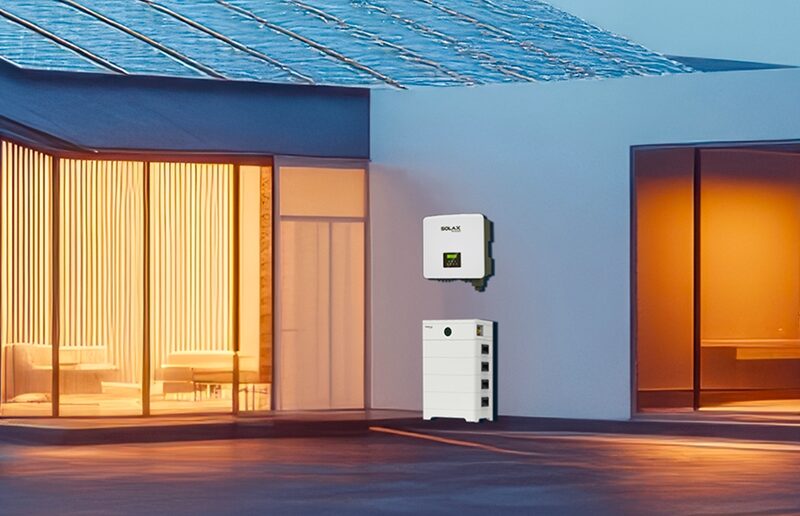
Battery storage can be added to an existing array, and this is often the more sensible upgrade than new panels. Independent guidance suggests considering battery storage if the system does not already have it, so that surplus electricity is stored instead of being exported10. The function is to store your electricity to use later, making your energy system more independent from the National Grid19.
Group-buying schemes run by councils have made this explicit. One official scheme states that households can register to have battery storage added to their existing solar panels to maximise the benefits of the system20, and a second scheme uses the same wording for households that already have panels installed21. Both are open to existing owners rather than new installations only.
The economics are less certain than the engineering. Independent guidance reports that adding a battery to a solar panel system can increase bill savings, but often not enough to recover the cost of the battery within its expected lifetime, particularly where households already have access to a good export tariff22. That is a material caveat: where export payments are decent, storing the electricity instead of selling it may not pay.
Battery lifetime is the other factor. Independent guidance states that if you also have solar panels, you can expect to replace your battery at least once during the life of your solar panel system4, and that because solar PV panels can last 25 years or more, the cost of replacing the battery at least once should be factored into total costs19. A battery therefore adds independence from the grid but introduces a second replacement cycle and a dependence on the manufacturer's continued support.
Replacement versus repair: how to decide
The decision turns on three things: whether the fault is repairable, whether the system is still under an installation warranty, and whether the roof is due for work anyway. Independent guidance sets out a maintenance rhythm that supports this: check every 12 to 18 months and clean if there is visible dirt, inspect panels, mounting system and visible wiring every one to two years, and have a full professional service to look for small cracks or inverter issues12. Where those checks find wear and tear, damage, water ingress, dirt build-up, bird droppings or lichen growth, repairs should be arranged and panels cleaned if needed12.
Where the fault is poor workmanship and the system is still within its installation warranty, the repair should be free of charge under that warranty15. That makes repair clearly the first route while cover remains. Beyond the warranty period, the calculation changes: a single failed module in an older string raises the question of matching, and a failed inverter is a separate matter entirely.
Costs are mostly installer-quoted. The one published figure in this area is the inverter: independent guidance puts replacement at around £800, depending on the size and manufacturer of the system6. No equivalent published figure exists for replacing panels themselves, so any panel replacement price is installer-quoted. Official guidance recommends getting various quotes to compare prices from different installers14, which is the practical control on cost.
Professional cleaning, where it is needed, is priced on the number of panels, their location, and whether specialist access equipment is needed12. Those same factors drive the labour element of any replacement.
What replacement means for warranties and MCS certification
Certification is the thread that runs through any replacement. Independent guidance states that solar panels should be installed by MCS-certified professionals, which ensures compliance with UK standards and eligibility for schemes like the Smart Export Guarantee, and that an installer who is not MCS-certified cannot offer access to those financial benefits24. MCS itself certifies, quality assures and provides consumer protection for microgeneration installations and installers, covering small-scale renewable electricity technologies including solar photovoltaic panels25.
The MCS certificate is the record that matters. Independent guidance describes it as a record that your solar installation has been done by a certified installer using certified products, required when accessing some grants and incentives26. Independent guidance for solar water heating makes the warranty position explicit: installations by an MCS-certified contractor come with both workmanship and product warranties, typically several years of workmanship and longer warranties for the solar collectors27. Independent guidance for solar panels repeats the certification requirement for installers28.
Product warranties vary by manufacturer. One MCS-certified monocrystalline panel range with built-in optimisers carries a 25-year manufacturer's warranty25. That is a maker's own term for its own product, not a general rule, and it applies to the module rather than to the installation work.
"Ultimately, it is a record that your solar installation has been done by a certified installer using certified products."
For Feed-in Tariff households, replacement interacts with the scheme's paperwork. Independent guidance advises finding out whether the panels receive payments from the old Feed-in Tariff scheme29, and notes that switching energy suppliers will not change the Feed-in Tariff payment rate30. Where a property changes hands, the previous owner should inform Ofgem they no longer own the solar panels due to the house sale, after which the buyer can apply for the remaining FIT payments10. Independent guidance also recommends having the system checked by a certified installer when moving into a property with existing panels29.
The independence picture is mixed. A replacement array installed by an MCS-certified installer restores eligibility for export payments and keeps the system connected and compliant. What it does not remove is the underlying dependence: the grid connection, the export tariff, the inverter manufacturer, and the certification body all remain part of the system.
Sources30 cited
- POSTnote: Solar Photovoltaics, UK Parliament, 2026
- Solar panel installation, Which?, 2026
- Solar panels, London Borough of Hammersmith and Fulham, 2026
- Battery storage, MCS, 2026
- How long do solar panels last?, Uswitch, 2026
- Solar power facts, Energy Saving Trust, 2026
- Solar panels, East Hertfordshire District Council, 2026
- Solar panels, City of York Council, 2026
- Renewable energy, Rother District Council, 2026
- Buying a house with solar panels, Energy Saving Trust, 2026
- Solar panels guidance, City of York Council, 2026
- Solar panel cleaning and maintenance, Energy Saving Trust, 2026
- How do solar panels work?, Smart Energy GB, 2026
- Solar photovoltaic (PV) panels, London Borough of Bromley, 2026
- Most common solar panel problems, Which?, 2018
- Solar PV, Flexi-Orb, 2025
- Solar photovoltaic (PV), MCS, 2026
- Generating renewable electricity, Energy Saving Trust, 2025
- Solar panel battery storage, Which?, 2026
- Switch Together Birmingham, Birmingham City Council, 2026
- Solar Together Norfolk, South Norfolk and Broadland Council, 2026
- Supporting households with low carbon technology combinations, Energy Saving Trust, 2026
- Plug-in solar panels, Which?, 2026
- Can solar panels charge electric cars?, The CPA, 2026
- ECO4 innovation approved measures, Ofgem, 2026
- Small wind turbines, MCS, 2026
- Solar water heating, Energy Saving Trust, 2026
- Solar panels, Energy Saving Trust, 2026
- Moving house energy checklist, Energy Saving Trust, 2026
- Feed-in Tariff, Uswitch, 2026
 Solar InvertersWhat does the box on the wall next to your solar panels do, and how long will it last?
 Warranties and DegradationHow long do solar panels actually last, and what do the warranties really cover?
 Panel RecyclingWhat actually happens to a solar panel when it stops working, and what can a household do with one?
 When an Installation Goes WrongYour solar panels have stopped generating.
 The Full Solar Panels GuideHow much do solar panels cost, and what could they save you each year?
 Solar Charging a Power StationCharging a portable power station from solar panels comes down to a few practical questions.