
In this answer
Short answer
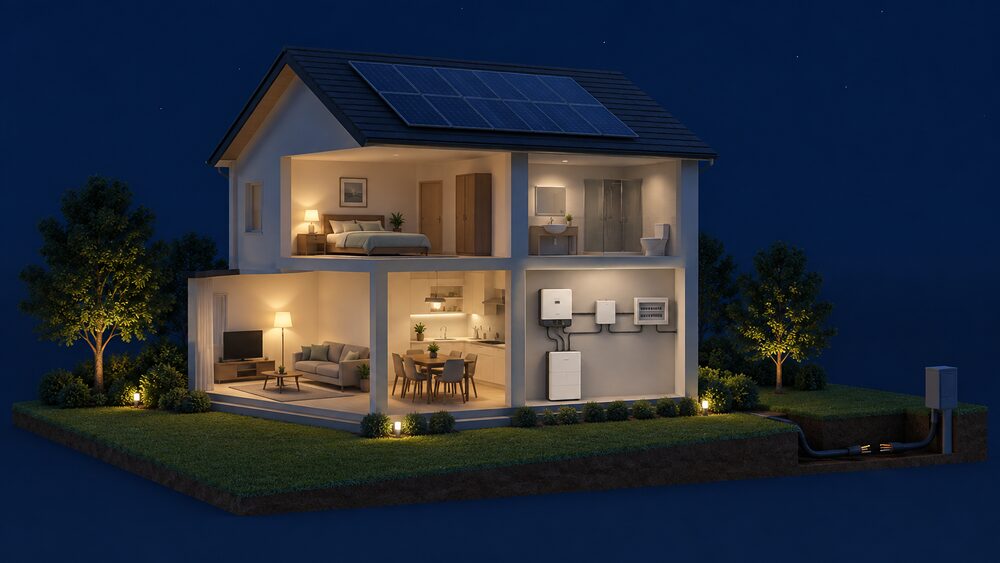
No. A standard grid-connected solar system normally shuts down during a power cut, and that is deliberate rather than a fault1. The panels keep making electricity in daylight, but the inverter that converts their direct current into usable mains electricity stops working the moment it stops sensing the grid. The Energy Saving Trust puts it simply: typically solar panels cannot power your home during a power cut, unless the home is off the grid or has additional equipment2.
The reason is safety. Electricity North West states that your solar panels will stop working during a power cut for safety reasons, and that most will start working automatically without needing any updates or actions once power returns3. The same operator notes that equipment should not be damaged and will be ready to use again once power is restored4. So the practical answer for a household is that a power cut takes the solar system offline along with everything else, and the array comes back on its own afterwards.
What changes the answer is storage and how it is wired. Some, but not all, battery storage systems can be set up to provide electricity to the home during a power cut, and they must be specifically set up to do so5. That distinction between a battery that stores energy for evening use and a battery that can run the house in an outage is the single most important thing to establish before buying.
Why panels switch off: anti-islanding and engineer safety
The shutdown has a name. Standard grid-tied solar panel systems are designed to shut down automatically during a power cut, a function known as anti-islanding1. The inverter is constantly checking the grid's voltage and frequency; when those disappear, it stops converting within seconds rather than continuing to energise the wiring in the home.
The purpose is to protect people working on the network. If a home's panels kept pushing power out during an outage, the cables that an engineer believes are dead could be live, a condition known as islanding. Network guidance is explicit that your own generation will not be able to export electricity to the wider electricity network at the times when you have emergency power as part of a rota7. The restriction applies to household solar and wind generation during a rota disconnection, so it is not limited to one technology or one manufacturer.
It is worth being clear about what is and is not affected. A power cut takes out far more than the solar system: gas boilers and heating, electrical appliances and the home's internet and landline connections will stop working in a power cut8. A solar array that stayed on would not change that, because the boiler's pump, the router and the fridge all need mains power in the ordinary way. The inverter shutdown is one part of a wider loss of supply.
"Your solar panels will stop working during a power cut for safety reasons. After the power is restored, check your user manual for any specific instructions."
How solar batteries and backup interfaces keep the power on
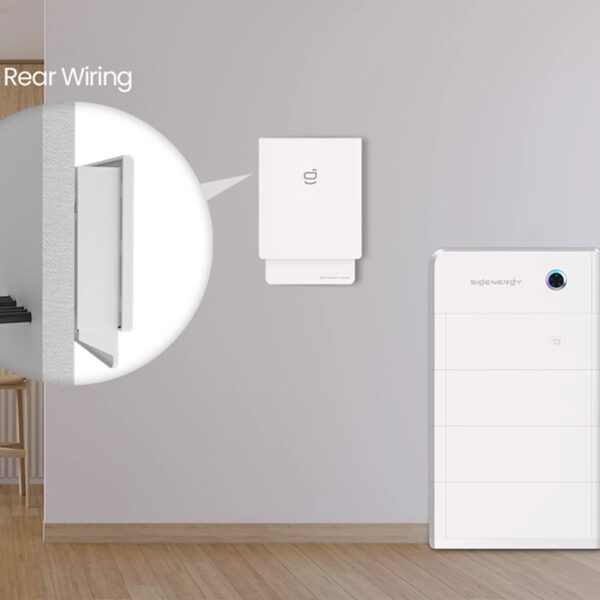
A battery on its own does not make a home resilient. Which? reports that some, but not all, battery storage systems can be set up to provide electricity to your home during a power cut, and must be specifically set up to do so5. The consumer body's earlier reporting is blunter still: several owners told Which? that their batteries do not work in a power cut, as the PV and battery also shut down if this happens9. That finding dates from 2019, but the underlying wiring logic has not changed, and it explains why so many households are surprised.
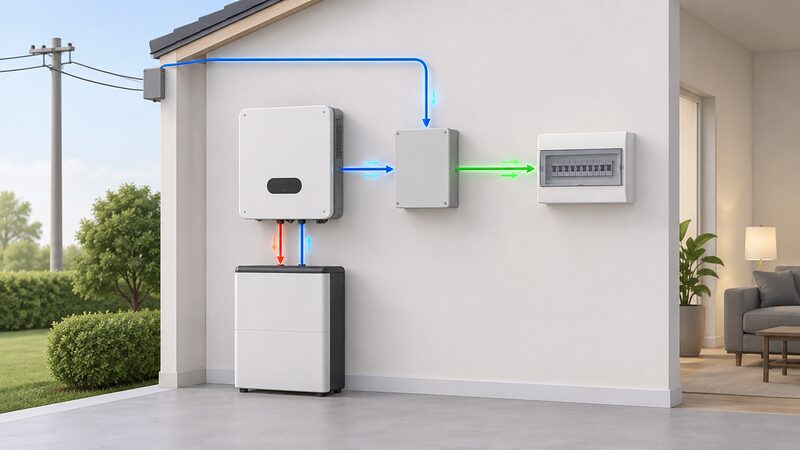
What makes backup possible is a combination of hardware and configuration. Maker guidance states that a battery can supply the home during a power cut only if you have an inverter that supports island mode paired with a dedicated physical backup gateway or backup circuit10. The gateway is the switch that disconnects the house from the grid so the inverter has somewhere safe to send its power. Without it, the inverter has no way to run independently of the network.
Some manufacturers build this into a product. SolarEdge states that when the grid is down, its Home Backup Interface keeps the solar power flowing throughout the home and automatically prevents power from continuing to flow to the grid11. The same maker describes the wider behaviour: in the event of a grid failure, the system, when equipped with its Backup Interface, knows to disconnect the house from the grid and immediately runs the home on solar energy day and night12. That is a maker's description of its own product, and it applies only to systems fitted with that interface.
Recharge behaviour during an outage varies. Maker guidance notes that if the battery inverter is larger than the solar inverter, energy can flow into the battery until it is fully charged, while some low-cost batteries immediately discharge stored energy when an outage is detected10. The practical consequence is that two homes with similar batteries can behave quite differently in the same outage.
| Setup | Runs the home in a power cut? | What it needs |
|---|---|---|
| Standard grid-tied solar | No, shuts down automatically1 | Nothing extra; restarts on its own3 |
| Solar plus ordinary battery | Not usually; must be specifically configured5 | Check with the installer2 |
| Solar plus battery with island mode | Yes, on the backed-up circuits10 | Inverter supporting island mode and a backup gateway10 |
| Solar plus maker backup interface | Yes, maker states the home runs on solar day and night12 | The manufacturer's own backup interface11 |
| Off-grid system | Yes, by design2 | No grid connection at all |
Plug-in solar: designed to switch off, not to see you through
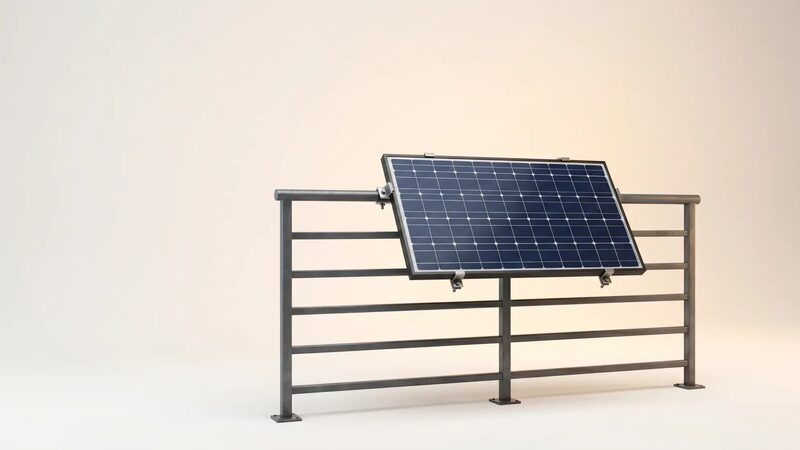
Plug-in solar has become a genuine option in Britain. Plug-in solar panels are now available to buy and use across Great Britain, helping households generate some of their own electricity13. The kits are small, usually mounted on a balcony, a wall or a garden frame, and they feed a modest amount of power into the home through a standard circuit.
They are not a backup supply. The Energy Saving Trust states plainly that plug-in solar panels are designed to switch off if there is a power cut6. The inverter in a plug-in kit carries anti-islanding protection, so the system shuts down automatically if the grid goes off14. That is the same safety logic as a rooftop array, applied to a smaller product.
There is a second limitation worth knowing. Unlike rooftop solar, you cannot use plug-in panels to sell excess power back into the grid, so the electricity they make does need to be used in the home15. That shapes the economics rather than the outage behaviour, but it reinforces the point that a plug-in kit is a bill-reduction device, not a resilience device. For a household whose main concern is keeping the lights on when the network fails, plug-in solar does not address it.
What happens when the grid comes back: automatic restart
Recovery is usually uneventful. Most solar panels will start working automatically without needing any updates or actions3, and the equipment should not be damaged and will be ready to use again once power is restored4. There is no reset procedure for a typical domestic array, and no engineer visit is needed simply because the grid failed.
There is one exception to watch for. Where a planned outage letter says a temporary generator will be used, the guidance is to turn off your solar panels before the planned outage and turn them back on once mains power has been restored4. That instruction exists because a generator supplying the street can be affected by generation feeding back into it, and it is the household's responsibility to follow the letter rather than the inverter's to detect the situation.
For planned cuts, restoration timing is reasonably predictable. Power should return to your home automatically and, if it is a planned power cut, within one hour after the expected time of reconnection16. Unplanned faults give no such estimate, and the network operator's own updates become the main source of information.
It helps to keep the restart in proportion. Once the installation is paid for, the electricity a system generates is free, although the household still pays for any additional electricity used from the grid and for maintenance costs17. A power cut interrupts generation for its duration; it does not reset the system's economics or its warranty.
Getting power-cut resilience: off-grid setups and extra equipment
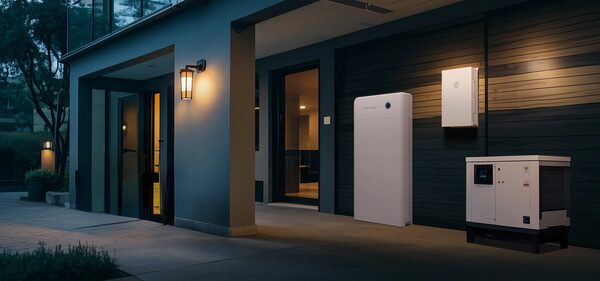
The Energy Saving Trust's position is that solar panels can power a home during a power cut if the home is off the grid or has additional equipment2. Off-grid is the unambiguous route: no connection to the network means no anti-islanding requirement, and the array, battery and charge controller are sized to run the property independently. That is a different design exercise from a grid-tied installation, with its own costs and constraints.
For a grid-connected home, resilience is an add-on. Batteries can provide back-up supplies in a power cut in some cases, but this is not always possible and the installer should be asked18. The Energy Saving Trust advises asking whether a given battery will work in a power outage, and for how long2. Backup capability to keep lights on during a power cut is often an option that can be added to a battery installation19, which means it is a decision to take at the design stage rather than after the fact.
What backup does not do is cover everything. A backed-up circuit typically runs selected loads rather than the whole house, and the duration depends on the battery's capacity and what is drawing on it. Households preparing for outages are also advised to keep a mobile phone fully charged, a torch handy, warm clothes, blankets and food that does not need heating, and to follow the network operator on social media for local updates20. Cadent's winter advice adds torches, a battery-powered radio and spare batteries21.
The independence picture is therefore partial. A grid-tied home with solar and a standard battery remains dependent on the network for its supply and on a supplier for anything it imports; a home with island mode and a backup gateway can run selected circuits when the grid fails; an off-grid home carries its own dependence in the form of battery capacity and generation limits. Solar panels lower electric bills by providing an additional source of electricity that can power appliances without taking electricity from the grid22, but that benefit applies while the grid is working. Resilience in an outage is a separate specification, and it is worth confirming in writing before installation.
Sources22 cited
- Solar panel installation in Lowestoft, Fuse Energy, 2023-12-27
- Solar power facts, Energy Saving Trust, 2026-08-13
- Tips to help you during a power cut, Electricity North West, 2026-09-19
- Understanding low carbon technology, Electricity North West, 2026-09-19
- Solar panel battery storage, Which?, 2024-07-03
- Plug-in solar panels, Energy Saving Trust, 2026-09-17
- Emergency planning portal for residential customers, SSEN, 2026-09-19
- Storms and bad weather, Energy Networks Association, 2026-09-17
- Solar panel battery popularity is booming, Which?, 2019
- Why solar PV battery storage is essential, Jackery UK, 2026-06-11
- SolarEdge home smart energy ecosystem, SolarEdge, 2022-07-18
- Home energy solutions, SolarEdge, 2022-09-11
- Support for people in rural homes, Home Energy Scotland, 2026-09
- What is plug-in solar?, Jackery UK, 2026-06-25
- Plug-in solar panels, Which?, 2026-09-15
- Preparing for a power cut, Centre for Sustainable Energy, 2026-08
- Solar power, Electricity North West, 2026-09-19
- Storage, Electricity North West, 2026-09-19
- Take control with smart solar battery tracking, E.ON Next, 2026-06-01
- What happens in an energy shortage, Energy Networks Association, 2026-09-17
- Stay safe, warm and connected this winter, Cadent Gas, 2026-09-20
- How do solar panels work, Smart Energy GB, 2026-03-16
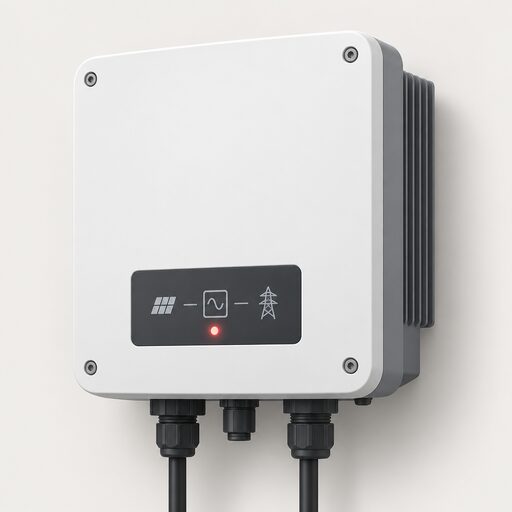 Islanding and Anti-IslandingWhy do solar panels switch off in a power cut, and can you keep the lights on anyway?
 Backup Power and EPSWill your lights stay on when the power goes out?
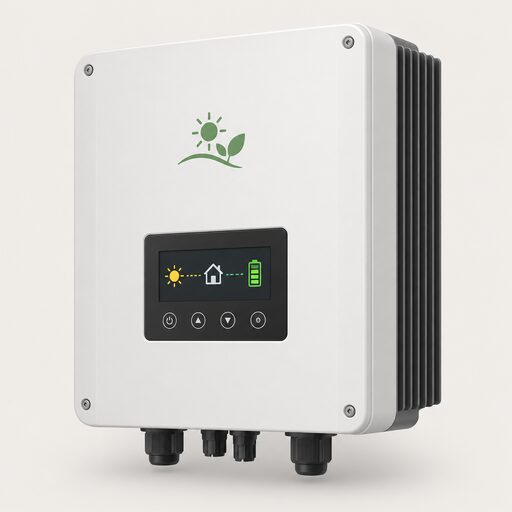 Island Mode and Black StartWhen the power goes off, why do solar panels stop working, and can a home keep its lights on anyway?
 Panel RecyclingWhat actually happens to a solar panel when it stops working, and what can a household do with one?
 Solar and Energy IndependenceHow far domestic solar cuts dependence on suppliers and the grid, what self-consumption really looks like across the year, what a battery, diverter or EV adds, and the grid-outage limit of ordinary inverters.
 Leaving the Electricity GridCan you really cut your home off the grid completely, and what does it cost to have your electricity supply removed for good?