
In this answer
Short answer
Potential induced degradation, almost always shortened to PID, is a fault that develops inside a solar module and quietly reduces the electricity it produces. It is driven by the voltage the array carries, combined with moisture and heat, and it shows up as a fall in output that no change in the weather explains. One maker of inverter-based recovery equipment reports that permanent PID leads to a power generation loss of up to 30%1.
That figure matters because it sits well above the normal, expected decline of a working panel. A standard solar panel loses up to 0.5% efficiency each year, according to maker guidance2, and independent guidance puts typical degradation at between 0.5% and 3% per year depending on panel type3. PID is not part of that normal curve. It is an additional, voltage-driven loss layered on top, and in some cases it can be partly reversed.
For a household, PID is a monitoring and maintenance issue rather than a safety one. It does not damage the rest of the system, and it does not stop the array working. It simply means the roof is generating less than it should, which eats into the free electricity that makes a solar installation worthwhile. The sections below set out what PID is, how much it can cost, which UK systems are most exposed, how to distinguish it from ordinary underperformance, and what prevention and recovery look like.
What PID is: potential induced degradation in plain terms
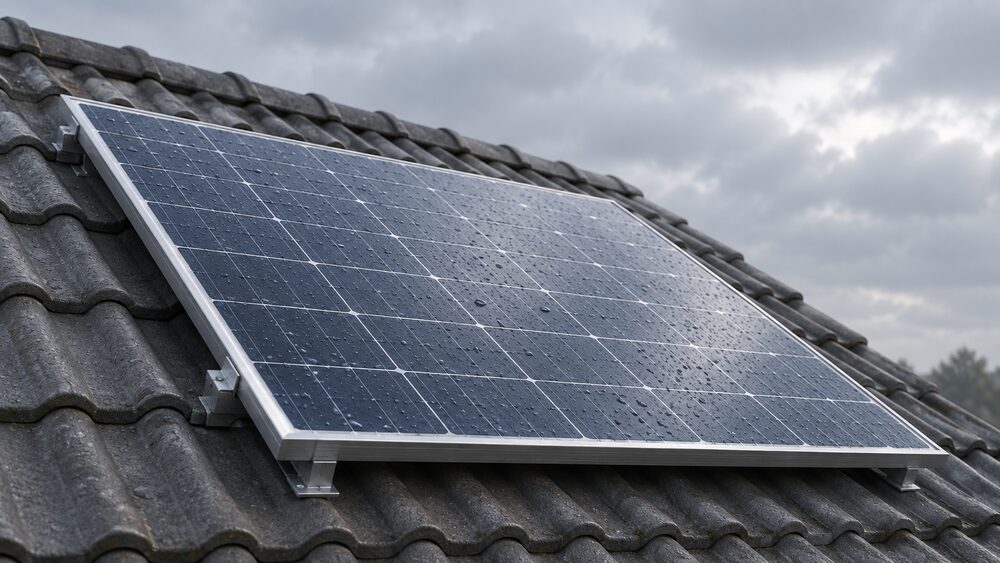
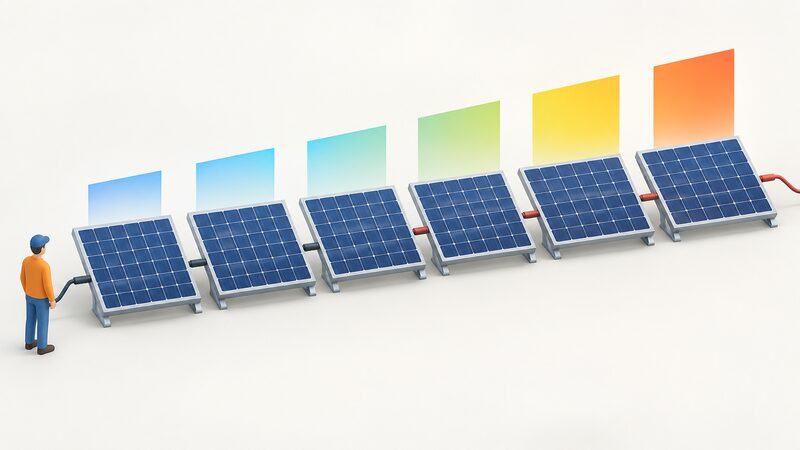
PID is a degradation mechanism that occurs when a module sits at a high voltage relative to its frame and the surrounding structure. In a modern string array, modules are wired in series, so the voltage builds up along the string. The module at the far end can sit at several hundred volts relative to earth. Combined with moisture, heat and the materials inside the module, that sustained voltage can drive ions through the cell structure and cause a loss of performance.
The effect is not the same as ordinary wear. Every panel degrades as it ages: a standard solar panel loses up to 0.5% efficiency each year2, and independent guidance gives a wider range of between 0.5% and 3% per year depending on the type of panel3. A maker's own guidance puts the figure at around 0.5% to 1% of rated output with each passing year5. PID sits outside that expected curve.
It is also not a universal problem. Manufacturers treat it as a known technical risk and design against it. One module maker states that it has developed solutions to address technical challenges such as hot spots and potential-induced degradation6. That is a design response, not a guarantee, and the risk still depends on the panel, the system voltage and the conditions on the roof.
The distinction that matters for a household is between reversible and permanent PID. Reversible PID is a polarisation effect that can be undone by applying a counter-voltage. Permanent PID involves physical change in the cell and cannot be undone. The same maker source that reports the 30% worst case describes it specifically as permanent PID1, which is why early detection is the practical priority.
How PID causes power loss: the physics in brief
The mechanism is electrochemical rather than mechanical. Under a sustained voltage difference, and in the presence of moisture and heat, charge carriers and ions migrate within the module. That migration reduces the module's ability to convert light into current, so the same amount of sunshine produces less electricity.
The conditions that drive it are the same conditions that make a roof a good solar site. Heat is one: beyond 25°C, panel efficiency typically decreases by about 0.35% per additional degree, so on a 35°C day a panel loses roughly 3% of its efficiency2. Moisture is another, and it is why humid, damp or coastal conditions can matter. Voltage is the third, and it is set by how the array is wired rather than by the weather.
That combination explains why PID is described as potential induced: the potential, meaning voltage, is the trigger. A module that is not held at a high voltage relative to its frame is far less exposed. This is also why the position of a module in a string can matter, since voltage rises along the string.
The loss is not usually sudden. It accumulates, which is what makes it hard to spot without monitoring. A household watching a generation figure that drifts down over several years, with no change in shading or tree cover, is seeing the kind of pattern that warrants an inspection.
How much power PID can cost a system
The headline figure is a loss of up to 30% of power generation in cases of permanent PID1. That is the worst case reported by a maker of recovery equipment, and it is the number to hold in mind when judging whether an underperforming array is worth investigating.
To put it in context, a domestic solar panel system is generally around 4.5 kWp and costs around £7,6007. Installation costs for a system of that size work out at around £6848. Once the system is paid for, the electricity it generates is free, though grid electricity and maintenance still cost money9. A 30% loss on a 4.5 kWp array is a substantial slice of that free output, and it compounds over the life of the system.
The wider context is that some energy is always lost between the panel and the socket. That is a normal system-level loss, not a fault. PID is different: it is an additional loss on top of the conversion and soiling losses, and unlike them it may be recoverable.
The recovery figure is the encouraging part. That is a maker's own test result on its own modules, so it should be read as an indication of what is possible rather than a promise for every array. It does show that the loss is not always permanent.
"permanent PID leads to a power generation loss of up to 30%"
Which panels and setups are most at risk in the UK
PID risk is a function of system design and site conditions rather than of the UK alone. The factors that raise it are high string voltage, sustained moisture, warmth and module construction. A long series string on a roof that stays damp, in a part of the country with mild, humid winters, carries more exposure than a short string on a well-ventilated roof.
UK conditions already reduce output in ways that have nothing to do with PID, and separating them matters. In UK conditions, a panel's rated wattage should be treated as a peak figure: cloud, low winter sun, shade and imperfect panel angle all reduce real charging power10. Winter alone cuts output sharply, with panels 25% to 50% less effective in winter than in summer because of shorter days and increased cloud cover11.
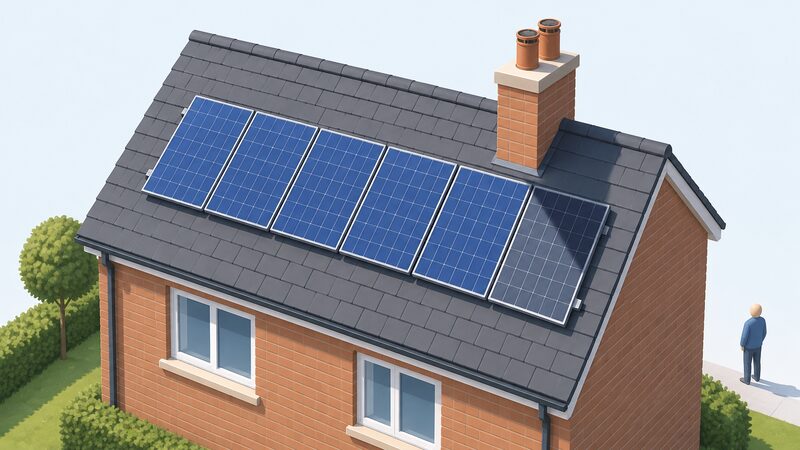
Shading is a separate and very common cause of lost output. Even if just one panel is in the shade, the whole system's performance may be hampered12. That is a wiring effect, not a degradation mechanism, and it is one of the main things to rule out before suspecting PID.
The inverter is the other component worth watching. Inverter problems tend to be the most common fault experienced on UK solar systems13, and grid voltage mismatch is a recognised cause of solar inverter faults14. Because PID is voltage-related, an inverter that is reporting voltage issues is a signal to look more closely at the array.
How to tell PID apart from other causes of underperformance
The practical difficulty is that PID, shading, soiling, winter and ordinary degradation all present as the same thing: less electricity than expected. Working through the alternatives in order is the sensible approach.
Weather and season come first. A drop that coincides with shorter days and more cloud is explained by winter, not by a fault. Dirt building up on the panels is the next candidate, along with a change in the environment such as shading from trees or new structures15. A faulty DC string is also a possibility15. Each of these has a visible or seasonal cause.
PID is what remains when the output falls gradually across the whole array, with no change in shading, no soiling and no seasonal explanation. Because it is a whole-array effect rather than a single-panel one, monitoring that shows every string drifting down together points away from a local shading problem and towards a system-wide mechanism.
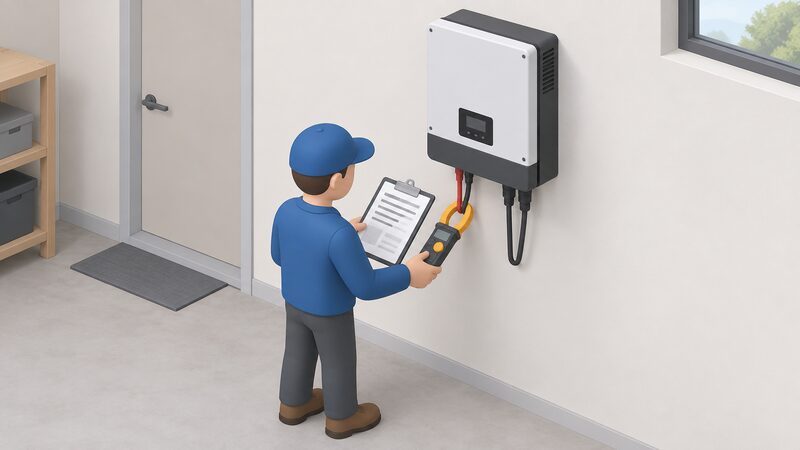
The route to a firm answer is professional. The advice for anyone taking on a property with an existing system is to get the system checked by a certified installer16. The same applies to a system already in place that is underperforming. NAPIT publishes practical guidance covering the maintenance and fault finding of solar PV systems17, which is the kind of framework a competent installer works to.
Prevention and reversal: grounding, anti-PID boxes and inverter settings
Prevention starts at the design stage. Module makers address PID in the cell and encapsulation design: one maker states it has developed solutions to address technical challenges such as hot spots and potential-induced degradation6. Choosing modules from a maker that treats PID as a named design risk is the first layer.
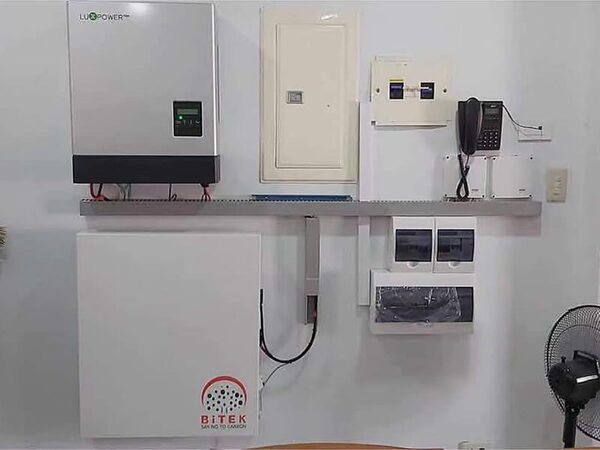
The second layer is the inverter. Some inverters include a PID recovery function. One maker's system automatically calculates the energy needed for recovery and boosts the voltage for PID recovery1, and the same system enables PID suppression during the day1. That means the inverter is actively working against the mechanism rather than simply reporting the result.
Inverter type matters for other reasons too. A PWM inverter has a lower initial cost due to its basic design, but weaker long-term performance because it wastes some solar energy during operation18. It directly connects the solar panel to the battery and reduces excess voltage to match the battery's voltage, wasting energy18, and it has lower power utilisation because its job is not to optimise solar output but to match the solar panel voltage with the battery voltage18. An MPPT inverter, by contrast, tracks the array's best operating point.
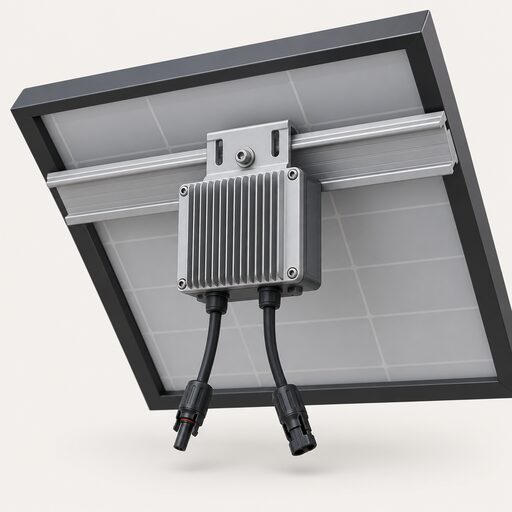
Where shading is the underlying issue rather than PID, the mitigation is different. If shading is unavoidable, an installer might recommend microinverters or power optimisers, which let each panel work independently, along with trimming trees causing partial shade19. Those are module-level electronics, and they address shading rather than PID directly.
What PID means for a household's energy independence
A solar array reduces reliance on the grid, and home solar panels can improve a home's Energy Performance Certificate20. That independence is only as good as the array's output. A 30% loss from permanent PID1 is a direct reduction in the electricity a household generates for itself, and it is invisible on a bill unless someone is watching generation figures.
The dependence that remains is on the equipment and the people who maintain it. PID is diagnosed and treated by an installer, not by the householder, and recovery depends on the inverter having the right function or on a polarity reversal being carried out correctly. A system without monitoring, and without an annual check, can lose output for years before anyone notices.
The practical position is that PID is a known, named risk that manufacturers design against and that some inverters actively counter. It is not a reason to avoid solar, and it is not a certainty. It is a reason to keep an eye on generation figures, to have the system checked by a certified installer16, and to ask about PID suppression and recovery when specifying an inverter.
Sources20 cited
- Sungrow PID Zero solution, Sungrow, 2022
- How solar panel efficiency impacts your savings, SunPower, 2026
- How long do solar panels last?, Uswitch, 2026
- Buying a house with solar panels, Energy Saving Trust, 2026
- How to calculate solar panel output, EcoFlow, 2025
- Qcells solar solutions, Qcells, 2026
- Solar panels advice, Energy Saving Trust, 2026
- Solar panel costs, Which?, 2026
- Solar power, Electricity North West, 2026
- Best silent generator UK, Bluetti, 2026
- Do solar panels work in winter?, Uswitch, 2026
- Make the most of your solar panels, Which?, 2026
- Five common concerns about solar PV debunked, Which?, 2026
- Managing voltage changes in your property, Electricity North West, 2026
- Solar panel problems and how to solve them, Which?, 2026
- Moving house energy checklist, Energy Saving Trust, 2026
- NAPIT Practical Guide: Solar PV & Battery Storage, NAPIT, 2026
- MPPT vs PWM solar inverters, LuxpowerTek, 2026
- Solar panel installation, Energy Saving Trust, 2026
- How do solar panels work?, Smart Energy GB, 2026
 Islanding and Anti-IslandingWhy do solar panels switch off in a power cut, and can you keep the lights on anyway?
 When an Installation Goes WrongYour solar panels have stopped generating.
 Fire and Electrical SafetyHow likely is a solar panel fire, and what actually causes one?
 Savings and PaybackExplains how bill savings from solar are made up of avoided import and export income, and what drives the payback period.
 The Full Solar Panels GuideHow much do solar panels cost, and what could they save you each year?
 Power OptimisersIf one panel is shaded, does it drag the whole roof down?