In this guide
Solar panel fire risk in the UK is low. The government's own review of fire incidents involving solar panels states that "the incidence of such fires is very low", while making recommendations to reduce risks further1. Electrical Safety First puts it in the same terms: "Although the risk of fire from solar panels is low, known problems can occur through bad installations, poor quality con[ections]"2. The recorded numbers are held in accredited official statistics covering fires in England where "solar panel" or "photovoltaic panel" appears in the additional information free text, a field fire and rescue services complete for every incident they attend, whether a fire, a false alarm or a non-fire incident3.
The risk that does exist is concentrated on the direct current side of the installation, not in the panels themselves. The literature review behind the government's fire publication identifies electrical arcing between conductors, or between conductors and earth, within defective or incorrectly installed components, or via exposed conductors, as one of the main causes of fires originating within PV systems4. The components named as typical locations of those arcs are DC connectors, DC isolators, inverters, and PV modules including by-pass diodes and junction boxes, when incorrectly specified, poorly installed or containing manufacturing faults4.
For a household, the practical picture is this: a well-installed system with sound connectors, a correctly specified isolator, working surge protection and a periodic inspection carries a small risk that is managed rather than eliminated. What remains is a live DC array that cannot be switched off by daylight, a dependence on the competence of whoever installed it, and a reliance on the manufacturer for the safety of the components bolted to the roof.
How common are solar panel fires in the UK?
The honest answer is that nobody publishes a single headline number, and the reason is worth understanding. The closest thing to a national count is the accredited official statistics series on the number of fires in England with "solar panel" or "photovoltaic panel" mentioned in the additional information free text3. That is a text search of an incident description, not a coded cause of fire. The field is completed by fire and rescue services for every incident they attend, be it a fire, a false alarm or a non-fire incident, so a mention of a solar panel in the free text does not establish that the panel caused the fire, or even that a fire occurred3.
What the official publications do say is directional. The government's fire incidents publication reports that "the incidence of such fires is very low, but the study makes a number of recommendations to reduce risks"1. That is the position from the department that commissioned the underlying research, and it is the strongest statement available on frequency.
The independent consumer position agrees. Electrical Safety First's solar panel guidance states that the risk of fire from solar panels is low, while noting that known problems can occur through bad installations, poor quality connections and cable damage through vermin and weathering2. Which? adds a specific mechanism that has nothing to do with the electrics: birds' nesting material can be combustible and present a serious fire risk, and birds and squirrels can damage connectors and wiring6.
Two further points shape how the statistics should be read. First, many installations don't have an automatic fire detection system, so a fire may spread before being discovered2. Second, the free-text field captures false alarms and non-fire incidents as readily as fires, which means the series is a screening tool for incident reports rather than a fire rate3. For a household weighing up a system, the reasonable conclusion is that a solar array is not a significant fire source in UK incident data, and that the residual risk sits in workmanship and component quality rather than in the technology.
Why solar panel fire risk is low, and where it actually comes from
The low baseline has a physical explanation. A PV array has no combustion process of its own: there is no burning of fossil fuels, so there are no polluting gases being released into the atmosphere7. There is no fuel store, no pilot flame and no flue. What a PV system does have is a permanently energised DC circuit whenever the modules are lit, and a set of connections that must survive decades of thermal cycling, wind loading and weather.
That is where the risk concentrates. The government's literature review is explicit that one of the main causes of fires originating within PV systems emerges from the literature as electrical arcing between conductors, or conductors and earth, within defective or incorrectly installed components, or via exposed conductors4. An arc is not a slow degradation; it is a localised, high-temperature event. The same review states that the heat and electrical energy from the arc can ignite nearby materials and start a fire which could cause further damage4.
The review also names the components where this happens. Certain components, if incorrectly specified, poorly installed or contain manufacturing faults, are typical locations of electrical arcs: DC connectors, DC isolators, inverters, and PV modules including by-pass diodes and junction boxes4. Read that list as a map of where to look. It is not the silicon that fails; it is the joints, the switching devices and the electronics.
"One of the main causes of fires originating within PV systems emerges from the literature as electrical arcing between conductors, or conductors and earth, within defective or incorrectly installed components, or via exposed conductors."
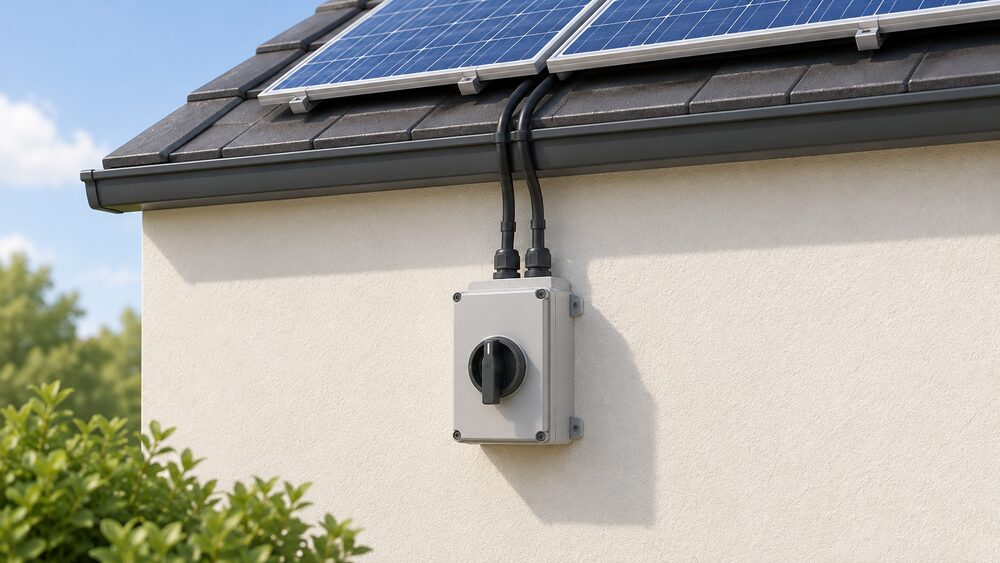
The isolator deserves separate mention because it is a component households rarely think about. The same government review states that incorrectly specified or installed isolators can cause fires, damage the reputation of the solar power industry, or worse, cause loss of life4. An isolator is a switch in a DC circuit carrying the full array current, and it is exposed to the weather on many roofs. Its specification and its enclosure are safety-critical, not incidental.
The DC side: connectors, arcs and poor installation
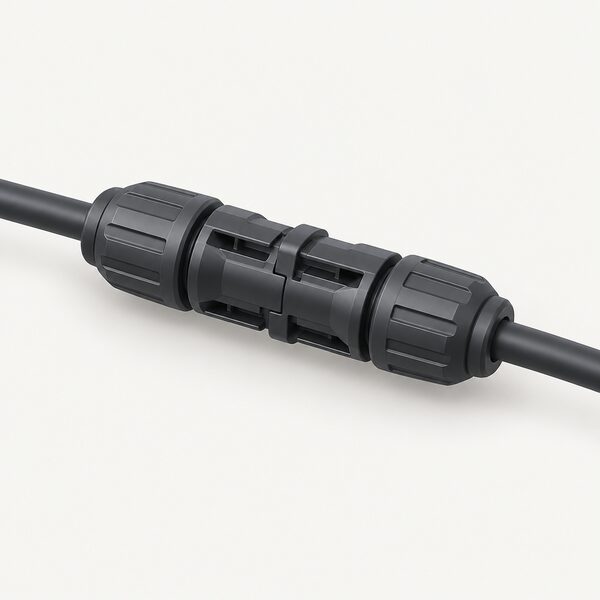
The DC side of a solar installation is the part that behaves unlike anything else in a house. It runs at array voltage whenever the modules are lit, it cannot be de-energised by a switch inside the building, and its connectors are often the only thing standing between a healthy circuit and an arc.
Connector quality and matching are the first control. The interim product specification for plug-in solar states that only matching connector pairs from the same product family shall be used DC side, and that Y-connectors shall not be used8. Those two rules exist because mixed-brand mating pairs and splitter arrangements are classic sources of high-resistance joints, and a high-resistance joint under load is where arcs begin. The same logic applies to professionally installed arrays, where the connectors are the same family of components.
The second control is fault detection at the module or string level. Some equipment carries arc fault detection as a built-in feature: the SolarEdge Smart Module with integrated S series Power Optimizers is described as having automatic safety shutdown (Safe DC) with AFCI (Arc Fault Circuit Interrupter) and heat detection at the module level9. The same description appears in Ofgem's ECO4 approved innovation measures documentation, which lists automatic safety shutdown (Safe DC) with AFCI and heat detection at the module level10. That is a maker's feature set recorded in an official scheme document, and it illustrates the direction of travel: detection and shutdown at the point where the fault occurs, rather than at a central unit.
The third control is diagnosis when output falls. Which? notes that a generation drop can come from weather conditions, dirt building up, or a change in the environment such as shading from trees or new structures, and also possibly a faulty DC string6. A faulty string is an electrical fault, and it is the one cause on that list that needs an electrician rather than a hosepipe.
DC isolation: what it does and when it matters
DC isolation is the set of arrangements that let the array be disconnected from the rest of the installation, and it matters for two different reasons: maintenance and emergency response.
For maintenance, the isolator is what allows an inverter to be replaced or a string to be worked on. The government review's warning about incorrectly specified or installed isolators causing fires, damaging the industry's reputation, or worse, causing loss of life, is a statement about how much depends on that one component being right4. A DC isolator is not a domestic light switch scaled up; it is a device specified for DC arcs and installed in an enclosure that keeps water out.
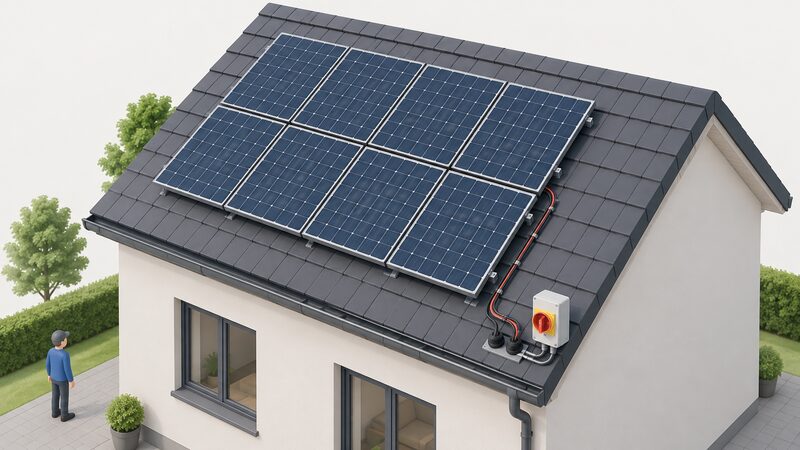
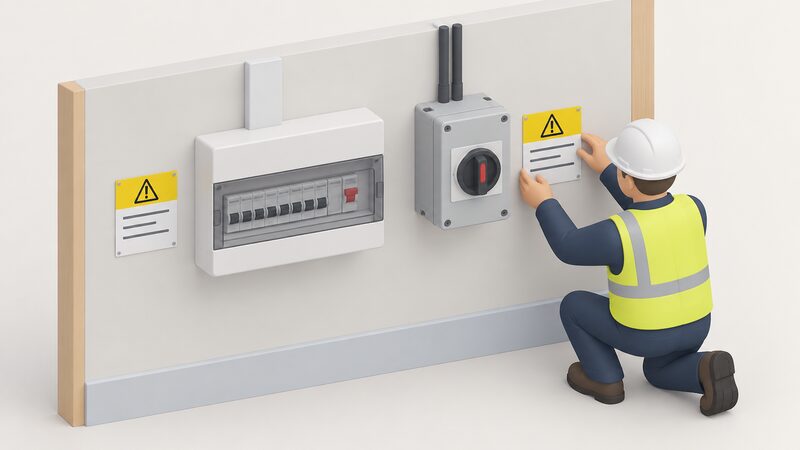
For emergency response, the point is different and often misunderstood. Switching off the AC side at the consumer unit stops the inverter exporting, but it does not de-energise the array. The DC conductors between the modules and the inverter remain live in daylight. That is why labelling, cable routing and access to the isolator are design decisions taken at installation, and why the location of DC cables inside a building is a matter for the installer and the building control process rather than something to be rearranged later.
The regulatory backdrop for isolation and removal sits partly in planning and building law. In Northern Ireland, Class C permitted development for stand alone solar carries the condition that any stand alone solar no longer used to provide heat or energy shall be removed as soon as reasonably practicable, and the same removal condition applies to Class A solar PV or solar thermal equipment11. The primary purpose test for stand alone solar is that it provides heat or energy for use within the curtilage of the dwellinghouse11. In England, the 2008 permitted development order excludes the installation, alteration or replacement of solar photovoltaics or solar thermal equipment from the Class C rights it otherwise grants12. These are not electrical standards, but they shape what happens to an installation at the end of its life, which is when abandoned DC cabling becomes a hazard.
Surge protection: Type 2 SPDs and what they guard against
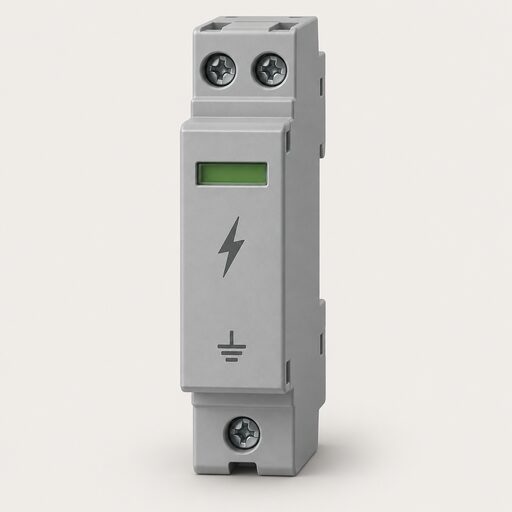
A surge protection device limits transient overvoltage reaching the installation. In solar equipment, protection is often built into the inverter and specified by type on the DC and AC sides separately.
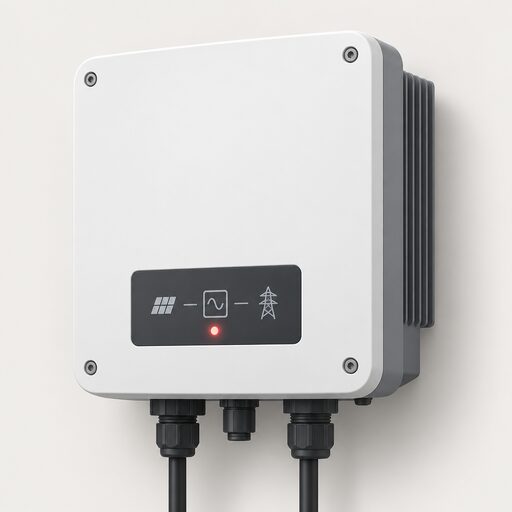
The Sungrow SG40CX-P2-V21 is listed with DC Type I+II SPD and AC Type II SPD13. That single line is a useful illustration of how the categories are applied in practice: a combined Type I+II device on the DC side, where the array itself can be a source of surge energy and where lightning-induced transients arrive, and a Type II device on the AC side, guarding the inverter and the connected installation against switching and induced surges on the mains.
Type II devices are the common specification for AC-side protection in domestic and small commercial installations. They are not the same as Type I devices, which are specified for direct lightning current, nor the same as Type III devices, which are fitted close to sensitive equipment. The type is a statement about the surge energy the device is designed to divert and the test waveform it has passed.
Whether a particular installation needs additional protection beyond what the inverter carries is a design question. It depends on the exposure of the site, the length and routing of DC and AC cabling, and the requirements of the standards the installer works to. The evidence available here does not support a blanket rule for every roof, and no figure for the proportion of UK installations fitted with external SPDs is published in these sources.
What can be said plainly is that surge protection is part of the electrical design, not an accessory. Where an inverter is specified with DC Type I+II and AC Type II protection built in, that protection is a property of the equipment13. Where it is not, the design has to account for the risk another way. For a household, the practical consequence is that the question belongs in the installer's design and handover documentation, alongside the isolation arrangements and the labelling.
Product recalls and component quality: what to check
Component quality is the part of solar safety a household can actually influence, because it is decided at the point of purchase.
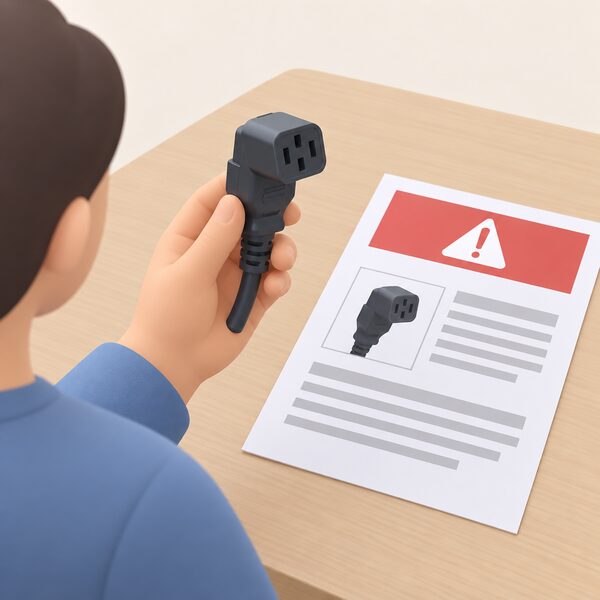
The clearest UK recall in this area concerns the Sigenergy SigenStor Energy Controller with quick connect AC plug. The notice records a hazard: the product presents a risk of burns as the quick connect AC plug may overheat in cases where it has been installed not in accordance with the manufacturer's instructions14. The same notice states that in rare cases the quick connect AC plug may present a risk of overheating and burns in cases where it has been installed not in accordance with the manufacturer's instructions14. The distinction matters: this is an installation-condition hazard, not a defect present in every unit.
For plug-in solar, the purchase channel is itself a safety control. Electrical Safety First urges shoppers to stick to reputable high street retailers and their online websites to ensure the device they are buying is safe and meets the new interim product specification15. Buying through an established retailer means the product has passed through a supply chain with traceability, and it means there is a route back if a recall is issued.
Panels have their own quality questions that are not safety questions but affect what a household ends up living with. Which? notes that where a cracked panel is replaced under warranty, the cost of labour for replacing the panel and any scaffolding may not be covered, the replacement panel may look different, and some manufacturers require independent testing to prove underperformance6. The same guidance explains that you can find the expected degradation of your panels on their datasheet, searchable by make and model6. That datasheet, and the MCS certificate that records the installation, are the documents that let a household identify exactly which model is on the roof when a recall or a safety alert is published.
There is also an end-of-life dimension. Parliament's POST note records that there are small amounts of antimony in solar panels, which is a hazardous substance and may impact recyclability, and that some European manufacturers produce panels without antimony16. That is a materials and disposal consideration rather than an operational risk, but it belongs in the same conversation about what is actually on the roof.
Who sets the standards: Electrical Safety First and the regulators
Solar safety in the UK is not governed by one body. It is split between building regulations, electrical installation practice, planning law and consumer safety guidance, and the split explains why the paperwork matters as much as the hardware.
Building regulations are the statutory layer. All solar panel installations must comply with Building Regulations17. Building regulations will normally apply to a solar panel on a roof18, and approval is likely to be needed19. The reasons given across council guidance are consistent: the additional loading on the roof structure and the associated electrical works20. Building regulations also apply to other aspects of the work such as electrical installation22. In Wales the same position is stated: building regulations also apply to other aspects of the work such as electrical installation23.
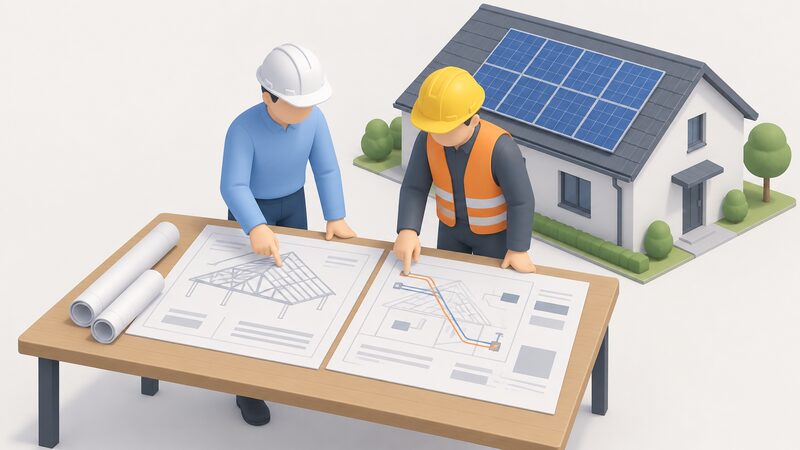
The parts engaged are named in scheme documentation. The Barcud Solar Panel Installation Scheme Specification lists Structural Safety (Part A), Fire Safety (Part B), Conservation of Fuel and Power (Part L) and Electrical Safety (Part P) as applying24. That is a useful summary of the statutory interests in a domestic array: the roof must carry the load, the fire performance of the building must not be compromised, the energy performance is the point of the work, and the electrics must be safe.
Electrical Safety First is the independent consumer safety body whose guidance underpins much of the practical advice in this area, covering both installed solar panels and plug-in solar panels2. Its recommendations on inspection intervals, visual checks and the use of registered electricians are the household-facing layer that sits on top of the statutory requirements.
The installer layer is where competence is verified. All electrical work should be undertaken by a Part P registered Electrician25. Structural questions go elsewhere: a Structural Engineer will need to check the roof for its strength, and some strengthening work may be needed25, a point repeated in council guidance that this must be done by a qualified structural engineer17. Where a group-buying scheme is used, the process includes a survey: once you accept your offer, a surveyor will visit your property to assess whether your roof is suitable for a solar installation and confirm the number of panels, their location, other details such as cabling locations and colour25.
What a household can do: registration, checks and smoke alarms
The household's role in solar safety is narrower than the installer's but it is not zero. It comes down to registration, periodic inspection, visual checks and detection.
Registration first. Where a solar installation is connected, you must register it with UK Power Networks (UKPN), usually done by your installer26. That registration is what tells the network operator that generation is connected at the property, and it is part of the connection process rather than an optional extra.
Inspection and testing next. Electrical Safety First recommends having your system inspected and tested at least every five years to ensure it remains safe and efficient2. Between those inspections, the same guidance is to do regular visual checks to identify any cracks, breaks, loose connections, and any cable damage caused by vermin and weathering2. Those checks are exactly the failure modes the government review identifies as arc precursors, which is why they are worth doing rather than treating as a formality.
Detection is the third element, and it is where scheme rules have moved furthest. The Barcud Solar Panel Installation Scheme Specification requires the fire detection system within the property to be upgraded to include a multi sensor where the inverter and solar battery are located within a dwelling, and the whole house system upgraded where interlinked smoke and heat detectors are not fitted24. That is a scheme requirement rather than a universal legal duty, but it reflects the underlying problem: many installations don't have an automatic fire detection system, so a fire may spread before being discovered2. An inverter and a battery are electrical equipment in a room, and detection in that room is the difference between an incident and a serious one.
For plug-in solar specifically, there is a pre-purchase step. Electrical Safety First recommends that households have their electrical installation assessed by a competent electrician registered with a competent persons scheme before purchasing or using a plug-in solar system, particularly in older properties or where the condition of the electrical installation and type of protective devices is unknown15. The same guidance recommends households have at least a Type A bidirectional RCD protecting circuits intended for use with plug-in solar panels15.
On the safety of plug-in devices themselves, the government's electrical safety study is the most recent official evidence. It examined a range of operating conditions and fault scenarios across different device types, and the results show that plug-in PV systems can operate safely within the tested conditions, with stable behaviour, effective protective device operation, and no evidence of sustained unsafe energisation or unacceptable thermal effects5. That is a finding about tested conditions, not a general clearance of every device on the market, which is why the purchase-channel advice sits alongside it15.
Where the dependence remains

A solar installation reduces a household's dependence on imported electricity and on the grid's generation mix, but it does not remove dependence, and on safety it creates a new set of relationships.
The array itself is a live electrical source that cannot be switched off in daylight. That is a permanent condition of owning one, and it is why isolation, labelling and cable routing are settled at installation rather than adjusted later4. The household depends on whoever installed it having specified the isolator correctly, matched the connectors, and routed the DC cabling sensibly.
The household also depends on the manufacturer of the inverter, the optimisers and the modules. Arc fault detection and module-level shutdown are features of particular products, not universal properties of solar9. Where a maker's equipment carries those features, the safety case for that installation is stronger; where it does not, the design has to compensate. And where a product is recalled, the household's protection depends on the manufacturer's remedy and on having the model identification to hand14.
Finally, the household depends on the inspection regime being followed. A five-year inspection interval and regular visual checks are recommendations, not automatic events2. Nothing in the system prompts them. The registration with the network operator, the MCS certificate and the datasheet are the records that make all of it possible, and they are worth keeping together with the handover documentation from the installer.
Sources26 cited
- Fire incidents involving solar panels, GOV.UK, 2017-07-20
- Solar panels safety advice, Electrical Safety First, 2026-09-17
- Number of fires in England with solar panel or photovoltaic panel mentioned in the additional information free text, GOV.UK, 2023-10-26
- Fire and solar PV systems: literature review, GOV.UK, 2017-07-17
- Plug-in solar electrical safety study, GOV.UK, 2026-06-16
- Solar panel problems and how to solve them, Which?, 2026-03-26
- Solar panels, Oxfordshire County Council, 2026-09-17
- Plug-in solar interim product specification (withdrawn), GOV.UK, 2026-06
- ECO4 Innovation Approved Innovation Measures v1.6, Ofgem, 2024-01
- ECO4 Innovation Approved Innovation Measures, Ofgem, 2023-07
- Stand alone solar permitted development conditions, Northern Ireland, legislation.gov.uk, 2026-09-17
- The Town and Country Planning (General Permitted Development) Order 2008, legislation.gov.uk, 2026-09-17
- Sungrow SG40CX-P2-V21 three phase string inverter, Alternergy, 2026-09-17
- Product safety report: Sigenergy SigenStor Energy Controller with quick connect AC plug, GOV.UK, 2026-04-23
- Plug-in solar panels safety advice, Electrical Safety First, 2026-09-17
- POST note: solar panels, UK Parliament, 2026-06-25
- Solar panels, East Herts Council, 2026-09-17
- Building regulations and renewables guidance, Bedford Borough Council, 2026-09-17
- Solar panels guidance, City of York Council, 2026-09-17
- Solar panels guidance, Islington Council, 2026-09-17
- Solar photovoltaic (PV) panels, London Borough of Bromley, 2026-09-17
- Building regulations, Planning Portal, 2026-09-17
- Building regulations and solar panels, Welsh Government, 2026-09-17
- Barcud Solar Panel Installation Scheme Specification, Sell2Wales, 2026-06-15
- Installing solar panels, Brighton & Hove City Council, 2026-09-17
- Solar panels, London Borough of Hammersmith & Fulham, 2026-09-17
 Surge and Lightning ProtectionWill a surge protector stop a lightning strike from wrecking my wiring and appliances?
 Islanding and Anti-IslandingWhy do solar panels switch off in a power cut, and can you keep the lights on anyway?
 Solar Charging a Power StationCharging a portable power station from solar panels comes down to a few practical questions.
 Solar Mounting SystemsWill your roof take the extra weight of solar panels, and will it still keep the rain out afterwards?
 Electrical Safety for GenerationWho signs off the wiring when you fit solar panels or a small wind turbine, and how do you know it is safe?
 Warranties and DegradationHow long do solar panels actually last, and what do the warranties really cover?