In this guide
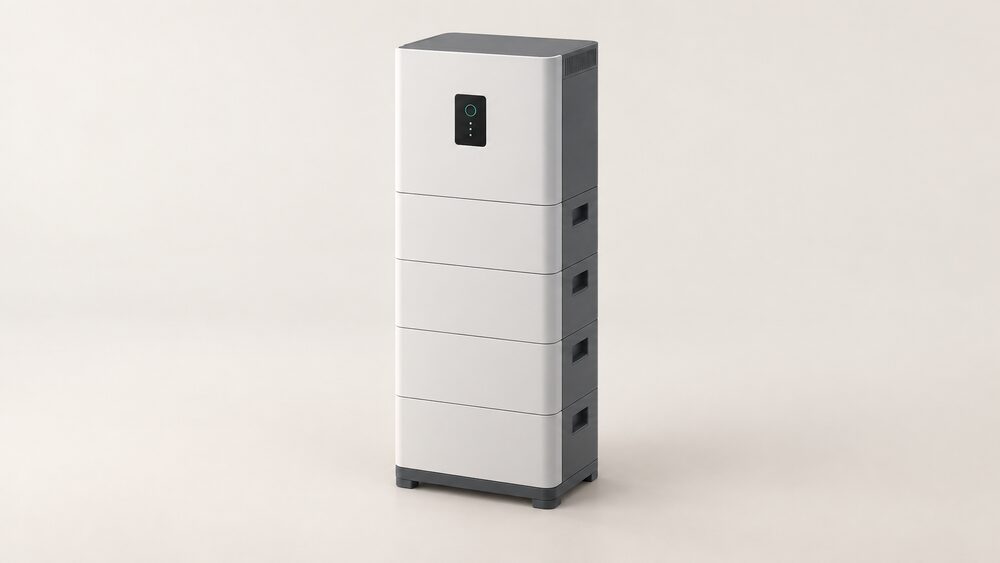
Sigenergy is a Shanghai-headquartered energy equipment maker that has built its UK offer around a single idea: rather than selling a household a separate inverter, a separate battery and a separate EV charger, it sells one stack that does all of it. The flagship product, the SigenStor, is described by the company as the world's first 5-in-1 energy storage system, integrating battery PCS, battery pack, EV DC charger, PV inverter and energy management into one unit1. A newer generation, the SigenStor Neo, was unveiled globally in June 2026 and integrates the inverter, battery, PCS, EMS and gateway into a single system2.
The company is not a small newcomer. By the end of 2025 it reported more than 17,600 registered installers worldwide, supported by 172 distributors, and ranked number one in the sub-1000 kWh market in Australia, South Africa and Ireland3. It is listed in Hong Kong under the stock code 06656.HK2. In Britain its distribution partner is Alternergy, a relationship announced in October 20231.
For a household, the appeal is integration and the trade-off is dependence. A Sigen system can run a home's solar, storage and car charging through one app, but the longest warranty term is conditional on the equipment staying connected to the internet, and the app, the firmware and the fault diagnosis all run through the manufacturer4.
What Sigenergy makes: the 5-in-One Sigen range
Sigenergy describes its focus as developing home and business energy solutions, with products ranging from energy storage systems to solar inverters and EV chargers7. In practice the residential catalogue splits into three groups: the SigenStor all-in-one stack, the Sigen hybrid and energy controller inverters that sit alongside it, and the smaller SigenMicro microinverter aimed at balcony and small rooftop systems.
The SigenStor is the centrepiece. The company calls it an AI-optimised 5-in-one energy storage system, integrating solar inverter, EV DC charger, battery PCS, battery pack and EMS into one unit5. The SigenStor Neo, launched in June 2026, integrates the EMS, PV inverter, battery PCS, battery pack and backup module, and is described as Sigenergy's next-generation all-in-one residential energy storage system8.
Around that core sit the inverters. The Sigen Energy Controller is published in two forms: a single-phase unit rated 5.0 to 12.0 kW, and a three-phase unit rated 5.0 to 30.0 kW10. The Sigen Hybrid Inverter is listed at 2.0 to 6.0 kW single phase7. The SigenMicro Inverter is a separate product, described as a key part of the Sigenergy Home Energy Ecosystem, and it uses a Sigen WLAN Mesh architecture for wireless coverage and single-point commissioning11.
| Product | Type | Published rating |
|---|---|---|
| Sigen Energy Controller | Single-phase inverter | 5.0 to 12.0 kW10 |
| Sigen Energy Controller | Three-phase inverter | 5.0 to 30.0 kW10 |
| Sigen Hybrid Inverter | Single-phase hybrid | 2.0 to 6.0 kW7 |
| SigenStor | Hybrid inverter element | 5 to 12kW6 |
| SigenMicro Inverter | Microinverter | Not stated |
The EV charging side is split between an AC charger, described as a click-in install and seamlessly synchronised with the SigenStor, and a DC charger offering fast charging, PV surplus charging and battery boost charging modes12. Sigenergy states plainly that it is not affiliated with, associated with, authorised by, endorsed by or officially partnered with any automobile manufacturer, which matters if a buyer has seen the DC charger presented alongside a car brand13.
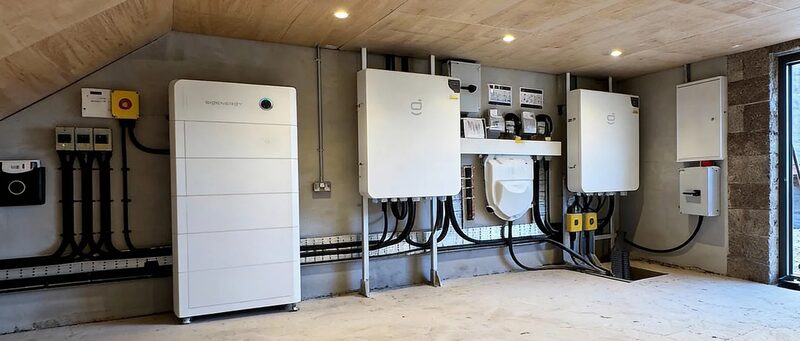
Who Sigenergy is: a Shanghai-founded maker, listed in Hong Kong
Sigenergy is headquartered in Shanghai2. It is a listed company, trading under the stock code 06656.HK, a Hong Kong listing2. Tony Xu is named in the company's own announcements as Founder and CEO, quoted in June 2026 on the launch of the SigenStor Neo9. The company describes its strategy as "AI in All", and its June 2026 announcements frame the product range around that idea9.
The corporate structure matters to a household for one reason: it determines who stands behind the warranty and where the engineering decisions are made. A Hong Kong-listed manufacturer with Shanghai headquarters and a UK distribution partner is a different proposition from a European maker with a UK subsidiary, though not automatically a worse one. What it does mean is that the route to a remedy runs through a distributor and an installer rather than a local manufacturer's service network.
The wider context is that Chinese manufacturers entering the UK and European solar markets is now routine. Intertek Shanghai was welcomed by MCS as a product certification body in July 2024, with the stated purpose of helping Chinese manufacturers to enter the UK and European markets14. Certification is the mechanism by which an overseas product becomes eligible for UK installation and, where relevant, for grid connection and payment schemes.
Sigenergy's own market position is stated in its December 2025 press release: more than 17,600 registered installers worldwide by the end of 2025, supported by 172 distributors, and a number one ranking in the sub-1000 kWh market in Australia, South Africa and Ireland3. Those are the company's figures about itself, and they describe commercial traction rather than UK-specific performance. The company also reported agreements totalling over 20 GWh at Intersolar Europe 2026, across Europe, Africa and the Asia-Pacific region15.
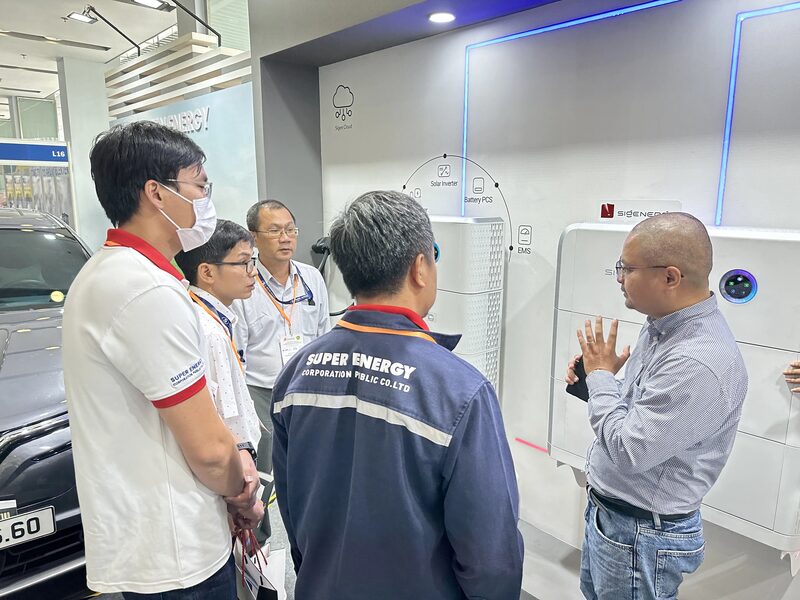
The SigenStor: storage, inverter and EV charging in one system
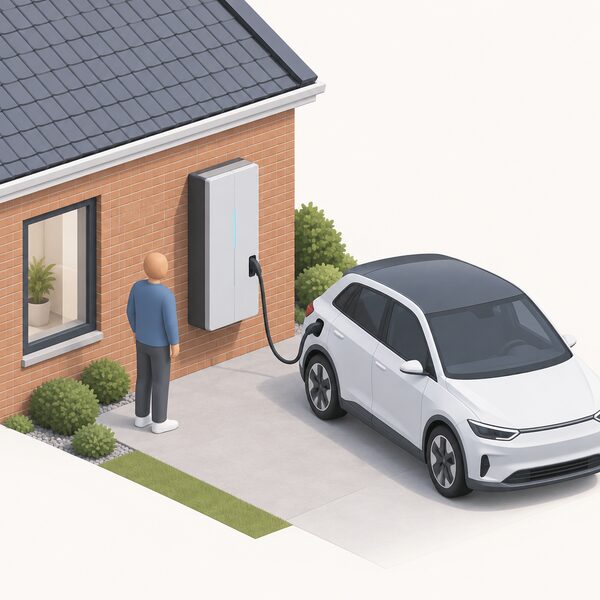
The SigenStor's proposition is that a household buys one box instead of four. The company describes it as integrating solar inverter, EV DC charger, battery PCS, battery pack and EMS into one powerful energy system16. The same integration is repeated across the product pages: Sigenergy's home energy system is described as combining solar, storage and EV charging into an all-in-one solar energy system for the home15.
The practical consequence is fewer separate components on a wall and one commissioning process. It also means the inverter and battery management are designed together, with backup capability built in6. Backup is the feature that most directly serves energy independence: a system with backup capability can keep selected circuits running when the grid is down, which a plain grid-tied inverter cannot do. The company publishes a separate page on home load backup, which is the mechanism by which a household decides what stays live17.
The trade-off is that integration concentrates risk. If the inverter element fails, the battery and the charging function sit behind the same service ticket. A modular system with separate components allows a household to replace one part; a 5-in-1 stack does not. That is a design choice rather than a fault, but it is the one a buyer should understand before committing.
The SigenStor Neo, unveiled in June 2026, extends the same idea with a modular design and what the company calls all-round safety protection8. It integrates the EMS, PV inverter, battery PCS, battery pack and backup module8. The SigenStor itself is listed with 314Ah long cycle-life cells and five-layer battery protection5. Cell capacity of 314 Ah is given for the 6.0 and 10.0 battery modules in the datasheet7.
Scalability: systems from a single home up to 270 kWh
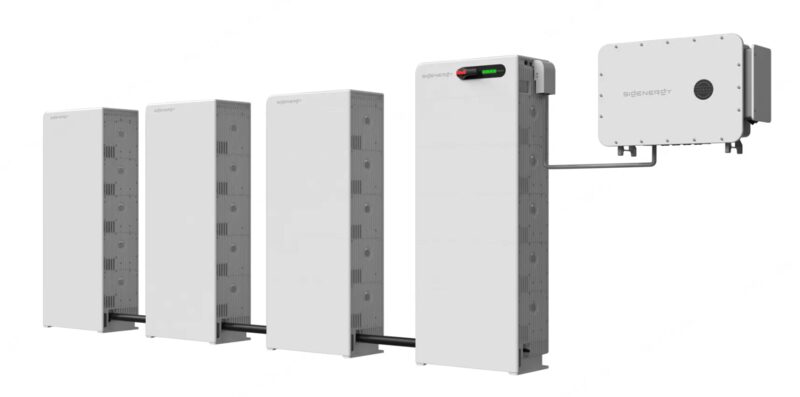
The SigenStor is described as modular and scalable from 9.6kWh upwards6. That starting point suits a household adding storage to an existing array, and the modular design means capacity can be increased later rather than specified once at the outset8.
The SigenStor Neo supports up to six vertically stacked battery modules9. Six modules is the published ceiling for that product, and the stacking is vertical, so the footprint stays small while the height grows. The company's wider claim of scalability up to 270 kWh appears in its commercial and utility messaging rather than in the residential product pages, and the residential ceiling is set by the module count and the inverter rating.
The inverter side scales with it. The Sigen Energy Controller is published at 5.0 to 12.0 kW single phase and 5.0 to 30.0 kW three phase10, and the SigenStor's hybrid inverter element is given as 5 to 12kW6. A three-phase controller at the top of that range is what allows a larger property, or one with three-phase supply, to run a bigger array and a bigger battery through the same platform.
For a household, the meaningful question is not the maximum but the sensible minimum. A single home with a typical roof array will sit at the bottom of the range, and the value of modularity is that the decision can be revisited. Adding modules later is cheaper than replacing a fixed-capacity unit, provided the original inverter rating and the physical space allow it.
UK availability: Alternergy distribution and three-phase options
Sigenergy announced in October 2023 that it had joined forces with Alternergy in Britain, making Alternergy the named UK distributor1. That is the route by which a UK installer sources the product, and it is the first thing to confirm when a quote names a Sigen system.
Three-phase support is published at the product level: the Sigen Energy Controller is listed at 5.0 to 30.0 kW three phase alongside the 5.0 to 12.0 kW single-phase version10. Three-phase matters in larger UK homes and in properties with a three-phase supply, where a single-phase inverter would be limited in what it can export. For context on how surplus diversion works across phases, OpenEnergyMonitor notes that its diagram is for a single-phase setting but that an equivalent three-phase system is available for diverting surplus energy18.
Availability of individual models is a separate question from brand availability. The SigenStor Neo was only unveiled in June 20262, and the SigenMicro Inverter is aimed at balcony and small-scale rooftop systems rather than a standard UK roof array11. A household should treat the range as a menu from which an installer selects, not a catalogue where every item is equally obtainable.
There is also a product safety dimension. The UK government published a product safety report for the Sigenergy SigenStor Energy Controller with quick connect AC plug, notification number 2604-0013, dated 23 April 2026, and gives a UK contact address for owners of affected products, sigenservice.uk@sigenergy.com19. A household with that specific product should check the notification directly rather than rely on a summary.
The mySigen App and smart home integration
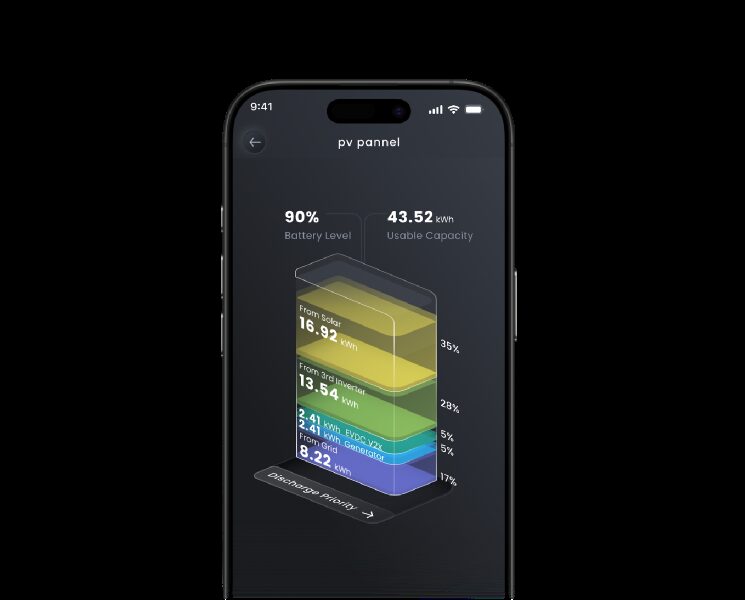
The mySigen app is the control layer for the whole system, and it is where most of the day-to-day interaction happens. It tracks real-time solar production and consumption11, and it can show the specific energy mix, solar, battery or grid, powering each identifiable smart device in the home20. Smart loads integrate through Shelly and the Sigen Gateway20.
The app monitors a wider set of equipment than the Sigenergy hardware alone: solar panels and batteries, smart home devices, third-party equipment and Tigo optimisers20. That openness is unusual and useful, because it means a household is not forced to replace existing smart devices to get monitoring. The app also carries a GPT-4o-powered smart assistant15, and for the SigenMicro Inverter it can automatically detect nearby microinverters via connected WLAN access points, which is aimed at balcony and small-scale rooftop systems11.
This is also where the dependence is clearest. Remote monitoring, scheduling and the AI features run through Sigenergy's app and, by implication, its servers. A household that wants the system to work without a manufacturer's cloud is looking at the wrong layer of the product: the inverter and battery will still generate and store, but the visibility and the smart scheduling sit behind an app.
The app is also the warranty channel. Claims are made by creating and submitting a service ticket to Sigenergy through the app, following the instructions in the support menu4. That makes the app a functional requirement rather than a convenience, and it is worth knowing before installation rather than after.
Support, warranty and installer network: what owning a Sigen system means
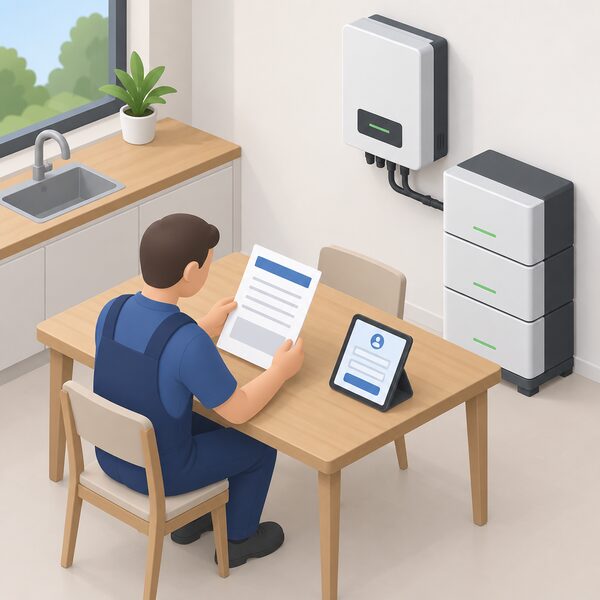
The published warranty position is 10 years for the inverter and 10 years for the battery, stated separately6. The Sigen Energy Controller carries a 10-year term4. The SigenMicro Inverter is listed with a 25-year warranty on one product page, though a second page gives 15 years, and the two figures are unresolved11.
The conditions attached to the 10-year term are the part that matters most. Under the SigenStor factory limited warranty, the device must remain connected to the internet for essential firmware updates to activate and maintain the 10-year limited warranty4. The earlier warranty document is blunter: if the equipment continues to be disconnected for an extended period, the company states it may not be able to honour the warranty, and continued disconnection may mean only a five-year warranty from first installation4.
"To activate and maintain 10-year limited warranty, your device must remain connected to the Internet for essential firmware updates"
The warranty clock starts on the earlier of the date the product is installed, activated and registered on site, or the 180th calendar day after shipment if it has not been installed, activated and registered within that window4. Claims must be made within 30 days from the failure date, otherwise Sigenergy states it will treat the claim as abandoned4. The battery system must be installed by a skilled and trained installer4.
Registration and claims both run through the mySigen app, or through the local installer or Sigenergy's national office4. For general enquiries the company directs people to sales@sigenergy.com, and for specific model details to the same address17. Its site carries a Learning Centre with courses and tutorials, alongside warranty documents and a download centre15.
The installer network is the other half of the picture. Sigenergy reported more than 17,600 registered installers worldwide by the end of 20253, which is a global figure rather than a UK one. For a household, the practical test is whether the installer quoting can demonstrate familiarity with the platform, because the warranty conditions on installation quality and registration are enforced through that relationship.
Where a Sigen system leaves a household
The independence a Sigen system offers is real but bounded. A SigenStor with backup capability can keep selected circuits running through a grid outage, and the battery lets a household use its own solar generation in the evening rather than exporting it6. That is a genuine reduction in reliance on the grid for the hours the battery covers.
What remains is a set of dependencies that no amount of storage removes. The system stays connected to the grid for import when the battery is empty and for export under a payment scheme. It depends on a UK distributor, Alternergy, for supply1, and on an installer network for commissioning and for any warranty claim. It depends on a home broadband connection for firmware updates, and that connection is a condition of the 10-year warranty rather than an optional extra4. It depends on the mySigen app for monitoring, scheduling and claims4. And it depends on a manufacturer headquartered in Shanghai and listed in Hong Kong for the product's continued support2.
None of that is unusual for a modern hybrid system, and the integration that creates the dependence is the same integration that makes the system simple to run. The honest summary is that a Sigen system trades some independence at the corporate and software layer for a good deal of independence at the energy layer. A household weighing it against a hybrid inverter and a separate battery should compare the warranty conditions as carefully as the specifications, because on this platform the two are linked.
Sources20 cited
- SigenStor world first 5-in-1 press release, Sigenergy, 17 October 2023
- Sigenergy showcases full-scenario energy portfolio at Intersolar Europe 2026, Sigenergy, 23 June 2026
- Sigenergy 2025 installer and distributor figures, Sigenergy, 31 December 2025
- SigenStor Factory Limited Warranty, Sigenergy, 29 April 2025
- SigenStor product page, Sigenergy, 2026
- Solar panel and battery backup guidance, Spirit Energy, 2026
- Sigenergy product datasheet, Sigenergy, 2026
- SigenStor Neo product page, Sigenergy, 2026
- SigenStor Neo launch announcement, Sigenergy, 25 June 2026
- Sigen Energy Controller datasheet, Sigenergy, 2026
- SigenMicro Inverter product page, Sigenergy, 2026
- Sigen EV AC Charger product page, Sigenergy, 2026
- Sigen EV DC Charger product page, Sigenergy, 2026
- MCS welcomes Intertek Shanghai as its newest product certification body, MCS Certified, 31 July 2024
- Sigenergy home page, Sigenergy, 2026
- SigenStor US product page, Sigenergy, 2026
- Home load backup support article, Sigenergy, 2026
- Mk2 PV Router, OpenEnergyMonitor, 2026
- Product safety report: Sigenergy SigenStor Energy Controller with quick connect AC plug, GOV.UK, 23 April 2026
- mySigen App product page, Sigenergy, 2026
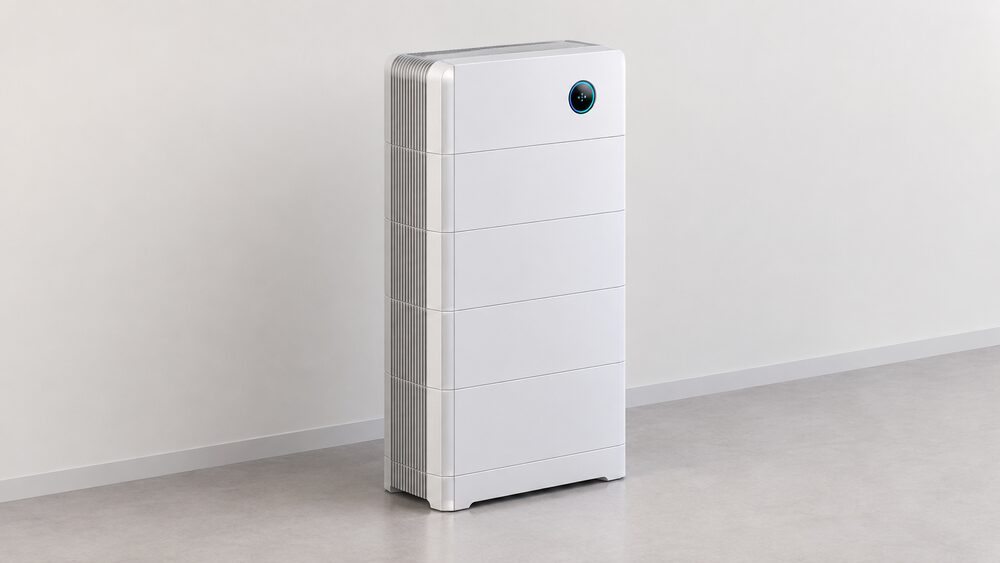 Sigenergy SigenStorIf you have seen a SigenStor quoted for your home, you probably want to know what it actually is, how much it stores and what it costs.