In this guide
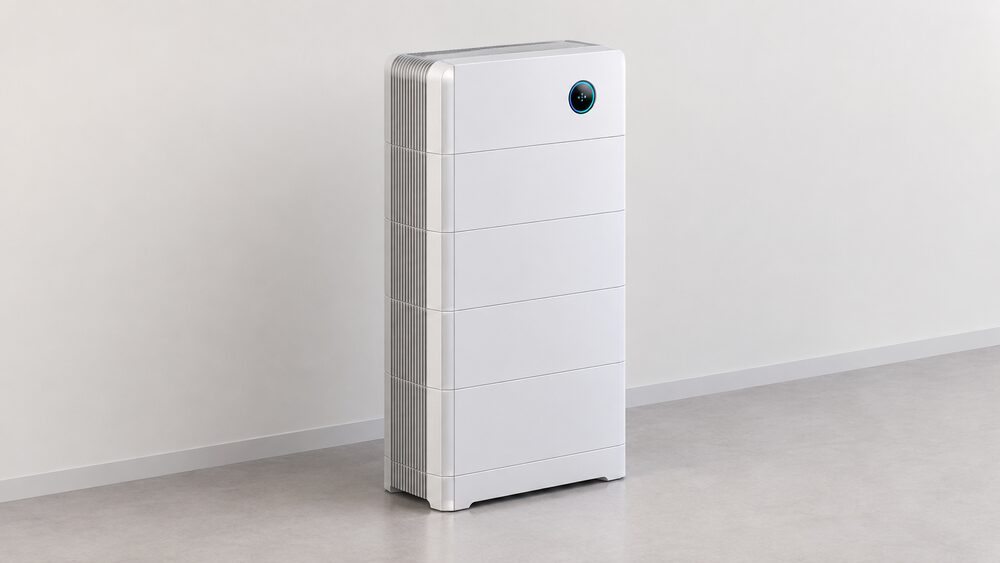
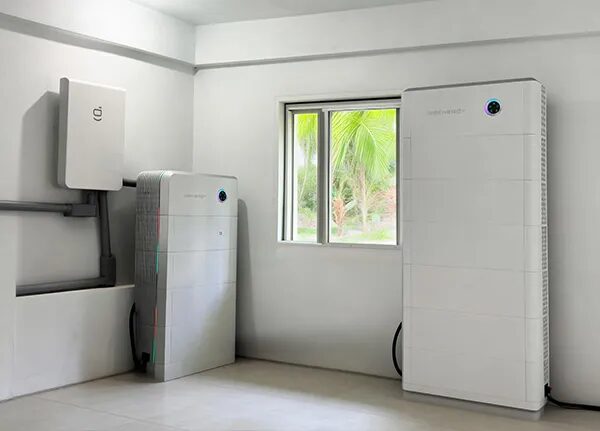
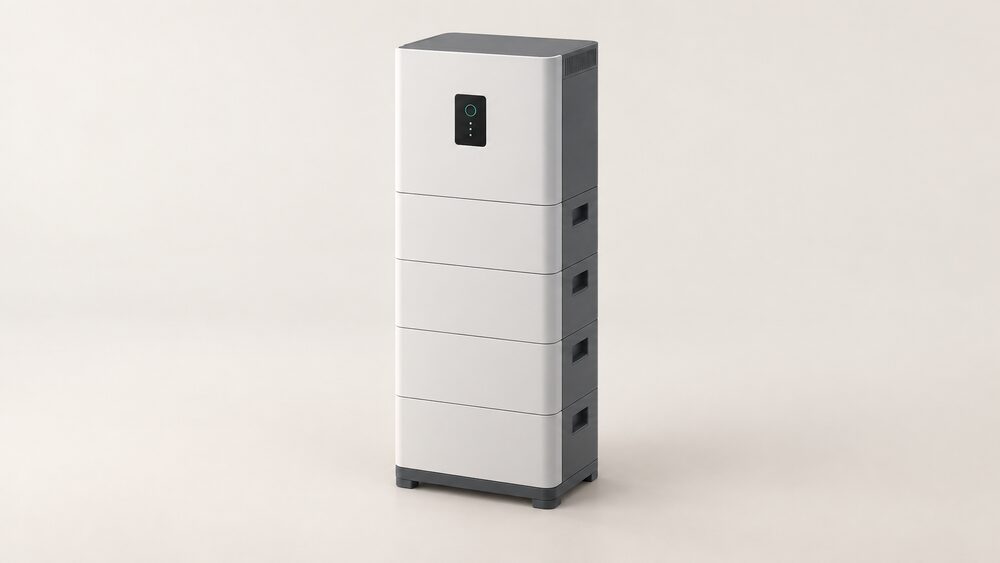
The SigenStor is a home battery system that arrives as a stack of identical-looking modules. Each module holds battery cells, and the unit as a whole also contains the inverter that turns solar or grid electricity into battery current and back again, the energy management system that decides when to charge and discharge, and a connection point for an electric vehicle. Sigenergy describes it as an "AI-optimised 5-in-one energy storage system"1.
For a household, the practical points are these. Capacity starts at 6kWh per module and runs to 48kWh across six modules, and the maker states that old and new battery packs can be mixed in the same stack2. A UK price range of £4,000 to £7,000 is published by one supplier4. Backup during a power cut is built in, with the maker claiming 0 ms of load-side interruption5.
What it does not do is take you off the grid. The system still needs a network connection, an installer to fit and notify it, and, for remote monitoring and app control, a working internet connection to Sigenergy's servers.
What the SigenStor is: five components in one unit
Sigenergy introduced the SigenStor in October 2023 as what it called "the world's first 5-in-1 energy storage system, seamlessly integrating Battery PCS, Battery Pack, EV DC Charger, PV Inverter, and EMS"9. In plain terms, that means the box on the wall contains the power conversion equipment, the battery cells, a direct-current charger for an electric vehicle, the solar inverter and the energy management system.
The alternative is a system assembled from separate parts: a hybrid inverter, a battery stack, a separate EV charger and a separate monitoring unit. Integrating them removes some cabling and some wall space, and it means one manufacturer is responsible for the whole chain. It also means the household is tied to that manufacturer for the parts that fail.
The unit is described as modular, and the maker lists four operating modes: solar plus storage plus charging, solar plus storage, storage only, and backup or off-grid2. A single-click full system diagnosis is offered through the platform1. The SigenStor Neo, a later version, is described as integrating the EMS, PV inverter, battery PCS, battery pack and backup module2.
Specifications: capacity, power and efficiency
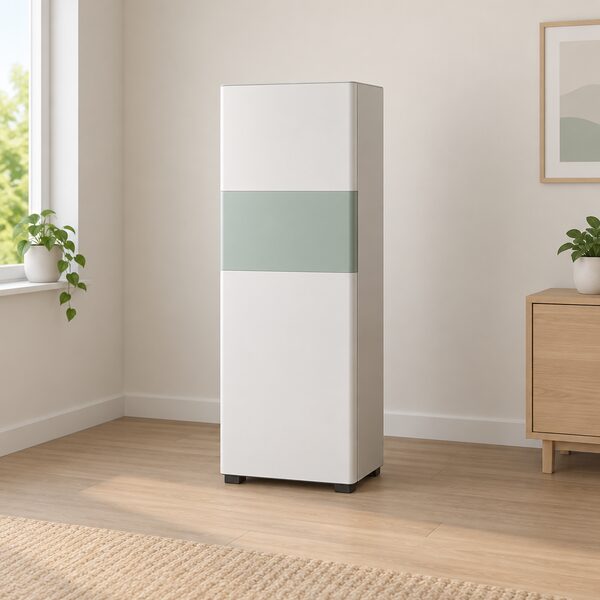
The published figures come from Sigenergy's own datasheets, so they describe the maker's claims rather than independently tested results. The battery modules are listed at 6.02kWh and 9.04kWh of total energy capacity, with usable energy of 5.84kWh and 8.76kWh respectively5. The gap between the two is the reserve the system keeps to protect the cells.
Peak efficiency figures vary by model: 98.1% for the 5.0 TP, 98.2% for the 6.0 TP, 98.3% for the 20.0 TP and 98.4% for the 30.0 TP6. These are conversion efficiencies for the power electronics, not round-trip figures for the whole system, and they are the maker's own measurements.
| Specification | Figure | Model |
|---|---|---|
| Total energy capacity | 6.02kWh | SigenStor BAT 6.05 |
| Usable energy capacity | 5.84kWh | SigenStor BAT 6.07 |
| Total energy capacity | 9.04kWh | SigenStor BAT 10.05 |
| Usable energy capacity | 8.76kWh | SigenStor BAT 10.07 |
| Peak efficiency | 98.1% | SigenStor EC 5.0 TP6 |
| Peak efficiency | 98.4% | SigenStor EC 30.0 TP6 |
| Nominal output power | 8000W | SigenStor EC 8.0 TP6 |
| Modules per controller | 1 to 6 | all listed models6 |
Installation is floor standing or wall mounted, depending on the module7. The maker also lists a 314Ah cell capacity and 25kW of two-way charging on its Swedish product page10.
Modular design and scalability: 6 to 48 kWh and beyond
The scalability claim is straightforward: up to six modules can be connected together, at 6kWh or 9kWh each4. Six 9kWh modules give 54kWh of nominal capacity, though the maker's own headline figure for the range is 48kWh. The controller accepts 1 to 6 modules6.
What makes the range unusual is the mixing rule. Sigenergy states that the SigenStor supports "mixed use of old & new batteries and various cell vendors, capacities & SOH/SOC"3. The mechanism is a DC-DC optimiser inside each battery pack, which allows packs to be connected in parallel3. The SigenStor Neo is described in the same terms, enabling the mixing use of old and new battery packs2.
That matters for a household that wants to add capacity in three years' time, when the module on sale may not be the one fitted originally. It is a maker's claim about its own product, and it is the kind of claim that should be tested against the warranty terms before relying on it.
For larger properties, Sigenergy states that for commercial applications you can connect multiple SigenStors in parallel to meet your capacity needs1. On the domestic side, the Sigen Gateway HomePro Single Phase supports up to 2 SigenStor units, and the Sigen Gateway C120-6 is shown with 511. A generator can also be connected to the SigenStor Neo2.
V2X: charging and backing up your home from your EV
The SigenStor's electric vehicle connection is bidirectional, which is what the V2X label means. Sigenergy lists V2H charging, described as backing up your home with your EV, and V2G, where the vehicle battery shares energy with the grid for peak shaving and load balancing12. The maker describes the technology as allowing direct tapping into DC power from the battery and solar panel, enabling virtual grid capacity expansion and 100% green power charging1.
The limits are stated by the maker itself. V2X functionality is limited by the EV's capabilities, and once the relevant standards are published the feature can be upgraded over the air1. In other words, the hardware is present but the function depends on the car and on standards that had not yet been published at the time of writing.
The SigenStor Neo is described as V2X-ready when paired with the Sigen EVAC 2, and the Sigen EVAC G2 features bidirectional charging technology for V2H home backup2. The Sigen EV DC charging module is listed at 25kW of two-way charging on the Swedish page10.
Safety and protection: the five-layer battery design
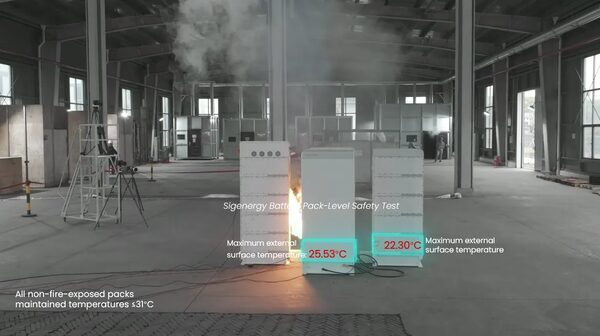
Sigenergy describes each battery pack as incorporating five protective measures: advanced temperature sensors, an internal fire suppression system, a decompression valve, aerogel-insulated pads, and high-temperature-resistant insulation9. The product pages shorten this to "5-layer Battery Protection"1. The SigenStor Neo is described as offering 8-layer protection8, and a later product, the SigenMate 2700 Ultra, is described as having a 6-layer battery safety system14.
Layer counts are a marketing structure rather than a standard, and they are not comparable between products or between makers. What can be said is that the maker lists temperature sensing, suppression and venting among the measures, which are the categories a household would expect to see addressed.
There is a live safety matter that a buyer should know about. The Office for Product Safety and Standards published a product safety report on the Sigenergy SigenStor Energy Controller with quick connect AC plug, dated 23 April 2026, stating that the manufacturer "has initiated a modification programme to warn customers of the risk and arrange for on-site inspection and repair of affected products"15. Owners needing information are directed to sigenservice.uk@sigenergy.com15. Separately, Sigenergy withdrew its original HomeMax gateway from the UK market in September 2026 after installer and homeowner feedback, and a new model has since been reviewed4.
Cost in the UK: what a SigenStor installation runs to
The only published UK price range in the material available is £4,000 to £7,000, given by the supplier Good Energy in July 20264. That is a range for a SigenStor installation rather than a manufacturer's list price, and it should be read as indicative. Sigenergy does not publish a UK installed price, so quotes come from installers after a survey.
Three things move the figure. The first is capacity: a single 6kWh module and a six-module stack are different orders of magnitude in cost. The second is whether the installation includes a backup circuit, which requires separating the circuits that stay live in a power cut from those that do not. The third is the electric vehicle connection, which is a separate module and a separate cost.
VAT treatment is not stated in the published range, so it should be read as quoted rather than as confirmed VAT-inclusive. Wider context on how battery prices are built up is at home battery cost, and the question of whether the outlay returns anything is covered at battery payback and savings.
Buying and installing in the UK: distributors and installers
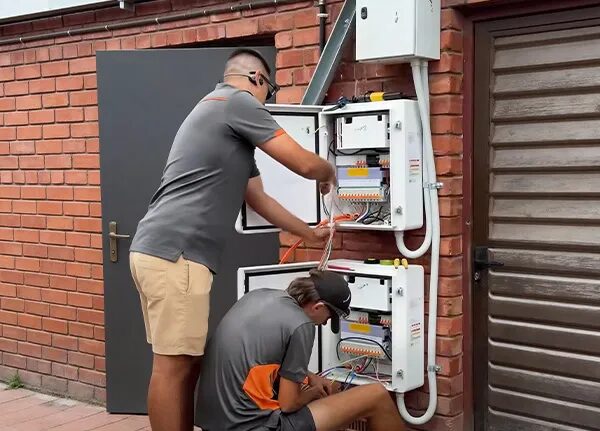
The warranty terms set the first condition: "The battery system shall be installed by a skilled and trained installer"8. That is a maker's requirement, and it means a self-installed SigenStor is outside the factory warranty.
The second condition is the network connection. UK Power Networks states that "Only installers can notify us on behalf of customers"16, and SSEN's microgeneration process states that "To progress with your connection, you must contact an accredited installer (or equivalent) to arrange your generation connection for you"17. A household cannot make that notification itself.
The third is the general standard expected of the trade. The HHIC states that "Installers are supplied with the means (documentation, training and technical support) to competently carry out and notify (where appropriate) installation, commissioning and servicing work, in accordance with manufacturer's instructions"18. That is the framework a household is relying on when it appoints someone.
On timing, Sigenergy's own figures describe the unit rather than the job: 15 minutes for stackable installation, 5 minutes for commissioning and a 2 minute over-the-air upgrade2. The electrical work, mounting, backup wiring and notification sit outside those numbers. The wider process is set out at battery installation process, and the rules that govern it at battery installation standards.
For installer enquiries, Sigenergy's support material directs model and sales questions to sales@sigenergy.com19. Warranty claims are raised by creating and submitting a service ticket to Sigenergy through the mySigen app in the support menu, or by contacting the local installer or Sigenergy's national office8.
Sigenergy as a company: scale, listing and market position
Sigenergy is headquartered in Shanghai and is listed in Hong Kong under the stock code 06656.HK20. The company states that it had more than 17,600 registered installers worldwide by the end of 202514.
On market position, the company's own figures are strong but should be read as the company's own. It reports ranking number one in the sub-1000kWh market in Australia, South Africa and Ireland in 2025, with market shares of 25%, 26% and 34% respectively14. The documents give two different figures for the Australian share, 25% and 26%, and the conflict is not resolved. In September 2026 Sigenergy reported securing the number one global ranking by MWh shipments in S&P Global Energy's H1 2026 Residential Energy Storage Market Tracker, with a 14% market share21.
The company has been expanding beyond the home. In June 2026 it reported securing over 20 GWh in global energy storage agreements across Europe, Africa and the Asia-Pacific region, including a 5 GWh distribution agreement focused on Australia and key APAC markets and 1 GWh of commercial and industrial agreements in Central and Eastern Europe22. In September 2026 it announced a formal expansion into utility-scale energy storage, alongside an 11.6 MWp photovoltaic and 20 MWh battery project in Weissach im Tal, Germany, and a DNV technical review of its utility solar inverter23. It showcased SigenStor Neo, SigenStack and SigenTerra at The smarter E South America 202625.
For a household, the relevant reading is that Sigenergy is a large and fast-growing manufacturer with a Hong Kong listing and a widening product range, not a small specialist. That supports parts availability and service over the warranty term. It does not change the fact that the warranty, the app and the remote features all depend on one company continuing to operate and support them.
Where the SigenStor's independence ends
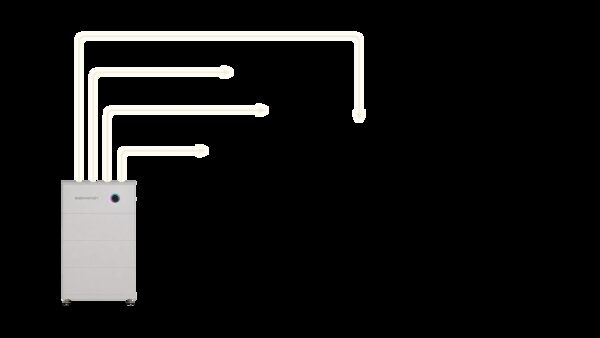
The system reduces dependence on the grid for the hours it can cover, and it can keep critical circuits live during an outage. The maker states that all critical home loads can be directly powered by the SigenStor Neo, which has a dedicated backup port, and that changeover involves 0 ms of load-side interruption8. Backup is also available through the Sigen EV DC charging module when coupled with an electric vehicle, and through the Sigen Energy Gateway when integrated with SigenStor or SigenStack13.
What remains is a set of dependencies. The system needs a network connection and an installer to notify it. Remote monitoring, the recommendation modes and over-the-air upgrades run through Sigenergy's platform and the mySigen app, which carries a 3.6 star Apple App Store rating4. The warranty requires a skilled and trained installer and sets storage conditions of 20% to 50% state of charge with a charge and discharge every 15 months8. Vulnerable parts such as the light strips in the decorative cover carry only a 2 year warranty8.
The wider picture of what a battery can and cannot do for a household's independence is at home batteries and household energy independence, and the comparison with other all-in-one designs is at all-in-one home battery systems.
Sources25 cited
- SigenStor product page, Sigenergy, 2026-09-17
- SigenStor Neo product page, Sigenergy, 2026-09-17
- SigenStor US product page, Sigenergy, 2026-09-19
- The best solar batteries explained, Good Energy, 2026-07-14
- SigenStor BAT datasheet, Sigenergy, 2026-09-17
- SigenStor EC datasheet, Sigenergy, 2026-09-17
- SigenStor BAT 6.0 and 10.0 datasheet, Sigenergy, 2026-09-17
- SigenStor Factory Limited Warranty (EU-English).pdf), Sigenergy, 2025-04-29
- SigenStor launch press release, Sigenergy, 2023-10-17
- SigenStor Swedish product page, Sigenergy, 2026-09-20
- Sigen Gateway product page, Sigenergy, 2026-09-17
- SigenStor EV DC charging module, Sigenergy, 2026-09-17
- SigenStor EV DC charging module (US), Sigenergy, 2026-09-17
- SigenMate 2700 Ultra press release, Sigenergy, 2026-07-14
- Product safety report: Sigenergy SigenStor Energy Controller with quick connect AC plug, Office for Product Safety and Standards, 2026-04-23
- Low carbon technology domestic connections, UK Power Networks, 2026-09-17
- Micro-generation connections, SSEN, 2026-09-19
- HHIC guidance, HHIC, 2026-09-17
- Home load backup support article, Sigenergy, 2026-09-17
- SigenMate 2700 Ultra news, Sigenergy, 2026-06-23
- Global residential storage ranking, Sigenergy, 2026-09-03
- Intersolar Europe 2026 agreements, Sigenergy, 2026-06-25
- Sigenergy Day Europe 2026, Sigenergy, 2026-09-10
- Solarpark Pfaffenklinge utility-scale project, Sigenergy, 2026-09-10
- The smarter E South America 2026, Sigenergy, 2026-08-08
 Sigenergy solar invertersThinking about a Sigenergy battery and inverter for your home?