


In this guide
Sigenergy is a Shanghai-based maker of home batteries, solar inverters and EV chargers, founded in 2022 and listed on the Hong Kong Stock Exchange under the code 06656.HK1. Its EV charging products are not standalone wallboxes in the usual sense: they are modules that attach to the SigenStor energy storage system, so the car charges from the same battery and solar array that supplies the house.
The DC charging module is the more capable of the two. Sigenergy states that it supports 25kW bi-directional charging, that it can provide up to 150 km of driving range in an hour, and that it works with vehicles from 150V to 1000V, which the maker describes as universal EV compatibility3. The AC charger is the simpler option, synchronised with SigenStor and able to draw from solar, grid and battery5.
What this means for a household is a shift in where the energy comes from. Charging from a home battery and rooftop solar reduces the amount bought from a supplier, and the DC module's vehicle-to-home and vehicle-to-grid functions go further, letting the car give power back to the house or the grid4. The dependence that remains is real: the system still needs the grid for backup and top-up, the DC module cannot be bought or used without a Sigen Energy Controller, and remote features run through the manufacturer's app and servers7.
Sigenergy: the company behind SigenStor and its chargers
Sigenergy was founded in 2022 and is headquartered in Shanghai1. Tony Xu is its founder and chief executive9. The company describes its business as spanning photovoltaic generation, smart energy storage and high-efficiency electric vehicle charging, and states that it had expanded across 85 countries and regions by the end of 2025, supported by 172 distributors and more than 17,600 registered installers worldwide2.
Its manufacturing base is in China. Sigenergy states that it has a 136,000 square metre manufacturing campus in Nantong with the capacity to produce up to 300,000 battery packs and inverters a year2. That is the maker's own figure and it describes capacity rather than output.
The company's product focus is home and business energy solutions, with products ranging from energy storage systems to solar inverters and EV chargers4. Its stated strategy is "AI in All", and it describes its home energy system as combining solar, storage and EV charging into an all-in-one system9.
For a UK householder, the corporate picture matters in two ways. First, a company with a Hong Kong listing and a stated global installer network is unlikely to disappear overnight, which bears on the value of a warranty. Second, the products are engineered and built outside the UK, so parts and service run through a distributor and an installer network rather than a domestic factory. Sigenergy's own terms are explicit that it assumes no product liability or warranty for any third-party accessories used with the DC charger, so the accessories matter as much as the unit3.

SigenStor: a 5-in-One system with EV charging built in

SigenStor is described by Sigenergy as the world's first 5-in-1 energy storage system, integrating a battery PCS, battery pack, EV DC charger, PV inverter and energy management system8. The company's product pages list the same five elements: solar inverter, EV DC charger, battery PCS, battery pack and EMS12.
The architecture is DC-coupled, which is the technical heart of the claim. Sigenergy states that a direct DC bus connection among PV, energy storage and EV chargers boosts system efficiency and power density11. In plain terms, the solar array, the battery and the car charger share one direct current path rather than each converting to alternating current and back. The maker's claim is that this raises efficiency; the practical effect for a household is fewer conversion steps between the panels and the car.
The charging modes built into the system are Fast Charging, PV Surplus Charging and Battery Boost Charging6. PV surplus charging uses generation that would otherwise be exported, and Sigenergy states that this enables 100% green power7. Battery boost charging draws on stored energy to raise charging speed, with a cut-off state of charge setting so the battery is not drained below a chosen level7. The system also supports setting charging start times, which allows charging to be moved to cheaper periods7.
A newer generation, SigenStor Neo, is described by the company as its next-generation all-in-one residential energy storage system9. Sigenergy also states that its commercial and industrial solar-storage-charging solution is fully compatible with its C&I energy storage systems13.
The independence this buys is partial and worth stating plainly. A household with SigenStor and a car can charge from its own roof and battery, and can shift charging to when generation is high. It remains connected to the grid, and the DC charging module cannot operate without the Sigen Energy Controller at the centre of the system7.
AC and DC charging modules: what each does and which suits which home
The two modules serve different installations, and the choice is largely settled by whether the household already has, or intends to have, a SigenStor system.
The DC module connects to the system's direct current bus. It offers 25kW bi-directional charging, a charging voltage range of 150V to 1000V, and CCS2 DC charging as its interface3. It supports fast charging by drawing from the grid and PV simultaneously, PV surplus charging, battery boost charging with a cut-off state of charge, scheduled start times and grid charging7. Authentication can be by RFID card, app or none at all, and it includes a welded contactor check and smart air cooling7. Remote functions include over-the-air updates and remote diagnostics4.
The AC charger is the more conventional unit. Sigenergy describes it as seamlessly synchronised with SigenStor, drawing energy from solar, grid and storage batteries5. Its charging modes are Sigen AI Mode, Fast Charging, PV Surplus Charging and Battery Boost Charging, and it offers remote control and adjustment, scheduled charging and customised charging through an app5. It adjusts charging power dynamically based on household electricity use, and that function requires a Sigen Power Sensor5.
| Feature | Sigen EV DC Charging Module | Sigen EV AC Charger |
|---|---|---|
| Charging power | 25kW bi-directional3 | Not stated in the material reviewed |
| Interface | CCS2 DC7 | Not stated in the material reviewed |
| Voltage range | 150V to 1000V4 | Not stated in the material reviewed |
| Energy sources | Grid and PV simultaneously, battery, PV surplus7 | Solar, grid and storage batteries5 |
| Load management | Not stated | Dynamic, needs Sigen Power Sensor5 |
| System requirement | Must be used with Sigen Energy Controller7 | Synchronised with SigenStor5 |
Which suits which home turns on the car as much as the house. The DC module's CCS2 interface and 150V to 1000V range cover a wide span of vehicles, but a car that charges only on AC cannot use the DC path. A household without a SigenStor battery has no route to the DC module at all, since it must be used with the Sigen Energy Controller7. For those homes, a conventional AC charge point is the practical option, and the wider choices are set out in types of home EV charger.

V2X: which vehicles have been field tested and what it means
Vehicle-to-everything, or V2X, allows electric vehicles to operate bidirectionally, charging from the electricity grid but also discharging to the grid, a building or a home as needed14. Vehicle-to-grid technology lets a charger not only charge a vehicle but also take energy from it15.
Sigenergy states that V2X is available on its DC charging module, and that the SigenStor EV DC supports V2H charging and 25kW bi-directional charging3. The company's press material describes the EV DC charging module as supporting emergency power supply to household appliances (V2H) and grid trading (V2G)8.
The field test record is where caution is needed. Sigenergy publishes a table of vehicles it has tested, and states that these test results are independent and have not been recognised or certified by the vehicle manufacturer6. Entries in that table include a Rivian R1S tested on 8 August 2025, a vehicle with a CCS1 interface tested on 11 September 2025, and a Nomad electric snowmobile tested on 2 August 202516. Further entries dated 13 March 2026 cover Xpeng models including the M9, X9, P7, G7, G6 and G9 on the GBT charging interface, AITO models including the M9, and a vehicle with a GBT interface17.
Two points follow. The list is a record of what has been tried, not a compatibility guarantee, and the maker says so itself. And the vehicles named are largely not the models sold in the UK, so a British householder cannot read the table as a list of cars that will work here.
There is also a network rule. Chargers with vehicle-to-grid capability must be type tested to EREC G98 specifications to be eligible for connect and notify18. That is a connection requirement rather than a product endorsement, and it sits alongside the general notification process covered in telling the network operator about a home EV charger. The wider picture of two-way charging is at vehicle-to-grid and vehicle-to-home.
UK availability: Alternergy, Midsummer Wholesale and installer matching

Sigenergy named Alternergy as its partner in Britain when it announced the arrangement in October 20238. Midsummer Wholesale lists Sigenergy EV chargers for sale and invites householders to email its team so it can help find a Sigenergy installer nearby10.
That installer matching matters because the products are not a straightforward swap for an existing charge point. The DC module must be used together with a Sigen Energy Controller, so it forms part of a system installation rather than a single-unit job7. A householder considering one is therefore specifying a battery system with charging attached, not a wallbox.
On who should do the work, the guidance is consistent. EV chargers should be installed by a registered electrician with experience in this type of installation19, and NICEIC advises using an electrician registered with a recognised certification body20. There is no official register of home charge devices in the UK, so the installer's registration is the check that matters21.
Prices are not published by Sigenergy for these modules, and no figure is given here. Quotes come from installers, and the cost of a system installation depends on the battery capacity, the inverter and the charging module specified together. For the general shape of fitted charge point costs, see how much a home EV charge point costs.
Scale and standing: 85 countries, 17,600 installers and a listing
Sigenergy states that it had expanded across 85 countries and regions by the end of 2025, supported by 172 distributors and more than 17,600 registered installers worldwide2. It also states that it has more than 200,000 installations worldwide2. These are the company's own figures and describe its global position rather than UK-specific activity.
The company listed publicly on the Hong Kong Stock Exchange and trades under the code 06656.HK1. It was founded in 2022 and is headquartered in Shanghai, with Tony Xu as founder and chief executive1. Its stated strategy is "AI in All"9.
For a householder weighing a purchase, scale of this kind bears on two things: the likelihood that spare parts and service will still be available in ten years, and the depth of the installer network. It does not bear on how well any individual unit performs, and a large global footprint says nothing about the quality of a particular installation. The relevant UK context is that the public charging network continues to grow, with 120,000 public chargers reported across the UK as of August 2025, which reduces the pressure on any single home charging setup20.
The company's own support structure includes a Learning Center with courses and tutorials, warranty information, a download centre and its SigenCare service11. Those are the routes an owner uses for documentation and aftercare.
Support, warranty and learning resources for owners

Sigenergy's support resources are grouped on its website: a Learning Center with courses and tutorials, warranty information, a download centre and SigenCare11. Version 02 of the Sigen EV AC Charger user manual was released on 20 June 2024, and current versions sit in the download centre22.
For faults, the first step in independent guidance is to speak to your installer or electrician to check whether the problem lies with your equipment23. Sigenergy's UK service contact for its SigenStor energy controller is sigenservice.uk@sigenergy.com, given in a government product safety report24.
That report is worth reading in full. It concerns the Sigenergy SigenStor Energy Controller with quick connect AC plug, and records that the manufacturer initiated a modification programme to warn customers of the risk and arrange for on-site inspection and repair of affected products24. Owners of affected products who need further information are directed to the service email address24.
The general rule for recalled electrical products is to stop using the item immediately and contact the retailer for further advice25. Where a charger is suspected of being faulty, the same principle applies: stop using it and report the fault to the manufacturer or retailer26.
On standards, the BSI Kitemark certification for EV chargers covers safety, security, quality and reliability27, and the BEAMA and GFI guide to electric vehicle infrastructure is written for owners, users, installers, sellers and manufacturers of EV charging products28. Both are useful reference points when assessing what a certification claim actually covers. For the wider picture of aftercare terms, see EV charge point warranties and aftercare, and for the system as a whole, EV charging at home in the UK.
Sources28 cited
- Sigenergy corporate site, Sigenergy, 2026
- Sigenergy company profile, Sigenergy, 2026
- SigenStor EV DC Charging Module, Sigenergy, 2026
- Sigen EV DC Charging Module datasheet, Sigenergy, 2026
- Sigen EV AC Charger, Sigenergy, 2026
- SigenStor EV DC Charging Module (US), Sigenergy, 2026
- SigenStor EVDC datasheet, Sigenergy, 2026
- SigenStor 5-in-1 launch announcement, Sigenergy, 17 October 2023
- SigenStor Neo announcement, Sigenergy, 25 June 2026
- Sigenergy EV chargers, Midsummer Wholesale, 2026
- Sigenergy home energy system, Sigenergy, 2026
- SigenStor product page, Sigenergy, 2026
- Sigenergy C&I compatibility announcement, Sigenergy, 23 June 2026
- Well-adapted energy system monitoring framework, Climate Change Committee, 2026
- Vehicle-to-grid best practice guide, Energy Saving Trust, 5 May 2026
- Sigen EV DC Charging Module support files, Sigenergy, 2026
- Sigen EV DC Charging Module (Australia), Sigenergy, 2026
- Applying for a new connection: electric vehicles, Electricity North West, 2026
- EV charger regulations in England, NICEIC, 19 August 2026
- Electric vehicle charger installation and maintenance, NICEIC, August 2025
- Home and community charging statistics, Zapmap, 2026
- Sigen EV AC Charger user manual version 02, Sigenergy, 20 June 2024
- Voltage changes in your home or business, UK Power Networks, 2026
- Product safety report: Sigenergy SigenStor Energy Controller with quick connect AC plug, Office for Product Safety and Standards, 23 April 2026
- Product recall: SEVA-24016P EV charging cable, Electrical Safety First, 2026
- Safety advice: e-scooters, Electrical Safety First, 2026
- BSI Kitemark certification for EV chargers, BSI, 2026
- BEAMA and GFI guide to electric vehicle infrastructure, BEAMA, 9 September 2024
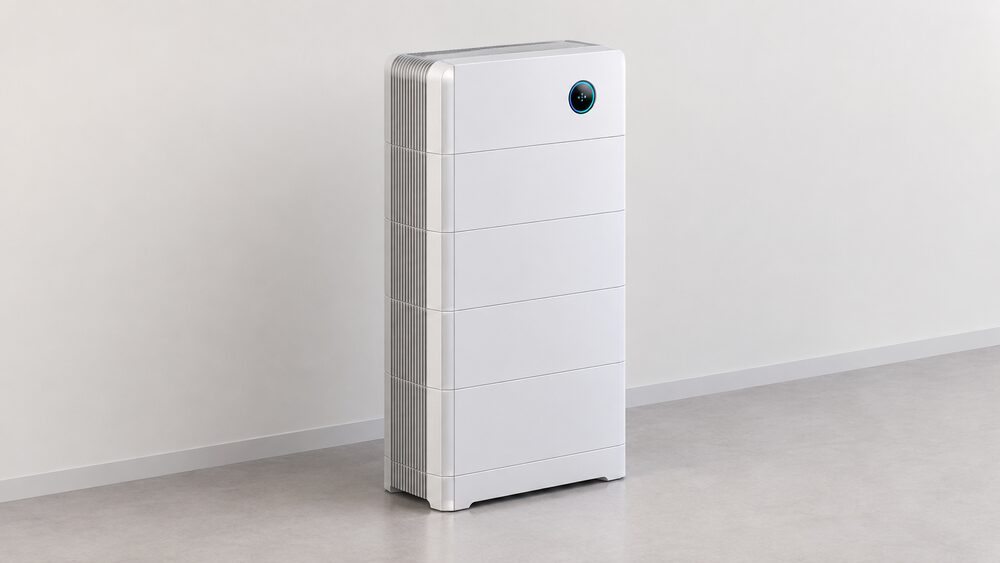 Sigenergy SigenStorIf you have seen a SigenStor quoted for your home, you probably want to know what it actually is, how much it stores and what it costs.
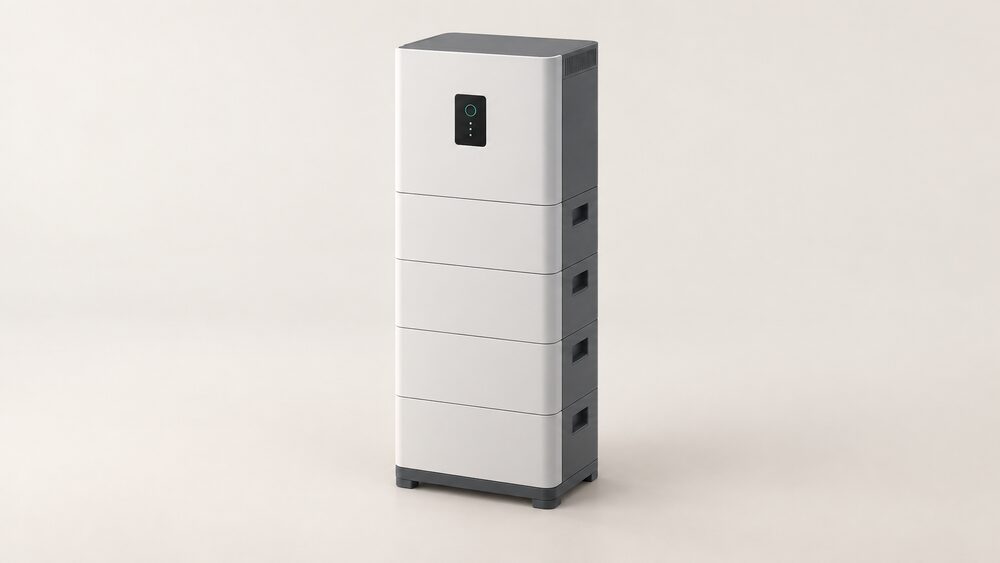 Sigenergy solar invertersThinking about a Sigenergy battery and inverter for your home?