
In this answer
Short answer
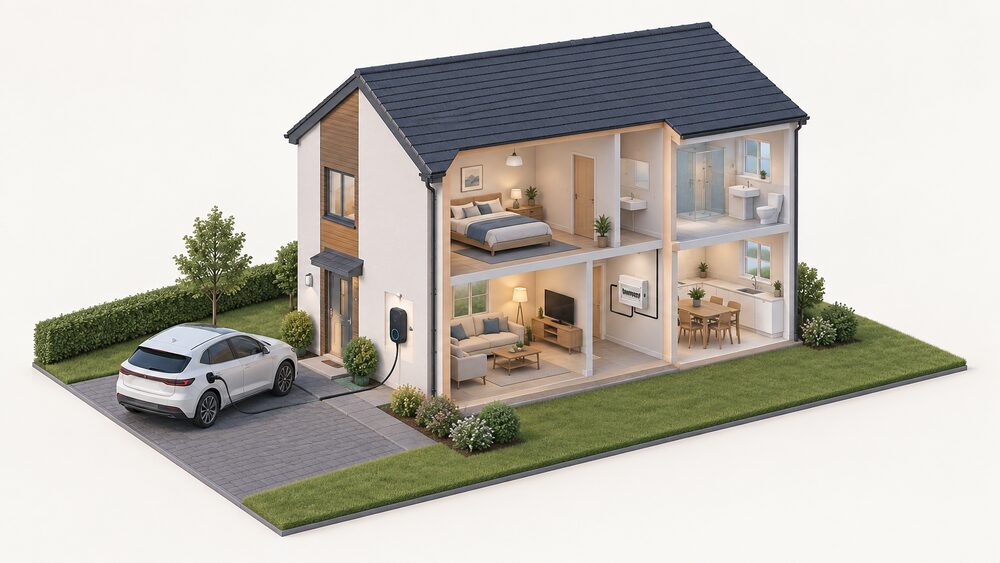
Vehicle-to-home (V2H) lets an electric car's battery run the house. The car charges as normal, then discharges back through a bidirectional charger to supply the home, and during a power cut the system disconnects the property from the grid and runs it as an electrical island on the car battery1. Some modern EVs support the technology, and a small number of chargers can use the EV battery as a backup home power source2.
The capability is real but narrow. V2H is limited to certain EV models and compatible chargers, and some products have limited commercial availability4. Independent guidance describes bidirectional charging as being trialled in some places but not widely available5. Official work on the electricity system treats V2X, the umbrella term covering discharge to a grid, building or home, as a recognised approach to household backup alongside generators, batteries and solar6.
For a household, the appeal is a second use for a battery already parked on the drive. The limits are the equipment list, the wiring, and the fact that the car is also the thing that has to get to work in the morning.
V2H in one sentence: a few smart chargers can run the house from the EV battery
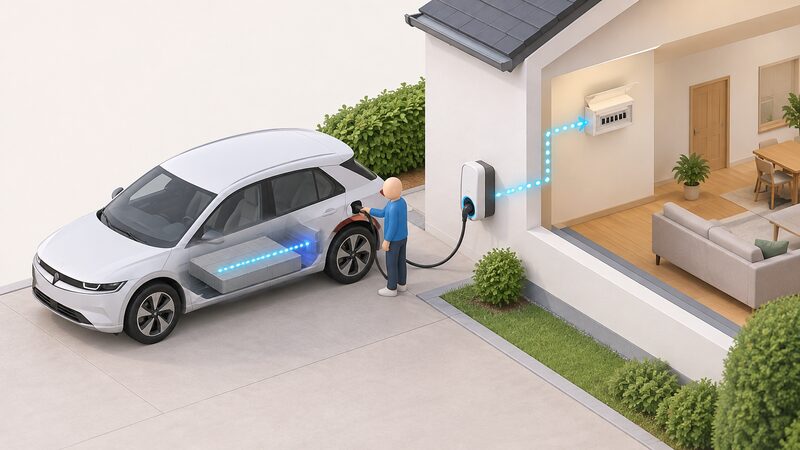
V2H is a technology that allows an electric vehicle to power a home using the energy stored in its battery1. The car becomes a large battery backup during outages, or supplies electricity during peak tariff times9. Kia describes the function in the same terms: powering the home from the EV, which is especially useful during power outages10.
The mechanism matters more than the label. When the public power grid goes down, a V2H system automatically disconnects the home from the grid, creating an electrical island so the home runs on EV battery power and nothing feeds back into the network1. That disconnection is what makes the arrangement safe for the people working on the fault, and it is why a V2H installation is not simply a charger with a different firmware setting.
Official analysis places V2X in a wider family of household backup options. Backup power can come from generators, which are widely used already, or from more innovative approaches such as batteries, solar and vehicle-to-everything6. Electric vehicles are starting to act as additional storage through V2H technology, which is how the capability is described in industry guidance11.
The scale of the underlying resource is not in doubt. Use of electric vehicle batteries in principle offers a very large potential to contribute to home energy storage and electricity system balancing12. What is in doubt is the retail hardware: the number of chargers that can actually discharge to a house, and the number of cars that will accept the instruction.

Which chargers can use the EV battery as backup, and what they need
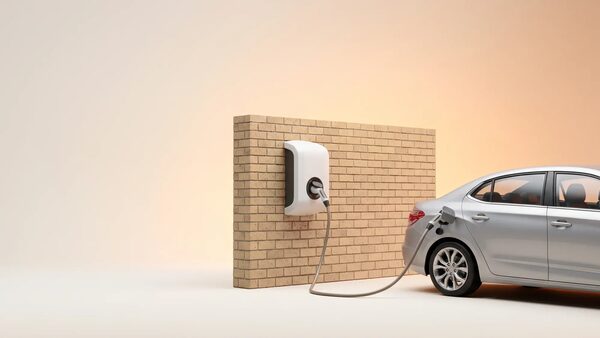
A few charger models can use the EV battery as a backup home power source3. The named V2H-capable products include the BMW Wallbox Professional, Ambibox ambiCHARGE, Wallbox Quasar 2, E3/DC and EVTEC crema&charge, all described as supporting Vehicle-to-Home charging with compatible vehicles and systems, with compatibility restricted to specific combinations and some products having limited commercial availability1. Enphase lists its IQ Bidirectional EV Charger as sending power from the EV to the home during outages13. Sigenergy's SigenStor EV DC is listed as V2H, backing up the home with the EV14. Wallbox's Quasar 1 is described as enabling bidirectional energy flow so the EV can both charge and discharge4.
The car side is just as restrictive. Some modern EVs support V2H, allowing the car's battery to supply electricity back to the home2. A charger alone does not create the capability.
Installation brings its own conditions. Most local authorities specify that households install a dedicated EV charger with protective earth neutral fault protection16. EV chargers and other low-carbon technologies can push a home's electricity demand above the available supply, which may require an upgrade17. Installing a home EV charger typically requires a fuse upgrade to 80 to 100 amps, which often cannot be done on a looped supply without overloading the shared cable18. A V2H unit adds discharge hardware on top of that baseline.
V2H versus a home battery: what each stores and powers
Both approaches store electricity and release it later, but they are bought, sited and regulated differently.
| V2H from an EV battery | Home battery | |
|---|---|---|
| What stores the energy | The car's traction battery1 | A fixed domestic battery20 |
| Main use | Backup during outages, supply at peak tariff times9 | Store excess solar, or charge when the tariff is cheap, then use at night or when prices are high20 |
| Availability | Limited to certain EV models and compatible chargers4 | Widely sold as a standalone product21 |
| Backup in a power cut | Disconnects the home from the grid and runs it as an island1 | Not all batteries can deliver electricity during a power cut21 |
| Where the energy goes when the car leaves | Leaves with the car | Stays with the house |
The home battery case is well established. A battery can store excess electricity generated by solar panels, or be charged when the tariff is cheap, and the stored energy used at night or when prices are high20. You can store cheap electricity when prices are low and use it later, even during peak times, which can significantly increase savings22. A battery also captures surplus solar that would otherwise be exported at a relatively low rate, holding it for when it is needed, including overnight EV charging23.
V2H borrows that logic and puts the store on wheels. The advantage is that the battery already exists and is large. The disadvantage is that it is also the household's transport, and it is only connected when the car is plugged in.
What backup from an EV battery can and cannot cover
The honest answer is that coverage is a design decision, not a property of the car. A V2H system can provide backup power from the EV to the home during power outages and support off-grid setups, but it is limited to certain EV models and compatible chargers4. Within those limits, the question of which circuits run is settled at installation.
Home storage offers a cautionary parallel. Not all batteries can deliver electricity during a power cut, and households looking to protect against cuts are advised to ask whether a battery will work in an outage and for how long21. The same question applies to a V2H charger: whether the backup covers the whole house or a chosen set of circuits, and for how long, is something to establish before relying on it.
Capacity planning gives a sense of scale. Guidance on whole-house backup combined with EV charging points to a battery system of 20+ kWh for that duty25. A car battery is generally larger than a domestic battery, which is the whole attraction, but the usable share is set by the reserve the system holds back for driving.
There is also a seasonal dimension to anything paired with solar. In summer a reasonably sized system can cover a significant portion of a typical household's EV charging needs, while in winter output drops considerably and grid top-ups become more necessary23. A household relying on solar and a car battery through a winter outage should expect the grid to do more of the work.
Costs, grants and installation: what V2H adds to a normal chargepoint

There is no published UK price for a V2H-capable home charger in the material available, so V2H costs are installer-quoted and no range can be given. The comparison point is the standard unit: a fully installed 7kW smart charger typically ranges from £1,000 to £1,350 in the UK, including the unit and labour7.
Grant funding is aimed at the chargepoint, not at bidirectional hardware. The Electric Vehicle Chargepoint Grant for Households with On-Street Parking is only for people who have vehicles on the list of OZEV-approved electric vehicles27. Eligible costs under the chargepoint and infrastructure specifications include the chargepoint units, additional electrical components or hardware, communications media, grid connections, civil engineering works, labour, project management and reporting, VAT incurred by the customer, and site survey works where they lead to a completed installation28.
The electrical work is where V2H diverges most from a standard job. A home charger installation typically requires a fuse upgrade to 80 to 100 amps, which often cannot be done on a looped supply without overloading the shared cable18. Chargers and other low-carbon technologies can push demand above the available supply, which may require an upgrade17. Most local authorities specify a dedicated EV charger with protective earth neutral fault protection16. Certification for charge points covers both home and commercial use, and the Kitemark scheme exists for that purpose29.
In Northern Ireland, home charging is the least expensive way to charge an electric vehicle because lower home electricity tariffs can be used30. That applies to charging; it says nothing about discharge, which remains a trial-stage capability.
Will using my EV battery as backup affect the car's warranty?
Manufacturers provide warranties on EV batteries lasting at least eight years or 100,000 miles8. These warranties typically protect against significant battery degradation, with the manufacturer repairing or replacing the battery if capacity drops below the threshold within the warranty period9.
Whether a V2H setup sits inside those terms is a matter for each manufacturer's own conditions, and the material does not settle it. What can be said is that the battery itself is not fragile in the way owners often assume. EVs do not usually need their batteries replaced, as they can last for hundreds of thousands of miles5. Where replacement is needed, EV batteries can usually be replaced, but it is complicated and often expensive5.
Habits that extend battery life are well documented: only using rapid charging when needed, not fully charging the battery, and not letting it get too low5. A V2H system that cycles the battery for household supply adds cycles that would not otherwise happen, which is why the warranty question is worth raising with the car maker rather than assuming an answer.
How V2H fits household energy independence
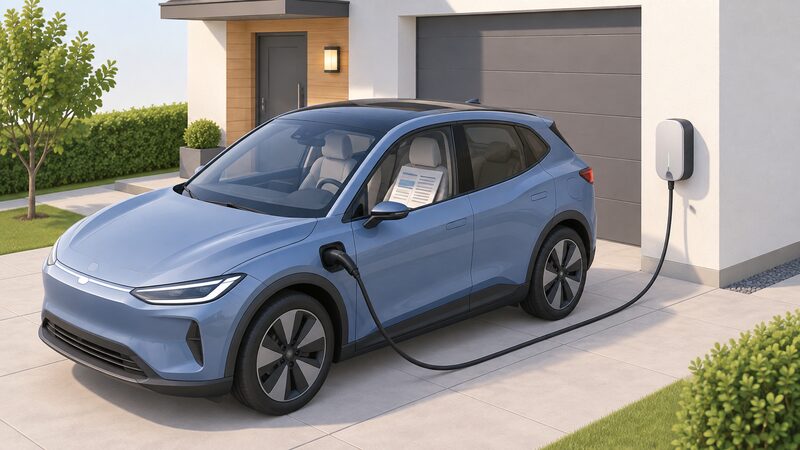
V2H changes what a household owns. Instead of a car that only consumes electricity, the driveway holds a store that can supply the building it is parked beside. Official analysis treats V2X as one of the routes by which households gain additional backup options during power outages, alongside home batteries and solar6. Independent research puts the underlying potential high: electric vehicle batteries in principle offer a very large potential to contribute to home energy storage and electricity system balancing12.
What remains dependent is substantial. The car still has to be charged from somewhere, and for most households that is the grid. The charger is a manufacturer's product with its own app, firmware and compatibility list, and V2H-capable units are restricted to specific vehicle and charger combinations, with some having limited commercial availability1. Bidirectional charging is being trialled in some places but is not widely available5. A household that buys into V2H today is buying into a short equipment list and a young market.
The time-shifting case is the more durable one. Storing cheap electricity when prices are low and using it later, even at peak times, is a saving that does not depend on an outage22. A home battery does this today; a V2H charger does it only while the car is plugged in. For households weighing the two, the comparison pages on EV charging alongside a home battery and vehicle-to-grid and vehicle-to-home charging set out the wider picture, and the EV charging at home guide covers the installation basics that apply either way.
Sources30 cited
- Vehicle-to-home, go-e, 2026-07-15
- What are EV chargers and how to optimize their energy usage in a smart home, Homey, 2026-09-20
- Everything you need to know about EV charging points, NICEIC, 2024-09-27
- Vehicle-to-grid charging guide, Uswitch, 2025-07-02
- Electric vehicle battery basics, Energy Saving Trust, 2025-09-16
- Well-adapted energy system, Climate Change Committee, 2026-09-19
- Tethered vs untethered EV charger, Fuse Energy, 2026-04-26
- EVs: the facts, SMMT, 2025-09-22
- Electric car battery, Fuse Energy, 2026-05-19
- What is bi-directional charging, Kia UK, 2026-09-17
- How to become energy independent, Aira, 2026-04-30
- Demand flexibility, CREDS, 2026
- Bidirectional EV chargers, Enphase, 2026-09-17
- Sigenergy home, Sigenergy, 2026-09-17
- Sigenergy Belgium home, Sigenergy, 2026-09-20
- Cross-pavement charging solutions, Energy Saving Trust, 2025-07-18
- If your electricity supply can't cope with the new equipment, NIE Networks, 2026-09-19
- Looped services, NIE Networks, 2026-09-19
- Guide to EVSCP regulations 2021, Department for Transport, 2026-09-18
- Battery storage, Energy Saving Trust, 2026-08-19
- Battery storage, Centre for Sustainable Energy, 2025-10
- Should I switch to a time of use tariff, Energy Saving Trust, 2026-01-23
- Can solar panels charge electric cars, The CPA, 2026-04-15
- Solar panel battery storage, Which?, 2026-05-14
- Home battery storage and energy independence, Jackery UK, 2026-06-25
- SolarEdge Home Battery 48V datasheet, SolarEdge, 2026-09-17
- Electric Vehicle Chargepoint Grant for Households with On-Street Parking, Find a Grant, 2026-09-17
- Electric vehicle chargepoint and infrastructure specifications, GOV.UK, 2023-10-10
- Powering trust in electric vehicle charging with BSI Kitemark certification, BSI, 2026-09-17
- Electric vehicles, nidirect, 2026-09-17
 Charging With a Home BatteryHow a home battery and an EV charger share one supply, whether a battery can usefully charge a car, and how combined systems are controlled so the battery is not discharged into the vehicle at a loss.
 Charging and Energy IndependenceCharging an electric car at home can cut your fuel costs, but how much does it really free you from the grid?
 Home EV Charger ManufacturersWhich home EV charger brands are worth considering, and how do you choose between them?
 Types of Home EV ChargerWhich home charger suits your car and your driveway?
 Charger Apps and ConnectivityHow a home charge point connects: Wi-Fi, Ethernet, 4G and Bluetooth, what the app controls, what happens when the network drops, and how much of the charger depends on the maker's cloud.
 Vehicle-to-Home and LoadCan an electric car really power your house, and which cars can do it?