
In this answer
Short answer
Leaving an electric car plugged in overnight, or for a fortnight while you are on holiday, is normal practice and will not overcharge the battery: charging stops automatically once the car reaches its target. What matters for the battery is not how long the plug stays in, but where the charge level sits. Most vehicle manufacturers recommend keeping the battery between 20% and 80% most days, and regularly holding it at 100% creates thermal stress that can accelerate ageing1.
An idle EV loses only around 2 to 3% of its charge a month, so a car left plugged in on holiday is not working hard to hold its charge, and any energy the car uses for warming or preconditioning while plugged in comes from the mains rather than the battery1. The rest of this page covers charge limits, how smart chargers decide when power flows, and the safety rules for plugging in at home.
What staying plugged in actually does to the battery
A plugged-in EV is not a device on a continuous charge. Once the battery reaches the target set by the car or the charger, current stops flowing, and the car simply sits connected. The battery's job is to provide energy for driving the vehicle, and it does not trickle-feed while parked5.
The one measurable effect of leaving the car idle is slow self-discharge: electric vehicles lose around 2 to 3% of charge a month when sitting idly1. That is a negligible amount against the average EV's driving range of 225 miles6. If the car needs to warm its battery or cabin while plugged in, for example during preconditioning before a journey, that energy is drawn from the power source, not the battery itself, so driving range remains unaffected, and the amount used is minimal3.
The genuine risk to battery health is not the plug but the charge level. EV batteries are at their happiest and last longest when kept between 20% and 80% capacity, and regularly sitting at 100% charge creates thermal stress which can accelerate battery ageing2. Charging to 100% can overheat the battery and cause cell degradation, where lithium battery cells lose their ability to charge at their original rate7. For more on this, see EV batteries, charging habits and degradation.
Daily charging versus charging to 80%
The consistent advice across makers and independent guides is a daily charge window of 20% to 80%. Most vehicle manufacturers recommend maintaining a daily charge level between 20% and 80%4, and most recommend only topping up to 80% to preserve battery life8. It is best to keep the charge between 20% and 80% most days9, and a good rule of thumb is to avoid letting it fall to the 20% mark, or you end up spending more on energy10.
In practice this means charging to a limit rather than to full:
- Set the car or charger's charge limit to 80% for everyday use; regularly charging to 100% can wear out the battery faster11.
- Avoid the slow, heat-heavy tapering phase at the end of a charge by capping daily charging at 80%12.
- Reserve a charge above 80%, or to 100%, for days when a long journey needs the full range.
None of this requires nightly charging. Around 30% of EV drivers make charging stops on longer journeys at least weekly, which suggests most owners top up at home around their driving patterns rather than on a fixed schedule13. If you charge at home, the timing of the top-up matters more than its frequency, which is where smart charging comes in.
Smart charging: how your charger and tariff decide when power flows
A smart charger turns a plugged-in car into a scheduled one. Smart EV charging lets your car charge when electricity is cheapest and greenest, often overnight, without changing your routine14. Your smart meter or battery charger knows when the price of electricity is low, so you can charge during times that cost less15. The lowest-demand overnight window is typically 1am to 5am4.
Smart charging is mainly available to those who can plug in on their driveway at home16, and most EV tariffs require you to have a smart meter as well as an electric vehicle charger17. Where a home has solar panels, smart chargers can monitor real-time solar electricity production and adjust charging speed accordingly, switching between solar and grid supply depending on availability18. A home battery extends this further: surplus solar energy is captured and held for when you need it, including overnight EV charging, rather than exported to the grid at a relatively low rate18.
One protection is written into regulation. Under the Electric Vehicles (Smart Charge Points) Regulations, a charge point must be configured so that when it loses communications network connectivity it is still able to charge the vehicle19. A smart charger that goes offline cannot leave you stranded. See smart EV chargers and EV energy tariffs for more detail.
Safety basics for plugging in at home
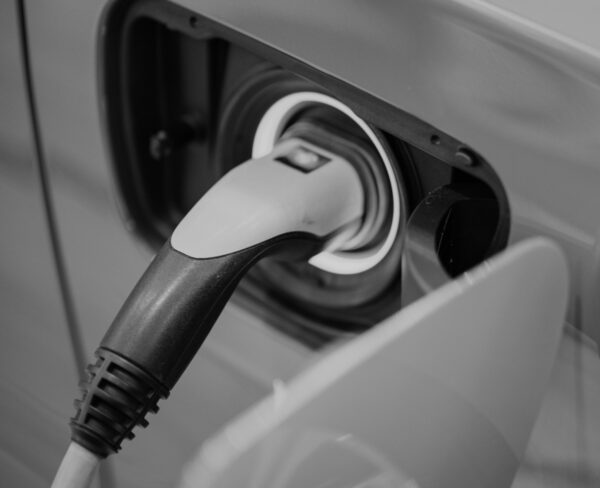
You do not need a wallbox to leave a car plugged in safely. An existing socket near the parking space is enough to charge an electric car, and the space does not need to be under cover20. The socket should be a dedicated domestic socket, one with a direct line to the circuit breaker and no other sockets, used with an EVSE cable, and the battery then tops up overnight21. Charging from a standard socket is slower, but it is a legitimate method; see charging from a 3-pin socket.
Two rules matter for anyone parking on the street. Installing a home charger is classified as development, so it is up to the householder to ensure the correct permissions are in place22. And if you trail a cable across the pavement, you may be liable for any issues or injuries caused23. In Northern Ireland, where a cross-pavement charging channel is used, as the owner you are liable for accidents or injury arising from the charging cable, particularly where it may present a hazard on a public footway24. Households without a driveway have specific options covered in charging without off-street parking.
Does a plugged-in EV use electricity when the battery is full?
Once the target charge is reached, charging current stops, so a full car left connected is not drawing charging power. The measurable consumption while parked is the 2 to 3% of charge lost each month, which the car replaces only if it is set to maintain a target level1. Preconditioning while plugged in draws from the mains, and the amount of energy used is minimal3.
Cold weather is the one case where a plugged-in car draws noticeably more. Frost and freezing temperatures lengthen charging time, especially when the battery is cold, and cold temperatures force the car to warm the battery before and during charging, while chemical efficiency drops, increasing thermal management losses12. Frost and cold can also reduce range and make acceleration less powerful on starting25. Leaving the car plugged in through winter means this warming energy comes from the mains rather than the battery, so the range you wake up to is unaffected3. Heat works the other way: an EV left out in the sun for too long could lose charge7.
Sources25 sources
- Electric car charging at home, myenergi, 2026-09-17
- Next Drive smart charging for EVs, E.ON Next, 2026-07-28
- What is EV battery preconditioning, Kia UK, 2026-09-17
- EV smart charging at night, E.ON Next, 2026-09-17
- Voltage and batteries explained, Volkswagen UK, 2026
- Electric cars, Home Energy Scotland, 2026-09-20
- Tips for electric cars in hot weather, Zapmap, 2025-07-08
- Top tips for new EV drivers on World EV Day, NAPIT, 2024-09-09
- Best EV charging tariff guide, Uswitch, 2025-07-02
- Electric cars and energy bills, Uswitch, 2026-04-27
- How long does it take to charge an EV in 2026, Electroverse, 2025-10
- Understanding where EV charging losses occur, E.ON Next, 2026-09-17
- New report for DfT finds most EV drivers are satisfied, Zemo Partnership, 2025-09-26
- What is flexibility, Flex Assure, 2026-09-19
- Smart homes, lower carbon footprint, Energy Saving Trust, 2026-01-21
- Agile Streets future flexible charging report, Energy Saving Trust, 2025-10-03
- How to choose the best energy company, Which?, 2026-01-19
- Can solar panels charge electric cars, The CPA, 2026-04-15
- Guide to the EV smart charge point regulations 2021, UK Government, 2026-09-18
- A wallbox for rented flats: how to plan your installation, Volkswagen UK, 2026
- Range and charging, Nissan UK, 2026-09-20
- Electric vehicle charging: planning permission, Planning Portal, 2026
- Electric vehicle chargers, Planning Portal, 2026
- Apply for electric vehicle cross pavement charging, nidirect, 2026-09-17
- Electric car batteries in cold weather, Volkswagen UK, 2026
 Home Charging TimesHow long a home charge really takes, from a three-pin plug to a 7 kW wallbox, with charging times by battery size, miles added per hour, what installation involves, and why an overnight charge suits most households.