
In this answer
Short answer
Many electric vehicle owners do charge at peak times, and the evidence on how many is mixed. One maker states plainly that the majority of EV owners charge when electricity is most expensive1. Against that, Ofgem reports that off-peak EV charging appears to be common practice among many EV users, with room to grow further2. A Zapmap survey found that 80% of EV owners use off-peak, renewable electricity tariffs for home charging3.
The practical picture is that most charging happens at home, and the timing of it is set by the tariff and the charger rather than by the driver standing at a plug. Three quarters of drivers surveyed in Scotland charge mostly at home, generally using a charging point attached to the house4. Home charging is simply cheaper and more convenient, especially where an energy provider offers cheaper electricity in off-peak periods such as late evening, overnight or early morning5.
What follows is when peak hours fall, how they differ between tariffs, how a smart charger moves load into the cheaper window, what that is worth, and what the Smart Charge Points Regulations actually require. The short version: off-peak charging is encouraged by regulation and rewarded by tariffs, but it is not compulsory, and the default settings on a new charger can be changed.
When peak hours fall, and why they cost more
Peak hours are the periods when electricity is dearest, and they cluster in the early evening. One supplier describes peak times as early evenings between 4pm and 7pm, when electricity tends to be more expensive6. Independent guidance on time-of-use tariffs puts the peak at typically 4pm to 7pm, and warns that a household may not save money if it cannot shift its use away from those times11. Some heat pump tariffs carry a pricier peak rate between 4pm and 7pm as well12.
The cost gap is the point. Boost charging during peak hours, such as 4pm to 7pm, can cost significantly more than using the overnight window13. That is the same logic that has always applied to Economy 7, where electricity outside the night window is charged at a more expensive peak rate14.
There is a second, regulatory definition of peak that does not match the tariff one. The Smart Charge Points Regulations describe times of peak electricity demand as between 8am and 11am, and 4pm and 10pm on weekdays7. That is the window a new charger is pre-set to avoid, and it is wider than the 4pm to 7pm that most suppliers price as peak. A household reading its charger's default schedule and its tariff's peak rate will therefore see two different sets of hours, and both are correct for their own purpose.
Research on real homes adds a third wrinkle. In Living Lab homes, peak charging occurred between midnight and 6am, consistent with behaviour optimising for current time-of-use tariffs15. In other words, what looks like a peak to the network and what looks like a peak to a tariff are not the same thing, and a household's charging can sit in a cheap tariff window while still landing in a period the network regards as busy.
Off-peak windows: midnight to 5am, 11pm to 6am and other definitions
There is no single national off-peak window. Typical supplier off-peak periods in the UK include 11pm to 8am, midnight to 7am and midnight to 5am8. One supplier's EV Charge tariff runs its off-peak window from midnight to 5am16. Another source describes EV tariffs as commonly offering off-peak from midnight to 5am9. Time-of-use periods are often late evening, overnight and early morning17.
Economy 7, the long-standing dual-rate tariff, uses a seven-hour window at night, typically midnight to 7am, with times that may vary between suppliers18. One description of the tariff gives night-time hours of 22:00 to 08:3019. The variation matters: a household that assumes a midnight start may find its own supplier begins earlier or later.
| Tariff or source | Off-peak window | Peak window |
|---|---|---|
| Typical supplier windows | 11pm to 8am; midnight to 7am; midnight to 5am8 | Not stated |
| EV Charge tariff | Midnight to 5am16 | 5am to midnight16 |
| Economy 7 | Typically midnight to 7am, varies by supplier18 | More expensive peak rate at other times14 |
| Smart charge point default | Outside the default hours7 | 8am to 11am and 4pm to 10pm, weekdays7 |
The practical consequence is that the length of the cheap window, not just its start time, determines how much of a car's charging can be done off-peak. A five-hour window, such as midnight to 5am, is a different proposition from an eight-hour one running from 11pm to 8am, and the difference shows up on the bill rather than on the dashboard1.
How smart chargers shift charging into the off-peak window
A smart charger does the timing so the driver does not have to. One maker's smart charger automatically aims to charge the vehicle during the cheaper off-peak periods on a dual-rate tariff20. The same product allows the owner to schedule charging during off-peak periods, optimise charging around the energy tariff, connect compatible EVs directly, monitor charging sessions and history, earn rewards and manage the charger remotely20.
Smart chargers also handle solar. They can monitor real-time solar electricity production and adjust charging speed accordingly, drawing more or less power and switching between solar and grid supply depending on what is available21. That is a different kind of optimisation from tariff-shifting, and the two can pull in opposite directions on a sunny afternoon.
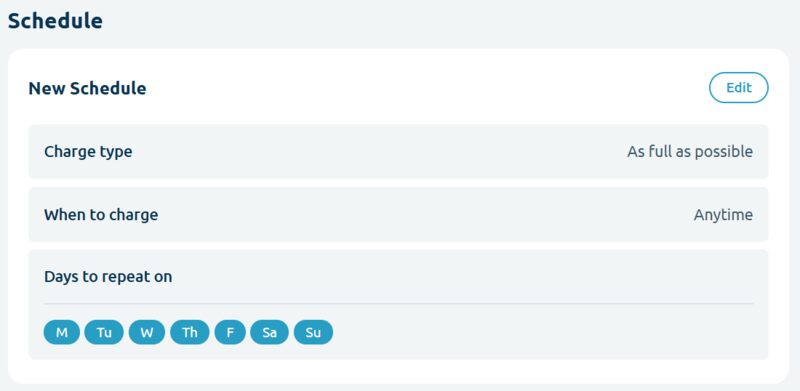
Charging apps commonly expose the setting directly. One app offers an only charge off peak option22. The charger, not the driver, then decides when the session runs within the window.
For a household, this is where energy independence is partly real and partly borrowed. The charger can move consumption into a cheaper window and can absorb surplus solar, which reduces reliance on the grid at expensive times. It cannot remove the dependence on the grid, the supplier or the tariff, and the scheduling logic usually sits in a manufacturer's app or cloud service rather than in the home.
What off-peak charging saves: hundreds of pounds a year
The published savings vary widely with tariff, mileage and the size of the gap between peak and off-peak rates. One supplier states that customers who arrange electric vehicle charging during off-peak times can save more than £700 per year9. Government guidance puts the figure for an average-consumption household with an EV at around £330 annually by smart-charging on a time-of-use tariff when compared with a static one10. An independent body describes smart EV charging as saving a typical EV driver hundreds of pounds a year23.
At the level of a single charge, an off-peak tariff can bring a full charge in at less than £1024. Independent guidance notes that some energy providers offer smart charging tariffs that make it cheaper to use electricity at night, or at times of low electricity demand25, and that EV tariffs typically charge a cheaper rate for electricity used at night26. One source describes the overnight rate as often the best option27.
The spread between these figures is not a contradiction so much as a difference in assumptions. The £700 figure is a supplier's own claim for its customers; the £330 figure is a government estimate for an average-consumption household against a static tariff; the hundreds of pounds is a general description. A household's own saving depends on how many miles it covers, the car's efficiency, and the size of the peak-to-off-peak gap on its particular tariff.
"Customers who arrange electric vehicle charging during off-peak times can save more than £700 per year."
The Smart Charge Points Regulations: encouraged, not mandatory
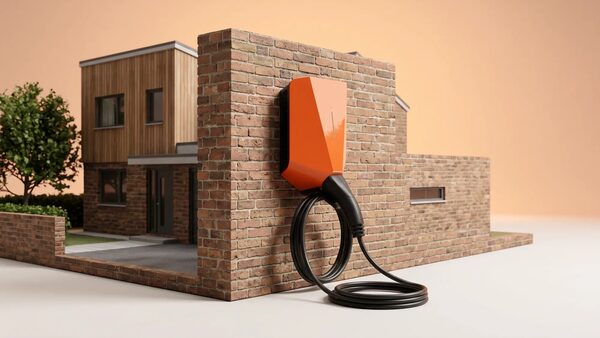
The law regulates the charger, not the driver. The Electric Vehicles (Smart Charge Points) Regulations 2021 require that domestic EV chargers must be smart, capable of responding to signals to shift charging to off-peak periods28. All new domestic and business charge points must include smart functionality to support off-peak, lower-cost charging29. One guide states the position bluntly: this is a legal requirement, not optional28.
The detail is in the defaults. A charge point must incorporate default charging hours and must allow the owner to accept, remove or change these upon first use and subsequently7. The default hours must be pre-set to not charge during times of peak electricity demand, between 8am and 11am and 4pm and 10pm on weekdays7. To protect consumers from lock-in, a charge point must retain its smart functionality even if the owner switches electricity supplier7.
The regulations do not apply to sales of charge points before 30 June 20227. Older units therefore sit outside the regime, and a household with an early charger may find it has no default schedule and no obligation to avoid peak hours.
What the regulations do not do is compel a household to charge off-peak. The owner can change or remove the default hours, and nothing in the rules requires a car to be plugged in during the cheap window. Off-peak charging is encouraged by the default setting and rewarded by the tariff, and that combination is what moves most charging into the night.
Vehicle-to-grid and the peak
Vehicle-to-grid technology takes the timing question further. It allows an EV charger to not only charge a vehicle but also take energy from it30. More fully, it allows electric vehicles to draw power from the grid to charge their batteries and to send electricity back to the grid when needed, generating cash for the EV owner31. Because that export can be aimed at the times of highest demand, it helps reduce peak demand on the electricity network32.
For a household, V2G turns the car from a load that must be kept out of peak hours into an asset that can be paid for discharging during them. It does not remove dependence on the grid or the supplier; it changes the direction of flow at the margin. The technology is distinct from smart charging, which only shifts consumption rather than exporting it.
Where the evidence disagrees
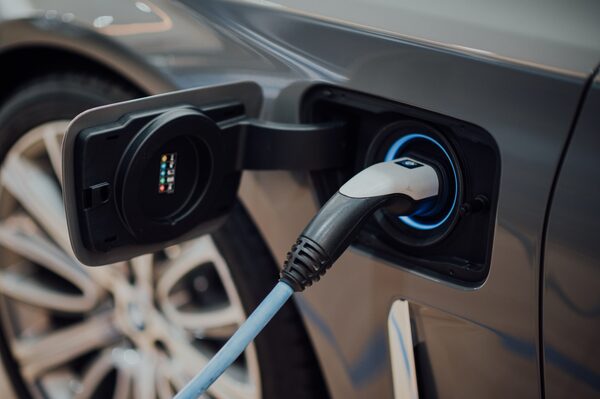
Two figures on behaviour do not sit easily together. One maker states that the majority of EV owners charge when electricity is most expensive1. Ofgem reports that off-peak EV charging appears to be common practice among many EV users, with room to grow further2. A Zapmap survey puts 80% of EV owners on off-peak, renewable electricity tariffs for home charging3.
A tariff choice is not the same as a charging time, and a survey of tariff holders is not the same as a measurement of when cars are plugged in. Consumer Council research found that almost three quarters (73%) of EV and plug-in hybrid owners would be likely to charge their vehicle outside 4pm to 8pm if it meant a reduction in the cost, down from 81% in 202233. That is stated intention rather than observed behaviour, and the fall between the two years suggests the picture is not static.
Sources33 cited
- Cheaper EV charging in winter, DEFA, 2024-03-04
- Tracking energy consumers' use of low carbon and flexible products and services 2025, Ofgem, 2025-06
- Common misconceptions about electric cars, Zapmap, 2026-05-08
- Consumer experience of electric vehicles in Scotland, Consumer Scotland, 2024-08-11
- What does the new Electric Car Grant mean for you-mean-for-you), NICEIC, 2025-07-29
- EV tariffs, Fuse Energy, 2026-04-10
- Guide to EVSCP regulations 2021, Department for Transport, 2026-09-18
- Time of use tariffs explained UK, 100Green, 2026-08-13
- When is off peak electricity, Jackery, 2026-04-29
- Electricity distribution networks study: government response, GOV.UK, 2025-07-07
- Air source heat pump costs and savings, Which?, 2026-04-14
- Time of use tariffs explained, Which?, 2026-04-23
- Boost vs float charge for EV, E.ON Next, 2026-09-17
- Getting the most from Economy 7, National Energy Action, 2026-09-10
- Grid impacts of heat pumps, EVs and solar revealed, Energy Systems Catapult, 2025-08-18
- Time of use peak and off peak times, Good Energy, 2026-03-24
- Washing machine energy saving tips, Smart Energy GB, 2026-08-17
- What is Economy 7, Smart Energy GB, 2026-04-07
- V2GB vehicle to grid Britain, Cenex, 2026-09-17
- What is a dual rate tariff, waEV-charge, 2026-09-17
- Can solar panels charge electric cars, The CPA, 2026-04-15
- Understanding off peak charging, waEV-charge, 2025-08-07
- What is consumer led flexibility, Low Carbon Hub, 2025-10-17
- Should I buy an electric car, Which?, 2026-04-16
- Electric vehicle charger installation and maintenance, NICEIC, 2025-08
- Benefits for Britain, Smart Energy GB, 2026-04-24
- Tariffs for renewable technology, Energy Saving Trust, 2026-08-12
- Section 722 EV charging complete guide, Elec-Mate, 2026-07-02
- EV charger regulations in England: what's changed, NICEIC, 2026-08-19
- Vehicle to grid best practice guide, Energy Saving Trust, 2026-05-05
- LCT strategy, Energy Networks Association, 2026-09-17
- Renewable energy storage, Electricity North West, 2026-09-19
- Attitudes to the Energy Transition 2024, Consumer Council, 2023-11
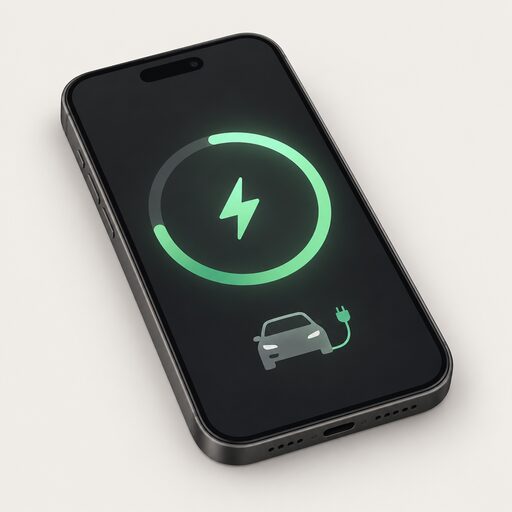 What Is a Smart Charger?A smart EV charger is an internet-connected home charge point that schedules charging around tariff prices, grid demand and household load.
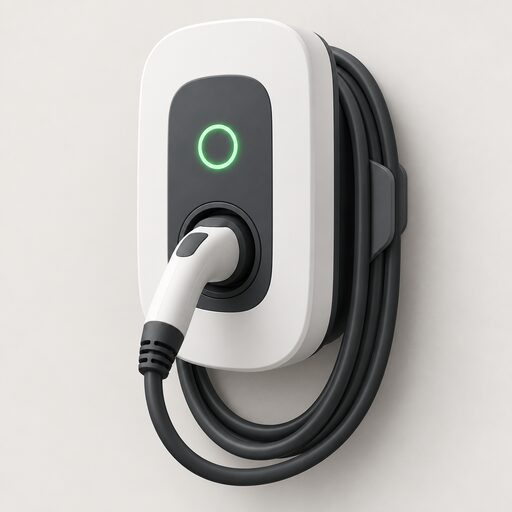 Supplier-Controlled ChargingSmart charging tariffs let your energy supplier decide when your car charges, usually overnight when electricity is cheaper.
 Charging With a Home BatteryHow a home battery and an EV charger share one supply, whether a battery can usefully charge a car, and how combined systems are controlled so the battery is not discharged into the vehicle at a loss.
 EV Tariffs and Home ChargingHow EV-specific import tariffs and charging bolt-ons work, including supplier-controlled charging where the energy company decides when the car draws power, which charge points each scheme supports, and what a household needs in place.
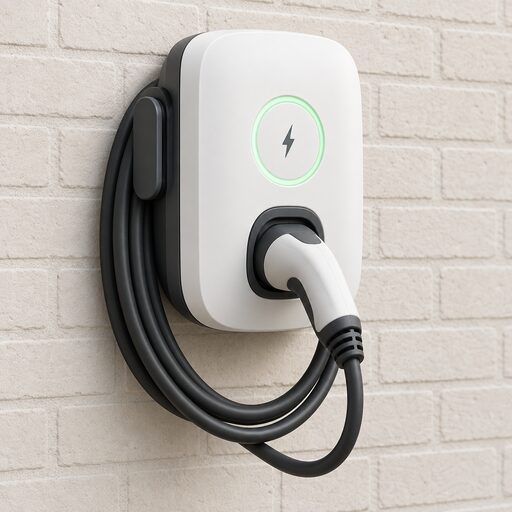 Home EV Charger ManufacturersWhich home EV charger brands are worth considering, and how do you choose between them?
 Public EV ChargingWhat does public charging really cost when you cannot plug in at home, and how do you pay for it?