
In this comparison
The choice between a fixed and a time-of-use tariff is not a choice between two versions of the same product. A fixed tariff sets one price for each unit of electricity and holds it for the term, so the cost of charging an electric car is the same at midnight as at six in the evening1. A time-of-use tariff charges different prices at different times of day, usually with a cheaper overnight window, so the cost of charging depends on when the car is plugged in2.
Most EV-specific products combine the two: a fixed term with a time-of-use structure inside it. That is why the question is usually not "fixed or time-of-use" but "how much of my charging can I move into the cheap window". Among drivers who can charge at home, 50% reported using a time-of-use tariff to charge their EVs, and an additional 33% of that group were interested in changing to one3. Uptake is rising quickly: domestic customers on EV smart time-of-use tariffs increased by 84% in the year to July 2025, from 354,000 to 653,000 customers4.
The structure that suits a household follows the charging habit, not the car. A driver who can plug in overnight and leave the car for several hours gains from a time-of-use window. A driver who charges mainly during the day, or who cannot set a charging schedule, gets little from an off-peak rate and may be better served by a flat fixed rate or by an add-on product that discounts the electricity metered to the charger at any hour5.
Fixed or time-of-use: what the two tariff types actually mean
The energy market divides into two main tariff types, fixed rate and variable1. A fixed rate tariff sets the price paid for each unit of gas or electricity for an agreed period, usually between one and three years6. A variable tariff moves with the supplier's own pricing, and the standard variable rate is what an account falls onto when a fixed deal ends1.
Time-of-use is a different axis. A time-of-use tariff is a plan where the price of a unit of energy varies during a 24 hour period8. A static time-of-use tariff offers two or more rates for electricity at fixed times of the day, and the same prices are offered at the same times each day2. A dynamic time-of-use tariff offers a different price per unit depending on the time of day, with times and rates that can change from day to day2.
The two axes cross. A tariff can be fixed in term and time-of-use in structure, which is what most EV products are. A tariff can also be variable in term and flat in structure, which is the standard variable rate. The distinction that changes behaviour is whether the price varies by clock time, because that is what determines whether shifting a charging session saves anything.
"A ToU tariff is a plan where the price of a unit of energy varies during a 24 hour period."
What share of EV drivers are on time-of-use tariffs
Survey evidence puts time-of-use use among EV drivers well above the general population. In a Scottish consumer survey, 42% of EV drivers used a time-of-use energy tariff, with a further 35% interested in using one in the next twelve months3. Among drivers who can charge at home, the figure rose to 50%, with an additional 33% interested in switching to such a tariff3.
Official figures show the same direction of travel. Domestic customers on EV smart time-of-use tariffs increased by 84% in the year to July 2025, from 354,000 to 653,000 customers4. That is a count of accounts rather than a share of drivers, but it establishes that these products have moved from niche to mainstream within a few years.
Earlier research shows how recent the shift is. In 2021, only 13% of plug-in EV users were on a time-of-use tariff at that time, rising to 16% of owners of fully electric vehicles9. The same 2021 work found that some participants had moved to a time-of-use tariff, but the majority reported that getting an electric vehicle had not changed what they look for in an energy deal or how they use their energy11. The gap between those findings and the 2024 and 2025 figures is the clearest evidence that charging behaviour, not vehicle ownership alone, drives tariff choice.
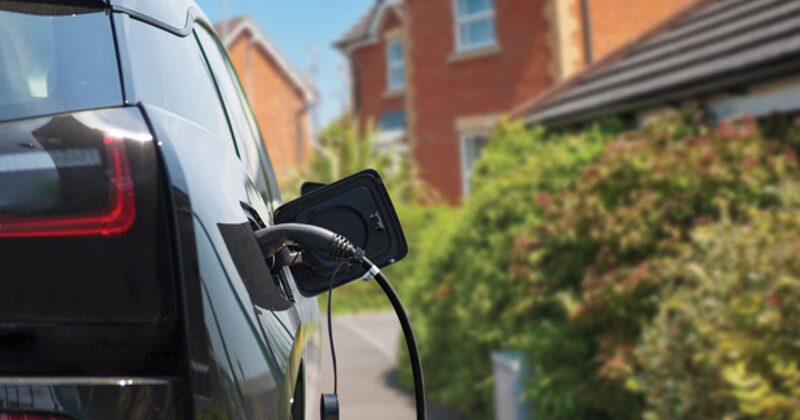
How a fixed EV tariff works: rates and standing charge locked for the term
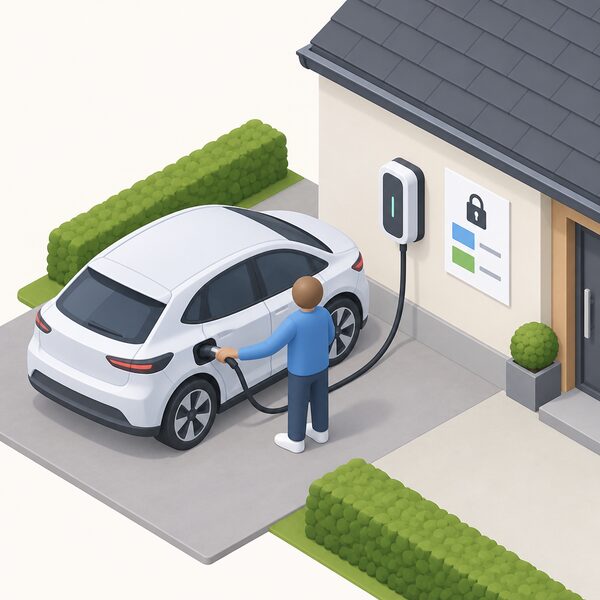
A fixed rate tariff offers certainty by locking in the unit rate and the standing charge for the duration of the contract12. The unit cost of energy and the daily fee are fixed; the amount charged depends on the energy used, the unit cost and the daily fee13. The price is fixed for the full duration of the tariff, regardless of changes to the wholesale cost of electricity during that period14.
For an EV household, that means the cost per kWh of charging is known in advance for the whole term. A fixed rate tariff usually runs for 12 months at a fixed amount per unit of energy15. Longer terms exist: a two-year fixed price tariff aimed at domestic customers has been offered in the EV market before16, and the wider market commonly runs to three years6.
What is fixed is the rate, not the bill. A household that drives more in one year than another pays more, because the standing charge covers the connection and the unit rate covers each kWh consumed. The certainty is in the price per unit, which is what makes budgeting for a known annual mileage straightforward.
The off-peak window: when the cheap rate applies
Time-of-use tariffs offer cheaper electricity during off-peak hours, such as at night, when demand is low17. Energy is typically cheaper at off-peak times, when fewer people are using it, or when there is more renewable energy being generated18. EV tariffs typically charge a cheaper rate for electricity used at night19.
The window itself varies by product. EV tariffs commonly provide one period of very cheap electricity in the early hours of the morning for charging an electric vehicle20. Most EV tariffs involve a lower rate for charging overnight21. Static time-of-use tariffs offer fixed cheaper hours every day, the same hours every day, although they might change with daylight savings time22.
That last point matters for planning. A static window is predictable: the household knows the cheap hours in advance and can set a charger or appliance timer accordingly. A dynamic window is not, because the times and rates can change from day to day2. For a driver who needs the car ready at a set time each morning, a static overnight window is the simpler structure to work with.
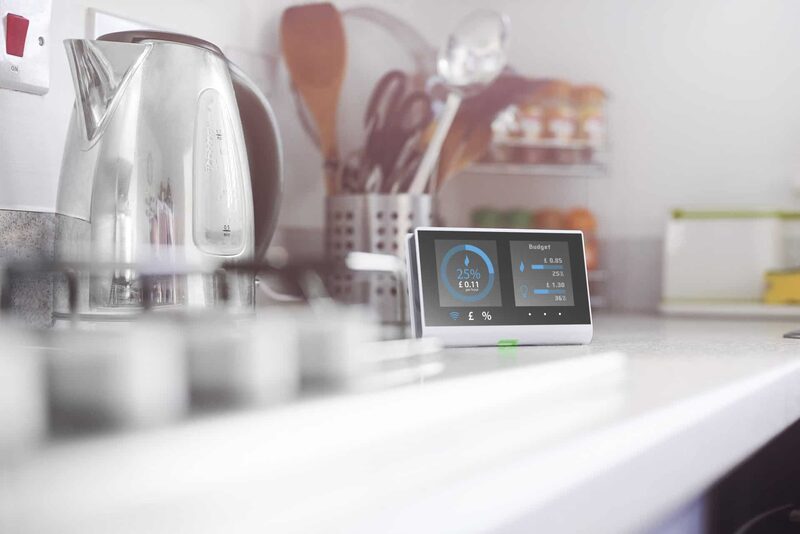
Time-of-use pricing: different unit rates for different times of day
Time-of-use tariffs charge different prices for energy at different times of day, or on different days18. Electricity prices vary throughout the day, usually with a cheaper overnight charging window4. The pattern is consistent across sources: cheaper when demand is low, usually overnight, and more expensive when demand is high, in the early evening22.
The structure is not the same as Economy 7. Economy 7 and Economy 10 use fixed cheaper periods, while newer EV and tracker tariffs can be more dynamic and usually work best with a smart meter23. A standard electricity tariff, by contrast, charges the same price whatever the time of day or night22. If a household is on a fixed or standard variable tariff, energy costs the same each day, at any time of day23.
There is a third structure worth separating out. Type of Use tariffs offer cheaper rates just for the specific energy used to charge the EV, and the cheaper kWh cost applies at any time of day or night5. That is a different proposition from a time-of-use window: the discount follows the load rather than the clock, which suits a household that cannot confine charging to the early hours.
| Structure | What varies | Typical EV fit |
|---|---|---|
| Fixed rate | Nothing by time; rate held for the term12 | Known cost per kWh; no benefit from shifting14 |
| Static time-of-use | Two or more rates at fixed times each day2 | Overnight charging on a predictable schedule22 |
| Dynamic time-of-use | Price per unit varies; times and rates can change daily2 | Households able to respond to day-ahead signals23 |
| Type of Use | Cheaper rate on the energy metered to the charger, at any hour5 | Daytime charging, or charging that cannot be scheduled5 |
Contract length and renewal: what happens when a fixed term ends

A fixed-rate tariff runs for an agreed period, usually between one and three years6. When it ends, the supplier automatically moves the account onto the standard variable tariff, and should remind the customer when the contract is about to end13. With a fixed rate, the account rolls onto the provider's standard variable rate when the tariff ends1.
For an EV household, that rollover has a specific consequence. The standard variable rate is not a time-of-use product, so the cheap overnight window disappears at the point the fixed term finishes. A driver who has been charging on an off-peak rate for twelve months and takes no action ends up paying a single flat rate for every hour of charging.
The reminder matters because the end date is easy to miss. Suppliers are expected to contact the customer before the contract finishes13, but the decision still sits with the household. Renewal is also the point at which the rate itself changes, since the new term is priced on the market at that time rather than the market at the start of the previous term.
Retention tariffs: who qualifies and who does not
Not every EV product is a standalone tariff. Some are add-ons: the consumer keeps their existing household tariff but receives separate EV charging discounts, credits or other benefits4. One example is an add-on to existing tariffs rather than a standalone tariff, available to customers who are already signed up to a home energy tariff, whether fixed or standard variable24.
That structure changes the eligibility question. A household on a standard variable tariff can hold an add-on EV product without moving its whole supply onto an EV tariff, which means the rest of the home's electricity stays on the existing rate. The trade-off is that the household does not get a cheap window for other appliances, only for the metered charging load.
Time-of-use tariffs more generally suit households with green technology such as a heat pump, battery storage or an electric or hybrid car25. An EV, heat pump or home battery makes smart tariffs much more valuable22. Eligibility for individual products varies between suppliers, and the terms of each product determine who can hold it2.
Which tariff fits which household: charging habits decide
The deciding factor is whether charging can be moved into the cheap window and left there. A driver who parks overnight, can set the car or charger to start in the early hours, and does not need the car during that period gets the full benefit of a time-of-use structure. A driver who charges at a workplace, at public rapid chargers, or on an irregular schedule gets little from an overnight rate.
The smart meter requirement sits underneath all of this. For many EV-specific tariffs, particularly smart or time-of-use tariffs, a working smart meter is needed4. New flexible time-of-use tariffs require a smart meter set to send readings every half an hour23. Most, if not all, electric car tariffs require a smart meter so the supplier can track usage at different times of the day15. Charging an EV does not itself require a smart meter, but without one some EV-specific tariffs cannot be accessed4.
Payment conditions apply equally to both structures. The bill must be collected by monthly direct debit, and EV tariffs are not available to households on prepayment meters7. Switching to any energy tariff is simple, does not cause power outages and typically takes just a few days15.
Several providers have introduced overnight or off-peak tariffs aimed solely at EV drivers26. As more suppliers make their EV tariffs available for comparison, it becomes easier for customers to find the one that matches their needs15. For the wider picture on how these products sit alongside export rates and other structures, see EV energy tariffs and the UK energy tariffs guide.
Sources26 cited
- Understanding consumers' energy tariff choices, research report 2024, Ofgem, 2025-07
- Time of use tariffs: the benefits, Smart Energy GB, 2026-04-24
- Consumer experience of electric vehicles in Scotland, Consumer Scotland, 2024-08-11
- EV tariffs and home charging: what consumers need to know, Energy Ombudsman, 2026-09-11
- EV energy tariffs, Zapmap, 2024-09-16
- Best deal energy, Home Energy Scotland, 2026-09-20
- Electric cars and energy bills, Uswitch, 2026-04-27
- Consumer engagement with smart electricity tariffs, Parliamentary Office of Science and Technology, 2026-09-17
- Consumer survey EVs summary, Ofgem, 2021
- Consumer Survey 2021: decarbonisation and home energy use, Ofgem, 2021
- Phase 1 EV publication, Ofgem, 2021-07-06
- Fixed rate gas tariffs, Energy Helpline, 2026-09-20
- Your gas or electricity supplier has put up its prices, Citizens Advice, 2026-09-17
- Electricity only, Confused.com, 2026
- EV energy tariffs, Uswitch, 2025-09-17
- E.ON launches new EV tariff, Zapmap, 2018-08-15
- What is consumer-led flexibility and what it means for your home and business, Low Carbon Hub, 2025-10-17
- How to use a smart meter to save money, Smart Energy GB, 2026-04-24
- EV tariffs typically charge a cheaper rate at night, Smart Energy GB, 2026-04-24
- Tariffs for renewable technology, Energy Saving Trust, 2026-08-12
- Charging electric vehicles, Energy Saving Trust, 2026-04-23
- Should I switch to a time-of-use tariff, Energy Saving Trust, 2026-01-23
- Cheaper bills with energy flexibility, Centre for Sustainable Energy, 2026-08-17
- OVO Charge Anytime, Uswitch, 2025-10-09
- Five top tips from Which? to cut your energy bills, Welsh Government Climate Action, 2026-03-18
- EV TOU tariffs, Flexi-Orb, 2024-06-19
 The Full Tariffs GuideWhich energy tariff suits how you live, and will switching really save you money?
 EV Tariffs and Home ChargingHow EV-specific import tariffs and charging bolt-ons work, including supplier-controlled charging where the energy company decides when the car draws power, which charge points each scheme supports, and what a household needs in place.
 Time-of-Use Tariffs ExplainedCan you pay less for electricity by using it at different times of day?
 Fixed-Rate Energy TariffsWhat a fixed energy tariff fixes and what it does not, the contract lengths sold in the UK, exit fees and the 49-day window, how fixed rates compare with the price cap, and what happens when the term ends.
 Tracker vs Price CapTracker tariffs can cost more than the price cap, so how do they compare?
 Charging by Home TypeHow the practical and legal position for home EV charging changes by property type: flats and leasehold consent, terraced homes without frontage, shared car parks and metering, rural properties with long cable runs, and listed or conservation area homes.