
In this comparison
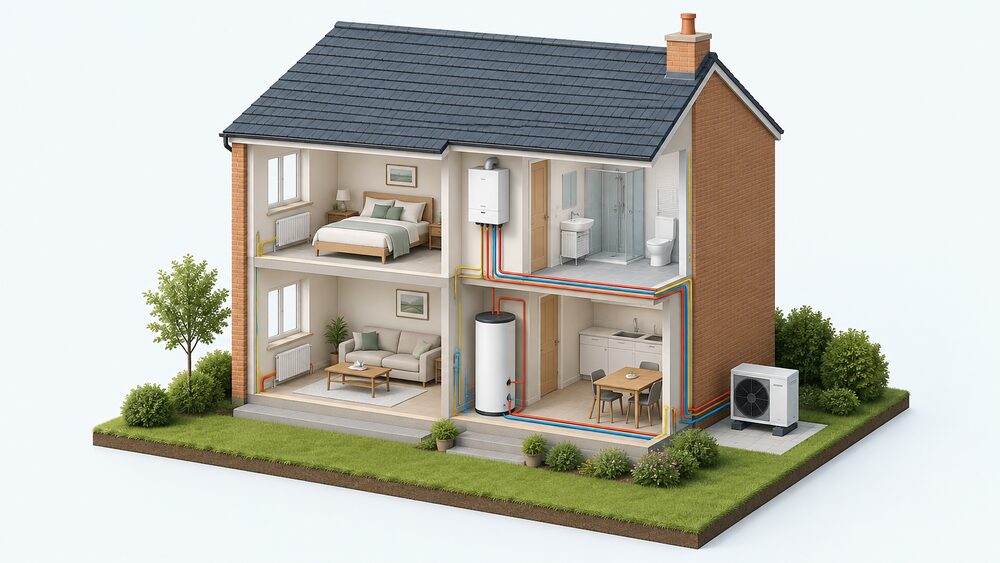
The choice comes down to a fuel. A hydrogen-ready boiler is a gas appliance: it burns natural gas today, is built to accept up to a 20% hydrogen blend, and could run on 100% hydrogen after an engineer alters it1. A heat pump runs on electricity, and current heat pump technologies can be up to 3 to 5 times more efficient than a natural gas boiler2.
That efficiency gap is the whole argument. Heat pumps are around three-to-four times more efficient than gas boilers, which should lead to lower household energy bills3, and they use 3 to 4 times less energy to provide the same heat as a boiler4. Against that, an average heat pump costs around £11,600, four times more expensive than a gas boiler, with a wider range of between £8,000 and £15,000 depending on the work needed5.
Waiting is a real option, but it has a cost of its own. Truly hydrogen-ready boilers are not something consumers can readily buy at the moment1, and the proposed Future Homes Standard states that gas boilers, including hybrid and hydrogen-ready boilers, will not meet the proposed standards6. Public familiarity is thin: knowledge of hydrogen-ready boilers stood at 5% in Winter 2025, against 24% for air source heat pumps7.
What 'hydrogen-ready' actually means for a boiler in your home
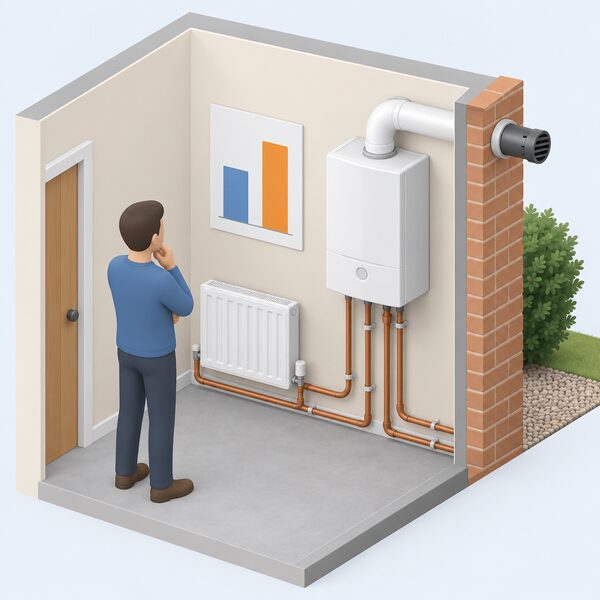
The term covers two different things, and the difference matters when a household is weighing up a purchase. A hydrogen-ready boiler is defined as capable of taking up to a 20% hydrogen blend immediately, with the potential to run on 100% hydrogen following an alteration by an engineer, and it is the type of boiler that would be mandated10. A hydrogen-blend boiler is technically identical to a natural gas boiler, but marketed as being capable of running a blend of up to 20% hydrogen10.
So the first category is a genuine engineering specification with a defined upgrade path. The second is a marketing position on an appliance that is, in substance, the boiler already in the cupboard. Which? puts it plainly: truly hydrogen-ready boilers are not something consumers can readily buy at the moment1.
On price, a number of leading boiler manufacturers have made a joint price-promise commitment that a hydrogen-ready boiler will cost no more than a gas boiler does today1. That is a manufacturer commitment, not a published UK price, and it applies to a product category that is not yet on general sale.
"Capable of taking up to a 20% hydrogen blend immediately, with the potential to run on 100% hydrogen following an alteration by an engineer."
For a household's energy independence, the picture is mixed. A hydrogen-ready boiler keeps the home on mains gas, which means continued dependence on a supplier, on the gas network and on whatever hydrogen production and blending decisions are taken nationally. It does not make a home self-sustaining. What it does is preserve the existing heating system, pipework and radiators, and defer the decision. The hydrogen boiler versus natural gas boiler comparison sets out the appliance-level differences, and the question of whether an existing gas boiler can run on hydrogen is answered separately.
Heat pumps: how they work and what they need from a house
A heat pump runs on electricity11. It does not burn a fuel; it moves heat, which is why it can deliver more heat energy than the electricity it consumes. Heat pumps are typically over three times more efficient than the most efficient gas boilers or electric heaters12, and the Committee on Climate Change puts them at around three-to-four times more efficient than gas boilers3. The Welsh Government's guidance describes them as up to 3 times more efficient than other heating systems13.
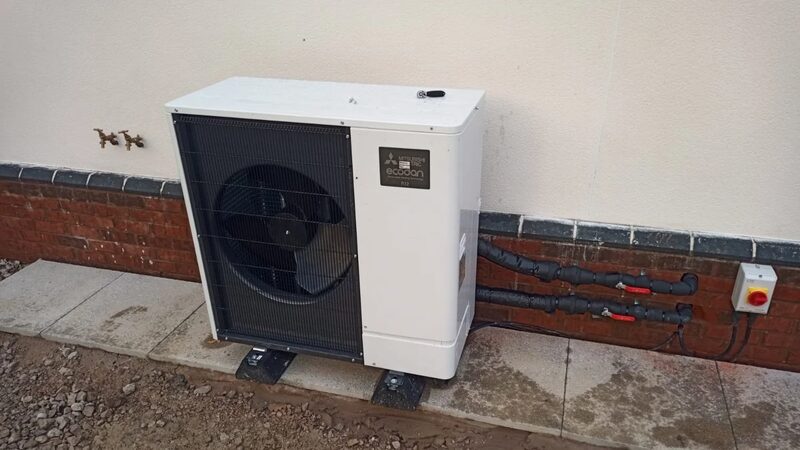
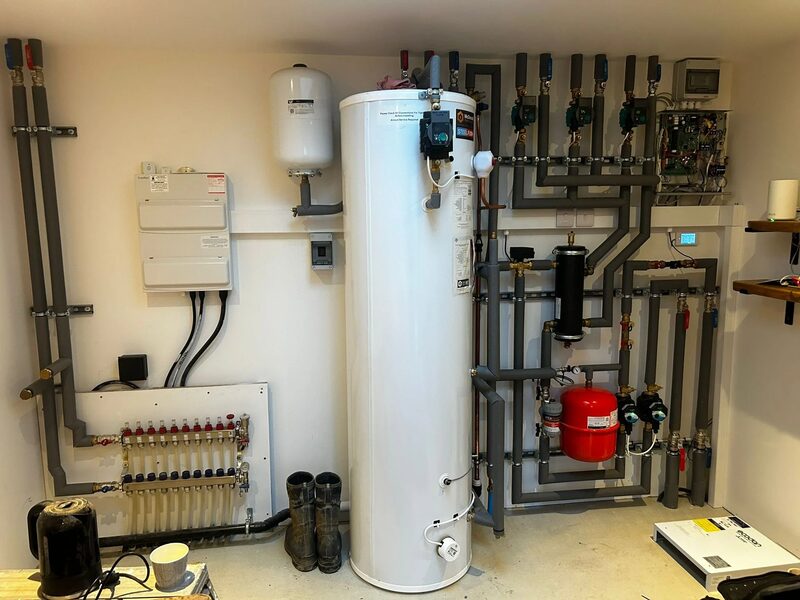
The practical requirements are what shape a household's decision. Unlike a boiler, heat pumps do not produce instant hot water, so, like a regular or system boiler, they must be combined with a hot water storage cylinder or another method of producing hot water14. A heat pump must provide both space and hot water heating and be capable of meeting the full space heating and hot water heating demands of the property15. On emitters, heat pumps can work with radiators or underfloor heating, but some types can work without either16.
Maintenance is not the differentiator: in general, heat pumps need about as much maintenance as a gas boiler8. In many cases a gas, oil, LPG, electric or biomass boiler can be swapped out and replaced with a heat pump14.
Where a home is not ready for a standalone heat pump, a hybrid is the middle path. A hybrid heat pump is a system that uses a standard heat pump with another heat source, usually a gas, oil or LPG boiler17. On a hybrid system, the heat pump meets 80% of space heating demand and a gas boiler covers the remainder18. Hybrid heat pumps are described as suitable for buildings with existing heating systems, to help efficiency and cut carbon emissions11, and as an effective interim solution where systems run on an electric heat pump along with natural gas, LPG or oil18.
Running costs: gas prices versus electricity prices and efficiency
This is where the two options converge more than most households expect. At current energy prices, running costs for heat pumps are around the same as for a new gas boiler8. For a typical-sized home, a heat pump currently costs about the same to run as a gas boiler, with the unit price of electricity almost 4 times higher relative to gas4.
The reason a heat pump can match gas despite that price ratio is efficiency. Running costs for heat pumps are typically lower when compared to those of traditional gas boilers, though the outcome depends on how the system is set up and used17. The efficiency advantage does the work that the unit price disadvantage would otherwise undo.
The independence question is different for each. A heat pump moves a household off gas and onto electricity, which is a shift in dependence rather than an end to it: the home still relies on the grid and a supplier, and on the generation mix behind them. A hydrogen-ready boiler keeps the home on gas, and adds a further dependence on national decisions about hydrogen production, blending and network conversion that no household controls.
Carbon: why the grid's decarbonisation favours heat pumps
Heat pump technology currently offers a carbon saving of up to 65% compared with a gas boiler9, and up to 70% less CO2 over 15 years than a gas boiler, with zero emissions at point of use19. Low carbon heating systems like heat pumps are more efficient than traditional heaters like gas boilers and electric radiators16.
The mechanism behind those figures is the grid. With offshore wind and PV costs reducing, and with heat pumps needing only a quarter of the energy of gas boilers, the case for electrified heat strengthens as generation decarbonises12. A gas boiler's emissions are set by the fuel it burns; a heat pump's emissions fall as the electricity supply gets cleaner. That is the structural argument, and it does not depend on any single household's circumstances.
Hydrogen's carbon position depends on how the hydrogen is made and whether it reaches homes at all. The evidence on a UK switchover is covered below, and the wider trials picture sits in hydrogen home heating trials in the UK.
Installation, disruption and space: what each option demands
A hydrogen-ready boiler is a like-for-like replacement. It occupies the same space, connects to the same gas supply and serves the same radiators, which is why manufacturers can promise price parity with today's gas boilers1. The disruption is that of any boiler swap.
A heat pump is a different installation. Heat pump installation costs are higher than gas boilers, in part due to the need for additional retrofitting20. Parliamentary evidence records that the paperwork required for the installation of a heat pump is many times greater in volume and complexity compared to that associated with a gas boiler21. A heat pump or biomass boiler system must be capable of meeting the full space heating and hot water heating demands of the property22.
Space is the other constraint. A heat pump needs somewhere for the outdoor unit and, in most configurations, a hot water cylinder indoors14. A hybrid avoids some of that: hybrid appliances which combine a gas boiler with a heat pump could be a low disruption, low-cost pathway to net-zero, reducing energy demand by 60% compared to current gas boilers and cutting peak electrical demand by 10 GW compared to air source heat pumps12. Heat pump and hybrid controls can be fitted to different heat sources and boiler types such as regular or combination boilers18.
Where a new heat pump is installed alongside an existing gas boiler, the gas boiler must have an energy-related products rating of A or above and the retrofit coordinator must be satisfied it is in good working order23.
Planning permission and consent
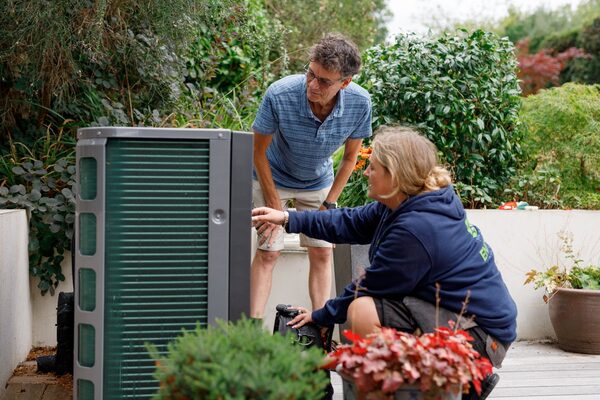
Air source heat pumps do not normally require planning permission, except where listed exceptions apply24. The exceptions are specific: where there is an existing air source heat pump on a building or within the gardens or grounds of a dwelling house which is not a detached house, or two existing units on a detached house, permission is required25. Ground source heat pumps do not usually require planning permission as long as permitted development criteria are met26.
Listed buildings are the clear exception. If a property is listed, listed building consent is usually needed before installing an air source heat pump, even if planning permission is not required27. Adding renewable energy solutions like solar panels or air and ground source heat pumps might be acceptable but will require listed and or planning consent28.
Waiting for hydrogen: what the evidence says about a UK switchover
The case for waiting rests on a mandate that has not arrived. Baxi Heating UK recommended a mandate that all boiler installations from 2025 are hydrogen ready, which would mean that a significant proportion of the existing housing stock could be converted30. No such mandate is in force.
The policy direction runs the other way. The Future Homes Standard consultation states that gas boilers, including hybrid and hydrogen-ready boilers, will not meet the proposed standards6. That is a proposed standard for new homes rather than a rule for replacements in existing ones, but it signals where building standards are heading.
Public understanding is limited. Knowledge of hydrogen-ready boilers stood at 5% in Winter 2025, against 24% for air source heat pumps7. In Nesta's experiment, around half of participants thought that heating their home with a hydrogen boiler using 100% hydrogen would have lower carbon emissions than a heat pump10, a perception that does not match the carbon figures above.
What would change minds is running cost. Among participants who selected a hydrogen boiler, 49% said they would change their mind a lot or a moderate amount if the price of electricity reduced to the extent that the heat pump had lower running costs of the two options10. Among those who chose a heat pump, running costs, carbon emissions and future-proofing their home were most often selected as the top reasons, with future-proofing chosen by 24%10.
The monitored evidence base for heat pumps is now substantial: analysis of monitored heat pump performance data from over 1,100 UK heat pump installations, combined with in-depth interviews with households at risk of fuel poverty, technical home audits, cost modelling and a review of existing evidence31. The equivalent evidence base for hydrogen home heating is thinner, and the trials are covered in the cancelled hydrogen village trials and H100 Fife.
Which to choose for which home
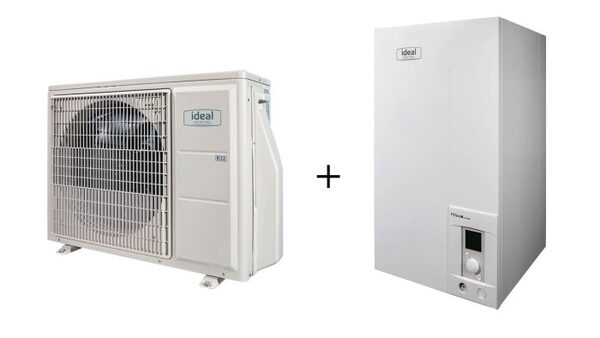
The decision turns on the property, not on the technology's headline merits.
A home with a well-insulated fabric, space for an outdoor unit and room for a cylinder is the straightforward heat pump case. A heat pump must meet the full space heating and hot water demands of the property15, and where that is achievable without extensive work, the efficiency and carbon advantages apply directly.
A home needing significant fabric, energy efficiency and pipework upgrades for a standalone heat pump is the hybrid case. Hybrid heat pumps are suitable for buildings with existing heating systems, to help efficiency and cut carbon emissions11, and they adapt the home for both low-electricity and low-carbon gas technologies, including 100% hydrogen18.
A home where the boiler is working, the budget is committed elsewhere, or the household intends to move is the wait-and-see case, with the caveat that a hydrogen-ready boiler is not readily available to buy1 and that the proposed standards exclude gas boilers including hydrogen-ready models6.
On grants, the Boiler Upgrade Scheme provides grants for heat pump installations across England and Wales32. A household may be eligible for a grant under the scheme if the home is energy efficient enough29. Heat pumps which have the capability to be installed alongside a fossil fuel boiler may be eligible, but they must be installed independently of a fossil fuel boiler; installations comprising both a heat pump and a fossil fuel boiler are ineligible15. The Welsh Government has set out £5 million of support to help Welsh households invest in greener homes33.
For the wider picture of how these choices affect a household's exposure to suppliers, networks and fuel markets, see emerging technology and household energy independence and the full UK guide to emerging home energy technology.
Sources33 cited
- Hydrogen boilers: what you need to know, Which?, 2026-09-17
- Energy innovation needs assessment 2025: heat and buildings, GOV.UK, 2025-06
- The Seventh Carbon Budget, Climate Change Committee, 2025-02-26
- Domestic heating technology options, Nesta, 2025-02-03
- Heat pumps: costs and performance, Public Accounts Committee, 2024-05-26
- The Future Homes and Buildings Standards 2023 consultation, GOV.UK, 2026-09-17
- DESNZ public attitudes tracker: heat and energy use in the home, Winter 2025, GOV.UK, 2025
- Heat pump fact check, Energy Saving Trust, 2026-07-01
- Boiler Upgrade Scheme launch, Ofgem, 2026-09-17
- Understanding the public view on hydrogen boilers, Nesta, 2023
- Hybrid heat pumps, Energy Saving Trust, 2026-07-16
- Bristol Warm Homes Plan, Bristol City Council, 2025-04
- Heat pumps, nidirect, 2025-02-24
- The best heating for your home, Which?, 2025-09-22
- Boiler Upgrade Scheme participant guidance, Ofgem, 2023-09-25
- Renewable heat: your right, Energy Saving Trust, 2026-05-19
- What impact can heat pumps have in domestic heating today, GOV.UK, 2023-11-21
- HHIC guidance, Heating and Hot Water Industry Council, 2026-09-17
- Heat pump, GOV.UK, 2026-09-10
- Heat pump installation costs, UK Parliament POST, 2026-09-19
- Written evidence on heat pump installation, UK Parliament, 2023-08
- Boiler Upgrade Scheme installer guidance, Ofgem, 2022-07-21
- Warm Homes Social Housing Fund wave 3 scheme guidance addendum, GOV.UK, 2026-06
- Air and ground source heat pumps, Croydon Council, 2026-09-17
- Heat pumps, New Forest District Council, 2026-09-17
- Planning guidance for heat pumps, Richmond Council, 2026-04-22
- Air source heat pumps, Westmorland and Furness Council, 2026-09-17
- Making alterations to a listed building, Bristol City Council, 2026-09-17
- Air source heat pumps, London Borough of Hammersmith and Fulham, 2026-09-17
- Written evidence from Baxi Heating UK Ltd, UK Parliament, 2026
- How to ensure a successful transition to heat pumps for households at risk of fuel poverty, GOV.UK, 2026-07-01
- Your essential guide to heat pumps, Welsh Government, 2025-02-20
- £5 million to help Welsh households invest in greener homes, Welsh Government, 2026-03-05
 Heat Pump Running CostsWhat does a heat pump cost to run each year, and is it cheaper than a gas boiler?
 The Full Boilers and Heating GuideWhich boiler suits your home, and when is it worth swapping the old one?
 Hybrid Heat PumpsHow hybrid systems pair a heat pump with a gas, oil or LPG boiler, what decides which appliance runs, what they cost, how much gas they displace, and why the Boiler Upgrade Scheme will not fund them.
 Heating Schedules and SetbackIs it cheaper to leave the heating on low all day, or set it to come on only when you need it?
 Heat Pumps vs BoilersWill a heat pump actually cost less to run than my boiler, and does it heat the house as well?
 Hydrogen-Ready BoilersWhat manufacturers mean by hydrogen-ready and hydrogen-blend-capable, what conversion would require, and the state of UK hydrogen heating trials and decisions.