
In this comparison
A hydrogen boiler burns pure hydrogen rather than methane, and it is not something a UK household can buy. Official statistics record that hydrogen boilers are not currently available in the UK, and hydrogen-ready boilers are not yet available either1. Estimated installation costs sit in the range of £2,300 to £3,800, roughly £100 to £500 more than a natural gas boiler2.
The fuel is the whole argument. Hydrogen burned for heat releases only water vapour, unlike fossil fuels, which emit carbon dioxide3. Against that, Imperial College London modelled that hydrogen would be three times more expensive than natural gas for heating4, and independent analysis states that hydrogen is four times more explosive and four times more likely to result in a fatality or injury in homes than fossil gas5.
For a household, the practical position is that a natural gas boiler remains the cheapest fuel to run where there is a mains connection, and a hydrogen boiler is a future appliance with no retail route, no confirmed price and no confirmed date6. What exists today is the 20% blend, which existing boilers already accept.
Hydrogen boiler vs natural gas boiler: what actually differs
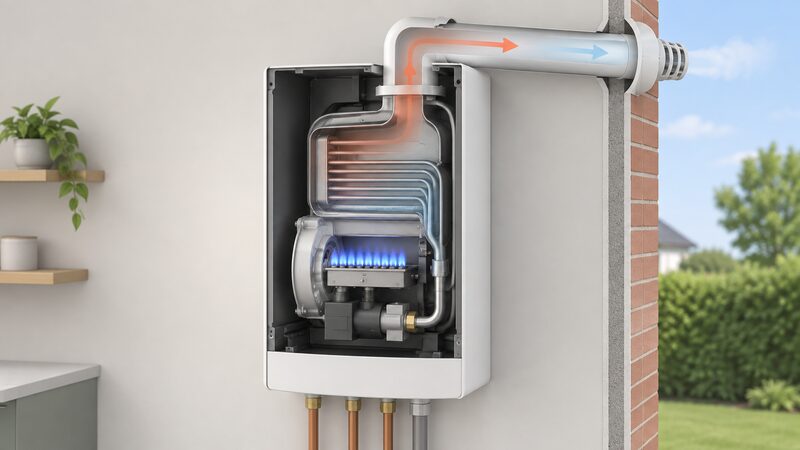
A gas boiler burns natural gas to heat water, which is then circulated through radiators or underfloor heating to warm the home10. Natural gas is piped to the property rather than hot water, which is why an individual gas boiler needs no cylinder or thermal store on site11. A hydrogen boiler does the same job with a different fuel: it is capable of running on 100% hydrogen with no alterations and is not capable of running on natural gas4.
The efficiency story is closer than the fuel story. A hydrogen boiler is treated as equally efficient to a methane gas boiler in cost modelling12, so the swap does not buy a household more heat per unit of fuel. What it changes is the carbon content of the fuel and the infrastructure behind it.
That matters because boiler efficiency itself has already been through its main step change. Modern condensing boilers are more efficient than older boilers because they capture and reuse more of the heat from gases that normally escape in the boiler's flue6. Older gas boilers can have an efficiency of less than 50%8, while traditional gas and oil boilers deliver less than one unit of heat per unit of energy13. A hydrogen boiler would sit on the modern condensing side of that line, not above it.
The comparison that decides most household decisions is not hydrogen against methane but hydrogen against a heat pump. Gas boilers use approximately more than 3.5 times more energy to produce one unit of heat than the baseline14, and the higher efficiency of a heat pump means the amount of energy needed can be less than a third the amount of energy needed by a gas boiler to produce an equivalent amount of heat15. Replacing a gas boiler with a hydronic heat pump reduces a home's gas use by over 70%, assuming the makeup of the electricity grid is constant16.
The fuel: hydrogen versus methane
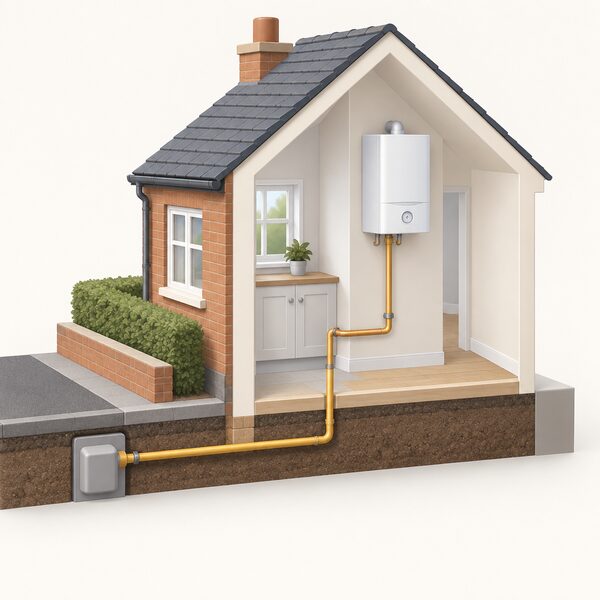
Methane and hydrogen are both gases that burn, and that is roughly where the similarity ends for a heating system. Methane arrives through the gas grid as natural gas, the most common boiler fuel, followed by heating oil and, less frequently, liquid petroleum gas10. Boilers are usually fuelled by gas or oil, but sometimes LPG or biomass17. LPG itself is propane and butane, two colourless liquids that help heat homes18. Gas fires and fixed heaters run on natural gas, propane or butane19.
Hydrogen for heat is put forward as a zero-carbon fuel that can be used in boilers and heating systems to provide warmth without releasing harmful carbon at the point of use3. The industry vision is to convert the elements of the natural gas grid to hydrogen, delivering a seamless transition to greener heat3. That is the case for the fuel.
The case against is about where the hydrogen comes from and what it costs. If using blue and grey hydrogen methods, heating UK homes would require 45% more fossil gas than today20. On cost, hydrogen for heating has been modelled at three times the price of natural gas4, and running a boiler on hydrogen made from renewable electricity compared with a heat pump could cost twice or even six times as much5.
There is also a gap between what householders believe and what the evidence shows. When asked about carbon emissions, around half of participants thought that heating their home with a hydrogen boiler using 100% hydrogen would have lower carbon emissions than a heat pump4. That perception is not supported by the whole-system figures above.
Gas density: hydrogen is a thinner gas than methane
Hydrogen carries less energy per unit of volume than methane, which is why the pipework question keeps coming up. The comparison is easiest to see with a solid fuel: biomass has a lower energy density than fossil fuels like gas, oil and coal, so more biomass fuel is usually needed to produce the same amount of energy21. Hydrogen sits on the same side of that divide relative to methane, and the practical consequence is that a hydrogen boiler needs a different volume of gas delivered to the burner for the same heat output.
That is the technical reason a conversion is not a like-for-like swap. Independent guidance states that a hydrogen boiler conversion would require swapping out gas pipes for new ones4. The meter, the pipe run and the appliance all sit on the hydrogen side of the change.
The blend is the exception, and it is the part that already works. Existing boilers and cooking appliances can run on a blend of up to 20% hydrogen with natural gas with no disruption to the home7. Natural gas boilers can use a blend of up to 20% hydrogen, which has been the case for many years4. A natural gas and hydrogen blend should not require a change to appliances used in the home, such as boilers and gas hobs7.
What a hydrogen boiler means for household energy independence
A hydrogen boiler keeps a household on a piped gas supply. That is the central trade-off. The home stays connected to a network it does not own, fed by production it does not control, and the fuel arrives through the same meter and the same pipework route as today, with the pipework itself replaced4. Independence from the electricity grid is preserved, and independence from a supplier is not.
The counterfactual is a home that generates or stores its own heat. A hydronic heat pump replacing a gas boiler cuts a home's gas use by over 70%, assuming the makeup of the electricity grid is constant16, which moves the household off gas and onto electricity it can increasingly generate itself. Hybrid appliances that combine a gas boiler with a heat pump are put forward as a low disruption, low-cost pathway to net zero, reducing energy demand by 60% compared with current gas boilers and cutting peak electrical demand by 10 GW compared with air source heat pumps22. That is a partial step: the gas boiler still supports during colder weather or when extra heat or hot water is needed23.
For a household weighing the two, the independence question is which network the home depends on and how much of the fuel it can produce. Hydrogen does not change the answer to either. It changes the carbon content of the gas in the pipe, and only if the hydrogen itself is produced cleanly, which the 45% fossil gas figure above puts in doubt20.
Where hydrogen boilers stand in the UK today
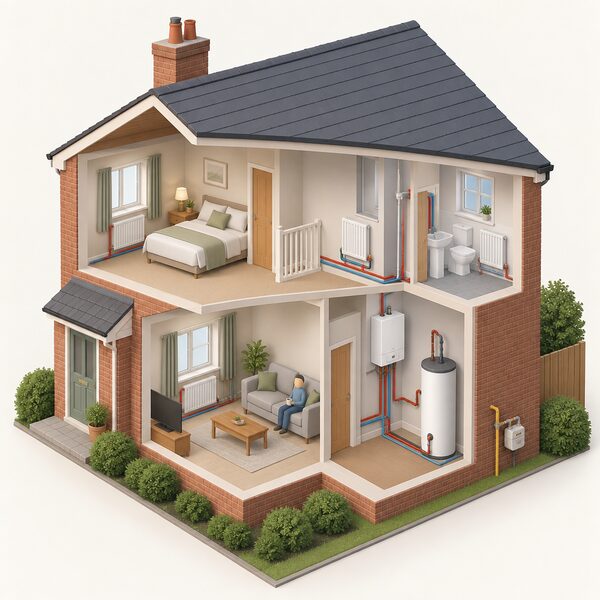
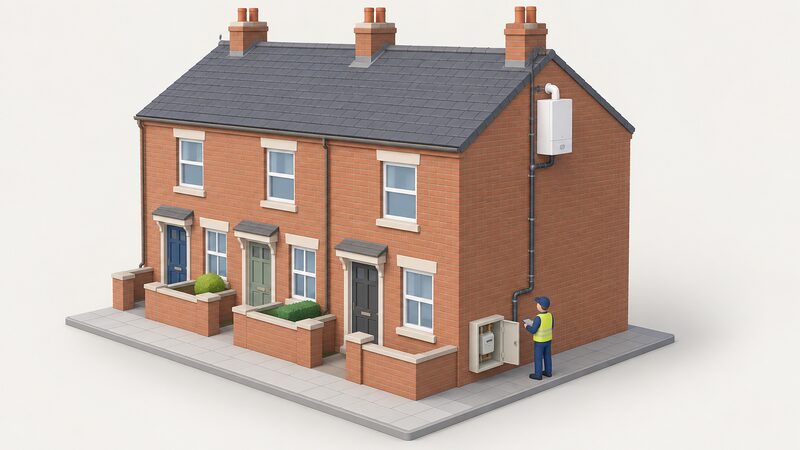
Nothing is on sale. Hydrogen boilers are not currently available in the UK, and hydrogen-ready boilers are not yet available1. Awareness is limited: 35% of those surveyed in winter 2025 had heard of hydrogen-ready boilers9. Against a base of 23 million UK homes with a gas boiler supplying central heating and hot water8, that is a large installed base with no hydrogen replacement product on the market.
The policy picture is mixed. The UK Government committed to consult on encouraging or requiring new gas boilers to be hydrogen-ready by 202624. The proposed Future Homes Standard states that gas boilers, including hybrid and hydrogen-ready boilers, will not meet the proposed standards25. Both positions are live, and they point in different directions.
On price, manufacturers have made a joint price-promise commitment that a hydrogen-ready boiler will cost no more than a gas boiler does today4. That sits alongside a non-binding price parity pledge made by major boiler manufacturers, whereby the cost of hydrogen-ready boilers should be at no additional cost once sales reach comparable levels to gas boilers4. Until sales exist, the estimated installation range of £2,300 to £3,800 is the only figure available2.
Which homes each boiler suits
A hydrogen boiler, when one exists, would suit a home already on the gas grid with a conventional wet heating system, because it uses the same radiators and the same hot water arrangement as a gas boiler. The pipework would change4; the heat emitters would not.
For homes choosing today, the fit is decided by size and fuel. A 24 to 30 kW boiler is suitable for any home with up to three bedrooms, whereas larger houses require a boiler that is 35 kW or more8. Electric boilers are best suited to smaller homes that do not have a very high demand for heating and hot water26, and changing fuel to an electric boiler is likely to need rewiring and possibly a new supply fuse26.
Off the gas grid, the timetable has moved. The ban on installing oil and LPG boilers, and new coal heating, for off-gas-grid homes in England was delayed from 2026 to 203527. Kerosene is more commonly used in homes and is more efficient than gas oil, so it is worth opting for where a boiler takes either28.
| Home | Fuel today | What fits now | Hydrogen position |
|---|---|---|---|
| On the gas grid, up to three bedrooms | Natural gas | 24 to 30 kW boiler8 | No product available1 |
| On the gas grid, larger or older property | Natural gas | Conventional boiler, 35 kW or more8 | No product available1 |
| Off the gas grid | Heating oil or LPG | Oil or LPG boiler until 2035 in England27 | No product available1 |
| Smaller home, low hot water demand | Electricity | Electric boiler, likely rewiring26 | Not applicable |
For a household on the gas grid, the blend is the only hydrogen exposure available now, and it needs no action: existing boilers and cooking appliances can run on up to 20% hydrogen with natural gas with no disruption7. For a household deciding what to install this year, the choice is between a gas boiler, an electric boiler and a heat pump, and the hydrogen option is not on the list.
Sources28 cited
- Public attitudes tracker: heat and energy use in the home, winter 2025, GOV.UK, 2025
- Savanta Cadent consumer choice, Cadent Gas, 2026
- Hydrogen for heat, Hydrogen UK, 2024-07-29
- Understanding the public view on hydrogen boilers, Nesta, 2023
- Is hydrogen the solution to high energy bills?, End Fuel Poverty Coalition, 2023-10-27
- Boilers, Energy Saving Trust, 2026-05-20
- Hydrogen blending, Cadent Gas, 2026-09-20
- Boiler statistics, Uswitch, 2024-01-04
- Hydrogen boilers: what you need to know, Which?, 2026-09-17
- Central heating systems, Uswitch, 2022-09-25
- GLA energy assessment guidance, Greater London Authority, 2022-06
- How to pay for energy, Cadent Gas, 2026-09-20
- Ditching costly gas and oil is cheaper thanks to heat pump scheme, GOV.UK, 2022-05-23
- How to make heat pumps more affordable: assumptions and methods, Nesta, 2024-06-13
- Heat buildings strategy, Scottish Government, 2021-10
- How the energy crisis affects the case for heat pumps, Nesta, 2022-10-25
- Renewable heat: right for your home, Energy Saving Trust, 2026-05-19
- What type of boiler should your next one be?, Which?, 2024-11-06
- Energy efficient heaters, Uswitch, 2026-07-01
- Hydrogen and home heating, UK Parliament, 2023-05-24
- Biomass energy: definition, pros, cons and energy savings, Smart Energy GB, 2026-08-17
- Buildings energy, CREDS, 2026
- Hybrid heating, Cadent Gas, 2026-09-20
- Heat buildings strategy: achieving net zero emissions in Scotland's buildings, Scottish Government, 2021
- The Future Homes and Buildings Standards 2023 consultation, GOV.UK, 2026-09-17
- Electric central heating, Which?, 2025-09-22
- Delivering net zero for Scotland's buildings, Scottish Government, 2023-11-28
- Heating oil prices are their lowest for three years, Which?, 2020-05-14
 Hydrogen Heating PolicyWill hydrogen ever heat your home, and when will the government decide?
 Hydrogen in the Gas GridHydrogen might be mixed into the gas you already use, but what would that actually mean for your bills, your boiler and your safety?
 Domestic Fuel CellsA fuel cell boiler makes electricity and heat at the same time, usually from mains gas.
 Regular and Heat-Only BoilersGot tanks in the loft and a hot water cylinder in the airing cupboard?
 Hydrogen Home Heating TrialsHydrogen home heating is still being tested, not sold.
 Replacing a Gas or Oil BoilerSwapping a gas, oil or LPG boiler for a heat pump changes how your home is heated and how much it costs.