
In this guide
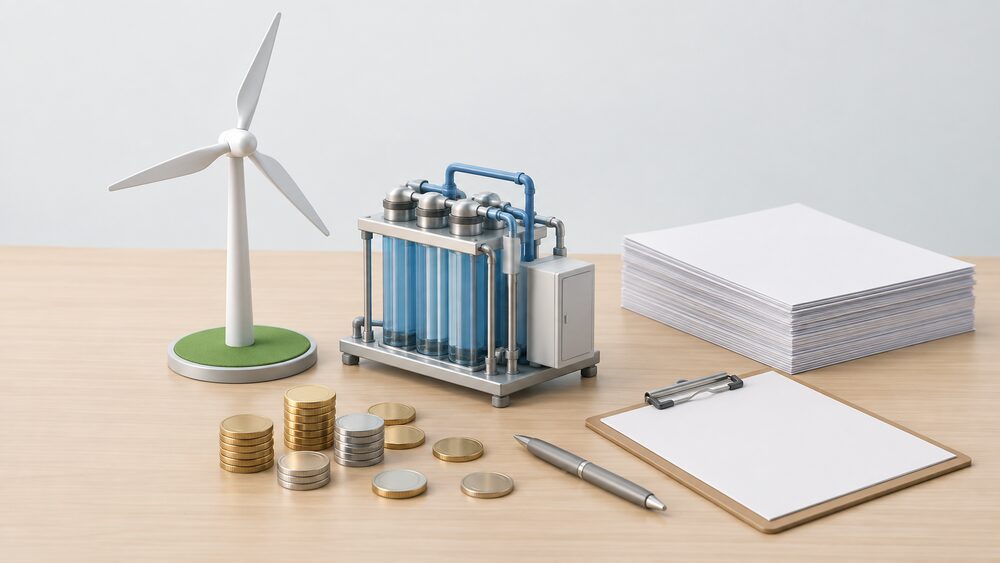
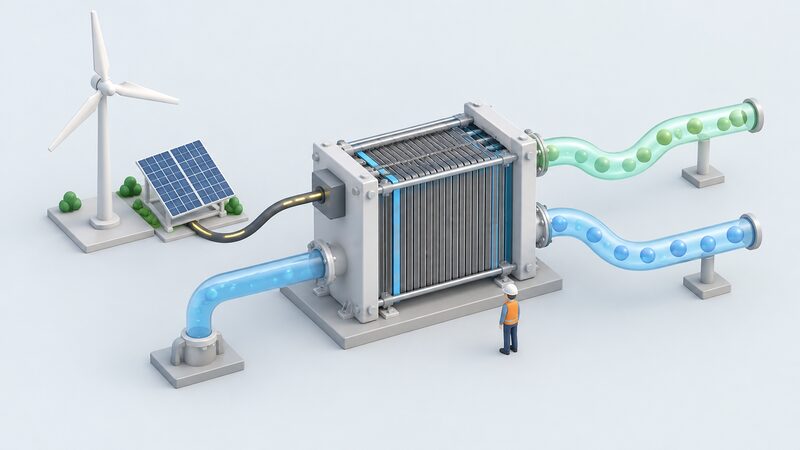
Green hydrogen is made by electrolysis: splitting water into hydrogen and oxygen using renewable electricity from wind or solar. The process emits zero carbon emissions, but it is very expensive, so only a small percentage of hydrogen fuel produced today is green1. The majority of hydrogen currently made is grey hydrogen, created from fossil fuels without capturing the carbon emissions, with carbon dioxide released directly into the atmosphere1.
The cost gap is the central fact about the fuel. Green hydrogen is assumed to cost between two and four times pre-gas-crisis prices, because of its high demand for grid electricity2. For heating specifically, it would take about five to six times more green electricity to produce electrolytic hydrogen than to heat homes directly with electric heat pumps3. That ratio, not the price of the gas itself, is what decides where the fuel can sensibly be used.
The UK has set supply ambitions rather than a single target. The British Energy Security Strategy aims to double ambition to up to 10GW of low carbon hydrogen production capacity by 2030, with at least half coming from green hydrogen and utilising excess offshore wind power to bring down costs4. The Climate Change Committee estimates the UK could be producing 22 to 62 TWh of hydrogen annually by 2030, if the UK delivers on its ambitions, and notes that only half of the hydrogen produced by 2030 is likely to be green2.
What green hydrogen is and how it is made
Electrolysis is the whole of the production method. Green hydrogen is produced through the electrolysis of water using renewable electricity such as wind or solar, and the process emits zero carbon emissions1. The same electrolysis route using electricity generated by nuclear power is labelled pink hydrogen1. The colour labels describe the electricity source and the carbon handling, not the hydrogen molecule, which is identical in every case.
The labels matter because they describe very different supply chains. Grey hydrogen is created from fossil fuels without capturing the carbon emissions, with carbon dioxide released directly into the atmosphere, and it is the majority of hydrogen currently produced1. Blue hydrogen is produced mainly from natural gas through a process called steam reforming, with carbon dioxide captured and stored1. The Climate Change Committee sets the bar for blue hydrogen at "at least 95% CO2 capture, 85% lifecycle greenhouse gas savings" compared with fossil gas5.
There is currently no large-scale production of either green or blue hydrogen2. That single sentence frames every cost and timeline claim on this page: the technology works, the volumes do not yet exist, and the price reflects a supply chain still being built rather than a mature commodity.
One further property is worth stating plainly, because it undercuts the simplest version of the zero-carbon claim. There is also some evidence that hydrogen plays a role as an indirect greenhouse gas itself, depleting chemicals that reduce methane's atmospheric lifetime and so increasing methane's global warming potential2. A leak-free hydrogen economy is therefore not automatically a climate-neutral one.
Cost: two to four times pre-crisis gas, and far above natural gas
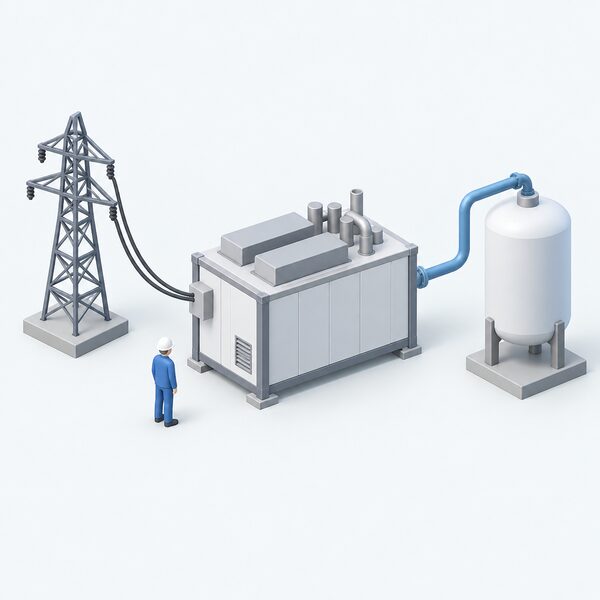
Green hydrogen is assumed to cost between two and four times pre-gas-crisis prices, due to its high demand for grid electricity2. That is the headline range, and it is a comparison against gas before the price crisis, not against today's bills. The distinction matters: a fuel that costs two to four times pre-crisis gas is not competing with the cheapest gas in recent history, it is competing with a benchmark that has already moved.
The wider energy price context explains part of the gap. At the time of the Scottish Government's consultation, the retail price of electricity per kWh was approximately four times more expensive than gas7. Since hydrogen from electrolysis is effectively electricity converted into a molecule, it inherits that ratio and adds conversion losses on top. The Lords Library analysis of electricity prices found that network charges and "green levies" account for 20% and 6% of the rise since pre-crisis levels respectively, compared with 54% due to higher wholesale prices8.
For a household, the relevant comparison is not hydrogen against gas at the meter but hydrogen against the alternatives for the same job. Heating a typical three bedroom house with liquefied petroleum gas costs 100% more than with mains gas9, which gives a sense of how quickly a delivered fuel can lose to a piped one. Hydrogen, delivered by pipe or road, sits further out still.
Why it is so expensive: electricity prices and electrolyser costs
The cost of green hydrogen is dominated by the cost of the electricity used to make it, and that electricity is priced at retail or near-retail levels in the UK. The retail price of electricity per kWh is approximately four times more expensive than gas7, so a process that consumes electricity to displace gas starts from a structural disadvantage.
The second driver is the capital cost of electrolysers and the fact that they run intermittently when powered by wind or solar. The British Energy Security Strategy explicitly links cost reduction to using excess offshore wind power, aiming for at least half of the 10GW ambition to come from green hydrogen on that basis4. The logic is that surplus generation, which would otherwise be curtailed, is the cheapest possible input.
The third driver is scale. The Climate Change Committee's estimate of 22 to 62 TWh of annual UK hydrogen production by 2030 is conditional on the UK delivering on its ambitions, and only half of that is likely to be green2. Until volumes rise, unit costs stay high, and until unit costs fall, volumes stay low.
The government has tried to break that circle through allocation. Support for 11 green hydrogen projects was confirmed through the first hydrogen allocation round10, and the hydrogen business model was to move to price-competitive allocation by 2025 as soon as legislation and market conditions allowed11. The UK hydrogen strategy suggested hydrogen made using electrolysers could become cost-competitive with CCUS-enabled methane reformation as early as 2025 in some cases5.
The UK Hydrogen Strategy and its capacity targets
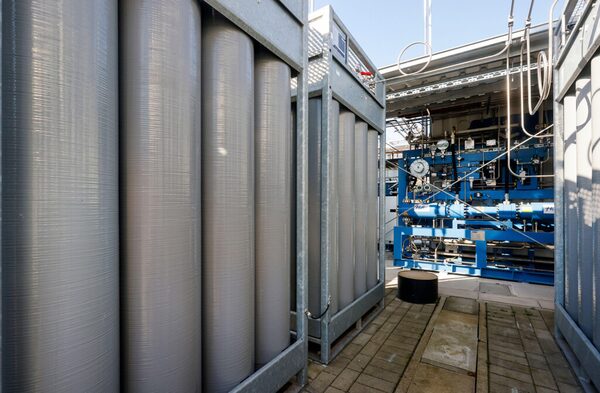
The strategy's targets have moved upward over time, and the documents do not all agree. The UK hydrogen strategy set plans to produce five gigawatts of annual low-carbon hydrogen production capacity in the UK by 2030, with a government aspiration to "see 1GW production capacity by 2025"5. The British Energy Security Strategy then aimed to double the ambition to up to 10GW of low carbon hydrogen production capacity by 2030, with at least half coming from green hydrogen4. Both figures are official; the later one supersedes the earlier as an ambition, and the 5GW figure remains the strategy's own number.
Demand projections scale with the capacity. The strategy anticipated potential hydrogen demand of up to 38 TWh by 2030, not including blending it into the gas grid, rising to 55 to 165 TWh by 20355. The Climate Change Committee's net-zero pathway sees low-carbon hydrogen scaling up to 90 TWh by 20355. The British Energy Security Strategy also targets 12,000 jobs in the UK hydrogen industry by 2030, 3,000 more than previously expected4.
| Measure | Figure | Date | Source |
|---|---|---|---|
| Production capacity target | 5GW annual low-carbon capacity | 2030 | 5 |
| Doubled ambition | up to 10GW low carbon capacity | 2030 | 4 |
| Share from green hydrogen | at least half | 2030 | 4 |
| Demand, excluding grid blending | up to 38 TWh | 2030 | 5 |
| Demand | 55 to 165 TWh | 2035 | 5 |
| CCC pathway demand | 90 TWh | 2035 | 5 |
| Jobs target | 12,000 | 2030 | 4 |
For 2050 the numbers are larger and less certain. The strategy suggests hydrogen could make up between 20 and 35% of the nation's total energy supply by 2050, or up to a third of energy needs5. The British Energy Security Strategy states there could be 240 to 500 TWh of low carbon hydrogen supply by 205011. Against those totals, green hydrogen specifically is modelled at 2 TWh in GB by 2035 and 5 TWh by 20506, a reminder that the headline hydrogen figures are not green hydrogen figures.
Green hydrogen's role in the twin-track approach
The twin-track approach treats hydrogen and electrification as complements rather than rivals. Hydrogen UK advocates for the complementary use of hydrogen and other heat solutions such as heat pumps and heat networks, and promotes the most suitable technology depending on the specific needs and circumstances of each home or business12. That is an industry position, and it is the clearest statement of the case for keeping both routes open.
The Climate Change Committee's assessment is more conditional. It found hydrogen is a credible option to help decarbonise the UK energy system but its role depends on early Government commitment and improved support to develop the UK's industrial capability, and that it can make an important contribution to long-term decarbonisation if combined with greater energy efficiency, cheap low-carbon power generation, electrified transport and new "hybrid" heat pump systems, which have been successfully trialled in the UK7. Every one of those conditions is a prerequisite, not a footnote.
The Scottish Government's draft strategy took a similar line, recognising that hydrogen could play a potential role in the longer term and that in the longer term hydrogen has a potential role in decarbonising heat in buildings13. Its strategic environmental assessment described the potential future role that hydrogen and bioenergy could play in the longer term14. The Scottish analysis also noted that increased availability of hydrogen for heat will have implications for the suitability of hybrid heat pump systems, which may be cost-effective solutions in conjunction with hydrogen, and committed to keeping this under review15.
The counterweight is the emissions arithmetic. Grey hydrogen is responsible for 2% of all carbon emissions2, so the existing hydrogen industry is itself a climate problem before any of the low-carbon routes scale. The Sixth Carbon Budget places hydrogen as a shipping and transport fuel and in industry, and potentially in some buildings, as a replacement for natural gas for heating16. Buildings are the last and least certain of those uses.
Where green hydrogen fits in home heating
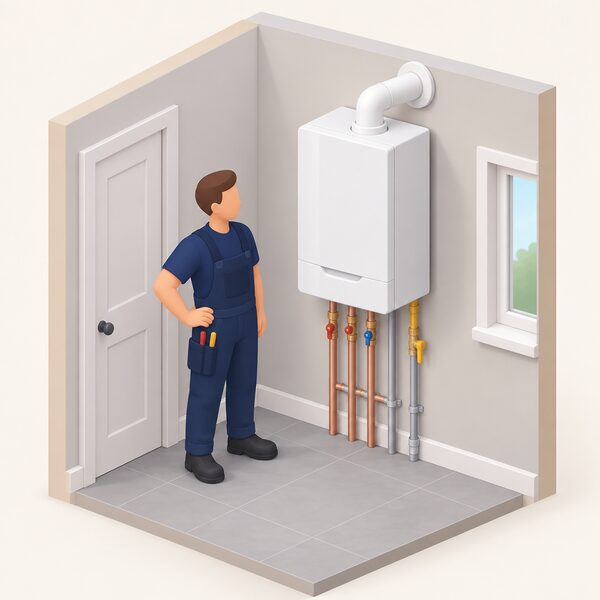
At present, hydrogen is not widely used to heat homes1. The Future Energy Grids for Wales report suggests hydrogen could play a part from 2030 onwards in helping the country reach its 2050 net zero targets1, which is the most concrete sub-UK timeline in the evidence. The UK hydrogen strategy anticipated that overall demand for low carbon hydrogen for heating by 2030 would be relatively low, under 1 TWh, with up to 45 TWh of low-carbon hydrogen potentially put to this use by 20355.
The appliance side is unsettled. Hydrogen can be used in boilers and heating systems to provide warmth without releasing harmful carbon, and when burned it releases only water vapour unlike fossil fuels, which emit carbon dioxide1. But the Future Homes Standard consultation states that gas boilers, including hybrid and hydrogen-ready boilers, will not meet the proposed standards17. A consultation on "hydrogen-ready" boilers was expected by 20265. The direction of building standards and the direction of hydrogen appliance policy are not obviously aligned.
The Climate Change Committee's 2025 position is the firmest statement against domestic use. It called for confirming that there will be no role for hydrogen in home heating18. That is a recommendation, not a rule, and it sits against the industry's complementary-use position12 and the Scottish Government's longer-term openness13.
The efficiency problem: heat pumps versus hydrogen
The efficiency comparison is the strongest single argument in the evidence, and it is consistent across official and independent sources. It would take about five to six times more green electricity to produce electrolytic hydrogen for heating than to heat homes directly with electric heat pumps3. A separate parliamentary submission puts the same finding at 4 to 6 times more renewable energy per unit of heat than a heat pump19. The two ranges overlap; the documents give slightly different bounds and neither is ruled out.
The reason is straightforward physics. Heat pumps are three times more energy efficient than traditional boilers20, and current available heat pump technologies can be up to 3 to 5 times more efficient than a natural gas boiler21. The Climate Change Committee puts heat pumps at around three to four times more efficient than gas boilers, which should lead to lower household energy bills22. Bristol City Council's warm homes plan states heat pumps, both for individual homes and large-scale ones for heat networks, use electricity as the energy source and are typically over three times more efficient than the most efficient gas boilers or electric heaters23. The government's own boiler upgrade messaging repeats the three times figure24.
Heat pumps operate more efficiently when the source temperature is higher and/or the sink temperature is lower25, which is why fabric efficiency and emitter sizing matter as much as the unit. The Scottish regulatory impact assessment notes that the higher efficiency of a heat pump means the amount of energy needed can be less than a third the amount of energy needed by a gas boiler to produce an equivalent amount of heat15, a figure repeated in the Heat in Buildings Strategy26.
Put together, the arithmetic is unforgiving for hydrogen heating. Every unit of renewable electricity spent on electrolysis delivers a fraction of the heat that the same unit delivers through a heat pump, and the gap is a factor of five or six, not a few per cent. That does not rule hydrogen out of industry, shipping or backup power, where electrification is harder. It does mean domestic heating is the least favourable application on efficiency grounds.
Storage and infrastructure: what is still missing
Hydrogen storage is the least developed part of the chain. The NESO figures put the hydrogen storage required in GB by 2050 at 56 TWh6, against green hydrogen production of 2 TWh in 2035 and 5 TWh in 20506. The storage requirement is an order of magnitude above the green production modelled for the same year, which indicates how much of the 2050 hydrogen system is expected to be met by other routes or by imports.
On the power side, the Climate Change Committee's assessment of a 2035 decarbonised power system requires new low-carbon back-up generation, with hydrogen-based power stations and some continued use of fossil gas, made low-carbon through use of carbon capture and storage27. Hydrogen therefore has a firm role in balancing a wind-heavy grid even where it has none in home heating.
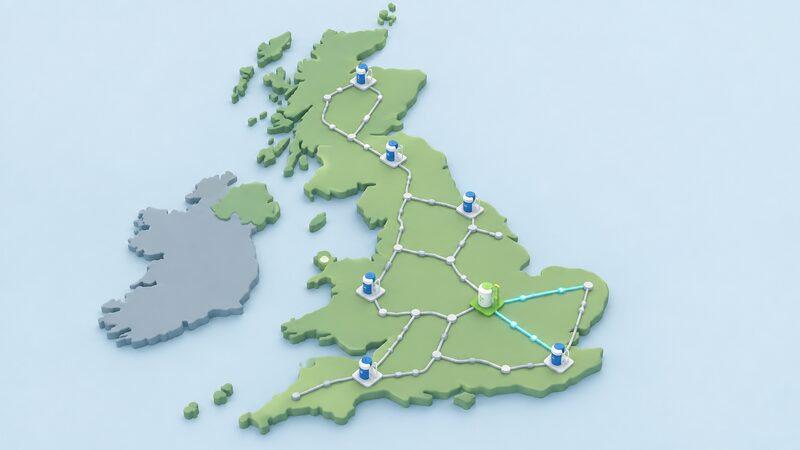
The gas grid itself is being prepared for partial substitution rather than full conversion. The government has consulted on blending up to 20% hydrogen by volume into the existing gas network26, and wants at least 20% of the volume of the gas in the GB gas grid to be alternatives to natural gas by 203026. A trial at Centrica's Brigg Power Station successfully completed blending 2% of green hydrogen into the gas grid in October 202528. The gap between a 2% trial and a 20% target is the practical measure of how much infrastructure work remains.
Scotland's planning framework identifies pumped hydro storage as a national development in the North, Central, and North and West Coast and Islands areas29, and sets a North East priority to plan infrastructure and investment to support the transition from oil and gas to net zero whilst protecting and enhancing blue and green infrastructure and decarbonising connectivity29. Scotland's climate plan lists hydrogen among its opportunity areas, alongside wind, carbon capture utilisation and storage, professional and financial services, and clean energy-intensive industries30.
When green hydrogen could become cost-competitive
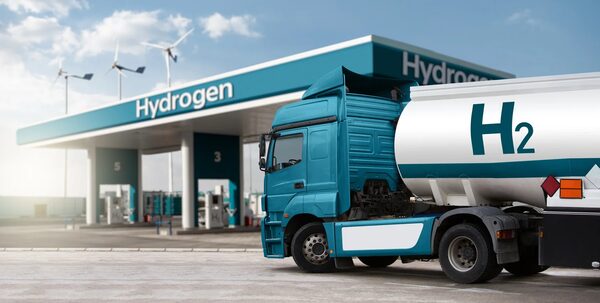
The official timeline and the independent timeline disagree, and the disagreement is wide enough to state both. The UK hydrogen strategy suggested hydrogen made using electrolysers could become cost-competitive with CCUS-enabled methane reformation as early as 2025 in some cases5, and the hydrogen business model was to move to price-competitive allocation by 2025 as soon as legislation and market conditions allowed11. The business model itself was to be finalised in 2022, enabling the first contracts to be allocated from the start of 20235.
Independent analysis is far more cautious about domestic availability. It found it highly unlikely that hydrogen would be commercially available to homes before 2035, if at all2. The Scottish Government's draft strategy committed to analysis in 2021 to 2022 to identify strategic areas most and least likely to have access to low carbon or green hydrogen13, which is a siting exercise rather than a cost forecast.
The Sixth Carbon Budget gives the long-run shape: low-carbon hydrogen scales up to be almost as large, in 2050, as electricity production is today16. That is a system-scale claim, and it is compatible with hydrogen having almost no domestic heating role, because industry, shipping and power balancing can absorb very large volumes.
For a household, the practical reading is that green hydrogen is not a near-term option for heating, and the cost gap is structural rather than a matter of waiting for one technology to improve. The electricity price ratio, the conversion losses and the efficiency gap against heat pumps all point the same way. Where hydrogen does arrive at scale, it is most likely to arrive first in industry and power, and last, if at all, at the domestic meter.
Hydrogen for home heating is not a near-term option. The Climate Change Committee sees low-carbon hydrogen scaling up to 90TWh by 2035, and its Sixth Carbon Budget has low-carbon hydrogen scaling up to be almost as large, in 2050, as electricity production is today2. Against that, the UK hydrogen strategy expects overall demand for low-carbon hydrogen for heating by 2030 to be relatively low, under 1TWh2. On cost, the strategy states that hydrogen made using electrolysers, in some cases, "could become cost-competitive with CCUS [carbon capture, utilisation and storage]-enabled methane reformation as early a"2, and low carbon hydrogen is relatively expensive today and is expected to fall to 4-5p/kWh by 20502.
Sources30 cited
- Hydrogen heat: could it be the future of home heating?, Elmhurst Energy, 2025-07-04
- Why hydrogen is not the solution to decarbonising our homes, Nesta, 2023-07-27
- Hydrogen and the decarbonisation of home heating, Environmental Audit Committee, 2025-05-09
- Major acceleration of homegrown power in Britain's plan for greater energy independence, GOV.UK, 2030
- In-depth Q&A: How will the UK's hydrogen strategy help achieve net zero?, Carbon Brief, 2021-08-17
- NESO hydrogen and storage data, NESO, 2022-07
- Electricity prices in Great Britain, House of Lords Library, 2026-06
- Delivering net zero: Scotland's buildings heat, Scottish Government, 2026-01-29
- Research briefing on home heating costs, House of Commons Library, 2026-09-17
- Accelerating to net zero: responding to the CCC progress report, GOV.UK, 2024-12-17
- British Energy Security Strategy, GOV.UK
- Hydrogen for heat, Hydrogen UK, 2024-07-29
- Draft Heat in Buildings Strategy, Scottish Government, 2021-02
- Heat in Buildings Strategy strategic environmental assessment, Scottish Government, 2021-02
- Heat in Buildings Strategy business regulatory impact assessment, Scottish Government, 2021-02
- Sixth Carbon Budget, Climate Change Committee, 2020-12-09
- The Future Homes and Buildings Standards 2023 consultation, GOV.UK, 2026-09-17
- End the fossil fuel age for a secure and prosperous future, Climate Change Committee, 2025-02-26
- Written evidence on hydrogen and heat, UK Parliament, 2023-08
- Heat pumps, Welsh Government, 2025-11-17
- Energy innovation needs assessment 2025: heat and buildings, GOV.UK, 2025-06
- The Seventh Carbon Budget, Climate Change Committee, 2025-02-26
- Bristol warm homes plan, Bristol City Council, 2025-04
- Demand for heat pumps rises following increase in applications to the Boiler Upgrade Scheme, GOV.UK, 2024-05-23
- Heat pump methodology, GOV.UK, 2026-01
- Heat and Buildings Strategy, GOV.UK, 2021-10
- A reliable, secure and decarbonised power system by 2035 is possible but not at this pace of delivery, Climate Change Committee, 2023-03-09
- Clean Flexibility Roadmap: July 2026 update, GOV.UK, 2025-10
- National Planning Framework 4, Scottish Government, 2023-02-13
- Scotland's Climate Change Plan 2026-2040, Scottish Government, 2025-11-06
 Domestic Fuel CellsA fuel cell boiler makes electricity and heat at the same time, usually from mains gas.
 Living Off the Gas GridNo mains gas at your home?
 Hydrogen Safety in the HomeCan hydrogen actually be used to heat UK homes, and is it safe?
 Heating and Energy IndependenceCan you heat your home without relying on gas or oil, and what would that take?
 Whole-Home Energy DesignHeating and hot water use more energy than anything else at home, so that choice shapes everything.
 Energy IndependenceA heat pump runs your heating on electricity instead of gas or oil, so how much does that really cut what you pay and how exposed you are when fuel prices jump?