

In this guide
A technology readiness level, usually shortened to TRL, is a way of grading how far a technology has been proved: from an idea on paper, through laboratory work and prototypes, to a system demonstrated and then operating reliably in the conditions it was designed for. It is a scale used by engineers, research funders and government departments to decide what needs more development money and what is ready to be deployed. It is not a consumer mark, it is not printed on packaging, and it says nothing about whether a particular unit will suit a particular house.
For a household, the useful translation is blunt. A technology low on the scale is a research subject: there is nothing to buy. In the middle sits the difficult ground of prototypes and demonstrators, where UK solar policy work has identified a funding gap, noting that support may be lacking for Technology Readiness Level 5 and 6 products or for smaller funding requests below £25m1. At the top sits a technology proven in operation, which is the point at which certification, installer training, scheme listings and warranties normally catch up and an ordinary order becomes possible. Even then, readiness of the technology and availability of a product are different things: the winter 2025 public attitudes tracker records hydrogen-ready boilers with the plain status "This technology is not yet available"2.
This page sets out what the scale measures, how UK energy policy and funding use it, and what a householder can substitute for it when reading a manufacturer's claim. The short version: in Britain the practical readiness tests are network connection standards, product certification, approved-measure listings and competent-person schemes, not a number on a nine-point scale.
What a readiness level actually measures
The scale grades evidence, not quality. Each step up means a technology has been shown to work under harder and more realistic conditions than the step below: first in principle, then in a laboratory, then as an integrated prototype, then in the real environment, and finally in routine operation. The same discipline appears in UK assessment work under different names. The Net Zero Technology Outlook was developed through expert interviews, peer review and literature synthesis, and assesses technology readiness alongside research, development and demonstration needs in three categories: technology development, decision support and delivery7.
That three-way split matters for households. A technology can be ready in the engineering sense while delivery is not: no trained installers, no certification route, no supply chain. The same document is explicit that it is not a statement of government policy7, which is a useful reminder that a readiness assessment is an opinion about maturity, not a promise of deployment.
Government digital projects use a similar staged vocabulary that is worth recognising when it appears in energy announcements. Work on the new digital EPC Register in Scotland completed its discovery phase, setting the requirements, and then moved into the alpha phase of project design and build, working with the UK Government8. "Discovery" and "alpha" are the same idea as a low readiness level: something is being scoped and built, not delivered.
The scale from concept to proven operation, in plain terms
The nine levels run from a stated concept at the bottom to a system proven in its operational environment at the top. The middle of the scale, where a prototype is being demonstrated in relevant conditions, is the expensive and risky part. That is precisely where the UK solar roadmap identifies the shortfall, at levels 5 and 61. Many promising home energy ideas stop there: the physics works, the demonstrator runs, and no route exists to volume manufacture, certification and installation.
Three practical markers show where a technology has reached in Britain:
- Demonstration and pilot stage. Projects exist, results are being gathered, nothing is on general sale. Long duration electricity storage illustrates the scale of the pipeline: 77 projects passed the initial eligibility assessment stage under the cap and floor scheme, progressing to more detailed assessment4.
- Certification and connection stage. A product type has a standard to meet. Plug-in solar devices, for example, must comply with the technical requirements for connection and parallel operation with low-voltage distribution networks in Great Britain set out in Engineering Recommendation G98 Issue 2 Amendment 19.
- Routine supply stage. Products are listed, installers are trained and certificated, and testing regimes run in service. For metering, prototype meters are tested by laboratories accredited against relevant international standards, whose test reports may be accepted as demonstration of compliance with certain aspects of the standards10; once approved, because there are no prescribed certification periods for meters approved under the Measuring Instruments Regulations, the Office for Product Safety and Standards has developed in-service testing procedures for monitoring performance11.
That last point is the one most often missed. Readiness is not a finish line. Performance in service is monitored after approval, because approval tests a sample and the field tests everything else.

Readiness in UK energy policy and funding calls
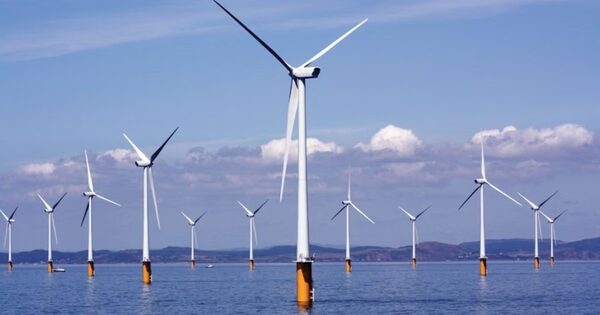
UK policy uses readiness language to decide where public money goes and what it buys. The Spending Review records £8.3bn of funding for Great British Energy and Great British Energy - Nuclear6. Strategy documents set expectations far ahead of deployment: the UK hydrogen strategy is reported as implying potential hydrogen demand of up to 38 TWh by 2030, not including blending into the gas grid, rising to 55 to 165 TWh by 203512. A wide range like that is itself a readiness signal. When credible projections vary by a factor of three, the technology's role is not settled.
Support mechanisms can also fail for reasons that have nothing to do with engineering maturity. The Climate Change Committee attributed the lack of any awarded contracts for offshore wind in Contracts for Difference Auction Round 5 to a failure to adjust the Administrative Strike Price to reflect substantial increases in supply chain costs beyond the level of general inflation13. A mature technology with the wrong price cap gets built nowhere.
Connection rules add a further, very concrete readiness gate for anything a household might generate with. Emerging Technology status under the connection recommendations applies only to Type A generation, with a generating capacity of 0.8 kW to 1 MW3. Larger or higher-voltage connections fall into other categories, where registered capacity is at or above 1 MW, or generation is connected at or above 110 kV, in practice 132 kV or above in Great Britain3. Legacy scheme limits work the same way: an eligible installation under the Feed-in Tariff scheme was capped at 5 MW of total installed capacity for all technologies except combined heat and power, where the maximum limit is 2 kW14.
How to read a manufacturer's claim
Words like "proven", "field-tested", "pilot" and "next generation" carry no defined meaning in UK consumer sales. What does carry meaning is documentation, and the industry's own quality expectations describe it precisely. The Heating and Hotwater Industry Council's benchmark language sets out that installers are supplied with the means, documentation, training and technical support, to competently carry out and notify installation, commissioning and servicing work in accordance with the manufacturer's instructions, and that:
"Customers receive documented evidence that their product has been correctly installed and is left operating at maximum efficiency"
Consumer assurance schemes sit alongside a maker's own claims and are easier to verify than a marketing phrase. TrustMark registration is described as assurance of standards in technical competence, customer service and trading practices16, and is characterised in local authority grant guidance as a government endorsed quality scheme17. For notifiable building work, installers applying to a competent person scheme have their work assessed to check they meet the level of competence required before approval18. None of these speaks to how a particular unit performs in a particular house; they describe the standing of the business fitting it, which is a different question from the one a performance claim answers.
Product-level compliance is tightening too. Under the product security regime, where there is more than one manufacturer of a relevant connectable product, each manufacturer must meet any relevant security requirement or satisfy the conditions for deemed compliance19. For energy smart appliances, conformity with EN 18031-3:2024 will be accepted as an equivalent route to compliance alongside ETSI EN 303 645 cyber security requirements20. Proposals for a new product safety framework would require producers, where reasonable and proportionate to the risks posed by the product, to conduct sample testing of the products they supply to ensure they are compliant21. Sampling is also how plug approvals work: a plug type qualifies where, by inspection or testing of samples, the manufacturer may reasonably be expected to ensure normal production and design will result in plugs corresponding with the samples22.
The pattern is consistent. Maturity is evidenced by named standards, named certificates and named schemes. A claim that cannot be traced to one of those is marketing.
Where household technologies sit, and what the gaps look like
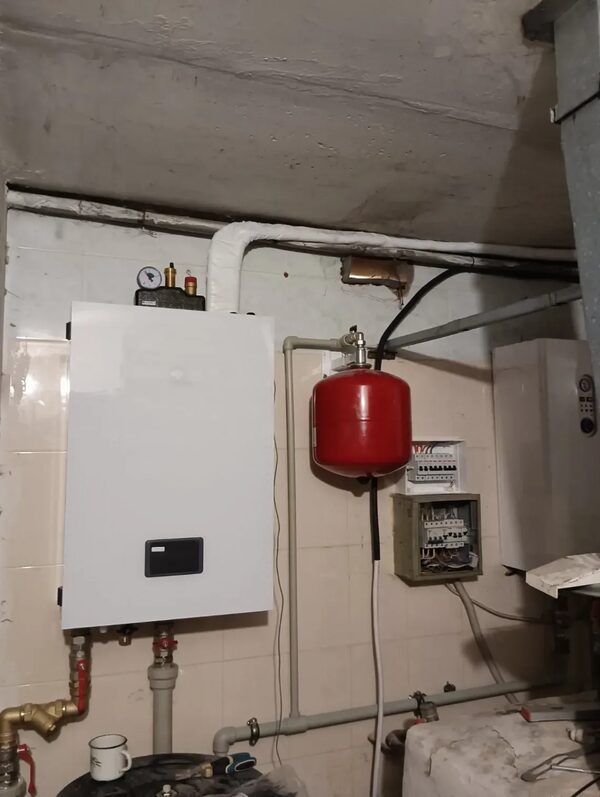
Nothing in UK public data assigns a readiness number to a domestic product. What exists is better: statements of availability, certification scope and monitoring intensity.
| Signal | What it tells a household | Example |
|---|---|---|
| Stated availability | The technology cannot be bought yet | Hydrogen-ready boilers: "This technology is not yet available", winter 20252 |
| Certification scope | Approved, but only for some buildings | ECO4 innovation measure 015: the system is not certified for use in high rise buildings23 |
| Monitoring intensity | Confidence is still being built in the field | ECO4 innovation measure 021: 50% of installations subject to technical monitoring5 |
| Connection class | The product fits a defined network category | Emerging Technology status, Type A generation, 0.8 kW to 1 MW3 |
| Named standard | A recognised compliance route exists | Plug-in solar under G98 Issue 2 Amendment 19 |
Technical monitoring of half of all installations, as applied to one approved innovation measure, is the clearest readiness marker a householder is likely to encounter. It means the measure is approved for use and still under observation. That is not a reason to avoid it, but it is an accurate description of where the evidence stands.
Household willingness is part of readiness as well. Nesta's segmentation describes tech-cautious pre-retirees as 5.5 million households, representing 18% of UK households, with 14% not convinced the technology would be good enough to heat their home, and scores the segment's environmental awareness at 5 out of 1024. Ofgem's tracking of low-carbon and flexible products finds people declining time of use tariffs citing a lack of guaranteed savings, inertia and limited knowledge25. Both are delivery problems, not engineering ones, and both slow deployment of technologies that are otherwise mature.
Emerging products to watch: vehicle-to-everything, modular storage and household backup
The clearest official statement on where household-level innovation is heading comes from the Climate Change Committee's adaptation monitoring work, which notes that at household level, further innovation in home battery technology, vehicle-to-everything (V2X) and solar can provide households with additional backup options during power outages26. "Further innovation" is the operative phrase: these are identified as areas where more development is needed, not as settled products.
For anyone tracking that space, the vehicle-to-home and vehicle-to-load and bidirectional charging pages set out the equipment and the standards, and grid connection rules for bidirectional charging covers the Type A connection question raised above. Household storage chemistries at different stages of maturity are covered under sodium-ion home batteries and solid-state batteries. The wider context sits on the emerging home energy technology pillar.
Why a high readiness level is not the same as a good buy
Maturity and value are separate questions, and UK scheme rules make the difference visible. Under the Boiler Upgrade Scheme, if a different technology type is installed from that stated in the voucher application, the voucher is not valid and cannot be redeemed27. Readiness does not make a technology interchangeable. Grant eligibility is similarly specific rather than maturity-based: zero emission vehicle grants state that only vehicles that have been approved by the government are eligible28, and the Warm Homes: Social Housing Fund Wave 3 assesses applications against the eligibility of the measures proposed, projected project outcomes, resident engagement and, for consortia, strategic reasoning, together with a comprehensive risk and mitigations register and evidence of previous delivery referencing both successes and lessons learned29.
Certification limits bite in the same way. A measure approved under ECO4 innovation but explicitly not certified for use in high rise buildings23 is mature and unavailable at once, depending on the building. So a household's real question is narrower than "is this ready": it is whether this product, in this property, has a compliant connection route, a competent installer, a guarantee certificate naming the system, and a company likely to be there to honour it. Company survival is covered in more depth on energy technology company failures, and the price of being early on what emerging energy technology costs early adopters.
Limits of the scale
The readiness scale has four weaknesses that matter to households.
- It grades technologies, not products. Two units built on the same mature technology can differ completely in build quality, software support and warranty backing.
- It ignores delivery capacity. The Net Zero Technology Outlook separates technology development from delivery precisely because they move at different speeds7.
- It is bounded by regulation, not physics. A generator that fits the 0.8 kW to 1 MW Type A band has a connection route; one outside it faces a different regime3. Regulatory timetables are slow: proposals for household tumble dryers included extending the ecodesign transition period to 10 months and setting a post-implementation review date of 9 December 203230.
- It says nothing about dependence. A fully mature product can still tie a household to a supplier tariff, a manufacturer's cloud service or an app.
That last point is the one this site returns to. A mature home battery, a certified heat pump or a bidirectional charger changes what a household depends on rather than removing dependence: on the distribution network under G98 or G993, on a manufacturer's continued existence for firmware and guarantee, and in many cases on a tariff to make the economics work. Ofgem's finding that households decline time of use tariffs for want of guaranteed savings25 is a reminder that a proven technology still has to earn its place in a particular home. Readiness answers whether something can be bought. It does not answer whether it should be.
Sources30 cited
- UK Solar Roadmap, Department for Energy Security and Net Zero, June 2025
- Public Attitudes Tracker: heat and energy use in the home, winter 2025, GOV.UK, 12 March 2026
- Engineering Recommendation G98, single premises, Energy Networks Association
- Statutory Security of Supply Report 2025, GOV.UK, 17 December 2025
- ECO4 Approved Innovation Measures v1.5, Ofgem, October 2023
- Spending Review 2025, GOV.UK, 30 June 2025
- Net Zero Technology Outlook report, GOV.UK, 21 August 2025
- Energy Performance of Buildings (Scotland) Regulations 2025 update, Scottish Government, 10 October 2025
- Plug-in solar interim product specification, GOV.UK, June 2026
- Approved gas and electricity meters, GOV.UK, 6 November 2025
- MIR approved gas and electricity meters, GOV.UK, 6 November 2025
- In-depth Q&A: how will the UK's hydrogen strategy help achieve net-zero, Carbon Brief
- CCC assessment of recent announcements and developments on net zero, Climate Change Committee, 12 October 2023
- Feed-in Tariffs guidance for licensed electricity suppliers v17.1, Ofgem, 6 September 2024
- Benchmark installation and commissioning guidance, Heating and Hotwater Industry Council
- About TrustMark, HIES Scheme, 15 July 2026
- Grants and loans to improve home energy efficiency, Bristol City Council, 2026
- Building regulations competent person schemes, GOV.UK
- Product Security and Telecommunications Infrastructure regulations, regulation 5, legislation.gov.uk
- Smart Secure Electricity Systems programme, interim response, GOV.UK
- The UK's new product safety framework, GOV.UK, 31 March 2026
- The Plugs and Sockets etc. Regulations, regulation 2, legislation.gov.uk, 2026
- ECO4 Approved Innovation Measures v1.10, Ofgem, July 2024
- Segment F: tech-cautious pre-retirees, Nesta, July 2025
- Tracking energy consumers' use of low carbon and flexible products and services 2025, Ofgem, June 2025
- Monitoring framework: a well-adapted energy system, Climate Change Committee
- Boiler Upgrade Scheme guidance for installers v5, Ofgem, 28 April 2026
- Zero emission vehicle grants, GOV.UK, 17 September 2026
- Warm Homes: Social Housing Fund Wave 3 guidance addendum, GOV.UK, June 2026
- Raising product standards for household tumble dryers, GOV.UK, 17 July 2025
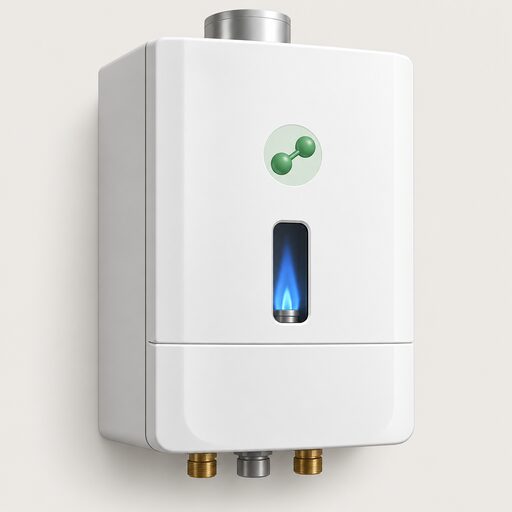 Hydrogen-Ready BoilersWhat manufacturers mean by hydrogen-ready and hydrogen-blend-capable, what conversion would require, and the state of UK hydrogen heating trials and decisions.
 Read an EPCA walk through each part of an EPC: the A to G rating and potential rating, the estimated costs, the fabric and heating assumptions and the recommendation table, plus what the assessor did and did not inspect and how the rules differ across the UK.
 How Energy Products Are TestedWhy does a solar panel's datasheet power rating look better than what you actually get on a UK roof?
 Energy Tech Company FailuresRecords UK and overseas home energy technology firms that have failed or withdrawn products, and what happened to installed equipment, warranties and apps.
 How to Read Energy StatisticsWhy do energy figures change after they are first published, and how much can you trust them?
 Apply for a Home Energy GrantThe application sequence common to funded schemes: the checker, the survey or assessment, the installer, the paperwork and the sign-off.