
In this guide
Mine water heat recovers warmth from water standing in disused coal workings and delivers it to buildings through a heat network. The water is warmed by natural processes underground, and the Welsh Government describes the country's disused coal mine network as something that "may now offer a renewable, secure, low carbon source of heating for buildings in coalfield areas" where conditions suit1.
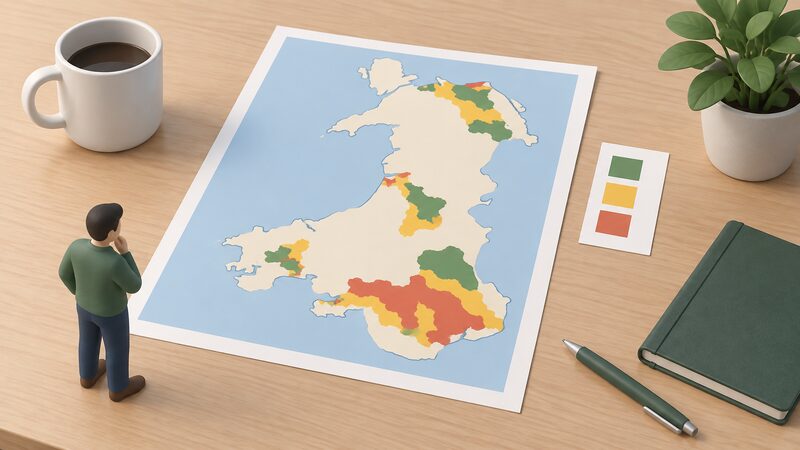
The resource is mapped rather than drilled. Wales's Mine Water Heat Opportunity Map, published on 29 August 2024, covers all local authority areas and categorises coal mine workings as "Good", "Possible" and "Challenging" opportunities for development1. Technical reports were prepared for 11 local authorities and published on the Welsh Government's website with a link to DataMapWales1.
The scale of the prize is set by how much of Wales's energy goes on heat: heating accounts for 50% of energy use in Wales1. A mine water scheme does not make a home independent of the grid, because the heat pumps that lift the water's temperature run on electricity. It changes where the heat comes from, not whether a supplier and a network are involved.
What mine water heat is and how it warms a home
Mine water heat is the recovery of thermal energy from water that has flooded abandoned coal workings. The Welsh Government commissioned the Coal Authority to assess "all known coal mine workings in Wales which might now hold water that is warmed by natural processes"1. That water sits in voids left by centuries of extraction, and because the workings are below ground and insulated by the rock around them, the water holds a temperature that varies far less across the year than the air above.
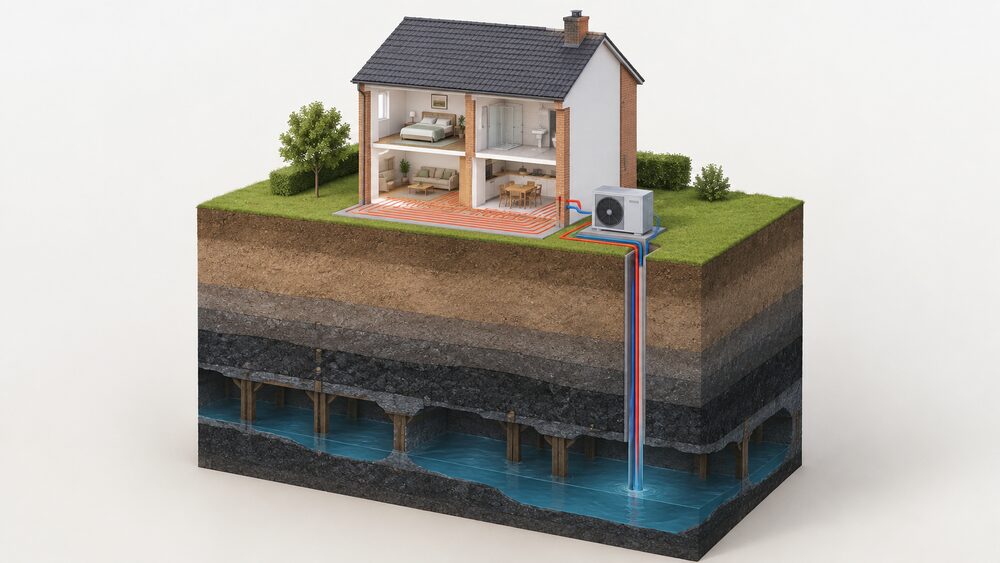
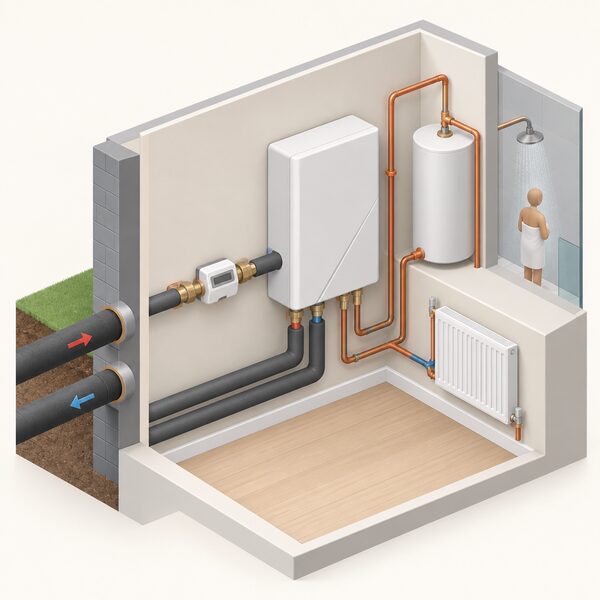
Getting that heat into a home takes three steps. First, water is drawn from the flooded workings, either from a shaft or from a borehole drilled into the workings. Second, a heat pump raises the temperature of that water to a level a heating system can use. Third, the heat is distributed, either through a district heat network serving many buildings or, in principle, to a single property.
The distribution end matters as much as the source. Warm water underfloor heating is described by BEAMA as "a modern, energy-efficient way to heat both domestic and commercial buildings", and it works by "operating at low temperatures", which "helps eco-friendly heat sources perform at their best while delivering consistent" comfort3. That is the pairing mine water heat suits: a low-temperature emitter matched to a low-temperature source, so the heat pump does less work.
For a household, the practical consequence is that mine water heat is not a boiler swap. It is a connection to a network, or a ground-side array plus a heat pump on the property, and it changes the emitter as well as the heat source. The emerging home energy technology pillar sets out how this class of technology fits alongside the rest.

Why flooded coalfields hold usable heat
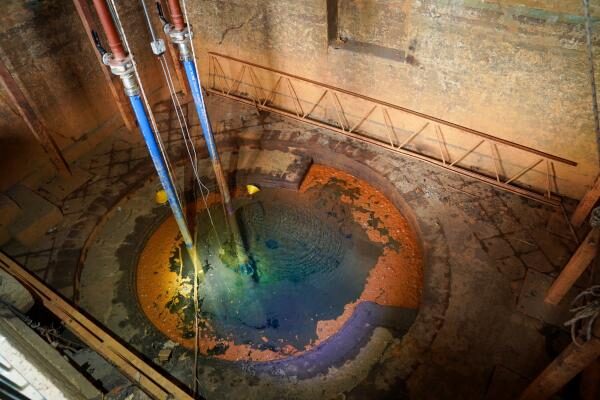
The heat in flooded workings is not geothermal energy from deep rock in the way a hot spring is. It is stored warmth in a very large body of water, held in a man-made reservoir with a huge surface area in contact with the surrounding strata. The Coal Authority's assessment covered workings "which might now hold water that is warmed by natural processes", which is the mechanism: natural processes warm the water, and the volume of the workings keeps it there1.
The technical definition used for ground source heat pumps in the Boiler Upgrade Scheme guidance describes the principle precisely. Such pumps "must generate heat using a thermodynamic cycle by transferring energy stored in the form of heat from the ground, including water in the ground or surface water or both, and use that energy to heat a liquid"4. Mine water is water in the ground, and the same thermodynamic cycle applies.
Two features make coalfields distinctive. The first is that the voids already exist, so the ground-side work is about accessing water rather than creating a heat exchanger from scratch. The second is that the workings are extensive and connected, so a single abstraction point can draw on a large body of water.
The Welsh Government's written statement notes that mine water treatment schemes and controlled gravity-driven discharges offer "particularly cost-effective potential for heating schemes"1. That is a significant qualification: where water is already being brought to the surface and managed, the marginal cost of extracting heat from it is lower than at a site where a new abstraction has to be built.
"Such locations offer particularly cost-effective potential for heating schemes."
Wales's Mine Water Heat Opportunity Map: what it shows
Wales's Mine Water Heat Opportunity Map was published on 29 August 2024 alongside technical reports, in a written statement by Ken Skates1. Its stated purpose is "to inform local authorities and developers on the opportunities and potential locations for mine water heat scheme sites"1. It is a screening tool, not a construction programme.
The map covers all local authority areas, and technical reports were prepared for 11 local authorities1. Those reports are described as providing "informative, and freely accessible information and data", and they are published on the Welsh Government's website with a link to DataMapWales1. The Coal Authority carried out the underlying assessment of all known coal mine workings in Wales that might hold warmed water1.
The context for the mapping is a heat strategy published on 15 July 2024, which sets the direction for how Wales heats its buildings5. Alongside it sits a body of work on fuel poverty: modelled estimates for Wales as at October 2024 were released on 16 October 20256. Mine water heat sits at the intersection of those two agendas, because a local heat source in a coalfield area addresses both the carbon intensity of heating and the cost of imported fuel.
It is worth being clear about what the map does not do. It does not grant permission, allocate funding or oblige any developer to build. It identifies where the geology and the existing workings make a scheme more or less plausible, and it gives local authorities a starting point for their own planning and feasibility work.
Opportunity categories: Good, Possible and Challenging
The map sorts coal mine workings into three categories: "Good", "Possible" and "Challenging" opportunities for mine water heat developments1. The categories are a high-level assessment of where the best potential lies, and the Welsh Government's 2022 announcement of the exploratory project described the method: "Sites will be mapped to give a high-level assessment of where the best potential lies, with more detailed feasibility studies carried out on those considered to have the most realistic likelihood to connect to existing buildings and new developments"2.
That two-stage structure is the important part. A rating on the map is a first pass. A "Good" rating does not mean a scheme will be built, and a "Challenging" rating does not mean one is impossible. It means the conditions at that location make delivery harder, and that a developer weighing up a site would need to resolve more before committing.
What drives a rating is not stated in the published material, but the factors that bear on any mine water scheme are visible in the surrounding policy. Heat networks can draw on a range of sources, including "power stations, energy from waste facilities, industrial processes, combined heat and power plants, geothermal sources, electric boilers and solar thermal arrays"7. A mine water scheme competes with those options on cost, and the cost depends on how easily the water can be reached and how many buildings lie close enough to connect.
The categories also interact with who is doing the work. The Heat Network Support Unit in Scotland is "open to public and private sector organisations, including support for new heat networks and the decarbonisation and expansion of existing heat networks"8. Comparable support structures determine whether a "Possible" site ever gets a feasibility study.
Who the map is for and how it is used
The map is addressed to local authorities and developers1. For a local authority, it is an input to planning and to local energy planning. For a developer, it is a shortlist of places where the ground-side risk is lower. Neither is the household, and that is the honest position: a household cannot use the map to obtain a connection.
Where a scheme does get built, the household's relationship is with a heat network and its operator. Ofgem's consumer protection guidance for heat networks covers what authorised suppliers must provide, including "comparisons of the Relevant Consumer's current consumption of heating, cooling or hot water with consumption for the same period in the previous year, if possible displayed in a graph"9. Bills on metered heat networks must be "accurate, and based on actual consumption"10. Those protections matter more on a heat network than on a gas boiler, because the household cannot switch heat source without moving.
Scotland has taken a different route on the developer side. The Scottish Government has proposed "the creation of an opt in licensing regime enabling heat network developers in Scotland to access the rights and powers for things like road works, survey and compulsory purchase"11. Those powers are what make a network buildable across multiple streets, and their absence is one reason schemes stall.
In Wales, the supporting landscape includes over 400 warm hubs across Wales, part of a £15 million programme to keep communities warm and connected12. A consultation on the formation of a consolidated Welsh public energy company was opened on 7 September 202613. Wales's electricity demand "is projected to increase", which shapes how any new heat load is met14.
Funding in practice: a £450,000 mine water heating project
The Welsh Government's mine water work began with an exploratory project. On 14 July 2022 it announced that "A £450,000 project will explore whether water from disused mines has the potential to play a vital role in supplying Wal"2. The funding allowed the Coal Authority to investigate the potential, with the then Climate Change Minister Julie James confirming the funding would let the Authority carry out that work2. The output of that investigation is the map and the technical reports published two years later1.
The £450,000 figure is the only mine water specific funding amount in the public record here, and it is small by the standards of heat network capital. For scale, the UK government has committed "£57 million of funding to support the construction of 5 heat network projects" and "£2.7 million to improve the operation of 33 existing heat networks"15. Those are construction and improvement sums, not feasibility sums, and the gap between them and £450,000 shows where mine water heat currently sits: at the assessment stage, not the build stage.
Scotland's heat network funding has run at a larger scale. The Heat in Buildings Development Funding Invitation provided £1 million of resource funding for the development of a long-term pipeline for capital investment, and the Low Carbon Infrastructure Transition Programme supported heat networks "receiving over £40 million of funding"16.
The Heat Pump Ready programme shows how innovation funding is distributed across many smaller projects rather than one large one. Stream 1 Phase 1 awarded "a total of £2,055,202.43 to 11 projects across Great Britain"17. Stream 1 Phase 2 awarded "a total of £9,746,535.60 to 4 projects across Great Britain"18. Stream 2 awarded "a total of £15,030,944.72 of grant funding to 24 projects across Great Britain"19. Individual contract values in Stream 1 Phase 1 include £196,935.00, £198,400.00, £192,860, £199,614 and £195,385.4117. Stream 2 Wave 2 includes a grant total of £465,763.1120.
| Programme | Amount | Scope |
|---|---|---|
| Mine water heating project, Wales | £450,000 | Exploratory investigation by the Coal Authority2 |
| Heat Pump Ready, Stream 1 Phase 1 | £2,055,202.43 | 11 projects across Great Britain17 |
| Heat Pump Ready, Stream 1 Phase 2 | £9,746,535.60 | 4 projects across Great Britain18 |
| Heat Pump Ready, Stream 2 | £15,030,944.72 | 24 projects across Great Britain19 |
| Heat network construction, UK | £57 million | 5 heat network projects15 |
| Existing heat network improvement, UK | £2.7 million | 33 existing heat networks15 |
Is mine water heat the same as a ground source heat pump?
No, but the two share a mechanism. A ground source heat pump transfers "energy from the natural heat stored in the earth to heat the home and domestic hot water"21. Northern Ireland's guidance describes the same principle: such pumps "make use of heat stored in the ground to pre-heat water for the heating system - this water is then heated to the required standard using electricity"22. Mine water heat applies that cycle to water standing in flooded workings rather than to natural ground or a purpose-built borehole array.
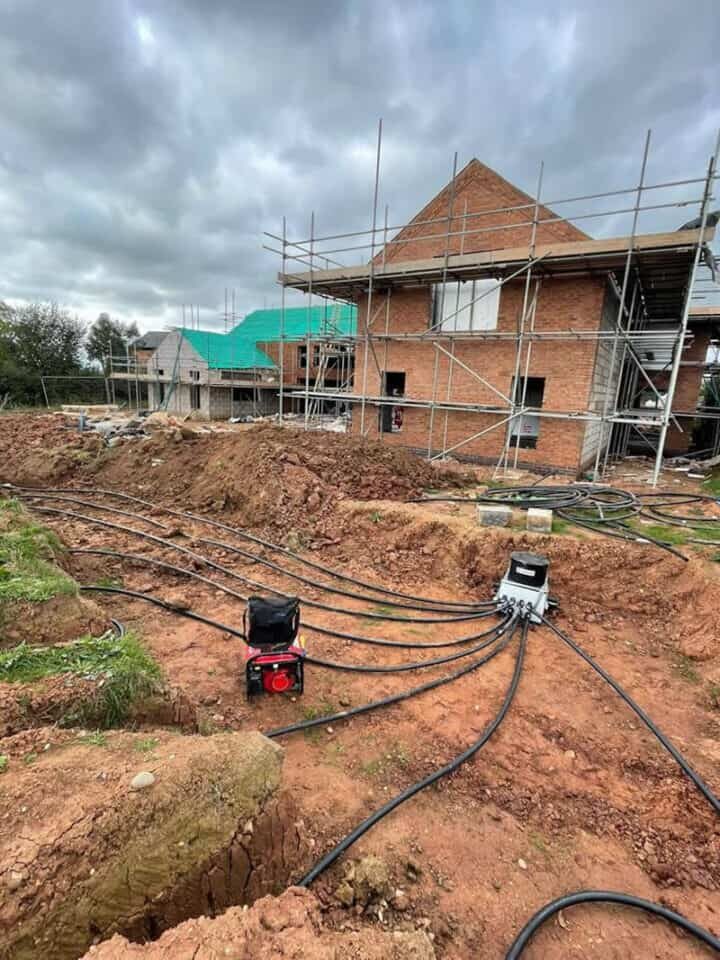
The distinction matters for what gets installed. A conventional ground source system uses either horizontal pipes in trenches "around one to two metres deep" or vertical boreholes that "could be up to 200 metres deep, although it is less than a metre in diameter"23. A mine water scheme taps existing voids, so the ground-side work is an abstraction and a heat exchanger rather than a field of new boreholes.
Both technologies produce low-temperature heat. A ground source heat pump "produces low-temperature heat, so is best connected to a system that's designed for this, such as underfloor heating"23. The building regulations position is the same for ground source as for air source: "The relevant building regulations requirements are the same for ground source heat pumps"24.
There is a further parallel in how the heat is used once inside. Solar water heating systems "preheat water for use in sinks, showers and other hot water applications"25, and the Domestic Renewable Heat Incentive defines domestic hot water as "hot water used for purposes other than space heating or heating a swimming pool"21. The distinction between space heating and hot water runs through every one of these technologies, because the two loads have different temperature requirements and different seasonal profiles.
What mine water heat means for household energy independence
Mine water heat changes one thing decisively and leaves several dependencies intact. What it changes is the origin of the heat. Instead of gas or oil brought into the country and burned in the home, the heat comes from water already under the coalfield, warmed by natural processes, and the Welsh Government describes that resource as "a renewable, secure, low carbon source of heating for buildings in coalfield areas" where suitable1. Secure is the operative word: the workings cannot be interrupted by an import market.
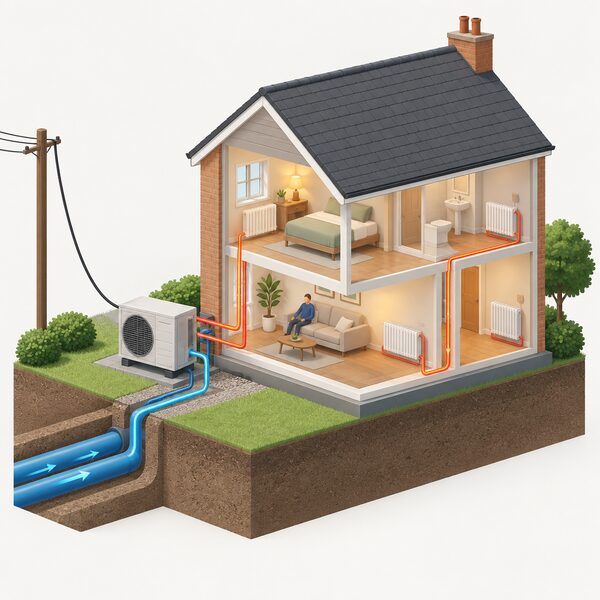
What it does not change is the electricity. A heat pump runs on electricity, and so do the circulation pumps on a network. A connected household therefore remains dependent on the grid and on a heat supplier, and the consumer protections for heat networks exist precisely because that relationship is hard to exit10. The heat source is local; the machine that moves it is not self-powered.
There is also a dependence on the scheme itself. A household connected to a mine water network has no boiler to fall back on, and no alternative supplier of heat. That is a different risk profile from a gas connection, where switching supplier is routine. It is closer to the position of a household on any district heat network.
The wider Welsh picture is one of rising electricity demand, with demand "projected to increase"14. Adding heat load to the electricity system is the trade-off that any heat pump based route carries, whether the source is mine water, the air or the ground. The Welsh Government has published work on renewable energy and on the Warm Homes Programme that bears on how that load is met26, and it has published a phase 1 report on air source heat pump noise and permitted development rights28. Smoke control areas, which cover parts of Wales, restrict what can be burned, and the list of authorised fuels in Wales is published separately29.
For a household in a coalfield area, the realistic position is that mine water heat is a possibility contingent on a scheme being built nearby, not a product to buy. The guide to emerging technology and household energy independence sets out how far any of these technologies can take a home, and where the grid and a supplier remain in the picture.
Sources29 cited
- Written Statement: Publication of Wales's Mine Water Heat Opportunity Map, Welsh Government, 29 August 2024
- Legacy lives on: Welsh coal mines could heat homes of the future, Welsh Government, 14 July 2022
- Underfloor heating: efficient, flexible comfort, BEAMA, 2 December 2024
- Boiler Upgrade Scheme guidance, Ofgem, September 2023
- Heat strategy for Wales, Welsh Government, 15 July 2024
- Fuel poverty modelled estimates for Wales: as at October 2024, Welsh Government, 16 October 2025
- Permitted development rights: support and provision for new homes consultation, Scottish Government, September 2025
- Heat in Buildings progress report 2025, Scottish Government, 2 October 2025
- Heat networks consumer protections draft guidance, Ofgem, 5 September 2025
- Heat networks regulation: consumer protection guidance decision, Ofgem, 13 January 2026
- Heat networks licensing regime proposal, Scottish Government, November 2025
- £15 million helping keep communities warm and connected, Welsh Government, 22 December 2025
- Formation of a consolidated Welsh public energy company consultation, Welsh Government, 7 September 2026
- Publication of Energy Generation and Energy Use in Wales: first combined edition report, Welsh Government, 18 March 2026
- Accelerating to net zero: government response to the CCC progress report, UK Government, 17 December 2024
- Heat Networks Delivery Plan, Scottish Government, March 2022
- Heat Pump Ready Programme Stream 1 Phase 1 projects, UK Government, 28 May 2026
- Heat Pump Ready Programme Stream 1 Phase 2 projects, UK Government, 28 May 2026
- Heat Pump Ready Programme Stream 2 projects, UK Government, 28 May 2026
- Heat Pump Ready Programme Stream 2 Wave 2 projects, UK Government, 28 May 2026
- Domestic Renewable Heat Incentive: eligible heating systems, Ofgem, 17 September 2026
- Ground source heat pumps, nidirect, 2 September 2026
- Ground source heat pumps explained: installing a ground source heat pump, Which?, 22 September 2025
- Air and ground source heat pumps, Croydon Council, 17 September 2026
- Generating your own energy: solar water, Welsh Government, September 2018
- Renewable energy deep dive: biannual recommendations update 2, Welsh Government, 27 April 2023
- Next iteration Warm Homes Programme review and recommendations report, Welsh Government, 13 June 2023
- Air Source Heat Pump Noise and Permitted Development Rights in Wales report, Welsh Government, 11 January 2024
- Smoke control area guidance for local authorities, Welsh Government, 30 July 2025
 Heating Zones and ZoningSplitting your heating into zones lets you warm upstairs and downstairs separately, or heat just one room, instead of paying to heat the whole house.
 Water Source Heat PumpsYour home sits near a river, lake or the sea.
 Warm Air Heating SystemsWarm air heating works by pushing heated air through vents in your floors or walls.
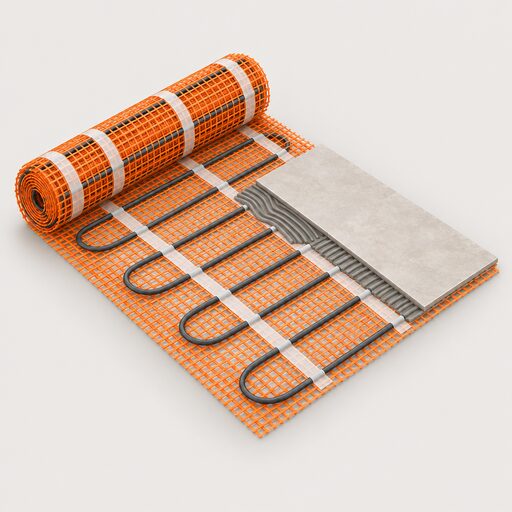 Underfloor Heating SystemsWhich rooms suit electric underfloor heating and which need a wet system?
 Which Homes Suit a Heat PumpMost UK homes can have a heat pump fitted, so the real question is whether yours makes it easy or expensive.
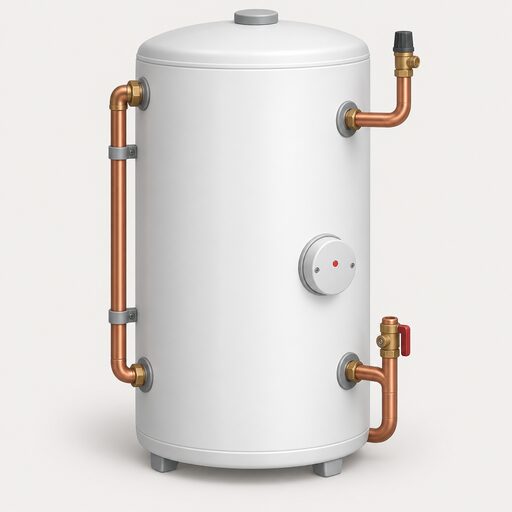 Air-to-Water Wet SystemsAir-to-water heat pumps feed radiators, underfloor heating and a hot water cylinder, and are the most common domestic heat pump in the UK.