

In this guide
UK energy innovation funding is the public money that carries a home energy idea from a laboratory bench to a working demonstration, and it is almost never paid to a household. It flows to companies, research organisations, local authorities and community groups. The Department for Energy Security and Net Zero, which absorbed the former BEIS, has paid individual research and development grants to private firms, including £55,941.24 to Brill Power Ltd and £40,575.68 to Rotaheat Ltd, both recorded as delivery of BEIS energy innovation1. UKRI runs competitions rather than direct awards, including a £25m competition for AI and digital solutions to increase consumer-led flexibility capacity2.
The scale of the newer money is larger. Great British Energy and Great British Energy - Nuclear together hold £8.3bn of funding, and a £1bn Clean Energy Supply Chain Fund sits alongside it1. Great British Energy was launched with £125m funding announced for 2025 to 2026, including £100 million of capital funding to spend in that year3.
For a householder, the useful question is not how much has been announced but what a grant award says about a product's maturity. It says a project was judged worth backing. It does not say the technology has a track record, a warranty history or a supply chain. That distinction is the thread running through everything below.
What UK energy innovation funding is and who provides it
Innovation funding is distinct from the bill support and retrofit grants that households encounter directly. It pays for feasibility studies, prototypes, trials and the standards work that has to happen before a product can be sold. The money comes from several directions at once, and the mix differs by nation.
At UK level, the Department for Energy Security and Net Zero and UKRI are the two main channels. The department's own accounts record the £1bn Clean Energy Supply Chain Fund and the £8.3bn for Great British Energy and Great British Energy - Nuclear1. UKRI's contribution in the flexibility space is a £25m competition for AI and digital solutions, plus up to £25m of initial funding invited through tenders for innovation in consumer-led flexibility2.
Scotland runs its own layer. The Community and Renewable Energy Scheme offers advice and funding support to community groups and other eligible organisations seeking to explore their renewable energy options, and had offered over £58 million to date by October 20227. The Green Heat Innovation Support Programme exists to support Scottish companies to respond to clean heat innovation challenges8. The Home Energy Scotland Grant and Loan scheme offers eligible homeowners support to install clean heating systems and energy efficiency measures, which is delivery rather than innovation but sits in the same landscape9.
Wales funds through the Ynni Cymru capital grants scheme, which provides financial support to community energy organisations, social enterprises, public sector bodies and SMEs developing innovative local energy projects10. Northern Ireland's main recent intervention was bill support rather than innovation: the Energy Bills Support Scheme Northern Ireland was administered by energy suppliers and funded by the UK government11.
The practical point for a household is that none of these routes is a consumer purchase channel. They build the pipeline; they do not stock the shelf.
| Nation | Main innovation-adjacent route | Who receives it |
|---|---|---|
| UK-wide | Clean Energy Supply Chain Fund, £1bn1 | Companies and supply chain firms |
| UK-wide | UKRI flexibility competitions, up to £25m2 | Applicants bidding for a share |
| Scotland | Community and Renewable Energy Scheme, over £58 million offered to date by October 20227 | Community groups and eligible organisations |
| Wales | Ynni Cymru capital grants, over £12.9 million in the latest round5 | Community energy organisations, social enterprises, public bodies, SMEs |
| Northern Ireland | Energy Bills Support Scheme Northern Ireland11 | Administered by energy suppliers |
The main funding bodies: DESNZ, UKRI and Great British Energy

Three bodies do most of the work, and they behave differently.
The department, formerly BEIS, has historically paid grants straight to companies. Its published spending records show research and development grants to the private sector, including the two payments to Brill Power Ltd and Rotaheat Ltd in July 20241. That model is direct: a company receives money against a project, and the department carries the risk of picking winners.
UKRI works through competition. Its £25m competition for AI and digital solutions to increase consumer-led flexibility capacity, and the up to £25m of initial funding it invited tenders for, are both structured as contests in which applicants bid for a share2. Competition design means the funding goes to whoever makes the strongest case, which is a different filter from a departmental grant.
Great British Energy is the newest and largest. It was established with £25 million funding to establish the company, then launched with £125m funding announced for 2025 to 2026, including £100 million of capital funding to spend in 2025 to 20263. Its initial £100 million capital funding was confirmed in the 2024 Autumn Budget3. The £8.3bn figure for Great British Energy and Great British Energy - Nuclear includes financial transaction capacity, and the spending review confirms that this capacity is part of that £8.3bn1. The briefing on the company records it as backed by £8.3 billion over the course of this Parliament4.
For a household watching a technology, the funding body matters less than the stage. A departmental grant to a small firm and a UKRI competition award both sit upstream of anything a buyer can purchase.
Flagship funded projects: Core4Grid and GreenSCIES
The Heat Pump Ready Programme is the clearest window into what funded home energy innovation actually looks like. Its Stream 2 projects include Catalyst, Accelerating the heat pump journey, led by EDF, with a BEIS Grant Value of £395,220.9412. Stream 1 Phase 1 includes PACE Financing for Heat Pumps in Rural Cambridgeshire, led by City Science Corporation Limited13. These are not product development grants in the ordinary sense: they fund work on how heat pumps get installed, financed and adopted.
The programme's second round shows the machinery in operation. The deadline for submitting questions regarding the competition was 14 May 2026, by email to a dedicated address, and the deadline to submit applications was 1pm on 25 June 202614. That is a fixed window, and missing it means waiting for the next round.
Beyond heat pumps, the funding spreads across hydrogen, efficiency and community generation. £90 million in capital grants through the Net Zero Hydrogen Fund went to HAR1 projects3. £6 billion of capital funding was committed for homes, public sector and industrial decarbonisation across 2025/26 to 2027/2815. The Optimised Retrofit Programme received an additional £14.1 million for energy efficiency improvements16.
Wales shows what funded projects look like on the ground. The Optimised Retrofit Programme's funded projects include Caredig in Swansea and Pembrokeshire, covering PV, an intelligent energy system and environmental sensors; ATEB in Pembrokeshire, covering environmental sensors, external wall insulation, a battery and PV; Barcud in Ceredigion, covering PV, external wall insulation and environmental sensors; Denbighshire, covering external wall insulation in stonewool or permeable form plus PV, batteries, inverters and environmental sensors; and LINC across Bridgend, Blaenau Gwent, Newport, Cardiff, Caerphilly and Neath Port Talbot, covering windows, PV and battery, an intelligent energy system and environmental sensors, fabric and hydrogen17.
That list is worth reading closely. It shows the funded frontier is a bundle of familiar measures, PV, batteries, insulation and sensors, assembled into demonstration packages rather than a single novel device.
| Funded project | Location | Measures funded |
|---|---|---|
| Caredig | Swansea and Pembrokeshire | PV, intelligent energy system, environmental sensors17 |
| ATEB | Pembrokeshire | Environmental sensors, external wall insulation, battery, PV17 |
| Barcud | Ceredigion | PV, external wall insulation, environmental sensors17 |
| Denbighshire | Denbighshire | External wall insulation, PV, batteries, inverters, environmental sensors17 |
| LINC | Bridgend, Blaenau Gwent, Newport, Cardiff, Caerphilly, Neath Port Talbot | Windows, PV and battery, intelligent energy system, environmental sensors, fabric, hydrogen17 |
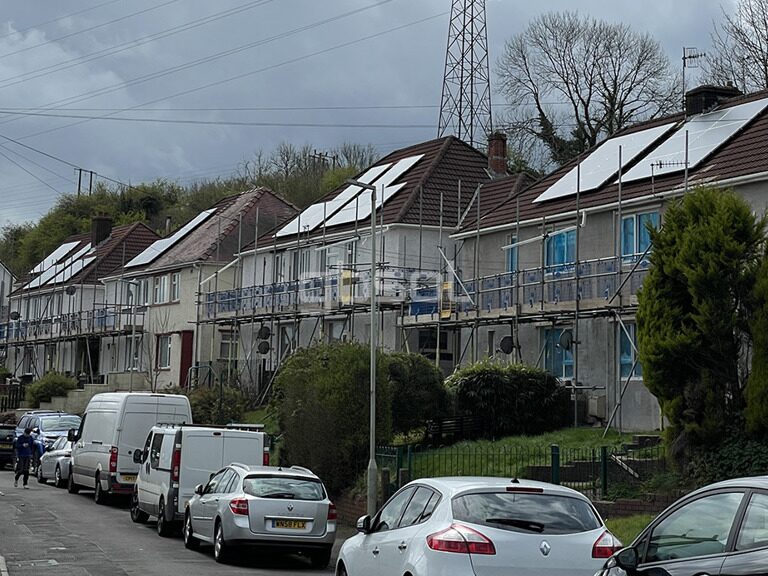
How the Industrial Strategy Challenge Fund supports home energy technology
The Industrial Strategy Challenge Fund is a research and innovation stream rather than a household scheme. Within it, the Industrial Decarbonisation Challenge provided £20m to fund the Industrial Decarbonisation Research and Innovation Centre, which aims to develop innovative fuels and industrial decarbonisation18. That work touches homes indirectly, through the fuels and supply chains that domestic heating might eventually draw on.
The skills side of the same landscape is often overlooked. £15 million was committed to skills in the energy efficiency and low carbon heating sectors in England since 2020 through the Home Decarbonisation Skills Training Competition19. Funding a workforce is as much a part of bringing a technology to homes as funding the technology itself, because an uninstalled product is not a product.
Scotland's draft Heat in Buildings Strategy set out £465 million to support those least able to pay through domestic energy efficiency programmes, and recorded UK Government commitments to a neighbourhood hydrogen trial by 2023, a Hydrogen Village trial by 2025 and a Hydrogen Town before the end of the decade20. Those trials have since been the subject of separate decisions, and the funding record shows how a strategy document commits money to a pathway that later changes.
"We propose to expand existing delivery programmes to focus on accelerating deployment against the following four strategic"
The honest reading is that challenge fund money builds capability, not products. A household waiting for a specific device will not find its arrival date in a challenge fund award.
Great British Energy Community Fund: what it offers and when to apply
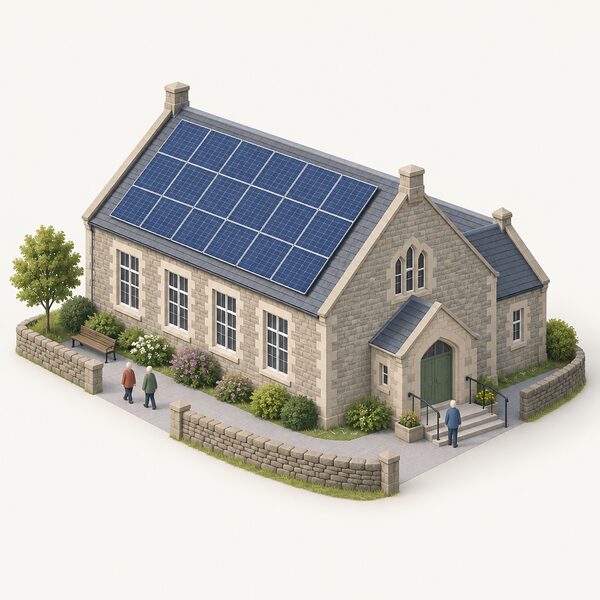
The Great British Energy Community Fund is the most accessible of the innovation-adjacent funds, and it is still not open to individual households. It was launched providing £5 million in grant funding for community energy groups4. The application window that opened in September 2026 runs for eight weeks, with a deadline of 12 November 202621.
The fund sits in a long tradition of community energy money. The Community and Renewable Energy Scheme had offered over £58 million to date by October 2022, with up to £5.25 million made available in that financial year for community groups developing renewable energy projects7. Its first community buildings funding round awarded over £2.6 million to 74 organisations to install renewable technologies in Scotland's community buildings7. The Rural Community Energy Fund, a £15m joint Defra and BEIS programme, had offered feasibility and development finance since 201323. £15 million of funding for feasibility studies was announced in 2019, with community schemes already powering the equivalent of 67,000 homes in England and Wales24.
Wales has run a comparable route. The Ynni Cymru capital grant scheme's latest round saw green energy projects across Wales share over £12.9 million, supporting 48 successful projects5. An earlier Welsh announcement set out £129 million to support Welsh communities transitioning to renewable energy25.
The pattern across all of these is the same: money reaches homes through an organisation, and the household's role is to be the site rather than the applicant.
Grants with deadlines: the Ymestyn Grant and completion dates
Deadlines are where innovation funding becomes concrete, and they are unforgiving. The Ynni Cymru capital grant scheme requires projects to be completed and commissioned by 30 November 20266. That date is fixed in the scheme guidance for the round.
The Heat Pump Ready Programme Round 2 competition ran to a tighter clock: questions had to be submitted by 14 May 2026, and applications by 1pm on 25 June 202614. Both dates are in the past relative to the current guidance, which is itself informative: the round has closed.
Scotland's Home Energy Scotland Grant and Loan scheme sets a claim deadline rather than a project deadline. Applicants have a set period to complete work and submit their claim, currently 9 months for HESGL27. That is a delivery condition on households who have already been awarded support, and it is the one deadline in this landscape that a householder can personally miss.
The Green Home Finance Innovation Fund, which piloted green home finance products such as green mortgages over an initial 18 month period, awarded £1.8m to three projects due to complete by March 202228. The Clean Heat Grant was budgeted at £100m to support the deployment of heat pumps and, in limited circumstances, biomass boilers29.
| Scheme | Deadline | Who it binds |
|---|---|---|
| Ynni Cymru capital grant scheme | Complete and commission by 30 November 20266 | Award-holding organisations |
| Heat Pump Ready Programme Round 2 | Questions by 14 May 2026; applications by 1pm on 25 June 202614 | Applicants to the competition |
| Home Energy Scotland Grant and Loan | Claim within 9 months for HESGL27 | Households already offered support |
| Green Home Finance Innovation Fund | Projects due to complete by March 202228 | Three funded projects |
What funded innovation means for householders
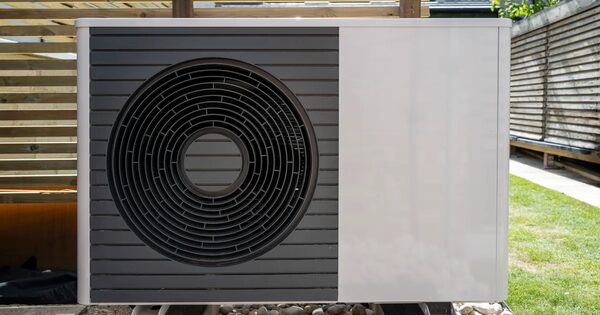
The gap between a funded project and a product on a wall is the single most useful thing a householder can understand about this landscape. Funding supports feasibility, demonstration and skills. It does not certify performance, and it does not create a warranty.
The consumer protection picture is being reformed precisely because home upgrade schemes have not always served households well. A consultation on reforming consumer protection for home upgrade schemes sets out the direction of travel26. That reform exists because the delivery end of the market, not the innovation end, is where households meet risk.
Some funding does reach households as reduced cost. £3 billion was announced to upgrade the energy efficiency of up to half a million homes30. The Warm Homes Plan records £6 billion of capital funding committed for homes, public sector and industrial decarbonisation across 2025/26 to 2027/2815. The Domestic Renewable Heat Incentive, introduced in 2014, paid households that had installed air source heat pumps, ground source heat pumps, biomass boilers or solar thermal heating systems31. That scheme is the clearest historical example of innovation-adjacent money reaching a domestic installation directly.
Energy supplier schemes and grants also fund making energy-saving improvements to a home, and Ofgem directs households to them as a source of help with bills32. These are obligations on suppliers rather than innovation funding, but they occupy the same space in a householder's decision.
The independence question is worth stating plainly. Public innovation funding does not reduce a household's dependence on the grid, a supplier or a manufacturer. It may accelerate the arrival of a product that does, and it may lower the cost of a measure through a grant. It does not transfer control. A funded demonstration home is still connected, still supplied and still reliant on whoever made the equipment.
Technologies on the horizon: tandem solar and EV education
Two areas show where funded innovation is heading, and both are upstream of anything a household can buy today.
The UK Solar Roadmap commits the government to explore opportunities to support the development of standards for next generation solar panels and emerging applications, and to consider the case to further support companies looking to scale up production of innovative solar technologies, processes and balance of system components4. Standards work is unglamorous and decisive: a panel without a standard is a panel an installer cannot confidently fit.
Great British Energy's solar programme aims to enable around 200 schools and up to 200 hospitals in England to install rooftop solar4. That is public-sector deployment rather than domestic, but it builds the installer base and the supply chain that domestic work later draws on.
On the vehicle side, Nissan launched a five-part video series covering EV fundamentals, batteries, range, charging and energy sharing on World EV Day in September 2026, available on its YouTube channel33. Education is not funding, but it is the same impulse: public money and manufacturer money both going into preparing a market before the products arrive in volume.
For a household, the horizon technologies are worth watching and not worth waiting for. The funding record shows a system that moves ideas forward steadily and slowly, and a household that needs a working system this winter is not the customer that system serves.
Sources35 cited
- DESNZ annual report and accounts 2025 to 2026: performance report, GOV.UK, 2026
- Clean Flexibility Roadmap: July 2026 update, GOV.UK, 2026
- Great British Energy and the CCC progress report response, House of Commons Library, 2024
- Accelerating to net zero: responding to the CCC progress report, GOV.UK, 2024
- Spending Review 2025, GOV.UK, 2025
- Ynni Cymru capital grant funding scheme 2026 to 2027 guidance, Welsh Government, 2026
- Heat in Buildings Strategy 2022 update: progress, Scottish Government, 2022
- Heat in Buildings progress report 2023: workers and skills, Scottish Government, 2023
- Home Energy Scotland Grant and Loan scheme awards, Scottish Government, 2025
- £10 million support for community-led energy projects across Wales, Welsh Government, 2025
- Vital help with energy bills on the way for millions more homes, GOV.UK, 2022
- Heat Pump Ready Programme Stream 2 projects, GOV.UK, 2026
- Heat Pump Ready Programme Stream 1 Phase 1 projects, GOV.UK, 2026
- Heat Pump Ready Programme Round 2 innovation funding competition, GOV.UK, 2026
- Warm Homes Plan technical annex, GOV.UK, 2025
- Welsh Government boosts funding for warmer, cheaper social homes, Welsh Government, 2025
- Optimised Retrofit Programme 3 funded projects, Welsh Government, 2023
- Draft heat strategy for Wales, Welsh Government, 2023
- Adapting historic homes for energy efficiency: a review of the barriers, GOV.UK, 2024
- Draft Heat in Buildings Strategy consultation, Scottish Government, 2021
- The Great British Energy Community Fund, Community Energy England, 2026
- Heat in Buildings Strategy: achieving net zero emissions in Scotland's buildings, Scottish Government, 2021
- Permitted development rights for non-domestic solar panels and domestic air source heat pumps, Scottish Government, 2015
- The future for small-scale low-carbon generation, BEIS, 2019
- £129 million support Welsh communities transition to renewable energy, Welsh Government, 2025
- Reforming consumer protection for home upgrade schemes, GOV.UK, 2026
- FOI 202400442664, Scottish Government, 2024
- Clean Heat Grant and Green Home Finance Innovation Fund, Public Accounts Committee, 2021
- Energy Bills Support Scheme Alternative Funding, Carmarthenshire County Council, 2023
- Spring Statement 2022, HM Treasury, 2022
- Domestic Renewable Heat Incentive annual report April 2023 to March 2024, Ofgem, 2024
- Get help with your energy bills, Ofgem, 2026
- EV? Easy! Nissan cuts through the confusion on World EV Day, Nissan, 2026
- Oxford PV mainstream, Oxford PV, 2026
- Perovskite solar technology, Sunsave, 2026
 DESNZ Energy PolicyThe government department behind home energy rules is not the one that pays your grant.
 Grants and Energy IndependenceCan you get a grant for solar panels or a battery?
 Public Attitudes to Home EnergyWhat do people in the UK really think about heat pumps, solar panels and smart meters?
 Tech Readiness and ClaimsHow the technology readiness level scale used in UK innovation funding maps onto what a household can actually order, and how to read claims like 'proven', 'pilot' and 'trial' on home energy products.
 Data and Energy IndependenceHow many UK homes actually make their own power, and is that number really growing?
 Community Energy in the UKWhat community energy means in practice, the legal structures used, and the types of project householders can join or benefit from.