In this guide
Emerging technology matters to a household's energy independence only where it shifts control from a supplier, a network or a manufacturer to the home itself. Two families of technology dominate the current picture. The first is bidirectional charging, where an electric vehicle battery becomes a household power store: vehicle-to-grid technology allows an EV charger to not only charge a vehicle, but also take energy from it1. The second is green hydrogen, produced through the electrolysis of water using renewable electricity such as wind or solar, which emits zero carbon emissions but is very expensive, so only a small percentage of hydrogen fuel is currently green2.
The independence question is not whether a technology exists, but who holds the energy and who holds the switch. A car battery that can discharge to a home during a power outage supports genuine self-sufficiency, though V2H is limited to certain EV models and compatible chargers3. A car battery that discharges to the grid on a supplier's signal earns money but hands the timing decision to someone else. Both are the same hardware.
The scale of what is at stake is large. If 50% of the UK's electric vehicles were V2G enabled by 2030, this would open up 22 TWh of flexible EV discharging capacity per year and could provide around 16GW of daily flexible capacity to the grid4. For an individual household, the practical figures are smaller and more contested: revenue estimates run from £150 to £200 a year on average to as much as £725 a year in one trial5.
What emerging technology means for household energy independence
The technologies reshaping household energy use are not only generation equipment. Citizens Advice describes new products and services, from plug-in solar to optimisation software, reshaping how consumers use energy10. That second category, software that decides when a device runs, is where independence is most easily traded away without the household noticing.
The baseline case for self-generation is well established. Renewable energy technologies help a household meet its own energy requirements and reduce the home's carbon dioxide emissions11. Carmarthenshire Council states that renewable technologies reduce reliance on fossil fuels such as gas and oil and therefore reduce fuel bills and carbon emissions12. Northern Ireland's guidance notes that those technologies may offer an attractive payback to homeowners without grant support13.
What complicates the picture is that the newest layer of technology is defined by remote control, not by local generation. An energy smart appliance is an appliance, such as an electric vehicle charging point or a heat pump, capable of increasing or reducing its electricity demand in response to signals received remotely from a third party14. That definition is the hinge of the whole subject. A heat pump or chargepoint that responds to a third party's signal is flexible, and flexibility is what earns money in current markets. It is also, by construction, a device whose operation is partly decided elsewhere.
The independence test for any emerging product is therefore three questions. Does it generate or store energy on the property? Can it operate when the network, the supplier or the internet connection is unavailable? And who decides when it charges or discharges? A home battery, a solar array and an EV battery all pass the first test. Only some pass the second and third. The sections below apply that test to the two technologies with the most active UK evidence base.
Vehicle-to-Grid: the EV battery as a household power store
The core proposition is straightforward. Energy Saving Trust states that having electric vehicles as battery storage will allow us to better manage the UK's energy, and that this could be one of the best ways of storing excess renewable energy1. The same guidance defines the mechanism: vehicle-to-grid technology allows an electric vehicle charger to not only charge a vehicle, but also take energy from the vehicle1.
For a household, the appeal is that the storage already exists. A battery-electric vehicle is charged from an external electricity supply, typically plugging in to an EV charge point, and charging at home or at work overnight when electricity is cheap reduces overall fuel costs by more than 70%15. V2G adds a second revenue stream on top of that cheap charging, using capacity that would otherwise sit idle for most of the day.
The system-level case is well documented. V2G operation could generate a net saving of between £40M and £90M a year depending on limits to V2G energy throughput, and V2G could save an additional £40 to £90M annually in GB by 20308. V2G could help to save £200m of cumulative distribution network investment by 2030, and could defer network upgrades of £5bn, or £180 per household16. Reduced renewable curtailment could amount to a saving of 6 MtCO2e per year5.
Those are system figures, not household ones, and the distinction matters for independence. The network savings accrue to the network. The household receives whatever the tariff pays. Cenex lists the benefits of V2G as supplying energy to energy markets and increasing use of localised renewables, which are two different things: one is a market transaction, the other is a local energy outcome17.
"Having electric vehicles as battery storage will allow us to better manage the UK's energy"
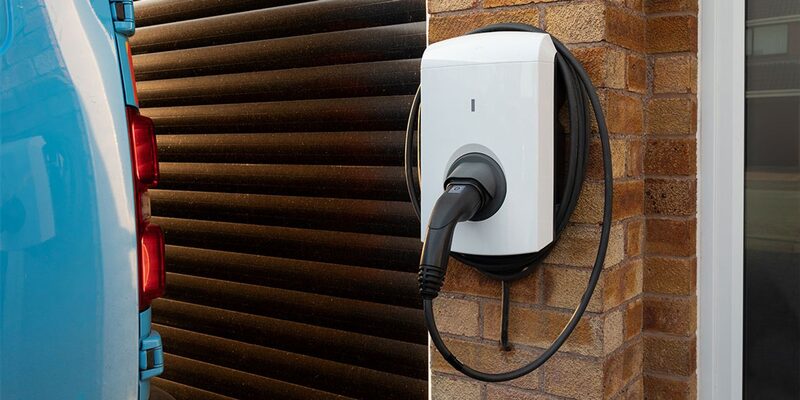
What V2G can do: charge, store and export electricity
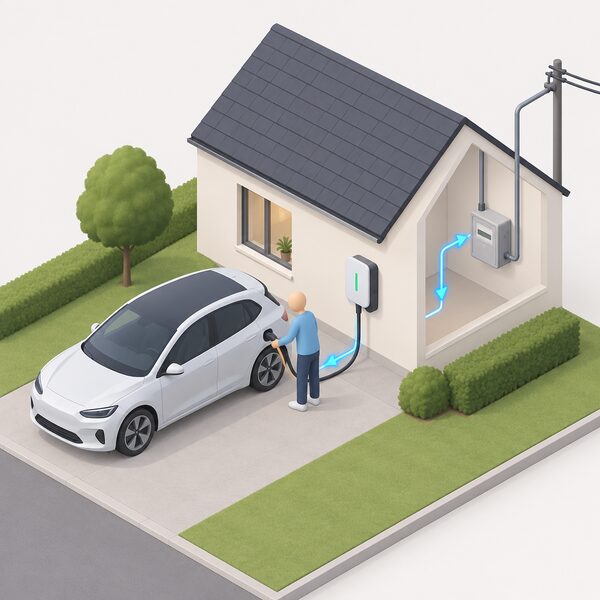
The three functions are sequential and each has a different independence profile. Charging is the ordinary case, and it is where most of the household saving already sits. Storing is where the car becomes a household asset rather than a transport cost. Exporting is where the household enters a market.
UK Power Networks describes V2G technology as allowing electric cars to do more than just charge, meaning they can send electricity back to the grid when needed18. Toyota, in its own announcement of expanded energy collaborations, describes the same function: this will allow EVs to not only draw energy from the grid but also return it when needed, and the company plans to expand its energy collaborations to additional countries and introduce more advanced solutions, including V2G19.
The storage function has a measurable environmental case. Storing generation from a 4 kWp domestic solar PV system with an EV battery over a weekend with 6 hours of sun per day can save over 600 kgCO2e per year5. That is a household-level figure and it depends on having both the solar array and the car.
The export function is where the household's control is most conditional. Exporting to the grid requires a market participant to buy the power, a charger that can reverse the flow, and a car that permits it. The demonstrator projects tested the commercial, technical, and operational viability of V2G technology and how it can benefit both the electricity grid, as well as consumers, and Energy Saving Trust developed best practice recommendations for future product and service providers to help them develop fit-for-purpose solutions with V2G technology1. The word "future" in that recommendation is doing real work: the products are not yet settled.
V2G earnings and savings: £150 to £400 a year
The published figures span a wide range, and the spread is explained by what is being counted. Some figures are incremental value above smart charging, some include grid services such as frequency response, and some are commercial fleet results rather than domestic ones.
| Basis for the figure | Annual value | Source |
|---|---|---|
| Average UK revenue generation from V2G | £150 to £200 per year | Cenex5 |
| V2G compared with unmanaged charging, from the first two revenue streams | around £410 per year | Cenex modelling of Sciurus trial data10 |
| Including Firm Frequency Response provision from V2G | £513 | Project Sciurus trial insights11 |
| Simulated annual revenue from V2G using tariff optimisation | £340 per year | Project Sciurus trial insights11 |
| Incremental value of V2G above smart charging | £220 per year | Project Sciurus trial insights11 |
| Commercial users, per EV-elocity project | £400 per vehicle per year | Cenex8 |
| Maximum earned by trial customers | as much as £725 a year | Ofgem case study6 |
The £725 figure deserves its context. Ofgem records that customers in the trial have been able to earn as much as £725 a year without needing to do anything except keep their car plugged in6. That is a trial maximum, not a typical outcome, and it sits alongside the £150 to £200 average estimate5.
There is also a documented conflict in the value-capture modelling. The V2G Britain report states that when including grid services, smart charging captures 40% of the total value of V2G for low plug-in scenarios, or merely 10% for high plug-in cases8. A separate figure from the same body puts the same measure at 80% for low plug-in scenarios, or 24% for high plug-in cases8.
For commercial fleet operators, the V2G Britain work identifies possible savings of between £200 and £700 on demand TNUoS charges for large electricity consumers8. That is a fleet-scale mechanism and does not transfer to a domestic household.
V2G hardware and charger costs
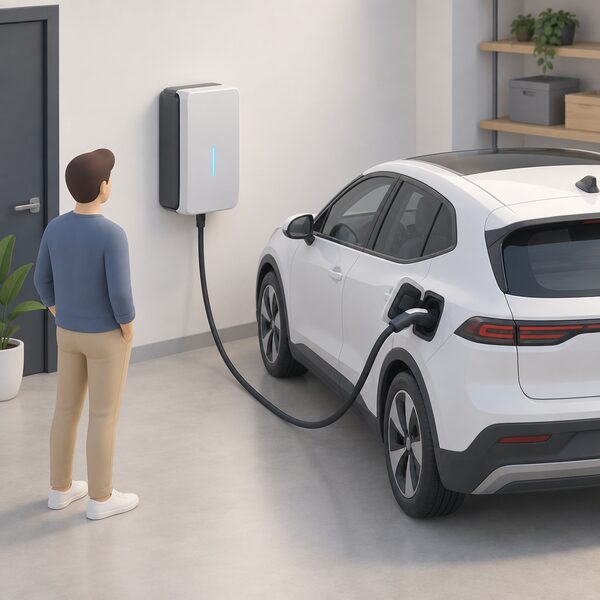
The cost picture is the clearest limit on V2G as a household independence measure today. The hardware premium is real and large, and the projections assume it falls.
At the end of the Sciurus trial, the incremental hardware cost was around £3,700 above a smart chargepoint11. An official case study records the same figure: by the end of the trial, the V2G hardware and installation cost was around £3,700 higher than a smart (monodirectional) charge point6. Cenex predicted V2G hardware prices would fall below that level by 20255.
The forward projections are more encouraging. The V2G Britain report suggests the premium over an equivalent smart charger is expected to reduce to between £656 and £1,164 by 20308. A top-down learning rate and bottom-up component-based projection aligned to predict a premium of around £650 to £1,150 in 20308. Cenex predicts V2G charger cost to fall to £1,000 by 20305.
The charger market has been thin. As of January 2021, four V2G charger models were available in the UK through different suppliers, with new suppliers entering the market regularly10. Named units include the Wallbox Quasar 1 and Indra V2G units, which enable bidirectional energy flow, allowing the EV to both charge and discharge to the grid3. The prototype V2G chargers in the EFES project were developed by Potenza Technologies20.
Battery health: how two-way charging affects the EV battery
This is the question that most affects whether V2G is a net gain for a household, because the car battery is the household's largest single energy asset and its warranty is the manufacturer's, not the household's.
The concern is legitimate but the evidence leans the other way. Uswitch guidance states that there are concerns that frequent charging and discharging could shorten EV battery life, but that the impact should be relatively minimal within recommended guidelines3. The EV-elocity project found that V2G could extend the life of an EV battery by about 10%, around one extra year of use8. Cenex reports that capacity fade can be reduced by 9.1% over a year through battery management, and that this could extend useable battery life by 10%, giving an annual depreciation saving of £2305.
The mechanism behind the extension is that managed charging keeps the battery in a gentler state of charge than uncontrolled charging does. That is a battery management outcome, not an automatic benefit of V2G: it depends on how the chargepoint and the vehicle manage the cycles.
The design priorities of the equipment also bear on this. The focus of EV charging and V2G technology design is customer needs and cost, and it will do just enough to meet grid-related regulations such as fault ride-through and high and low voltage withstand21. Exploiting the full capability of smart EV charging demand side response flexibility and V2G can support decarbonisation targets, reducing operating costs and enhancing system resilience21. The phrase "just enough" is the equipment maker's own framing of how much grid compliance is built in.
V2G, V2H, V2B and V2L: the family of two-way technologies
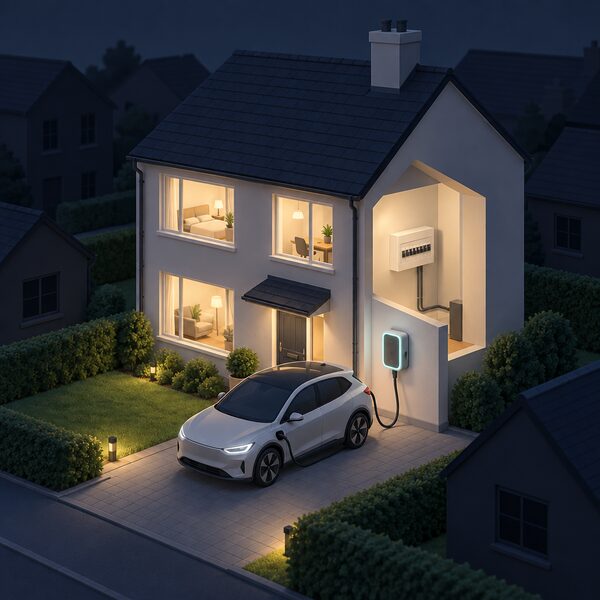
The family shares one underlying capability. V2X allows for electric vehicles to operate bidirectionally, charging from the electricity grid but also discharging to the grid, building or home as needed22. The letters after V2 describe the destination, and the destination determines who benefits.
| Technology | Where the power goes | Independence profile |
|---|---|---|
| V2G | Back to the grid | Earns revenue; timing controlled by a third party |
| V2H | To the home | Backup power during outages; supports off-grid setups, limited to certain EV models and chargers3 |
| V2B | To a building | Building-level supply, typically commercial |
| V2L | To a load, such as a tool or appliance | Direct use, no grid involvement |
V2H is the variant that most directly serves household independence. It can provide backup power from your EV to your home during power outages and support off-grid setups, though it is limited to certain EV models and compatible chargers3. That limitation is the whole story: the capability exists, but the household cannot assume its car has it.
The distinction between V2G and V2H is not only technical but commercial. V2G supplies energy to energy markets and increases use of localised renewables17. V2H supplies the house. A household that wants resilience should be looking at the second; a household that wants income should be looking at the first, and accepting the dependence that comes with it.
There is a further layer of emerging technology in this space. Among the most exciting new technologies to enable the smart, flexible energy system transition are distributed ledger technologies and peer-to-peer energy trading23. These would allow households to trade with each other rather than only with a supplier, which is a genuine change in the structure of dependence, but they remain at the demonstration stage.
Green hydrogen: where it fits and what it costs
Hydrogen is the other technology frequently presented as a route to household energy independence, and the evidence base is much less settled than the V2G case.
Green hydrogen is produced through the electrolysis of water using renewable electricity such as wind or solar2. The process emits zero carbon emissions but is very expensive, so only a small percentage of hydrogen fuel is currently green2. That cost position is the central fact. A fuel that is zero-carbon in production but expensive to make does not deliver independence to a household unless it is cheaper or more controllable than the alternative.
The strategic question is still open. Government intends to take strategic decisions on the role of hydrogen in heating buildings in 20269. By 2035, all new heating systems installed in UK homes will either be low-carbon technologies, such as electric heat pumps, or support new technologies like hydrogen-ready boilers24. That leaves a window in which hydrogen remains a possibility rather than a plan.
On cost, the modelling is long-range. The wholesale costs to supply hydrogen and electricity are broadly similar by 2050 when flexibility management and hydrogen storage costs are considered25. The same work assumes a balanced approach in which legacy transition costs are spread equally between hydrogen and electrified heating users, with new costs allocated to respective user groups25. That is an assumption about who pays, and it is doing a lot of work in the conclusion.
There is also a consumer-choice argument in the modelling: consumers want to be empowered to choose their own heating solutions and not foot the bill for a government mandated decision25. For a household thinking about independence, the relevant point is that hydrogen heating would arrive through a network conversion, which is the opposite of self-sufficiency: the home would remain connected to a piped supply, just a different one.
What V2G needs: a compatible car and a bi-directional chargepoint
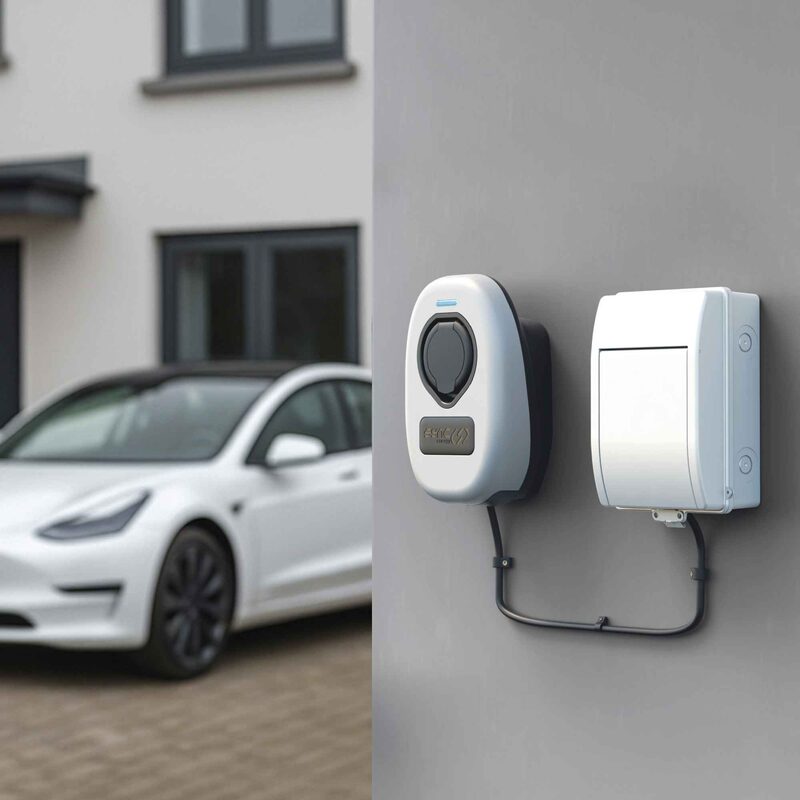
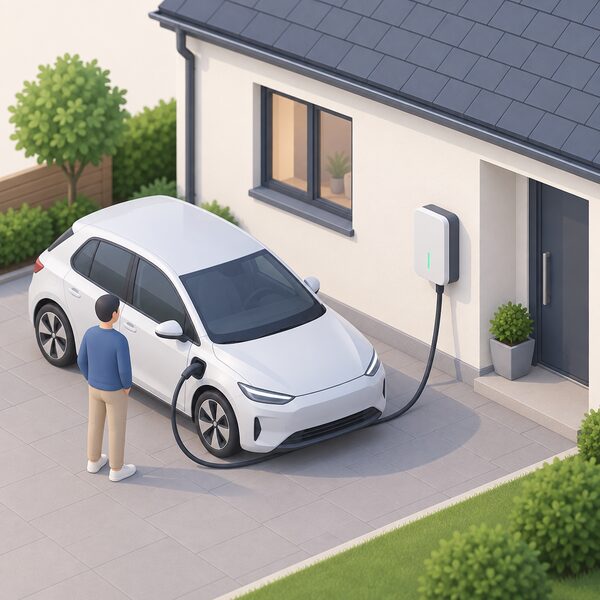
The equipment requirements are specific and all three must be present. To use V2G, a household needs a smart meter, a compatible V2G charger and a car that supports the technology3. Official guidance confirms that this requires a bi-directional chargepoint and for the car to be V2G compatible26.
Installation is not a simple swap. Under the IET Code of Practice for EV Charging Equipment Installation, installers must assess the adequacy of the supply capacity for the new electric vehicle load plus any existing load before installing the charging equipment, assess the adequacy of the earthing before installing the charging equipment, and notify NIE Networks of the installation27. The last requirement is specific to Northern Ireland, where the network operator is NIE Networks; the supply capacity and earthing assessments apply across the UK.
The application route for trials is also a filter. Trials often require specific EV models, compatible chargers and may involve a selection process, with application procedures covering online registration, eligibility verification and coordination with installers and energy suppliers3. A household cannot simply buy into a trial.
Where V2G stands in the UK today
The UK has run a substantial programme of V2G demonstration, and the results are the best evidence available. Since the beginning of the project, 330 V2G devices have been installed across the UK6. Project Sciurus recorded more than 750MWh of energy offset through V2G11. The UK pilot project was supported by funding from the Office for Low Emission Vehicles, now OZEV, and the Department for Business Energy and Industrial Strategy6.
The projected national capacity is significant. If 50% of the UK's EVs were V2G enabled, this would open up 22 TWh of flexible EV discharging capacity per year and could provide around 16GW of daily flexible capacity to the grid4. The same projection appears in Ofgem's case study6. The V2G Britain feasibility study is part of the Vehicle-to-Grid competition8.
Connection processes are improving. UK Power Networks has become the first network operator in the UK to approve new connection requests automatically within seconds, including for EV chargers that enable V2G18. That removes one administrative barrier, though it does not change the hardware or vehicle requirements.
Supplier involvement remains trial-based. Several suppliers, including Octopus Energy, offer V2G schemes in the UK as part of trials and partnerships with companies such as UK Power Networks, Nissan and Indra Renewable Technologies3. Toyota plans to expand its energy collaborations to additional countries and introduce more advanced solutions, including V2G19.
The honest summary for a household is that V2G today is a demonstration-stage technology with a measured hardware premium of around £3,700, a revenue range from £150 to £725 a year depending on scheme and tariff, and a battery-life picture that is more favourable than early fears suggested. It increases a household's energy options but deepens its dependence on a supplier, a chargepoint maker and a vehicle manufacturer's warranty terms. For related technologies, see bidirectional charging, vehicle-to-home and vehicle-to-load, bidirectional chargers, V2G earnings and tariffs, V2G, battery degradation and warranties, grid connection rules for bidirectional charging, which cars support bidirectional charging, hydrogen home heating trials, green hydrogen production and cost, and the emerging home energy technology pillar.
Sources27 cited
- Vehicle-to-Grid Best Practice Guide, Energy Saving Trust, 2026-05-05
- Hydrogen Heat: Could It Be the Future of Home Heating?, Elmhurst Energy, 2025-07-04
- Vehicle-to-Grid Charging Guide, Uswitch, 2025-07-02
- UK First Approach to Fast Track Vehicle-to-Grid Technology, UK Power Networks, 2026-03-12
- Vehicle-to-Grid (V2G), Cenex, 2026-09-17
- Case Study: UK Electric Vehicle to Grid (V2G) Charging, Ofgem, 2021-07-06
- Project Sciurus Trial Insights Report, Cenex, 2021-05
- V2GB: Vehicle to Grid Britain, Cenex, 2026-09-17
- Heat and Buildings Strategy, UK Government, 2026
- Supporting the Shift: Information and Advice for Energy Home Upgrades, Citizens Advice, 2026-07-29
- Home Energy Generation, Planning Portal, 2026
- Renewable Energy, Carmarthenshire County Council, 2025-07-01
- Support to Generate Your Own Electricity, nidirect, 2025-09-22
- Energy Smart Appliances Research Briefing, House of Commons Library, 2026-09-20
- EV Basics, Zapmap, 2024-05-14
- V2G Britain Case Study, Cenex, 2030
- An Introduction to Vehicle-to-Grid Charging for Electric Vehicles, Cenex, 2021-08-23
- Toyota to Expand EV Charging Ecosystem Across the UK, SMMT, 2025-12-04
- Register Energy Devices in Homes or Small Businesses, UK Government, 2021-03-31
- EFES V2G Data Analysis, Cenex, 2019-04-09
- Resilient Electric Vehicle Charging, Energy Systems Catapult, 2022-02-21
- Well-Adapted Energy System, Climate Change Committee, 2026-09-19
- Trading Sunlight, Solar Energy UK, 2026-09-17
- Ditching Costly Gas and Oil Is Cheaper Thanks to Heat Pump Scheme, UK Government, 2035
- Economics of Hydrogen for Heat, Cadent Gas, 2025-04
- EVs and Heat Pumps FAQs, NIE Networks, 2026-09-19
- Solar Power Facts, Energy Saving Trust, 2026-08-13
 Energy Independence RulesExamines how the regulatory framework helps or hinders a household trying to generate, store and use its own energy, from connection rules to export arrangements and metering obligations.
 Cooling and Energy IndependenceExplains how passive measures, efficient cooling and on-site generation reduce a household's dependence on grid electricity in summer.
 Energy Security for HouseholdsCan a household really protect itself from gas and electricity price shocks, and what actually makes a difference?
 Technology by Home TypeWhich new energy technologies actually work in a flat, a terrace or a rural home?
 Batteries and IndependenceHow far home battery storage moves a UK household away from the grid and supplier pricing, covering self-sufficiency, winter limits, cost, lifespan, backup, export payments and flexibility earnings.
 Energy IndependenceHow the choice of installer or retailer shapes a household's long-term control over its energy system, from certification and consumer codes to spare parts, servicing access and what happens when a firm stops trading.