
In this guide
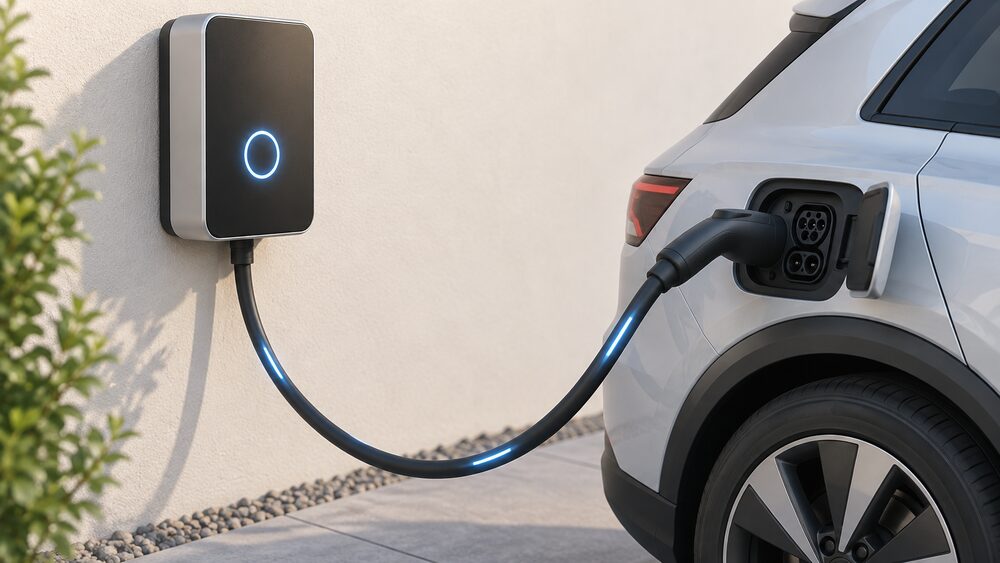
The Wallbox Quasar is a bidirectional charger: a unit that lets an electric vehicle either draw power from the home supply or send power back out to the house or the grid1. It is the product most often named when UK householders first encounter vehicle-to-home and vehicle-to-grid charging, and it is a DC charger built around the CCS connector rather than the Type 2 AC connector used by ordinary home wallboxes2.
The important qualification is availability. Bidirectional charging is allowed in the UK and the government is keen to encourage it, but the technology is currently being trialled in some places and is not widely available3. Wallbox's mainstream UK presence is in conventional smart AC charging, where the Pulsar Plus is listed among the top smart chargers sold in the UK4. The Quasar sits in a different category: technically proven in trials, commercially narrow, and dependent on a car that supports the standard.
For a household, the Quasar represents a genuine shift in what an EV is for. Instead of a load on the house, the car becomes a store of energy that can be moved back into the building. What it does not do is remove dependence on the grid, on a supplier, or on the manufacturer's software and support. This page sets out what the equipment does, what it requires, and where the limits sit.
What the Quasar is: a bidirectional charger that lets an EV power the home
Bidirectional charging is the general term for equipment that lets an EV either draw or supply power to your home or the grid1. The Quasar is the best-known domestic example. Independent guidance names it directly, describing smart V2G chargers such as the Wallbox Quasar 1 and Indra V2G units as enabling bidirectional energy flow, allowing the EV to both charge and discharge to the grid2.
That description matters because it separates the Quasar from an ordinary home charger. A standard 7kW wallbox is a one-way device: power flows from the grid into the car and stops there. A bidirectional unit adds an inverter path so the direct current stored in the vehicle battery can be converted into alternating current the house can use, or exported. The same hardware, run in reverse, is what makes vehicle-to-home and vehicle-to-grid possible at all.
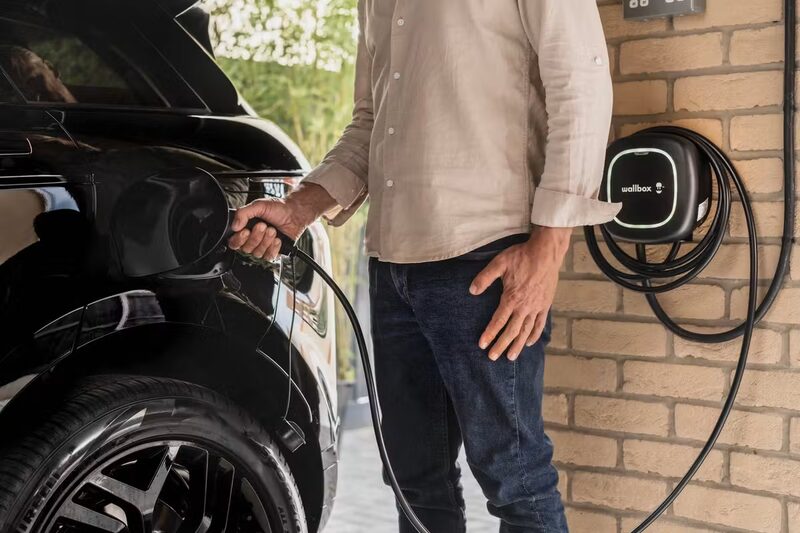
The technology is not yet a mass-market product in the UK. Independent guidance states plainly that bidirectional charging is currently being trialled in some places but is not widely available3. That is the single most important fact for anyone searching for a Quasar by name: the concept is established, the trials are real, and the retail route is thin. Wallbox's own UK-facing accessory and product pages concentrate on AC charging hardware, cables and power meters rather than on a widely stocked bidirectional unit8.
V2H and V2G: what the two modes actually do
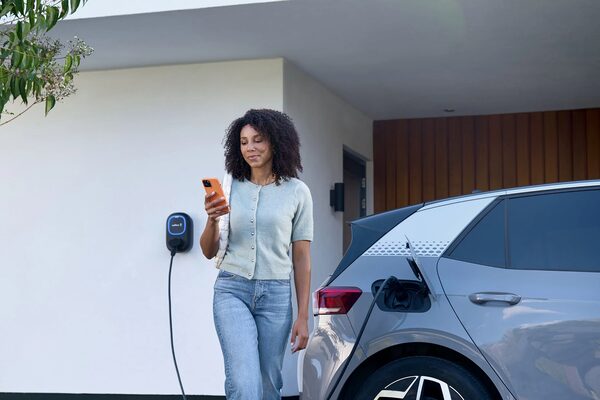
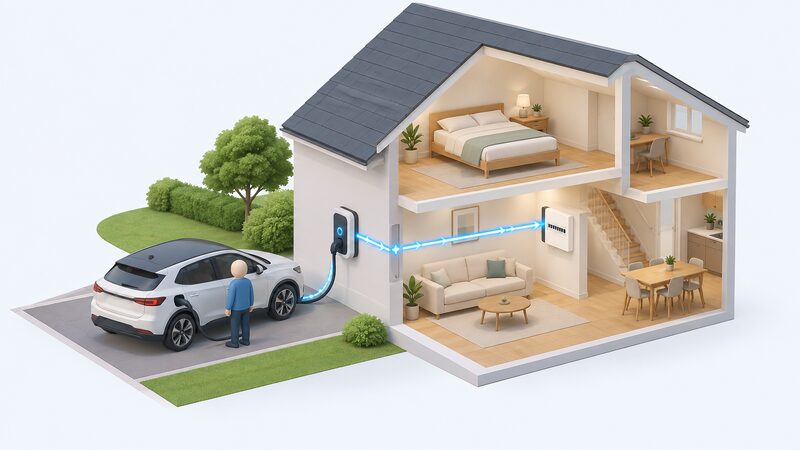
Vehicle-to-home and vehicle-to-grid are two different uses of the same bidirectional hardware, and the distinction is about where the power goes. V2H supplies the building: the car's battery discharges into the house's circuits, offsetting what would otherwise be drawn from the grid. V2G goes further and exports to the network, so the car becomes a small generator that the grid can call on.
Some products are described by their makers as doing both. The SigenStor, for example, is listed with V2H and V2G capabilities9. That is a maker's description of its own product, and it shows the direction of travel: bidirectional capability is being folded into home energy storage systems rather than sold only as a standalone charger.
The practical difference for a household is what the energy is worth. V2H displaces imported electricity, so its value tracks the import price at the moment the car discharges. V2G earns from export, which depends on a tariff or a flexibility contract that pays for the service. Neither is automatic: both depend on the car, the charger and the software agreeing on when and how much power moves. The three conditions set out by independent guidance are an electric car, suitable charging infrastructure including wallboxes that support bidirectional charging, and a uniform software language6. Where any one of those is missing, the mode does not run.
DC charging with CCS2: how the Quasar differs from AC bidirectional units
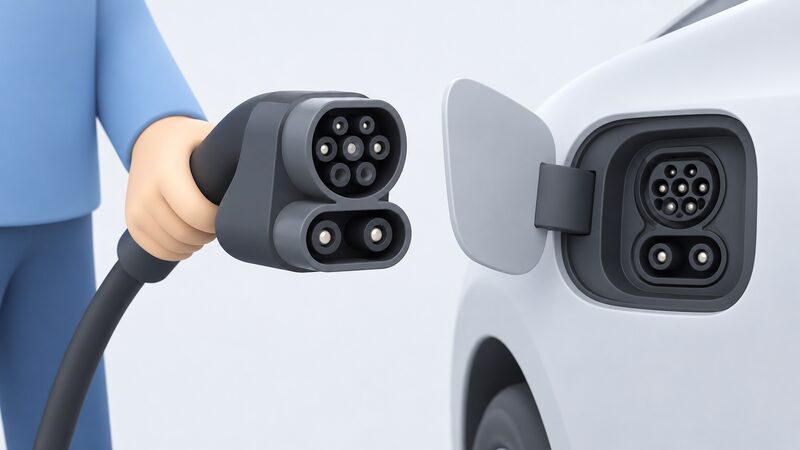
The Quasar is a DC charger, and that shapes everything about it. CCS connectors are the standard for rapid DC charging in the UK and Europe, and they look similar to the Type 2 connector but have an additional two DC pins5. Those two pins are what carry direct current at high power, and they are why CCS equipment supports rapid and ultra-rapid charging at power levels from 25kW to 400kW+5.
The split between connector types is well established. Home and slower chargers, at around 7kW, use Type 2 connectors, while rapid chargers almost always use CCS plugs10. CCS is described as the main connector type for higher-powered DC charging11. Destination chargers at locations such as supermarkets are commonly 50kW, though some networks have installed 25kW DC chargers with CCS or CHAdeMO connector types12.
| Connector | Current | Typical use | Power level |
|---|---|---|---|
| Type 2 | AC | Home and slower charging | Around 7kW10 |
| CCS | AC and DC combined | Rapid and ultra-rapid DC charging | 25kW to 400kW+5 |
| CCS at destination sites | DC | Supermarkets and similar locations | 50kW typical, some 25kW12 |
A car must have the right inlet for any of this to work. The Kia EV6, for example, uses the CCS charging standard, which consists of a combined AC and DC inlet port13. That combined port is what allows one vehicle to accept slow AC charging at home and DC charging on a rapid charger, and it is also the physical prerequisite for a DC bidirectional unit. A car with an AC-only inlet cannot use a DC charger of any kind, bidirectional or otherwise.
Solar charging integration and home energy management
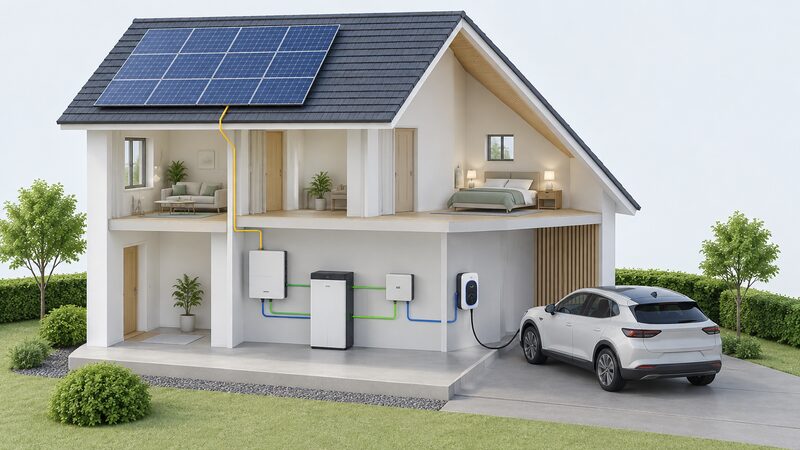
Solar panels convert sunlight into electricity, and they work during daylight even when it is cloudy or overcast, because they use light rather than heat to generate energy14. That generation can be used in the building it is installed on15, and it can also be stored. The question for a bidirectional charger is whether it can be told to charge the car from the roof rather than from the grid.
Wallbox sells power meters that enable solar EV charging8, and solar panel integration is listed as a feature of the Pulsar Max16. Those are maker and product-page facts about Wallbox's own equipment, and they describe the AC side of the range rather than the Quasar specifically. The principle carries across: a charger that can read the home's generation and import can be set to divert surplus solar into the car, and a bidirectional unit can later move that energy back into the house.
The wider context is that solar and storage are increasingly designed together. Independent guidance on home batteries notes that storage changes when and how generated electricity is used, and that not every system behaves the same way in an outage7. For a household, the combination of solar, a home battery and a bidirectional charger is the closest thing to a self-contained energy system available at domestic scale, but each element adds a dependency: an inverter, a manufacturer's app, and a control system that decides where the power goes.
Backup capability: keeping the house supplied during an outage
Back-up power is the feature most householders assume comes with a bidirectional charger, and it is the one most often overstated. Independent guidance is explicit: in some cases these storage devices can provide back-up supplies for use in a power cut, but this is not always possible7. The same guidance advises checking with an installer rather than assuming.
The point is repeated in guidance on home batteries. If you are looking to protect yourself against power cuts with a home battery, not all systems are suitable17. Householders are advised to ask their installer whether a battery will work in a power outage, and for how long17. Those two questions, whether and how long, are the ones that determine whether back-up is a real capability or a marketing line.
For a Quasar owner, the practical position is that the car's battery is large enough to matter, but the hardware has to be designed and wired to island the house from the grid safely during an outage. That is an installation question, not a product specification, and it is the reason back-up claims should be tested against the actual system design rather than the charger's marketing.
Why the Quasar is the best-known bidirectional charger in the UK
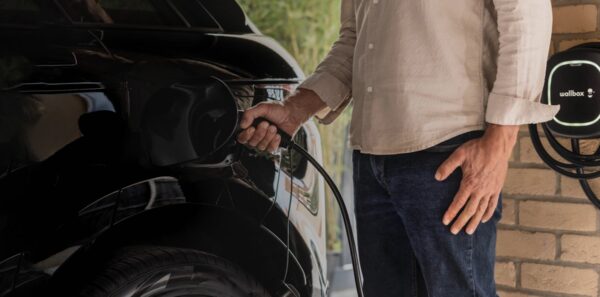
The Quasar's reputation runs ahead of its availability, and the reason is timing. It arrived as one of the first domestic bidirectional chargers to be named in independent UK guidance, alongside the Indra V2G units2. Being named in that guidance, rather than being widely stocked, is what fixed the name in the UK market's mind.
The charging landscape around it has grown quickly. Slow and fast chargers are the most common public chargers, accounting for around 80% of all UK chargers18. Rapid and ultra-rapid provision is concentrated in particular regions: the East of England has 3,212 such chargers, followed by Scotland with 3,39519. Network operators have also been building out storage and flexibility infrastructure that bidirectional charging would interact with21.
Wales provides a useful illustration of how planning documents treat the technology. Official Welsh charging strategy modelling projected total charger numbers for 2030 under two scenarios: Swansea at 57,145 chargers in a fast-dominant scenario and 55,685 in a rapid-dominant one, and Cardiff at 61,100 and 58,285 respectively22. Those are modelled projections for public charging, not domestic bidirectional units, but they show the scale at which the surrounding infrastructure is being planned.
Against that backdrop, the Quasar's profile is best explained by the gap between a well-publicised concept and a narrow product market. Bidirectional charging is allowed in the UK, and the government is keen to encourage it6. That policy encouragement, combined with a small number of named products, is what keeps the Quasar at the front of the category.
What owning a Quasar means for household energy independence
A bidirectional charger changes the household's relationship with its car, and to a lesser extent with the grid. The car becomes a store that can supply the building, which reduces the amount of electricity that has to be imported at peak times and increases the value of any generation the household produces itself. That is a real gain in independence, and it is the reason the technology attracts policy support6.
What it does not do is take the household off the grid. The car still charges from the mains, the charger still needs a supply, and the control software still depends on the manufacturer. The same pattern appears across home energy technology: a home battery can shift when electricity is used, but not all systems can run the house in an outage, and the capability has to be confirmed with an installer7. Independence here is a matter of degree, not a switch.
There is also a dependence on the vehicle. The three conditions for bidirectional charging include a uniform software language as well as the car and the infrastructure6. That means the household's independence is partly contingent on a manufacturer's software decisions, on standards that are still settling, and on a car that supports the standard. Where those hold, the household gains a genuine second energy store. Where they do not, the charger is an expensive one-way unit.
What to check before choosing a bidirectional charger
The first check is whether the technology is available at all in the intended form. Bidirectional charging is currently being trialled in some places but is not widely available1. A householder should establish what is actually installable now, rather than what is announced.
The second is the car. Bidirectional charging requires an electric car, suitable charging infrastructure including wallboxes that support bidirectional charging, and a uniform software language6. A vehicle without a combined AC and DC inlet port, such as the CCS port used on the Kia EV613, cannot use a DC bidirectional charger.
The third is back-up. Not all systems are suitable for power cuts, and the capability and its duration should be confirmed with an installer17. Independent guidance on storage makes the same point: back-up is possible in some cases but not always7.
The fourth is the surrounding equipment. Wallbox's own accessories illustrate how tightly the ecosystem is tied together: its RFID cards are compatible with the Pulsar Pro, Commander 2, Copper SB, Quasar 2 and eM4, and its cable holders and docks are compatible with all Wallbox chargers8. Those are maker facts about Wallbox's own products, and they show that the charger is one part of a system rather than a standalone purchase.
For wider context on how these systems fit together, see bidirectional charging, vehicle-to-home and vehicle-to-load and bidirectional chargers. The standards that govern them are covered in bidirectional charging standards, and the vehicles that support them in which cars support bidirectional charging. For the wider picture of emerging home energy technology, start with the pillar guide.
Sources22 cited
- Battery storage, Energy Saving Trust, 2026-08-19
- Vehicle-to-grid charging, Uswitch, 2025-07-02
- Battery storage (England), Energy Saving Trust, 2026-08-19
- Best EV tariffs for multi-car families, Uswitch, 2025-07-02
- Connector types, Zapmap, 2026-05-20
- What is bidirectional charging, Carwow, 2025-05-30
- Storage, Electricity North West, 2026-09-19
- Accessories, Wallbox, 2026-09-20
- SigenStor, Sigenergy, 2026-09-17
- Electric car charging guide, Carwow, 2025-07-16
- Guide to EV charging, Zapmap, 2026-09-04
- Destination charging, Zapmap, 2026-02-26
- Kia EV6 charging, Zapmap, 2026
- Solar panel myths, Which?, 2026-06-09
- Solar panels, East Herts Council, 2026-09-17
- Lifetime cost of an electric vehicle, Uswitch, 2024-11-26
- Solar panel battery storage, Which?, 2026-05-14
- How to use electric car charging points, Which?, 2026-05-20
- EV charging statistics, Zapmap, 2026-08
- EV charging statistics, Zapmap, 2026-08
- Electric vehicle charging strategy for Wales, Welsh Government, 2021-03
- How do solar panels work, Smart Energy GB, 2026-03-16
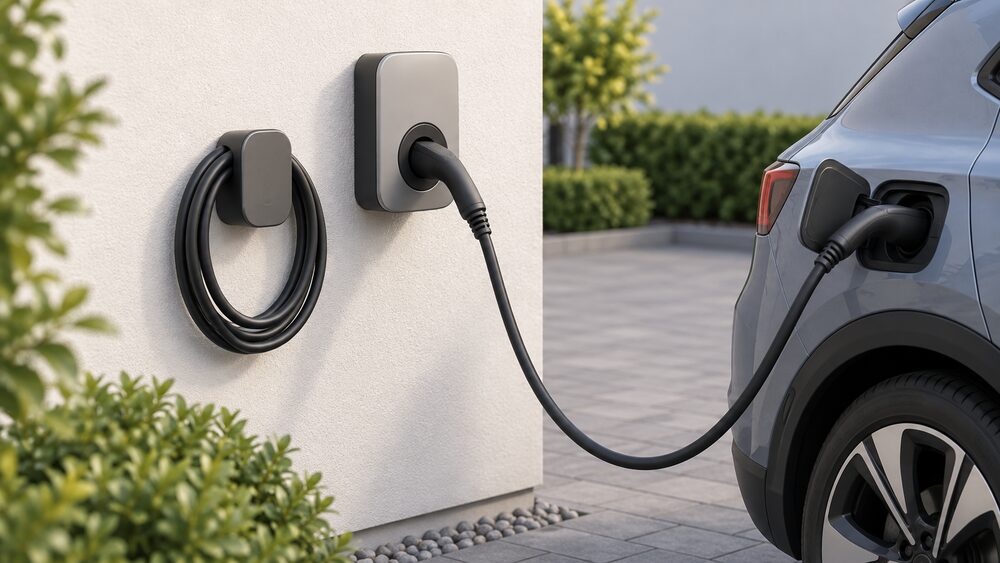 Wallbox home EV chargersWhich Wallbox charger suits your car and your home supply?
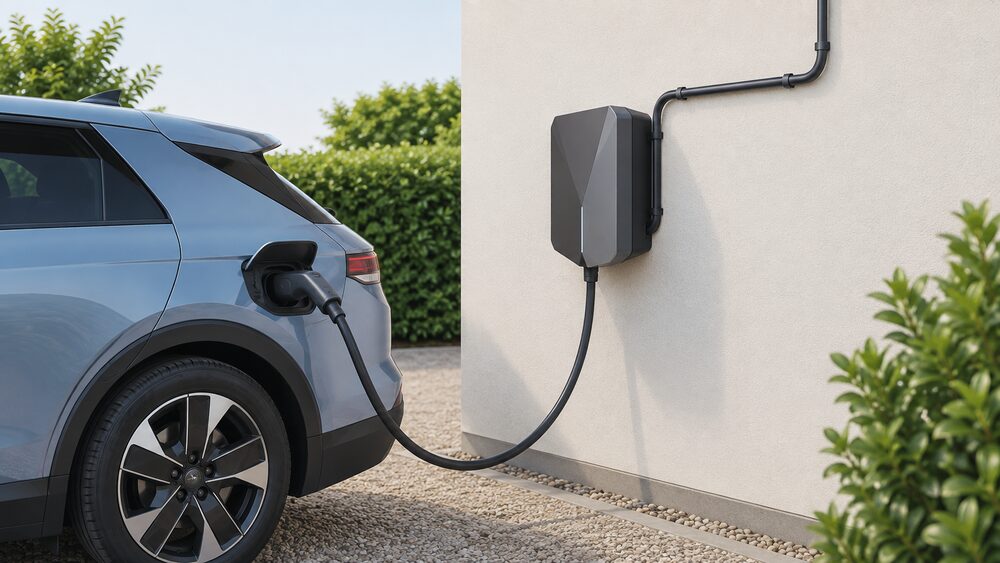 Wallbox Quasar 2The Wallbox Quasar 2 lets you run your home off your electric car and send power back to the grid.