In this guide
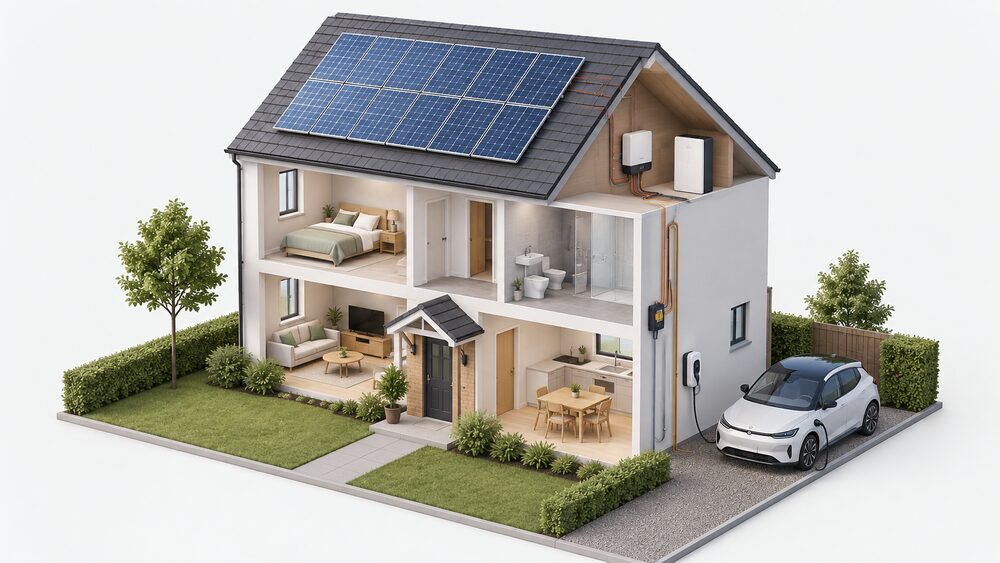
Charging an electric car from solar panels means diverting the electricity a roof is already generating into the car instead of sending it to the grid. It is not a separate fuel supply: it is a way of using the same electrons twice, once for the house and once for the vehicle. The practical reality for most households is a hybrid approach, where solar covers as much of the charging as it can and the grid fills the gaps1.
The mechanism is a charge point that can see how much the array is producing and how much the house is using, then vary the current it sends to the car to match whatever is left over. Standard EV chargers draw electricity from the home supply without distinguishing between solar-generated power and grid electricity, so the surplus-tracking behaviour is a feature of the charger, not of the panels1. A typical 4kW solar panel system, made up of 8 to 12 panels, can generate approximately 3,400 kWh annually under UK conditions, which is a meaningful share of an average car's annual demand but rarely all of it2.
The limits are real and worth stating at the outset. Solar power alone is unlikely to be relied on year-round in the UK, especially in winter, and a home battery helps store excess energy so charging is more consistent when the sun is not shining1. What follows is how the kit fits together, what the modes do, how much roof is needed, and where the arrangement runs into compatibility and regulatory edges.
What charging an EV from solar actually involves
The idea is simple and the plumbing is not. A solar array produces direct current, an inverter converts it to alternating current for the house, and the charge point sits on the same consumer unit as everything else. What makes solar charging different is that the charger is given a live signal of generation and consumption, usually from a current transformer clamp on the incoming supply, and it modulates the current it offers the car so that it never exceeds the surplus.
Without that signal, the car charges from the grid and the solar output is either used by the house, stored in a battery, or exported. With it, the charger can hold the car at a low rate through the middle of the day and let it rise and fall with passing cloud. The Energy Saving Trust notes that charging an EV with renewable energy such as solar panels significantly reduces a household's carbon footprint, which is the environmental case for the arrangement10.
The practical case is cost. Charging from your own electricity is significantly cheaper than using grid power and far cheaper than petrol or diesel over the same distance1. That is the whole argument for surplus charging: the marginal cost of a kilowatt hour already generated on the roof is close to nothing, and exporting it at a low rate then buying it back at a higher one is a poor trade.
There is a second, quieter benefit. A home battery captures surplus solar energy for later use, including overnight EV charging, whereas without it unused solar electricity is wasted or exported to the grid, often at a relatively low rate1. The battery turns a midday surplus into an evening charge, which matters because most households are not at home in the middle of the day.
"For most homeowners, the practical reality is a hybrid approach: solar covers as much of the charging as it can, and the grid fills the gaps."
The kit you need: panels, inverter, battery and a smart charger
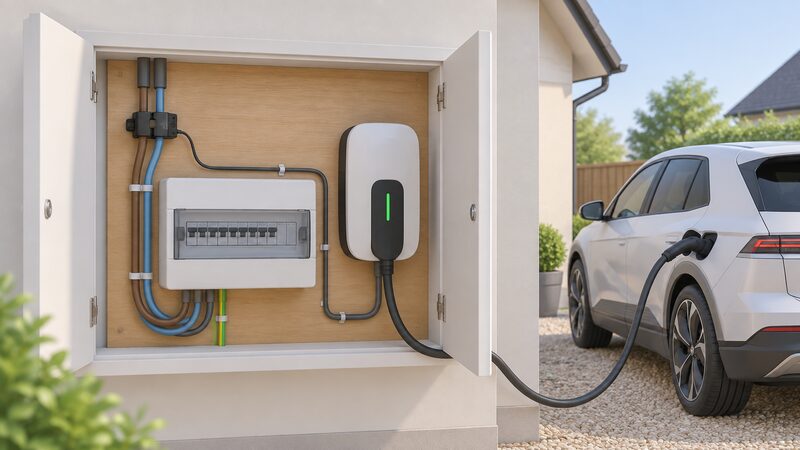
A solar EV charging setup is assembled from five parts. Maker guidance lists solar panels to capture sunlight and convert it to electricity, an energy storage system, an EV charging station to deliver electricity to the vehicle, an inverter, and smart management features covering scheduling, remote monitoring and energy flow management11. The inverter is the piece that makes the roof's output usable, and official guidance describes photovoltaic panels as coming with cabling, a control panel and an AC/DC inverter12.
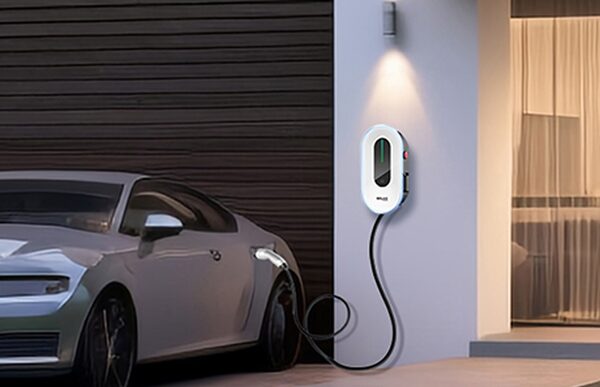
The charge point is the part that decides where the electricity goes. Smart chargers work with solar panels, and sometimes with an energy bill, to charge the car at the best and cheapest time, usually when the panels are making the most power3. A charger without that capability will simply pull from the supply.
Installation is not a DIY job. EV chargers should be installed by a qualified electrician with relevant experience, and compatibility between the charger, the solar system and any battery storage should be considered from the outset1. Maker guidance is blunter: installation of a solar EV charger at home typically requires the help of a certified solar installer and electrician11. The reason is that the charger, the inverter and the battery all need to agree on who is measuring what.
A battery is optional but changes the shape of the day. Maker guidance answers the question of whether a battery is required with a no, but adds that a solar battery helps store excess energy, ensuring more consistent charging even when the sun is not shining3. Independent guidance on storage makes the same point from the household side: with a 6kWh battery, a household with 3.5kW of solar might be able to use 70% of the solar generated energy13.
For a household that wants a smaller entry point, plug-in solar kits exist. These are likely to include one or two panels, an inverter, mounting equipment, cable and a standard three-pin plug, and typically one or two solar panels, a microinverter, a lead fitted with a three-pin plug, mounting brackets and a monitoring app14. They are a different proposition from a roof array and are covered separately in plug-in solar.
How much solar you need: four to ten panels can cover an average EV
The honest answer is that it depends on the car, the mileage and the roof, and the sources give a range rather than a single number. A typical 4kW solar panel system, made up of 8 to 12 panels, can generate approximately 3,400 kWh annually under UK conditions2. Against a typical electric car's annual consumption, that is a substantial contribution but not a complete one.
Panel counts vary by source and by what is being described. Independent guidance states that most systems contain around 6 to 10 panels16. Official guidance for a 3.5kWp system describes using between six and 12 panels17. Solar Energy UK puts a typical system at 10 to 14 solar panels18. The differences reflect system size, panel wattage and the year the guidance was written rather than any disagreement about physics.
| Source | Typical panel count | Notes |
|---|---|---|
| CIPHE | 6 to 10 panels | Most systems16 |
| NICEIC | 6 to 10 panels | Most systems16 |
| London Borough of Hammersmith and Fulham | 6 to 12 panels | 3.5kWp system17 |
| Solar Energy UK | 10 to 14 panels | Typical system18 |
| Uswitch | 8 to 12 panels | 4kW system, approximately 3,400 kWh a year2 |
What the roof area delivers is a separate measure. As a general rule, 10m2 to 20m2 of PV panels will generate between 20 and 40% of a typical household's electricity needs4. That figure is for the whole house, not the car, and it is the number to hold on to when judging whether a solar array can carry an EV as well.
The efficiency of the panels themselves sets a ceiling. Most PV panels only absorb up to 70% of the solar energy available to them, according to a product-page figure citing published research19. That is a property of the technology rather than of any installation, and it explains why roof area and orientation matter as much as headline wattage.
Charging modes: solar only, solar plus grid, or full speed from the grid

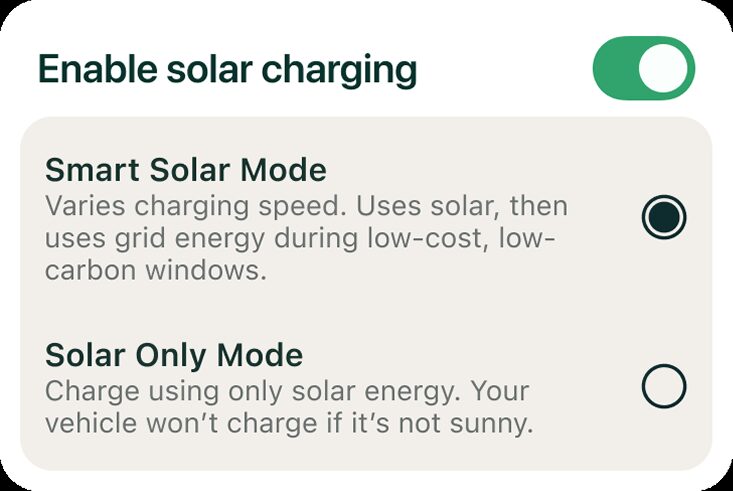
Solar-aware chargers typically offer a small set of modes, and the differences between them matter more than the marketing names. Some chargers have special modes to charge the EV only using the extra solar energy that is not being used in the house and would otherwise be sent back to the grid3. That is the strictest setting: the car takes nothing but surplus.
At the other end is a full-rate grid charge, which ignores generation entirely and charges as fast as the supply and the vehicle allow. In between sits a mixed mode that tops up the solar with grid electricity so the car reaches a target by a set time. The three main types of EV charging, slow, fast and rapid, describe the power level rather than the source, and a home charge point is a slow or fast device20.
Maker product pages give the modes their own names. One charger's Full-Green mode charges using exclusively solar energy and starts automatically when enough surplus solar energy is available5. Another describes a smart charger solution where the EV is charged dynamically only by surplus solar power21. The behaviour is the same idea under different labels.
A combined solar, storage and charging system adds a fourth state. During daylight hours, solar panels first power the home, then supply energy to charge the EV, and finally store any excess in the battery or export it to the grid for credit11. At night, the system prioritises stored battery energy to power the home and charge the EV, and if the battery is depleted it switches to grid power11. That ordering is what makes the system feel automatic to the householder.
| Mode | Source of electricity | Typical use |
|---|---|---|
| Solar only | Surplus generation only | Long daytime parking, low mileage |
| Solar plus grid | Surplus first, grid tops up | Overnight target charge |
| Full speed from grid | Grid only | Rapid top-up before a journey |
| Battery first | Stored solar, then grid | Evening and overnight charging11 |
Smart chargers that divert surplus solar to your car
The diversion itself is done by the charger, not by the panels. Smart chargers can monitor real-time solar electricity production and adjust charging speed accordingly by drawing more or less power, and switch seamlessly between solar and grid supply depending on availability1. That continuous adjustment is what keeps the car from pulling grid electricity when the sun goes behind a cloud.
The features that matter when choosing a unit are consistent across independent guidance. Solar diversion allows the charger to prioritise solar power for EV charging and minimise reliance on the grid, and it sits alongside app control and dynamic scheduling as the desirable features of a solar-integrated charger2. Dynamic load balancing is the safety counterpart: it keeps an eye on how much electricity the house is using and changes the charging speed of the EV, stopping the electrical circuits from overloading3.
Compatibility is not universal. One maker states that its solar charging is not compatible with multiple-charger installations and OCPP, while another lists OCPP as a supported protocol on its smart charger and states compatibility with different-brand PV5. A household with two electric cars, or one planning to add a second charge point, needs to check this before buying rather than after.
Three-phase homes: how 3P optimisation can deliver up to 200% more solar energy
A three-phase supply changes the arithmetic of surplus charging, because a car connected to three phases can be charged at a low rate on each of them rather than being held at a minimum on one. One maker states that up to 200% more solar energy can be delivered to the EV, comparing a three-phase installation with and without the 3P optimisation feature using Full-Green mode5. The same maker's material describes the unit intelligently switching a three-phase charger to single-phase when enough solar surplus is detected5.
Those two statements sit awkwardly together. The maker's own material says both that the charger switches to single-phase automatically when surplus is detected, and that moving back to three-phase grid charging requires the EV cable to be unplugged and plugged in again5. The two accounts disagree, and a household with a three-phase supply should treat the behaviour as model-specific and confirm it with the installer.
The reason three-phase matters is the minimum current a car will accept. A single-phase charge point that can only modulate down to a floor will stop and start as clouds pass, whereas spreading the same power across three phases lets the charger hold a lower total rate without dropping below the vehicle's minimum. That is the mechanism behind the claimed gain, and it is why the feature is offered on three-phase units specifically.
For most UK homes the question is academic, because domestic supplies are single-phase. Where a three-phase supply exists, the gain is worth having, but the control behaviour is the part to pin down before installation rather than the headline percentage.
Charging apps and software-only solar charging
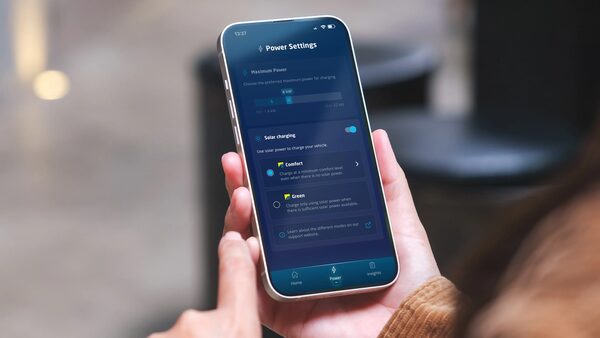
Not every household needs a new charge point to charge from solar. Some systems put the intelligence in the inverter or the battery rather than the wallbox, and the charger is told when to draw. Maker guidance describes a smart EV charger solution that charges the car with surplus solar power and charges EVs with renewable energy, with the coordination handled by the wider system21.
The app is where the household sees and controls this. Solar charging is normally enabled in the charger's app once the hardware is installed and the current transformer clamp is fitted, and the mode then appears alongside scheduling and monitoring. Where the option does not appear, the usual causes are a missing measurement feed, a firmware version that predates the feature, or a charger that was installed without solar awareness.
Software-only approaches have limits. A charger that cannot modulate its current cannot follow a passing cloud, so the car either takes from the grid or stops. The value of a solar-aware wallbox is precisely that it can vary the rate continuously rather than switching on and off.
There is a regulatory wrinkle worth knowing about. In a consultation response on energy smart appliance regulations, BEAMA states that as it stands the Government are saying that those with solar panels cannot charge their vehicles optimally through solar and still have a randomised delay, up to 30 minutes, which renders the optimised charging schedule through solar less effective22. That is a live policy tension rather than a settled rule, and it affects how well any software-only approach can track generation.
Where solar charging falls short: compatibility limits and setup quirks
The limitations are consistent and worth stating plainly, because they are not fixed by buying a bigger charger.
- Not compatible with every installation. At least one maker states solar charging is not compatible with multiple-charger installations and OCPP5.
- Minimum current floors. A car will not accept an arbitrarily low charging rate, so surplus charging stops and starts on cloudy days rather than trickling continuously.
- Winter output. Solar power alone is unlikely to be relied on year-round in the UK, especially in winter1.
- Battery drain. A charger set to draw from a home battery will empty it into the car unless the mode is configured to track generation only.
- Planned outages. SSEN states that it does not provide specific compensation for being unable to charge an EV or export electricity from solar panels during a planned outage23.
- Cost remains the barrier to adoption. Official statistics identify cost as the main barrier to adopting EVs, heat pumps and solar panels among consumers unlikely to take up low carbon technologies24.
The setup quirks are mostly about control rather than capability. Switching back to full-rate three-phase grid charging requires unplugging and replugging the cable on one maker's unit5. A charger that has been set to solar-only will not charge overnight unless the mode is changed. None of these are faults, but they are the kind of detail that decides whether the arrangement feels automatic or fiddly.
Grants, VAT and the rules changing around home chargers

The financial rules around home charging are more settled than the solar side. Electricity for home EV charging carries 5% VAT, against 20% for electricity used for public charging away from home6. That gap is the reason home charging is cheaper per mile than rapid charging, and it applies whether the electricity comes from the roof or the grid.
Grant support is narrower than many households expect. The Electric Vehicle Chargepoint Grant offers up to £350 per socket for residential landlords, people living in flats and people who rent their homes8. The same scheme is described as supporting electric vehicle buyers living in flats and rented properties, and as available for renters and flat owners installing charge points at home10. Owner-occupiers of houses with their own driveway are not the target of the current scheme.
| Item | Position | Source |
|---|---|---|
| VAT on home EV charging | 5% | 6 |
| VAT on public EV charging | 20% | 7 |
| Chargepoint grant | Up to £350 per socket | 8 |
| Eligible for grant | Residential landlords, flat residents, renters | 8 |
| Scheme administrator | Office for Zero Emission Vehicles, with Energy Saving Trust webinars | 27 |
Planning rules have moved in the household's favour in England. Home EV chargers, public charging points and business installations now fall under permitted development rights28. Where a planning application is still needed, official guidance advises ensuring the development minimises impact on the visual context of the local area, for example by placing the charge point around the side of the house, on a porch, or disguising it with bushes and plants29.
VAT relief on energy-saving materials has also been extended. Electrical batteries that store electricity generated by certain energy-saving materials and from the grid have been added to the list of eligible materials, along with water source heat pumps and diverters and certain preparatory groundworks30. That matters for a household adding storage alongside solar and a charger.
The policy direction is not settled. ChargeUK has called for action on charge point operators' energy costs, to address the VAT penalty and to introduce EV charging to the existing renewable fuel credit scheme31. NAPIT has urged the Government to rethink a pay-per-mile scheme for electric vehicles26. Both are industry positions rather than rules, and neither changes what a household pays today.
What solar charging means for energy independence
Solar charging moves a household part of the way towards independence and leaves it dependent in specific, identifiable ways. The gain is real: the electricity is generated on the property, the marginal cost is close to nothing, and the household is not buying that energy from a supplier at a retail rate. Charging from your own electricity is significantly cheaper than using grid power and far cheaper than petrol or diesel over the same distance1.
The dependencies that remain are worth naming. The system falls back to the grid: if solar production is insufficient and battery storage is depleted, the system automatically and seamlessly switches to drawing power from the utility grid11. The charge point itself is a manufacturer's product with an app, a firmware path and a company behind it, and the household's control runs through that software. The car is a separate dependency again.
Storage changes the balance but does not remove it. A home battery captures surplus solar energy for later use, including overnight EV charging, whereas without it unused solar electricity is wasted or exported to the grid, often at a relatively low rate1. A 6kWh battery might let a household with 3.5kW of solar use 70% of the solar generated energy13. The remaining share is still exported or drawn from the grid.
Vehicle-to-home and vehicle-to-grid would change this further, but they are not yet a mainstream option. Home battery storage guidance states that generally you cannot use your EV as a battery, and that bidirectional charging is being trialled in some places but is not widely available32. Until that changes, the car is a load rather than a store.
The cost comparison between the two charging strategies is not a contest. Smart charging could save up to 20% on EV charging costs by shifting load to cheaper periods9. Solar charging avoids the cost altogether for the kilowatt hours it covers. A household with both runs solar diversion by day and a tariff-linked schedule overnight, and takes whichever is cheaper at the moment.
"charging from your own electricity is significantly cheaper than using grid power and is far cheaper than petrol or diesel over the same distance"
Sources32 cited
- Can solar panels charge electric cars?, The CPA, 2026-04-15
- Integrating solar panels with EV charging, Uswitch, 2025-07-02
- EV chargers for solar panel charging, E.ON Next, 2026-09-17
- Plumbing with renewables, CIPHE, 2026-09-17
- Home energy management, Wallbox, 2026-09-20
- EV charging VAT, Zapmap, 2026-08-24
- Government urged to rethink pay-per-mile scheme for electric vehicles, NAPIT, 2026-02-24
- Charging electric vehicles, Energy Saving Trust, 2026-04-23
- Smart charging electric vehicles, Energy Saving Trust, 2025-03-25
- Driving an electric car: top tips, Zapmap, 2024-09-27
- The complete guide to solar EV charging at home, SolaX Power, 2025-08-20
- VAT energy saving materials and grant funded heating supplies, HM Revenue and Customs, 2026-09-17
- Battery storage, Centre for Sustainable Energy, 2025-10
- Plug-in solar, Centre for Sustainable Energy, 2026-09
- Plug-in solar panels, Which?, 2026-09-15
- Renewables and electrics, NICEIC, 2026-09-17
- Solar panels, London Borough of Hammersmith and Fulham, 2026-09-17
- Solar energy, Solar Energy UK, 2026-09-17
- Coating to increase the efficiency of photovoltaic cells, UK Green Building Council, 2024-05
- How long does it take to charge an electric car, Zapmap, 2024-12-06
- EV charger solutions, Growatt, 2026-09-17
- BEAMA response to Energy Smart Appliances Regulations consultation, BEAMA, 2026-02-05
- Planned power cuts, SSEN, 2026-09-19
- Tracking energy consumers' use of low carbon and flexible products and services 2025, Ofgem, 2025-06
- Electric vehicle public charging network implementation plan response, Energy Saving Trust, 2026-02-19
- Electric vehicle charging, SMMT, 2025-06-25
- ChargeUK responds to record EV registrations in September 2025, ChargeUK, 2025-10-04
- EV charger regulations in England: what's changed, NICEIC, 2026-08-19
- Planning permission for electric vehicle charging, Planning Portal, 2026
- The Ecodesign for Sustainable Products etc. Regulations 2024, legislation.gov.uk, 2026-09-17
- EV charging statistics, Uswitch, 2025-12-15
- Battery storage, Energy Saving Trust, 2026-08-19
 Charging and Energy IndependenceCharging an electric car at home can cut your fuel costs, but how much does it really free you from the grid?
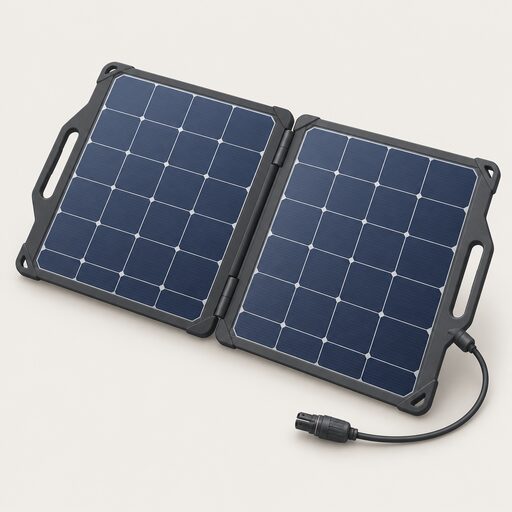 Solar Charging a Power StationCharging a portable power station from solar panels comes down to a few practical questions.
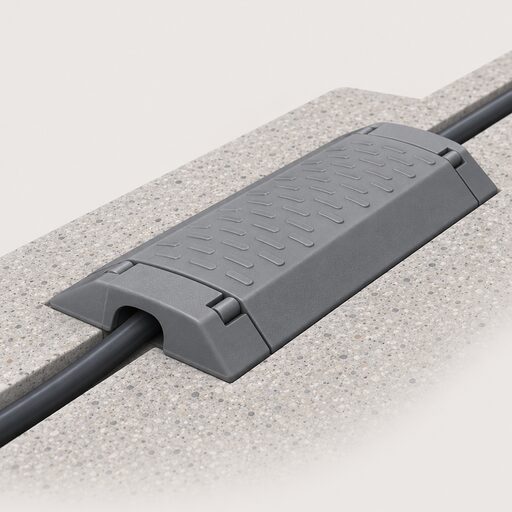 Charging Without a DrivewayParking on the street makes charging an electric car at home tricky.
 The Full EV Charging GuideCharging an electric car at home usually means a wallbox, but do you need one, and what will it cost to fit and run?
 Solar Export PaymentsIf you have solar panels, how do you actually get paid for the electricity you send back to the grid?
 Solar and Battery Import TariffsWhat does a special import tariff actually get you when you have solar panels or a home battery?