
In this guide
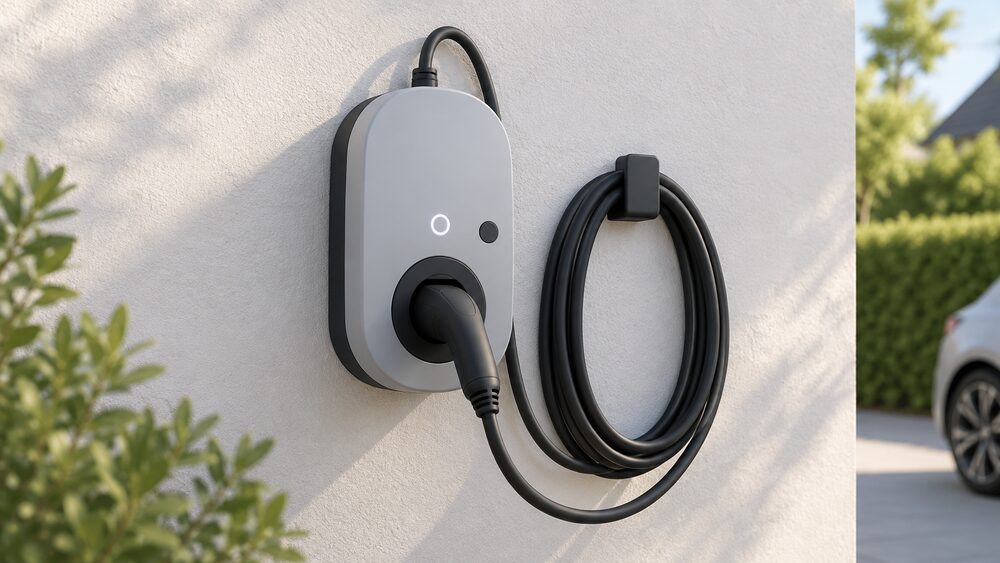
The Fronius Wattpilot is a smart charging station for electric cars that uses surplus energy from a household's own photovoltaic system, and it is made in Austria by a company that has been building solar electronics since 19921. It is sold in 11 kW and 22 kW power categories, and it can vary its output in 1 ampere steps across a range from 1.38 kW to 22 kW, switching automatically between one and three phases2.
That combination is the point of the product. A charger that can only run at a fixed rate cannot follow a solar array whose output rises and falls through the day, so it either imports from the grid or exports the surplus. The Wattpilot instead tracks the surplus and adjusts in small increments, which is what makes solar self-consumption possible without a battery in the middle2.
For a household, the independence on offer is partial and specific. The Wattpilot reduces the amount of grid electricity bought for driving, and it can shift charging to the cheapest hours on a variable tariff. It does not remove the grid connection, the electricity supplier, or the dependence on a home broadband link for remote features, and its solar logic works best inside Fronius's own ecosystem of inverters and metering4.
What the Wattpilot does: charging from your own solar surplus
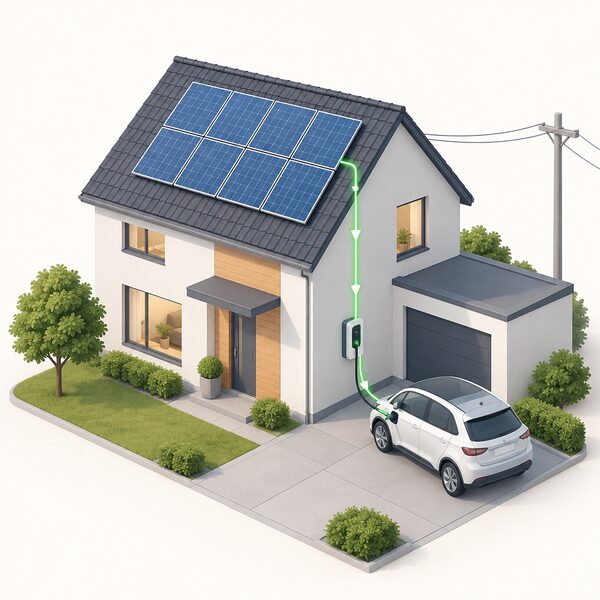
The Wattpilot's core function is to take excess solar generation that would otherwise be exported and put it into the car instead. Fronius describes it as using surplus energy from the user's own photovoltaic system, and the charger regulates its output in 1 ampere steps rather than jumping between fixed rates1. A press release from the product's launch in April 2021 put the same claim plainly: the Wattpilot is "excellent at utilising the surplus PV and controls in 1-ampere increments up to the maximum charging power"5.
The practical effect is that on a sunny day the car absorbs whatever the array is producing beyond the house's own demand, and the charger throttles down as clouds pass rather than pulling the shortfall from the grid. Fronius states that surplus PV energy from 1.38 kW to 22 kW can be used this way2. The lower end matters: 1.38 kW is roughly the output of a small array in marginal conditions, so the charger can still make use of a modest surplus rather than waiting for a bright midday peak.
Control sits in the Solar.wattpilot app, which Fronius describes as handling easy commissioning, a clear display of all charging data, selection of a charging mode at any time and from anywhere, settings changes and software updates2. The charger itself is rated for indoor and outdoor use across all versions, and it is available either as a mobile charging solution to take with you or as a stationary model for the home2.
The independence this buys is real but bounded. Every kilowatt hour put into the car from the roof is a kilowatt hour not bought from a supplier, and the household keeps the export it would otherwise have sold, often at a lower rate than it pays for imports. What remains is the grid connection itself, the standing charges and the fact that in winter, or on a still grey week, the car charges from the network like any other.
Wattpilot Flex Home, Flex Pro or Go: which version fits which home
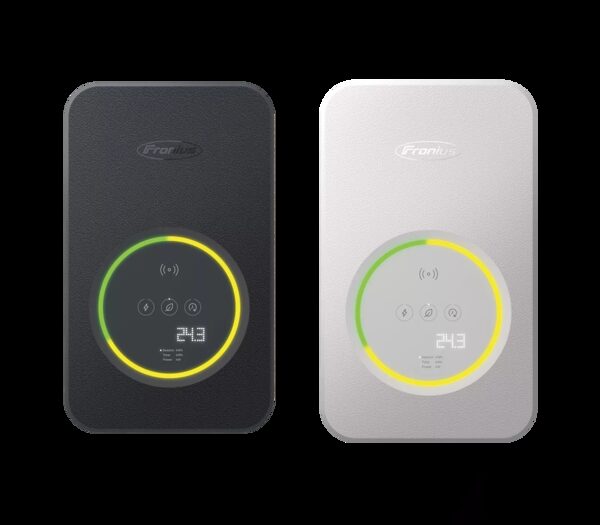
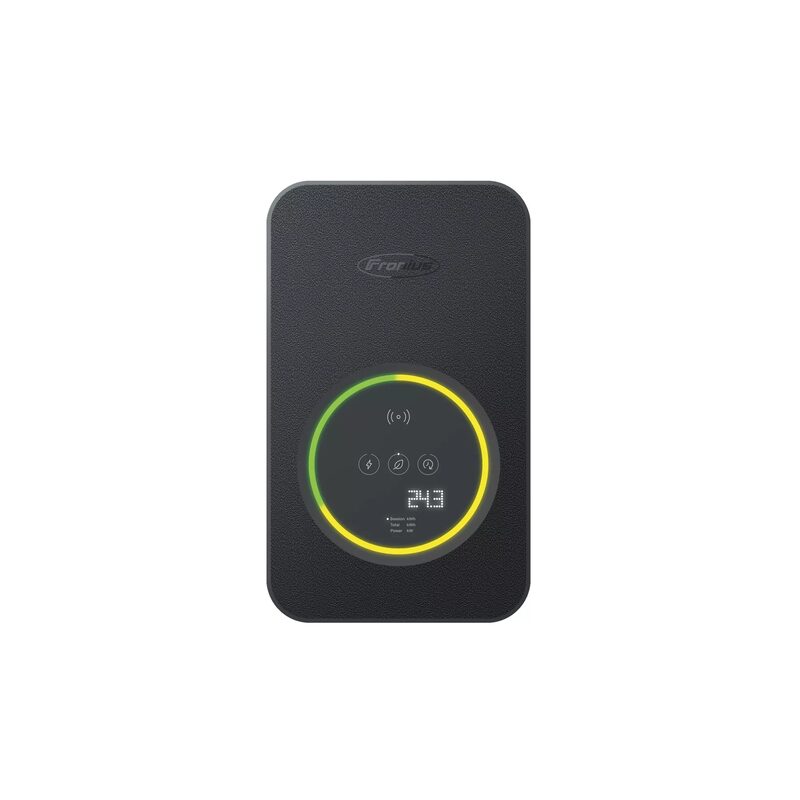
Fronius sells the Wattpilot in three variants: the Wattpilot Flex Home for the home as a fixed installation, the Wattpilot Flex Pro, and the Wattpilot Go4. The Flex itself comes in two versions, Home and Pro, distinguished by colour and by metering rather than by charging power7.
The clearest functional difference is the meter. The Wattpilot Flex Pro has an integrated MID compliant electricity meter, so the exact number of kilowatt hours charged is recorded, while the Flex Home does not have one integrated7. That matters where charging costs need to be attributed precisely, for a business reclaiming mileage or a household splitting costs between drivers. The Pro is finished in anthracite and the Home in telegrey8.
Cable entry also differs. The Flex Pro accepts cable entry at the top, but only where the unit is installed indoors, as well as at the bottom and the rear8. The Flex Home is described by Fronius as suitable for indoor and outdoor areas9. Both current Flex versions are available in an 11 kW model8.
The Go is the mobile option, designed to be carried rather than fixed, and Fronius describes the range as available as a mobile charging solution to take with you or as a stationary model for the home6. A household that needs one charger at home and occasional charging elsewhere is the natural fit for that form factor.
| Variant | Form | Metering | Colour | Availability |
|---|---|---|---|---|
| Wattpilot Flex Home | Fixed, indoor and outdoor9 | No integrated MID meter8 | Telegrey8 | 11 kW model8 |
| Wattpilot Flex Pro | Fixed, indoor and outdoor9 | Integrated MID compliant meter7 | Anthracite8 | 11 kW model8 |
| Wattpilot Go | Mobile6 | Not stated | Not stated | 11 kW and 22 kW categories2 |
Power and control: 1.38 to 22 kW with automatic phase switching
The Wattpilot's headline specification is its range. Fronius states automatic one and three phase switching from 1.38 kW to 22 kW in ampere increments, and separately that each variant is available in 11 kW and 22 kW4. Connection current is 16 A for the 11 kW variants and 32 A for the 22 kW variants4. The Wattpilot Flex Home 22 C6 datasheet gives dynamic PV surplus charging from 1.38 to 22 kW at 230 V or 400 V with automatic one and three phase switching9.
Phase switching is what makes the low end usable. A three phase charger running at minimum current still draws a substantial floor load, which a small solar surplus cannot cover. By dropping to a single phase the charger can operate at much lower power, and Fronius states that the unit can switch between one and three phase automatically2. The Flex is described as automatically switching between one and three phases7.
The 22 kW figure needs a caveat that applies to any home charger. It is the charger's maximum, not a guarantee of what a given car will accept, and it depends on a three phase supply at the property. A household with a single phase connection will not reach it. The 11 kW variants at 16 A are the more common domestic fit.
Fronius also notes that the Wattpilot Flex Home and Pro are controllable under section 14a of the German energy industry law, a German regulatory provision with no direct UK equivalent9. It is a statement about the German market rather than about how a UK unit behaves.
Charging modes: Eco and Next Trip, plus variable tariffs
Fronius describes the Wattpilot as offering two charging modes, and elsewhere as having intelligent charging modes for flexible and plannable charging3. Eco Mode charges with self-generated solar power or the cheapest mains current2. Next Trip Mode works the other way round: it aims to cover a specific journey, a certain number of kilometres, by a specific time2.
Next Trip Mode has a limitation worth knowing. Fronius states that energy in kWh or kilometres can be specified and the car charged up to a defined point in time, but that a direct state of charge as a percentage cannot be set4. So the household sets a distance or an energy amount, not a battery percentage.
The modes interact through a priority order. Fronius gives Priority 1 as Standard Mode, Priority 2 as Next Trip Mode and Priority 3 as Eco Mode4. Where several are active, that ordering decides which wins.
Variable electricity tariffs are supported separately. Fronius names Lumina Strom HOURLY and aWattar HOURLY as examples, and notes that surcharges must be taken into account manually4. PV optimisation and variable tariffs can be activated individually or in combination in the app4. That combination is the interesting one for independence: the charger can prefer solar when it is available and fall back to the cheapest grid hours when it is not.
"Use of PV optimization and variable electricity tariffs can be activated individually or in combination in the app."
What it needs to work with your PV system
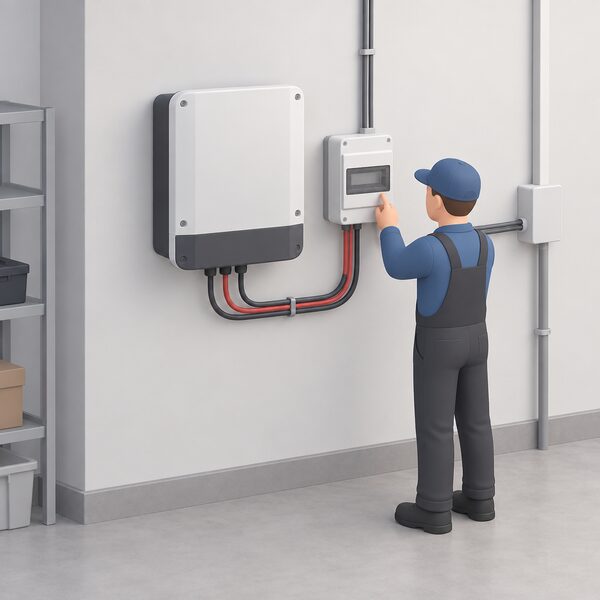
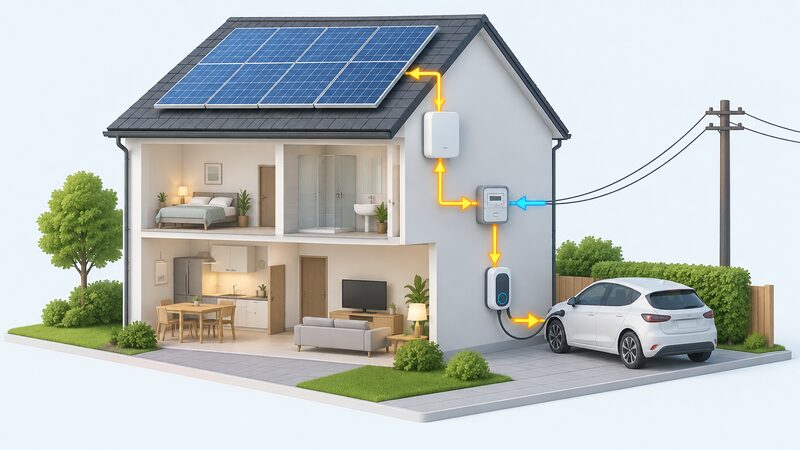
Solar surplus charging is not a property of the charger alone. Fronius states that a Fronius inverter with a Fronius Smart Meter at the feed-in point is required for PV optimisation4. The meter is what tells the system how much power is flowing to or from the grid at any moment, and without it the charger has no surplus signal to follow.
Compatible inverters are listed as GEN24, Verto, SnapINverter from Datamanager 2.0, and the IG, IG Plus, IG TL and CL series in combination with a Datamanager 2.04. For Dynamic Load Balancing the requirements are a Fronius Smart Meter IP, or a compatible Fronius inverter with a Fronius Smart Meter, or a Datamanager Box 2.0 with a Fronius Smart Meter at the feed-in point4. Fronius recommends installation with a Fronius Smart Meter for load control4.
Third-party inverters are not excluded. Fronius states that PV optimisation can also be used with third-party inverters if they are combined with a Fronius Smart Meter IP or a Datamanager Box 2.0 and a Fronius Smart Meter at the feed-in point, provided no other self-consumption regulations are active in parallel, and notes that household loads are not taken into account in the app4. So the metering hardware remains Fronius even where the inverter is not.
Fronius Smart Meters are interchangeable across versions and ages: all Fronius Smart Meters, regardless of version or age, can be combined with each other10. The company's hybrid inverters also support storage systems from other manufacturers such as BYD or LG11, and any Fronius inverter can be combined with a battery from Solarwatt in single phase markets12. For a household already running a Fronius system, the Wattpilot slots into existing monitoring rather than requiring a parallel one.
Load balancing, multiple vehicles and RFID records
Dynamic Load Balancing is available on the Wattpilot, and Fronius states that the energy required can be controlled and distributed dynamically among up to three vehicles being charged2. That is a household-level limit on simultaneous vehicles, distinct from the limit on charging boxes.
On boxes, the position is more generous. Fronius states that there is no limit to the number of Wattpilot charging boxes that can be operated with Dynamic Load Balancing4. The Flex Home 11 C6 datasheet describes dynamic load balancing as integrated with an unlimited number of charging boxes9. Any number of Wattpilots can be operated in parallel, though PV optimisation only works for one device at a time4.
Charging records are handled per RFID chip. Fronius states that the amount of energy charged in kWh and the charging time per RFID chip can be recorded for each charging process, and that the data can be exported as a CSV file4. The Flex Pro's integrated MID compliant meter records the exact number of kilowatt hours charged7. RFID and app authentication are both supported on the Flex8.
Fronius RFID tags for the Wattpilot 2.0 are compatible with the Wattpilot 2.0, and a set is listed at £16.4013. The Wattpilot can also be combined with Fronius-compatible DC-coupled battery storage systems and the Fronius Ohmpilot, with thresholds definable in the app4. The Ohmpilot diverts surplus to a heating element, towel radiator or infrared heating, and can also be used in combination with zero feed-in15.
Warranty: 3 years as standard, and when the clock starts
The Wattpilot carries a 3 year warranty, and Fronius states this applies even in the absence of additional requirements9. The support documentation repeats it: the warranty for the Wattpilot is 3 years4. Units delivered before 1 August 2024 have a warranty of 2 years, so the term depends on when the device was supplied4.
The start date is defined by the commissioning protocol of the specialist installer, or in its absence by the date of first delivery ex works9. That is a meaningful distinction. A charger bought and stored before installation starts its clock at delivery if no commissioning protocol exists, so the paperwork from the installer is what anchors the term.
For context on how Fronius treats its other products, the terms differ by product and by country group. Inverters in country group 1 up to 49 kW get 10 years in total, made up of 5 years Fronius Warranty Plus and 5 years Fronius Warranty thereafter9. The Fronius Reserva battery has a 10 year warranty period, beginning six months after initial delivery from Fronius16. The Smart Meter runs from the same date as the inverter where the two were purchased together, otherwise from first delivery ex works9.
Fronius: the Austrian maker behind the Wattpilot
Fronius is a family-owned Austrian enterprise founded more than seven decades ago by Günter Fronius, now with a team of over 5,000 people17. The company states it has been developing solutions for solar energy since 1992, that all Fronius products are developed in Austria, and that more than 90% of them are also manufactured there1. The Wattpilot specifically is made in Austria4.
The company describes its partner network as over 6,000 expert installers around the world, and itself as solar pioneers with more than 30 years of experience19. Fronius quality, in its own words, has always been produced in Austria17.
The Wattpilot Flex received the German Design Award 20257. The Wattpilot Flex Home 22 C6 secured second place in the 2025 Wallbox Inspection with a 94.4% Wallbox Performance Index7.
The relevance to a household is supply chain and support rather than sentiment. A maker that designs and builds in one country, and that also supplies the inverters, meters and monitoring the charger depends on, can support the whole chain rather than pointing at a third party when something does not work. The counterweight is that the same integration is a form of lock-in: the solar logic is at its most complete inside Fronius's own ecosystem.
Wattpilot in the UK: availability and what owning one means
UK availability is through distributors rather than a direct Fronius sales channel. One UK distributor lists 2 models of the Wattpilot Home and 4 models of the Wattpilot Flex as available14. Prices are not published by Fronius for the charger itself, so they are installer-quoted; the only figure in the public listings is the £16.40 for a set of RFID tags13.
The independence case rests on what the charger displaces. Every kilowatt hour from the roof into the car is one not bought, and the Eco Mode's fallback to the cheapest mains current shifts the rest to lower-priced hours2. Fronius states that PV optimisation and variable tariffs can be combined in the app, which is the configuration that makes the most of both4.
What remains is a list of dependencies. The household stays on the grid and with a supplier. Solar surplus charging needs a Fronius inverter and a Fronius Smart Meter at the feed-in point, or a third-party inverter with Fronius metering alongside it4. Remote access, PV pairing, flexible tariffs, Dynamic Load Balancing and software updates all stop without a network connection, and the Home and Go connect over Wi-Fi only while the Flex adds Ethernet4. Dynamic Load Balancing on the Flex Home and Pro requires an internet connection9.
There is also a vehicle-side limit. Fronius publishes a list of affected car models for known issues, including the Kia Soul, Renault Zoe, Mitsubishi i-MiEV, Citroën C-Zero, Peugeot iOn, Opel Corsa-e, Volkswagen ID models with software below 4.1, Cupra Born, Ford Explorer, Porsche Taycan, Škoda Enyaq, Dacia Spring, Mercedes and SsangYong4. That list is worth checking against a specific car before committing.
For firmware, Solar.web data display needs Wattpilot firmware version 36.0 or higher, and GEN24, Verto or Tauro inverters need at least version 1.304. GEN24 inverters on firmware version 1.14.110-1 or higher need the Solar API activated in the inverter interface under Communication, then Solar API4. Solar.web itself is free20.
Sources20 cited
- E-mobility products and solutions, Fronius, 2026
- Wattpilot electric car charger for homes, Fronius, 2026
- Wattpilot EV charging solution for homes, Fronius, 2026
- Wattpilot support articles, Fronius, 2026
- New Fronius charging solution for electric cars, Fronius, 2021
- Electric car charger for homes with PV system, Fronius, 2021
- Wattpilot Flex, Fronius, 2026
- Wattpilot Flex datasheet, Fronius, 2026
- Terms of warranty, Fronius, 2026
- GEN24 support, Fronius, 2026
- Compatible batteries, Fronius, 2026
- Storage solutions residential, Fronius, 2026
- Fronius Wattpilot Home, Wind and Sun, 2026
- Fronius Wattpilot Flex, Wind and Sun, 2026
- Ohmpilot hot water with solar power, Fronius, 2026
- Battery terms of warranty, Fronius, 2026
- Heating with PV, Fronius, 2026
- Store solar power, Fronius, 2026
- GEN24 UL inverter for PV system backup power, Fronius, 2026
- Solar.web, Fronius, 2026
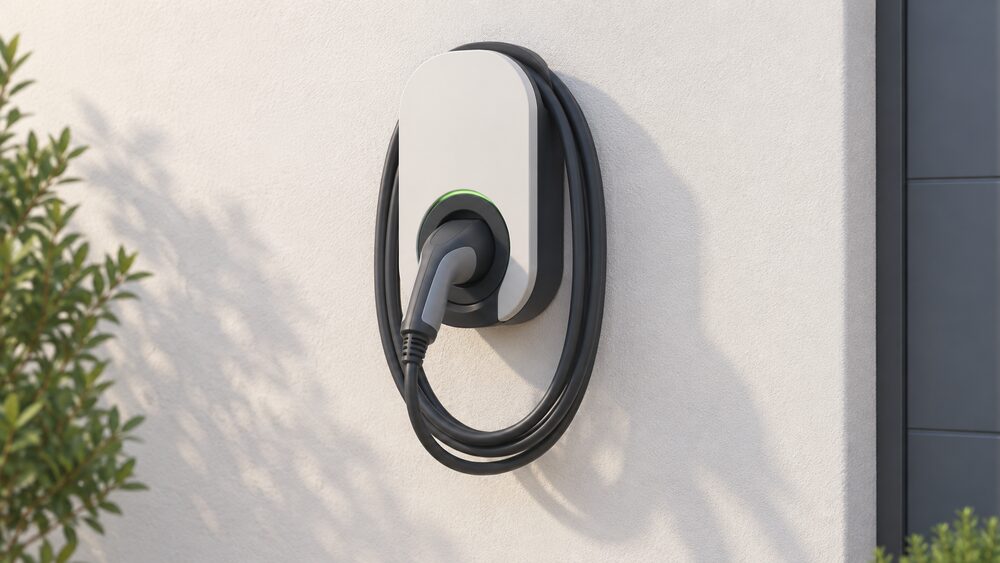 Fronius Wattpilot chargerHow much of your solar power can the Fronius Wattpilot send to your car instead of the grid?
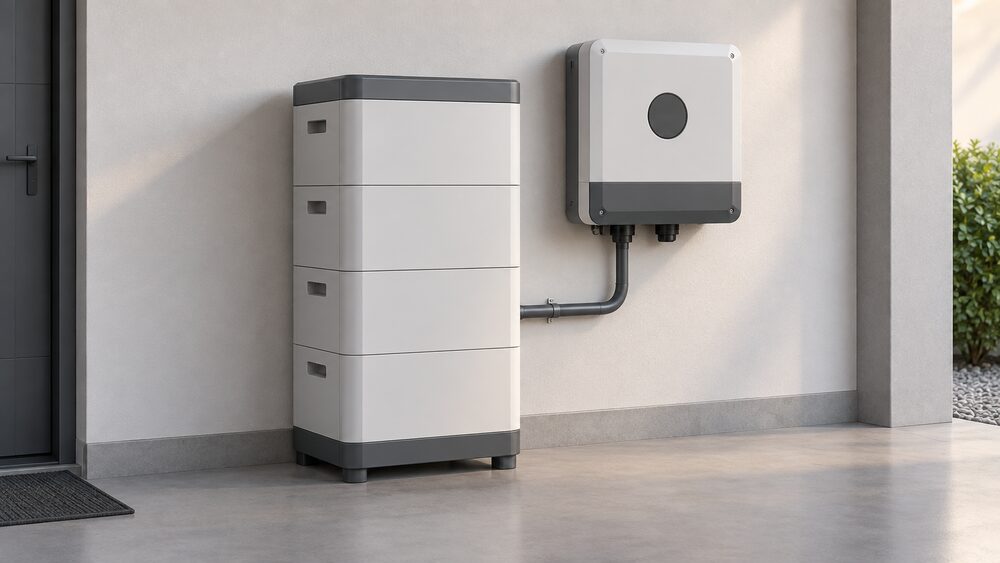 Fronius Reserva Battery and GEN24 InvertersIf you already have a Fronius inverter, or you are weighing up a Fronius system, the Reserva is the battery that goes with it.
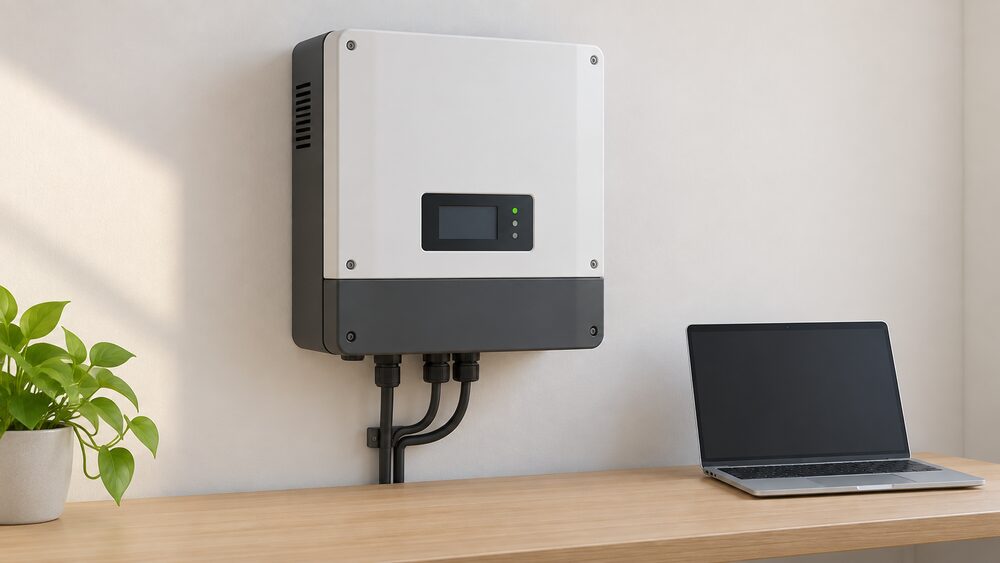 FroniusHow do you actually watch what your Fronius solar panels are making?
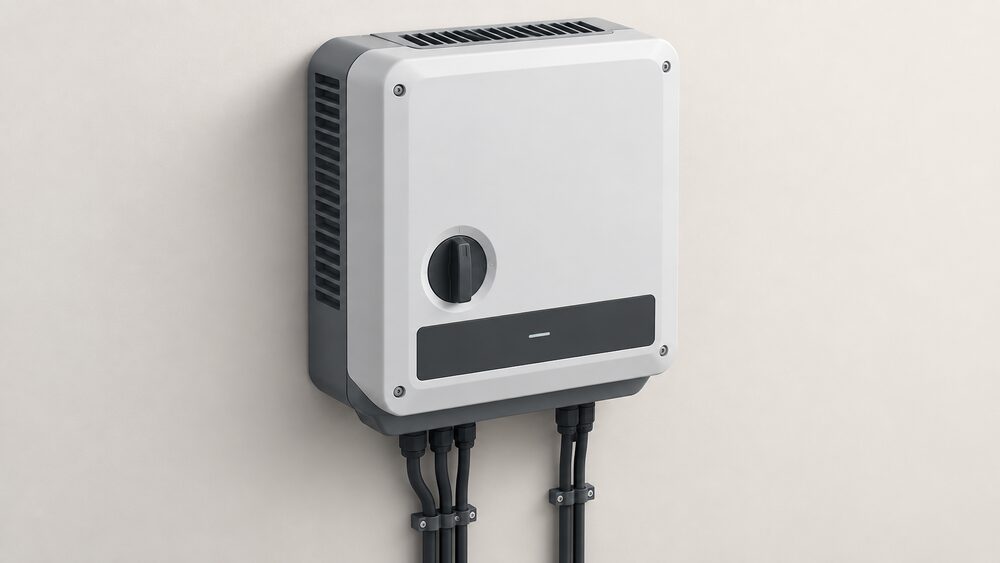 Fronius solar invertersFronius is an Austrian inverter maker whose Primo GEN24 and Symo ranges are widely installed in UK homes, with 10 years of warranty as standard and up to 15 with a paid extension.