
In this guide
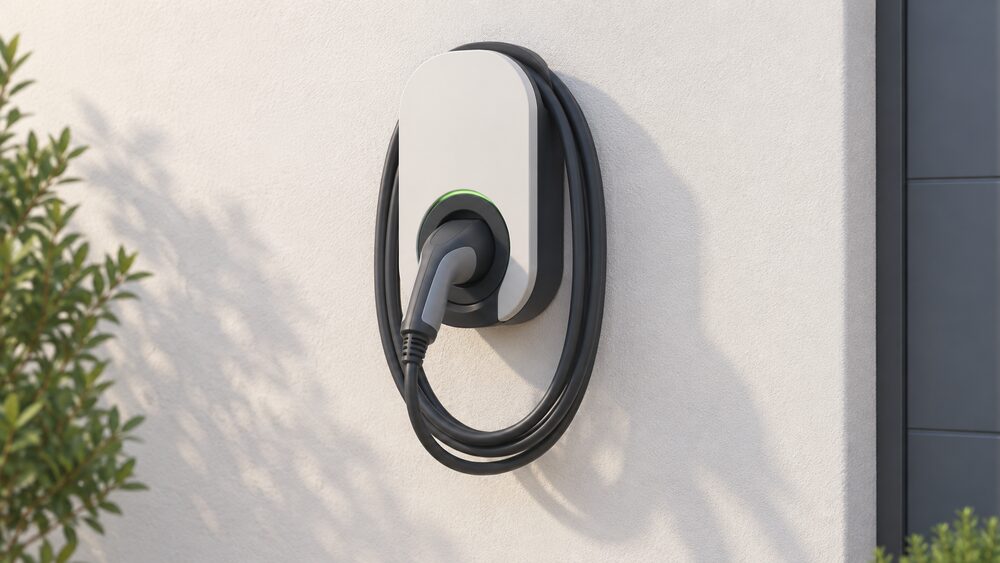
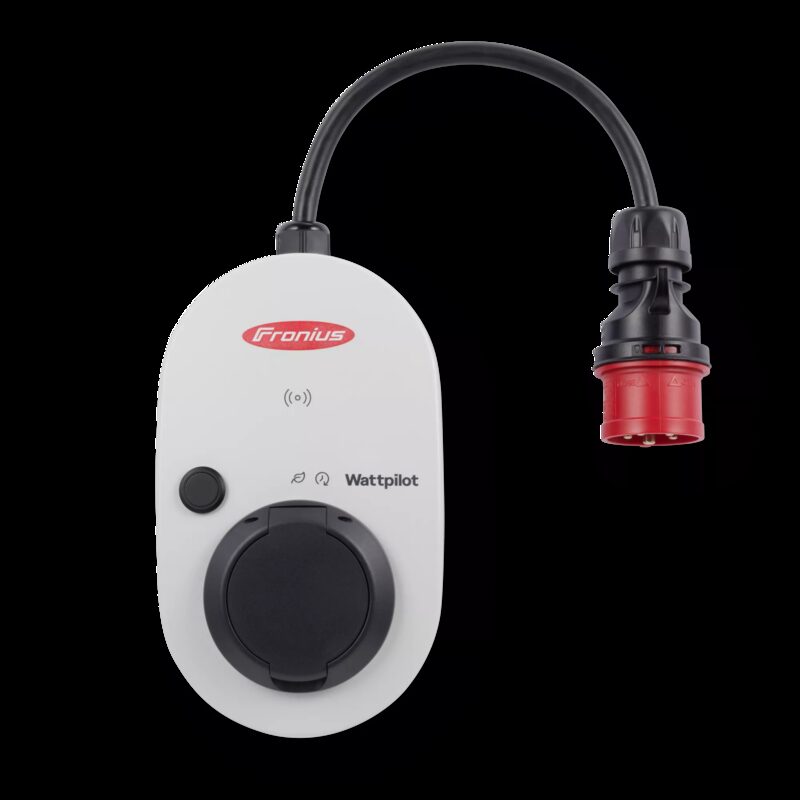
The Fronius Wattpilot is a smart charging station for the home, built by an Austrian maker whose solar business dates to 19921. Its defining feature is not raw speed but the ability to follow the output of a rooftop solar array: Fronius describes it as the smart charging station for drivers who want to charge at home or on the move, and the range is designed so that surplus photovoltaic generation is diverted into the car rather than exported1.
The headline numbers are straightforward. Charging power runs from 1.38 kW to 22 kW, and the charger switches between single-phase and three-phase operation automatically, which is what allows it to trickle along on a small solar surplus and then use the full three-phase supply when the household wants a fast charge3. It offers two charging modes, and it carries a residual current device rated at 20 mA AC and 6 mA DC2.
What the Wattpilot does for a household's energy independence is real but conditional. It can turn a car into the largest flexible load in the house and soak up generation that would otherwise be exported, but that only works when the charger can see the whole system, which in Fronius's own guidance means a Fronius inverter and a Fronius Smart Meter at the feed-in point4. The dependence that remains is on the grid for anything beyond the solar surplus, on a broadband connection for the app and remote functions, and on the manufacturer's ecosystem for the optimisation itself.
What the Wattpilot is: a charging station built around PV surplus
The Wattpilot sits in the small category of chargers that treat solar generation as the primary input rather than an add-on. Fronius positions it as a smart charging station, and the company's own framing is that the unit exists for households wanting to charge an electric car at home or on the move1. The solar-aware behaviour is the point of the product: the charger varies its draw to match what the array is producing rather than pulling a fixed current regardless.
That behaviour depends on measurement. Fronius states plainly that a Fronius inverter with a Fronius Smart Meter at the feed-in point is required for PV optimisation4. The Smart Meter's job is to optimise self-consumption and record the household's load curve, which is what tells the charger how much surplus is available at any moment5. Without that measurement chain, the charger still charges a car, but it cannot distinguish solar generation from imported electricity.
The wider context is that a home charge point is a controllable load, and smart charging is a catch-all term for the functions a Wi-Fi connected charging station can perform, usually energy monitoring and managed charging at periods of low grid demand or high grid supply6. The Wattpilot's version of that idea is narrower and more specific: it manages the charge around the household's own generation first.
Charging power and specifications: 1.38 to 22 kW with automatic phase switching
The Wattpilot's charging window runs from 1.38 kW to 22 kW3. That lower figure is the one that matters for solar charging: a household array rarely produces enough surplus to justify a 7 kW draw, so a charger that can step down to a little over one kilowatt can follow the sun through a partly cloudy afternoon instead of importing the difference.
The upper figure is a three-phase rating. Three-phase AC fast charging at 32 A per phase gives 22 kW, and Type 2 AC charging spans 3.7 kW up to 22 kW depending on the supply and the vehicle's onboard charger7. Mode 3 charging, the standard mode for a dedicated wallbox, typically reaches 22 kW on a three-phase supply8. The Wattpilot Flex is listed for both single-phase and three-phase operation9.
Automatic phase switching is the mechanism that makes the range usable. Fronius states that the charger can switch between 1 and 3-phase automatically, and the Flex range is described as switching automatically between 1 and 3 phases3. In practice this means the unit can charge on a single phase when the surplus is small and move to three phases when more power is available, without the household intervening.
| Specification | Figure | Source basis |
|---|---|---|
| Charging power range | 1.38 kW to 22 kW | Fronius support3 |
| Maximum charging power, Go 22 J | 22 kW | Fronius product page2 |
| Maximum charging power, Flex Pro and Flex Home | 11/22 kW | Fronius product page9 |
| Phase switching | Automatic, 1 and 3 phase | Fronius product page3 |
| Residual current device | 20 mA AC, 6 mA DC | Fronius product page2 |
| Network connection | WLAN | Fronius product page2 |
Two charging modes: full speed or solar surplus
Fronius states that the Wattpilot offers two charging modes2. The distinction is between charging at whatever rate the installation and vehicle allow, and charging only from what the rooftop array is producing at that moment. The solar-surplus mode is the one that changes the economics, because it converts exported generation into miles driven.
The comparison across the market is useful for understanding what the two-mode approach does and does not include. One rival wallbox offers three modes, described as Boost, Eco (solar and grid) and super eco (solar only)10. Another maker's app offers two modes, solar and grid plus solar11. The Wattpilot's two modes sit in the same territory: a full-speed mode and a solar-following mode, with the household choosing between them.
For a household, the practical question is what happens on a dull day. A solar-only mode will simply not charge, or will charge very slowly, and the car waits. A grid-plus-solar mode tops up the shortfall from the mains. Fronius's own guidance that PV optimisation requires the inverter and Smart Meter combination is the condition that makes the solar mode meaningful rather than nominal4.
"A Fronius inverter with Fronius Smart Meter at the feed-in point is required for PV optimization."
The range: Go, Home and the Flex models
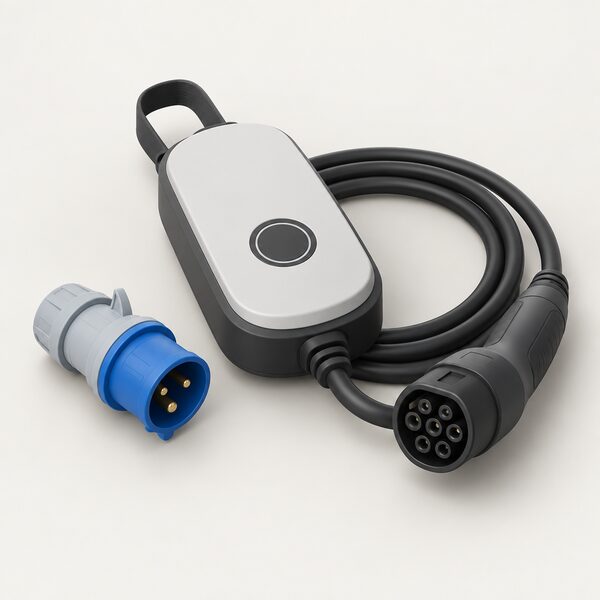
Fronius sells the Wattpilot in several families. The Wattpilot Go and the Wattpilot Home both come in 11 kW and 22 kW power categories2. The Go is the more portable proposition: the Go 22 J accepts optional adapter sets including CEE16 red, a CEE blue camping plug and a safety plug, while the Go 11 J takes CEE32 red fused, CEE blue camping plug and safety plug adapters2. That adapter approach is what allows the unit to be used away from a fixed wall installation.
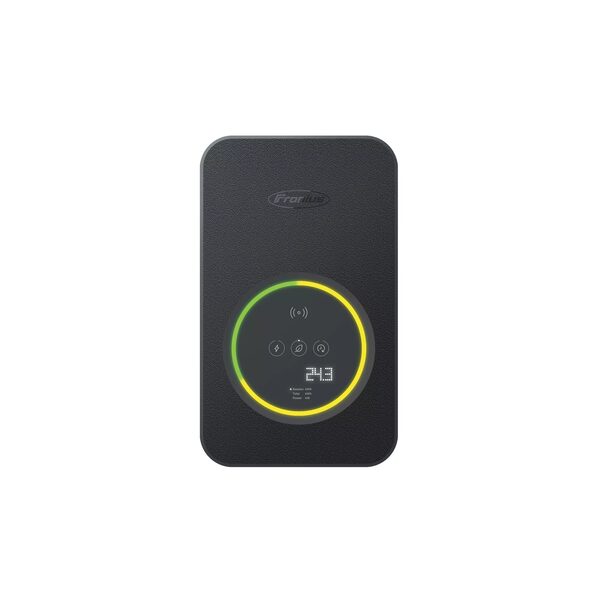
The Flex family is the fixed installation line. The Wattpilot Flex Pro and Flex Home are both listed at 11/22 kW, and the Flex Pro carries an integrated MID meter with conformity to measurement and calibration law9. An MID meter matters where the charge needs to be measured to a certified standard, which is a billing and reimbursement question rather than a domestic one.
Connectivity differs across the range in a way worth noting. The Wattpilot Flex can be integrated via Ethernet as well as WiFi, while the Wattpilot Home and Go support WiFi only4. The Flex also ships with a plug holder and two RFID tags, where the Go ships with one ID chip4. Optional accessories across the range include a pedestal, a pre-installation kit, sets of 10 ID chips, Type 2 cables in 2.5, 5 and 7.5 metre lengths, additional mounting plates and Type 2 plug holders4.
The Flex received the German Design Award 2025 for product design, and the Flex Home 22 C6 placed second in the 2025 Wallbox Inspection with a 94.4% Wallbox Performance Index9.
Dynamic load balancing and what the Fronius Smart Meter adds
Dynamic load balancing is the function that stops a charger from tripping the main fuse. Fronius lists it as available on the Wattpilot, and states that the energy required can be controlled and distributed dynamically among up to three vehicles being charged2. The Flex range lists dynamic load balancing as a feature, and the Flex Home 11 C6 datasheet describes it as integrated with an unlimited number of charging boxes9.
The hardware conditions are specific. Dynamic load balancing requires a Fronius Smart Meter IP, or a compatible Fronius inverter with a Fronius Smart Meter, or a Datamanager Box 2.0 with a Fronius Smart Meter at the feed-in point4. Fronius also recommends installation with a Fronius Smart Meter for load control generally4. The Smart Meter itself optimises self-consumption and records the household's load curve5.
There is a further integration path. Fronius states that a combination with Fronius-compatible DC-coupled battery storage systems and the Fronius Ohmpilot is possible, with thresholds definable in the app4. The Ohmpilot is described as a consumption regulator, which is the device that diverts surplus generation to a hot water cylinder5. A household with a battery and a diverter can therefore set the order in which surplus energy is used: battery, hot water, car.
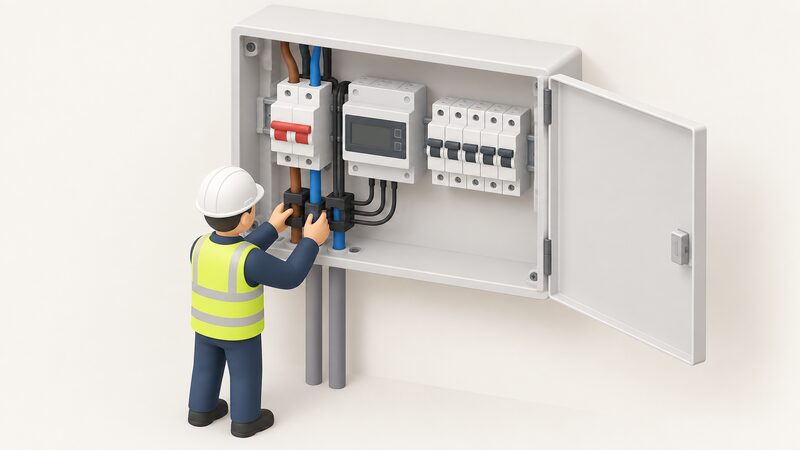
Safety, connectivity and control
The Wattpilot's built-in residual current device is rated at 20 mA AC and 6 mA DC2. The DC element is the significant one for electric vehicle supply equipment, because a smooth DC fault current can saturate the magnetic circuit of a Type A residual current device and prevent it from tripping. The IET's guidance on RCDs for EV supply equipment sets out the protective requirements for this equipment, and the exact arrangement for a given installation is determined by the manufacturer's instructions and the wiring regulations8.
On connectivity, the Wattpilot's network connection is WLAN, and the Flex adds Ethernet2. The functions that stop working without a network connection are listed by Fronius as remote access via the app, pairing with the PV system, flexible electricity tariffs, dynamic load balancing and software updates4. That list is worth reading carefully, because it means the solar optimisation and the load balancing both depend on a live network link, not just on the hardware being installed.
The Flex is also described as ISO 15118 (Plug and Charge) hardware-ready, which is the standard behind automatic authentication and billing at a charge point without a card or app4. The Flex Home 11 C6 datasheet lists LAN via RJ45 or LSA at 10/100 Mbit/s, WiFi 802.11 b/g/n, two digital inputs, a relay output and preparation for ISO 1511812.
Charging up to three cars at once
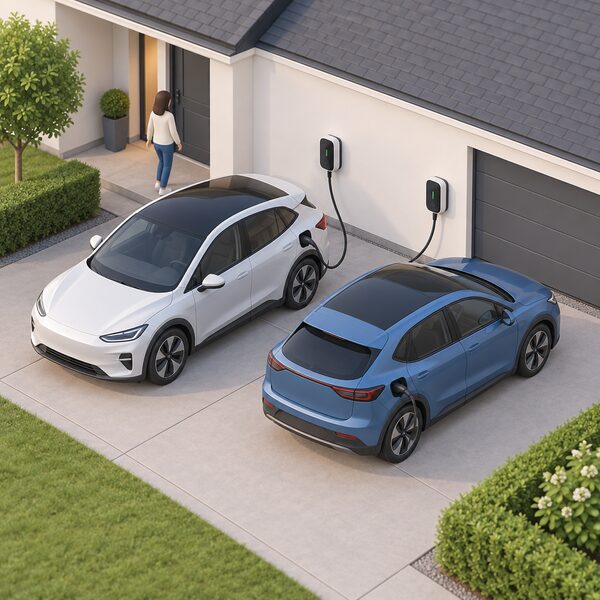
Fronius states that up to three electric cars can be charged at the same time, and that the energy required can be controlled and distributed dynamically among up to three vehicles being charged2. This is a load-sharing arrangement rather than three independent full-power supplies: the available current is divided between the connected vehicles.
There is a second, separate statement about scale. Fronius says that any number of Wattpilots can be operated in parallel, but that PV optimisation only works for one device at a time4. Read together, the two statements describe a system where multiple chargers can share a supply, but where only one of them follows the solar surplus at any moment.
For context, multi-vehicle charging is a common feature across the market rather than unique to Fronius. One rival allows three units on a single fuse, splitting power evenly between them with access controlled by RFID cards10. A dual public charger offers two sockets so two vehicles can charge at once11. Commercial units go further: one cabinet delivers up to 22 kW to four vehicles simultaneously, and another supports three vehicles from a single cabinet13.
The household relevance is straightforward. A two-car home with a single-phase supply will not charge both at full rate at once, and a load-sharing charger is what makes two cars practical without an upgrade to the supply.
Fronius: an Austrian, family-owned maker
Fronius is a family-owned enterprise founded more than seven decades ago by Günter Fronius, and the company describes itself as having 75 years of experience, with a team of more than 5,000 people15. It has been developing solar energy solutions since 1992, and all Fronius products are developed in Austria1. Production is also Austrian: the company states that Fronius quality has always been produced in Austria, and that the Wattpilot specifically is made in Austria15.
The company's solar credentials run deep. Fronius describes itself as solar pioneers with more than 30 years of experience, and produces its inverters in compliance with strict quality guidelines in Europe17. Its partner network consists of over 6,000 expert installers around the world, which is the route through which the Wattpilot reaches households17.
For a household weighing independence, the Austrian manufacturing base and the family ownership are relevant to the longevity question: the charger is tied to a company with a long history in solar inverters, and the PV optimisation depends on that company's inverter and metering ecosystem rather than on a third party. The trade-off is that the deepest solar features are most accessible to households already inside the Fronius ecosystem. Households with a different inverter brand can still install the charger, but the PV optimisation condition stated by Fronius points to a Fronius inverter and Smart Meter4.
The wider picture of how a home charger fits into a household's energy position, including the grid dependence that remains, is set out in EV charging and household energy independence, and the solar-specific case is covered in charging an EV from solar panels.
Sources17 cited
- E-mobility home owners, Fronius, 2026
- Wattpilot EV charging solution for homes, Fronius, 2026
- Wattpilot electric car charger for homes, Fronius, 2026
- Support Wattpilot, Fronius, 2026
- Storage solutions residential, Fronius, 2026
- EV glossary, Uswitch, 2024
- Understanding electric car charging, Spirit Energy, 2026
- RCDs for electric vehicle supply equipment, IET, 2024
- Wattpilot Flex, Fronius, 2026
- Home electric vehicle chargers, Carwow, 2026
- On-street charging, Zapmap, 2026
- Wattpilot Flex datasheet, Fronius, 2026
- HEX, Rolec, 2026
- EV charging, Delta, 2026
- Heating with PV, Fronius, 2026
- Store solar power, Fronius, 2026
- GEN24 UL inverter for PV system backup power, Fronius, 2026
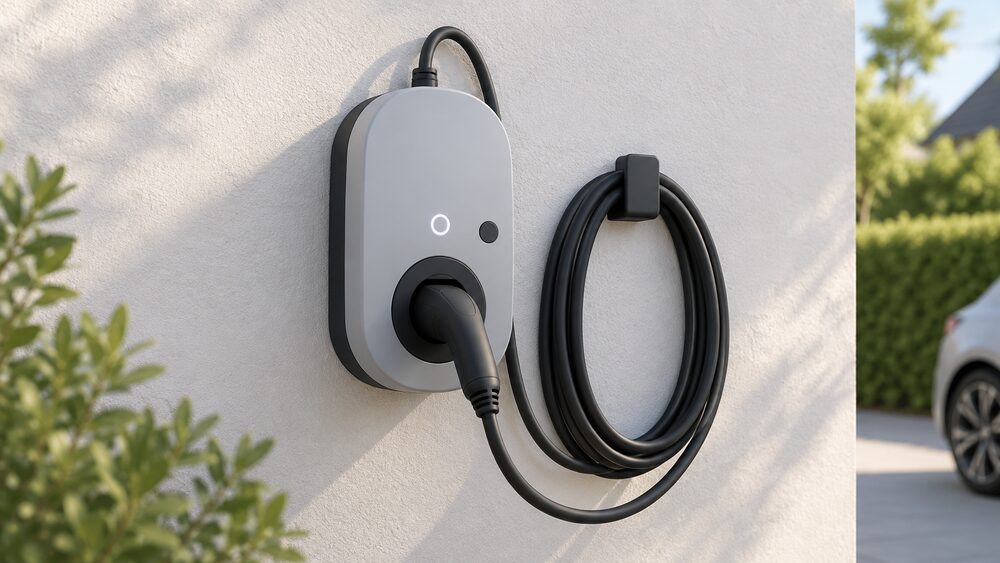 Fronius WattpilotCan the Fronius Wattpilot charge your electric car using only the power your solar panels make?
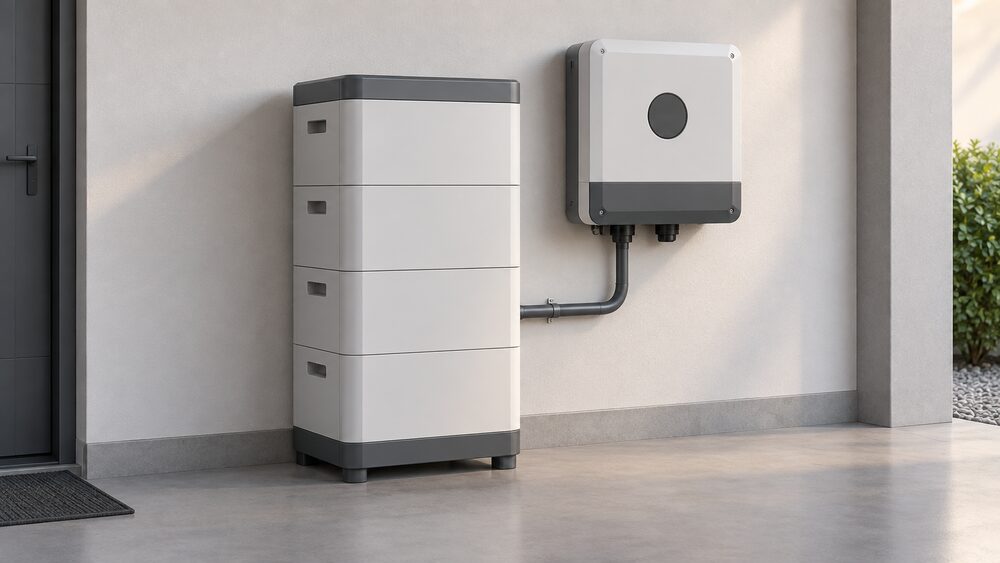 Fronius Reserva Battery and GEN24 InvertersIf you already have a Fronius inverter, or you are weighing up a Fronius system, the Reserva is the battery that goes with it.
 FroniusHow do you actually watch what your Fronius solar panels are making?
 Fronius solar invertersFronius is an Austrian inverter maker whose Primo GEN24 and Symo ranges are widely installed in UK homes, with 10 years of warranty as standard and up to 15 with a paid extension.