
In this guide
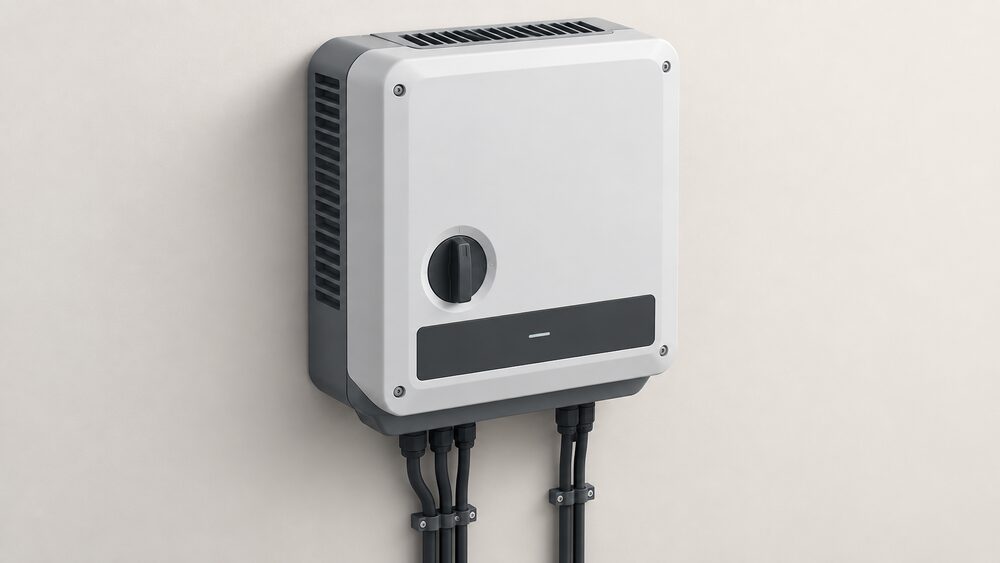
Fronius is an Austrian manufacturer that has put more than 35 gigawatts of inverters into service worldwide, producing them in Europe under what it describes as strict quality guidelines1. For a UK household, the practical question is narrower: which of its ranges suits a domestic roof, what the warranty actually covers, and how much of the system stays under the household's own control.
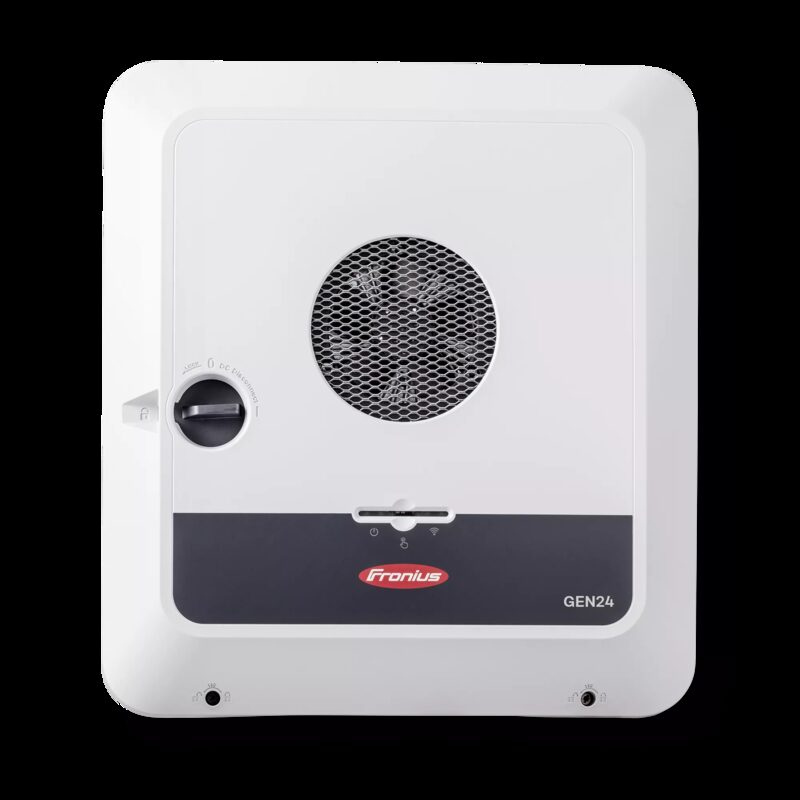
The current domestic line-up splits two ways. The Primo GEN24 is a single-phase hybrid inverter for homes on a standard 230 V supply, and the Symo is a three-phase machine for larger roofs and three-phase supplies3. Both carry PV Point, a basic backup socket rated up to 3 kW that works while the sun is shining, and both are covered by 10 years of warranty in the UK as standard, extendable to 15 years for a fee3.
Prices are quoted by installers rather than published by the maker, but distributor listings give a starting point: Fronius Symo inverters from £1,078.34 and Fronius Eco from £2,493.40, with the Primo GEN24 6.0 Plus at £2,088.31 excluding tax5.
Fronius at a glance: the maker behind the inverters
Fronius Solar Energy describes the inverter as "the heart and brains behind your PV system", and the company's own figures put its installed base at more than 35 gigawatts of inverter output to date, with production capacity of 70,000 inverters per month recorded in 20241. Manufacturing sits in Europe, which the maker presents as a quality and supply-chain point rather than a cost one1.
The product philosophy is visible in the specification sheets. Fronius fits active cooling as standard across its inverter range, rather than reserving it for premium models, and states that actively cooled inverters deliver higher yields and have a longer service life than passively cooled equivalents8. The airflow design also allows units to be mounted side by side, which matters where a household has limited wall space in a garage or plant room8.
For a household thinking about energy independence, the maker's location is a modest but real factor. A European manufacturer shortens the parts and service chain compared with a unit built and supported from outside the continent, though it does not change the fundamental position: a grid-tied inverter still depends on the grid for reference voltage and on a licensed installer for commissioning and any warranty claim. Fronius inverters are transformerless across the ranges, which is now standard practice and keeps weight and losses down9.
Symo and Primo: which range fits which home
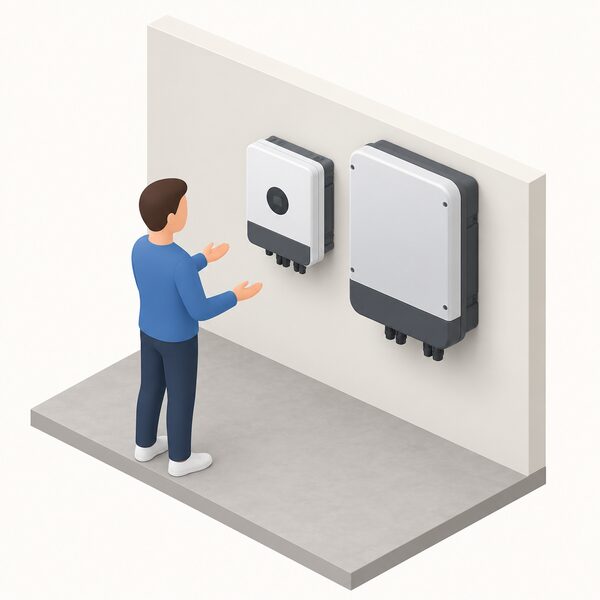
The dividing line between the two families is the electrical supply, not the size of the roof. The Primo is a single-phase, transformerless device that Fronius describes as the ideal inverter for private households, and the GEN24 generation keeps that single-phase 230 V configuration3. The Symo is the three-phase counterpart, described by the maker as the three-phase inverter for every system size8.
In practice, a home with a standard single-phase supply takes a Primo GEN24. A property with a three-phase supply, or one installing a system large enough that a single-phase connection would be awkward, takes a Symo. The classic Symo line runs from 3.0 to 8.2 kW, and distributor listings show the range extended to 20.0 kW in the wider Symo family8.
The GEN24 generation adds hybrid capability. A GEN24 unit can be activated to support battery operation at any time through the Fronius UP.storage software upgrade, which converts it into a GEN24 Plus hybrid inverter10. That matters for a household that wants to add a battery later without replacing the inverter, and it is the single most useful feature for anyone planning a staged installation.
| Range | Phases | Power class | Battery-ready |
|---|---|---|---|
| Primo GEN24 | Single-phase 230 V3 | 3 to 6 kW3 | Yes, via UP.storage10 |
| Primo GEN24 Plus | Single-phase 230 V3 | 3 to 6 kW3 | Yes, as standard3 |
| Symo GEN24 | Three-phase3 | 3 to 10 kW3 | Yes, via UP.storage10 |
| Symo (classic) | Three-phase8 | 3.0 to 8.2 kW8 | No |
Primo GEN24: single-phase models from 3 to 10 kW
The Primo GEN24 is the range most UK households will be offered. Fronius lists the single-phase Primo GEN24 and GEN24 Plus at 3 to 6 kW in its own product summary, while the individual model pages run from the 3.0 through 3.6, 6.0, 8.0 and up to the 10.0 kW Plus3. The spread covers a small terrace with a modest array through to a large detached house with a substantial roof.
Every model in the range shares the same core specification. Cooling is active across the 3.6, 6.0 and 8.0 models, the design is transformerless, and a DC disconnector is built in rather than being a separate external component12. The 6.0 kW model is rated for both indoor and outdoor installation, which gives some flexibility on siting where a plant room is not available12.
The 10.0 kW Plus model is the top of the single-phase line and is priced accordingly: £2,775.54 excluding tax, against £2,446.93 for the 8.0 Plus and £2,088.31 for the 6.0 Plus6. Those are supply prices, not installed prices, and they exclude the mounting, cabling, isolators and labour that make up the bulk of an installation quote.
For a household, the choice within the range is driven by array size and by whether a battery is planned. A 3.0 or 3.6 kW unit suits a small array on a single roof plane. The 6.0 kW and above models suit larger arrays or a mix of orientations, where a bigger inverter can make better use of the array's peak output. The Plus designation is the one to look for if battery storage is intended, since it arrives ready for a battery rather than needing the software upgrade.
Symo: three-phase inverters from 3.0 to 8.2 kW for larger roofs
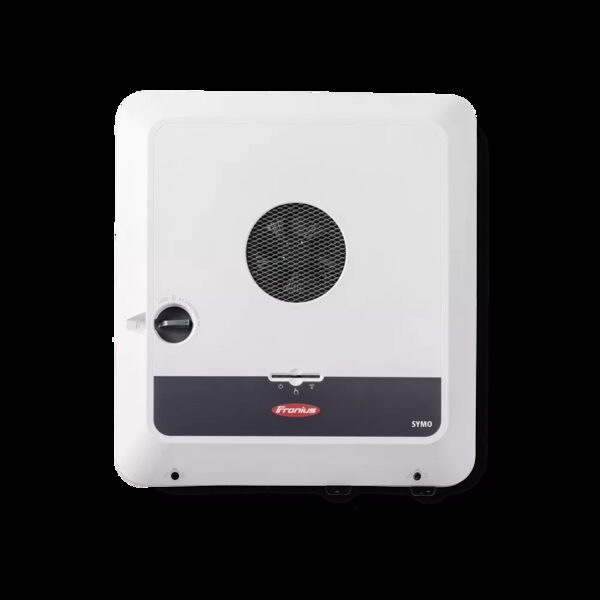
The Symo is Fronius's three-phase line, and the classic range runs from 3.0 to 8.2 kW, with the maker describing it as the transformerless three-phase inverter for every system size8. The 3.0-3-M and 8.2-3-M models both share the three-phase configuration and transformerless design, and active cooling is supplied as standard across the devices9.
Three-phase matters for two reasons. First, a home with a three-phase supply can spread generation across phases, which suits larger arrays and avoids concentrating output on one phase. Second, some distribution network operators prefer or require a three-phase connection above certain export capacities, so a three-phase inverter can simplify a G99 application. That is a grid-connection question rather than an inverter one, and it is covered in connecting solar to the grid.
The classic Symo line is being gradually replaced. Fronius states that the Symo is being superseded by the Symo GEN24 for systems up to 10 kW and by the Verto for systems up to 33.3 kW, with the 10.0 to 20.0 kW models replaced by the Symo Advanced5. A household offered a classic Symo should therefore expect it to be an end-of-line product, though the warranty terms are unaffected.
The Symo GEN24 takes the three-phase format into hybrid territory, with the same 3 to 10 kW power class and the same UP.storage route to battery readiness as the Primo3. For a larger property planning both a substantial array and a battery, that is the natural three-phase option. The Verto and Verto Plus sit above it for commercial-scale installations, with the Verto Plus described as a versatile hybrid inverter that allows battery storage and customised backup power solutions to be integrated13.
Efficiency, cooling and build: what the specs say
Fronius fits active cooling as standard in all its inverters, and the maker's claim is specific: actively cooled inverters deliver higher yields and have a longer service life than inverters with passive cooling, and they are basically maintenance-free8.
The reasoning is straightforward. Inverter efficiency falls as internal temperature rises, so a unit that sheds heat effectively holds its conversion efficiency for longer across a hot afternoon. Passive cooling relies on a large heatsink and natural convection, which works but runs warmer. Fronius's airflow design also permits side-by-side mounting, useful where several units share a wall8.
Build quality shows in the smaller details. The design is transformerless across the Primo and Symo ranges, which removes a heavy and lossy component9. A DC disconnector is integrated into the GEN24 models rather than being a separate box, which simplifies isolation for maintenance and for emergency shutdown12. The 6.0 kW Primo GEN24 is rated for indoor and outdoor installation12.
For a household, the practical implication is that the inverter is not the component likely to need attention. Fronius describes its actively cooled inverters as basically maintenance-free, and the cooling design is intended to extend service life rather than shorten it8. The limits are the usual ones: an inverter is a power electronics device with a finite life, it depends on a clean and adequately ventilated mounting position, and it depends on the grid for its reference voltage. More on how inverters compare generally is in solar inverters explained.
Backup power and surplus control: what GEN24 can run when the sun shines
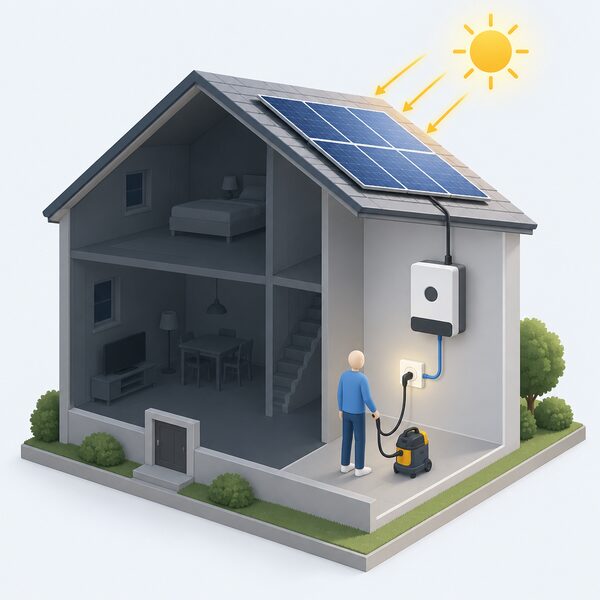
PV Point is the backup feature fitted as standard to all GEN24 and GEN24 Plus devices. It can supply a single-phase socket with up to 3 kW of power in the event of a grid outage, as long as the sun is shining3. The Primo GEN24 3.0, 6.0 and 8.0 model pages all list PV Point as the backup function, and the grid connection for the socket is rated 1~NPE 220 V / 230 V11.
Full backup is a different proposition. Fronius hybrid inverters have an integrated backup power function that can draw on both the PV module array and a battery, and the Full Backup option is compatible with the GEN24 Plus hybrid inverter14. That is the configuration that keeps selected circuits live after dark, and it requires a battery and appropriate wiring rather than being a standard feature.
On surplus control, Fronius inverters have four integrated digital inputs and outputs and can be connected to third-party components such as a heat pump, pool pump or air conditioning system15. Dynamic feed-in control takes self-consumption into account, so the inverter can manage export against what the house is using8. For hot water specifically, the Ohmpilot uses surplus solar power to heat water rather than sending it to the grid15. Households weighing that route against a battery should read solar diverters and adding battery storage to solar.
The independence picture here is partial and worth stating plainly. PV Point gives a household a socket that works in a power cut, which is more than a standard string inverter offers. Full backup gives genuine resilience, but only with a battery, and the battery is a separate purchase with its own cost and lifespan. Neither removes the dependence on the grid for the rest of the house.
Monitoring with Solar.web: live status, export data and registration
A Fronius inverter with integrated data communication monitors the entire photovoltaic system and transmits its status live on Solar.web16. Solar.web is a free monitoring tool, and registration is done at www.solarweb.com using the inverter serial number18. The same portal handles the warranty extension, which is why registration matters beyond monitoring18.
The installer side of Solar.web adds fleet monitoring in real time, remote fault monitoring and add-on simulations for battery storage or Ohmpilot18. That means a fault can often be identified remotely before anyone visits, which shortens diagnosis time. For the householder, the app shows generation, consumption and export, and Fronius positions the portal as a way to keep the PV system up to date17.
"You can register easily and free of charge at www.solarweb.com with your inverter serial number."
The dependence this creates is worth naming. Monitoring runs through Fronius's servers and a broadband connection. The inverter itself keeps generating without either, and the system continues to work, but the data, the remote diagnostics and the warranty registration record all sit with the manufacturer. A household that wants its generation data to remain accessible locally should ask the installer what the inverter exposes on the local network, since Solar.web is a cloud service rather than an on-site one. General guidance on what to look for is in monitoring a solar PV system.
Warranty: 10 years standard, up to 15 with extension, and the registration rules
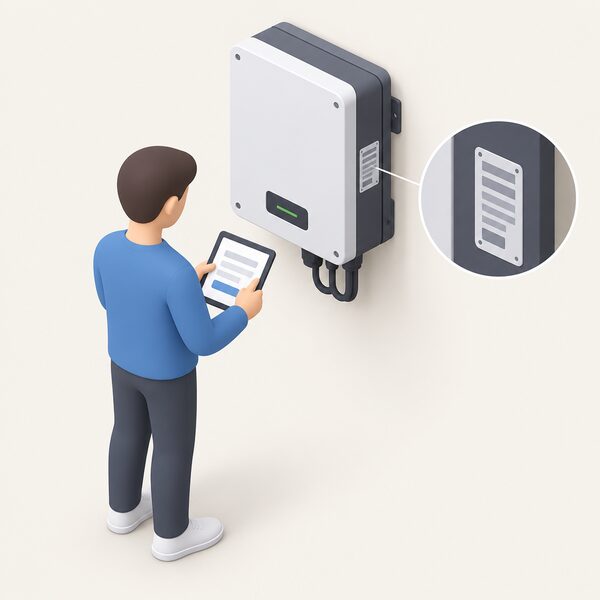
For inverters from 0 to 49 kW in the UK's country group, the total warranty period is 10 years, made up of 5 years Fronius Warranty Plus and 5 years Fronius Warranty thereafter4. That is the headline figure, and it is longer than many domestic inverter warranties. A paid extension takes cover to a maximum of 15 years7.
The registration rules changed on 1 June 2026. New Fronius inverters commissioned on or after that date must be registered in Fronius Solar.web to qualify for the free warranty extension19. The underlying terms require inverters to be properly registered at www.solarweb.com within thirty months of the initial delivery by Fronius ex works4. The warranty period itself starts with the date of initial commissioning of the covered product4.
Registration is done by logging in to www.solarweb.com, registering the inverter using its serial number, then selecting the warranty option18. The serial number is on the rating plate of the Fronius product, and registration also asks for the installation date, installation country and installer20. Inverters of 50 kW and above get 5 years of free cover on registration rather than 10, and figures for larger units are not consistent across Fronius's own material, so the position should be confirmed with Fronius directly19.
The Fronius Datamanager, where fitted, automatically imports the warranty period of the inverter it is installed in, or runs from its own first delivery date if bought separately4. The terms also state that Fronius may change the conditions at any time for contracts concluded after a change, and that the limited warranty applies to covered products purchased on or after 1 June 20264.
Cost and availability in the UK: distributor prices and the move to newer models
Fronius does not publish installed prices, so quotes come from installers after a survey. Distributor listings give the supply side: Fronius Symo inverters from £1,078.34, Fronius Eco from £2,493.40, and the Primo GEN24 Plus models at £2,088.31 for the 6.0, £2,446.93 for the 8.0 and £2,775.54 for the 10.0, all excluding tax5. The Verto line runs higher, from £3,297.04 for the 27.0 kW through £3,501.32 for the 30.0 kW to £3,761.30 for the 33.3 kW, with the Verto Plus 15.0 kW at £3,993.08 and the 17.5 kW at £4,271.6321.
For context on what an inverter replacement costs once installed, independent guidance puts a solar inverter replacement at about £500 to £1,00023. That figure is a general market estimate rather than a Fronius price, and it sits well below the distributor prices above because it reflects a smaller typical domestic unit and does not represent a hybrid model.
Availability is shifting. The classic Symo is being gradually replaced by the Symo GEN24 up to 10 kW and the Verto up to 33.3 kW, with the 10.0 to 20.0 kW models superseded by the Symo Advanced5. The Primo 3.6-1 Light is listed as discontinued5. The GEN24 ranges remain current, and the Primo GEN24 is sold in 3.0, 3.6, 6.0, 8.0 and 10.0 kW forms11.
Firmware support is active. Fronius released GEN24 bundles 1.39.5-1 in November 2025, 1.40.8-1 and 1.40.9-1 in April and May 2026, and 1.41.10-1 and 1.41.11-1 in July and August 2026, covering both Symo GEN24 and Primo GEN24 and addressing battery charging, export limits, Smart Meter IP and third-party software libraries10. A household buying a Fronius inverter is buying into a maintained software platform, which is a real part of the product's value over its life.
Sources23 cited
- Photovoltaics, Fronius, 2026
- Fronius Solar Energy factsheet, Fronius, 2024
- GEN24 Plus inverter with flexible backup power, Fronius, 2026
- Terms of warranties, Fronius, 2026
- Fronius string inverters, Wind & Sun, 2026
- Fronius GEN24 hybrid storage package, Wind & Sun, 2026
- Solar inverter warranty, Fronius, 2026
- Fronius Symo 8.2-3-M, Fronius, 2026
- Fronius Symo 3.0-3-M, Fronius, 2026
- GEN24 support, Fronius, 2026
- Fronius Primo GEN24 3.0, Fronius, 2026
- Fronius Primo GEN24 6.0, Fronius, 2026
- Backup power, Fronius, 2026
- Backup power function, Fronius, 2026
- Ohmpilot: hot water with solar power, Fronius, 2026
- Solar monitoring, Fronius, 2026
- Solar monitoring, Fronius, 2026
- Solar.web, Fronius, 2026
- Warranty models, Fronius, 2026
- Fronius product registration, Solarwatt, 2017
- Fronius Verto, Wind & Sun, 2026
- Fronius Verto Plus, Wind & Sun, 2026
- A complete guide to solar PV, Centre for Sustainable Energy, 2025
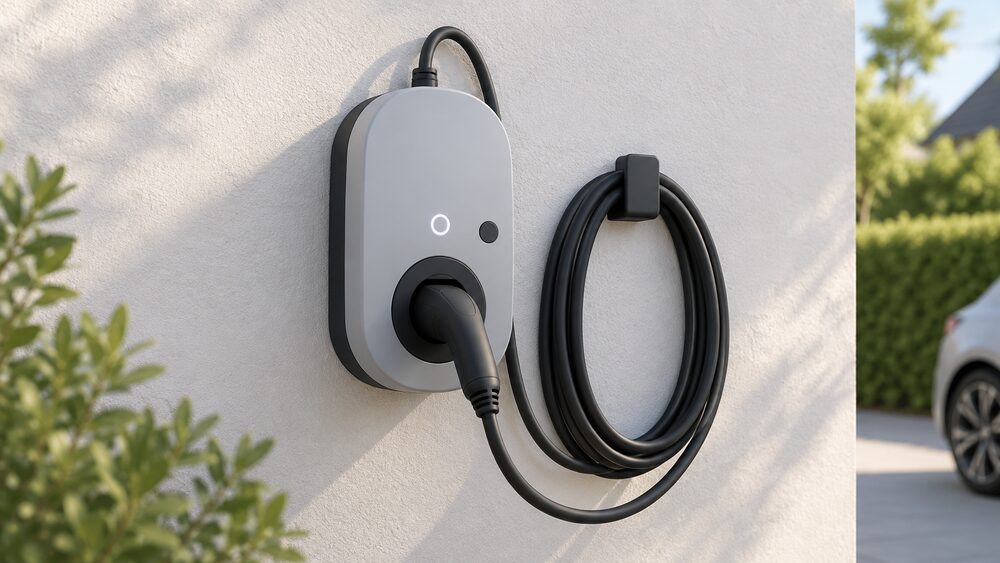 Fronius WattpilotCan the Fronius Wattpilot charge your electric car using only the power your solar panels make?
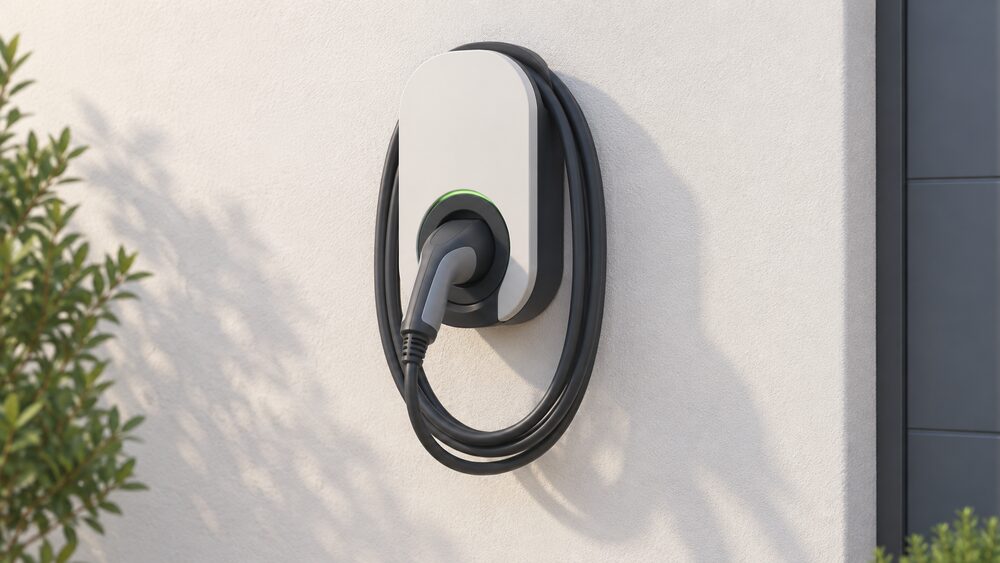 Fronius Wattpilot chargerHow much of your solar power can the Fronius Wattpilot send to your car instead of the grid?
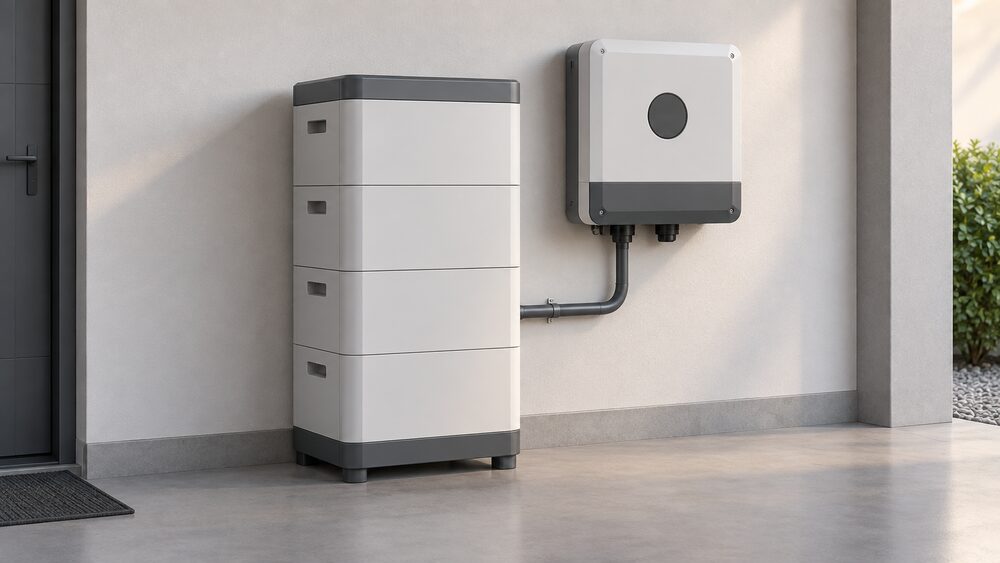 Fronius Reserva Battery and GEN24 InvertersIf you already have a Fronius inverter, or you are weighing up a Fronius system, the Reserva is the battery that goes with it.
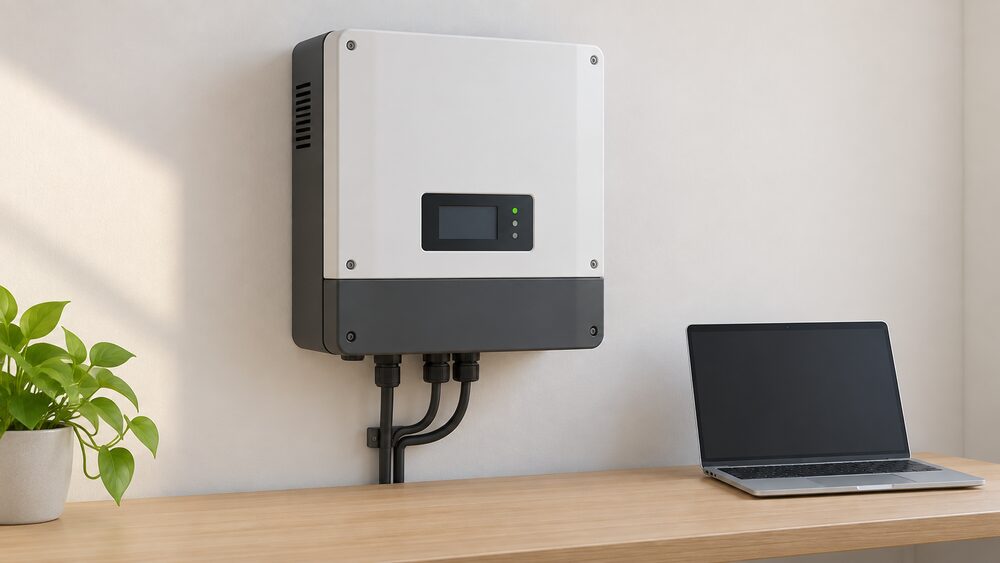 FroniusHow do you actually watch what your Fronius solar panels are making?