
In this guide
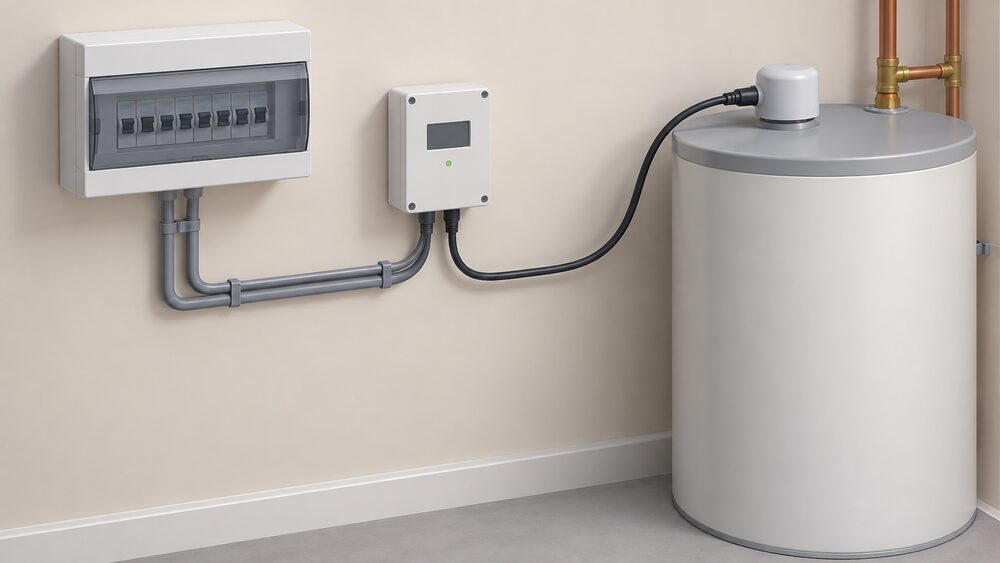
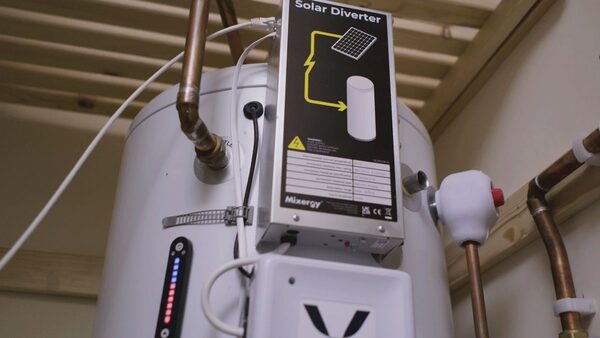
A solar diverter is a device that watches the electricity supply to a home and, when the solar panels are generating more than the house is using, sends the surplus to an immersion heater instead of letting it flow out to the grid. Official guidance describes it plainly: a solar diverter switch can power the immersion heater in your hot water tank for free, storing hot water for you to use later1. The same description appears in independent guidance, which notes that instead of sending surplus electricity to the grid, a PV diverter switch can power your hot water tank's immersion heater2.
The economics are modest but real. Independent guidance puts the hardware at around £250 to £500 to buy, or £600 to £800 with installation costs, and the annual saving at around £100 a year on bills3. The case rests on a simple asymmetry: the price paid for exporting surplus solar electricity to the grid is almost always less than the price to buy electricity from the grid, so a unit used at home is worth more than a unit sold3.
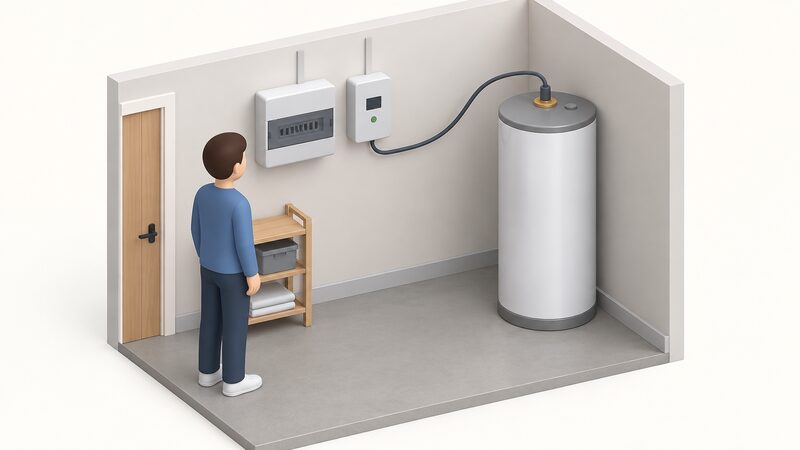
What a diverter does not do is make a home independent of the grid, a supplier or gas. It shifts the destination of surplus generation within the home. It does not store electricity, does not generate heat in winter, and does not remove the standing charge or the need for a grid connection. Its value depends on how much surplus a system produces, which depends on system size, orientation and how much the household uses during the day.
What a solar diverter does: sending surplus PV to the immersion heater
The device sits between the generation and the household load, and its job is to make sure that as little as possible leaves the property when it could be used instead. Official guidance from a London borough describes the outcome in household terms: a solar diverter switch can power the immersion heater in your hot water tank for free, storing hot water for you to use later1. Independent guidance frames the same mechanism as a choice about destination: instead of sending surplus electricity to the grid, a PV diverter switch can power your hot water tank's immersion heater2.
The statutory definition is broader than the immersion heater application. Legislation defines a smart diverter as a device capable of automatically diverting electricity generated by a microgeneration system to one or more appliances, in particular circumstances7. Official VAT guidance uses similar language: a smart diverter automatically diverts electricity generated by one or more energy-saving materials to electrical appliances in the accommodation or building4. The word "appliances" matters, because it means the diverter is not tied to hot water alone.
In practice the sequence is: generation rises, household demand is met first, and the remainder is offered to the immersion element in proportion to what is spare. The cylinder becomes a thermal store, holding energy as hot water rather than as electricity. That is the whole trick, and it is why diverters are often described as the cheapest form of storage for a home that already has a cylinder.
How much surplus solar a typical home exports without one
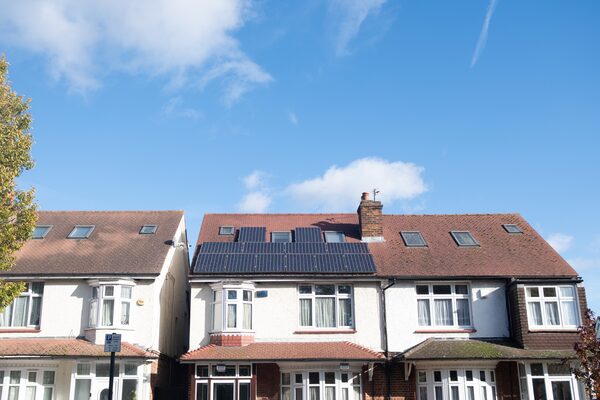
The size of the opportunity depends on how much a system generates and how much the household uses while it is generating. Without a diverter, or a battery, or deliberate timing of appliance use, the surplus leaves the property. Independent guidance is direct about the consequence: the price you get paid for exporting surplus solar electricity to the grid is almost always less than the price to buy electricity from the grid3.
Export rates vary by tariff. Published tariff information shows a 12-month fixed term paying 25p per kWh and a variable tariff with no fixed end date paying 15p per kWh8. Those are export rates, not import rates, and the gap between them and the price of bought electricity is the margin a diverter captures.
The Feed-in Tariff, now closed to new applicants, illustrates how the export side has historically been treated. Independent guidance explains that where a smart meter is not fitted, a deemed export rate estimates that 50% of the energy generated is exported5. That estimate is fixed regardless of what actually leaves the property, which is why diverters and deemed export have coexisted without penalty.
For a household, the practical question is how many kilowatt hours of surplus arise in a year. That depends on system size, roof orientation and daytime occupancy, and the sources here do not give a single national figure for surplus. What they do give is the price relationship, which is the part that determines whether diverting is worth more than exporting.
Cost: £250 to £500 to buy, £600 to £800 installed
Independent guidance gives the cost of PV diverters as around £250 to £500 to buy, or £600 to £800 with installation costs, and notes that they take less than an hour to fit3. A consumer body's review of immersion heaters names two products in the same bracket: the Immersun Power Diverter and the Solar iBoost+, which cost around £300 to £500 plus the cost of installation9.
| Item | Figure | Source |
|---|---|---|
| Diverter hardware | around £250 to £500 | 3 |
| Installed cost | around £600 to £800 | 3 |
| Named products | Immersun Power Diverter, Solar iBoost+ at around £300 to £500 plus installation | 9 |
| Fitting time | less than an hour | 3 |
| Reported annual saving | around £100 a year on bills | 3 |
The gap between hardware and installed cost is the electrician's time and any materials needed to connect the unit to the consumer unit and the immersion circuit. Because the fitting time is short, the installed premium is modest relative to most solar work: independent guidance on solar panels in Scotland gives an installation cost range of £1,500 to £10,000 and a duration of between one and two days for the panels themselves2.
Prices are installer-quoted and vary with the property, the cylinder and the existing wiring. The figures above are the published ones; there is no single national price for a diverter installation.
Installation: a few hours by a qualified electrician, often retrofitted
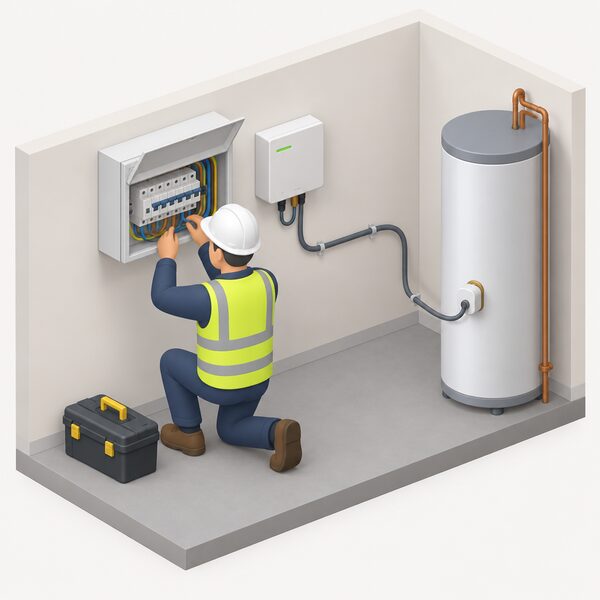
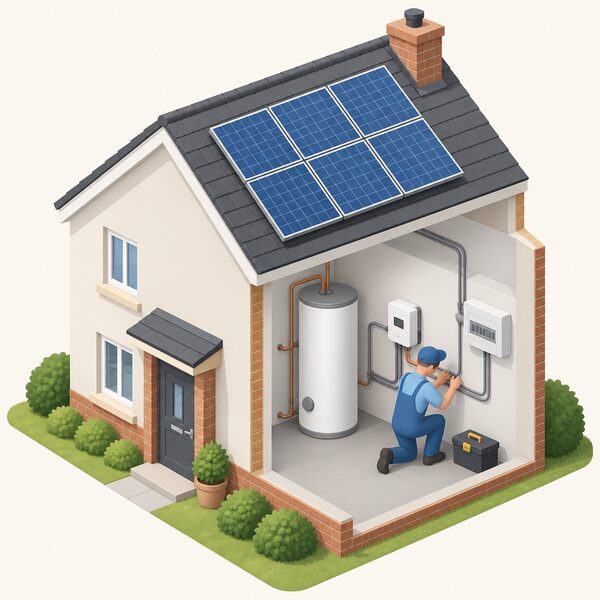
A diverter is usually added to an existing system rather than specified with it, which is why the fitting time is measured in hours rather than days. Independent guidance states that PV diverters take less than an hour to fit3. The work is electrical rather than structural: no roof access, no scaffolding, no mounting rails.
The electrical side is not a DIY task. Guidance on solar energy monitors notes that some can be installed yourself but for others you'll need help from a qualified electrician3. Official guidance on plug-in solar devices is firmer still: any necessary testing and modifications of the building's electrical system shall only be performed by professional electricians10. The same principle runs through official guidance on solar installations generally, which states that solar installations should always be carried out by a trained and experienced installer11.
Where the work touches the building rather than the electrics, different rules apply. Official guidance notes that installers who are members of a relevant competent person scheme can self-certify certain types of building work, including solar PV installation, avoiding separate building regulations approval12. A diverter retrofit normally falls outside that territory, but a household adding panels and a diverter together should expect the installer to handle the notification.
Compatibility: immersion heaters, batteries, heat pumps and other appliances
The statutory definition of a smart diverter covers one or more appliances, and official VAT guidance extends the same idea to other microgeneration systems such as ground and air source heat pumps4. That breadth is the reason diverters turn up in discussions of batteries, heat pumps and electric vehicle charging as well as hot water.
On immersion heaters, a consumer body notes that some immersion heaters can use electricity from solar panels so you're heating water for nothing9. That is the core compatibility question, and for most homes the answer is that the existing cylinder already has a suitable element.
On heat pumps, independent guidance describes a combined setup: PV, a heat pump and a diverter can work together, meaning your heat pump isn't needed at all over the summer3. The same guidance adds that design, installation and commissioning need careful consideration, which is a caution rather than a recommendation.
On batteries, the VAT list places electrical battery storage and smart diverters side by side among qualifying energy-saving materials13. On electric vehicles, independent guidance describes how smart chargers monitor real-time solar electricity production and adjust charging speed accordingly by drawing more or less power as generation changes14. Home energy management systems can also integrate EV chargers, heat pumps and PV diverters3.
| Destination | What the sources say | Source |
|---|---|---|
| Immersion heater | Some immersion heaters can use electricity from solar panels | 9 |
| Heat pump | PV, heat pump and diverter can work together, heat pump not needed over summer | 3 |
| Battery | Electrical battery storage and smart diverters both on the VAT relief list | 13 |
| EV charger | Smart chargers monitor real-time solar production and adjust charging speed | 14 |
| Other microgeneration | Includes ground and air source heat pumps | 4 |
How much you can save: around £100 a year, and the CO2 question
Independent guidance puts the saving from PV diverters at around £100 a year on bills3. That figure is the one to work from, and it is modest: against an installed cost of around £600 to £800, it implies a payback measured in years rather than months, before any change in export tariff or household behaviour.
The saving arises because a diverted unit displaces a bought unit. The size of the gain therefore depends on the gap between the export rate and the import rate, and on how much surplus exists. A household with a large array, low daytime consumption and a cylinder that runs cold by evening will divert more than a household with a small array and high daytime use.
The plan for this page refers to savings of up to 70% off water heating bills and up to one tonne of CO2 a year. Those figures are not in the sources available here, so they are not stated. What the sources do support is the £100 annual figure and the price relationship that drives it3.
For a household's independence, the effect is to reduce the amount of water heating bought from a supplier. It does not reduce the standing charge, does not remove the gas connection where one exists, and does not insulate the household from winter, when generation is low and the immersion element will draw from the grid if it is used.
Do you need a home battery? No, but diverters can charge one too
A diverter does not require a battery, and a battery does not require a diverter. They solve overlapping problems in different ways: a battery stores electricity for later use across the whole house, while a diverter stores energy as hot water in a cylinder. The cylinder is the cheaper store; the battery is the more flexible one.
The two are not mutually exclusive. Official VAT guidance lists electrical battery storage and smart diverters together among the energy-saving materials qualifying for relief13, and the statutory definition of a smart diverter covers diverting generation to one or more appliances7. A battery is an appliance in that sense, so a diverter configured to charge one is within the definition.
Where both are present, the ordering matters. A battery will typically absorb surplus first if it is set to do so, leaving less for the cylinder. Independent guidance on home energy management systems notes that they can integrate EV chargers, heat pumps and PV diverters3, which is the mechanism by which a household sets the priority between them.
The independence question is worth stating plainly. A battery reduces reliance on the grid for electricity; a diverter reduces reliance on bought energy for hot water. Neither removes the connection, and neither removes the need for a supplier for the periods when generation is insufficient.
VAT treatment: when a diverter qualifies for the zero rate
Smart diverters appear on the list of energy-saving materials that qualify for VAT relief. Official guidance sets out the list, which includes air source heat pumps, wood fuelled boilers, central heating and hot water controls, draught stripping, ground source heat pumps, insulation, micro combined and heat power units, solar panels, water and wind turbines, water source heat pumps, electrical storage batteries and smart diverters, installed in residential accommodation and certain charitable buildings, until 31 March 202715.
The condition matters. Official guidance states that smart diverters installed as part of the installation of a qualifying energy-saving material normally fall to be ancillary and form part of a single supply4. In other words, the relief is clearest when the diverter is installed alongside a qualifying material rather than as a standalone retrofit.
The wider relief has been extended over time. Official legislation describes adding electrical batteries that store electricity generated by certain energy-saving materials and from the grid, along with water source heat pumps and diverters, and certain preparatory groundworks for ground and water source heat pumps16. Independent guidance on solar heating notes that the relief removes VAT on both materials and labour costs17.
Diverters and export payments: how FIT and SEG interact with self-consumption
This is the part of the subject where the rules are most easily misread, and where the answer depends on which scheme applies.
Under the Feed-in Tariff, payments comprise generation payments and export payments18. Generation payments are made on everything generated, whether it is used on site or not, so diverting does not reduce them. Export payments are the part affected by metering. Official guidance states that if you currently receive deemed export payments, then these will stop and you will instead receive export payments for the amount of electricity recorded by the meter exported to the grid19. Deemed export payments still require a valid generation meter reading20.
Independent guidance explains the deemed basis: where a smart meter is not fitted, a deemed export rate estimates that 50% of the energy generated is exported5. Because that is an estimate rather than a measurement, self-consumption through a diverter does not reduce a deemed export payment. Once a smart meter is fitted, the payment follows measured export, and diverted units are not exported, so they are not paid for.
Under the Smart Export Guarantee, the position is simpler. SEG payments are calculated by using export meter readings6, and SEG generators are paid by their chosen SEG licensee for the electricity which they export back to the National Grid6. Anything diverted is not exported and therefore not paid.
The two schemes cannot both pay for the same installation. Official guidance states that if you intend to claim SEG payments, you must not be in receipt of an export tariff under the FIT scheme for the same installation and generation capacity, and you must first opt out of FIT export payments by contacting your FIT licensee20. The licence conditions put it as a restriction on the generator: the prospective SEG generator must not also receive or benefit from the FIT export tariff or receive SEG payments from another SEG licensee for the installation21.
There is one route to holding both. Official guidance states that you can receive SEG payments for an installation when you already receive FIT export payments for a different installation, as long as the installations are completely separate with distinct import and export meters and different import and export MPANs20. The same condition appears in guidance for licensed electricity suppliers22.
Solar diverter or solar thermal: two routes to solar-heated water
A diverter and a solar thermal system both end up with hot water heated by the sun, but they get there differently. A diverter uses electricity the panels have already generated and puts it through an immersion element. Solar thermal captures heat directly.
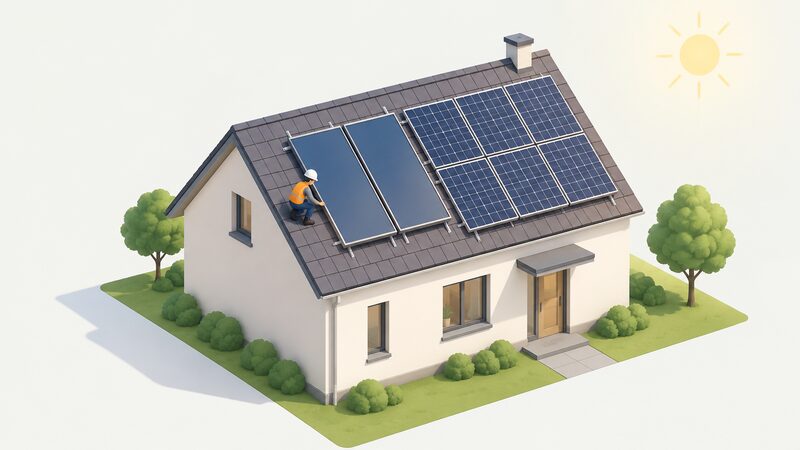
Official guidance describes solar water systems, also known as solar thermal, as comprising three main components: solar collectors, a hot water cylinder and a plumbing system23. They work by retaining the heat from the sun's rays and transferring this heat to a fluid, in order to preheat water23. Official guidance elsewhere notes that solar water heating uses energy from the sun to work alongside your conventional water heater11, and that it can be used in the home or for larger applications, such as swimming pools11.
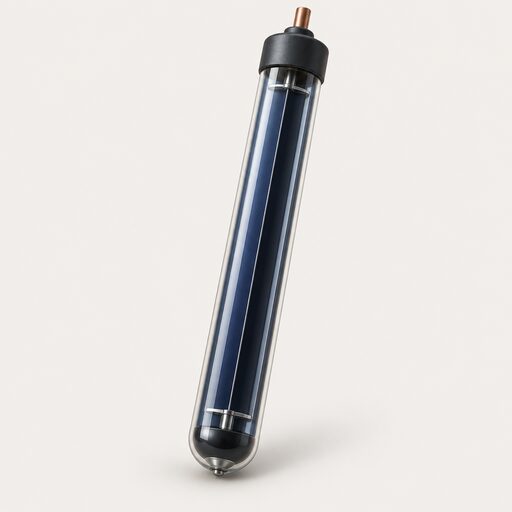
Independent guidance identifies two collector types, evacuated tubes and flat plate collectors, and notes that because the amount of solar energy varies throughout the year, solar thermal systems are usually used alongside a conventional boiler or immersion heater24. Some systems use two cylinders, one dedicated to the solar collectors and another for the immersion heater24. A hot water cylinder is needed, ideally inside the home but a garage or similar space can work24.
The two routes differ in what they require. A diverter needs an immersion heater and a cylinder, and it uses the PV array the household may already have. Solar thermal needs its own collectors, its own cylinder arrangement in some designs, and a plumbing circuit. A household with PV already installed is adding a small electrical device; a household choosing solar thermal is adding a separate renewable system.
For independence, the distinction is about which fuel is displaced. A diverter displaces bought electricity or gas used for water heating, within the limits of cylinder size and surplus. Solar thermal displaces the same demand but produces heat even when the household is using its electricity elsewhere, and it continues to work when the PV system is exporting.
Sources24 cited
- Solar panels, London Borough of Hammersmith and Fulham, 2026-09-17
- Solar panels, Home Energy Scotland, 2026-09-20
- Making the most of your solar PV panels, Centre for Sustainable Energy, 2026-08
- VAT energy-saving materials: VENSAV3062, HM Revenue and Customs, 2026-09-17
- Feed-in Tariff guide, Uswitch, 2026-07-13
- Smart Export Guarantee, Ofgem, 2026-09-17
- Value Added Tax Act 1994, Schedule 7A, legislation.gov.uk, 2026-09-17
- Smart Export Guarantee, Solar Energy UK, 2026-05-12
- Immersion heaters, Which?, 2026-06-01
- Plug-in solar interim product specification, Department for Energy Security and Net Zero, 2026-06
- Solar thermal water heating, Planning Portal, 2026-09-17
- Solar panels, Wirral Council, 2026-09-17
- VAT energy-saving materials: VENSAV2082, HM Revenue and Customs, 2026-09-17
- Can solar panels charge electric cars?, The CPA, 2026-04-15
- VAT on energy-saving materials, HM Revenue and Customs, 2026-07-10
- VAT relief for energy-saving materials: impact assessment, legislation.gov.uk, 2026-09-17
- Solar heating, MCS Certified, 2026-08-17
- Key terms explained: Feed-in Tariffs, Ofgem, 2026-09-17
- Feed-in Tariffs: FIT generators, Ofgem, 2026-09-17
- Guidance for FIT generators, Ofgem, 2026-04-01
- Draft licence conditions, Department for Business, Energy and Industrial Strategy, 2026-09-17
- FIT guidance for licensed electricity suppliers, Ofgem, 2024-09-06
- Generating your own energy: solar water, Welsh Government, 2026-09-17
- Solar water heating, Energy Saving Trust, 2026-05-20
 The Full Solar Panels GuideHow much do solar panels cost, and what could they save you each year?
 Solar Water Heating CollectorsSolar water heating uses panels on your roof to warm the water in your cylinder, working alongside your boiler rather than replacing it.
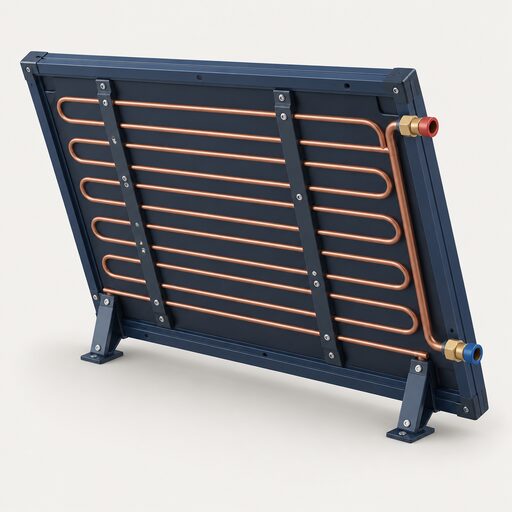 PVT Hybrid PanelsA PVT panel makes electricity and heats water from one roof space, so it suits homes without room for two separate systems.
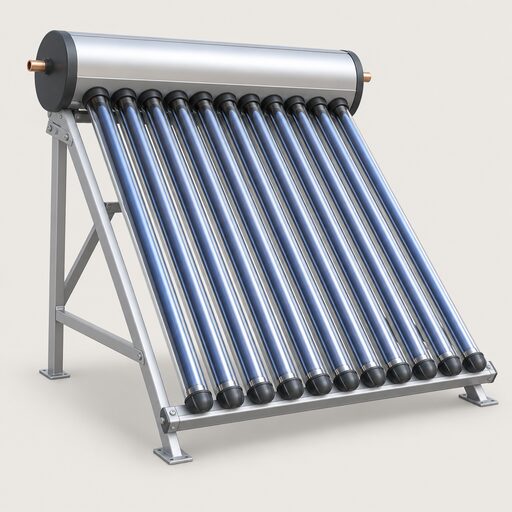 Solar Thermal Water HeatingSolar thermal panels heat your water using the sun, working alongside your boiler rather than replacing it.
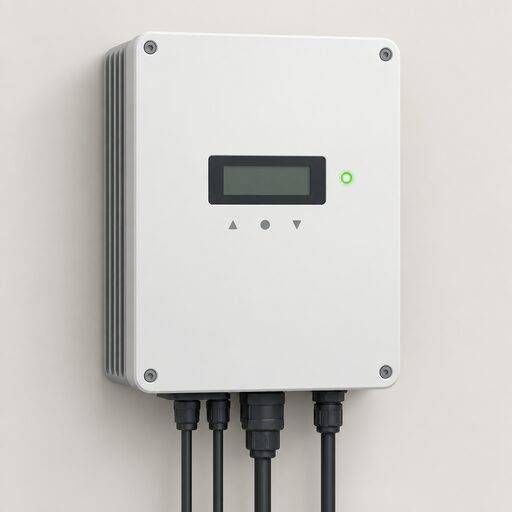 Solar InvertersWhat does the box on the wall next to your solar panels do, and how long will it last?
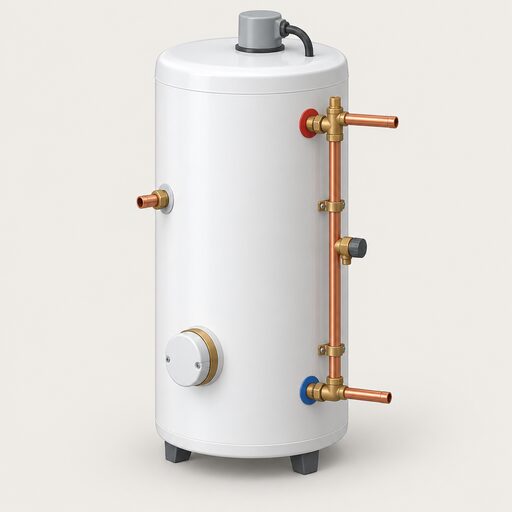 Solar and Energy IndependenceHow far domestic solar cuts dependence on suppliers and the grid, what self-consumption really looks like across the year, what a battery, diverter or EV adds, and the grid-outage limit of ordinary inverters.