
In this answer
Short answer
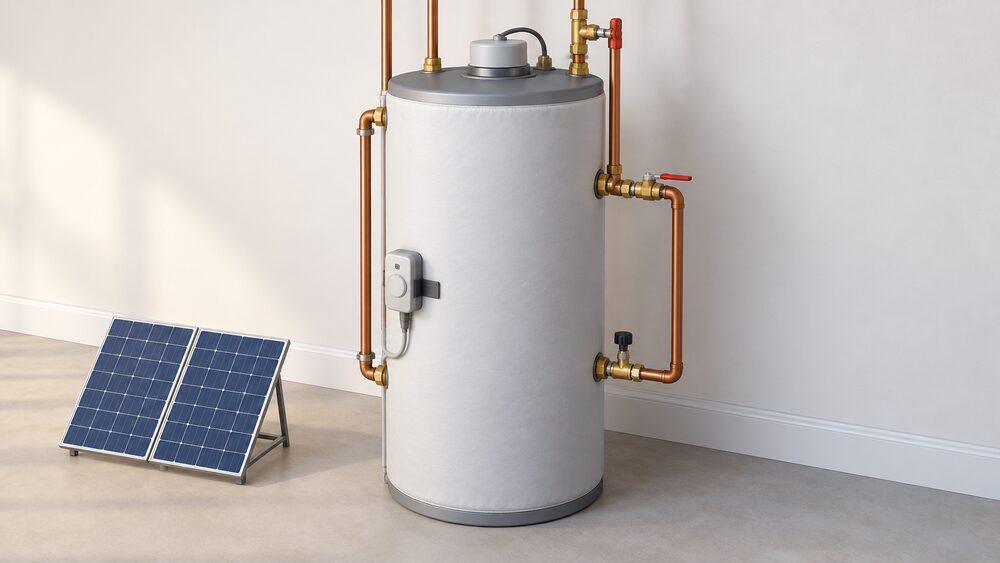
A hot water tank is not a battery in the electrical sense, but it does store energy, and for a household with surplus solar or a cheap overnight tariff it can act as one. The energy is held as heat in water rather than as charge in a cell. A water-based thermal store is an insulated tank that can hold heat as hot water for several hours1. A 300 litre tank can contain more than 15 kWh of heat, which a maker describes as comparable to an average home battery in electrical terms2.
That figure is the reason the question gets asked. A tank of hot water and a lithium battery can hold a similar order of energy, but they do different jobs. The tank's heat can run taps, showers and, in some designs, space heating. It cannot run your lights, your fridge or your broadband router. The distinction matters for anyone weighing thermal storage against an electrical battery, and it shapes where each fits in a home energy setup.
What a hot water tank stores, and in what form
A hot water cylinder stores thermal energy in water. The water is heated by a boiler, an immersion heater, a heat pump or a solar thermal collector, and the cylinder holds it until a tap or shower draws it off. Solar assisted heat pumps follow this pattern: the hot water is stored in a hot water cylinder, ready for when it is needed6. Ground source heat pumps can also heat water stored in a cylinder, ready for hot taps and showers7.
Storage in the home takes several forms. Official guidance on the Energy Company Obligation lists heat stored in the fabric of the building, hot water storage, electric battery storage and heat batteries using phase change materials8. A well-insulated home stores heat in its walls and floors; a cylinder stores it in water; a battery stores it chemically; a heat battery stores it in a material that changes phase.
The cylinder itself comes in different arrangements. System boilers have a separate water cylinder to store hot water2. Heat-only boilers go further and have two extra header tanks to store cold water, usually in the loft2. Storage combi boilers carry a small built-in tank, typically sized between 40 and 200 litres9. Each of these holds heat, and each can in principle be charged when energy is cheap or abundant.
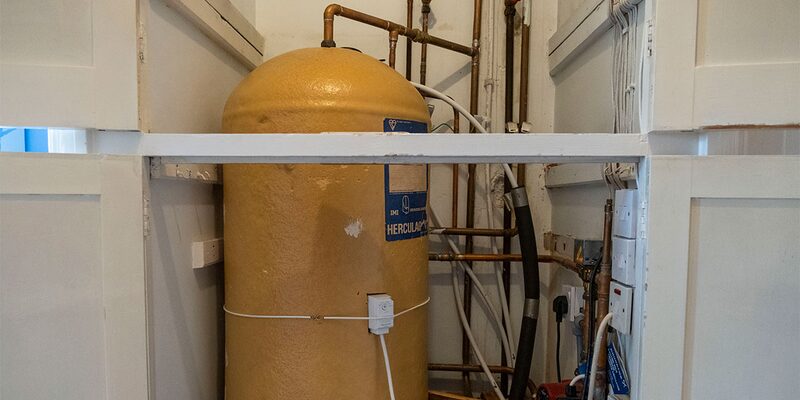
How a tank works as a battery: storing surplus energy as hot water
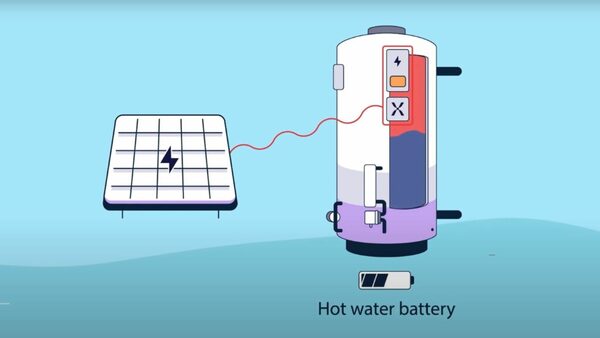
The battery analogy works best when something is charging the tank that would otherwise be wasted or exported. A hot water cylinder lets a household store energy from solar panels2. Instead of sending surplus generation to the grid, a diverter or immersion heater can send it into the cylinder as heat. The tank becomes a sink for energy that has nowhere better to go.
Dedicated heat batteries take the same idea further. They store energy as heat provided by electricity from the grid or a renewable source, and by surplus heat from a boiler, heat pump or another heating system1. One design stores spare heat or electricity as heat in a material that changes from solid to liquid as it absorbs energy, then back to solid to release it10. That phase change allows a compact unit to hold a useful amount of heat.
Heat pumps can charge thermal storage directly. A trial system design describes a heat pump charging renewable heat into large capacity time-shifting thermal storage, delivering space heating and hot water on demand11. Hybrid heat pumps offer a related route: for homes with a hot water cylinder, there is the potential to use off-peak electricity for heating and storing hot water to balance the energy supply12.
The mechanism is the same in each case. Energy arrives when it is cheap, abundant or would otherwise be lost, and is converted to heat in water or a phase change material. It is drawn off later as hot water. What the tank cannot do is return that energy as electricity.
What the stored heat can be used for in the home
The heat in a cylinder serves domestic hot water first. Hot water storage tanks are made for domestic hot water, and makers emphasise ease of installation as a selling point13. That is the core use: taps, showers, baths and any appliance that draws hot water.
Thermal stores go wider. Water-based thermal stores are insulated tanks that can store heat as hot water for several hours, and they usually serve two or more functions1. Those functions include providing hot water, storing heat from a solar thermal system or biomass boiler, acting as a buffer for heat pumps, storing heat from multiple sources, and heating water using an immersion heater via a diverter1. A single tank can therefore sit at the centre of several heat sources at once.
Space heating is possible in some designs. Air-to-water heat pumps can hold their hot water in a storage tank or in an underfloor heating system14. That means the stored heat can feed a distribution system rather than only a tap. The older electric storage heater worked on the same principle: it stored thermal energy overnight by heating internal ceramic bricks, then released it to warm the home during the day15.
For a household, the practical question is what the stored heat displaces. Every kilowatt hour drawn from the cylinder for a shower is a kilowatt hour the boiler or immersion does not have to produce at that moment. That is the independence the tank offers: it decouples the moment of heating from the moment of use.
How much energy a tank can hold compared with a battery
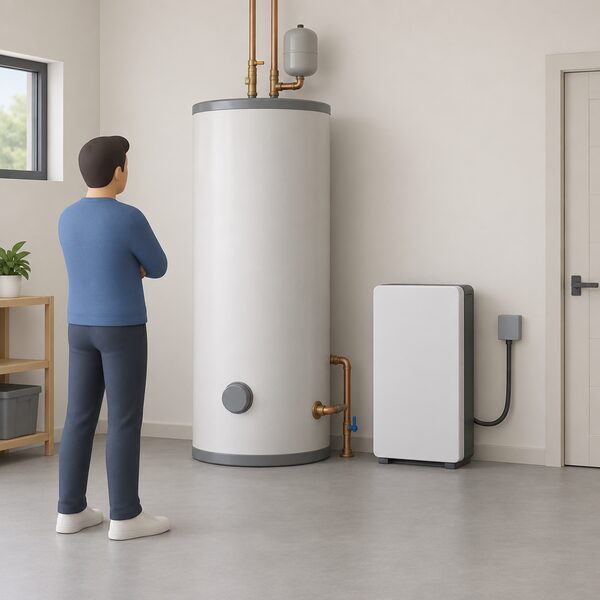
The headline comparison is capacity. A 300 litre tank can contain more than 15 kWh of heat, which the maker describes as comparable to an average home battery in electrical terms2. That is a substantial figure, and it explains why thermal storage is often discussed alongside batteries rather than instead of them.
The comparison has limits. Lithium-ion batteries can have roughly double the energy density of water storage, so could be effective in space-constrained settings5. In other words, a battery holds more energy per unit of volume than a tank of hot water. A tank needs space; a battery needs less of it for the same energy.
Grid-scale storage shows the same contrast. Batteries are one of several storage methods, alongside pumped hydro reservoirs, vehicle-to-grid electric vehicle batteries, hydrogen and stored heat16. But the electricity batteries can deliver is much more limited than pumped storage16. Scale changes what each technology can do, and the same is true at home.
| Store | What it holds | Example capacity | Notes |
|---|---|---|---|
| Hot water tank | Heat in water | More than 15 kWh in a 300 litre tank2 | Heat only, for hot water and some space heating |
| Heat battery | Heat in a phase change material | Not stated in the sources | Compact, stores surplus heat or electricity1 |
| Home battery | Electrical charge | Not stated in the sources | Delivers electricity to circuits16 |
| Storage combi tank | Heat in water | 40 to 200 litres9 | Built into the boiler |
The two are not rivals so much as different tools. A tank holds a large amount of heat in a bulky, cheap medium. A battery holds electrical charge in a dense, expensive one. A household wanting to run appliances after dark needs the battery; a household wanting to shower on stored solar needs the tank.
Limits of thermal storage: heat is not electricity
The central limit is that heat cannot run electrical loads. A tank charged with surplus solar cannot power a fridge, a laptop or a light. It can only supply heat. That single fact rules thermal storage out as a substitute for a battery in any home that wants to shift electrical demand.
There are regulatory limits too. Heat losses from hot water storage vessels are limited under building rules for heat pump installation work3. Solar water heating systems supplying domestic hot water are capped at a solar heated water storage volume of less than 440 litres17. These are not arbitrary: they keep standing losses and system complexity in check.
Standing loss is the everyday limit. A 300 litre vessel has a maximum daily heat loss of 2.36 kWh3. That is heat leaking away whether or not anyone draws hot water. Insulating the tank reduces it: a jacket keeps hot water warm for longer and means less energy is used to reach the required temperature18. Insulating a hot water tank significantly reduces heat loss, keeping water hotter for longer and lowering energy bills19.
There is also a funding limit worth knowing. Under one consultation, retrofitting thermal storage to an existing heat pump, or upgrading the storage, is not eligible for support20. That affects which households can get help for a retrofit, though it does not affect the physics.
Where tank storage fits in a household energy setup
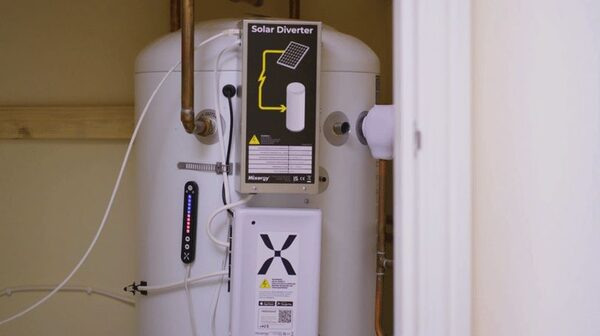
Thermal storage sits between generation and heat demand. It captures energy when it is cheap or abundant and releases it as hot water when needed. Conventional thermal storage includes additional tanks for hot water, and more innovative heat battery technologies do the same job in a smaller unit20. Both increase self-consumption of whatever is generating the energy.
The fit depends on what the household already has. A home with a system boiler and a cylinder can store energy from solar panels without new hardware beyond a diverter2. A home with a heat pump can use the cylinder as a buffer and charge it on off-peak electricity12. A home with solar thermal already stores heat in a cylinder or thermal store21. Solar thermal installations may need space for an additional water cylinder if required22.
What remains dependent is the point to be honest about. A tank does not reduce reliance on the grid for electricity, on a supplier for top-up, or on gas or oil for the boiler that charges it. It shifts when energy is used, not whether it is bought. For a household working through whole-home energy system design, the tank is one component among several, and its role is thermal.
The comparison with an electrical store is set out in home battery vs hot water tank, and the wider picture of using your own generation is in self-consumption. For the household, the tank's contribution to independence is real but bounded: it makes stored heat possible, and stored electricity still needs a battery.
Sources22 cited
- Storing energy, Energy Saving Trust
- Water battery: how to store heat smartly, Homey
- Approved Document L, Conservation of fuel and power, Volume 1: Dwellings, HM Government
- Burns and scalds, CIPHE
- Home and business grants, schemes and advice, East Herts Council
- Air source heat pump, MCS Certified
- How a heat pump can cool your home, Which?
- Energy Company Obligation ECO guidance 2022 to 2026, HM Government
- The suitability of clean heating options for challenging dwelling types, ClimateXChange
- Heating your home with renewable energy, Which?
- History of electrical heating, Electrical Safety First
- Our response to the Treasury's consultation on VAT relief for energy saving materials, Energy Saving Trust
- Our homes net zero toolkit, Energy Systems Catapult
- Ground source heat pumps, Energy Saving Trust
- Approved Document L, Volume 1 consultation version, Welsh Government
- Solar assisted heat pumps, Energy Saving Trust
- Solar energy, Solar Energy UK
- Cheap and easy ways to insulate your home over a weekend, Which?
- Top energy savings tips, National Energy Action
- Daikin 4 port multi air conditioner, Quiet Mark
- Solar thermal water heating, Planning Portal
- Hybrid heat pumps, HHIC
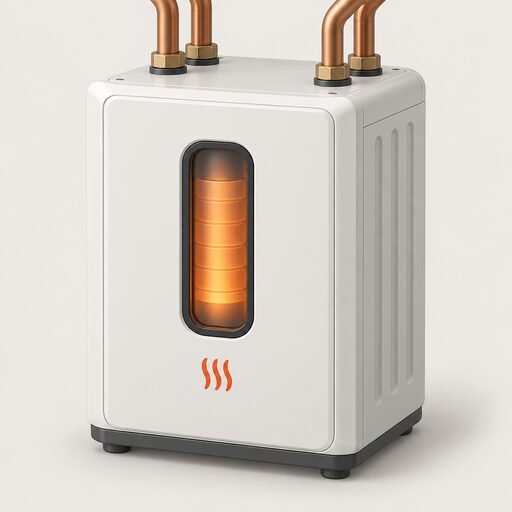 Heat Batteries with Heat PumpsCan a heat battery replace a hot water cylinder if you have no space for one?
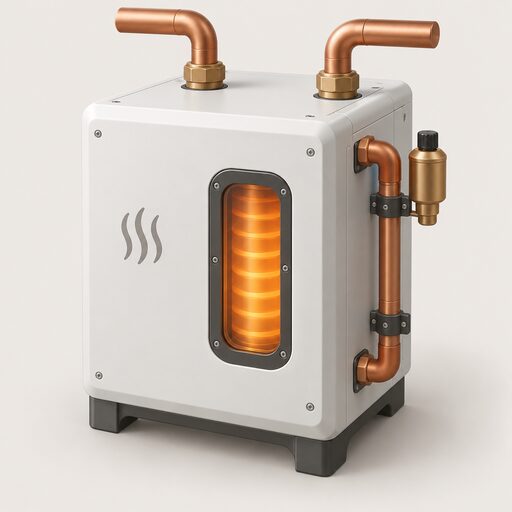 Heat Batteries and Zero EmissionA heat battery stores cheap overnight electricity as heat, then releases it to warm your home or your hot water.
 Phase-Change Heat StorageA heat battery that melts and freezes a special material can hold several times more heat than a hot water cylinder of the same size.
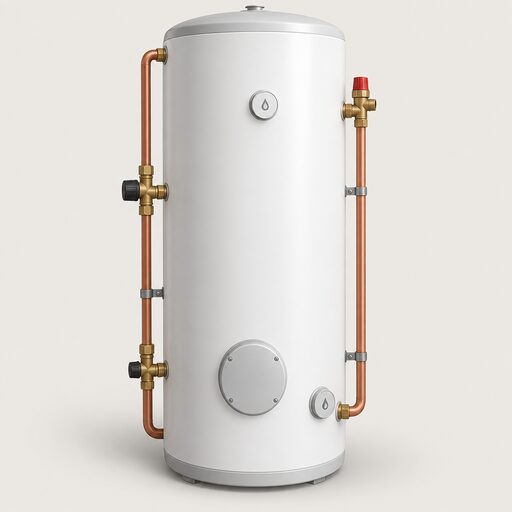 Whole-Home Energy DesignHeating and hot water use more energy than anything else at home, so that choice shapes everything.
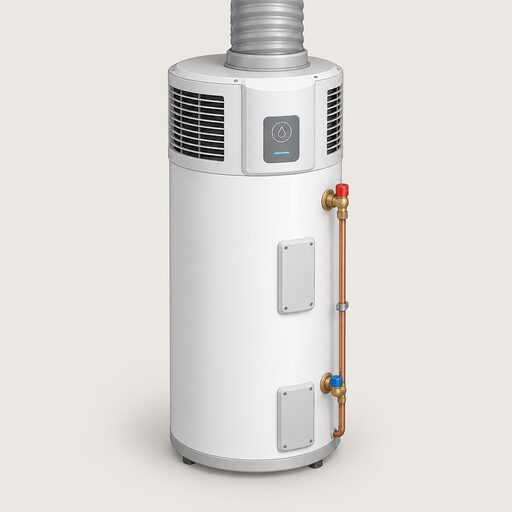 Hot Water Heat PumpsA hot water heat pump heats only the water in your cylinder, using air instead of a boiler flame.
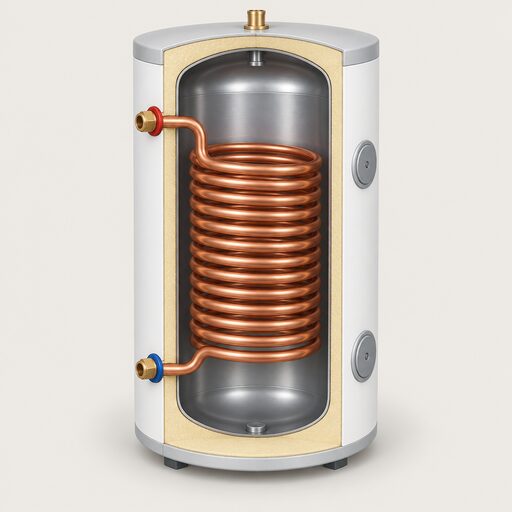 Hot Water CylindersA heat pump needs a cylinder to store hot water, so swapping a combi means getting one.