
In this comparison
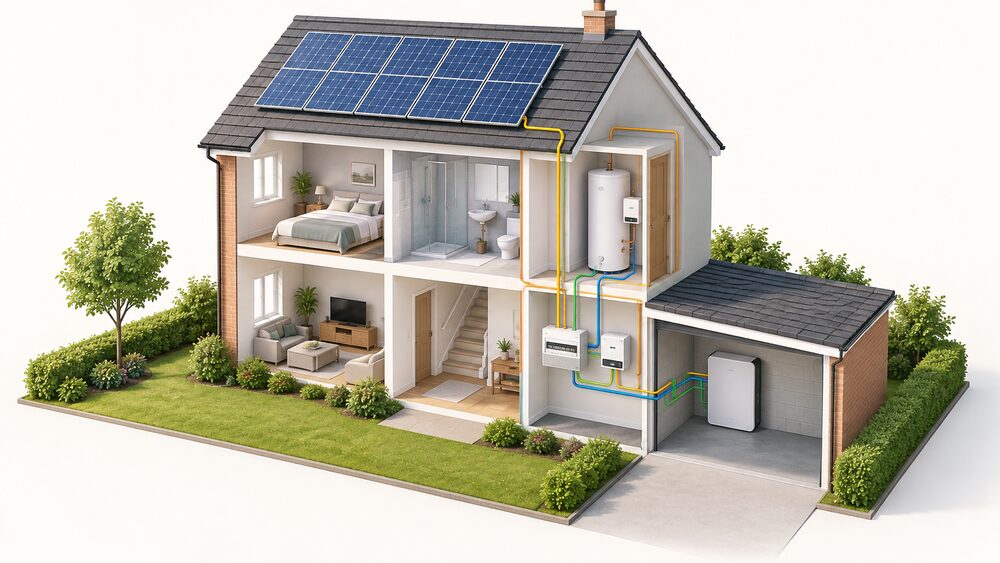
A solar diverter and a battery are competing answers to the same problem: what to do with the electricity a rooftop array produces when the house is not using it. A diverter sends that surplus into the immersion heater and stores it as hot water. A battery stores it as electricity for the evening. The cost gap is wide. A diverter costs £250 to £500 to buy, or £600 to £800 with installation, while a battery typically adds £2,500 to £5,000 to an installation1.
Both beat exporting. The price paid for exporting surplus solar to the grid is almost always less than the price of buying electricity back, so every kilowatt hour used on site is worth more than the same unit sold3. That single fact drives the whole comparison, and it is why the two technologies are usually discussed together rather than as alternatives.
The choice turns on what the household needs after dark. A diverter can only make hot water, and only up to the capacity of the cylinder. A battery can run lights, appliances, a heat pump or an electric vehicle. Neither is a route to independence from the grid on its own, and both leave the household dependent on a supplier for winter and for anything the array cannot cover.
What a solar diverter does with surplus power
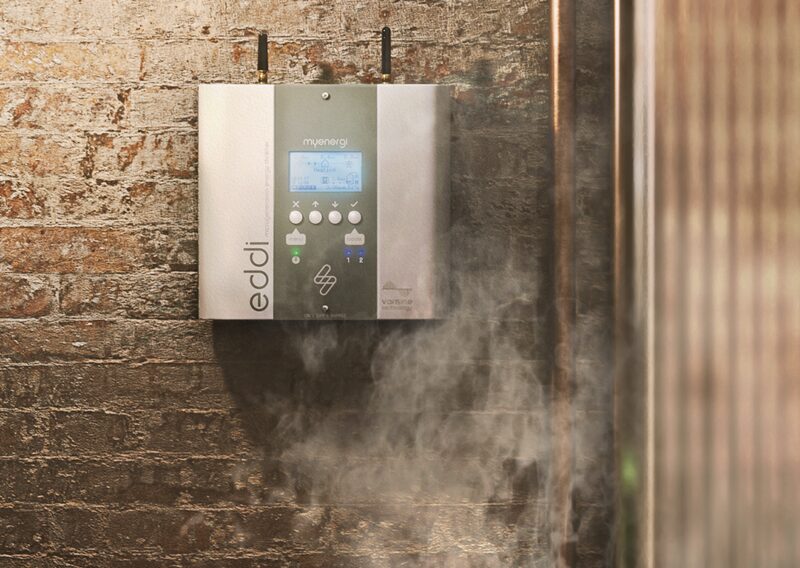
A diverter is a load controller wired between the consumer unit and the immersion heater. It watches the current flowing at the meter, and when the array is generating more than the house is drawing, it sends the difference to the immersion element instead of letting it leave for the grid. The effect is that surplus electricity becomes hot water in the cylinder.
The mechanism is well established. A solar diverter switch can power the immersion heater in a hot water tank for free, storing hot water for later use6. The same description appears in Scottish guidance: instead of sending surplus electricity to the grid, a PV diverter switch can power the tank's immersion heater, storing hot water for later use7. Some immersion heaters can use electricity from solar panels, heating water at no running cost8.
The practical limit is the cylinder. Once the water is up to temperature, the thermostat opens and the diverter has nowhere to send the surplus, which then exports. In summer, that can happen by mid-morning. The benefit is real but seasonal: using excess electricity to heat water can cut gas use, and some households report needing no gas at all to heat water in summer9. A case study from Wales describes a diverter taking surplus solar energy from the panels to heat hot water when required10.
For a household's independence, the diverter does something specific and modest. It displaces gas or off-peak electricity that would otherwise have heated the cylinder, and it does so without an app, a cloud account or a subscription. It is a resistive load with a controller, and it keeps working when the internet does not.
What a battery does with surplus power
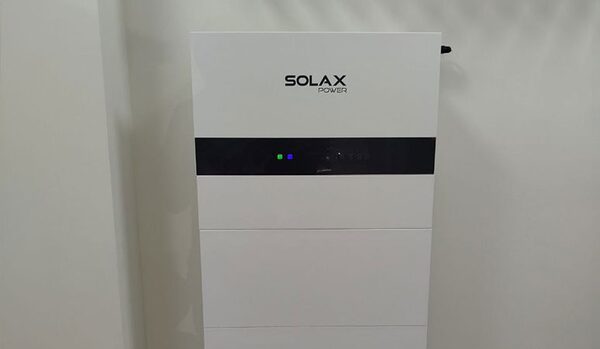
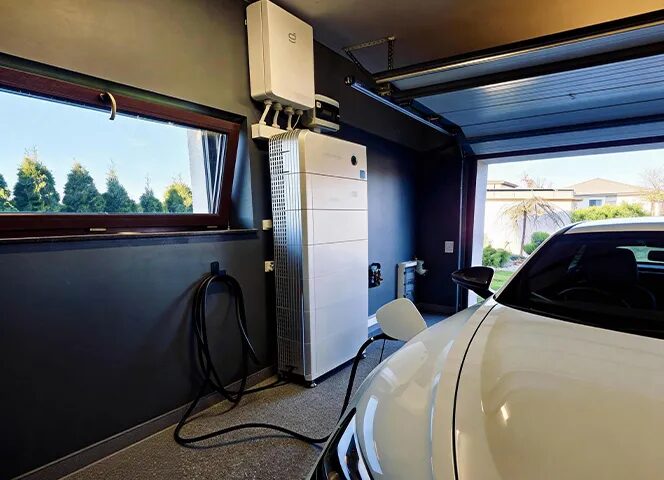
A battery stores the surplus as electricity, which makes it far more flexible than a cylinder of hot water. A home battery captures surplus solar energy for later use, including overnight EV charging, whereas without it unused solar electricity is wasted or exported to the grid, often at a relatively low rate11. The same principle applies to any load: lighting, cooking, a heat pump, a washing machine run after dark.
The storage medium is not the only option. Heat batteries may have a longer lifespan than electrical batteries, and they occupy a half to a third of the space of hot water tanks of equivalent storage capacity12. That comparison matters for a household short of plant room, though a heat battery still delivers heat rather than electricity.
The financial case rests on the spread between import and export prices. Adding a battery can significantly increase savings, with a £2,500 solar battery potentially increasing annual savings to £9324. Independent modelling of a pass-through tariff with solar PV and battery storage, where the battery responds to price signals but the heat pump does not, puts the average annual saving at £1,00214. Those are modelled figures for specific tariff structures, not guarantees, and they depend on the household shifting load into the battery rather than on the battery alone.
What the battery does not do is remove the grid. It shifts when electricity is drawn, not whether it is drawn. In a dull week in December the array produces little, the battery empties, and the house imports as before. The independence it offers is temporal, measured in hours, not in seasons.
Diverter, battery or both: which fits which home
The two are not rivals in every household. A home with a hot water cylinder, a gas boiler and modest evening demand gets most of the benefit from a diverter at a fraction of the cost. A home with a heat pump, an electric vehicle or a large evening load gets more from a battery, because those loads need electricity rather than hot water.
Running both is common and coherent. The battery charges first, and the diverter takes whatever surplus remains once the battery is full. That sequence captures more of the generation than either device alone, and it means the cylinder is still heated from surplus on days when the battery fills early.
There is a policy dimension. Solar photovoltaics, battery storage and PV diverters all sit in the same eligible works category, Electrical, under the Home Improvement loan rules15. That is a funding classification rather than a technical one, but it confirms that official schemes treat them as comparable household measures.
There is also a caution. Questions have been raised about the robustness of testing specifically with regard to PV diverters and batteries, in the context of the Home Energy Model consultation16. That is a live concern about how performance is verified, not a finding against either technology, and it is worth knowing that the evidence base is still being tested.
Costs compared: diverter vs battery
The cost difference is the single largest factor in the decision, and it is roughly an order of magnitude.
| Option | Cost | What it covers |
|---|---|---|
| Solar diverter | £250 to £500 to buy; £600 to £800 installed1 | Hot water only, up to cylinder capacity |
| Battery added to an installation | £2,500 to £5,000 typical2 | Any electrical load, for hours |
| Battery, wider market range | £2,000 to £12,500 depending on capacity, chemistry and lifespan4 | Any electrical load, sized to demand |
| Battery for a typical rooftop system | around £2,000 to £6,000 for sufficient capacity5 | Evening and overnight household demand |
The ranges differ because they measure different things. The £2,500 to £5,000 figure is the typical addition to an installation cost2. The £2,000 to £12,500 range spans the whole market, from small retrofit units to large high-cycle-life systems4. The £2,000 to £6,000 figure is specifically the cost of sufficient capacity for typical UK rooftop systems5. A household comparing quotes should establish which of these the installer is quoting against.
Prices are installer-quoted and vary with the property, the existing consumer unit, the cylinder and the wiring route. The diverter figures are the only ones with a published buy-and-install split, and even those are indicative.
How much surplus each option can actually use
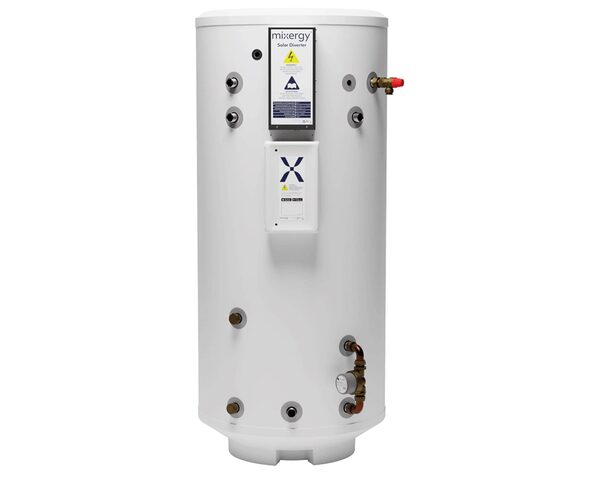
A diverter's ceiling is the cylinder. A 150-litre cylinder can absorb a few kilowatt hours of heat before its thermostat opens, and after that the surplus exports regardless of how large the array is. On a bright May day with a 4 kWp array and a low base load, the cylinder may be satisfied before lunch.
A battery's ceiling is its capacity and its round-trip efficiency, and beyond that the same export applies. The advantage is that the battery can be filled and emptied repeatedly across the day, absorbing surplus in the morning, discharging at teatime, and recharging in the afternoon. Over a full day it can absorb considerably more than a cylinder, which fills once.
Neither can absorb what the house does not need. A household with low hot water demand and low evening demand will export whatever it installs, and the export rate will apply. The relevant measure is self-consumption, and the honest position is that both devices raise it while neither eliminates export.
Export payments and why they change the maths
Export payments are the benchmark against which both options are judged, and they are smaller than most households expect. The price paid for exporting surplus solar to the grid is almost always less than the price to buy electricity from the grid3. That gap is the entire economic case for using surplus on site.
The Smart Export Guarantee is the current mechanism. It is an export tariff, based solely on how much electricity is exported back to the grid as recorded by a smart meter17. Oxfordshire guidance describes the same payment as the Smart Export Guarantee18. Under the older Feed-in Tariffs scheme, the value of net export payments was calculated to account for the difference between the export tariff paid by a licensee and the value of that electricity to the licensee19.
Two consequences follow. First, every unit diverted or stored is a unit not paid for, so the export income falls. Second, a battery can affect eligibility. Installing battery storage lowers the amount exported, meaning less money from export payments, though overall savings are greater than relying on export payments12. More sharply, having a storage battery may render a household ineligible for some SEG tariffs13. Households on legacy arrangements should also note that deemed export payments stop once a smart meter is fitted, replaced by payments for the amount actually recorded as exported20. Free solar PV arrangements raise a separate question: whether the consumer receives the export premium21.
Installation, wiring and compatibility with your existing setup
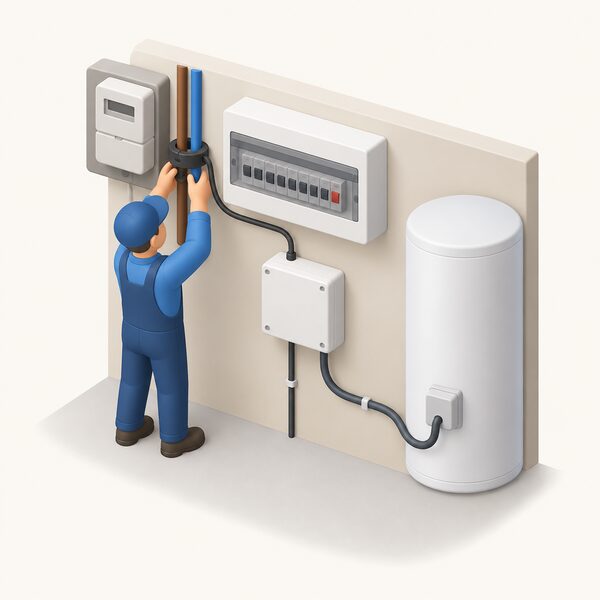
A diverter is the simpler installation. It needs a current sensor at the meter tails, a supply to the unit, and a switched connection to the immersion element. It does not generate, so it does not require a network connection application. The G98 and G99 processes apply to generating units and electricity storage: any generating units, including electricity storage, connected through the G99 Fast Track process must use EREC G99 or G98 Type Tested inverters, and units installed before 27 April 2019 may also use EREC G59 or G83 Type Tested inverters22.
A battery does need that application, because it is storage connected to the network. In Northern Ireland the process differs again: installing solar panels or wind turbines, or adding a new battery, is a different process from the EV charger and heat pump connection route23.
Compatibility questions cluster around the inverter and the tariff. A hybrid inverter will automatically disconnect from the grid during a blackout and keep the home powered using solar and stored energy when paired with a battery24. That is a property of the inverter, not the battery, and it is the difference between a system that runs the house in a power cut and one that does not. On the tariff side, a dedicated solar and battery tariff, or a good SEG tariff matched with a dynamic import tariff or an Economy 7 tariff, are the recognised combinations25. Some storage tariffs only work with specific systems, so compatibility needs checking26. Economy 7 itself needs either a smart meter or an Economy 7 meter26, and all smart meters can support tariffs that charge different prices at different times of day, including Economy 727. Households on Economy 7 or Economy 10 can get a smart meter28, though some suppliers do not yet offer meters that work with those tariffs for storage heater customers28.
For smaller systems, the picture is changing. Plug-in solar kits typically include one or two solar panels, a microinverter and a lead fitted with a standard three-pin plug, along with mounting brackets and an app for monitoring29. Those kits do not include storage, and a diverter remains the cheapest way to use their output on site.
Where a battery adds value beyond hot water
The battery's advantage is that it serves loads a cylinder cannot. A solar battery can increase savings further by storing the sun's energy to power a heat pump later in the day30. That matters because a heat pump is the largest electrical load in a retrofitted home, and it runs hardest in the evening, exactly when the array has stopped producing.
The same logic applies to an electric vehicle. A home battery captures surplus solar energy for later use, including overnight EV charging11. Without storage, that charging happens on imported electricity at whatever the overnight rate happens to be.
There is a control dimension too. A battery can be set to charge when electricity is cheap and discharge when it is expensive, which is how it interacts with time-of-use tariffs25. A diverter cannot do this, because it responds only to surplus generation and has no notion of price.
The limits are worth stating plainly. A battery is a manufactured product with a control app, and its smart functions may depend on a manufacturer's cloud service. It stores hours, not seasons, so the winter gap remains. It reduces export income and may affect SEG eligibility12. And it does not make a home independent of the grid; it makes the home a more flexible customer of it. For the wider picture of what full independence would require, see household energy independence and how much battery increases self-consumption.
Sources30 cited
- A complete guide to solar PV, Centre for Sustainable Energy, 2025-11
- Solar panels guide, Uswitch, 2026-09-16
- Making the most of your solar PV panels, Centre for Sustainable Energy, 2026-08
- Battery storage and solar panels, The CPA, 2026-01-06
- Could solar panels save you £500 a year?, Which?, 2026-06-17
- Solar panels, London Borough of Hammersmith and Fulham, 2026-09-17
- Solar panels, Home Energy Scotland, 2026-09-20
- Immersion heaters, Which?, 2026-06-01
- Should you get solar panels?, Which?, 2024-07-03
- Transitioning to renewables in Wales, MCS Certified, 2024-11-08
- Can solar panels charge electric cars?, The CPA, 2026-04-15
- Battery storage, Home Energy Scotland, 2026-09-20
- Solar panel battery storage, Which?, 2026-05-14
- Domestic heat pump flexibility modelling, Nesta, 2024-11-19
- Eligible and non-eligible works, Cornwall Council, 2025-10-01
- Home Energy Model consultation response, CIBSE, 2026-09-17
- Can I switch energy supplier if I have solar panels?, Uswitch, 2026-06-04
- How do I retrofit my home: solar panels, Oxfordshire County Council, 2026-09-17
- Feed-in Tariffs Annual Report Scheme Year 13, Ofgem, 2023-12
- Feed-in Tariffs: FIT generators, Ofgem, 2026-09-17
- Information regarding free solar PV systems, RECC, 2026-09-17
- G99 Fast Track process, Electricity North West, 2026-09-19
- EVs and heat pumps, NIE Networks, 2026-09-19
- Microinverter vs hybrid inverter, Solax Power, 2026-08-25
- Tariffs for renewable technology, Energy Saving Trust, 2026-08-12
- Time of use tariffs explained, Which?, 2026-04-23
- Smart meters, Energy Ombudsman, 2026-09-20
- Can I get a smart meter?, Smart Energy GB, 2026-03-16
- Plug-in solar panels, Which?, 2026-09-15
- Is now a good time to get a heat pump?, Energy Saving Trust, 2025-12-12
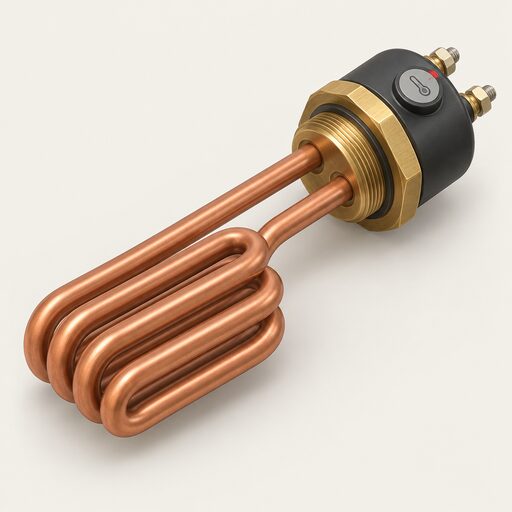 Solar DivertersYour panels often make more electricity than your home needs.
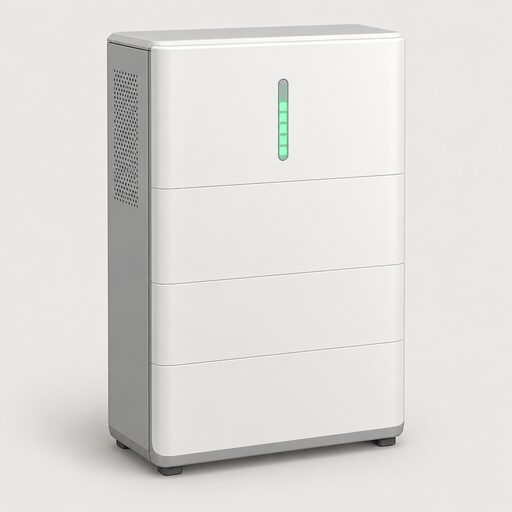 AC-Coupled vs DC-CoupledCan you add a battery to your existing solar panels without swapping the inverter, and does one kind waste more of your solar power than the other?
 Inverters and Inverter-ChargersIf the power goes off, what actually keeps your fridge and boiler running?
 Hybrid InvertersA hybrid inverter lets you store solar power in a battery and use it later, all through one unit instead of two separate boxes.
 Heat Batteries and Zero EmissionA heat battery stores cheap overnight electricity as heat, then releases it to warm your home or your hot water.
 The Full Home Batteries GuideA home battery stores cheap or solar power for later, but will it really cut your bills enough to be worth it?