In this guide
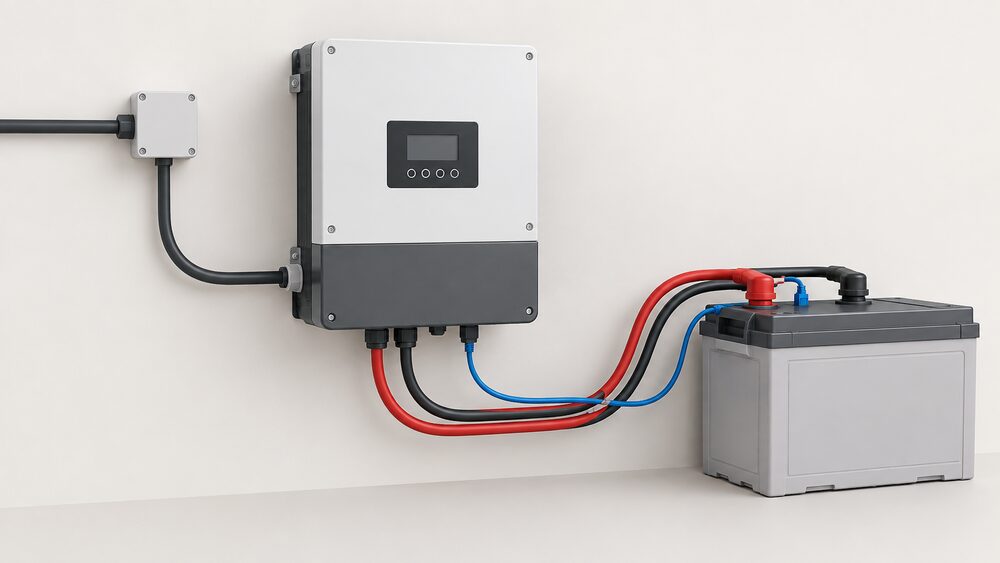
An inverter takes direct current from a battery and turns it into the 230V alternating current that household appliances use. On its own it does one job. An inverter-charger does that job and adds two more: it passes mains power through to the loads when the grid is up, and it recharges the battery from the mains when the grid is up. That combination is what makes a battery bank usable as a home backup supply rather than a one-way drain.
The distinction matters because most backup failures are not inverter failures. They are transfer failures, charging failures or communication failures. A unit that can invert but cannot charge leaves the battery flat after one outage. A unit that can invert and charge but cannot communicate with a lithium battery's management system will report a fault and refuse to work. The Victron MultiPlus-II datasheet lists the protections built into a combined unit: output short circuit, overload, battery voltage too high, battery voltage too low, temperature too high, 230 VAC on inverter output, and input voltage ripple too high1.
Costs sit in a wide band. A replacement PV inverter is put at perhaps £500 to £1,0002, while a full home battery system runs from £1,500 to £10,000, with a 5kWh system around £4,6003. An inverter-charger sits between those poles: it is the power electronics, not the storage, and its price depends on continuous rating, battery voltage and whether it includes a transfer switch and charger.
What an inverter does, and what an inverter-charger adds
A plain inverter converts DC to AC. The Victron VE.Direct range, for example, is described as having a VE.Direct communication port and protections covering output short circuit, overload, battery voltage too high, battery voltage too low, temperature too high and DC ripple too high6. It has no charger and no transfer switch. It is a building block, not a backup system.
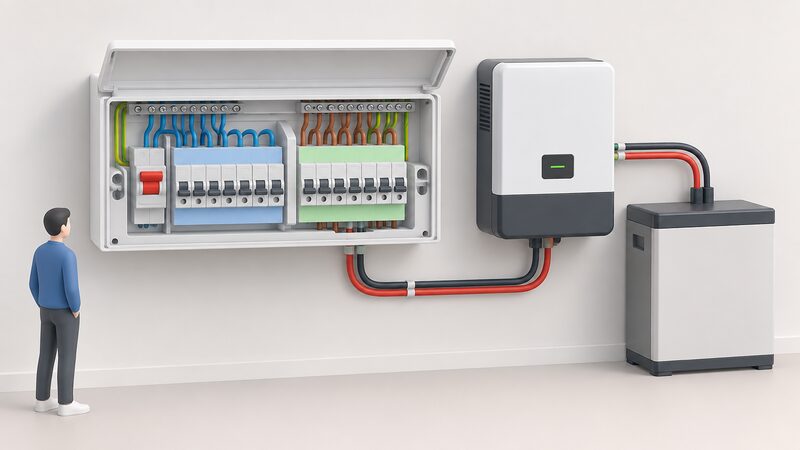
An inverter-charger adds a mains input, a transfer function and a battery charger. The MultiPlus-II datasheet lists the same protection set plus 230 VAC on inverter output and input voltage ripple too high, which are the protections that only make sense once a mains input exists1. The unit can therefore sit between the grid and the loads, pass the grid through when it is present, and switch to inverting when it is not.
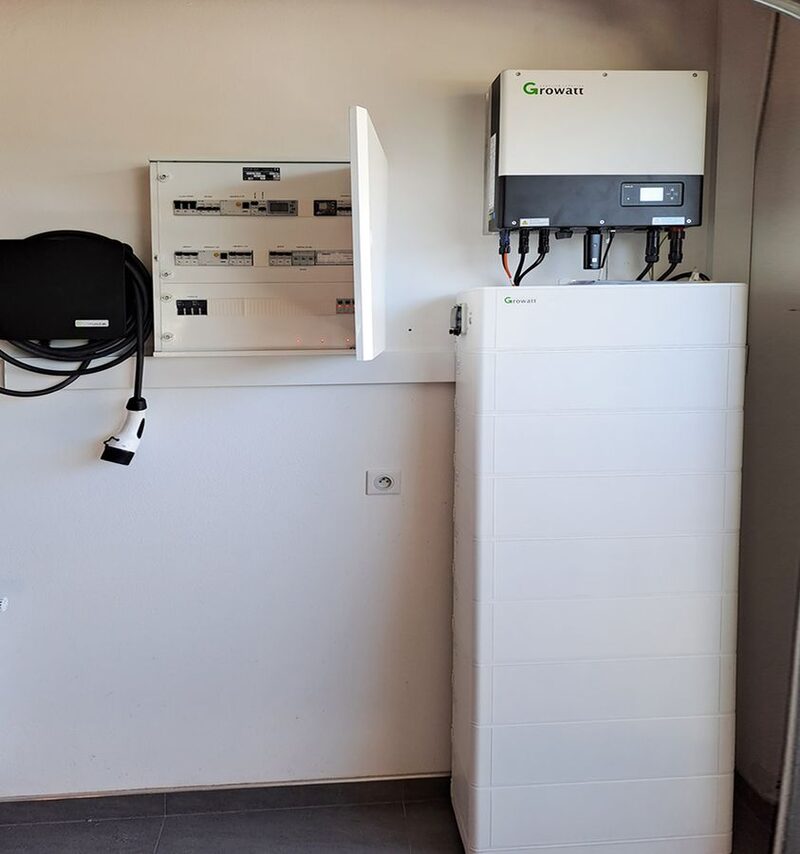
The third category is the hybrid inverter, which is designed around solar. A hybrid inverter will automatically disconnect from the grid during a blackout and keep the home powered using solar and stored energy when paired with a battery7. A multi-mode or all-in-one hybrid inverter is described as having full UPS capabilities with anti-islanding protection, seamlessly switching to battery and PV power to support critical household loads when the grid fails8. The anti-islanding protection is not optional: it is what stops the inverter energising a dead network while linesmen are working on it.
For a household, the practical difference is what the unit can do without the grid. A plain inverter can run loads from a battery but cannot recharge that battery from the mains. An inverter-charger can do both, which is why it is the usual choice where a battery bank is meant to carry a house through a cut and then refill afterwards. A hybrid inverter can do both and also harvest solar, but it depends on a solar array and, in most UK installations, on a battery that its maker has approved.
Inverter-charger, off-grid inverter or plain inverter: which fits which backup setup

The three types are not interchangeable, and the differences are structural rather than a matter of quality.
An off-grid inverter operates independently from the grid, draws charges only from the battery in many designs, and is generally lower in initial cost9. Its applications are described as remote ones: vehicles, camping, boats, recreational vehicles and emergency backup9. It needs maintenance, and battery management is a must for operation rather than an optional extra9. Efficiency is described as lower than the alternatives9.
An off-grid hybrid inverter is a middle case. These units do not feed power back to the grid; they strictly use the grid as a backup source to supplement power only when solar and battery levels are insufficient8. That is a useful distinction for a household that wants backup without export: the grid connection is an input, never an output.
A hybrid inverter is built for a grid-connected home. It is described as ideal for homeowners wanting to lower bills and have backup power during outages10. When the grid goes down it disconnects from the utility and continues powering the home using solar panels and battery storage10.
A microinverter, by contrast, has no backup capability unless retrofitted with batteries7. That is worth stating plainly, because microinverters are common on UK roofs and are sometimes assumed to provide backup. They do not, as standard.
| Type | Grid interaction | Battery role | Backup capability |
|---|---|---|---|
| Plain inverter | None | Draws from battery | Runs loads only, no charging6 |
| Off-grid inverter | Operates independently from the grid9 | Must for operation9 | Battery and solar only9 |
| Off-grid hybrid inverter | Grid used as backup input only, no export8 | Supplements when solar and battery are insufficient8 | Yes, from battery and PV8 |
| Hybrid inverter | Grid-connected, disconnects on blackout10 | Paired battery required10 | Yes, automatic on outage7 |
| Microinverter | Grid-connected | None as standard | No, unless retrofitted with batteries7 |
The choice follows the wiring, not the preference. A property with no grid connection needs an off-grid inverter. A property with a grid connection and a solar array needs a hybrid inverter if backup is wanted. A property with a battery bank and no solar needs an inverter-charger.
Sizing and battery compatibility: lithium BMS communication versus lead-acid voltage limits
Sizing starts with the continuous rating, not the peak. A unit rated at 3000VA is not a 3000W appliance supply in every case, and the surge rating only covers motor starting for a moment. The protections listed on the MultiPlus-II, including overload and output short circuit, exist because the inverter will shut down rather than deliver more than it is rated for1.
Battery compatibility is where most installations go wrong. A low voltage battery and hybrid inverter should match on battery operating voltage range, maximum charge and discharge current, battery capacity, BMS communication protocol and expansion requirements11. Those five items are the checklist. A mismatch on any one of them produces either a fault code or a system that works until the load rises.
The two battery chemistries behave differently at the inverter. In lithium battery mode, the machine needs to communicate with the battery through the network cable12. That communication is what lets the inverter read state of charge and respect the battery's limits. In lead-acid mode, the upper and lower limits of the battery voltage need to be set12. There is no management system to do it, so the installer sets the thresholds and the inverter enforces them.
Undervoltage is the common failure in either mode. Common causes include low state of charge, high loads, voltage sag, poor cable connections, low temperature and BMS protection11. When undervoltage is detected, the BMS or inverter may reduce output power or disconnect the battery completely11. That behaviour is protective, not faulty, but it means a system sized too tightly will drop loads during a long outage.
Monitoring and control: VE.Direct ports, Bluetooth dongles and battery monitors
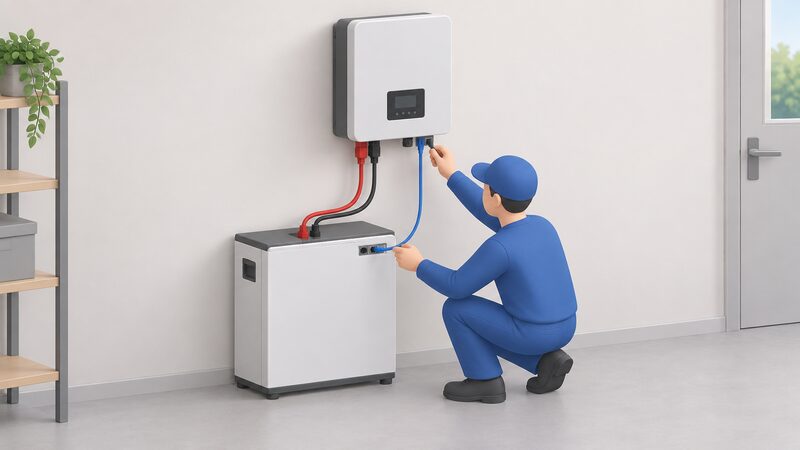
Monitoring is what turns a backup system from a black box into something a household can reason about. The interfaces differ by product, and the differences determine what can be seen without opening a cabinet.
Victron's VE.Direct inverters expose in- and output voltage, percentage load and alarms through the VE.Direct port6. The port can be connected to a computer, Apple and Android smartphones, tablets, MacBooks and other devices6. On the 230V VE.Direct models the port is listed as a VE.Direct communication port, with screw terminals for the battery connection and configurable settings including low battery voltage alarm trip and reset levels13. Those trip and reset levels are the practical control: they decide when the inverter warns and when it stops.
Bluetooth is handled differently across the range. The BlueSolar charge controllers need a VE.Direct Bluetooth Smart dongle to enable Bluetooth14. The SmartSolar controllers with a VE.Can interface have Bluetooth Smart built in, alongside VE.Can and VE.Direct data communication15. The VE.Bus Smart Dongle provides monitoring and control via Bluetooth on the MultiPlus-II1.
For a household, the useful distinction is between monitoring and control. A dongle that reports voltage and load tells the occupant what is happening. Configurable alarm trip and reset levels change what the system does. A battery monitor sits alongside either, and the BMV-702 is listed by a UK distributor at £95.83 plus VAT, with a second listing at £115 excluding VAT from outside the UK; the two figures are not reconciled4.
"In- and output voltage , % load and alarms"
Cost: what a typical unit and its accessories run to in pounds
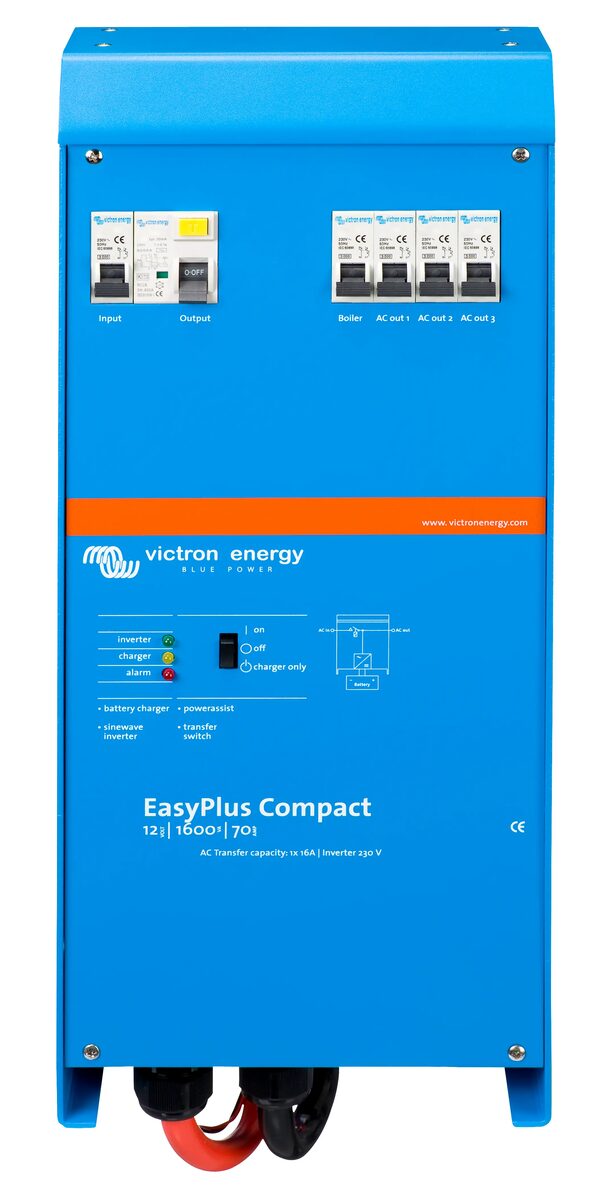
Inverter-charger prices are quoted by installers and vary with model, battery voltage and accessories. The published figures that exist are distributor listings, and they should be read as a guide to the hardware rather than a fitted price.
The MultiPlus-II 3000VA, 48V inverter charger is listed at £485.60 excluding tax4. The MultiPlus Compact 24/1200/25-16 is listed at £916.61 including VAT, or £763.84 excluding VAT, with a second listing showing the same £763.84 excluding VAT figure4. The MultiPlus Compact 24/800/16-16 appears at £732.38 including VAT, or £610.32 excluding VAT4. The MultiPlus 2000VA 24/2000/50-32 is listed at £610.60 including VAT and at £508.83 excluding VAT4. A battery monitor in the same range, the BMV-702, is listed at £95.83 plus VAT4.
Accessories add to the total. A battery monitor is listed at £95.83 plus VAT, with a second listing at £115 excluding VAT from outside the UK4. The VE.Bus Smart Dongle is the Bluetooth monitoring and control accessory for the MultiPlus-II1.
For context on the wider system, home battery storage ranges from £1,500 to £10,000, with a 5kWh battery system around £4,6003. Official guidance puts battery storage at up to £10,000 depending on size, with a typical 5kWh system around £4,60016. A replacement PV inverter is put at perhaps £500 to £1,0002. Where a household is adding an EV charger alongside, typical domestic electrical work is £800 to £1,500 excluding the charger unit5, and installation costs including the charge point range from £400 to £1,000 depending on how powerful the charger is17.
| Item | Figure | VAT position |
|---|---|---|
| MultiPlus-II 3000VA, 48V inverter charger | £485.60 | Excluding tax4 |
| MultiPlus Compact 24/1200/25-16 | £916.61 | Including VAT4 |
| MultiPlus Compact 24/1200/25-16 | £763.84 | Excluding VAT4 |
| MultiPlus Compact 24/800/16-16 | £732.38 | Including VAT4 |
| MultiPlus 2000VA 24/2000/50-32 | £610.60 | Including VAT4 |
| Battery monitor BMV-702 | £95.83 | Plus VAT4 |
UK availability and delivery
Inverter-chargers are supplied through UK distributors and installers rather than as retail shelf products. The listings above are UK distributor prices, which is why the VAT position is stated on each. Delivery and lead time are quoted at the point of order and depend on the model and the battery voltage.
Availability of the wider system varies. The Enphase AC Battery is available via UK installers18. For battery storage generally, the market is served by installers who specify the inverter, the battery and the protection together, which is why a fitted price is not the same as a hardware price.
Where the work touches the electrical installation, notification rules apply in Northern Ireland. NIE Networks states that it must be contacted if any work involves the electrical installation, such as replacing or upgrading a consumer unit, installing EV chargers, solar panels or heat pumps, a rewire or extension, or repairing damage after a fault or flooding19. That is a Northern Ireland requirement and it is stated as such; the equivalent process differs in England, Scotland and Wales.
For a household, the practical point is that an inverter-charger is not a plug-in device. It is wired into the installation, it needs a battery with matching voltage and communication, and it needs protection and isolation arranged around it. The hardware price is the smaller part of the decision.
What owning an inverter-charger means for household energy independence
An inverter-charger changes what a household can do during a grid outage, and it also defines the limits of that change.
What it provides is a supply that does not depend on the grid for the duration of the battery. A hybrid inverter automatically disconnects from the grid during a blackout and keeps the home powered using solar and stored energy when paired with a battery7. A multi-mode hybrid inverter switches seamlessly to battery and PV power to support critical household loads when the grid fails8. The loads supported are the ones wired to the backup circuits, not the whole house unless the system is sized for it.
What remains is dependence. The battery has to be recharged, and in winter that usually means the grid. The inverter itself is a manufactured product with a maker, a firmware version and a support chain; Error 418, for example, occurs when the firmware programmed by the machine does not match, and the remedy is to check whether the software is the correct version and burn the correct code if it is not12. Monitoring may depend on an app, a dongle or a cloud service. And the system only works if the battery and inverter remain compatible, which is why the compatibility list matters as much as the hardware.
The independence is therefore partial and conditional. It covers the hours the battery can supply, the circuits that are backed up, and the faults the system does not have. It does not cover a flat battery, a failed inverter, a firmware mismatch or a battery that is no longer on the approved list. A household that understands those boundaries gets a realistic picture of what the equipment delivers.
Fault codes and what they tell you: Error 302, 500, 502/503 and 505
Fault codes are the inverter's way of naming a condition it will not operate through. Most are wiring or configuration issues rather than failed electronics, and the maker's own guidance is the place to start.
Error 302, No AC Connection, occurs when the machine has no mains connection12. The check is whether the wiring between the mains and the machine is correct, and whether the wiring itself is reliable12. On an off-grid unit the same code can appear during a deliberate test: connecting the battery only, without utility input and PV input, is a documented configuration for fault 09 testing20.
Error 500, BMS COM Fault, appears when battery-to-battery communication fails12. In lithium battery mode the machine needs to communicate with the battery through the network cable, and the check is whether the wiring between the energy storage machine and the battery is normal12. A related warning, Warning 20, means BMS communication error; the documented remedies are replacing the BMS cable or checking with the maker whether the battery has been approved and is on the compatibility list21.
Error 502 and Error 503, battery voltage low and battery voltage high, occur in lead-acid mode when the battery voltage exceeds the set range12. The solution is to set the battery voltage range of the energy storage machine12. Undervoltage has several possible causes: low state of charge, high loads, voltage sag, poor cable connections, low temperature and BMS protection11.
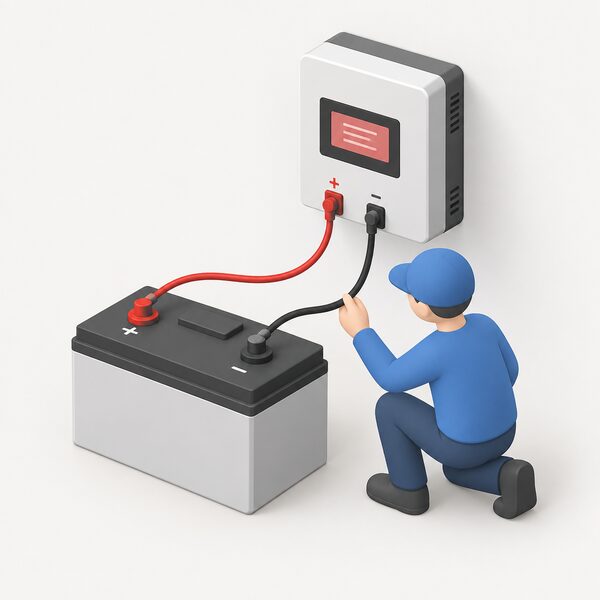
Error 505, Battery reversed, occurs when the positive and negative terminals of the battery do not correspond to the terminals marked on the machine12. The check is whether the positive and negative terminals of the battery are reversed12. Error 506, Battery Open, is different: it occurs when communication between the machine and the battery is good in lithium mode but the battery is not connected, and the check is whether the battery terminals are firmly connected to the machine12.
| Code | Meaning | First check |
|---|---|---|
| Error 302 | No AC Connection12 | Mains wiring correct and reliable12 |
| Error 500 | BMS COM Fault12 | Wiring between machine and battery12 |
| Error 502 | Battery voltage low12 | Battery voltage range setting12 |
| Error 503 | Battery voltage high12 | Battery voltage range setting12 |
| Error 505 | Battery reversed12 | Positive and negative terminals12 |
| Error 506 | Battery open12 | Battery terminals firmly connected12 |
| Error 418 | Firmware mismatch12 | Software version and correct code12 |
Other codes point to different systems. Error 300 and Error 304 occur when the connected mains voltage or frequency exceeds the rated range under the set safety regulations, and the check is whether the mains voltage or frequency is outside the upper or lower limit of the rated range12. Error 300 can also be caused by voltage rise due to high export and AC cable impedance, or by incorrect safety standard configuration22. Error 408 relates to temperature: high ambient temperature exceeding the inverter rating, restricted airflow due to poor installation location or obstructions, and internal fan failure or dust accumulation are the listed causes, with the remedy being to clear obstructions, ensure a shaded or cool location, clean the heatsink and fan if accessible externally, and restart the inverter once the temperature normalises23.
Fault 52, Bus Voltage Is Too Low, is most often caused by heavy load, because the battery cannot supply enough power for the load20. Fault 09, Bus Voltage Is Too High, is most often caused by burnt MOSFETs or a MOSFET-related circuit, and if the error persists on battery only, a DC-DC circuit fault on the mainboard24. Fault 51 is resolved by replacing the MOV board20. Fault 81, Host Loss, appears in parallel mode when the host cannot be detected for more than 8 seconds24.
Warnings and setup faults: meter connection (Warning 401) and NTC open
Warnings differ from errors in that the machine may continue to operate. They still indicate a configuration that is not as intended.
Warning 401 occurs when the electricity meter is not connected12. Three-phase and single-phase machines under some safety regulations need to be connected to the electricity meter when they work normally12. The check is whether the meter is connected, and whether communication between the meter and the energy storage machine is normal12. The same cause and remedy are given for the energy storage machine generally12.
The NTC OPEN warning appears in lead-acid mode. In that mode the energy storage machine needs to be connected to the NTC terminal at the corresponding terminal block, and the fault occurs if the NTC is not connected12. The check is whether the NTC terminal is properly connected with the energy storage machine12. The NTC is a temperature sensor, so the warning concerns the inverter's ability to read battery temperature.
Other warnings follow the same pattern of naming a condition and a check. Warning 01, Fan Fault, may relate to the fan itself or to a loose connection of the fan connector; the documented options are to upgrade the firmware to clear it, reinstall the fan connector, or replace the faulty fan21. Warning 02, Internal Temperature Is High, points to a problem with the temperature sensors or the temperature sampling circuit21. Warning 03, Battery Is Overcharged, can come from incorrect settings for a lead-acid or lithium-ion battery, or from a battery voltage sample circuit fault; for a lead-acid battery the check is the 19th and 20th options on the LCD, and the issue may be caused by too high a bulk charging voltage or float voltage21.
For lead-acid charging generally, the usual charging current is 0.2 to 0.3C, where C means battery capacity24. That figure is a maker's guidance for lead-acid batteries and is stated as usual practice rather than a rule.
Sources24 cited
- MultiPlus-II inverter charger datasheet, Victron Energy, 2026-09-17
- Solar photovoltaic, CAT, 2026-03-10
- Battery storage, Energy Saving Trust, 2026-08-19
- Victron ESS package, Wind and Sun, 2026-09-20
- Section 722 EV charging complete guide, Elec-Mate, 2026-07-02
- Inverter VE.Direct 250VA to 1600VA datasheet, Victron Energy, 2026-09-17
- Microinverter vs hybrid inverter, Solax Power, 2026-08-25
- Harnessing power: your ultimate guide to solar hybrid inverters, Solax Power, 2025-01-23
- Hybrid inverter vs off-grid inverter, LuxpowerTek, 2024-07-24
- Off-grid vs hybrid inverter, Solax Power, 2026-03-13
- Low voltage battery, Solax Power, 2026-09-11
- Storage inverter FAQ, Growatt, 2026-09-17
- Inverter VE.Direct 250W to 1600W 230V datasheet, Victron Energy, 2026-09-17
- BlueSolar Charge Controller MPPT datasheet, Victron Energy, 2026-09-17
- SmartSolar charge controller MPPT 150/70 to 150/100 VE.Can datasheet, Victron Energy, 2026-09-17
- POST note on energy storage, Parliament, 2026-06-25
- Electric vehicle charge points, Flexi-Orb, 2025-04-22
- Solar panel battery storage, Which?, 2026-05-14
- Safe isolation, NIE Networks, 2026-09-19
- Off-grid inverter FAQ, Growatt, 2026-09-17
- Off-grid inverter FAQ, page 2, Growatt, 2026-09-19
- Growatt Error 300 AC voltage out of range, Growatt, 2025-12-19
- Growatt Error 408 over temperature cooling ventilation, Growatt, 2025-12-19
- Off-grid inverter FAQ, page 1, Growatt, 2026-09-19
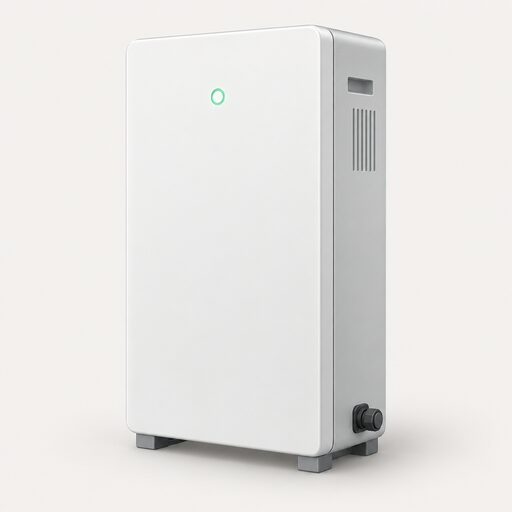 All-in-One Battery SystemsA single unit holding your battery and the equipment that turns its power into usable electricity.
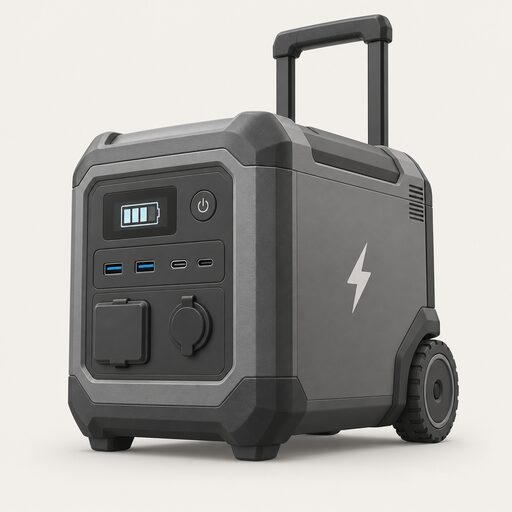 Portable Power StationsWhat can a portable power station actually keep going in a power cut, and for how long?
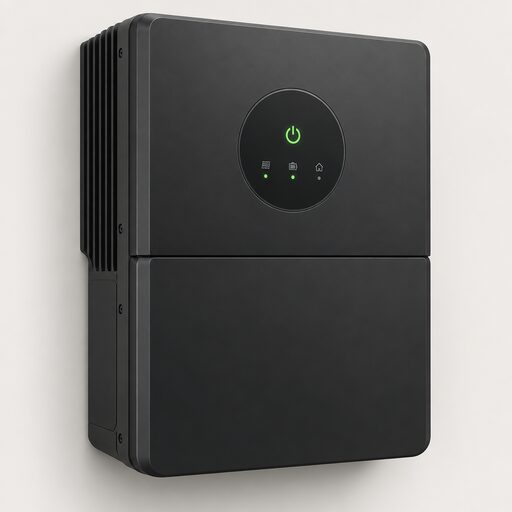 Hybrid InvertersA hybrid inverter lets you store solar power in a battery and use it later, all through one unit instead of two separate boxes.
 Charging With a Home BatteryHow a home battery and an EV charger share one supply, whether a battery can usefully charge a car, and how combined systems are controlled so the battery is not discharged into the vehicle at a loss.
 Maintaining Backup PowerWill your generator actually start when the power goes off?
 AC-Coupled vs DC-CoupledCan you add a battery to your existing solar panels without swapping the inverter, and does one kind waste more of your solar power than the other?