
In this guide
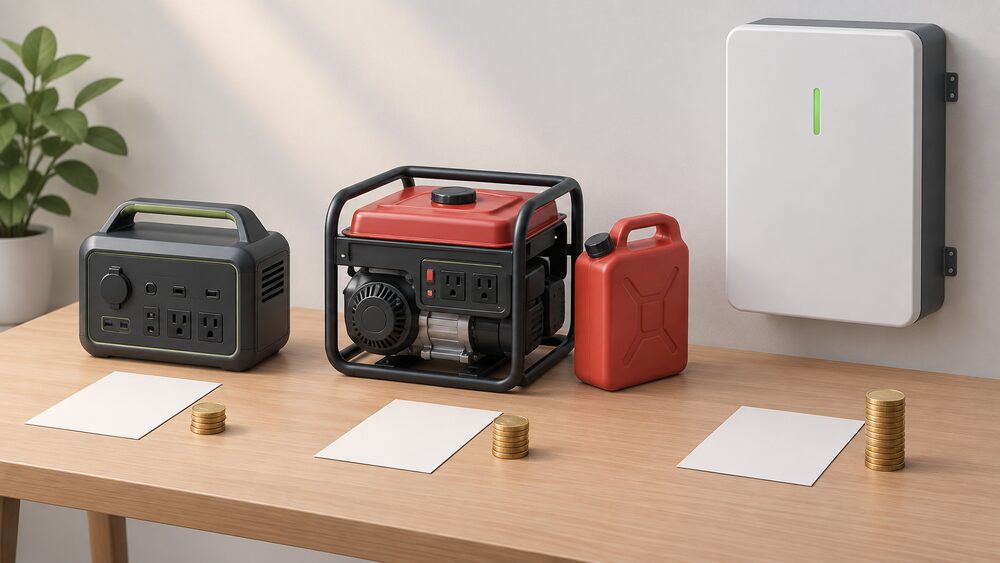
Backup power in the UK is not one product with one price. It is a ladder of options, and the cost of each step is set by how much of the house it can carry and for how long. The cheapest published entry point is a portable generator at around £160, rising to £2,000 or more for larger units1. At the other end, home battery storage ranges from £1,500 to £10,000 depending on type and size, with a typical 5kWh system around £4,6002.
The running cost picture is just as uneven. Households pay around four times more for a unit of electricity than for gas4, so anything that runs on mains electricity carries a higher unit cost than a gas appliance. Against that, off peak electricity is priced at 3.59 pence per kWh in one published comparison, against a standard rate of 28 pence per kWh6. A battery recharged overnight on a time of use tariff is therefore working from a very different cost base to a generator burning petrol at around £4.35 a tank1.
This page sets out what each option costs to buy, install and run, what it will actually power in a blackout, and where the dependence remains. It covers portable power stations, fuel generators, UPS units and home battery systems, and it treats the published figures as the evidence base rather than any single retailer's quote.
What backup power costs in the UK: the short answer
The honest short answer is that there is no single UK price for backup power, because the category spans a £160 generator and a £10,000 battery installation. What the published figures do allow is a set of anchors.
A typical household in Great Britain pays around £79 a month for electricity, or £947 a year, under the January 2026 energy price cap9. The average electricity bill was £981 in real 2025 prices, against £803 for gas10. Those are the bills a backup system is either protecting or adding to, and they set the scale against which any purchase should be judged.
The cost of the energy itself varies by region and payment method. Under the cap running from 1 October to 31 December 2025, a Northern household on single rate metering at 3,100 kWh faced £958.83 a year on the other payment method, while a Southern household on prepayment faced £912.8011. Under the previous cap period, an Eastern household on the second payment method faced £998.79 at 3,100 kWh, and a Northern household on multi-register metering faced £1,123.43 at 4,200 kWh12. A benchmark maximum charge for the charge restriction period put a Northern electricity bill at £994.24 a year at 3,100 kWh on single rate metering13.
The wider context matters too. The energy price cap was £531, or 22%, lower than at the height of the energy crisis at the start of 2023, when the Energy Price Guarantee was in place14. The Energy Price Guarantee itself was credited with saving a typical Great Britain household around £900 over the winter of 2022 to 2023, reducing bills by roughly a third against the then current price cap15. The crisis as a whole was estimated at the equivalent of £6,400 per household16.
For a household weighing backup power, the practical implication is that the running cost of anything charged from the mains is tied to a unit price around four times the gas equivalent4. That is the number that decides whether a battery recharged overnight is cheap or expensive, and it is why off peak tariffs matter so much to the economics.
Four options compared: power station, UPS, generator or home battery

The four main options differ less in what they store than in what they can carry and how long they last. A portable power station is a battery in a box with an inverter and sockets. A UPS is a battery designed to bridge seconds or minutes, not hours. A fuel generator makes electricity on demand from petrol, diesel or LPG. A home battery is a fixed installation wired into the house.
The cost of electricity is the common thread. Households pay around four times more for a unit of electricity than for gas4, and the home electricity cost used in one published calculator defaults to the UK average, sourced from UK Government data updated annually17. That default is the figure most households should use when comparing a battery recharge against a generator tank.
| Option | Typical published cost | What it carries | Dependence that remains |
|---|---|---|---|
| Portable power station | No published UK list price; installer or retailer quoted | Sockets, small appliances, electronics | Mains recharge, or solar and a car |
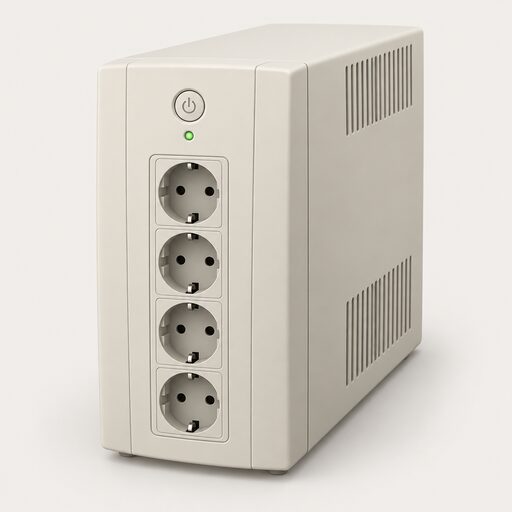
| UPS | No published UK list price in this evidence base | Electronics, router, medical devices | Mains, plus battery replacement |
| Fuel generator | From around £160 to £2,000 or more1 | Higher loads, including heating appliances | Fuel supply, siting, maintenance |
| Home battery | £1,500 to £10,000, typical 5kWh around £4,6002 | Whole house or selected circuits | Grid recharge, installer, app |
The table shows the shape of the trade. The cheapest upfront option is the generator, and it is also the one with the most ongoing dependence: fuel, storage, siting and servicing. The most expensive is the home battery, and it is the one that integrates with the house rather than sitting beside it.
A UPS sits in a different category again. It is not a backup power source in the sense the others are; it is a bridge. Its value is in the seconds between the power failing and either a generator starting or the equipment shutting down safely. For a router, a home office or a medical device, that bridge is the whole point.
For a household's energy independence, the ranking is not by price. A generator gives independence from the grid but dependence on a fuel supply chain. A battery gives independence from the grid for its runtime but dependence on recharging. Neither removes the grid from the picture entirely, and both add a piece of equipment that needs maintaining.
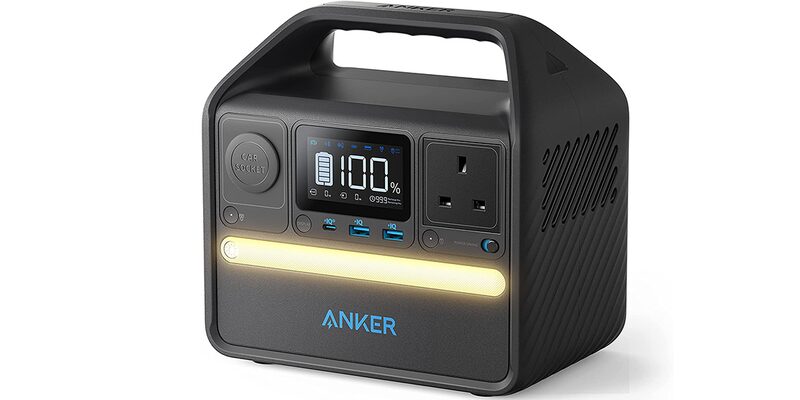
Portable power stations: £400 to £3,000+ and what that buys
Portable power stations occupy the middle of the market, and the published UK evidence base does not contain a list price for them. What it does contain is the adjacent categories, which bracket the range. Portable generators start at around £160 and can go up to £2,000 or more1. Home battery storage ranges from £1,500 to £10,000 depending on type and size2. A portable power station sits between those two, and in practice its price is installer or retailer quoted rather than published.
What the money buys is capacity, inverter output and portability. A larger unit carries a bigger battery and a more powerful inverter, which is what allows it to run higher draw appliances. The published figures for home battery storage give a sense of the relationship between capacity and cost: a typical 5kWh system is around £4,600, and the range runs to £10,000 depending on size2. Battery storage for a solar system tends to cost around £5,000 to £8,00018.
The comparison with a home battery is instructive. A home battery is a fixed installation, wired into the consumer unit and typically paired with solar. A portable power station is a box that can be moved from room to room and taken to a site or a caravan. The portability is the product; the trade is that it carries less of the house and needs manual intervention when the power fails.
For a household's independence, a portable power station is the lowest commitment option. It does not require an installer, a notification to the network operator or a change to the consumer unit. It also does not remove dependence on the mains, because it is recharged from the mains unless solar or a car is used. Its independence is measured in hours, not days, and it is bounded by the capacity of the unit.
Fuel generators: lower upfront cost, higher running costs
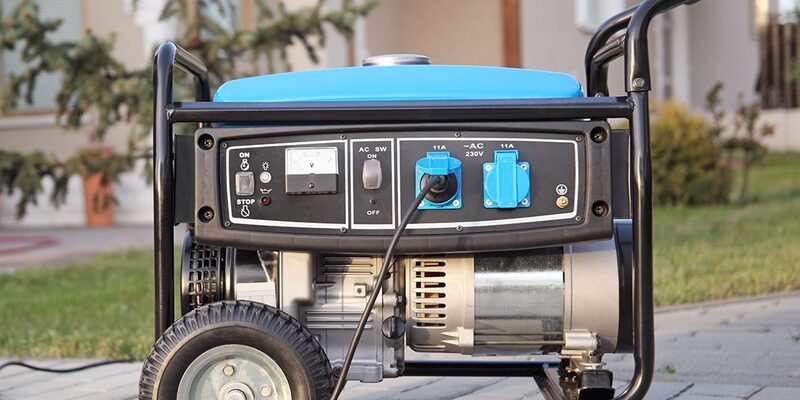
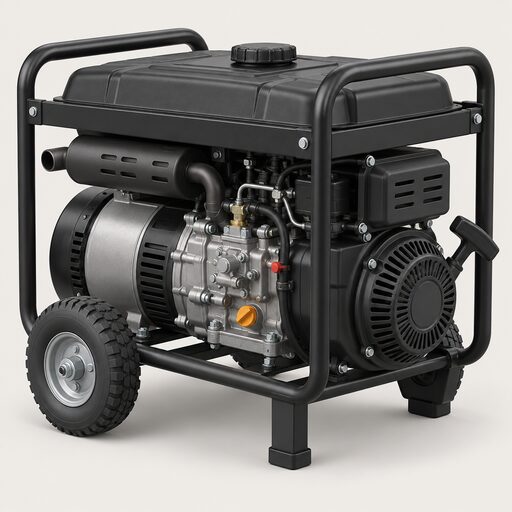
A fuel generator is the cheapest way into backup power and the most demanding to own. Prices for portable generators start at around £160 but can go up to £2,000 or more1. A petrol generator specifically starts at at least £2001. The upfront cost is low; everything after that adds up.
Fuel is the first ongoing cost. One small petrol generator costs around £4.35 to fill and run the tank empty1. That figure is for a specific small unit, so it should be read as an illustration of the fuel cost of a short run rather than a general rate. The point is that a generator's running cost is a fuel cost, and fuel prices move.
The second cost is the fuel itself, and its storage. Petrol, diesel and LPG each carry different storage requirements and different shelf lives, and the rules on storing fuel at home are separate from the rules on running the generator. A generator that cannot be fuelled is not backup power; it is equipment.
The third cost is siting and safety. A fuel generator produces carbon monoxide and must not be run indoors, in a garage or in any enclosed space. That constrains where it can be used and how the cable reaches the house. It also means the generator is a piece of outdoor equipment, which affects both its noise footprint and its security.
The fourth cost is maintenance. A generator that sits unused for months may not start when it is needed, so it needs periodic running and servicing. That is time and money that a battery does not require in the same way.
For a household's independence, a generator is the option that most completely removes dependence on the grid for the duration of its fuel. It replaces that dependence with a fuel supply chain, a storage obligation and a siting constraint. For a rural household with space and a fuel store, that trade can be reasonable. For a flat or a terraced house, it is often not available at all.
What a portable power station can and cannot run in a blackout
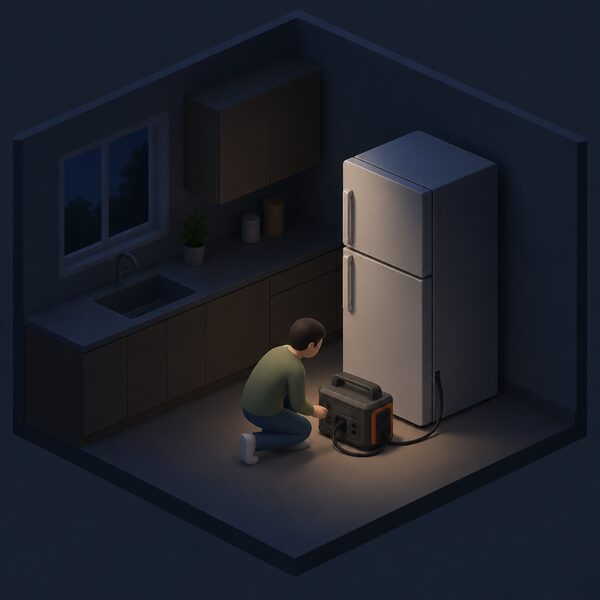
The dividing line is between appliances that draw a lot of power for a short time and appliances that draw a little power for a long time. A power station handles the second category well and the first category only if it is large enough.
The published guidance on power banks sets the floor: portable power banks can hold enough power to charge up a mobile several times, and are worth having to hand8. A power station is a larger version of the same idea, scaled to run a fridge, a router, a lamp or a laptop.
The fridge is the appliance most households care about, and the published figure is about food safety rather than battery runtime. Food will typically stay safe in a fridge for four to six hours without power, as long as the doors are kept closed8. That is the window a power station is trying to extend. A freezer holds its temperature longer, but the same principle applies: the doors stay shut.
What a power station cannot do is run the whole house. Heating, hot water, an electric shower, an oven and a tumble dryer are all beyond the realistic reach of a portable unit. A power station is a selected-loads device, and the selection is made at the point of purchase by choosing the unit's output.
The other limit is recharge time. A power station that has been drained needs to be refilled, and if the grid is down, that means solar or a car. A unit with no recharge path is a one-shot resource, and its runtime is the whole of its value.
For a household's independence, this is the honest position: a portable power station keeps the lights, the router and the fridge going for a defined period. It does not keep the house warm, and it does not remove the need for the grid to come back.
Sizing the unit: capacity, output ports and inverter quality
Sizing a power station is two decisions, not one. The first is capacity, measured in kilowatt hours, which sets how long the unit runs. The second is inverter output, measured in watts, which sets what it can run at all. A unit with a large battery and a small inverter will run a small load for a long time and refuse a large load entirely.
The published evidence base does not contain a sizing table for portable power stations, but it does contain the cost of the adjacent fixed option. Home battery storage ranges from £1,500 to £10,000 depending on type and size, with a typical 5kWh system around £4,6002. That gives a sense of how capacity drives price in the battery market generally.
Inverter quality matters because it determines whether sensitive electronics run safely. A modified sine wave inverter is cheaper and can cause problems with some equipment; a pure sine wave inverter is the standard for anything with a motor or a sensitive power supply. The published evidence base does not carry a price comparison between the two, so the choice is a specification decision rather than a cost one.
The practical approach is to list the loads that matter, add up their running watts, and check that the total sits within the unit's continuous output rather than its peak. Peak output is for motor starting, not for sustained running. A unit that is sized on peak will trip when two appliances run together.
For a household's independence, sizing is where the promise meets the physics. An oversized unit costs more than the household needs; an undersized unit fails at the moment it is needed. The published figures for home battery storage show how quickly cost rises with capacity, and the same relationship applies to portable units.
Indoor safety, noise and emissions compared
The safety and nuisance profile of each option is as important as its price, because it determines where the equipment can be used.
A battery power station has no engine and no exhaust, so it does not produce carbon monoxide and does not carry the indoor prohibition that applies to fuel generators. That is a genuine advantage in a flat or a house without a garden. It does not mean every unit can go anywhere: the maker's instructions govern placement, clearance and ventilation, and those instructions are the rule.
A fuel generator is the opposite. It produces carbon monoxide and must be run outdoors, away from windows, doors and vents. Noise is the second constraint: a generator running through the night is a neighbourhood issue as well as a comfort one, and it affects where the unit can be sited relative to the house.
A UPS is silent and indoor by design. It sits beside the equipment it protects and runs only for the duration of its battery. Its constraints are heat and battery age rather than emissions.
A home battery is a fixed installation, usually in a garage, utility room or outside wall. Its safety profile is governed by the installation standards and the battery chemistry, and it is not a device the household moves.
For a household's independence, the safety profile decides whether the option is available at all. A flat with no outdoor space cannot use a fuel generator. A house with a garage can. The published guidance on power cuts and food safety assumes the household can keep the fridge closed, which is a behaviour, not a purchase8.
Recharging options: mains, car and solar panels
How a battery is refilled is the part of the cost that households most often overlook, and it is where the difference between a cheap and an expensive backup system is decided.
Mains recharging is the default. The cost depends on the tariff. Off peak electricity is priced at 3.59 pence per kWh in one published comparison, against a standard rate of 28 pence per kWh6. A 60kWh electric vehicle costs £6 to charge on an off peak time of use tariff and £16.80 on the standard rate7. Those figures are for vehicles, but the unit prices apply to any battery charged from the same supply.
Car charging is the second route. A full charge at home for an electric car with a 50kWh battery costs approximately £17 on a standard tariff15. Drivers who can charge at home could save up to £750 a year compared with a petrol car14. The relevance to backup power is that a car with vehicle to load capability can act as a recharging source, and the cost of that energy is the same as any other home charging.
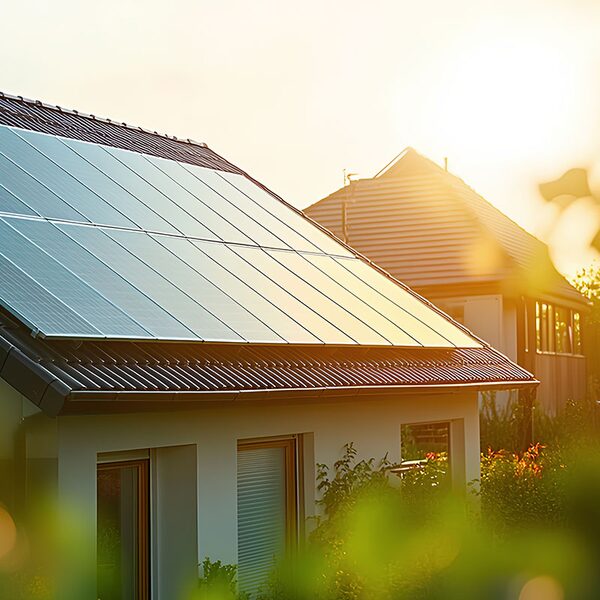
Solar is the third route. A domestic solar panel system is generally around 4.5 kWp and costs around £7,60018. Panels alone cost between £6,100 and £11,000 depending on the size of the property19. Battery storage for a solar system tends to cost around £5,000 to £8,00018. Those are the costs of the generation and storage, not of the power station, and they are substantial.
For a household's independence, recharging is where the dependence actually sits. A battery recharged from the mains is dependent on the grid. A battery recharged from solar is dependent on the weather and the array. A battery recharged from a car is dependent on the car being charged. None of these is a closed loop, and the cost of each is a running cost that continues for the life of the equipment.
Where a home battery system fits for whole-house backup
A home battery is the option that comes closest to whole-house backup, and it is priced accordingly. Home battery storage ranges from £1,500 to £10,000 depending on type and size2. A typical 5kWh system is around £4,6002. Battery storage for a solar system tends to cost around £5,000 to £8,00018. The Energy Saving Trust estimate cited in parliamentary research puts battery storage at up to £10,000 depending on size, with a typical 5kWh system around £4,6003.
The cost of the battery is not the whole cost. A home battery is a fixed installation, wired into the consumer unit, and it may require an electrician, a notification to the network operator and a change to the household's electrical arrangements. The published evidence base does not carry a separate installation figure for home batteries, so the installed cost is installer quoted.
What the money buys is coverage. A home battery can be configured to carry selected circuits or the whole house, depending on the inverter and the wiring. That is a different proposition from a portable unit, which carries whatever is plugged into it. The trade is that the home battery cannot be moved, and its capacity is fixed at installation.
The comparison with other low carbon heating and storage options is useful for scale. Ground source heat pumps for a small property cost £15,200, or £7,700 after the £7,500 Boiler Upgrade Scheme grant; a medium property costs £21,100, or £13,600 after the grant; a large property costs £28,700, or £21,200 after the grant20. Those are heating systems rather than batteries, but they show the order of magnitude of a whole-house low carbon installation.
For a household's independence, a home battery is the option that most reduces dependence on the grid for the hours it can carry. It does not remove the grid, because it recharges from it, and it does not remove the installer or the manufacturer from the relationship. It is a long-term commitment with a long payback, and it is the most expensive rung on the ladder.
Sources20 cited
- How to buy the best generator, Which?, 2026-01-20
- Battery storage, Energy Saving Trust, 2026-08-19
- Battery storage and grid balancing, UK Parliament POST, 2026-06-25
- Insulation and heat pumps: the perfect pairing, MIMA, 2026-09-20
- Heatwaves, air con and other things, BESA, 2026-07-03
- Reduced public charging prices could boost EV sales, ChargeUK, 2026-07-31
- What is the cheapest way to charge an EV?, Uswitch, 2025-07-02
- What to do in a power cut, Which?, 2026-06-04
- Average UK energy bill, Energy Saving Trust, 2026
- DESNZ annual report and accounts 2025 to 2026, GOV.UK, 2025
- Energy price cap levels 1 October to 31 December 2025, Ofgem, 2025
- Energy price cap levels 1 July to 30 September 2025, Ofgem, 2025-07-01
- Benchmark maximum charges for the charge restriction period 13a, Ofgem, 2025
- EVs: the facts, SMMT, 2025-09-22
- Electric vehicles: debunking myths, Energy Saving Trust, 2025-09-22
- Change in energy bill price cap for Jan to Mar 2026, ECIU, 2025-11-21
- Home charging calculator, Zapmap, 2026
- Solar panels, Energy Saving Trust, 2026-08-27
- Make your home more energy efficient, Confused.com, 2026-07-06
- Domestic heating technology options: ground source heat pumps, Nesta, 2025-02-03
 Maintaining Backup PowerWill your generator actually start when the power goes off?
 Portable Generators for HomesWhat can a portable generator actually run in a power cut, and for how long?
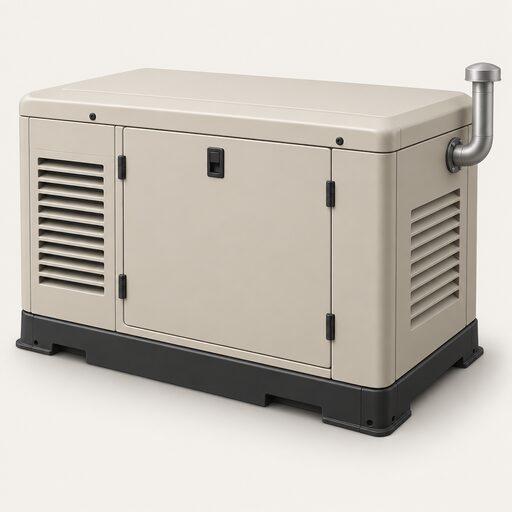 Standby Generators for HomesA standby generator starts itself when the power cuts out, so your home keeps running even when you are out.
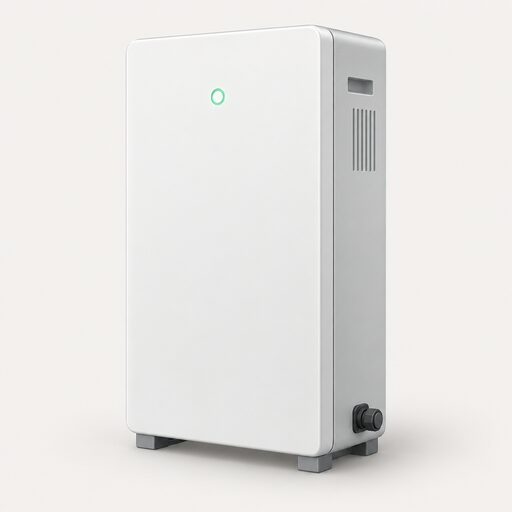 All-in-One Battery SystemsA single unit holding your battery and the equipment that turns its power into usable electricity.
 Generator Fuel and Running CostsPetrol, diesel, LPG or HVO: which is cheapest to run a whole-house generator, and how much does it really cost each day?
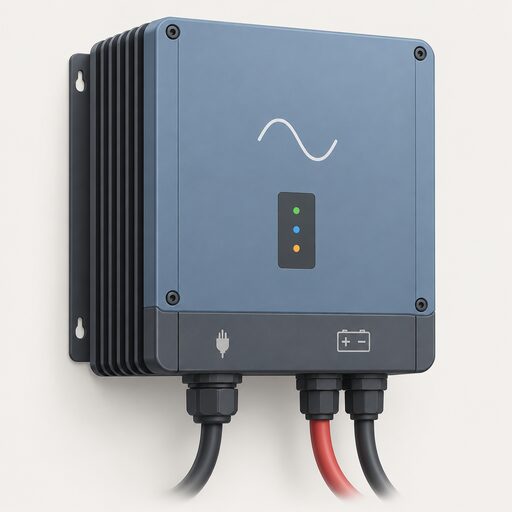 Inverters and Inverter-ChargersIf the power goes off, what actually keeps your fridge and boiler running?